How we make this list: we compare pricing pages, product documentation and public user reviews. Rankite is independent; if a vendor ever pays for a featured spot, that listing is clearly labeled Partner.
Quick comparison
| Tool | Best for | Starting price | Free plan |
|---|
 Mighty Networks Mighty Networks | Creators, coaches and course sellers who want memberships, courses and events in one branded space | $79/month (Launch plan) | No (14-day free trial) |
 Circle Circle | Brands and membership businesses wanting a modern community hub with live video and courses | $89/month (Professional plan, annual billing) | No (14-day free trial) |
 Bettermode Bettermode | Companies that want a forum-style community embedded in their existing website or product | See website (custom quote) | No |
 Discourse Discourse | Open-source discussion communities that want full data ownership | Pro hosting $100/month (self-hosting is free) | Yes (limited free hosting plan; self-hosted Community edition is free) |
 Hivebrite Hivebrite | Alumni networks, professional associations and corporate communities | See website (custom quote) | No |
 HumHub HumHub | Organizations that want a free, self-hosted social network on their own servers | Free (open-source Community Edition) | Yes (Community Edition is free and open source) |
 Open Social Open Social | Nonprofits, NGOs and public-sector organizations needing an accessible community platform | See website | See website |
 PeepSo PeepSo | WordPress site owners who want a social network running inside their existing site | See website (paid bundles; core plugin is free) | Yes (free core plugin, per the vendor's FAQ) |
 BuddyBoss BuddyBoss | WordPress communities that need native mobile apps and LearnDash course integration | See website | No |
Is your product missing or out of date?
We review this list regularly. Vendors can request a listing, send updated pricing or ask about featured placement.
What happens to your community when the platform changes the rules? A Facebook group or a Slack workspace can alter its algorithm, its pricing or its access policy overnight, and your members are the ones who feel it. A white label social network platform puts your brand on the experience instead: your domain, your app icon, your design, with the vendor's technology running underneath. These nine platforms cover the real options, from no-code membership tools to open-source forums you host yourself.
#1
Mighty Networks
Best for: Creators, coaches and course sellers who want memberships, courses and events in one branded space
Visit mightynetworks.com
Starting price$79/month (Launch plan)
Free planNo (14-day free trial)
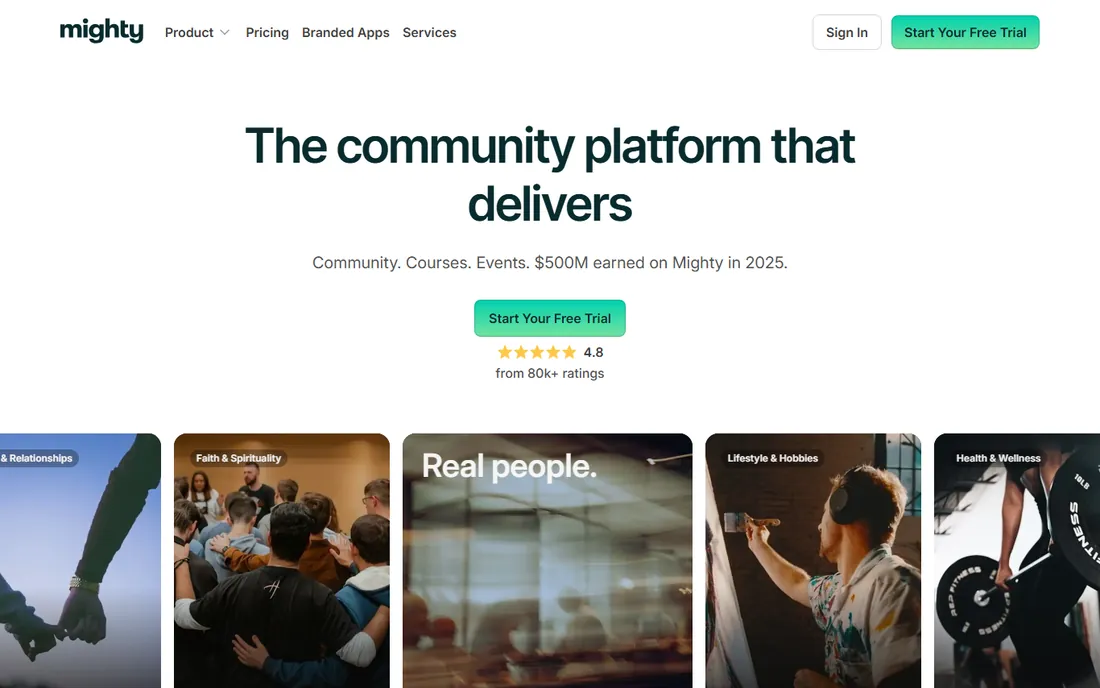
Mighty Networks is the default pick for creators who sell access. The Launch plan at $79 per month gives you a branded community space with courses, events and live streaming built in, so you are not bolting three tools together. Scale at $179 adds deeper analytics and more customization, while Growth at $354 adds API access, SSO and the full white label mobile app treatment. The 14-day trial lets you build the actual community before paying.
The trade-off is how much of the Mighty Networks identity you can remove at each tier. Launch communities still carry visible platform fingerprints, and the genuinely white labeled experience, custom app icon and all, sits on the higher plans. If your budget caps at $79 a month, expect your members to notice whose software it is. For coaches and course creators who live on membership revenue, that is often an acceptable compromise.
What we like- Published pricing with a clear upgrade path
- Built-in courses, events and live streaming on one plan
- Branded mobile app option on higher tiers
Watch out for- Branding control is limited on the Launch plan
- The top Growth tier at $354 per month is a big jump for small communities
#2
Circle
Best for: Brands and membership businesses wanting a modern community hub with live video and courses
Visit circle.so
Starting price$89/month (Professional plan, annual billing)
Free planNo (14-day free trial)
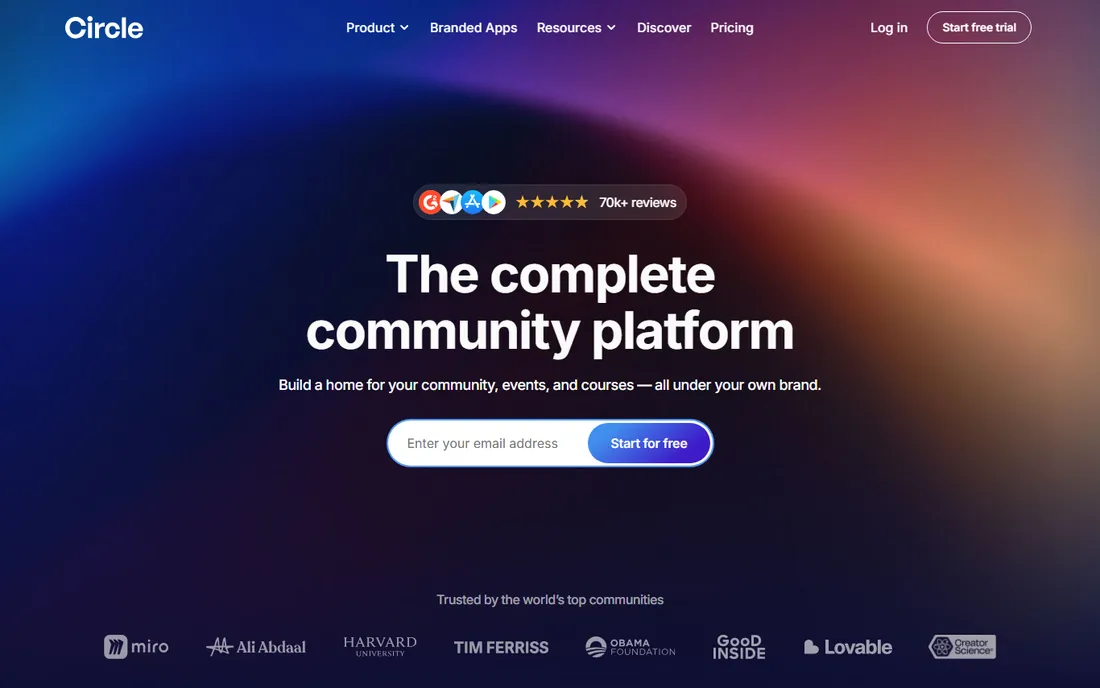
Circle has quietly become the go-to for businesses that outgrow a Discord server or a Facebook group. The Professional plan at $89 per month (billed annually) covers the core: branded community spaces, live streaming rooms, events and basic courses. Business at $199 and Scale at $419 add workflows, analytics depth and higher member caps. Every plan runs on your own domain, and the 14-day trial is genuinely useful for testing engagement before committing.
Where Circle draws the line is the mobile app. If you want your own app in the app stores with your icon and name, that is Circle Plus, the custom enterprise tier, not the self-serve plans. For many small businesses that is fine, members mostly use the mobile web anyway, but know the limitation before you promise stakeholders an app. Circle is the pick when polish matters more than open-ended customization.
What we like- Clean, modern interface that needs no developer
- Live rooms, events and courses included
- Custom domain and branding on all paid plans
Watch out for- Fully white labeled mobile apps require the enterprise Circle Plus tier
- Member limits per tier can force upgrades as you grow
#3
Bettermode
Best for: Companies that want a forum-style community embedded in their existing website or product
Visit bettermode.com
Starting priceSee website (custom quote)
Free planNo
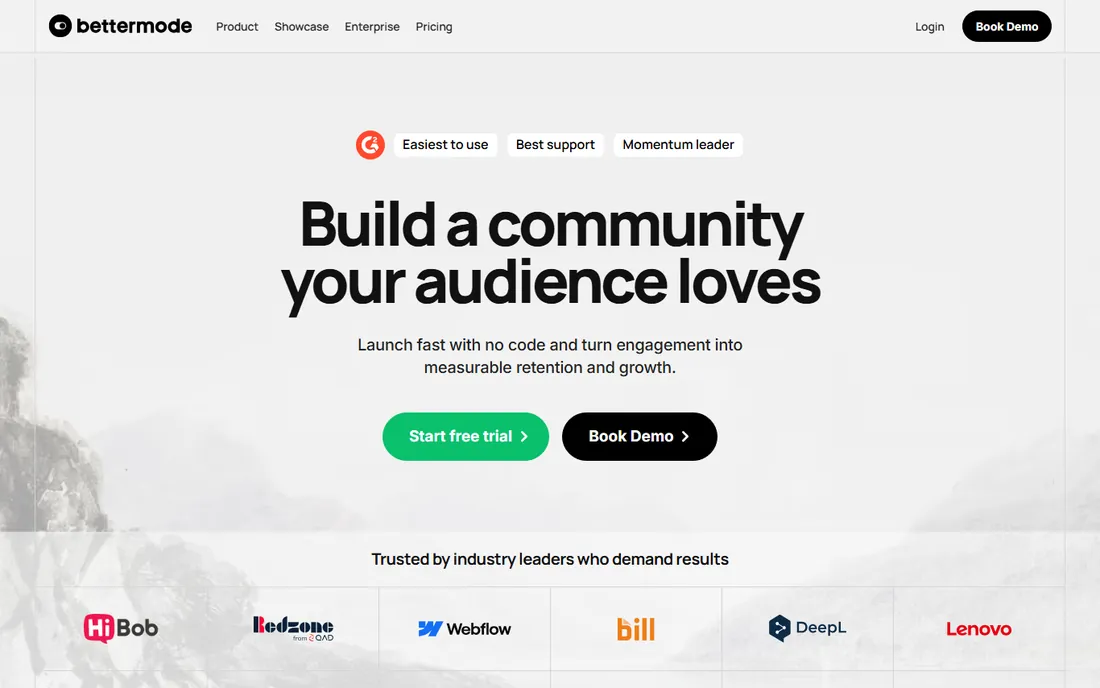
Bettermode is the successor to Tribe, which merged into it, and it carries that DNA: a community platform designed to live inside your existing digital property rather than replace it. Spaces can be forums, Q&A boards, changelogs or knowledge bases, and the platform embeds into your site or product with your styling. Moderation tooling, gamification and integrations are built for support communities and product feedback loops.
The catch is commercial, not technical. Bettermode publishes no prices, so you will talk to sales and wait for a quote before you can compare it to anything else on this list. For a support community tied to a SaaS product, the embedding story is strong enough to justify the process. For a standalone membership brand, the app-first tools above are simpler.
What we like- Deep embedding options, including widgets that live inside your product
- Flexible spaces for forums, Q&A and knowledge bases
- Strong moderation and gamification tooling
Watch out for- No published pricing, so every deal starts with a sales conversation
- The embeddable approach suits websites more than standalone branded apps
#4
Discourse
Best for: Open-source discussion communities that want full data ownership
Visit discourse.org
Starting pricePro hosting $100/month (self-hosting is free)
Free planYes (limited free hosting plan; self-hosted Community edition is free)
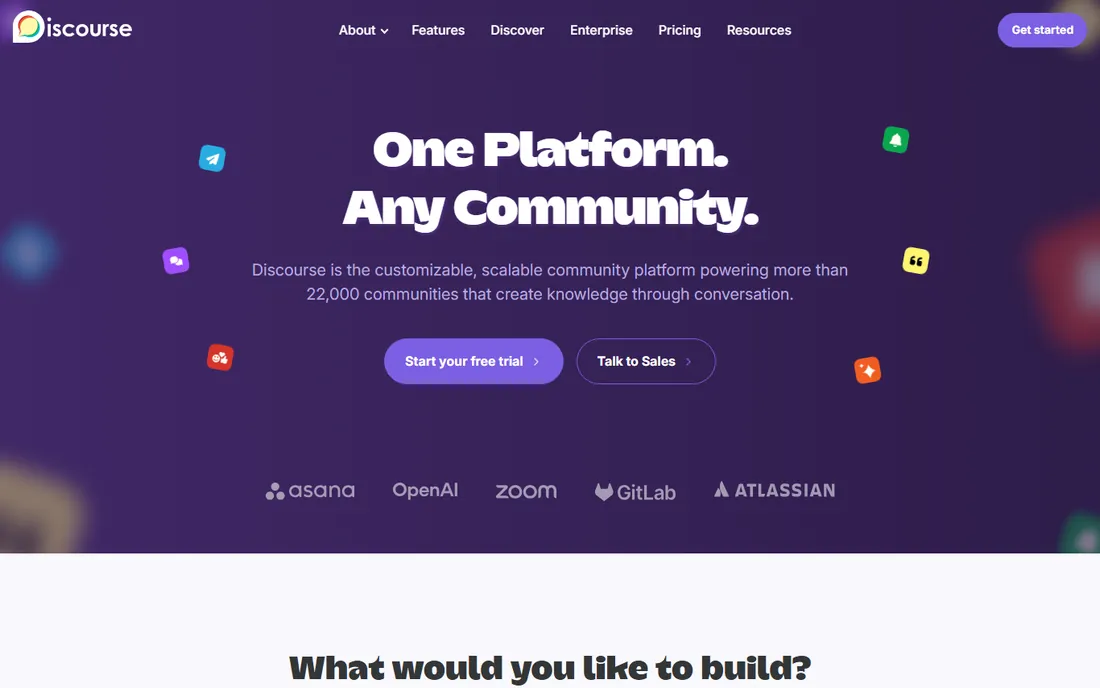
Discourse is the open-source workhorse of online discussion, and it is the only option here where you can own everything: the code, the data and the server. Self-hosting the Community edition costs nothing but your time and a server. If you would rather not touch infrastructure, the Discourse team's own hosting starts with a limited free plan, then Pro at $100 per month and Business at $500 per month, with Enterprise quoted custom.
The honest limitation is the format. Discourse is a forum, threads and categories, not a feed of profiles and stories. For developer communities, support forums and knowledge-sharing groups that structure is a strength. For a creator brand that wants a social vibe, it will feel like the wrong tool. Choose it when open discussion and data ownership matter more than app-store polish.
What we like- Open source with complete control over data and code
- The official hosting tiers remove server management
- Battle-tested by large public communities
Watch out for- The interface reads as a forum, not a social network, which limits its appeal for lifestyle brands
- Self-hosting demands real server administration
#5
Hivebrite
Best for: Alumni networks, professional associations and corporate communities
Visit hivebrite.io
Starting priceSee website (custom quote)
Free planNo
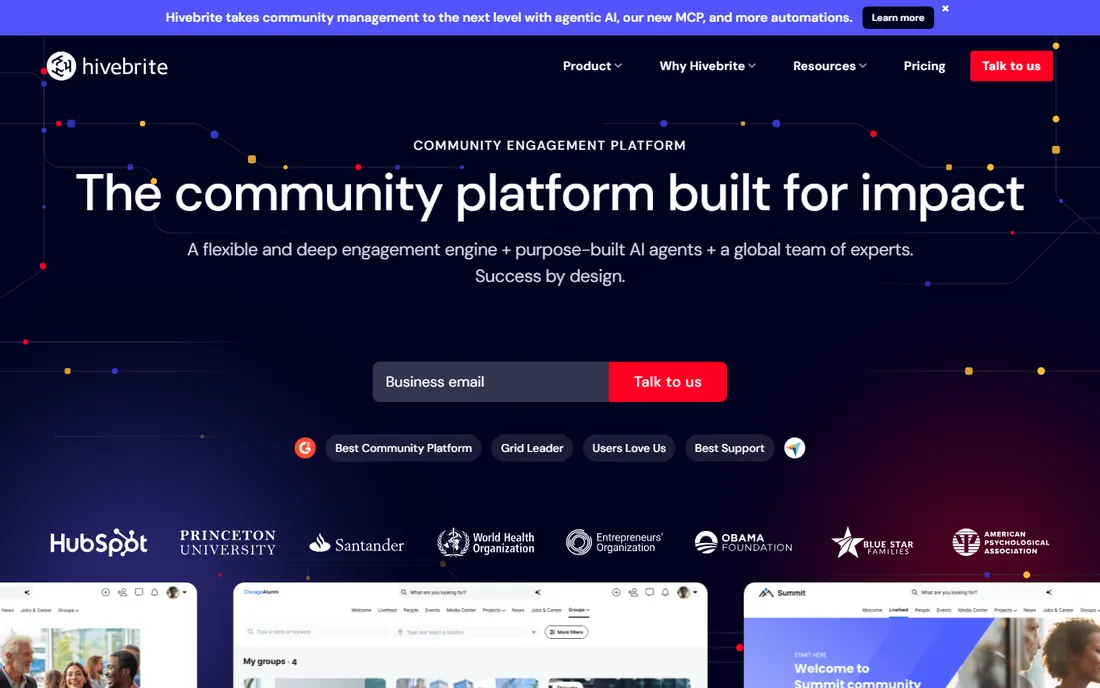
Hivebrite serves the institutional end of the market: universities, alumni associations, professional bodies and corporate alumni programs. The platform combines member directories, subgroups, events, mentorship matching and email campaigns in one branded portal, with white labeled mobile apps available. It is the tool you pick when the community has chapters, dues and governance, not just a chat feed.
That focus comes with enterprise buying friction. There is no pricing page and no self-serve trial path; expect demos, discovery calls and a custom quote. Small startups will find the process slow. For a 5,000-member alumni association with a real budget, though, Hivebrite's member-organization features are exactly the checklist other platforms lack.
What we like- Purpose-built for member organizations with directories and subgroups
- Strong event management and email campaign tools
- White labeling across web and mobile
Watch out for- Quote-only pricing with no public numbers
- Aimed at institutions, so pricing and process feel heavy for small startups
#6
HumHub
Best for: Organizations that want a free, self-hosted social network on their own servers
Visit humhub.org
Starting priceFree (open-source Community Edition)
Free planYes (Community Edition is free and open source)
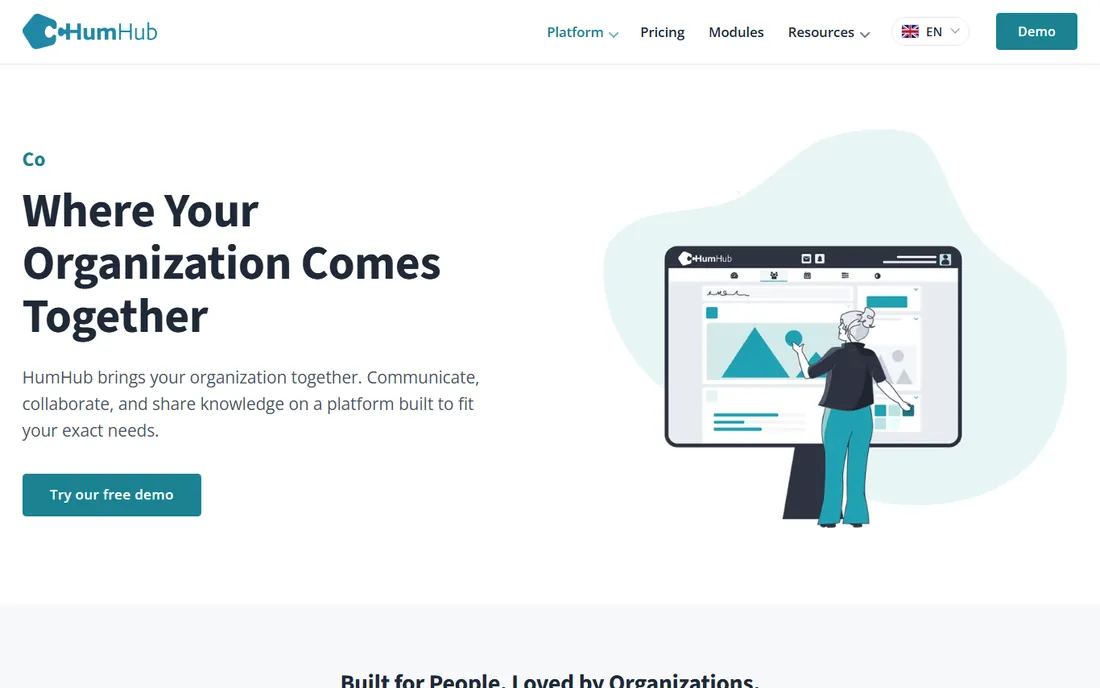
HumHub is the closest thing to running your own private Facebook for free. The Community Edition is open source and free to install on your own server, with profiles, activity streams, spaces, messaging and file sharing built in. A marketplace of modules extends it into wikis, tasks and calendars. There is also a Professional Edition with a trial for teams that want supported hosting.
The price of free is responsibility. You are the sysadmin: installation, updates, security patches and backups are yours. The interface is serviceable rather than beautiful, and it reads as a workplace intranet, not a consumer brand experience. For internal communities, nonprofits with a technical volunteer, or anyone allergic to subscription fees, HumHub is the honest answer.
What we like- Completely free to self-host with no user limits
- Modular design with a marketplace of extensions
- Active open-source development
Watch out for- You handle installation, updates, security and backups yourself
- The design feels more intranet than consumer social app
#7
Open Social
Best for: Nonprofits, NGOs and public-sector organizations needing an accessible community platform
Visit getopensocial.com
Starting priceSee website
Free planSee website
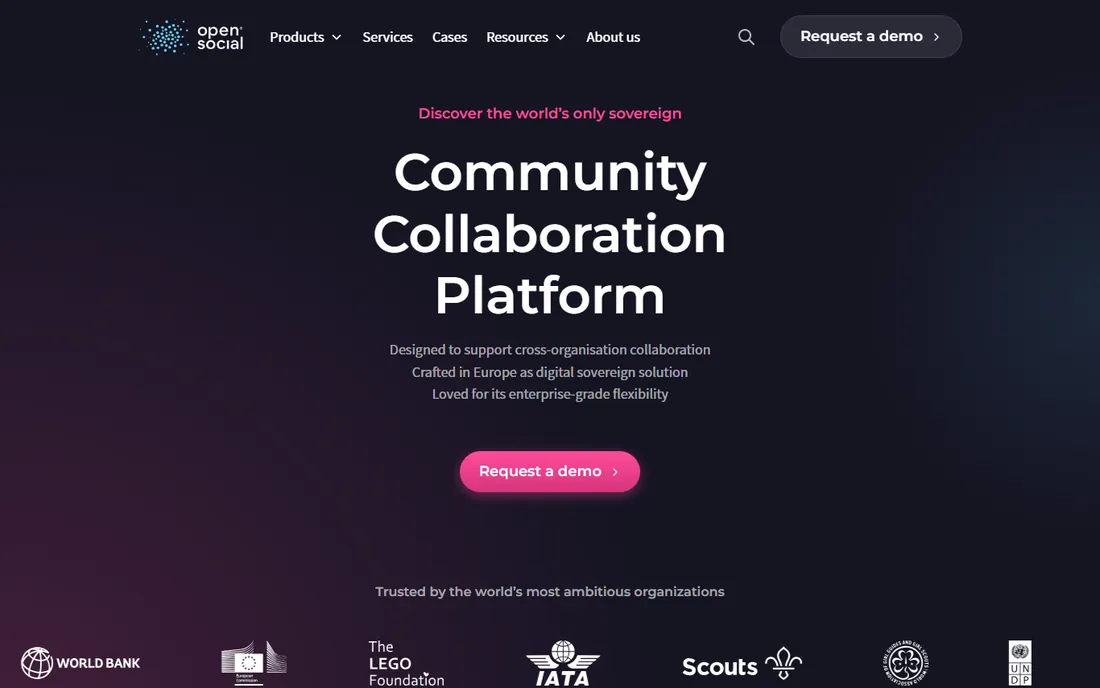
Open Social is a community platform built on Drupal, aimed squarely at nonprofits, NGOs and government bodies. That heritage shows in its strengths: accessibility compliance, multilingual content and content governance are first-class concerns, not afterthoughts. Organizations that already run Drupal get a community layer that fits their existing stack and security reviews.
The trade-off is the talent pool. Serious customization means Drupal developers, who are scarcer and pricier than WordPress developers. Pricing is not published, so budget planning requires a sales conversation. If you are a mission-driven organization with accessibility requirements and a Drupal shop, Open Social deserves a demo. If not, the WordPress options below are easier to staff.
What we like- Built on Drupal, so it inherits strong accessibility and multilingual support
- Designed for mission-driven organizations
- Community and enterprise editions available
Watch out for- Drupal-based, so customization needs Drupal expertise
- Pricing and plan details are not published
#8
PeepSo
Best for: WordPress site owners who want a social network running inside their existing site
Visit peepso.com
Starting priceSee website (paid bundles; core plugin is free)
Free planYes (free core plugin, per the vendor's FAQ)
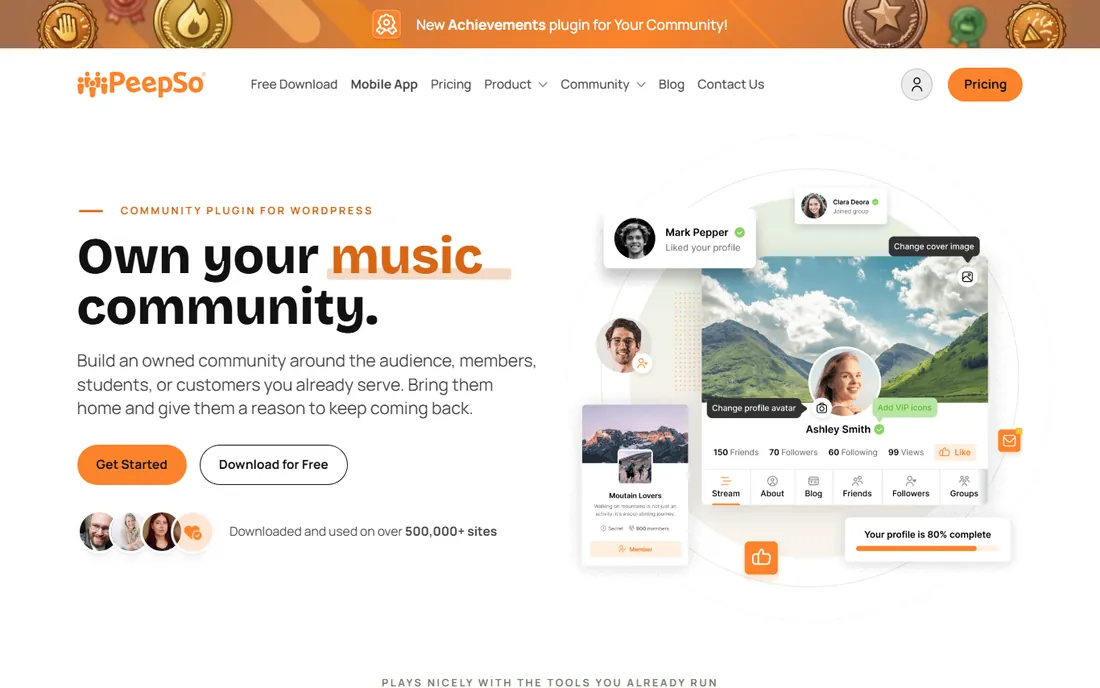
PeepSo turns a WordPress site into a social network: member profiles, activity streams, groups and private messaging, all inside your existing theme and user database. The core plugin is free, which makes it the cheapest way to test whether your audience even wants a community. Paid bundles add features like chat, advanced groups and monetization options.
The bundle model deserves a careful look. The free core is genuinely limited, and the bundles that make PeepSo competitive add up. You also inherit WordPress scaling concerns: a large active community needs caching and a decent host. For bloggers, membership sites and course creators already on WordPress, though, keeping everything in one system is a real operational win.
What we like- Lives entirely inside WordPress, so your theme and users stay put
- Free core plugin to start
- Add-on bundles for chat, groups and monetization
Watch out for- Pricing is bundle-based and the full feature set costs more than the core suggests
- Performance tuning falls on you as the community grows
#9
BuddyBoss
Best for: WordPress communities that need native mobile apps and LearnDash course integration
Visit buddyboss.com
Starting priceSee website
Free planNo
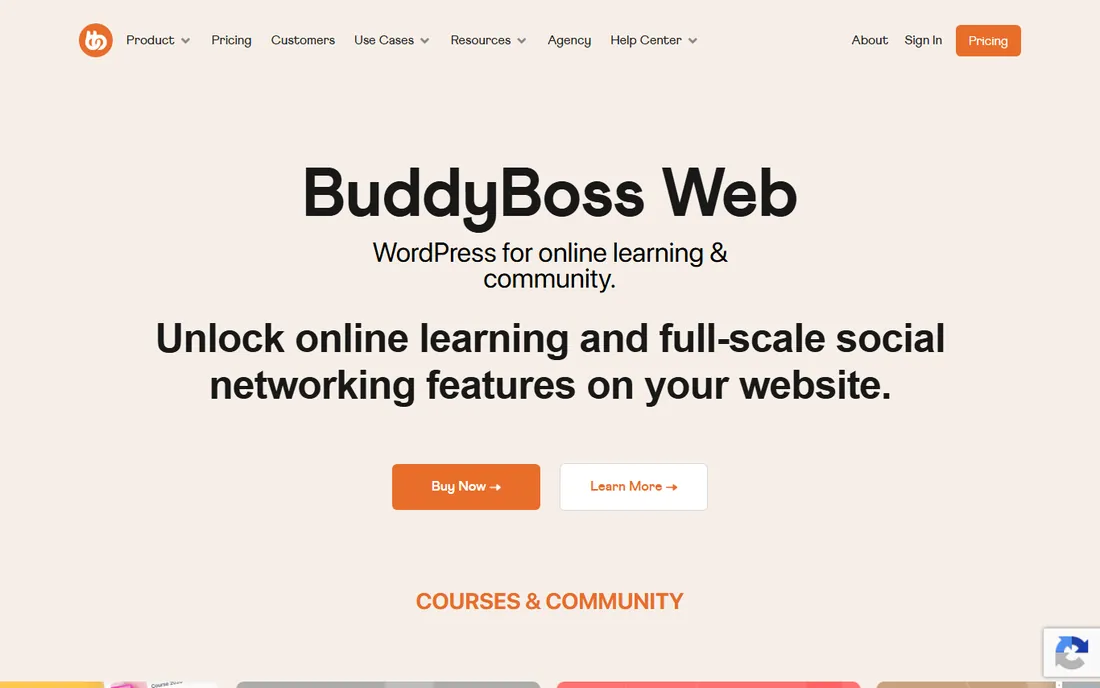
BuddyBoss is the heavyweight WordPress community option, built for sites that combine community with online courses. The platform pairs with LearnDash for course delivery, adds forums, groups and member profiles, and offers a native mobile app service so your community gets a real app-store presence under your brand. The ecosystem of themes and add-ons is the largest in the WordPress community space.
Pricing opacity is the annoyance: you will work through their site to pin down the current platform and app costs. And like PeepSo, you own the hosting and scaling. But if your business is courses plus community on WordPress, BuddyBoss is the integrated answer that avoids duct-taping five plugins together. It is the pick when the community is the product, not a side feature.
What we like- Purpose-built for community plus online courses, with deep LearnDash integration
- Native mobile app offering for branded apps
- Active development and large user community
Watch out for- No published starting price on the main site flow
- The platform plus app pricing can exceed simpler alternatives
Key takeaways
- For creators selling memberships: Mighty Networks ($79/month) and Circle ($89/month) are the two self-serve leaders, both with 14-day trials and published prices.
- For open source and data ownership: Discourse and HumHub are free to self-host; Discourse also offers official hosting from a limited free plan up to $500/month Business.
- For WordPress sites: PeepSo (free core) and BuddyBoss cover the in-WordPress route, with BuddyBoss the stronger pick for courses plus community.
- For institutions: Hivebrite and Open Social target alumni networks, associations and nonprofits, both quote-only.
- Bettermode (the former Tribe) is the embeddable forum option for product and support communities.
Start with where your members already are and how they will reach you. If your audience lives on phones and expects an app, shortlist Mighty Networks, Circle and BuddyBoss, and confirm whose app icon actually appears in the store before you commit. If your community is a support forum or a knowledge base attached to a product, Bettermode's embeddable spaces or Discourse will serve you better than any app-first tool.
Then price the second year, not the first. Entry tiers look close, $79 at Mighty Networks versus $89 at Circle, but member caps, app fees and white label upgrades diverge fast. Quote-only vendors like Hivebrite, Bettermode and Open Social need a written quote with the renewal terms, not just the year-one number. Open-source options look free until you cost the server, the updates and whoever administers them.
Finally, test migration before you need it. Ask every vendor how member data, posts and media export, and what happens to your custom domain if you leave. A white label platform should make your brand portable, not lock it in. The vendors that answer this question clearly, usually the open-source ones and the transparently priced ones, are the ones to trust with a community you plan to grow for years.
White label versus private label: what you are actually buying
Vendors use "white label" loosely, and the differences matter. At the light end, you get your logo and colors on the vendor's product, your members still see the vendor's name in URLs, emails or app listings. At the full end, you get your domain, your app-store listing, your email sender identity and no vendor branding anywhere a member can find it. Mighty Networks and Circle sit at the light end on starter plans and the full end on top tiers; Hivebrite and BuddyBoss's app service aim for the full end.
The practical question is which surfaces your members touch. A B2B support community lives in the browser, so a custom domain plus branded emails is effectively full white label. A creator community lives in the app stores, so the app icon and listing name are the whole game. Match the white label depth to where attention actually goes, and do not pay enterprise app fees for a community that opens links in a browser.
Frequently asked questions
What is a white label social network platform?
It is community software you brand as your own: your logo, colors, domain and often your mobile app, running on a vendor's technology. Members experience your brand, not the vendor's. The depth of branding varies by vendor and plan, from simple logo swaps to fully unbranded apps.
How much does a white label community platform cost?
Self-serve options start at $79 per month (Mighty Networks Launch) and $89 per month (Circle Professional). Discourse hosting runs from a limited free plan to $500 per month. Enterprise and institutional tools like Hivebrite are quote-only and cost more. Open-source self-hosting is free apart from server costs.
Can I migrate my community off Facebook groups?
Yes, but plan the move deliberately. Export what you can, announce the move with a clear reason members care about, and run both in parallel for a few weeks. Platforms with import tools and email onboarding, like Circle and Mighty Networks, make the transition easier. Expect some attrition; the members who move are your real community.
Do I need a mobile app for my community?
Only if your members live on phones and expect one. Creator and fitness communities usually benefit; B2B support communities mostly do not. Note that true app-store white labeling, your icon and name, is a top-tier or enterprise feature at most vendors, so confirm it before promising it.
What happened to Tribe?
Tribe merged into Bettermode. If you see older comparisons listing Tribe as a separate tool, treat Bettermode as its successor: same team direction, focused on embeddable community spaces for websites and products.
Is open source or hosted better for a branded community?
Hosted is better if you want to launch fast and never think about servers; open source (Discourse, HumHub) is better if data ownership, custom code or zero license fees matter most. The middle path is vendor hosting of open-source software, like Discourse's own hosting tiers, which removes server work while keeping the code open.
How we chose
We started with the categories buyers search: white label community platform, branded community software and private social network. For each candidate we opened the vendor's own pricing page, checked prices against public reviews on G2 and Capterra and practitioner discussion on Reddit, and compared features, branding depth, migration options and company-size fit. Where a price could not be verified on the vendor's page we wrote "See website" rather than guessing. Tribe was dropped because it merged into Bettermode.
Sources we checked (11)
- https://mightynetworks.com/
- https://circle.so
- https://bettermode.com
- https://www.discourse.org
- https://hivebrite.io/
- https://humhub.org/
- https://www.getopensocial.com
- https://peepso.com/
- https://buddyboss.com/
- https://www.g2.com/categories/community-platforms
- https://www.capterra.com/community-platforms-software/
Is your product missing or out of date?
We review this list regularly. Vendors can request a listing, send updated pricing or ask about featured placement.

Shihab Mia · Founder, Rankite
Shihab has spent more than a decade helping SaaS and e-commerce brands grow through search. He writes Rankite's software buying guides from pricing pages, documentation and public user reviews. More about Shihab.