How we make this list: we compare pricing pages, product documentation and public user reviews. Rankite is independent; if a vendor ever pays for a featured spot, that listing is clearly labeled Partner.
Key takeaways
- Appy Pie and GoodBarber run the most established reseller programs, with GoodBarber's flat subscription covering unlimited client apps.
- BuildFire suits agencies selling premium custom-feeling apps, while AppMySite and MobiLoud specialize in turning websites into apps.
- Siberian CMS is the open-source outlier for agencies that want full control and no per-app fees.
- White-label economics live or die on pricing structure: flat-rate platforms reward volume, per-app platforms punish it.
Quick comparison
| Tool | Best for | Starting price | Free plan |
|---|
 Appy Pie Appy Pie | Agencies starting a reseller business fast | See website | Free trial |
 GoodBarber GoodBarber | Unlimited white-label client apps on flat pricing | See website | Free trial |
 BuildFire BuildFire | Premium custom apps for high-value clients | See website | No |
 AppMySite AppMySite | Converting websites into white-label apps | See website | Free trial |
 MobiLoud MobiLoud | WooCommerce and news publishers going mobile | See website | No |
 Siberian CMS Siberian CMS | Open-source white label with full control | Free | Yes |
 Twinr Twinr | Turning websites into apps quickly | See website | Free trial |
 Median Median | White-label web-to-native app conversion | See website | Free trial |
 WebIntoApp WebIntoApp | Budget website-to-app conversion | See website | Free trial |
 AppYourself AppYourself | European agencies needing local support | See website | Free trial |
Is your product missing or out of date?
We review this list regularly. Vendors can request a listing, send updated pricing or ask about featured placement.
The best white label app builder
Starting priceSee website
Free planFree trial
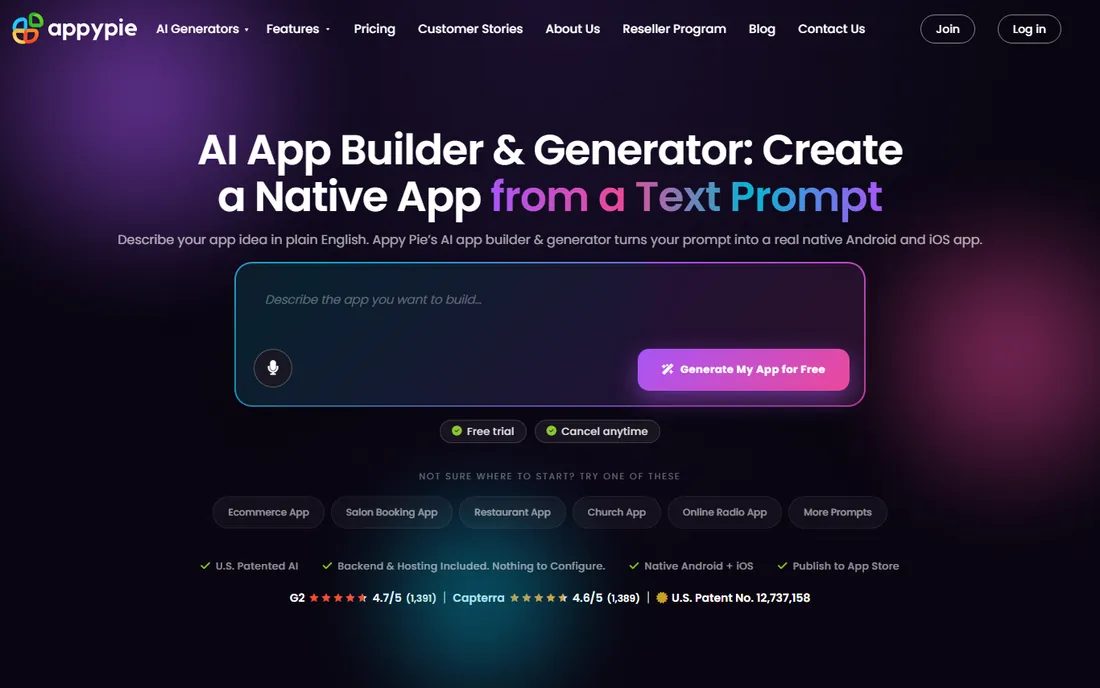
Most agencies hear about white-label app building through Appy Pie, and for good reason. Its reseller program is explicitly designed to let someone launch a branded app development business in about a day, with the Appy Pie name invisible to the end client. Login screens, dashboards and the builder itself all carry the reseller's brand, domain and pricing. For an entrepreneur who wants to sell apps without hiring developers, the pitch is direct.
The economics are the attraction. Resellers set their own prices and keep the margin, and the company claims partners earn healthy markups across more than 150 countries. The starter reseller packages include a block of paid licenses so selling can begin immediately. The honest limits are the apps themselves. They are template-driven no-code products, fine for restaurants, churches and small retailers, but not for clients who need genuinely custom functionality. Agencies should sell them for what they are: fast, affordable business apps.
What we like- True white-label reseller program with own branding and domain
- No coding needed to launch
- Serves agencies in 150-plus countries
Watch out for- Template-based apps can feel generic
- Reseller tiers cost real money
- Advanced customization is limited
Starting priceSee website
Free planFree trial
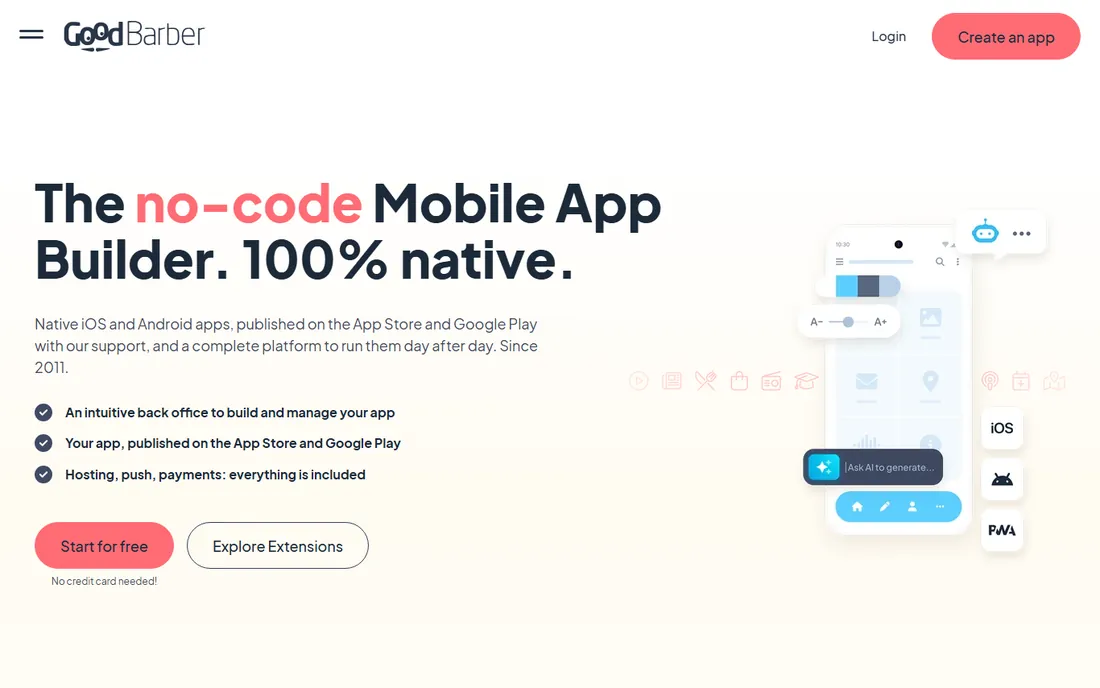
GoodBarber takes a different commercial approach that agencies tend to love. Instead of charging per app, one flat subscription covers unlimited white-label client apps. That single decision changes the business math: every new client is nearly pure margin after the subscription is covered. For an agency planning to sell dozens of apps, few pricing models compete.
The product backs it up with unusual depth for a no-code builder. The e-commerce stack supports many payment gateways with no commission taken by GoodBarber, and the back office handles orders properly. Push notifications, CMS and app store publishing are bundled rather than upsold. The catch is lock-in. There is no code export, so leaving means rebuilding. Pricing is euro-denominated, which US agencies should convert carefully. But for the reseller business model specifically, GoodBarber's flat pricing is the benchmark competitors are measured against.
What we like- One flat subscription covers unlimited white-label apps
- Strong e-commerce features with many payment gateways
- Built for agencies and resellers
Watch out for- No code export, so platform lock-in is real
- Pricing in euros can confuse US buyers
- Advanced custom logic has limits
Starting priceSee website
Free planNo
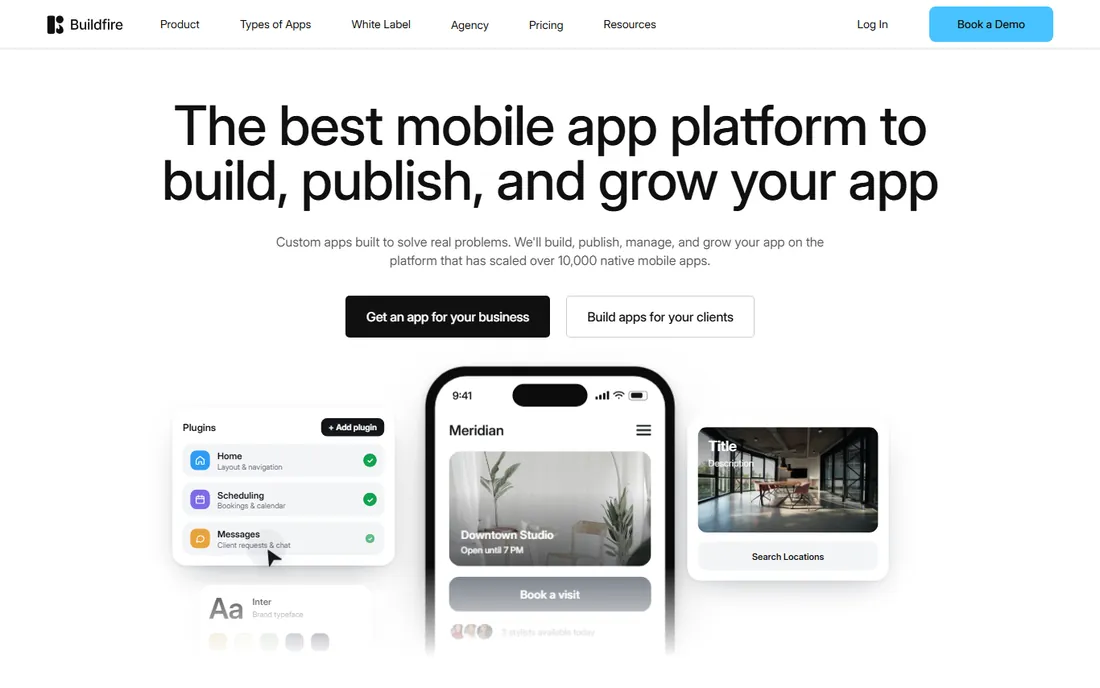
BuildFire positions above the budget builders. Its apps look and feel more custom, which lets agencies charge higher prices to clients who care about polish. The white-label reseller program runs on a per-app model: the agency pays BuildFire per app and marks up to the client. That works well for agencies selling a smaller number of high-value apps rather than dozens of cheap ones.
The platform suits business apps with real functionality: loyalty programs, ordering, content, messaging. Agencies that can sell at premium prices will find the margins workable. The per-app cost structure punishes volume, though, so an agency planning fifty low-cost client apps should look at GoodBarber's flat pricing instead. There is no free plan, only demos and trials through sales. BuildFire fits the agency that sells quality over quantity.
What we like- White-label reseller program on a per-app model
- Apps feel more custom than template builders
- Strong for client-facing business apps
Watch out for- Per-app pricing adds up with volume
- No free plan to test
- Overkill for simple brochure apps
Starting priceSee website
Free planFree trial
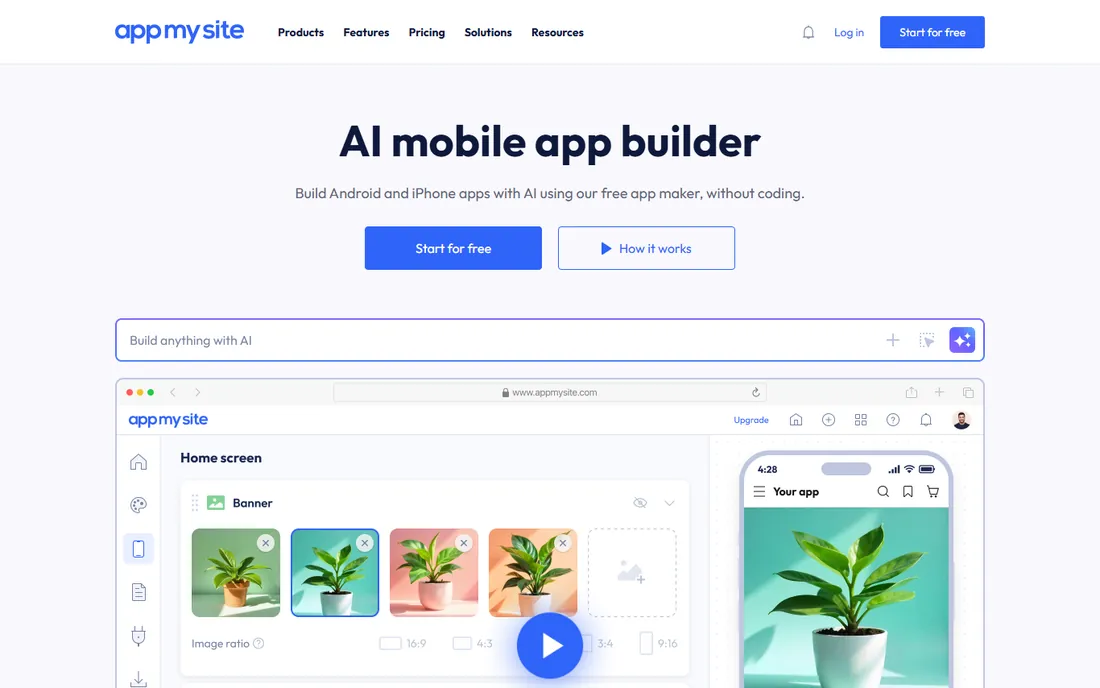
A large share of small-business apps are just mobile wrappers around existing websites, and AppMySite owns that workflow. Point it at a website, particularly a WooCommerce or WordPress site, and it produces working iOS and Android apps quickly. For agencies, white-label options let the whole process run under the agency's brand.
The appeal is speed and price. A client with a decent website can have apps in the stores far faster than any custom build, at a fraction of the cost. The limitation is inherent to the approach: the app is only as good as the website behind it, and truly native features are limited. Agencies should be honest with clients about that. For the common case of a store or publisher that wants an app presence without an app budget, AppMySite is a practical answer.
What we like- Fast website-to-app conversion
- White-label options for agencies
- Affordable entry pricing
Watch out for- App quality depends heavily on the source website
- Limited truly native functionality
- Design customization has bounds
Starting priceSee website
Free planNo
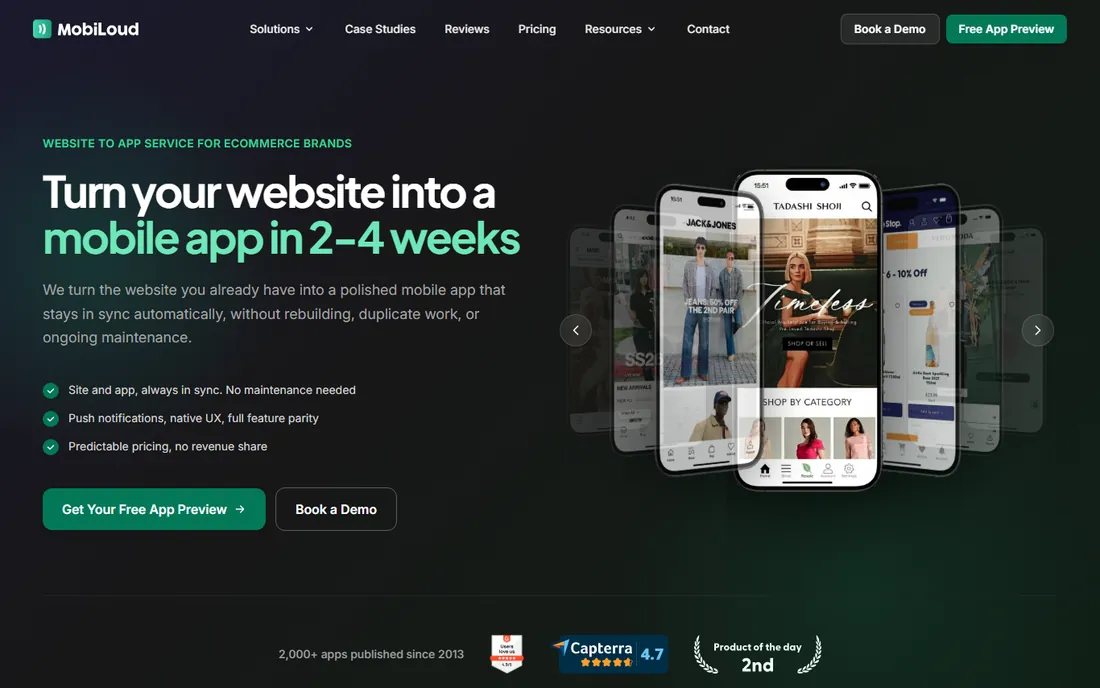
MobiLoud focuses on two kinds of clients: WooCommerce stores and content publishers. For those, it offers a managed service that converts the site into native-feeling apps and handles the tedious parts, like app store submission and maintenance. The WooCommerce integration is genuinely deep, with cart, checkout and push notifications working the way store owners expect.
The managed-service model is the differentiator and the cost driver. Pricing is quote-based, and the service suits businesses that want the outcome without operating the machinery. Agencies can resell it, but the per-client economics are premium. MobiLoud is not a general app builder, and it does not pretend to be. For its two niches, it is among the most polished options available.
What we like- Deep WooCommerce integration
- Purpose-built for publishers and stores
- Managed service handles app store work
Watch out for- Quote-based pricing
- Narrow focus excludes many app types
- No self-serve free option
Starting priceFree
Free planYes
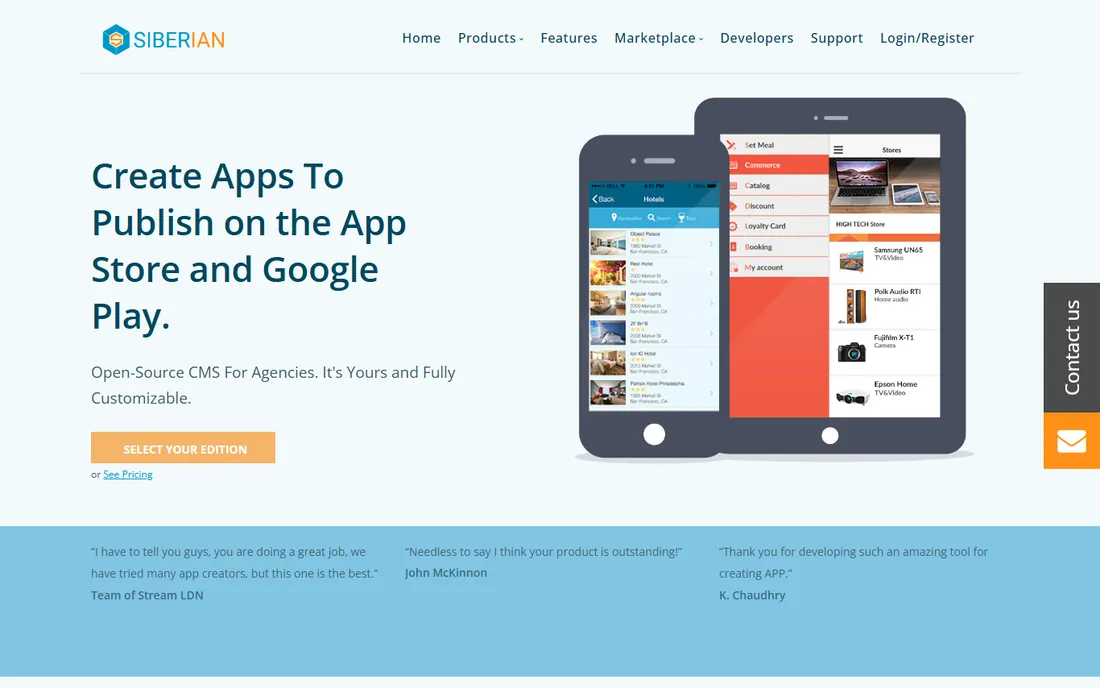
Siberian CMS is the outlier on this list and proud of it. The core is open source, which means an agency can deploy it, brand it completely, and pay no per-app fees to anyone. For technically capable agencies, the economics are unbeatable at scale: server costs plus their own time, regardless of client count.
That freedom comes with responsibility. The agency deploys, maintains, updates and supports everything. There is no vendor support line when something breaks at midnight. The ecosystem of extensions is smaller than commercial platforms, and the interface shows its open-source roots. But for agencies with development capacity that resent per-app rents, Siberian CMS offers something no commercial builder can: genuine ownership.
What we like- Open-source core with no per-app fees
- Full white label including source code access
- One-time costs instead of subscriptions
Watch out for- Requires technical skill to deploy and maintain
- Smaller ecosystem
- Agency handles all support itself
Starting priceSee website
Free planFree trial
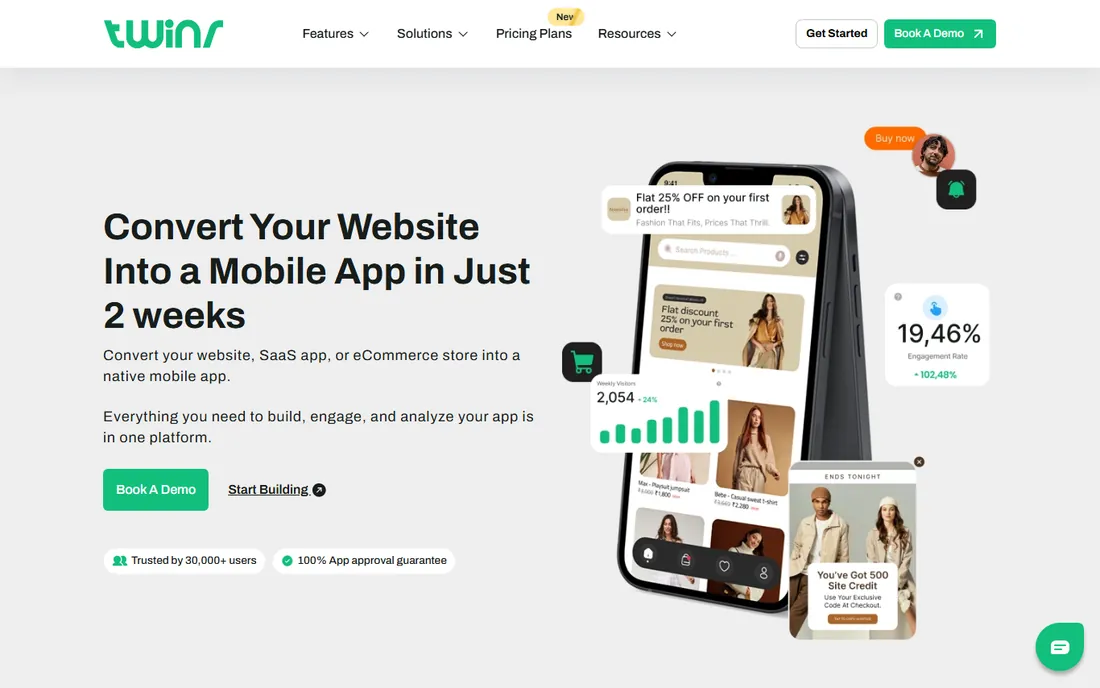
Twinr does one thing with minimal friction: turn a website into mobile apps. The process is quick, the pricing is straightforward, and white-label options let agencies deliver under their own brand. For content sites, blogs and simple business sites, the result is perfectly serviceable.
Expectations should match the simplicity. Twinr is not building custom app logic or complex native features. It is a conversion tool, and good at it. The company is smaller than the established players, which matters for agencies betting client relationships on the platform. For fast, affordable web-to-app projects, Twinr is easy to recommend. For anything needing real app functionality, look elsewhere.
What we like- Very fast website-to-app conversion
- Simple pricing
- White-label publishing options
Watch out for- Feature depth is limited
- Best for content sites rather than complex apps
- Smaller company
#8
Median
Best for: White-label web-to-native app conversion
Visit median.co
Starting priceSee website
Free planFree trial
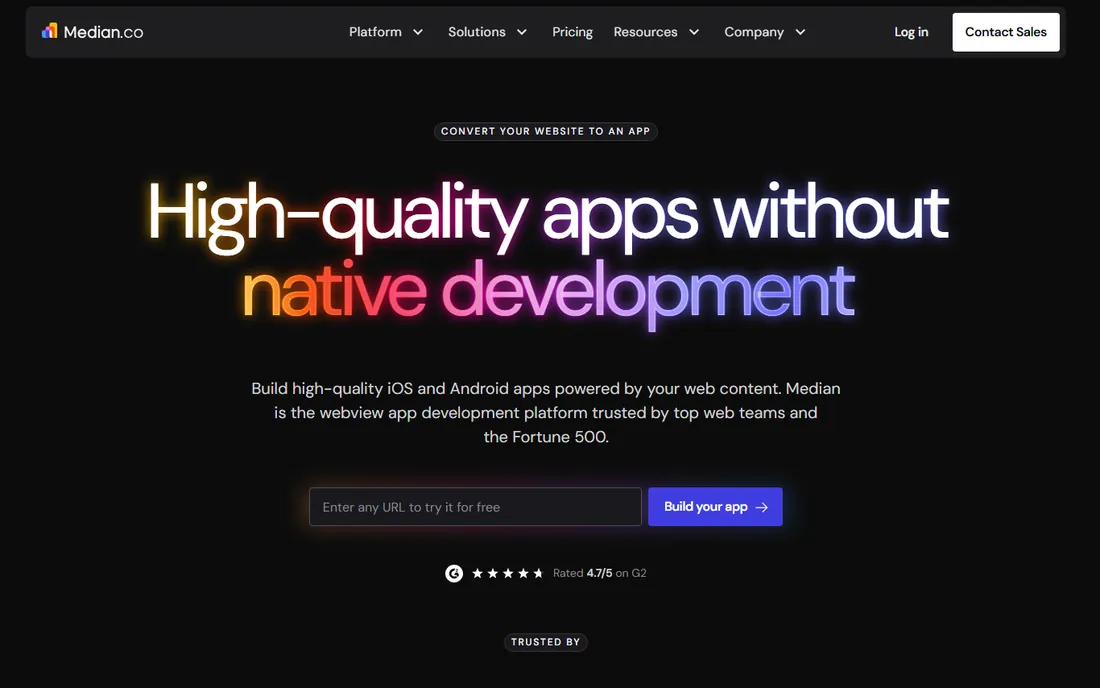
Median, formerly GoNative, serves teams that have web skills and want native apps without maintaining separate codebases. It wraps web applications with native functionality like push notifications, biometric login and offline support, delivering real apps to the stores. Agencies with developers can white-label the output for clients.
This is a developer tool, not a drag-and-drop builder. Someone needs to understand web development to use it well, which excludes the pure no-code agency. But for shops that already build web apps for clients, Median is an efficient path to mobile without doubling the engineering. Pricing scales with use, and larger deployments are quote-based. It fills the gap between no-code converters and full native development.
What we like- Strong bridge between web code and native features
- White-label delivery
- Good documentation for developers
Watch out for- Needs web development skill to use well
- Pricing by quote for larger use
- Not a drag-and-drop builder
Starting priceSee website
Free planFree trial
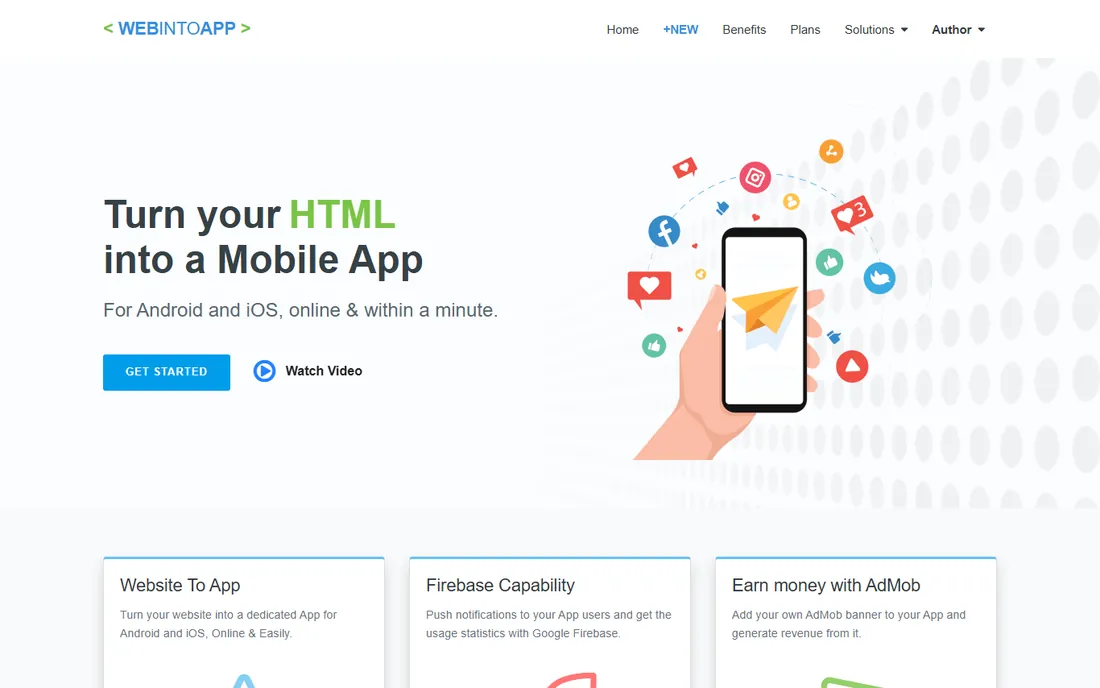
WebIntoApp competes on price in the website-to-app space. For agencies or businesses that need apps in the stores cheaply and quickly, it gets the job done. White-label options exist for agencies delivering to clients, and the turnaround is fast.
The low price shows in the rough edges. Feature depth is basic, support for tricky app store approvals is limited, and the final quality depends heavily on how well the source website adapts to mobile. It is a fair trade for the price, and honest agencies will set client expectations accordingly. For budget projects where a simple app presence is the goal, WebIntoApp is a reasonable choice.
What we like- Low-cost conversion
- Quick turnaround
- White-label options available
Watch out for- Basic feature set
- App store approval support is limited
- Quality varies with the source site
Starting priceSee website
Free planFree trial
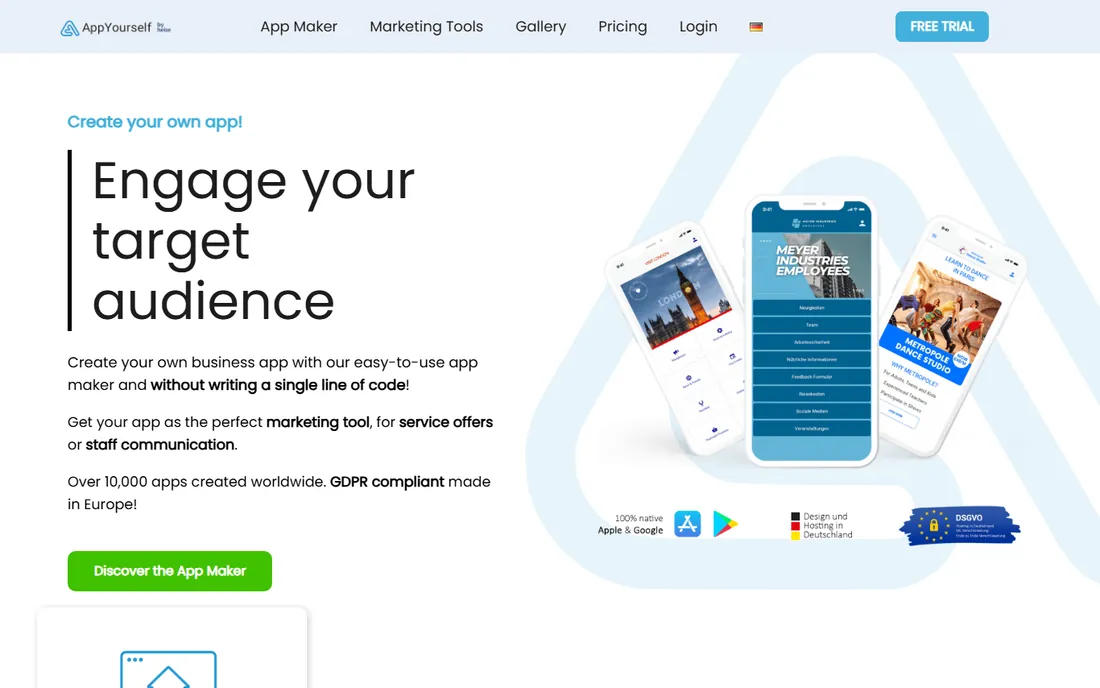
AppYourself is the European answer on this list. Based in Germany, it offers white-label app building with reseller options, and its EU base matters for agencies with GDPR concerns and clients who prefer data hosted in Europe. Local-language support is a real advantage for German-speaking agencies.
The trade-off is scale. AppYourself is smaller and less known internationally than Appy Pie or GoodBarber, with fewer integrations and a smaller community. Agencies outside Europe gain little from its home-field advantages. For EU agencies that value local support, GDPR posture and a reseller model in their own language, it deserves a place in the evaluation.
What we like- German company with EU-focused support
- White-label reseller options
- GDPR-conscious hosting
Watch out for- Smaller international presence
- German-centric product and support
- Fewer third-party integrations
How we chose
We looked for platforms with genuine white-label or reseller programs, not just app builders with a logo upload feature. Each product was verified as currently operating with a real homepage. We weighed the reseller economics, meaning how the platform charges the agency versus what the agency can charge clients, alongside product quality, branding depth and support. Pricing pages informed the comparisons where public; quote-based products are marked honestly. No vendor paid for placement and we claimed no hands-on testing. The list mixes no-code reseller platforms, website-to-app converters and the open-source outlier because agencies buy across all three.
What to check before you sign the reseller agreement
Read the branding depth carefully. True white label means the end client never sees the platform's name: not in the builder, not in the app, not in emails, not in the app store listing. Some platforms claim white label but leave their branding in support emails or loading screens. Ask for a demo of the exact client experience before committing.
Model the unit economics at three volumes: five apps, twenty apps and fifty apps. Flat-rate platforms like GoodBarber get dramatically cheaper per app as volume grows. Per-app platforms like BuildFire stay linear. Open source like Siberian CMS costs mostly your own time. The right choice depends entirely on how many apps you realistically expect to sell.
Check app store publishing support. Getting apps approved, especially on iOS, is where no-code platforms earn their keep or fail their resellers. Ask who handles rejections, how long publishing typically takes, and what happens when Apple changes its rules. Also confirm push notification limits, since some platforms charge extra beyond a threshold.
Finally, consider the exit. If the platform raises prices or shuts down, what happens to your clients' apps? Code export is rare in this category, so understand the lock-in before building a business on someone else's platform.
White-label pricing, explained
Reseller pricing generally follows three models. Flat subscriptions charge the agency one fee for unlimited or high-volume app creation, which rewards agencies that sell at scale. Per-app pricing charges per client app, which is simpler to understand but punishes volume. Revenue-share or license-block models, like Appy Pie's reseller tiers, sit in between, with the agency buying capacity upfront and keeping the markup.
Watch for the costs beyond the headline price. App store developer accounts, push notification overages, premium features and client support all add up. Some platforms charge extra for removing their branding from specific touchpoints, which is worth confirming since branding removal is the whole point. Always calculate the all-in cost per client app at your expected volume before signing.
Frequently asked questions
What is a white label app builder?
It is a platform that lets an agency build mobile apps and sell them under the agency's own brand, with no visible trace of the underlying platform. True white label covers the builder interface, the published app, client communications and billing, so the end client believes the agency built everything.
How much can agencies charge for white-label apps?
It varies widely by market and app complexity. Simple business apps often sell for a few hundred dollars setup plus a monthly fee, while premium custom-feeling apps can command thousands. The agency's margin is the difference between the platform cost and the client price, which is why the platform's pricing model matters so much.
Do clients know a third-party platform is involved?
With true white-label platforms, no. The builder, the app, the login screens and client-facing communications all carry the agency's branding. Cheaper or partial white-label options may leave the platform's name in support emails or loading screens, so verify the full client experience.
Can I migrate apps away from a white-label platform?
Usually not easily. Most no-code platforms do not export source code, so leaving means rebuilding the apps elsewhere. This lock-in is the biggest structural risk of the reseller model. Open-source options like Siberian CMS are the exception, since the agency controls the code.
Which white label app builder is best for beginners?
Appy Pie's reseller program is the most beginner-friendly, designed for non-technical entrepreneurs to launch quickly. GoodBarber suits beginners who plan to sell at volume and want flat pricing. Technically skilled agencies should also evaluate Siberian CMS for its zero per-app cost.
Sources we checked (11)
- https://www.appypie.com
- https://www.goodbarber.com
- https://buildfire.com
- https://www.appmysite.com
- https://www.mobiloud.com
- https://siberiancms.com
- https://twinr.dev
- https://median.co
- https://www.webintoapp.com
- https://appyourself.net
- https://www.goodbarber.com/blog/best-app-builders-for-mobile-apps-a1419/
Is your product missing or out of date?
We review this list regularly. Vendors can request a listing, send updated pricing or ask about featured placement.

Shihab Mia · Founder, Rankite
Shihab has spent more than a decade helping SaaS and e-commerce brands grow through search. He writes Rankite's software buying guides from pricing pages, documentation and public user reviews. More about Shihab.