How we make this list: we compare pricing pages, product documentation and public user reviews. Rankite is independent; if a vendor ever pays for a featured spot, that listing is clearly labeled Partner.
Key takeaways
- Wix ($17/month) and Squarespace ($16/month) are the two best all-rounders for small business sites, and the choice mostly comes down to ease of use versus design polish.
- Shopify ($29/month) is the only serious pick here for businesses that sell online at volume; the general builders all hit limits with real catalogs.
- WordPress.com ($4/month) and Weebly (free plan) are the cheapest credible routes to a professional site with a custom domain.
- Webflow ($15/month) and Duda ($19/month) serve businesses that care about design control or hand their site to an agency.
Quick comparison
| Tool | Best for | Starting price | Free plan |
|---|
 Wix Wix | All-round small business sites built fast | $17/month (Light plan) | Yes |
 Squarespace Squarespace | Design-led sites for services and portfolios | $16/month (Basic plan) | Free trial (14 days) |
 WordPress.com WordPress.com | Blogs and content-heavy sites on a budget | $4/month (Personal plan) | Yes |
 Shopify Shopify | Businesses serious about selling online | $29/month (Basic plan, annual billing) | Free trial |
 Webflow Webflow | Design control with a real CMS | $15/month (Basic plan, annual billing) | Yes |
 Weebly Weebly | Simple sites with light ecommerce | $10/month (Personal plan, annual billing) | Yes |
 GoDaddy GoDaddy | Getting a decent site live this week | $10.99/month (Basic plan) | Free trial |
 Duda Duda | Agencies and teams managing client sites | $19/month (Basic plan, annual billing) | Free trial (14 days) |
 Jimdo Jimdo | Beginners wanting an AI-built site | $11/month (Start plan) | Yes |
Is your product missing or out of date?
We review this list regularly. Vendors can request a listing, send updated pricing or ask about featured placement.
A plumber in Ohio has been in business for twelve years and has never needed a website. Then a customer asks why his competitor shows up on Google with online booking while he does not show up at all. He opens his phone, looks at the competitor's site, and sees photos of real jobs, reviews, and a "request a quote" button. He looks at his own Facebook page, last updated in 2022. The job he just lost was worth four thousand dollars.
That gap is what the best website platforms for small business close. These builders let a non-technical owner get a professional site live in days, not months, with hosting, security, templates and support included. The nine below are the strongest options in 2026, from dead-simple builders to platforms that can run a real online store.
#1
Wix
Best for: All-round small business sites built fast
Visit wix.com
Starting price$17/month (Light plan)
Free planYes
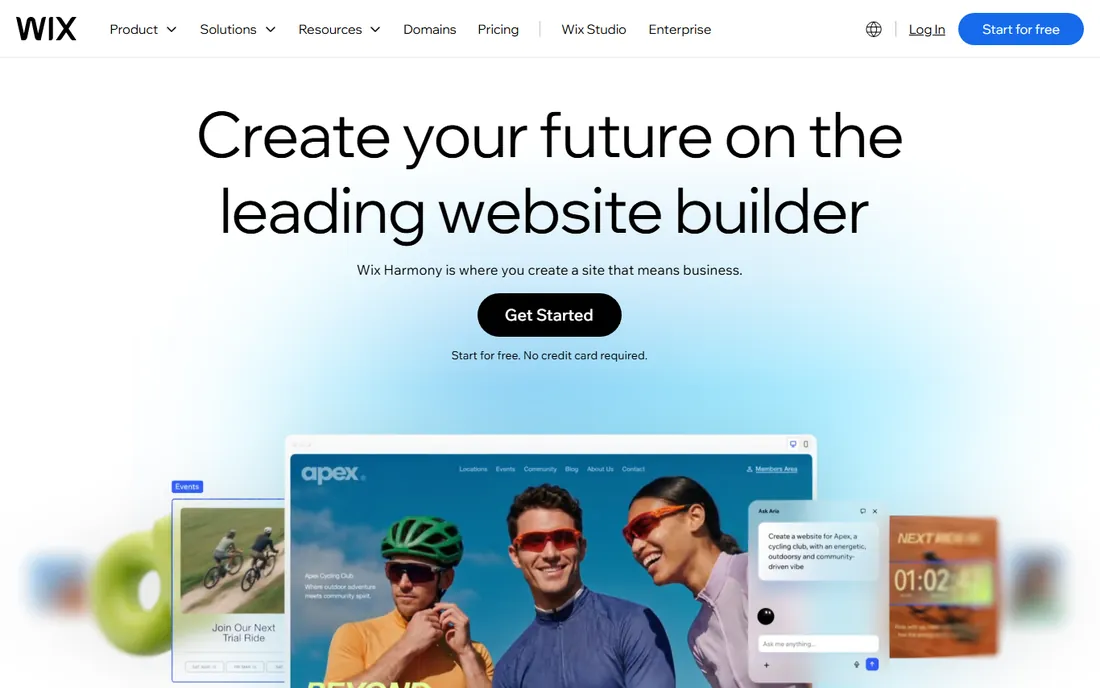
Wix is the most popular website builder in the world for a reason: it makes getting online feel easy. The editor lets you drag anything anywhere, the AI builder can generate a first draft from a few questions, and the template library covers plumbers, salons, law firms and restaurants with layouts that already look right. Bookings, online stores, email marketing and payments all plug in from the same dashboard.
The honest catch is lock-in. A Wix site lives on Wix forever; you cannot export it and move hosts. Light at $17 a month is fine for a brochure site, but selling online pushes you to Core at $29 or Business at $36. For the typical small business that wants a good-looking site without hiring anyone, Wix remains the fastest route from nothing to live.
What we like- Easiest drag-and-drop editor in the category with AI site generation
- Huge template library covering nearly every trade and service
- Built-in bookings, stores and marketing tools
Watch out for- Sites cannot be exported or moved to another host
- Template choice is locked once you pick
- Storage and features are tiered tightly on lower plans
Starting price$16/month (Basic plan)
Free planFree trial (14 days)
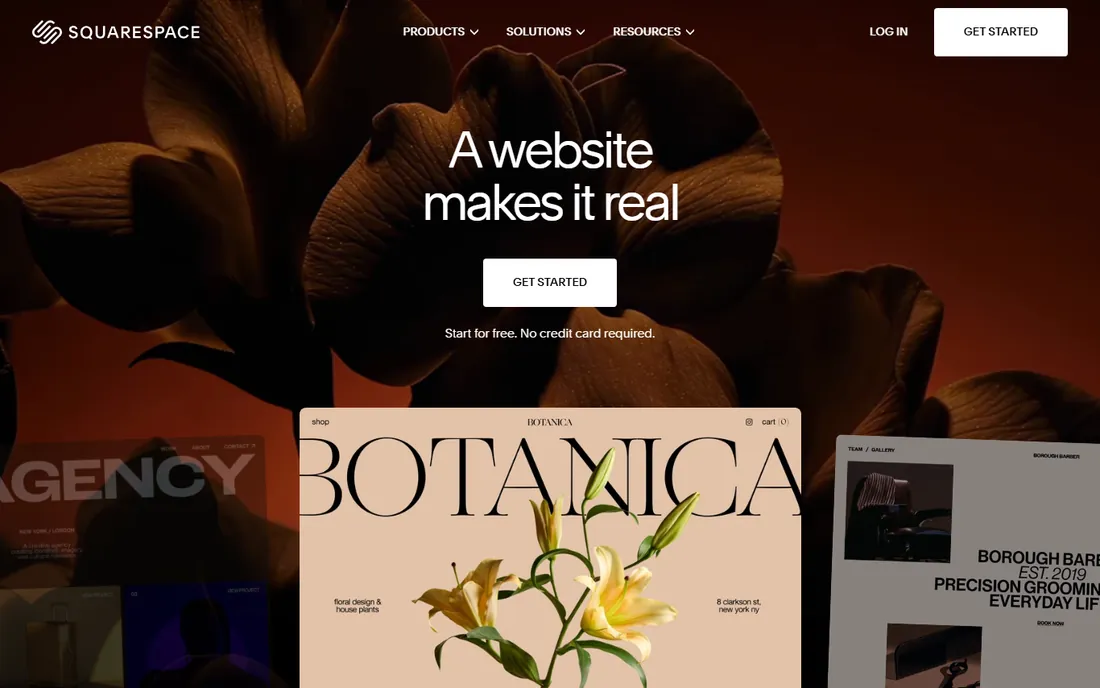
Squarespace is the builder for businesses where appearance is the product. Photographers, designers, architects, salons and restaurants get templates that look expensive with minimal effort, and the Fluid Engine editor keeps things tidy without the chaos of free-form dragging. The built-in Acuity scheduling makes it a natural pick for appointment-based businesses, and commerce features handle small stores competently.
The tradeoffs are scope and price. There is no free tier, plans run $16 to $59 a month on annual billing, and the integration library is the smallest of the major builders. Page speed is not its strong suit either. If your site needs to look beautiful and you will not hire a designer, Squarespace is worth the premium. If you need hundreds of products or deep customization, it is not.
What we like- Best-looking templates in the category out of the box
- Built-in scheduling (Acuity) suits service businesses
- Solid blogging and email marketing tools
Watch out for- No free plan, only a 14-day trial
- Fewer templates and integrations than Wix
- Large-catalog ecommerce lags Shopify badly
Starting price$4/month (Personal plan)
Free planYes

WordPress.com is the hosted version of the software that runs a huge share of the web, and Personal at $4 a month on annual billing is the cheapest credible way to get a custom domain and an ad-free site. The free plan works for testing, and the content tools (blogging, pages, media) are mature in a way the drag-and-drop builders are still catching up to.
The honest catch is the tier wall. The plugin and theme ecosystem that makes WordPress powerful is locked behind the Business plan, which costs far more than Personal. At the Personal and Premium levels, you are getting a simpler site with the WordPress name. For content-led businesses that may grow into something bigger, it is a smart cheap start. For anyone who wants drag-and-drop simplicity today, Wix or Squarespace will feel easier.
What we like- Cheapest paid path to a custom domain here
- Free plan is genuinely usable
- The WordPress ecosystem means endless themes and future flexibility
Watch out for- Real power (plugins, themes) needs the expensive Business plan
- Support is email-only on lower tiers
- The hosted version is less flexible than self-hosted WordPress
Starting price$29/month (Basic plan, annual billing)
Free planFree trial

Shopify is not really a website builder that happens to sell; it is a commerce platform that happens to build sites. Basic at $29 a month on annual billing gets you unlimited products, the highest-converting checkout in the industry, and an app store of 8,000+ extensions for everything from subscriptions to wholesale. If selling online is the business, not a side feature, nothing else here competes.
The catch is that everything around the core costs money. Apps commonly add $50 to $300 a month combined, premium themes cost hundreds, and payment processing fees apply on every sale. A business that mainly needs a brochure site with a "buy" button will pay for power it never uses. But for retailers, DTC brands and anyone scaling past a few dozen products, Shopify is the only name on this list built for the job.
What we like- Best checkout and ecommerce tooling in the business
- 8,000+ apps extend nearly anything
- Handles large catalogs, multi-channel selling and POS
Watch out for- Overkill and overpriced for a brochure site
- Monthly app costs add up fast
- Transaction fees apply unless you use Shopify Payments
Starting price$15/month (Basic plan, annual billing)
Free planYes
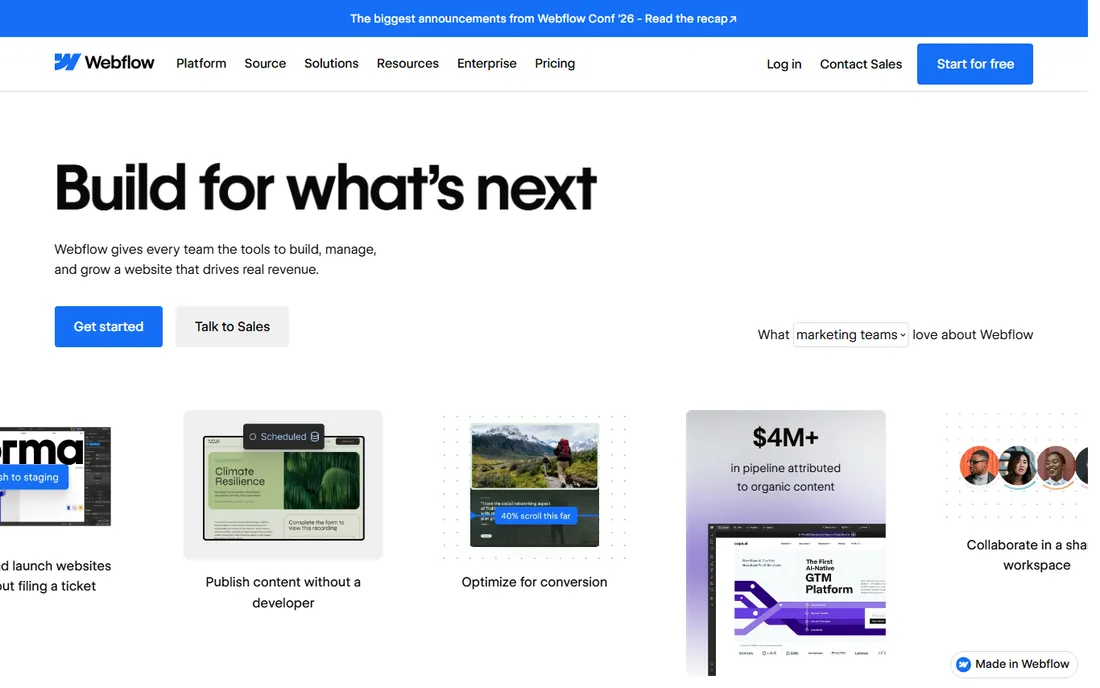
Webflow is what happens when a website builder is designed for people who care about design. The visual canvas gives precise control over layout, spacing and responsive behavior, the CMS handles blogs, directories and content sites properly, and the SEO panel (meta, schema, redirects, audits) is the deepest in this list. Sites are fast, and you can export the code if you ever leave.
The honest catch is the learning curve. Webflow expects you to understand layout concepts like the box model and flexbox, even without writing CSS, and a non-technical owner will find it overwhelming. Costs also creep: CMS limits, localization and optimization add-ons push the monthly bill up. For design-led businesses and agencies, it is the best tool here. For a plumber who wants a site by Friday, it is the wrong one.
What we like- Pixel-level design control without writing code
- Real CMS with custom content types
- Clean code export and excellent SEO controls
Watch out for- Steep learning curve for non-designers
- Costs climb with CMS items, localization and add-ons
- Ecommerce is weaker than Shopify
Starting price$10/month (Personal plan, annual billing)
Free planYes
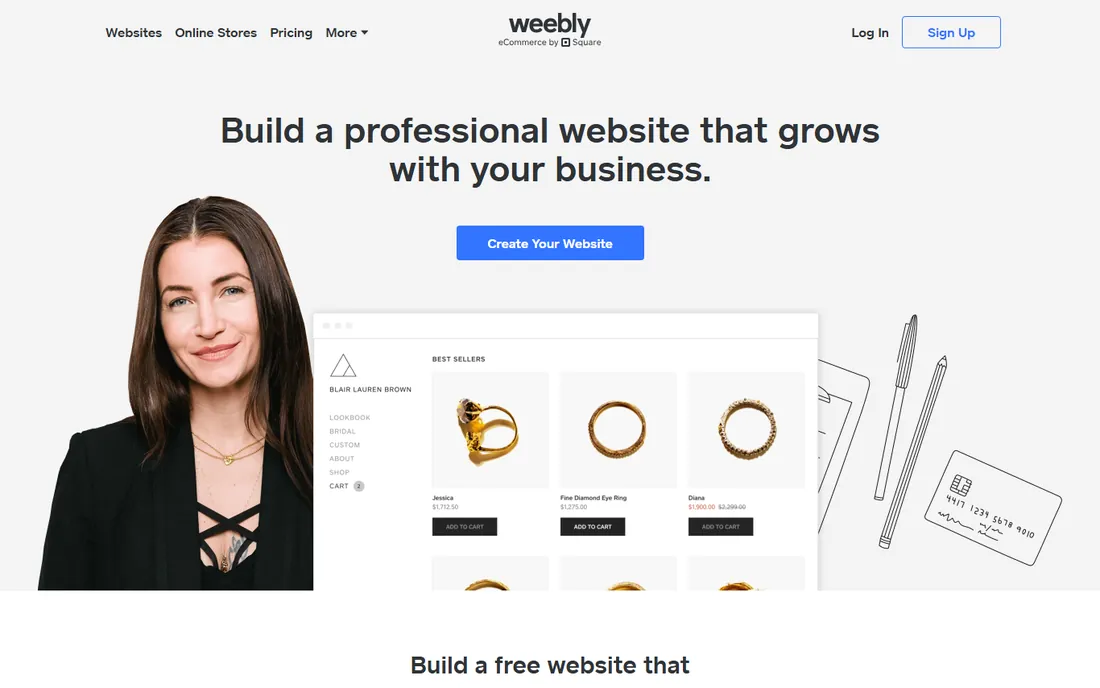
Weebly is the quiet survivor of the website builder wars, now owned by Square. The free plan is unusually generous, including basic ecommerce with a Weebly subdomain, and paid plans start at just $10 a month for Personal with a custom domain. The editor is genuinely simple, and the Square connection makes payments and POS natural for businesses that already use Square in person.
The tradeoffs are age and momentum. Templates look dated next to Wix and Squarespace, and every sale on the Free, Personal and Professional plans carries a 3% Weebly transaction fee on top of payment processing, which makes Performance at $26 the real pick for active stores. For a simple site or a side store on a tight budget, Weebly still does the job at a price nobody beats.
What we like- Free plan includes basic ecommerce, which is rare
- Simple editor that beginners learn in an hour
- Square ownership means solid payment integration
Watch out for- Template designs feel dated
- 3% platform transaction fee on lower plans
- Development pace is slow under Square
Starting price$10.99/month (Basic plan)
Free planFree trial
GoDaddy's website builder is built for speed above all else. Answer a few questions, let the AI assemble a draft, tweak the text and photos, and a small business can be live the same day. Plans start at $10.99 a month for Basic, with appointments, ecommerce and membership features bundled into the higher tiers. The 24/7 phone support matters for owners who want a human to call.
The honest catch is the ceiling. Design control is limited, SEO tooling is beginner-grade, and like Wix, sites cannot migrate off the platform. It is the right pick for the owner who values "done" over "perfect" and wants support on the phone. It is the wrong pick for anyone planning serious content marketing or a custom design.
What we like- Fastest path from signup to live site
- AI-assisted setup asks a few questions and builds the draft
- 24/7 phone, chat and email support
Watch out for- Design flexibility is limited
- Sites cannot be moved off the platform
- SEO tools are basic for serious content strategies
#8
Duda
Best for: Agencies and teams managing client sites
Visit duda.com
Starting price$19/month (Basic plan, annual billing)
Free planFree trial (14 days)
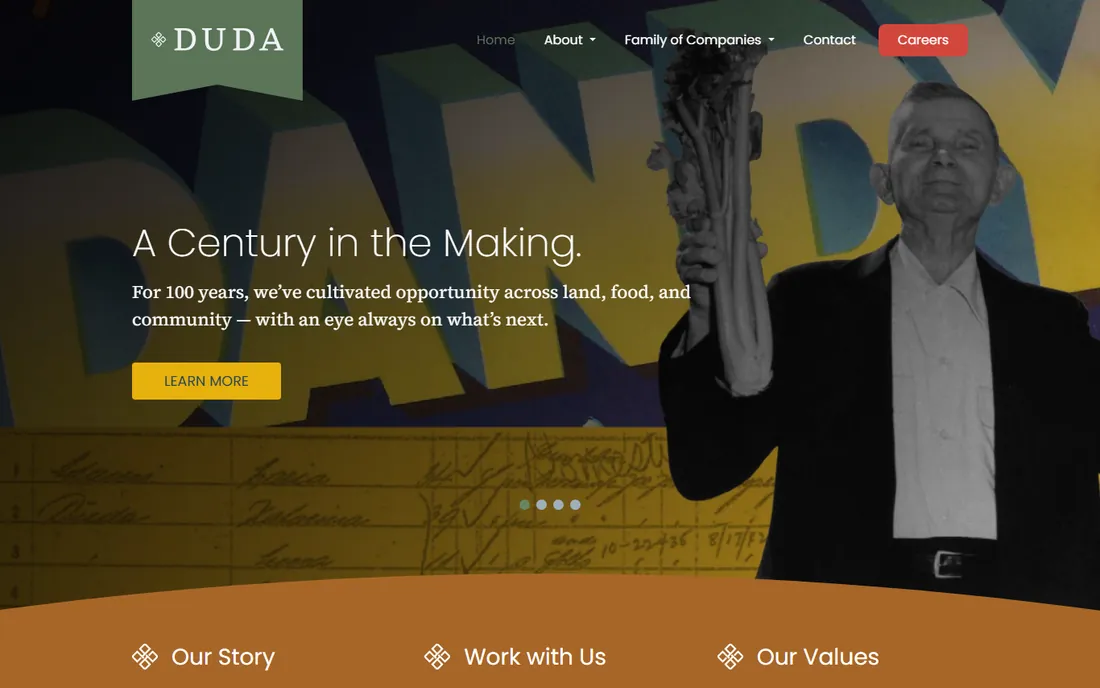
Duda is the builder for people who build sites for other people. Agencies get client management, team roles, white-label options and reusable sections, with Basic at $19 a month for one site on annual billing. The section-based editor is fast for standard business sites, sites are hosted on AWS, and storage is unlimited even on the entry plan.
For a single small business, the tradeoffs are real: ecommerce costs extra as an add-on, and the editor is less flexible than Webflow for custom design. Duda makes most sense when an agency or freelancer is building and managing the site for you, which is how many small businesses actually get online. If that is your path, ask your web person about Duda before defaulting to Wix.
What we like- Built for multi-site management with client roles and permissions
- Fast section-based building with good responsive control
- Unlimited storage even on lower plans
Watch out for- Ecommerce is a separate paid add-on, not built in
- Less design freedom than Webflow
- Pricing scales steeply as site count grows
Starting price$11/month (Start plan)
Free planYes
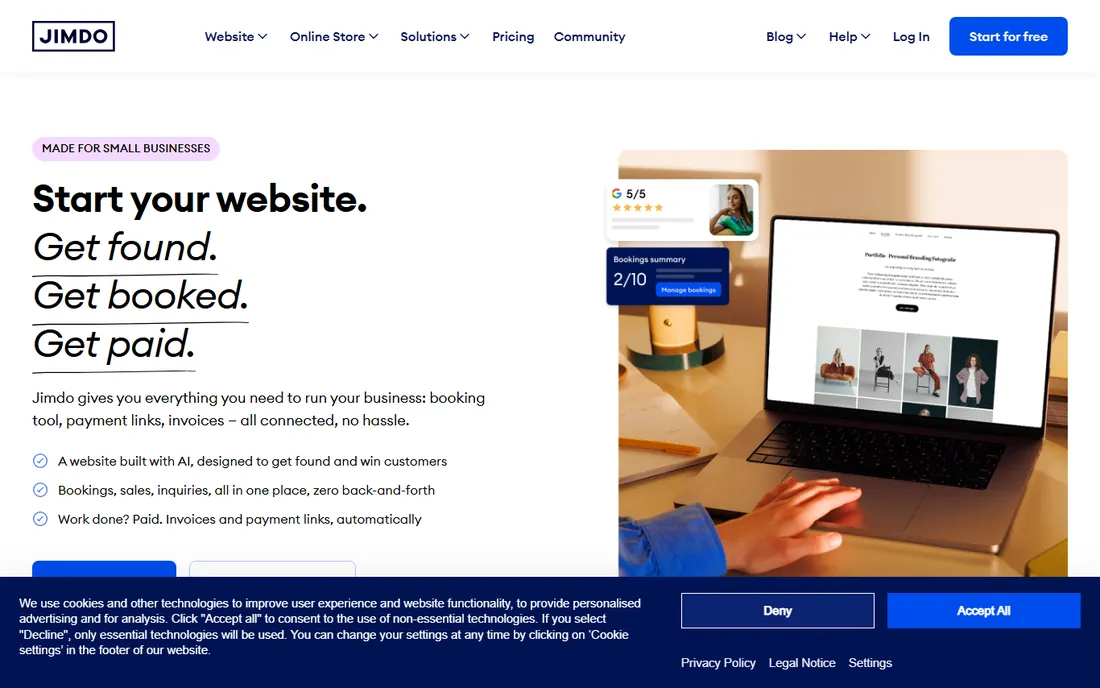
Jimdo is the budget minimalist of this list. The AI builder asks a few questions and produces a working site, the free Play plan lets you experiment with a Jimdo subdomain, and Start at $11 a month gets you a custom domain with no ads. Prices do not jump at renewal, which is refreshingly honest in this category.
The limits are tight by design: 10 pages on Start, 50 on Grow at $18, with storage caps to match. Customization is minimal, and the ecommerce plans are basic compared to Shopify or even Wix. Jimdo fits the owner who needs a simple professional presence for the least money and the least effort. Anyone with bigger plans will outgrow it within a year.
What we like- AI builder creates a first draft from a few questions
- Cheapest custom-domain plans in the category
- Pricing stays flat at renewal with no surprise jumps
Watch out for- Page and storage limits are tight on lower plans
- Design flexibility is minimal
- Ecommerce plans are separate and basic
Choosing the right builder for your kind of business
Match the platform to the job, not to the marketing. A brochure site for a local service business wants Wix, Squarespace, GoDaddy or Jimdo: fast, good-looking, done. A content site or blog wants WordPress.com or Webflow. A real online store wants Shopify, full stop, with Wix or Squarespace only for small catalogs. An agency-built site wants Duda or Webflow in the hands of the professional.
Then check the two numbers that matter beyond the sticker price: the renewal price and the transaction fees. First-year discounts are common (GoDaddy's $10.99 is first-year pricing), and several builders charge platform fees on sales below certain tiers. A $10 plan with a 3% transaction fee costs more than a $26 plan once sales pass about a thousand dollars a month.
Finally, think about who will actually update the site. The owner who will never touch it should optimize for the agency or freelancer workflow (Duda, Webflow, WordPress). The owner who will add photos and blog posts should optimize for the easiest editor they will genuinely open (Wix, Squarespace, Weebly). The best platform is the one that still gets updated in year two.
How we put this list together
This list was built from vendor pricing pages, published plan comparisons and review data from G2, Capterra and hands-on tester reviews, with prices verified in October 2026. Annual-billing prices are shown where vendors discount for them, since that is how most small businesses actually buy. Every platform here is an active product sold to US small businesses today.
No hands-on testing was involved and no vendor paid for placement. The selection weights ease of use for non-technical owners, design quality, ecommerce depth, pricing transparency and the strength of support. Both general builders and specialists (Shopify for commerce, Webflow for design) are included because different small businesses need fundamentally different tools.
The renewal trap and other costs to watch
The price you see at signup is often not the price you pay in year two. Introductory discounts of 50% or more are standard, and several builders raise the renewal substantially. Before buying, find the renewal price on the pricing page (it is usually in the fine print) and budget for that, not the promo.
Then add the extras. A custom domain is often free for year one and $15 to $20 after. Transaction fees on lower ecommerce tiers can exceed the subscription itself at real sales volumes. Premium templates, email marketing add-ons and appointment scheduling upgrades each carry their own charges. None of this makes these platforms expensive in absolute terms, but the honest total for a selling site is usually 50 to 100% above the headline plan price.
Frequently asked questions
What is the cheapest website builder for a small business?
Jimdo Start at $11 a month and Weebly Personal at $10 a month are the cheapest paid paths to a custom domain, and WordPress.com Personal at $4 a month undercuts both. Wix, Weebly, WordPress.com and Jimdo all offer free plans if you can live with their branding and a subdomain.
Should I use Wix or Squarespace?
Pick Wix if you want the easiest editor, the biggest template library and the most built-in features. Pick Squarespace if design polish matters more and you like curated templates, built-in scheduling and stronger blogging. For most small service businesses, either works; the deciding factor is usually which editor feels better in the trial.
Is Shopify worth it for a small store?
If selling online is a serious part of the business, yes. Shopify's checkout, app ecosystem and multi-channel tools are far ahead of the store features inside general builders. For a handful of products as a side feature, Wix or Squarespace commerce is cheaper and simpler. The break-even is usually around a few dozen products or a few thousand dollars in monthly sales.
Can I switch website builders later?
Technically yes, practically it is a rebuild. None of the drag-and-drop builders here (Wix, Squarespace, GoDaddy, Weebly, Jimdo) export a working site to another platform; you rebuild the design and migrate content manually. Webflow is the exception, with code export. Treat the choice as a multi-year commitment and pick accordingly.
Do I need a web designer, or can I do it myself?
Most small business sites on this list can be built by the owner in a weekend, especially with the AI builders in Wix, GoDaddy and Jimdo. A designer earns their fee on brand-heavy businesses (restaurants, salons, creatives) and on anything custom. The middle path, a freelancer building on Duda or Webflow, suits owners who want professional results without learning the tool.
How much does a small business website really cost per year?
A brochure site typically runs $120 to $350 a year for the builder plan plus $15 to $20 for domain renewal. A selling site with apps and transaction fees usually lands between $500 and $2,000 a year all-in. The builder subscription is only part of it; budget for the domain, any transaction fees and one or two paid add-ons.
Sources we checked (13)
- https://startupowl.com/grow/best-website-builder-comparison
- https://www.fahimai.com/wix
- https://www.startuphub.ai/ai-news/insights/2026/best-wix-alternatives-2026
- https://www.stylefactoryproductions.com/blog/wix-vs-squarespace-vs-wordpress-the-essential-comparison
- https://www.shopify.com/ph/blog/wix-alternatives
- https://webhelpagency.com/blog/best-cms/
- https://www.selecthub.com/web-design-software/webflow-vs-godaddy-website-builder/
- https://dataconomy.com/2026/06/08/the-8-best-website-builders-for-small-businesses-on-any-budget/
- https://stackcrawler.com/most-popular-website-builder
- https://litextension.com/blog/jimdo-vs-wix/
- https://www.stylefactoryproductions.com/blog/jimdo-review
- https://www.saasworthy.com/product/duda
- https://Super.so/blog/best-no-code-website-builder
Is your product missing or out of date?
We review this list regularly. Vendors can request a listing, send updated pricing or ask about featured placement.

Shihab Mia · Founder, Rankite
Shihab has spent more than a decade helping SaaS and e-commerce brands grow through search. He writes Rankite's software buying guides from pricing pages, documentation and public user reviews. More about Shihab.