How we make this list: we compare pricing pages, product documentation and public user reviews. Ratings come from G2, Capterra or Trustpilot, with the date we checked them.
Key takeaways
- The best weather tracking tools for farmers in 2026 combine hyperlocal forecasts, live radar, and severe weather alerts that protect planting, spraying, and harvest plans.
- Windy leads for detailed forecast maps and wind data, while Weather Underground offers the densest network of local stations.
- FieldView and WeatherLink tie weather data to actual fields and on farm sensors, which beats a generic forecast for daily decisions.
- Most tools offer a free tier, so a farmer can start with two or three apps and keep only the ones that prove accurate locally.
- Forecast accuracy varies by region and terrain, so compare app forecasts against your own rain gauge for a season before trusting one source alone.
Quick comparison
Is your product missing or out of date?
We review this list regularly. Vendors can request a listing, send updated pricing or ask about featured placement.
Starting priceSee website
Free planYes
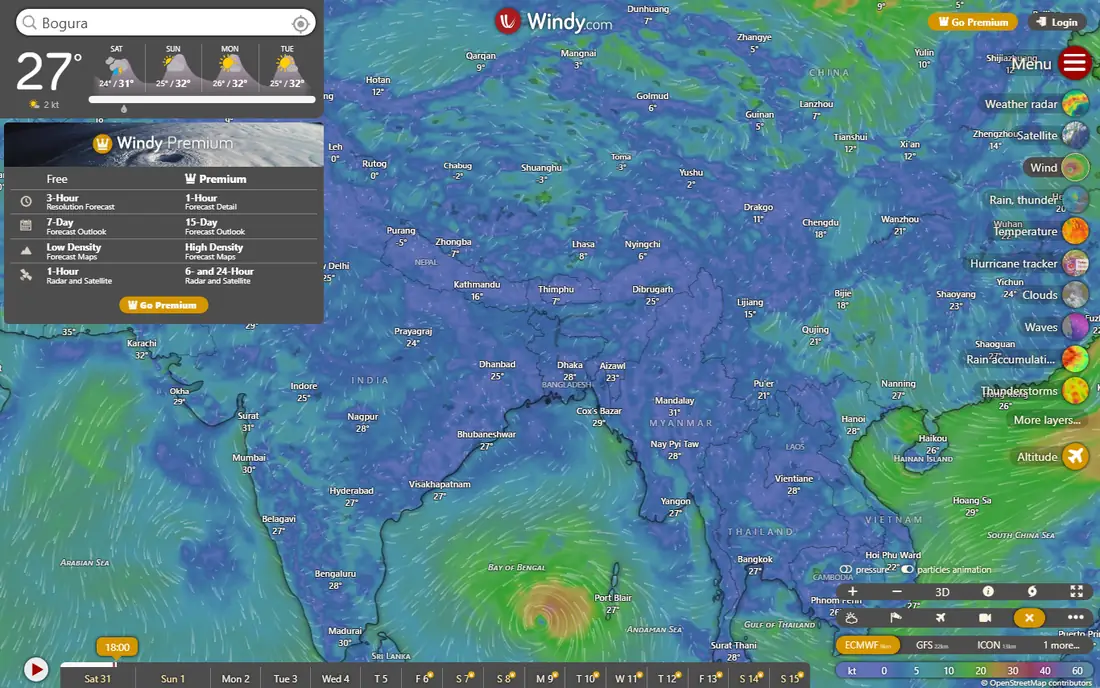
Windy shows weather as detailed maps rather than a single daily icon. A farmer can compare several forecast models side by side, watch wind speed and gusts by the hour for spraying decisions, and track rain bands on radar style layers. That model comparison matters, since models often disagree on rain timing, and seeing the spread beats trusting one number.
The limits are interpretation and farm context. Windy shows raw weather data, not planting or spraying advice, so the farmer must read the maps and decide. Its interface also assumes comfort with layers and models, which can overwhelm a new user. For a farmer who wants the fullest forecast picture and can read a map, Windy is the strongest free starting point.
What we like- Detailed wind, rain, and temperature maps
- Several forecast models to compare
- Global coverage
Watch out for- Interface assumes comfort with weather maps
- Farm specific advice is limited
- Premium features cost extra
Starting priceFree
Free planYes
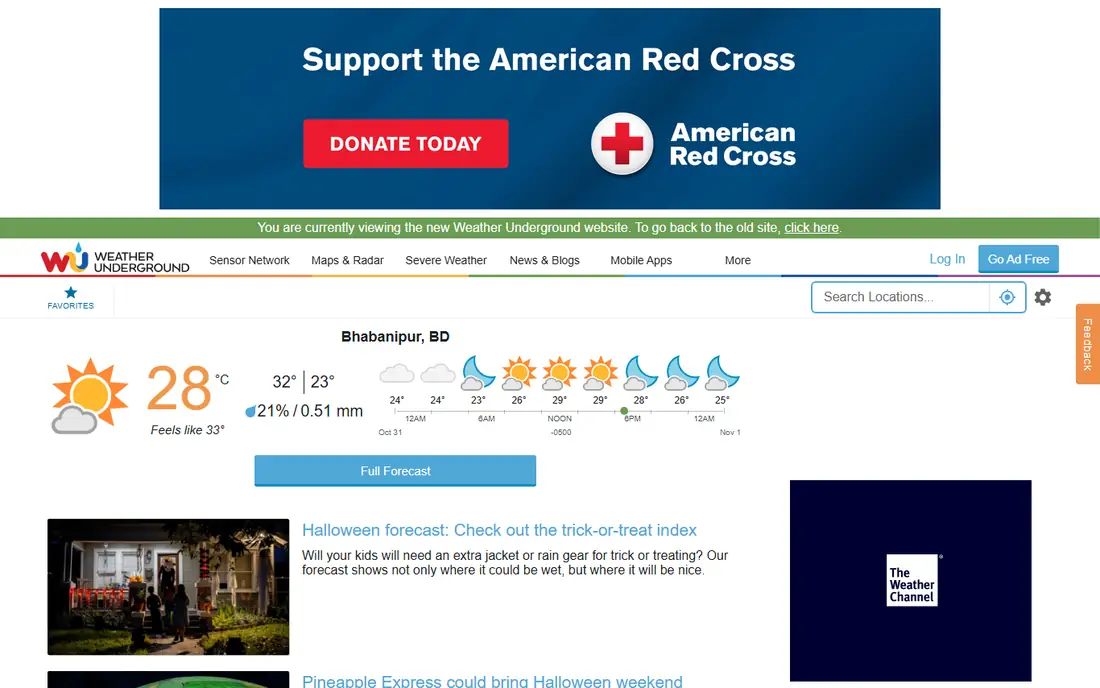
Weather Underground draws on one of the largest networks of personal weather stations, which gives forecasts tied to a nearby location rather than a distant city. A farmer can often find a station within a few miles of the farm, which improves temperature, wind, and rainfall readings in areas with variable microclimates. Radar maps, hourly forecasts, and severe weather alerts round out the package.
The trade is station quality. Personal stations vary by owner care and placement, so a badly sited station can mislead. Some deeper features sit behind a paid tier, and the free app carries ads. For a farmer who wants the most local readings available without buying hardware, Weather Underground is hard to beat.
What we like- Over 270,000 personal weather stations
- Hyperlocal forecasts
- Radar maps and severe alerts
Watch out for- Station quality varies by owner
- Some features sit behind a paid tier
- Ads in the free app
Starting priceSee website
Free planYes
AccuWeather gives the clearest routine forecast for daily farm planning, with hourly detail, minute by minute rain timing, and multi day outlooks. Its agriculture data products add agronomic models, including disease and pest alerts, crop yield forecasts, and risk indices, which suit larger operations that plan around disease pressure as well as rain.
The limits are cost and regional detail. The most useful farm features sit in premium offerings aimed at large agribusinesses, and forecast detail varies by region. The free app carries ads. For a farmer who wants a dependable daily forecast with the option to add agronomic models later, AccuWeather is a solid pick.
What we like- Clear hourly and daily forecasts
- Minute by minute rain timing
- Agronomic models for disease and yield risk
Watch out for- Premium farm features cost extra
- Forecast detail varies by region
- App carries ads on free tier
Starting priceFree
Free planYes
WeatherBug connects to over 10,000 professional grade weather stations, often giving readings from locations just miles from a farm. That local data delivers more accurate temperature, wind, and precipitation readings than apps that rely only on regional forecasts. For farms in areas with variable microclimates, that precision can matter during marginal frost events. Lightning detection and fast severe alerts add safety for field crews.
The trade is farm depth. WeatherBug is a consumer weather app first, so it lacks field mapping, spray windows, and agronomic models. Some features require a paid tier. For a farmer who wants fast alerts and trustworthy local readings in a simple app, WeatherBug is an excellent daily tool.
What we like- Connects to over 10,000 professional grade stations
- Fast severe weather alerts
- Lightning detection
Watch out for- Farm specific tools are limited
- Some features require a paid tier
- Interface leans consumer

#5Climate FieldView
Best for: Field level weather and satellite data4.5/5 on
G2 (3 reviews, checked Oct 2026)
Visit climate.com
Starting priceSee website
Free planYes
Climate FieldView ties weather data to individual fields rather than a town or county. A farmer sees rain, temperature, and growth stage data per field, plus satellite imagery that shows crop health variation across a field. Planting, spraying, and harvest records sit in the same account, so weather and work history stay connected.
The limits are cost and fit. Full features require a paid plan, and the platform suits row crop operations best, with less value for livestock or market garden farms. Setting up field boundaries takes time at the start. For a row crop farmer who wants weather, imagery, and records in one system, FieldView is the strongest field level option.
What we like- Weather tied to individual fields
- Satellite imagery for crop monitoring
- Planting and harvest records in one place
Watch out for- Full features require a paid plan
- Best suited to row crop operations
- Setup takes time per field
Starting priceSee website
Free planYes
Davis WeatherLink pairs with a Davis weather station on the farm, so readings come from your own land rather than a distant station. Temperature, humidity, wind, rain, and soil data flow to the app, which keeps a historical log for planning and records. Charts show when the last rain fell or how cold last week got, which supports irrigation and frost decisions with real farm data.
The trade is hardware cost and setup. WeatherLink needs a Davis station purchase, and the Pro subscription adds cost for deeper data. Sensor placement needs care, since a poorly sited gauge misleads as surely as a bad forecast. For a farmer who wants a lasting climate record for the farm itself, WeatherLink is the most dependable route.
What we like- Data from your own farm station
- Long term records and charts
- Reliable hardware from Davis Instruments
Watch out for- Requires buying a Davis station
- Pro subscription costs extra
- Setup needs care for sensor placement
Starting priceSee website
Free planYes
OpenWeatherMap is a weather data service rather than a farmer facing app. It delivers current, hourly, and forecast data globally through an interface that farm software can consume, plus historical data for analytics. Many farm apps run on its data, and its free tier suits small farms or a team building its own dashboard.
The limits are audience and depth. OpenWeatherMap is built for developers, so a farmer without software help will get more from a direct app like Windy or WeatherBug. Historical depth costs extra, and accuracy varies by location like any global model. For a farm operation that builds or buys software around weather data, it is a proven data source.
What we like- Free tier for basic data
- Global current, hourly, and forecast data
- Widely used by farm apps
Watch out for- Built for developers, not direct farm use
- Historical data costs extra
- Accuracy varies by location
Starting priceFree
Free planYes
Farmers Almanac Weather brings long range seasonal outlooks to a phone, drawing on traditional forecasting methods used since 1818 alongside modern data. For planning planting windows, seasonal labor, and general expectations months ahead, its long range view helps a farmer think beyond the next seven days. Daily and hourly forecasts cover routine planning too.
The trade is precision. Long range outlooks are broad by nature and less precise than short term models, so they suit seasonal planning rather than spray day calls. Radar and alert features are thinner than WeatherBug or Windy. For a farmer who wants a seasonal planning view beside short term tools, Farmers Almanac Weather is a useful companion.
What we like- Long range seasonal outlooks
- Traditional forecasting methods since 1818
- Simple daily forecasts
Watch out for- Long range outlooks are less precise than short term models
- Fewer radar and alert features
- Farm tools are basic
How we chose
We ranked tools by forecast detail, local accuracy, alert quality, field level data, and price. We favored tools with dense station networks or on farm sensors, since a forecast for a distant town can mislead a farm in a valley or on a ridge. We gave extra weight to free tiers, because a farmer should be able to test accuracy locally before paying.
We also weighed farm fit. Generic weather apps score well for forecasts and alerts, while field level platforms score higher when weather must connect to planting, spraying, and harvest records. Price conflicts across sources were handled by writing "See website" where published figures disagreed, so readers check the vendor pricing page rather than trusting a stale number.
Buying guide
Start by matching the tool to the decision it must support. Spraying needs wind and rain timing, frost protection needs overnight lows, irrigation needs rainfall totals, and harvest needs multi day dry windows. A tool that excels at one of these may be weak at another, so list your top three weather decisions before choosing.
Next, test accuracy locally for a season. Compare each app forecast against your own rain gauge and thermometer, and keep the app that proves most accurate for your farm. Regional models differ, and the best rated app nationally may not be the best for your valley.
Finally, pair a free forecast app with a record. Whether you use WeatherLink with your own station or a simple notebook beside a free app, a written record turns forecasts into knowledge about your farm. Review the record each season and adjust which tools you trust.
Frequently asked questions
What is the best free weather app for farmers?
Windy and Weather Underground are the strongest free options. Windy offers the fullest forecast maps, while Weather Underground offers the most local station readings.
How accurate are farm weather apps?
Short term forecasts for temperature and rain timing are usually reliable, while long range outlooks are broad. Accuracy varies by region and terrain, so test apps against your own rain gauge for a season.
Do I need my own weather station?
A personal station gives the most accurate farm data and a lasting climate record, but it costs money and needs care in placement. Many farmers start with free apps and add a station once they know which data they use most.
What weather matters most for spraying?
Wind speed and gusts, rain timing, and temperature drive spraying decisions. Windy shows wind by the hour, while WeatherBug gives fast alerts when conditions change.
Can weather tools help with frost protection?
Yes. Hyperlocal overnight low forecasts from Weather Underground or WeatherBug, plus your own station data from WeatherLink, help a farmer judge frost risk and act before a cold night.
Sources we checked (0)
Is your product missing or out of date?
We review this list regularly. Vendors can request a listing, send updated pricing or ask about featured placement.

Shihab Mia · Founder, Rankite
Shihab has 5+ years in B2B and SaaS SEO. He writes Rankite's software buying guides from pricing pages, documentation and public user reviews. More about Shihab.
 Windy
 Weather Underground
 AccuWeather
 WeatherBug
 Davis WeatherLink
 OpenWeatherMap
 Farmers Almanac Weather