How we make this list: we compare pricing pages, product documentation and public user reviews. Ratings come from G2, Capterra or Trustpilot, with the date we checked them.
Key takeaways
- Only three vendors here publish prices: Cin7 (from $349/month), inFlow Inventory ($161/month monthly billing) and Katana (free exploration, custom-scoped paid plans). The rest quote per deal.
- QuickBooks or Xero shops should start with Fishbowl or inFlow; both sync inventory movements into the ledger without a middleware stack.
- Ecommerce brands shipping from their own warehouse fit ShipHero or Cin7; third-party logistics operators should look at Extensiv 3PL Warehouse Manager or Deposco.
- Budget for hardware and onboarding, not just the subscription: scanners, label printers and setup packages add real money in year one.
Quick comparison
| Tool | Best for | Starting price | Free plan |
|---|
 Fishbowl Fishbowl | SMB manufacturers and distributors running QuickBooks or Xero | See website (straightforward per-user pricing, no published numbers) | No (free trial reported by reviewers, unverified on vendor site) |
 Cin7 Cin7 | Growing product businesses selling across ecommerce, wholesale and retail | $349/month (Core plan starting point) | Free trial advertised (no permanent free plan) |
 Oracle NetSuite Oracle NetSuite | Mid-market companies that want inventory inside a full cloud ERP | See website (custom quote only) | Free 3-day test drive of NetSuite Next (not a full free plan) |
 ShipHero ShipHero | Ecommerce brands and 3PLs fulfilling high volumes from their own floor | See website (custom quote) | No |
 Deposco Deposco | Fast-growing brands, retailers and 3PLs that want a modern cloud WMS | See website (custom quote) | No |
 Finale Inventory Finale Inventory | Multichannel sellers outgrowing spreadsheets who want real barcode workflows | See website (vendor states plans start at $99/month) | Free trial (14 days, per reviewers) |
 inFlow Inventory inFlow Inventory | Small distributors and wholesalers with straightforward warehouse workflows | $161/month (Entrepreneur plan, monthly billing; $129/month billed annually) | 14-day free trial (per vendor pricing page) |
 Katana Katana | Small manufacturers selling on Shopify, Amazon and WooCommerce | See website (custom-scoped plans) | Explore at no cost (free exploration advertised) |
 Extensiv 3PL Warehouse Manager Extensiv 3PL Warehouse Manager | Third-party logistics providers running client warehouses | See website (custom quote) | No |
Is your product missing or out of date?
We review this list regularly. Vendors can request a listing, send updated pricing or ask about featured placement.
The best warehouse inventory software
Most buyers get this purchase wrong in the same way: they compare subscription prices while ignoring the scanners, the onboarding package and the month of disrupted picking that follows. A warehouse system touches receiving, putaway, picking, packing, shipping and the accounting books. Get the fit right and mispicks drop; get it wrong and you pay twice, once for the software and once for the chaos. These nine systems cover the real market, from $161-per-month tools to quoted enterprise platforms.
Starting priceSee website (straightforward per-user pricing, no published numbers)
Free planNo (free trial reported by reviewers, unverified on vendor site)
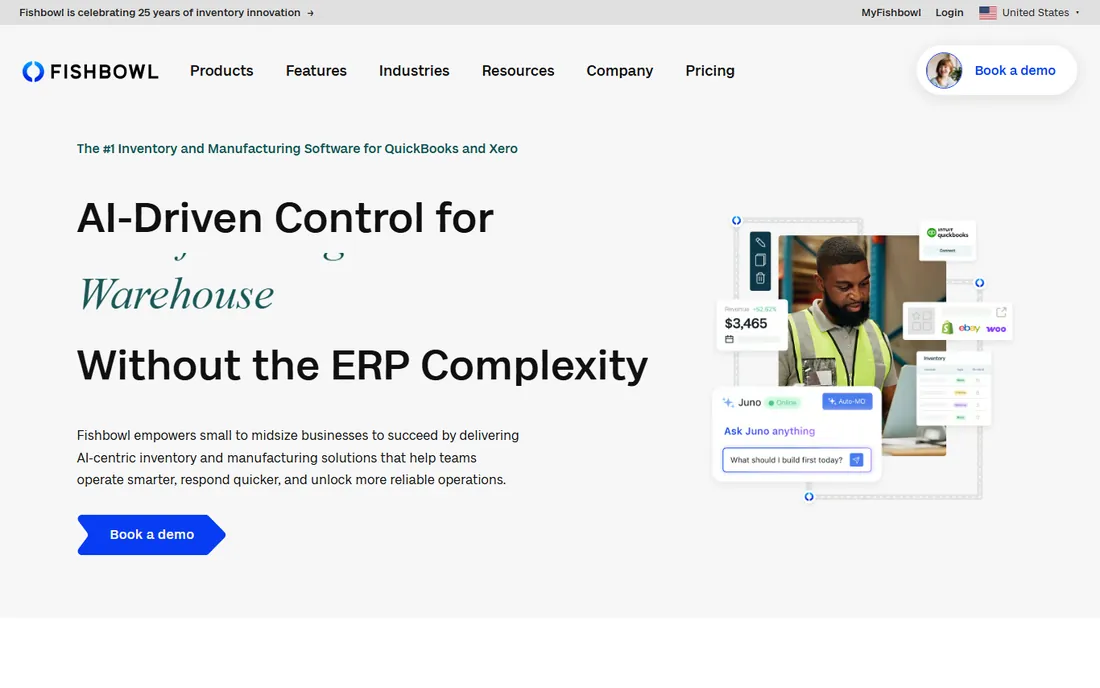
Fishbowl has been the default pick for QuickBooks shops since 2001, and the pitch has not changed much: one system for inventory, manufacturing and the warehouse that posts every movement into the accounting software. Multi-location tracking, lot and serial traceability, barcode workflows and landed-cost accounting are all in the box. The vendor advertises go-live in 2 to 6 weeks with in-house implementation, no outsourced consultants.
The honest catch is the sales process. Fishbowl publishes no prices; its own site says pricing depends on warehouse count and user needs. Integrations cover the expected set (Shopify, Amazon, Salesforce, ShipStation) but the product shines brightest when the accounting package is QuickBooks or Xero. Companies on NetSuite or Sage should look elsewhere.
What we like- Deep two-way sync with QuickBooks Desktop, QuickBooks Online and Xero, so inventory movements post cleanly to the books
- Manufacturing depth (BOMs, work orders, material requirements) at SMB prices
- Fishbowl GO mobile app for scan-based receiving, picking, packing and shipping
Watch out for- Pricing is quote-only, so budget planning starts with a sales call
- The accounting-first design means companies not on QuickBooks or Xero get less value
#2
Cin7
Best for: Growing product businesses selling across ecommerce, wholesale and retail
Visit cin7.com
Starting price$349/month (Core plan starting point)
Free planFree trial advertised (no permanent free plan)
Cin7 is built for the brand that sells on Shopify, through wholesale accounts and out of a retail storefront at the same time. The core promise is one real-time stock figure across every channel and location, with purchase orders, manufacturing and EDI handled in the same system. Its own homepage states pricing starts at $349 per month with up to six ecommerce and app integrations.
The honest catch is that $349 is a starting point, not a ceiling. Integrations beyond the included set cost extra, and the plan structure (Core versus Omni) decides how much warehouse and manufacturing depth you actually get. Still, for multichannel sellers who have outgrown a basic inventory app, this is the most transparently priced mid-market option on the list.
What we like- Published starting price, rare in this category
- Connected inventory, POS, warehouse and manufacturing modules under one subscription
- 700-plus native integrations, the widest connector library here
Watch out for- The $349 entry price is already mid-market money
- Serious manufacturers may need the higher Omni tier for full warehouse depth
#3
Oracle NetSuite
Best for: Mid-market companies that want inventory inside a full cloud ERP
Visit netsuite.com
Starting priceSee website (custom quote only)
Free planFree 3-day test drive of NetSuite Next (not a full free plan)
NetSuite is the answer when the warehouse problem is really an everything problem. Its WMS module handles receiving, putaway, picking, packing and shipping with barcode-driven workflows, while the same database runs the financials, the order management and the CRM. For companies with multiple warehouses and complex accounting needs, that single data model is the whole point.
The honest catch is cost and commitment. Oracle publishes no prices, implementations run through partners, and the timeline is measured in months. A 10-person warehouse team will find Fishbowl or inFlow far simpler. NetSuite belongs on the shortlist once you have outgrown best-of-breed tools and want one suite.
What we like- Inventory, financials, CRM and ecommerce on one data model, so stock, orders and the general ledger never drift apart
- Warehouse features (directed putaway, wave picking, cycle counting) scale to serious operations
- A vendor that will not be acquired or disappear
Watch out for- Custom-quoted pricing with a sales-led process and implementation measured in months
- Far more system than a single-warehouse SMB needs
#4
ShipHero
Best for: Ecommerce brands and 3PLs fulfilling high volumes from their own floor
Visit shiphero.com
Starting priceSee website (custom quote)
Free planNo
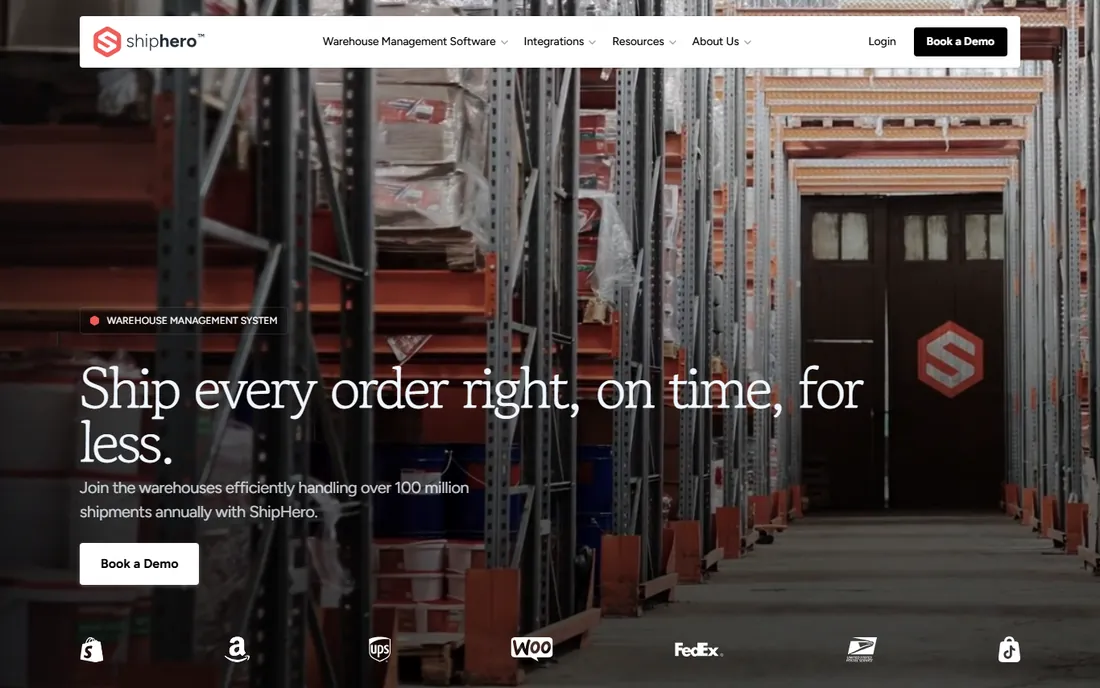
ShipHero runs warehouses that live and die on units per hour. The system is built around the ecommerce pick-pack-ship flow: mobile scanning, pack-to-light stations, AI-assisted picking routes and built-in rate shopping so the cheapest label is always one click away. It also sells a 3PL edition, so fulfillment providers can run client warehouses and bill them from the same platform.
The honest catch is transparency. ShipHero publishes nothing on price; every deal is quoted. It is also unapologetically an ecommerce tool. If your warehouse ships pallets to distributors or runs work orders, the fit is wrong. For a DTC brand doing hundreds of orders a day from its own floor, it is one of the strongest operational picks here.
What we like- Purpose-built for ecommerce fulfillment with pick-to-light, mobile picking and pack-station workflows
- Rate shopping across carriers inside the shipping workflow
- A 3PL edition with client billing and portals
Watch out for- No published pricing, so you cannot budget without a demo
- Ecommerce-centric design is a poor fit for distributors and manufacturers
#5
Deposco
Best for: Fast-growing brands, retailers and 3PLs that want a modern cloud WMS
Visit deposco.com
Starting priceSee website (custom quote)
Free planNo
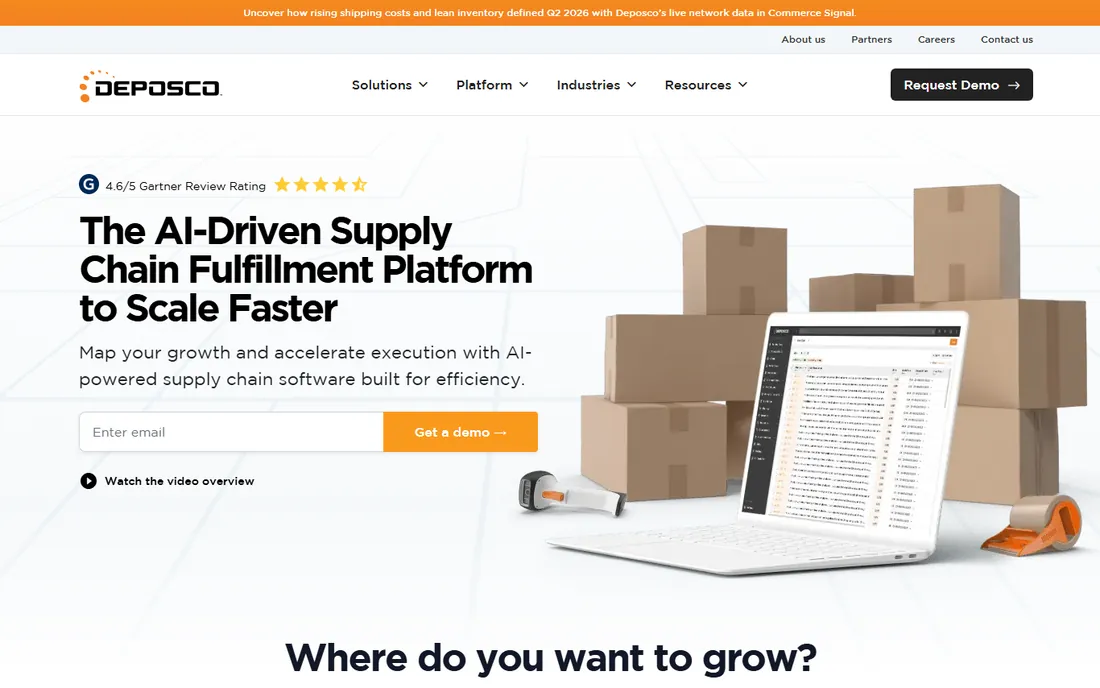
Deposco pitches itself as the modern alternative to legacy warehouse systems, and the product backs it up: cloud-native, API-first, with order management and planning modules alongside the core WMS. The 3PL features are genuinely deep, with client portals, billing and labor management that fulfillment providers need. The company claims over 3,000 customers and advertises 90-day implementations.
The honest catch is the buying process. Pricing is quoted, the sales cycle is consultative, and the platform assumes a certain operational scale. A single-warehouse seller will get more value per dollar from Finale or inFlow. Deposco earns its place when growth is fast, channels are multiplying and spreadsheets have already failed.
What we like- Bright Suite covers WMS, order management and demand planning on one cloud platform
- The vendor advertises go-live in 90 days or less with 150-plus prebuilt integrations
- Strong 3PL billing and client-portal features
Watch out for- Enterprise-grade quoting with no public pricing
- Smaller single-warehouse operations will find it oversized
#6
Finale Inventory
Best for: Multichannel sellers outgrowing spreadsheets who want real barcode workflows
Visit finaleinventory.com
Starting priceSee website (vendor states plans start at $99/month)
Free planFree trial (14 days, per reviewers)
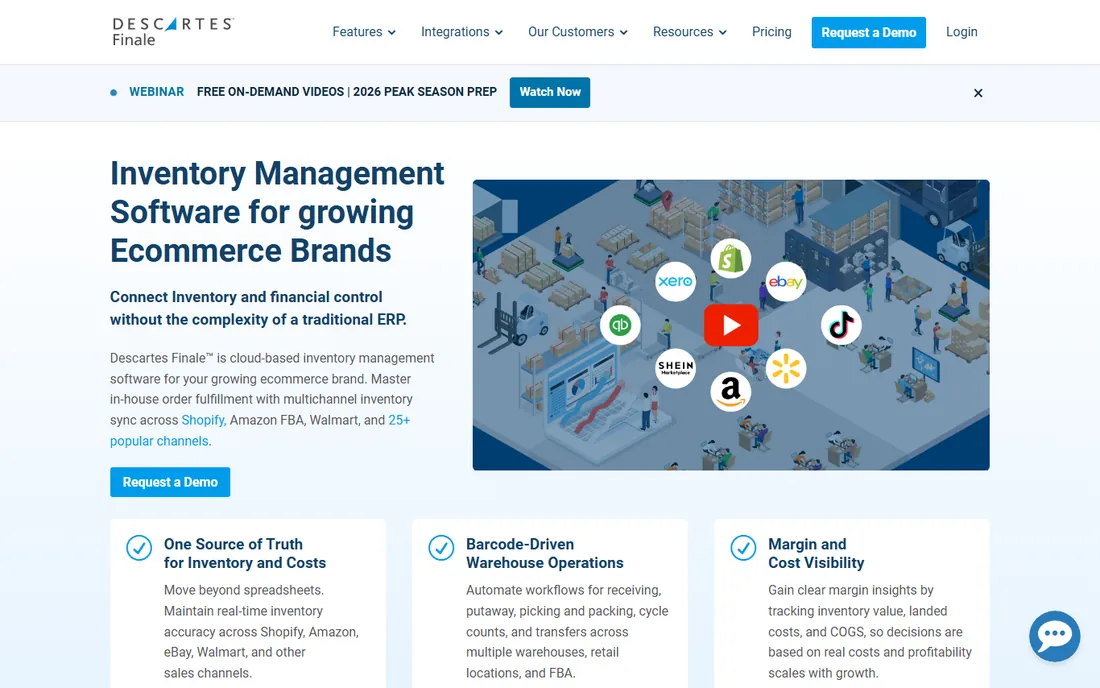
Finale sits in the sweet spot between a basic inventory app and a quoted WMS. You get real warehouse mechanics: wireless barcode scanning, bin-level tracking, pick-pack-ship workflows and landed-cost accounting, all syncing stock across marketplaces in real time. The vendor states there are no setup fees or hidden charges, and Bronze plans and up include live onboarding over Zoom.
The honest catch is pricing clarity. Third-party sites show different plan prices than the vendor's own pages, which is exactly why the number above reads "see website." Treat the published figures as directional and get the current sheet from sales. Even so, Finale remains one of the cheapest ways to get actual barcode discipline into a small warehouse.
What we like- Genuine warehouse features (barcode scanning, bin locations, mobile picking) at SMB-friendly prices
- Strong multichannel sync with Amazon, Shopify, eBay and Walmart
- No setup fees, per the vendor
Watch out for- Published pricing has changed over time and currently requires a sales conversation to pin down
- Tier limits on users, orders and integrations push growing sellers upmarket
#7
inFlow Inventory
Best for: Small distributors and wholesalers with straightforward warehouse workflows
Visit inflowinventory.com
Starting price$161/month (Entrepreneur plan, monthly billing; $129/month billed annually)
Free plan14-day free trial (per vendor pricing page)
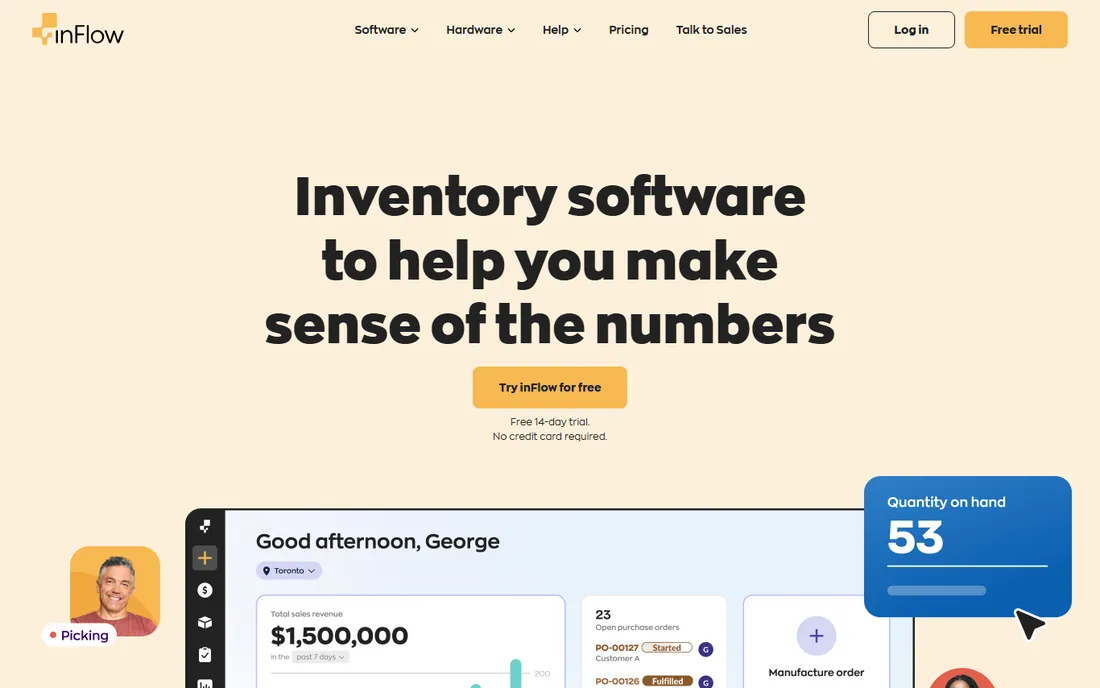
inFlow is the simplest buying decision on this list. Pricing is published down to the add-ons: Entrepreneur at $161 per month for 2 team members and one location, stepping up to Small Business and Mid-Size as order volume grows. Features cover the basics well: barcode scanning, reorder points, purchase and sales orders, document designers and integrations with QuickBooks Online, Xero, Shopify and ShipStation.
The honest catch is the ceiling. One Entrepreneur location and 100 monthly sales orders is genuinely small, and add-ons (extra team members, serial numbers, API access) stack on top. Most plans also require a paid onboarding package, which the pricing page discloses but buyers often miss. For a small distributor that wants honest software at an honest price, though, inFlow is hard to beat.
What we like- Fully published pricing with no sales call required
- Clean, approachable interface that non-technical staff actually use
- In-house support teams and a built-in B2B showroom for wholesale
Watch out for- Plan limits on locations, team members and monthly orders mean growing warehouses move up tiers quickly
- Most plans require a paid one-time onboarding package
#8
Katana
Best for: Small manufacturers selling on Shopify, Amazon and WooCommerce
Visit katanamrp.com
Starting priceSee website (custom-scoped plans)
Free planExplore at no cost (free exploration advertised)
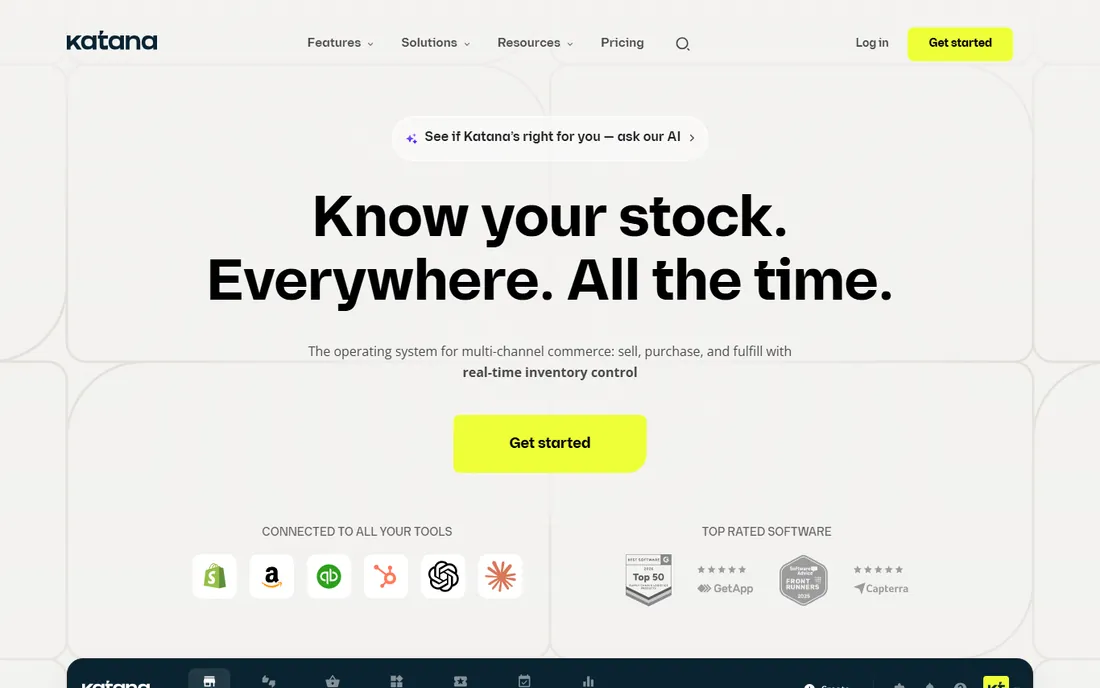
Katana is the manufacturer's inventory tool that does not look like an ERP. Raw materials, production and finished goods share one live view; a work order consumes materials and returns finished stock automatically. It connects natively to Shopify, Amazon, WooCommerce, QuickBooks Online and Xero, and handles lot and serial traceability for food, cosmetics and supplement makers who need it.
The honest catch is the pricing model. Katana now scopes plans per business under its Advantage program rather than publishing flat tiers, which means budgeting starts with a conversation. Older published tiers (Core from $299 per month) appear on review sites but no longer reflect the current offer. If you make things and sell them online, it is still worth the call.
What we like- Live inventory across channels and locations with production tied directly to stock
- Manufacturing depth (BOMs, work orders, lot and serial traceability) in a clean interface
- Free exploration before any sales conversation
Watch out for- Pricing moved to custom-scoped plans, so the old flat tiers no longer apply
- Advanced modules and high order volumes can push the bill up fast
#9
Extensiv 3PL Warehouse Manager
Best for: Third-party logistics providers running client warehouses
Visit extensiv.com
Starting priceSee website (custom quote)
Free planNo
Extensiv 3PL Warehouse Manager (formerly 3PL Central) is the specialist pick for companies that warehouse other people's goods. Everything orbits the 3PL business model: track inventory per client, bill for storage and handling, and give each client a portal with real-time visibility into their stock and orders. The mobile SmartScan app covers receiving, picking and cycle counts on the floor.
The honest catch is specialization. This is not a general inventory tool that happens to do 3PL; it is a 3PL system first. Brands fulfilling their own orders will find ShipHero or Cin7 a better fit. Pricing is quoted per operation, so expect a discovery process before any number appears.
What we like- Built specifically for 3PL workflows: client billing, customer portals and multi-client inventory in one system
- SmartScan mobile app for floor operations
- Part of a wider Extensiv suite (order manager, integration manager)
Watch out for- Quote-only pricing with no public numbers
- Overkill for brands running their own single warehouse
Do you need a WMS or just inventory software?
The terms get mixed up, so here is the dividing line. Inventory software tracks what you have and where it is: stock levels, purchase orders, sales orders and the accounting sync. A warehouse management system runs the floor: receiving docks, putaway rules, bin locations, pick paths, pack stations, shipping labels and labor tracking. Fishbowl, Cin7, inFlow and Finale lean toward inventory with warehouse features; ShipHero, Deposco and Extensiv lean toward running the warehouse itself.
Buy the smaller category you can get away with. A WMS adds scanners, label printers, floor training and a longer rollout. If your team picks from printed lists and stocks one room, inventory software with barcode scanning is enough. When pickers walk miles per day, mispicks cost real money and you run multiple zones or clients, the WMS earns its keep. The wrong direction is expensive: buying a WMS for a stockroom means paying for workflows nobody uses.
The real cost of warehouse software
The subscription is only the first line of the budget. Plan for three more. First, hardware: handheld scanners, label printers and packing-station terminals run a few hundred to a few thousand dollars, and cheap scanners die fast on a warehouse floor. Second, onboarding: inFlow charges a one-time onboarding package on most plans, Fishbowl and Deposco run paid implementations, and even self-serve tools cost you staff time. Third, the parallel run: most warehouses run the old and new systems side by side for two to four weeks, which means double data entry and slower picking during the switch.
Ask every vendor four questions before signing. What is the total first-year cost including onboarding and required add-ons? What happens to pricing when we add a second warehouse or double our order volume? How do we get our data out if we leave? And who answers the phone when the scanners stop working on a Monday morning? The answers separate the vendors that want your signature from the ones that want your renewal.
How we chose
We started with the searches buyers actually run: warehouse inventory software, warehouse management system, WMS software and inventory management software for warehouses. For each candidate we opened the vendor's homepage and pricing page, recorded whether prices were published or quoted, and checked the free plan or trial situation against the vendor's own pages. We mixed large platforms (NetSuite, Deposco) with mid-market tools (Fishbowl, Cin7, ShipHero) and SMB options (Finale, inFlow, Katana) plus one 3PL specialist, and left out anything that could not be confirmed as a live product in 2026. Where a price could not be verified on the vendor's own page, we wrote "See website" instead of guessing.
Frequently asked questions
What is the difference between warehouse inventory software and a WMS?
Warehouse inventory software tracks stock levels, locations, purchase orders and sales orders. A warehouse management system goes further and runs floor operations: receiving, putaway, picking, packing, shipping and labor. Small warehouses usually need the first; multi-zone or multi-client operations need the second.
How much does warehouse inventory software cost?
Published prices on this list run from $161 per month (inFlow Entrepreneur) and $349 per month (Cin7), up to custom quotes for Fishbowl, NetSuite, ShipHero, Deposco and Extensiv. Add onboarding packages, scanners and label printers for the real first-year total.
Does warehouse software integrate with QuickBooks?
Yes, across this list. Fishbowl, Cin7, Finale, inFlow and Katana all integrate with QuickBooks Online, and several also cover QuickBooks Desktop and Xero. Check whether the sync is two-way and whether it posts inventory adjustments automatically, not just sales.
Do I need barcode scanners?
If your team picks more than a few dozen orders a day, yes. Barcode receiving, picking and packing cut mispicks sharply and make cycle counts practical. Most tools here support standard handheld scanners and Zebra-style mobile devices; budget the hardware separately.
Can this software handle multiple warehouses?
All nine handle multiple locations in some form, but check the plan limits. inFlow's entry plan covers one location; higher tiers and the quoted platforms handle unlimited warehouses, transfers between sites and location-level stock visibility.
How long does implementation take?
Vendor claims range from two weeks (Fishbowl's 2 to 6 weeks, Deposco's 90 days or less for larger rollouts) to several months for NetSuite. Add two to four weeks of parallel running with your old system. The biggest variable is data cleanup: dirty SKUs and duplicate products slow every project.
Sources we checked (10)
- https://fishbowlinventory.com/
- https://www.cin7.com/
- https://netsuite.com/
- https://shiphero.com/
- https://deposco.com/
- https://www.finaleinventory.com/industries/ecommerce-inventory-software/
- https://www.finaleinventory.com/guides/warehouse-management-system-cost/
- https://inflowinventory.com/software-pricing
- https://katanamrp.com/
- https://extensiv.com/
Is your product missing or out of date?
We review this list regularly. Vendors can request a listing, send updated pricing or ask about featured placement.

Shihab Mia · Founder, Rankite
Shihab has 5+ years in B2B and SaaS SEO. He writes Rankite's software buying guides from pricing pages, documentation and public user reviews. More about Shihab.