How we make this list: we compare pricing pages, product documentation and public user reviews. Rankite is independent; if a vendor ever pays for a featured spot, that listing is clearly labeled Partner.
Key takeaways
- RELEX Solutions and Blue Yonder lead unified retail and supply chain planning, combining forecasting with replenishment and space planning.
- ToolsGroup and Slimstock specialize in inventory optimization with deep expertise in service levels and stock policies.
- Manhattan Associates serves large enterprises needing planning integrated with warehouse and transportation execution.
- Lokad brings a quantitative, programmatic approach for technically sophisticated supply chain teams.
- EazyStock and Netstock offer accessible cloud inventory optimization for mid-market distributors and manufacturers.
The two expensive mistakes in inventory
Inventory planning is the discipline of avoiding two expensive mistakes. Too little stock means stockouts, lost sales, and angry customers. Too much means cash trapped on shelves, obsolescence, and write-downs. Every business holding inventory pays for one mistake or the other; the planning software determines how much.
Modern inventory planning goes far beyond reorder points. Demand forecasting uses machine learning on sales history, seasonality, promotions, and external signals. Inventory optimization sets stock policies by SKU, balancing service levels against carrying costs. Replenishment automation turns plans into purchase orders. And multi-echelon optimization coordinates stock across warehouses, stores, and suppliers.
We compared eight platforms, from enterprise planning suites to focused optimization tools, judging them on forecasting quality, optimization depth, usability, and fit for different business sizes. The goal is helping you find the right weight class for your operation, so you pay for capability you will actually use.
Quick comparison
| Tool | Best for | Starting price | Free plan |
|---|
 RELEX Solutions RELEX Solutions | Unified retail planning | See website | No |
 Blue Yonder Blue Yonder | Enterprise supply chain planning | See website | No |
 ToolsGroup ToolsGroup | Inventory optimization expertise | See website | No |
 Slimstock Slimstock | Inventory optimization for mid-market | See website | No |
 Manhattan Associates Manhattan Associates | Planning plus execution | See website | No |
 Lokad Lokad | Quantitative supply chain optimization | See website | No |
 EazyStock EazyStock | Accessible cloud optimization | See website | Free trial |
 Netstock Netstock | Inventory planning for SMBs | See website | No |
Is your product missing or out of date?
We review this list regularly. Vendors can request a listing, send updated pricing or ask about featured placement.
The best inventory planning software in 2026
Starting priceSee website
Free planNo
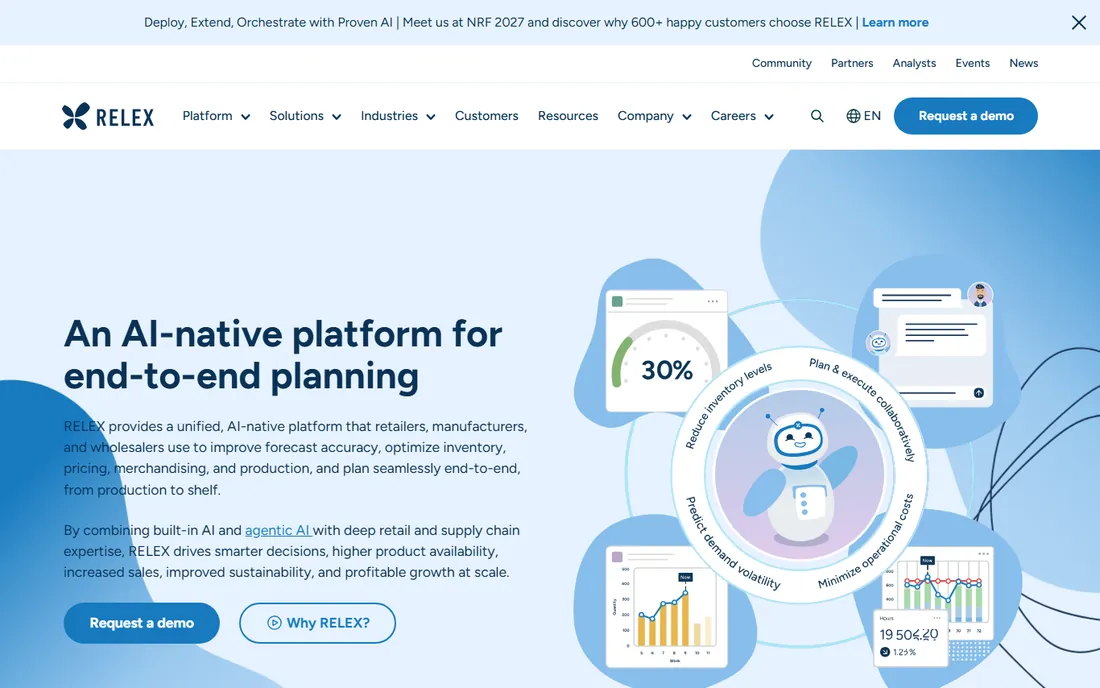
RELEX unifies demand forecasting, replenishment, allocations, and space planning in one platform built for retail's complexity. Grocery chains, with perishables, promotions, and weather sensitivity, are the proving ground; RELEX handles fresh food waste reduction alongside availability in ways generic planners cannot. The unified data model means a forecast change flows through to orders and shelf space automatically.
Implementations are enterprise projects, and the retail focus means manufacturers find less depth. But for retailers, the combination of forecasting accuracy and operational integration is the category benchmark. The documented waste reduction and availability improvements make the business case concrete.
What we like- Unified forecasting and replenishment, Strong in grocery and retail, Good promotions handling, Proven ROI cases
Watch out for- Enterprise implementations, Retail-focused, Pricing not published
Starting priceSee website
Free planNo
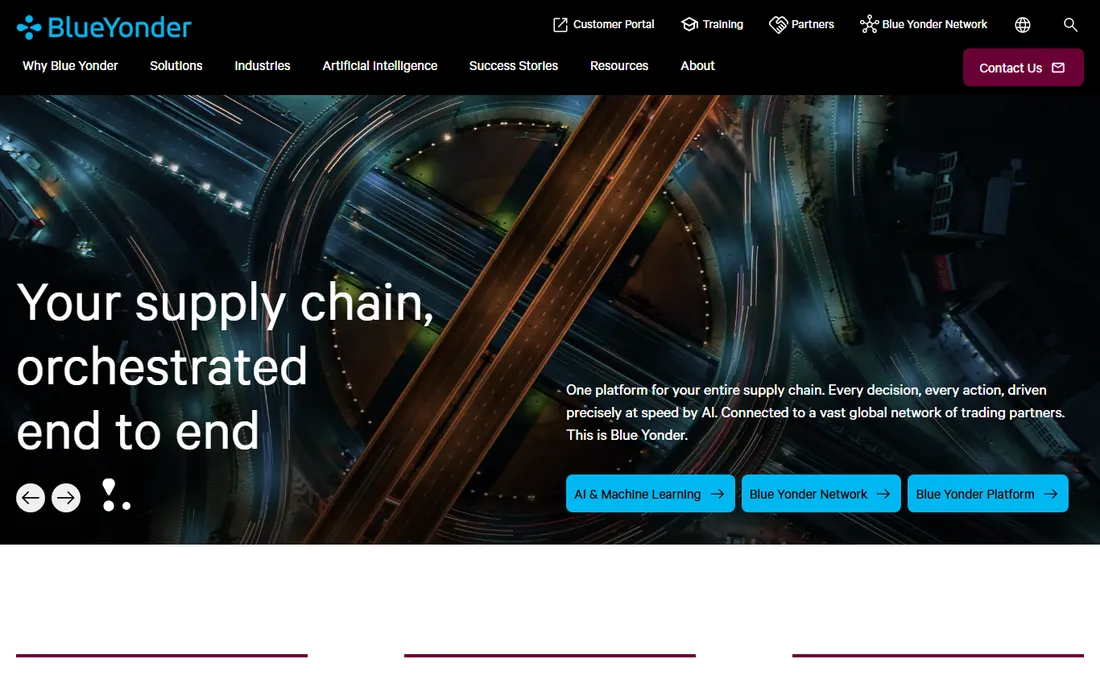
Blue Yonder, formerly JDA, offers one of the most comprehensive supply chain planning suites: demand planning, inventory optimization, replenishment, and transportation in an integrated platform. The machine learning forecasting handles the complexity of large enterprises with thousands of SKUs and locations. Major retailers and manufacturers run their supply chains on it.
The comprehensiveness brings complexity and cost that mid-market companies cannot justify. But at enterprise scale, the integrated planning-to-execution vision is powerful. For organizations where supply chain is a competitive weapon, Blue Yonder's depth is the standard.
What we like- Comprehensive planning suite, Strong ML forecasting, Large enterprise base, End-to-end supply chain
Watch out for- Complex and expensive, Implementation timelines, Overkill for mid-market
Starting priceSee website
Free planNo
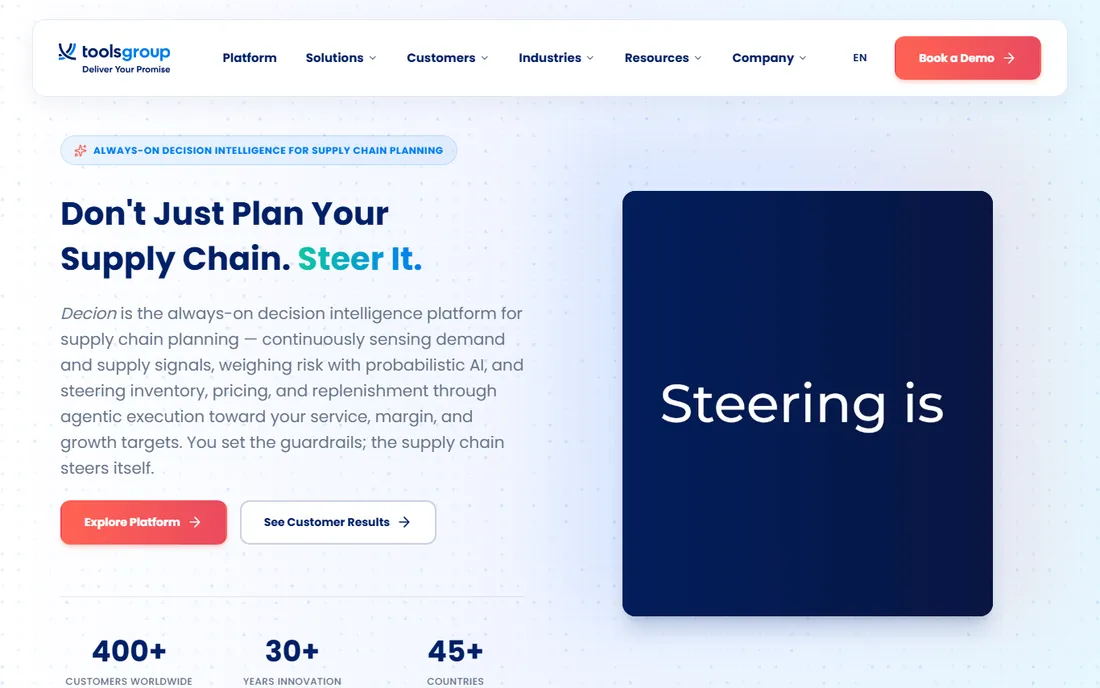
ToolsGroup built its reputation on inventory optimization science: setting the right stock policies to hit service level targets at minimum cost. Distributors and manufacturers with complex assortments use it to rationalize millions of SKU-location combinations. The methodology is rigorous, and the results in working capital reduction are well documented.
Retail breadth trails RELEX, and the orientation is enterprise. But for the core optimization problem, ToolsGroup's depth is exceptional. Companies whose inventory challenge is primarily mathematical rather than operational find the right tool here.
What we like- Deep optimization science, Good service-level management, Strong in distribution, Proven methodology
Watch out for- Less retail breadth than RELEX, Enterprise orientation, Interface functional
Starting priceSee website
Free planNo
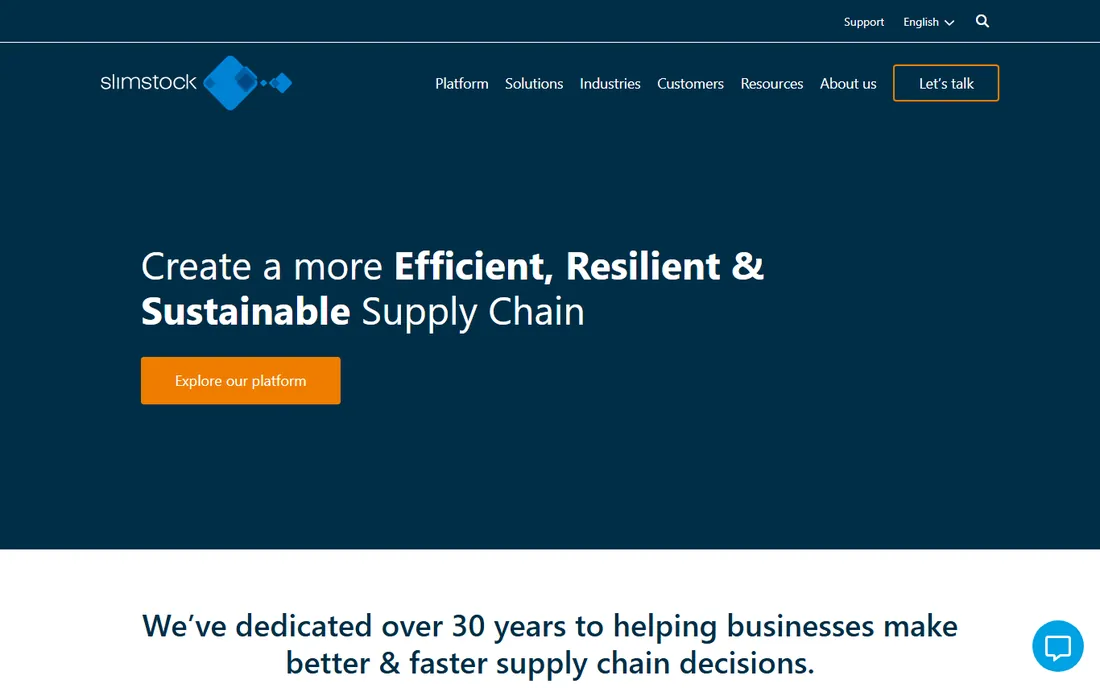
Slimstock serves the mid-market with practical inventory optimization: demand forecasting, replenishment, and stock policy management without enterprise complexity. European wholesalers and distributors are the core base, and the approach emphasizes usable results over theoretical perfection. Implementation is more manageable than the enterprise suites.
North American presence is smaller, and very large enterprises need more. But mid-market distributors, the companies with real inventory problems and limited planning teams, are exactly who Slimstock serves best. The practical focus shows in faster time to value.
What we like- Strong mid-market focus, Good forecasting and replenishment, European strength, Practical approach
Watch out for- Less known in North America, Enterprise depth thinner, Smaller ecosystem
Starting priceSee website
Free planNo

Manhattan Associates uniquely combines planning with execution: the same vendor provides warehouse management and transportation alongside inventory planning. For large enterprises, this integration means plans account for warehouse capacity and transportation realities. The unified commerce vision connects planning to the store and distribution center floor.
This is enterprise-only software with matching complexity and price. But the planning-execution integration is genuinely differentiating. When the plan and the warehouse run on separate systems, friction is inevitable; Manhattan eliminates it.
What we like- Planning integrated with WMS and TMS, Strong for large enterprises, Good execution depth, Unified platform vision
Watch out for- Enterprise only, Complex implementations, Premium pricing
Starting priceSee website
Free planNo
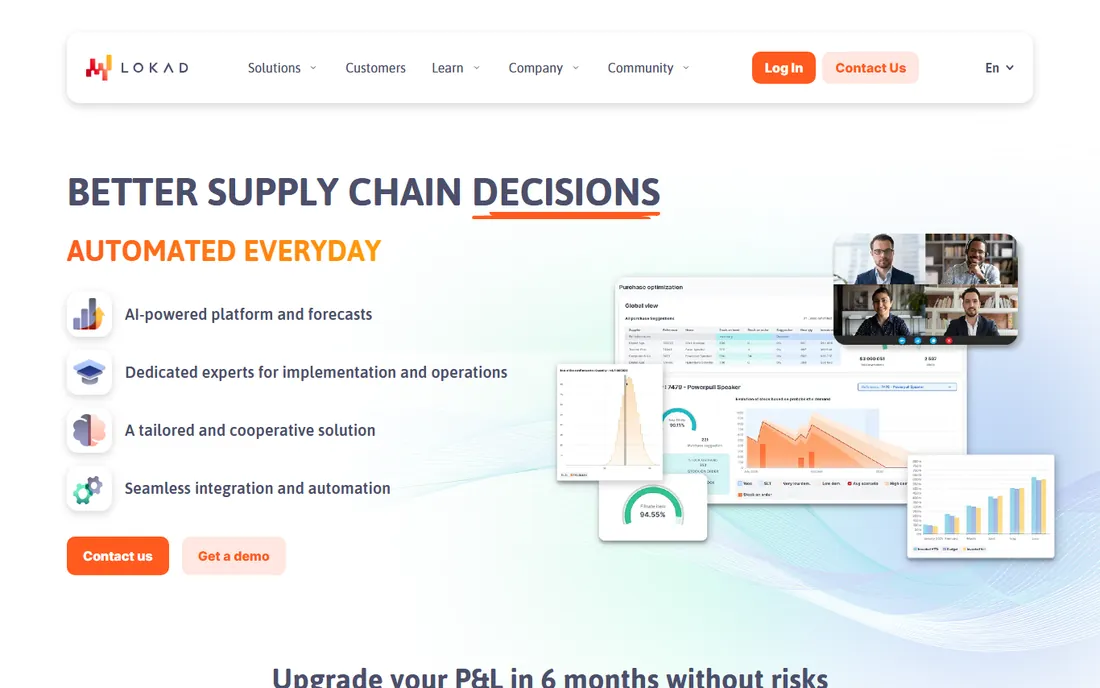
Lokad takes a radically quantitative approach: supply chain optimization expressed as programs in its domain-specific language, executed on cloud infrastructure. For teams with the technical sophistication to wield it, the power is extraordinary. Complex, idiosyncratic supply chains that break packaged software become solvable. The methodology is transparent rather than black-box.
Casual users need not apply; this is a tool for quants. But organizations with supply chain scientists on staff get capabilities no packaged planner offers. Lokad's intellectual honesty about optimization, probabilistic forecasting done properly, is refreshing in a market full of AI marketing.
What we like- Programmatic optimization approach, Extremely powerful for experts, Transparent methodology, Good for complex cases
Watch out for- Requires technical sophistication, Steep learning curve, Not for casual users
Starting priceSee website
Free planFree trial
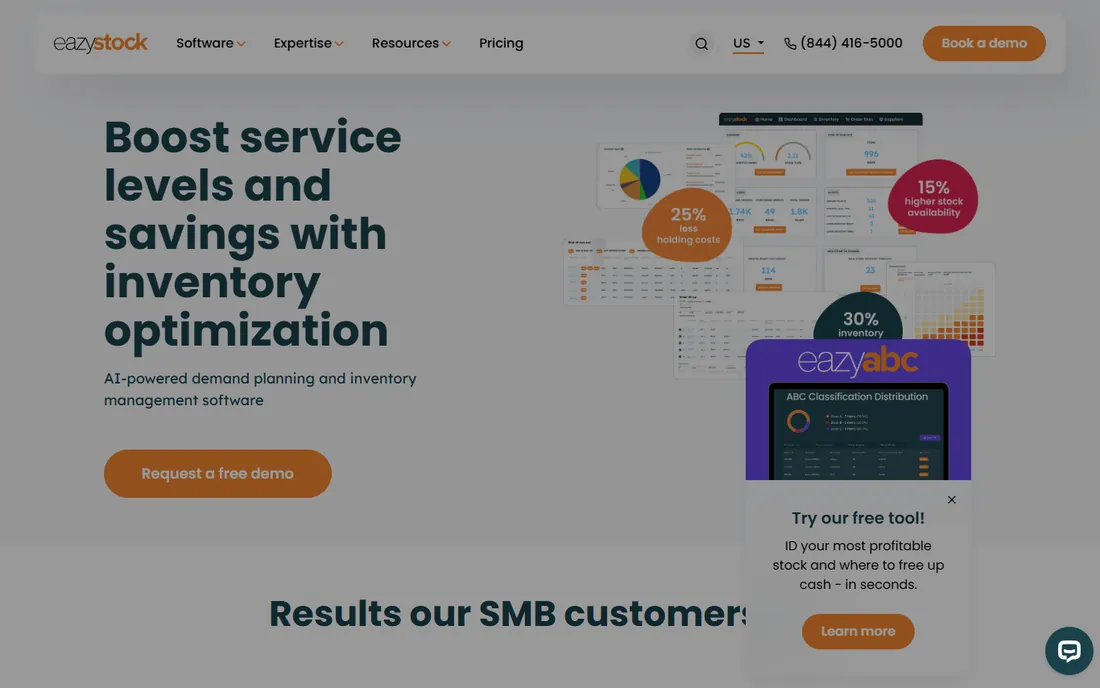
EazyStock, part of Syncron, brings inventory optimization to companies that find the enterprise tools excessive. Cloud delivery, quick implementation, and sensible pricing make modern forecasting and replenishment accessible to mid-size distributors and manufacturers. The free trial lets teams validate before committing.
Depth trails the enterprise specialists, and very complex supply chains need more. But accessibility is the strategy: most mid-market inventory problems do not require Blue Yonder. EazyStock delivers the 80 percent that matters at a fraction of the cost and effort.
What we like- Cloud-native and accessible, Good for distributors, Quick implementation, Reasonable pricing
Watch out for- Less depth than enterprise tools, Smaller vendor, Limited advanced features
Starting priceSee website
Free planNo
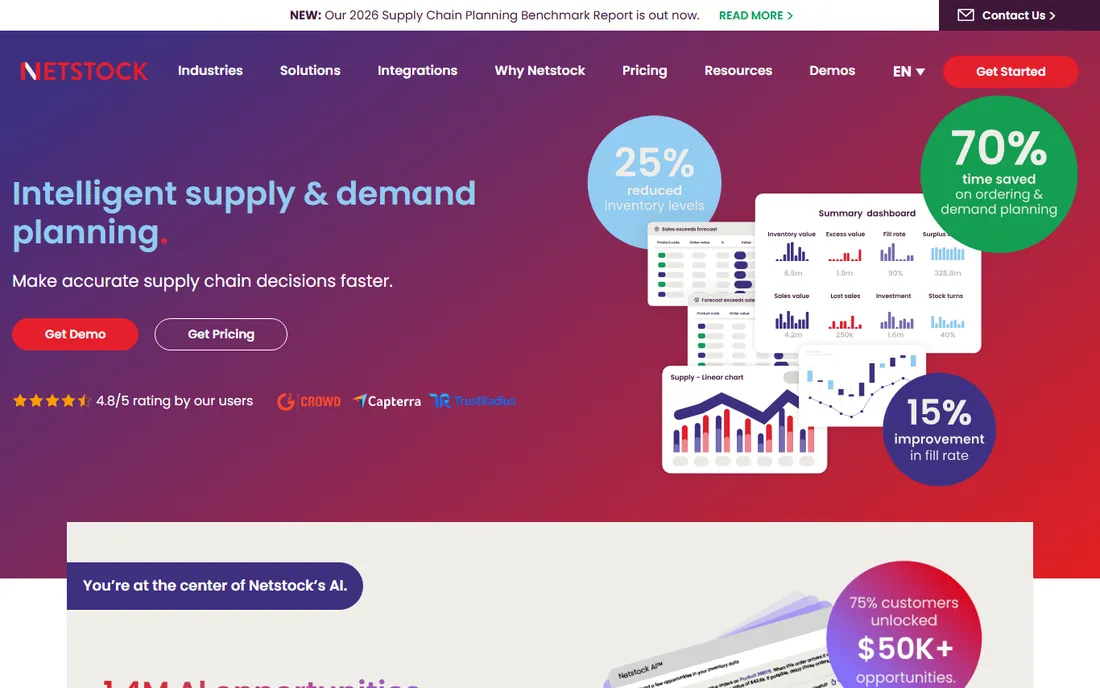
Netstock focuses on small and mid-size distributors and manufacturers, integrating with the ERP systems they already run. The emphasis is usability and quick results: better stock policies, fewer stockouts, less excess, without a planning department. ERP integration means the data flows and the purchase orders land where buyers work.
Large enterprises will outgrow it, and the optimization is less sophisticated than ToolsGroup's. But for SMBs, sophistication is not the constraint; adoption is. Netstock's ease of use gets planning actually done, which beats a powerful tool nobody uses.
What we like- Built for SMB distributors, Good ERP integrations, Easy to use, Quick time to value
Watch out for- SMB focus limits scale, Less advanced optimization, Acquired by TransImpact
How we chose
We evaluated forecasting quality, optimization depth, and usability across business sizes. Enterprise suites were judged on comprehensiveness and scale; mid-market tools on accessibility and time to value. Real customer results in availability improvement and working capital reduction mattered more than algorithm claims.
We included both broad planning platforms and focused optimization tools because buyers range from global retailers to regional distributors. The right comparison is within your size and complexity band, not across the whole list. A regional distributor comparing Netstock against Blue Yonder is wasting everyone's time; compare within your weight class.
Getting inventory planning right
Start with data quality. Every planning tool is garbage-in, garbage-out: sales history must be clean, promotions flagged, and stockout periods identified so the forecast does not learn from censored demand. The implementation projects that fail usually fail on data, not software.
Then set service level targets deliberately. The 98 percent service level costs substantially more than 95 percent, and not every SKU deserves the same target. ABC/XYZ segmentation, focusing service on the SKUs that matter, is where the optimization savings come from. The tools support this; the commercial decisions are yours to make and defend.
Finally, treat planning as continuous, not a project. Demand shifts, assortments change, and suppliers disappoint. The companies that sustain results review forecasts, tune policies, and hold planners accountable for outcomes. The software enables the discipline; it does not replace it. Build a monthly cadence for forecast review and exception management, and make sure planners have the authority to act on what the system tells them.
Pricing and plan limits shift over time, so double-check the details on the vendor's website before signing anything. Where a free trial or free tier is available, use it with realistic data; a week of hands-on use reveals more about fit than a dozen review sites.
Frequently asked questions
What is the difference between demand planning and inventory optimization?
Demand planning forecasts what customers will want. Inventory optimization decides how much stock to hold given that forecast, balancing service levels against costs. The best tools do both, since the forecast is only useful when translated into stock policies.
How much inventory reduction is realistic?
Results vary, but 10 to 30 percent reductions in working capital alongside maintained or improved service levels are commonly reported. The biggest gains come from companies moving off spreadsheets or reorder points to real optimization.
Do we need machine learning for forecasting?
ML helps with complex patterns: promotions, seasonality interactions, and large SKU counts. For stable demand and small assortments, simpler methods work fine. Be skeptical of AI marketing; ask vendors to prove forecast accuracy improvement on your data.
How long does implementation take?
Cloud mid-market tools can deliver value in weeks. Enterprise suites take months to over a year including data preparation, integration, and change management. The data work, not the software configuration, usually determines the timeline. Ask vendors for a realistic plan based on your data readiness, not their fastest case study.
Can inventory planning integrate with our ERP?
Yes, and it must. All the tools here integrate with major ERPs like SAP, Oracle, Microsoft Dynamics, and NetSuite. The purchase orders and stock policies the planner generates need to flow into execution systems. Verify your specific ERP version during evaluation, and ask for reference customers on the same ERP to confirm the integration works in practice.
Sources we checked (8)
- https://www.relexsolutions.com/
- https://www.blueyonder.com/
- https://www.toolsgroup.com/
- https://www.slimstock.com/
- https://www.manhattan.com/
- https://www.lokad.com/
- https://www.eazystock.com/
- https://www.netstock.com/
Is your product missing or out of date?
We review this list regularly. Vendors can request a listing, send updated pricing or ask about featured placement.

Shihab Mia · Founder, Rankite
Shihab has spent more than a decade helping SaaS and e-commerce brands grow through search. He writes Rankite's software buying guides from pricing pages, documentation and public user reviews. More about Shihab.