How we make this list: we compare pricing pages, product documentation and public user reviews. Ratings come from G2, Capterra or Trustpilot, with the date we checked them.
Key takeaways
- Semrush and Ahrefs cover the broadest ground for retail teams, with keyword research, rank tracking, site audits and competitor data in one subscription.
- Stores with thousands of product pages need crawl depth and scalable rank tracking, which is where enterprise tools and desktop crawlers earn their place.
- Moz Pro and SE Ranking give smaller retail teams a cheaper starting point without losing the basics of tracking and auditing.
- Content optimisation matters as much as technical fixes for retail, so a tool like Surfer belongs in the stack once product and category copy is a priority.
- No single tool replaces Google Search Console, which remains the free source of truth for how a store actually performs in search.
Quick comparison
| Tool | Best for | Starting price | Free plan |
|---|
 Semrush | All-in-one retail SEO | $139.95/month | Yes |
 Ahrefs | Backlink and competitor research | $29/month | Yes |
 Moz Pro | Smaller retail teams | $49/month | No |
 BrightEdge | Large retail brands | See website | No |
 Conductor | Enterprise content and reporting | See website | No |
 seoClarity | Large catalogues and AI search | See website | No |
 Surfer | Optimising product and category copy | $79/month (billed annually) | No |
 SE Ranking | Budget-friendly rank tracking | $52/month (billed annually) | No |
 Screaming Frog | Deep technical crawls | Free plan for 500 URLs; paid licence from £199/year | Yes |
Is your product missing or out of date?
We review this list regularly. Vendors can request a listing, send updated pricing or ask about featured placement.
#1Semrush
Best for: All-in-one retail SEO4.4/5 on
G2 (4,035 reviews, checked Oct 2026)
Visit semrush.com
Starting price$139.95/month
Free planYes
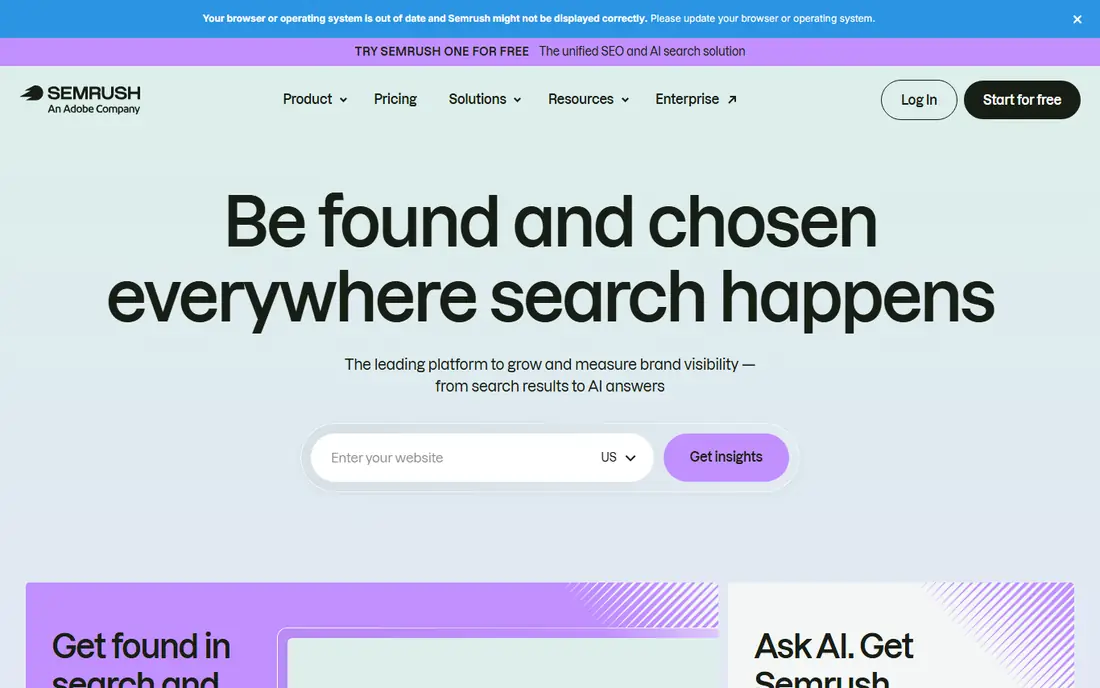
Semrush is the default all-in-one choice for retail teams that want one subscription to cover most of their search work. It tracks rankings for product and category keywords, audits a store for technical problems, and shows which competitor pages pull the most organic traffic. For a retailer, the competitor angle is the practical one: you can see which rival product pages rank for the terms you care about and where their backlinks come from.
Local SEO is the other reason Semrush fits retail. Chains and franchises can manage listings, track local rankings by store location and watch reviews from one place. That matters when a shopper searches for a product near them and the local pack, not the national ranking, decides which store gets the visit. The free account is limited but lets a small team try the main tools first.
The trade-off is cost and complexity. Extra users are charged separately, and a team that only needs rank tracking and audits may pay for features it never opens. Start with the Pro plan, learn which reports the team actually uses each week, and only move up when limits on keywords or projects start to bite.
What we like- Broad keyword, competitor and audit data
- Strong local SEO tools for stores
- Useful reporting for merchandising and marketing teams
Watch out for- Price climbs fast with extra users
- The interface can feel crowded for first-time users
#2Ahrefs
Best for: Backlink and competitor research4.5/5 on
G2 (717 reviews, checked Oct 2026)
Visit ahrefs.com
Starting price$29/month
Free planYes
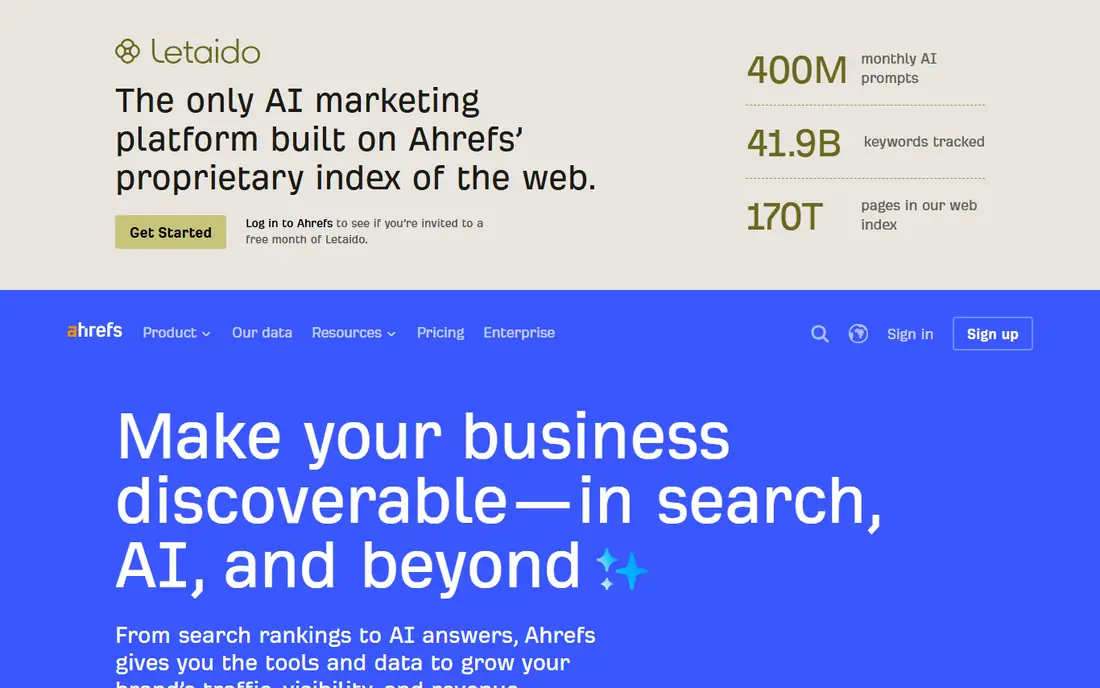
Ahrefs is strongest where retail SEO is won or lost off the page: links and competitor content. Its backlink index is one of the largest in the industry, so a retailer can see who links to rival stores, which product guides earn links, and where its own link profile has gaps. The content gap tool shows keywords competitors rank for that your store does not, which is a direct brief for new category pages or buying guides.
For a small retailer, the $29 Starter plan is a sensible entry point, and the free Webmaster Tools tier gives site audit and keyword data for sites you verify. The catch is that Starter is a lightweight plan with tight credit limits, so a team doing daily research will outgrow it quickly. Lite at $129 a month is the more realistic plan for an active store.
Ahrefs is less of a local SEO tool than Semrush. Pair it with Search Console for real performance data and a local listings tool if you run physical stores.
What we like- Very deep backlink data
- Clear competitor gap reports
- Free Webmaster Tools tier for verified sites
Watch out for- The Starter plan is limited
- Higher plans are expensive for small stores
#3Moz Pro
Best for: Smaller retail teams4.3/5 on
G2 (608 reviews, checked Oct 2026)
Visit moz.com
Starting price$49/month
Free planNo
Moz Pro suits the retail team that is still building its SEO habit. The interface is calmer than Semrush or Ahrefs, reports are easy to read, and the Starter plan at $49 a month covers one website with rank tracking, site crawls and keyword research. For a single-store retailer, that is often enough to find and fix the biggest problems.
Domain Authority remains a handy shorthand, even though it is a third-party metric and not a Google ranking factor. It gives a quick way to compare a store against rivals and to judge whether a link prospect is worth pursuing. The weakness is depth: backlink data and keyword coverage are thinner than the bigger suites, and a growing catalogue will eventually hit the Starter plan's limits.
Moz Pro also has a 30-day free trial on some plans, which is worth using to test the crawl and tracking against your real store before paying. If the team outgrows it, the data exports cleanly enough to carry into a larger tool.
What we like- Friendly interface for beginners
- Useful Domain Authority metric for quick comparisons
- Solid rank tracking and audits
Watch out for- Backlink data is thinner than Ahrefs
- Keyword research depth is limited on lower plans
Starting priceSee website
Free planNo
BrightEdge is an enterprise platform, and it shows in both its strengths and its price. It handles very large sites, tracks rankings across many locations and languages, and folds AI search visibility into its reporting, which matters as shoppers increasingly ask chatbots and AI overviews where to buy. Its content recommendations tie keywords to specific pages, so a merchandising team can see which category pages need work and why.
For a national retailer with hundreds of stores, the reporting is the selling point: dashboards that a chief marketing officer can read without an analyst translating them. For a small or mid-size retailer, though, BrightEdge is hard to justify. Pricing is custom, onboarding takes time, and much of its power only pays off when a dedicated SEO team uses it daily.
If you are comparing enterprise options, ask for a demo on your own catalogue data. The difference shows up in how tools handle faceted navigation, product variants and local pages.
What we like- Built for enterprise scale
- Strong AI search and content recommendations
- Good executive reporting
Watch out for- Priced for large teams
- Overkill for a single store
#5Conductor
Best for: Enterprise content and reporting4.5/5 on
G2 (826 reviews, checked Oct 2026)
Visit conductor.com
Starting priceSee website
Free planNo
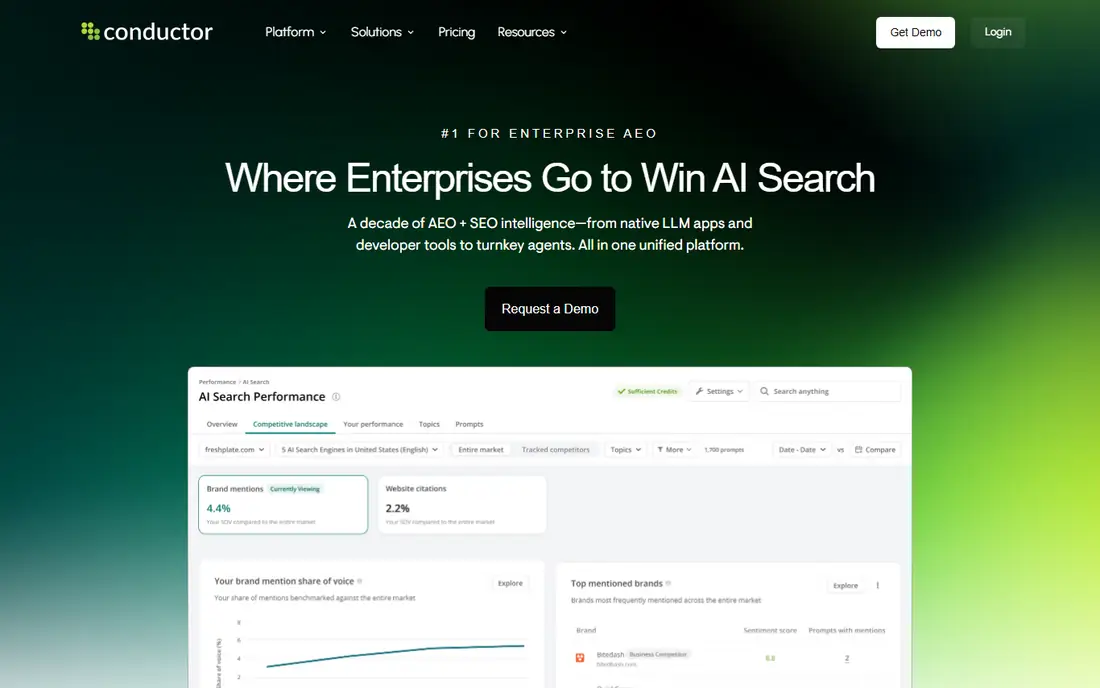
Conductor pitches itself as a website optimisation platform rather than a pure SEO tool, and that framing fits retail. It combines rank tracking, technical monitoring and content guidance, with workflows that let SEO, content and merchandising teams share the same data. When a category page drops in rankings, the team can see the change, the likely cause and the recommended fix in one place.
Its content intelligence is the standout for retailers with large buying guides and editorial sections. It groups keywords into topics, shows which pages already cover them, and flags gaps where a competitor is winning. That turns content planning from guesswork into a list of pages to write or improve.
As with BrightEdge, pricing is custom and the platform is aimed at larger organisations. A small retailer will get more value per dollar from Semrush, Ahrefs or SE Ranking. Conductor makes sense when the SEO programme spans multiple teams and the reporting needs to reach people who never open an SEO tool.
What we like- Strong content and keyword intelligence
- Clear reporting for large teams
- Good workflow features
Watch out for- Custom pricing
- Less suited to small retail teams
#6seoClarity
Best for: Large catalogues and AI search4.5/5 on
G2 (216 reviews, checked Oct 2026)
Visit seoclarity.net
Starting priceSee website
Free planNo
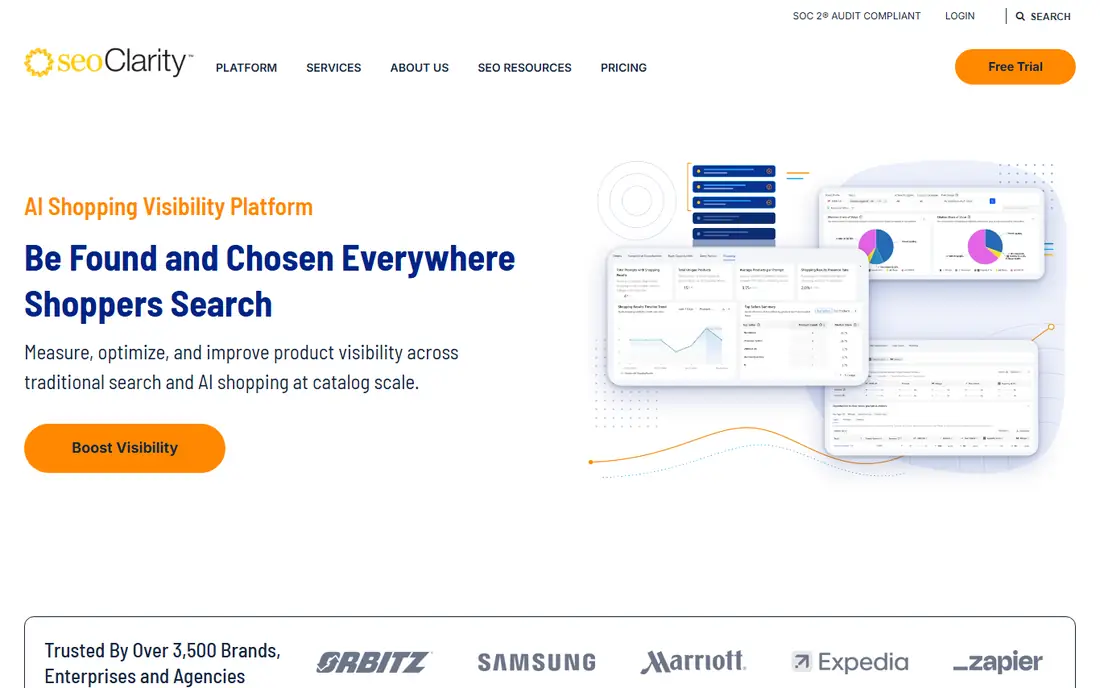
Retailers with huge catalogues face a specific problem: tracking tens of thousands of product keywords without the data becoming unusable. seoClarity is built for that scale. Its rank tracking handles large keyword sets, its crawl data ties technical issues to revenue-relevant pages, and it has added reporting for AI search visibility, showing how a brand appears in AI-generated answers.
The platform also emphasises tying SEO to business outcomes, which helps when an SEO team needs to justify budget to a retail board. Instead of reporting only rankings, it can connect search performance to traffic and, with the right integrations, to sales.
The downside is the usual enterprise trade: custom pricing, a longer setup, and a learning curve that assumes an experienced SEO team. It is a strong choice for a large retailer or a marketplace; it is not the right first tool for a single store.
What we like- Built for very large sites
- Strong rank tracking at scale
- AI search visibility reporting
Watch out for- Enterprise pricing
- Steep learning curve
#7Surfer
Best for: Optimising product and category copy4.6/5 on
G2 (126 reviews, checked Oct 2026)
Visit surferseo.com
Starting price$79/month (billed annually)
Free planNo
Surfer answers a different question from the suites above: not what to rank for, but how to write the page that ranks. Its Content Editor scores a draft against the pages already ranking for a target keyword, suggesting terms to include, headings to add and a sensible word count. For retail, that is directly useful for category descriptions, buying guides and product copy that currently reads like a spec sheet.
The audit tool does the same job for pages that already exist, which is where most retail gains hide. A category page that ranks on page two often needs better copy and structure, not more links, and Surfer gives a concrete fix list. The Essential plan covers 30 Content Editor articles a month, which suits a steady publishing rhythm.
Surfer is not a rank tracker or a crawler, so it belongs alongside a suite, not instead of one. And the lack of a free trial means the 7-day money-back guarantee is the only low-risk way to test it. Use it on your weakest category pages first, where improvement is easiest to measure.
What we like- Clear content scores based on top-ranking pages
- Useful audits for existing pages
- Keyword research included
Watch out for- No free trial, only a 7-day money-back guarantee
- Article limits cap heavy publishing
#8SE Ranking
Best for: Budget-friendly rank tracking4.7/5 on
G2 (1,606 reviews, checked Oct 2026)
Visit seranking.com
Starting price$52/month (billed annually)
Free planNo
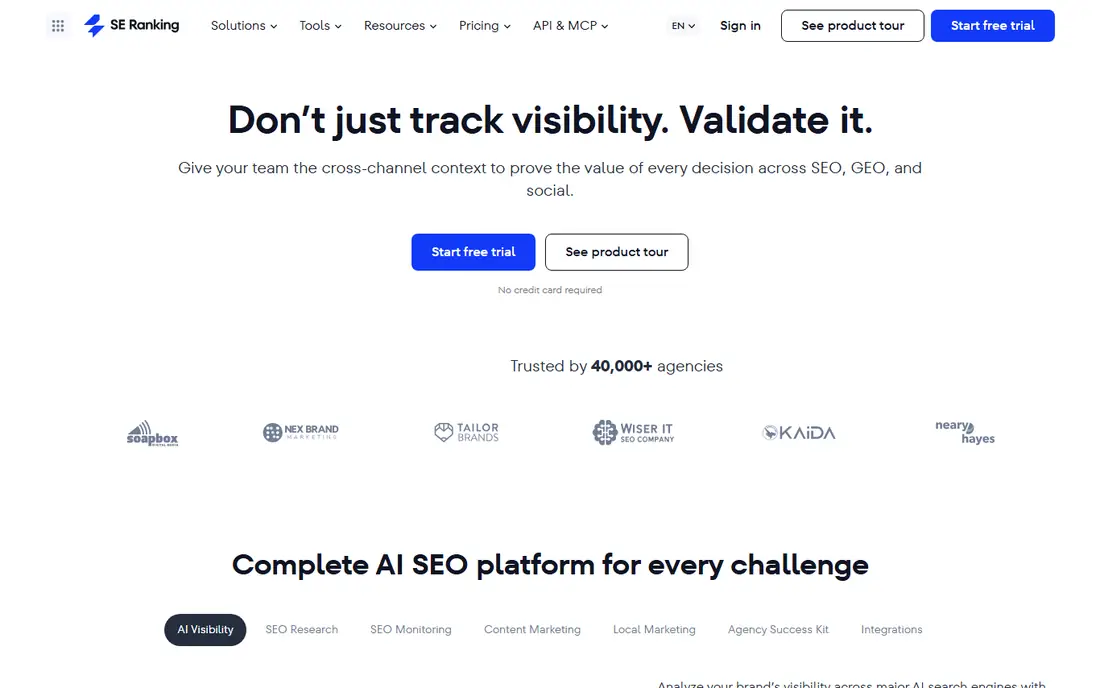
SE Ranking is the value pick for retail teams that need reliable rank tracking, site audits and keyword research without paying suite prices. The Essential plan at $52 a month billed annually covers 10 websites and 500 keywords, which is enough for a small chain or a single growing store. The interface is straightforward, and white-label reporting is included on higher plans for agencies.
For retail specifically, the rank tracker handles local rankings and competitor tracking well, and the site audit flags the usual catalogue problems: duplicate titles, missing descriptions, broken links and slow pages. It will not match Ahrefs on backlinks or Semrush on keyword database size, but for a team whose main job is tracking and fixing, that gap rarely matters.
The 14-day free trial needs no card, so it is easy to test against your real store. If the keyword limits start to pinch as the catalogue grows, the Pro plan at $95.20 a month billed annually is the natural next step.
What we like- Good value for rank tracking and audits
- Clean interface
- 14-day free trial
Watch out for- Backlink data is thinner than Ahrefs
- Smaller keyword database than Semrush
Starting priceFree plan for 500 URLs; paid licence from £199/year
Free planYes
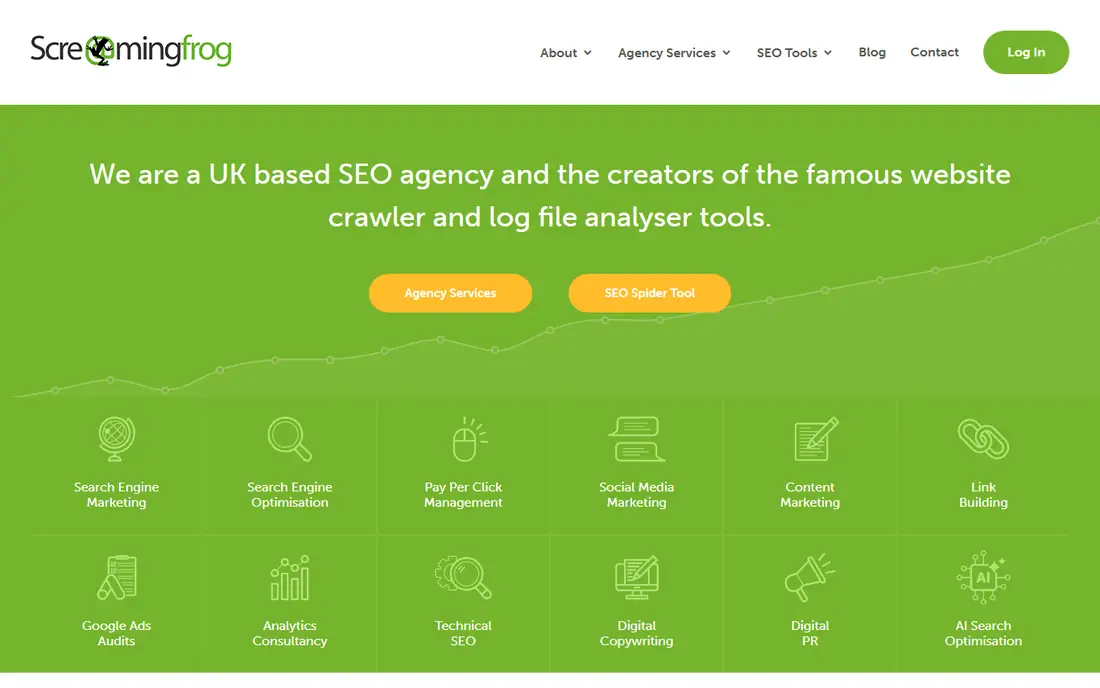
Screaming Frog is a desktop crawler, not a cloud suite, and for technical retail SEO that is a strength. It crawls a store the way a search engine does and reports every URL with its status code, title, meta description, canonical tag, indexability and more. Faceted navigation, duplicate product URLs, redirect chains and orphan pages all show up clearly, and the data exports to spreadsheets for the development team.
The free version crawls up to 500 URLs, which covers a small store. The paid licence removes that limit and adds JavaScript rendering, scheduled crawls, custom extraction and integrations with Google Analytics, Search Console and PageSpeed Insights. Because it is a yearly licence rather than a monthly subscription, the long-term cost is low compared with cloud tools.
The trade-off is that Screaming Frog does none of the research or tracking work. It finds problems; it does not tell you which keywords to target or how you rank. Use it as the technical layer under a suite like Semrush, Ahrefs or SE Ranking, and run a full crawl before any site migration or major catalogue change.
What we like- Extremely detailed crawl data
- One-off licence cost, not a monthly subscription
- Integrates with Search Console and PageSpeed Insights
Watch out for- Desktop software, so it needs a capable machine
- No rank tracking or keyword research
How we chose
We compared tools on retail fit rather than general SEO reputation. That meant weighting catalogue-scale crawling, local rankings for physical stores, competitor product-page data and reporting that merchandising and marketing teams can actually use. Prices and free tiers were checked against vendor pricing pages and recent pricing summaries, and where a vendor prices on request we say so instead of guessing. We also read public reviews on G2 and Capterra and vendor documentation to confirm what each tool does well and where it falls short.
What to set up first
A retail SEO stack works best in a clear order, and buying everything at once is the fastest way to waste money. Start with Google Search Console, which is free and shows real clicks, impressions and indexing problems for your own store. Add one suite next, Semrush, Ahrefs, Moz Pro or SE Ranking, and use it for a month before deciding what is missing. Most teams find that one suite plus Search Console covers 80 percent of the work.
Then fill the gaps in order of pain. If the audit shows technical problems across thousands of product pages, add Screaming Frog. If category copy is thin and rankings stall on page two, add Surfer. If you run many stores, check whether your suite's local tools are enough before buying a separate local platform. Enterprise tools like BrightEdge, Conductor and seoClarity only earn their price when the catalogue is large and several teams share the programme.
Watch the catalogue traps
Retail sites create SEO problems that blogs never face. Faceted navigation can generate thousands of near-duplicate URLs, product variants can split ranking signals across near-identical pages, and out-of-stock products can leave dead ends that frustrate shoppers and search engines. A good crawl, whether from your suite or Screaming Frog, should be the first diagnostic step, not an afterthought.
Measure sales, not just rankings
Rankings are a means, not an end. A category page that climbs from position eight to position three but sends shoppers to an out-of-stock product has not helped the business. Connect search data to revenue where you can, track which product and category pages actually convert, and prioritise fixes on pages that sell. That discipline also makes it easier to justify the tool budget next quarter.
Frequently asked questions
Which SEO tool is best for a small retail store?
SE Ranking or Moz Pro are the best starting points for a small store. Both cover rank tracking, audits and keyword research at a price a small team can defend, and both offer trials. Add Google Search Console for free, and only add more tools when a specific gap appears.
Do I need an enterprise tool for a large retail site?
Large catalogues and multi-store chains benefit from enterprise tools like BrightEdge, Conductor or seoClarity, mainly for scale and reporting. But a large site can also run well on Semrush or Ahrefs plus Screaming Frog, so test the cheaper combination first and move up only when limits or reporting needs force the change.
How important is local SEO for retail?
Very important if you have physical stores. Many shoppers search for products near them, and the local pack often decides which store they visit. Make sure your listings are accurate, your store pages are indexed, and your chosen tool tracks rankings by location.
Can one tool do everything for retail SEO?
No single tool covers research, tracking, crawling, content optimisation and local listings equally well. A realistic stack is one suite, Google Search Console, and one specialist tool for your biggest gap, whether that is crawling with Screaming Frog or copy optimisation with Surfer.
How often should I audit a retail site?
Run a light audit monthly and a full crawl quarterly, plus a full crawl before any migration, redesign or major catalogue change. Product pages change constantly, so waiting a year between crawls lets duplicate URLs and broken links pile up.
Is a free SEO tool enough for a store?
Google Search Console is essential and free, and free tiers from Semrush, Ahrefs and Screaming Frog cover small sites. Once the catalogue grows past a few hundred pages or you need regular competitor data, a paid plan pays for itself in time saved.
Sources we checked (9)
- https://www.semrush.com/pricing/
- https://ahrefs.com/pricing
- https://moz.com/products/pro/pricing
- https://www.brightedge.com/
- https://www.conductor.com/
- https://www.seoclarity.net/
- https://surferseo.com/pricing/
- https://seranking.com/pricing.html
- https://www.screamingfrog.co.uk/seo-spider/pricing/
Is your product missing or out of date?
We review this list regularly. Vendors can request a listing, send updated pricing or ask about featured placement.

Shihab Mia · Founder, Rankite
Shihab has 5+ years in B2B and SaaS SEO. He writes Rankite's software buying guides from pricing pages, documentation and public user reviews. More about Shihab.