How we make this list: we compare pricing pages, product documentation and public user reviews. Rankite is independent; if a vendor ever pays for a featured spot, that listing is clearly labeled Partner.
Key takeaways
- Square POS is the easiest way to start: the software itself costs nothing and you only pay a per-transaction fee, which suits new shops and pop-ups.
- Lightspeed Retail is the pick for inventory-heavy specialty stores like apparel and sporting goods, but at $89 per month and up it is overkill for a simple counter.
- Shopify POS only makes sense if your store already runs on Shopify; POS Lite comes with every plan and POS Pro adds $89 per location per month.
- Clover and Heartland Retail sell through quotes and lean on bundled hardware and processing, so get the full monthly cost in writing before you sign.
- Rain POS, Epos Now, Erply, and Amber POS each serve a narrower niche: specialty retail, hospitality crossover, multi-store chains, and deep inventory control.
Quick comparison
| Tool | Best for | Starting price | Free plan |
|---|
 Square POS Square POS | new shops and pop-ups that want zero upfront software cost | $0 (Square Free); Plus $49/mo per location; Premium $149/mo per location | Yes (free plan); 30-day free trial on paid plans |
 Lightspeed Retail Lightspeed Retail | apparel, sporting goods, and other inventory-heavy specialty stores | $89/mo (Basic, billed annually) | Free trial |
 Clover Clover | shops that want hardware, software, and support from one vendor | See website | No |
 Shopify POS Shopify POS | retailers already running their online store on Shopify | $29/mo Shopify plan (annual) + $89/mo per location for POS Pro | No |
 Heartland Retail Heartland Retail | shops that want a full-service payments partner, not just software | See website | No |
 Rain POS Rain POS | specialty retailers like craft stores, music shops, and outdoor outfitters | See website | No |
 Epos Now Epos Now | businesses that mix retail with hospitality, like cafes with gift shops | $39/mo (software only) | Free trial (30 days) |
 Erply Erply | growing chains and franchises that need ERP depth behind the register | $59/mo (Brick & mortar plan) | Free trial |
 Amber POS Amber POS | established independent retailers who want inventory control without enterprise pricing | See website | Free trial (90 days) |
Is your product missing or out of date?
We review this list regularly. Vendors can request a listing, send updated pricing or ask about featured placement.
The best pos software for small retail business
#1
Square POS
Best for: new shops and pop-ups that want zero upfront software cost
Visit squareup.com
Starting price$0 (Square Free); Plus $49/mo per location; Premium $149/mo per location
Free planYes (free plan); 30-day free trial on paid plans
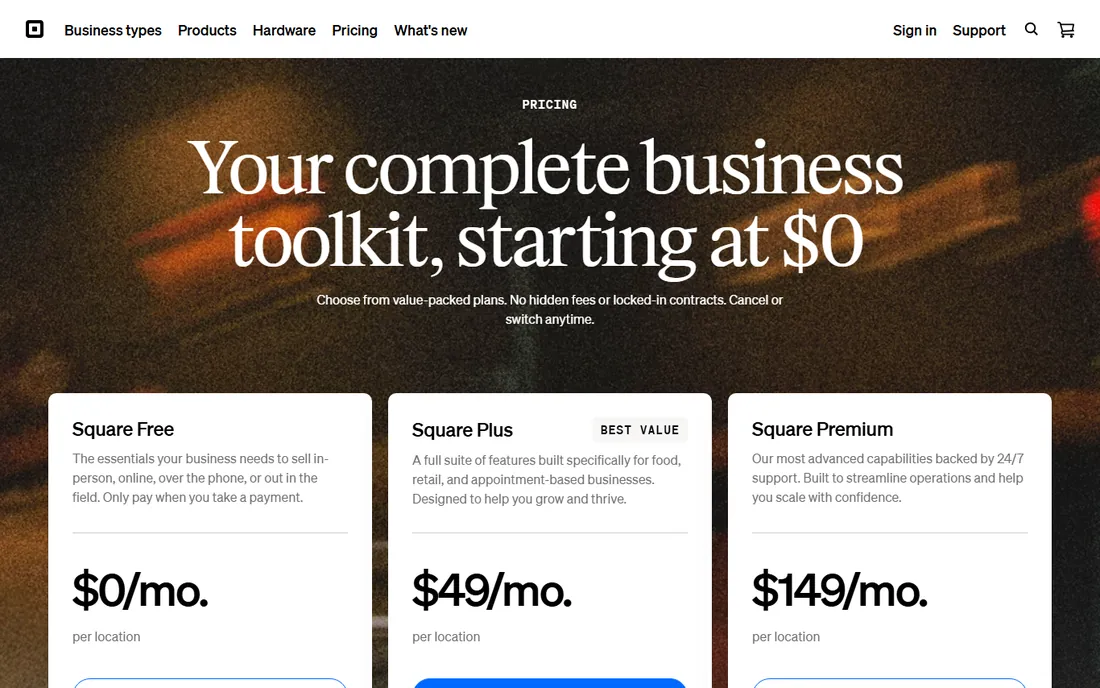
Square earns the top spot because it removes the biggest barrier for a new shop: cost. The Square Free plan charges no monthly fee per location, so a boutique or gift shop can start ringing up sales with just a phone and a $59 reader. Processing runs 2.6% plus 15 cents for tap, dip, or swipe on the free plan, dropping to 2.5% and then 2.4% on the $49 and $149 Plus and Premium tiers. That published rate card matters. Many competitors hide their processing math until you are on a sales call.
The tradeoff is depth. Square covers the basics well: item library, inventory tracking, invoices, and a free online store. But if you run a store with complex variants, purchase orders, and multi-location transfers, you will feel the ceiling sooner than with Lightspeed or Erply. Square also locks you into its own processing, so you cannot shop your card rates elsewhere. For a small shop doing straightforward retail, though, the free plan is the fastest path from signing up to taking money.
What we like- Genuinely free core software with no monthly fee
- Transparent published processing rates starting at 2.6% + 15 cents in person
- Large hardware lineup from $59 readers to full registers
Watch out for- Advanced retail features like loyalty and deep reporting sit on paid tiers
- You must use Square for processing, with no third-party processor option
#2
Lightspeed Retail
Best for: apparel, sporting goods, and other inventory-heavy specialty stores
Visit lightspeedhq.com
Starting price$89/mo (Basic, billed annually)
Free planFree trial
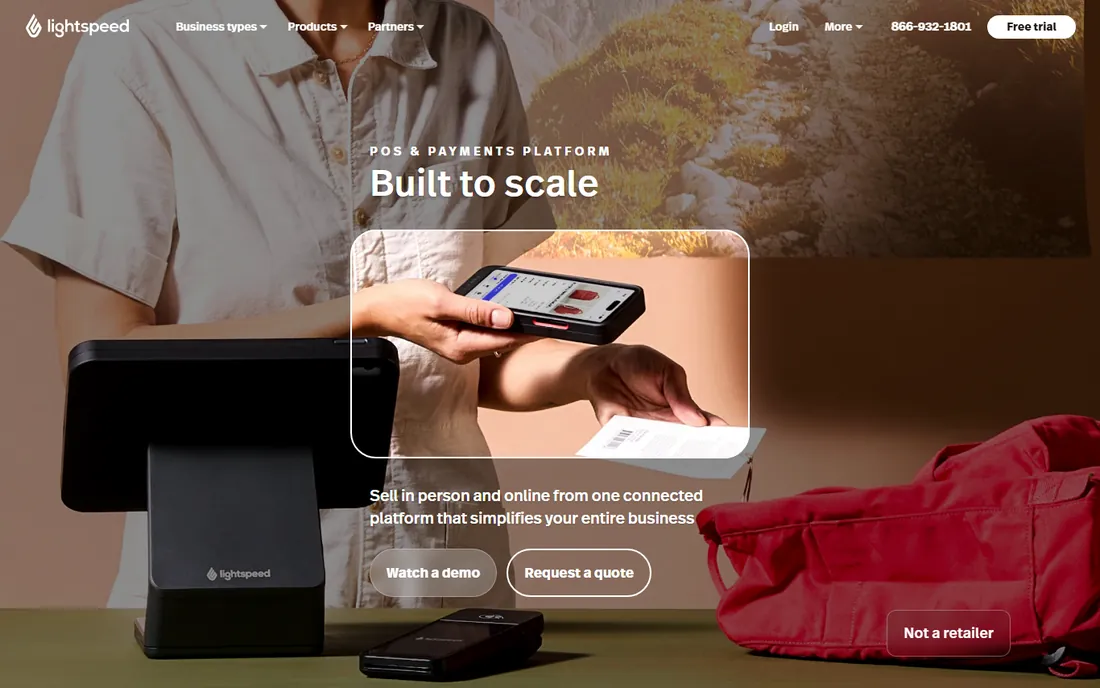
Lightspeed is the system you buy when inventory is the business. A clothing boutique juggling sizes and colors across two locations gets matrix inventory, vendor catalogs, and stock transfers that Square and Clover cannot match at this price. The Basic plan at $89 per month (billed annually) includes one register, integrated payments, and basic eCommerce, while Core at $149 adds loyalty and deeper reporting and Plus at $289 adds forecasting, API access, and 24/7 phone support.
That power comes with a learning curve and a real monthly commitment. A single-register gift shop will pay for features it never touches. Lightspeed also expects you to use Lightspeed Payments; bringing your own processor triggers an additional monthly fee. If your catalog is simple, start cheaper. If your stockroom keeps you up at night, Lightspeed pays for itself in fewer stockouts and cleaner purchase orders.
What we like- Strongest inventory toolkit in this lineup, with variants, purchase orders, and multi-location transfers
- Built-in eCommerce and loyalty from the Core plan up
- Same 2.6% + 10 cent card-present rate across card brands
Watch out for- $89 per month starting price is steep for a simple shop
- Best features require the $149 or $289 tiers
- Extra monthly fee if you use a third-party processor instead of Lightspeed Payments
#3
Clover
Best for: shops that want hardware, software, and support from one vendor
Visit clover.com
Starting priceSee website
Free planNo
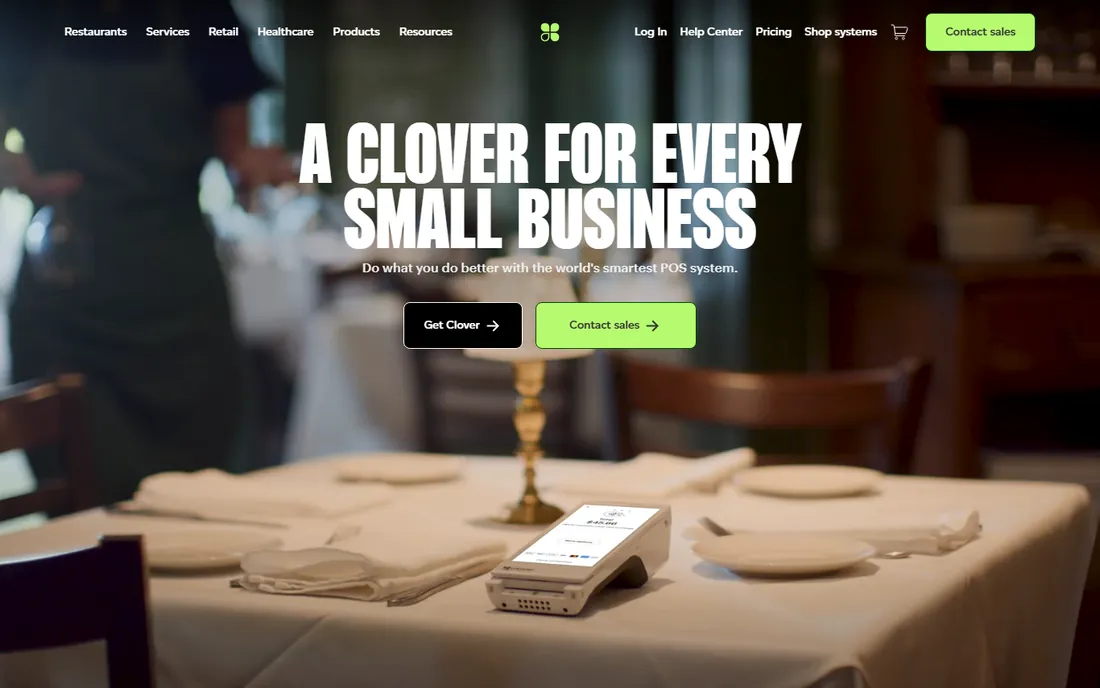
Clover takes a different approach from the software-first vendors on this list. You buy into an ecosystem: Clover devices on your counter, Clover software on the screen, and processing arranged through Clover or its partners. For a busy boutique that wants one throat to choke when something breaks, that integration has real value. The app marketplace fills gaps with hundreds of add-ons, and the hardware feels built for retail rather than adapted from a phone accessory.
The catch is transparency. Clover does not publish its software pricing, and the total monthly cost depends on the hardware bundle, the plan tier, and the processing arrangement your rep sets up. Two shops can pay meaningfully different amounts for similar setups. Before signing, ask for the full monthly figure including software, hardware financing, and processing, and get it in writing. If you prefer knowing the price before the sales call, Square or Shopify will feel more comfortable.
What we like- Polished countertop hardware lineup from compact readers to full station setups
- Large app marketplace for add-ons like loyalty and employee management
- Backed by Fiserv, a major payments company
Watch out for- No published pricing, so you negotiate through a sales rep or reseller
- Processing and software costs are often bundled, which makes comparison shopping hard
#4
Shopify POS
Best for: retailers already running their online store on Shopify
Visit shopify.com
Starting price$29/mo Shopify plan (annual) + $89/mo per location for POS Pro
Free planNo
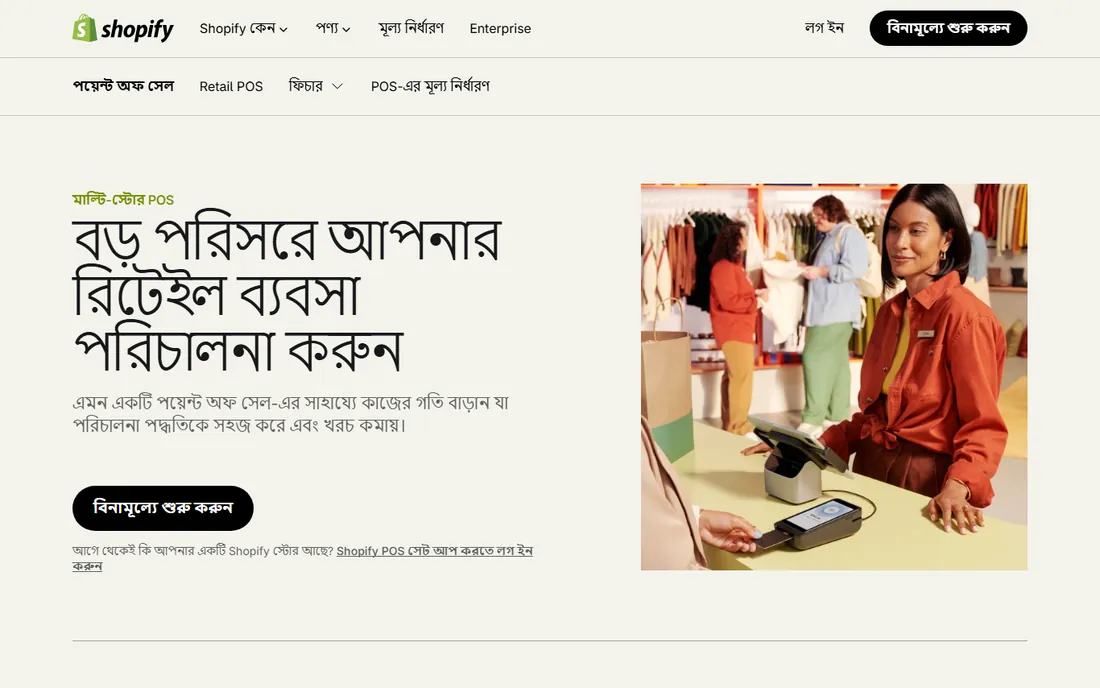
Shopify POS is not really a standalone product. It is the in-store arm of Shopify, and its value lives entirely in that connection. Edit a product once and it updates on your website and at the counter. A customer buys online and returns in store against the same profile. No integration project, no nightly sync, no mismatched stock counts. For the many small retailers whose website already runs on Shopify, that single source of truth is the whole argument.
The pricing has two layers. Every Shopify plan includes POS Lite for basic checkout, starting at $29 per month billed annually. POS Pro, which adds staff permissions, smart inventory, and retail analytics, costs $89 per location per month. A single store on Pro plus Basic runs about $118 a month before processing. If you have no Shopify store and no plans for one, this is the wrong system. If you do, nothing else on this list connects the counter to the website this cleanly.
What we like- One catalog, one inventory count, and one customer record shared between your website and your counter
- POS Lite is included with every Shopify plan for basic in-person selling
- Strong omnichannel features like buy online, pick up in store
Watch out for- Requires a Shopify subscription even if you only want a register
- POS Pro at $89 per location per month adds up fast for multi-store setups
- Thinner inventory tools than Lightspeed for specialty retail
#5
Heartland Retail
Best for: shops that want a full-service payments partner, not just software
Visit heartland.us
Starting priceSee website
Free planNo
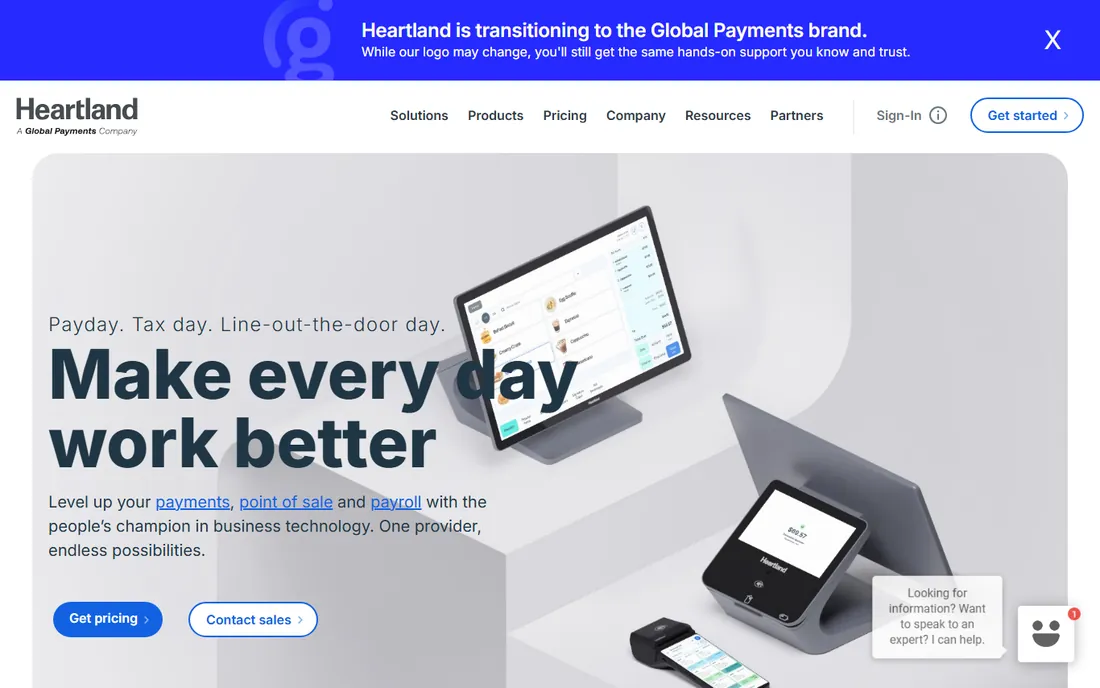
Heartland Retail, formerly Springboard Retail, positions itself as the grown-up option for independent retailers who want more hand-holding than a self-serve signup provides. The software covers the retail essentials: inventory management, customer records, promotions, and reporting across locations. Where Heartland tries to stand out is the relationship: dedicated onboarding, US-based support, and payment processing arranged as part of the package rather than bolted on.
Because pricing is quote-based, you cannot comparison-shop it against a published rate card. That is normal in this corner of the market, but it means the sales conversation does real work in your decision. Ask how the software fee, hardware, and processing interact, and what happens to your rate as volume grows. Shops that value a single accountable partner tend to like Heartland. Shops that want to self-serve and see prices upfront will prefer Square or Lightspeed.
What we like- Retail-focused feature set with inventory, CRM, and multi-location support
- Human support and onboarding aimed at independent retailers
- Integrated payments with transparent interchange-plus options for larger volumes
Watch out for- Pricing is quote-based, so budgeting takes a sales conversation
- Smaller app and integration ecosystem than Square or Shopify
#6
Rain POS
Best for: specialty retailers like craft stores, music shops, and outdoor outfitters
Visit rainpos.com
Starting priceSee website
Free planNo
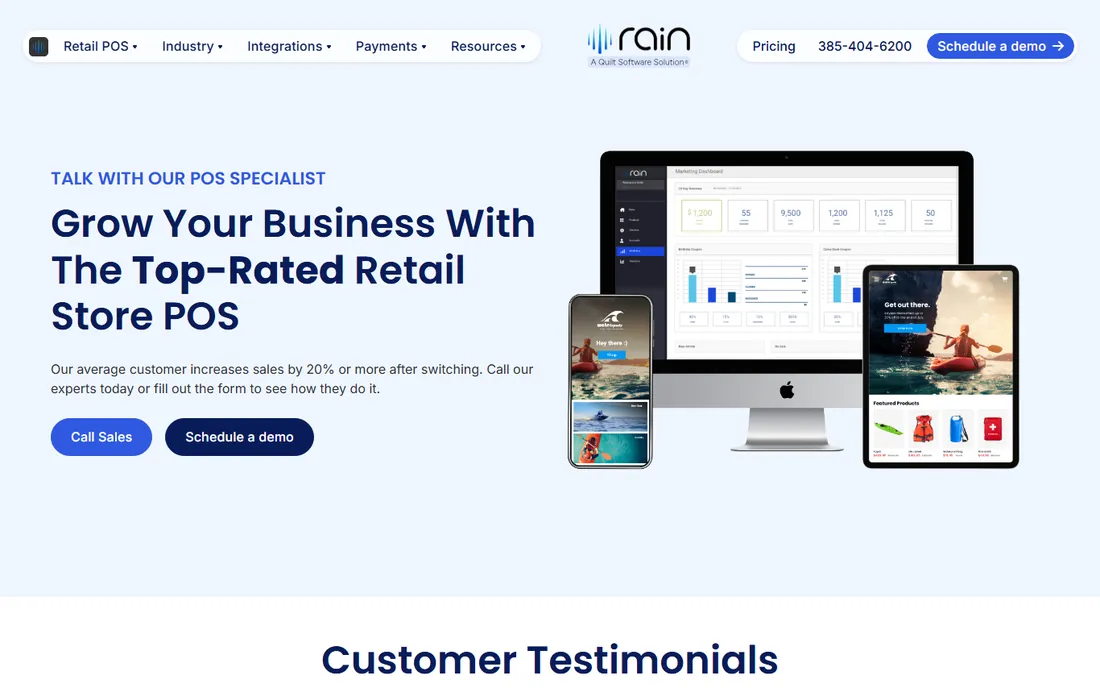
Rain POS is the specialist in a field of generalists. While most systems on this list serve any retailer, Rain built its product around craft stores, music shops, quilt shops, and outdoor retailers. That shows up in features you will not find elsewhere at this level: class sign-ups with online registration, instrument and equipment rentals, repair tracking, and consignment management. The website and the POS share one database, so a sale online and a sale in store draw from the same inventory count.
The tradeoff is polish and transparency. Rain does not publish pricing, so expect a demo and a quote. The interface reflects its long history more than current design trends, and the integration ecosystem is narrower than the big platforms. But if you run a specialty shop, the vertical features matter more than a slick UI. A quilt shop managing classes and fabric by the yard will get more from Rain than from a generic system with ten times the marketing budget.
What we like- Built for niche retail verticals with features like class management, rentals, and consignment
- POS, website, and marketing share one database so inventory stays in sync
- Unlimited users on plans
Watch out for- Pricing is not published and requires a demo or call
- Interface and feature set feel dated next to Square and Shopify
- Smaller user community means fewer third-party resources
#7
Epos Now
Best for: businesses that mix retail with hospitality, like cafes with gift shops
Visit eposnow.com
Starting price$39/mo (software only)
Free planFree trial (30 days)
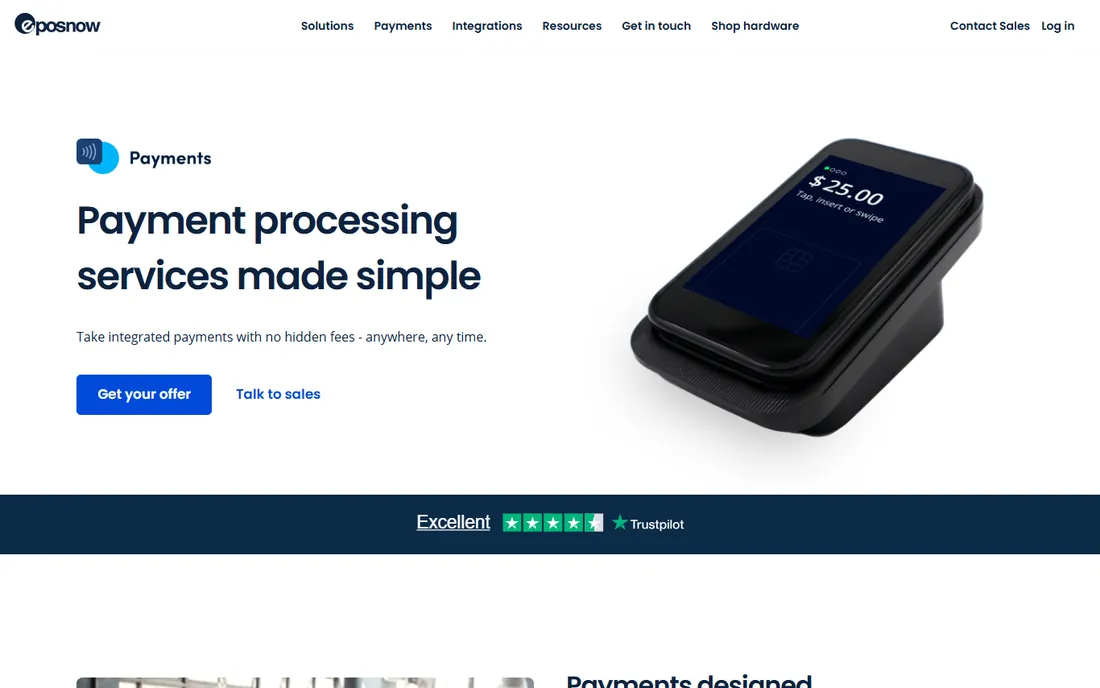
Epos Now earns its place for shops that do not fit neatly into retail or hospitality. A cafe that sells beans and merchandise, a bar with a bottle shop, a salon with product shelves: these businesses usually end up buying two systems or forcing one to do both jobs badly. Epos Now handles both from one back office, with table management and retail inventory living side by side. The software-only option starts at $39 per month, and the hardware bundles let you bring your own tablets.
Read the contract before you commit. Epos Now agreements can stretch to several years, and the headline software price does not include everything. Advanced reporting, premium support, and certain integrations add monthly fees that change the total meaningfully. The 30-day trial is worth using properly: run real transactions, test the reports you actually need, and confirm the total cost with add-ons before the trial ends.
What we like- One system covers both retail and hospitality workflows
- App store with 100+ integrations including QuickBooks, Xero, and Mailchimp
- Works on your own Android or iOS hardware to keep startup costs down
Watch out for- Contracts can run one to five years depending on the package
- Advanced reporting and some integrations cost extra
- 24/7 support is an add-on rather than standard
#8
Erply
Best for: growing chains and franchises that need ERP depth behind the register
Visit erply.com
Starting price$59/mo (Brick & mortar plan)
Free planFree trial
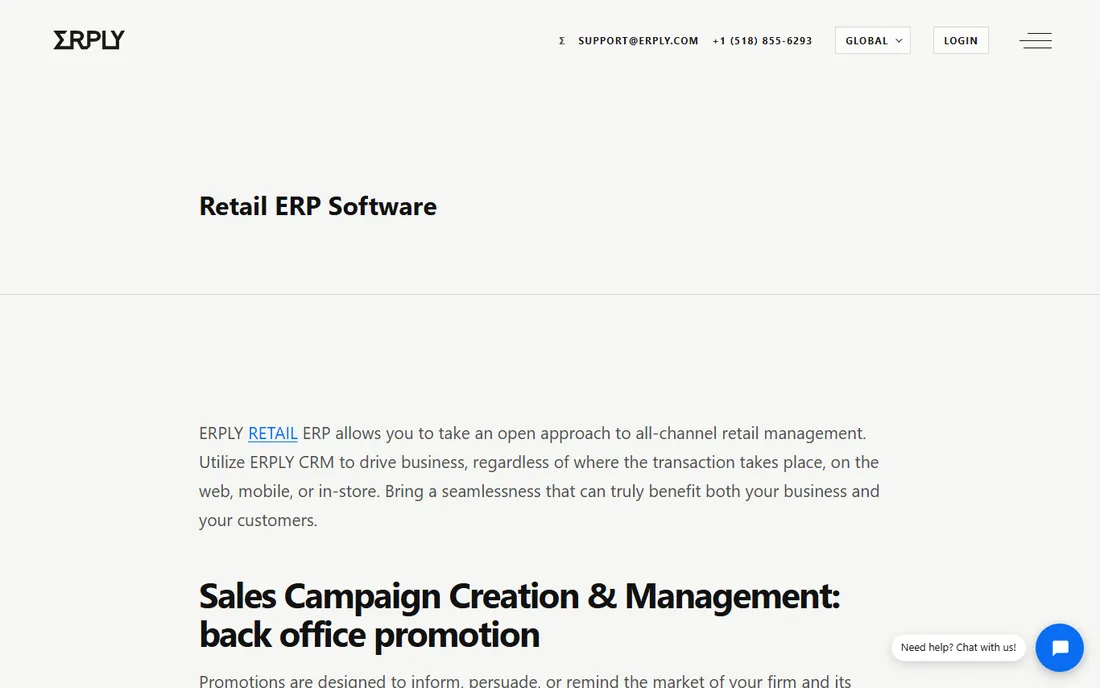
Erply is the least glamorous name on this list and, for the right buyer, the most capable. Where Square gives you a register with some inventory attached, Erply gives you a retail ERP with a register attached. Multi-location inventory, warehouse management, franchise controls, and a customer database that scales into the millions: this is the system for a regional chain outgrowing its starter POS. The Brick & mortar plan starts at $59 per month, with E-tailer at $99 and custom quotes for enterprise and franchise setups.
Small single-store shops should look elsewhere. Erply assumes you have operational complexity worth managing, and its interface and onboarding reflect that. There is no free plan, and the real cost depends on which modules you switch on. But if you are choosing between Erply and a patchwork of spreadsheets plus a basic POS, the consolidation is the point. One system, one database, every store.
What we like- Serious back-office depth: inventory, warehousing, CRM, and franchise management modules
- Scales from one store to hundreds of registers
- Open API for custom integrations
Watch out for- Interface feels utilitarian and dated
- Onboarding is heavier than cloud-native competitors
- Pricing climbs as you add modules and locations
#9
Amber POS
Best for: established independent retailers who want inventory control without enterprise pricing
Visit amberpos.com
Starting priceSee website
Free planFree trial (90 days)
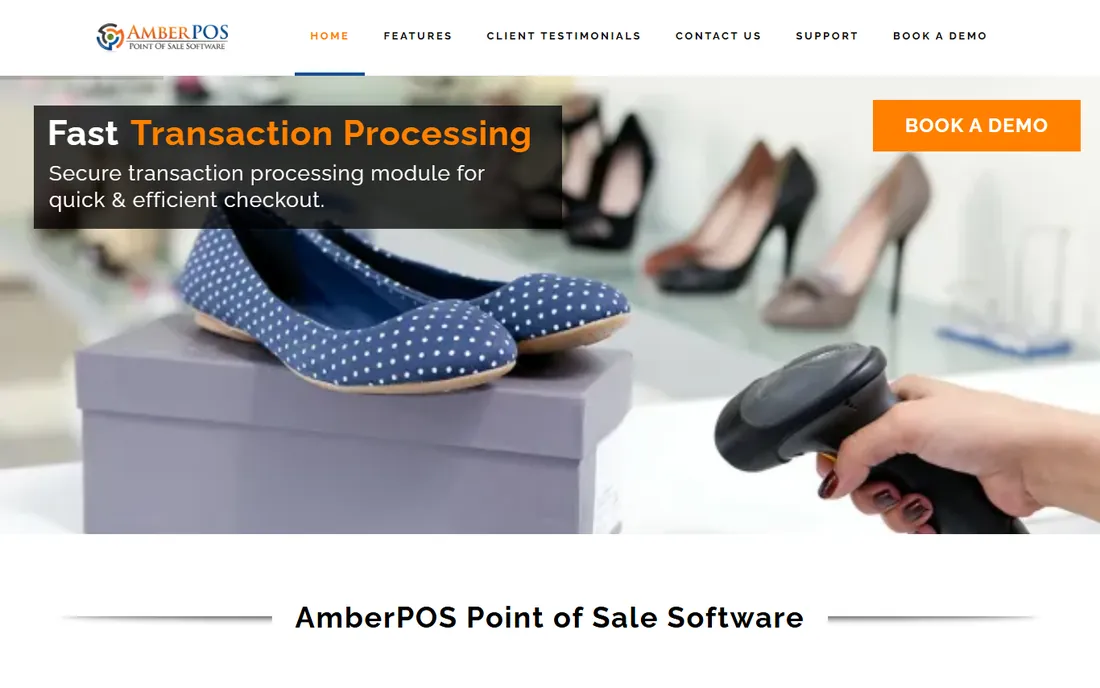
Amber POS has served independent retailers from the US and Canada for over two decades, and the product reflects that focus. The inventory toolkit goes deeper than anything else near its price: serial number tracking for high-value items, layaways and special orders, full accounts receivable, and a built-in CRM that tracks purchase history per customer. The BigCommerce connector gives you an online store synced to the same stock counts. And the 90-day trial gives you a full quarter to decide, far longer than the industry-standard two to four weeks.
The company keeps its pricing behind a conversation, which makes budgeting harder than it should be. The interface carries its Windows roots, and you will not find the app marketplace depth of Square or Clover. But for a specialty retailer that lives in its inventory data, perhaps a shoe store, a jewelry shop, or a hobby retailer, Amber POS offers enterprise-style inventory control at an independent-retailer price. Use the long trial to run it against your actual catalog before deciding.
What we like- Deep inventory tools with 500+ built-in reports, serial number tracking, and vendor management
- 90-day risk-free trial is the longest on this list
- Integrates with BigCommerce for eCommerce
Watch out for- Pricing is not published
- Windows-based heritage shows in the interface
- Smaller ecosystem than the cloud-native leaders
How we chose
We did not test these systems in a lab, and we will not pretend we did. Instead we worked from sources a buyer can check: each vendor's own pricing and product pages, feature documentation, and plan comparisons, plus public reviews on G2, Capterra, and Software Advice and real user discussions on Reddit. We weighted the factors that matter most to a small retail shop: total monthly cost including processing, inventory depth, hardware options, multi-channel sync between store and website, quality of support, and how well each system fits a specific kind of retailer rather than retail in general. Where a vendor does not publish pricing, we say so instead of guessing. Prices change, so treat every figure here as a starting point and confirm the current number on the vendor's site before you buy.
What actually drives the total cost of a POS
The monthly software fee is the number vendors advertise, and it is rarely the number that matters most. Here is how to read the real math before you sign.
Processing fees usually cost more than the software
A shop processing $30,000 a month at 2.6% plus 15 cents pays about $780 in processing. That dwarfs a $49 or $89 software subscription. When comparing systems, multiply your monthly card volume by each vendor's rate first, then look at the software fee. A "free" POS with a high processing rate can cost more than a $149 plan with a lower one.
Hardware is a second purchase, not an accessory
Budget the counter separately. A basic setup with a reader and tablet stand can run under $200 with Square or Shopify, while a full dual-screen station from Clover or Lightspeed can pass $1,000 per lane. Ask whether the hardware is purchased, leased, or financed, because a lease can quietly add $30 to $60 a month per station.
Watch for the fees vendors do not headline
Third-party processor surcharges, paid support tiers, per-register fees, and add-on charges for loyalty, advanced reporting, or texting can add 30 to 50 percent to the advertised price. Get the all-in monthly figure in writing, including processing at your volume, before you compare two quotes.
When a cheaper POS is the smarter buy
Expensive does not mean better for a small shop. A $0 Square setup that rings up sales reliably beats a $289 Lightspeed plan whose forecasting tools nobody opens. Match the system to the complexity you have today, with room for one step up. Most of the vendors on this list let you start small and add registers, locations, or modules as you grow. The costly mistake is buying the enterprise system for the business you hope to become in five years, then paying for it every month while you get there.
Frequently asked questions
What is the cheapest POS software for a small retail business?
Square POS is the cheapest to start because the core software is free and you only pay per transaction, currently 2.6% plus 15 cents for in-person sales. Shopify POS Lite is also free but requires a Shopify plan starting at $29 per month. If you process very low volume, a free plan usually beats a cheap monthly fee.
How much should a small retail shop expect to pay for a POS per month?
For software alone, most small shops land between $0 and $149 per month. Add processing, which typically runs 2.4% to 2.9% plus a per-transaction fee, and hardware costs. A realistic all-in budget for a single-register shop is $100 to $400 per month depending on sales volume and the system you choose.
Do I need to buy special hardware for a POS system?
Not necessarily. Square, Shopify, and Epos Now all run on phones and tablets you may already own, with card readers starting around $49 to $59. Dedicated countertop terminals from Clover or Lightspeed cost more but handle high volume better. Start with a reader and upgrade the hardware once the volume justifies it.
Can a POS system sync my in-store and online inventory?
Yes, and this is one of the most important features to verify. Shopify POS shares one inventory count between your store and website automatically. Lightspeed, Rain, and Erply offer built-in or integrated eCommerce sync. Amber POS connects to BigCommerce. Ask specifically whether the sync is real-time and automatic, because some systems only update on a schedule.
What is the difference between a POS system and a cash register?
A cash register records sales. A POS system records sales and connects them to inventory, customer records, staff management, reporting, and often an online store. For a small retail business, that connection is the value: when a sale updates stock, triggers a reorder alert, and logs the customer's purchase history without extra work.
Should I choose a POS with built-in payment processing?
Built-in processing is simpler: one vendor, one statement, one support number. The tradeoff is that you cannot shop for lower card rates. If your monthly card volume is high, typically above $20,000 to $30,000, it is worth getting an interchange-plus quote from an independent processor and comparing it against the flat rate. Below that volume, the simplicity usually wins.
Sources we checked (9)
- https://squareup.com/us/en/pricing
- https://www.lightspeedhq.com/
- https://www.clover.com/
- https://shopify.com/pos/multi-store-pos
- https://heartland.us/
- https://www.rainpos.com/contact-us
- https://www.eposnow.com/au/payment-processing/
- https://Erply.com/retail-erp-software
- https://amberpos.com/
Is your product missing or out of date?
We review this list regularly. Vendors can request a listing, send updated pricing or ask about featured placement.

Shihab Mia · Founder, Rankite
Shihab has spent more than a decade helping SaaS and e-commerce brands grow through search. He writes Rankite's software buying guides from pricing pages, documentation and public user reviews. More about Shihab.