How we make this list: we compare pricing pages, product documentation and public user reviews. Rankite is independent; if a vendor ever pays for a featured spot, that listing is clearly labeled Partner.
Key takeaways
- Monnit and Swift Sensors are the most approachable picks for facilities that want wireless sensors with cloud dashboards and fast setup.
- SensoScientific, ComplianceMate, and Eupry are built around food safety and pharma compliance, with audit trails and 21 CFR Part 11 style controls.
- Vaisala viewLinc, Sensitech, and XiltriX serve regulated and large-scale operations where validation, calibration, and cold chain visibility matter most.
- Nearly all pricing in this category is quote-based, so budget for sensors, gateways, and software subscriptions as one package.
Picture a walk-in freezer at a restaurant at 2 a.m. The compressor fails, nobody is there, and by morning thousands of dollars of food are gone, along with the health inspector's confidence. Temperature monitoring software exists so that story ends differently: a wireless sensor notices the temperature climbing, the system calls or texts the manager, and someone fixes the problem before the food spoils. The eight systems below all do that core job, but they are built for very different buyers, from single restaurants to pharmaceutical cold chains.
Quick comparison
| Tool | Best for | Starting price | Free plan |
|---|
 Monnit Monnit | facilities that want wireless sensors up and running quickly | See website | Free trial |
 SensoScientific SensoScientific | hospitals, labs, and pharmacies with strict compliance needs | See website | Free trial |
 Swift Sensors Swift Sensors | straightforward wireless monitoring without IT headaches | See website | Free trial |
 ComplianceMate ComplianceMate | restaurants and food service chains | See website | Free trial |
 Vaisala viewLinc Vaisala viewLinc | validated monitoring in pharma and life sciences | See website | Free trial |
 Sensitech Sensitech | cold chain visibility during shipping and storage | See website | Free trial |
 Eupry Eupry | wireless compliance monitoring for pharma and food | See website | Free trial |
 XiltriX XiltriX | laboratories and cleanrooms needing precise monitoring | See website | Free trial |
Is your product missing or out of date?
We review this list regularly. Vendors can request a listing, send updated pricing or ask about featured placement.
8 temperature monitoring systems for facilities and cold chain
#1
Monnit
Best for: facilities that want wireless sensors up and running quickly
Visit monnit.com
Starting priceSee website
Free planFree trial
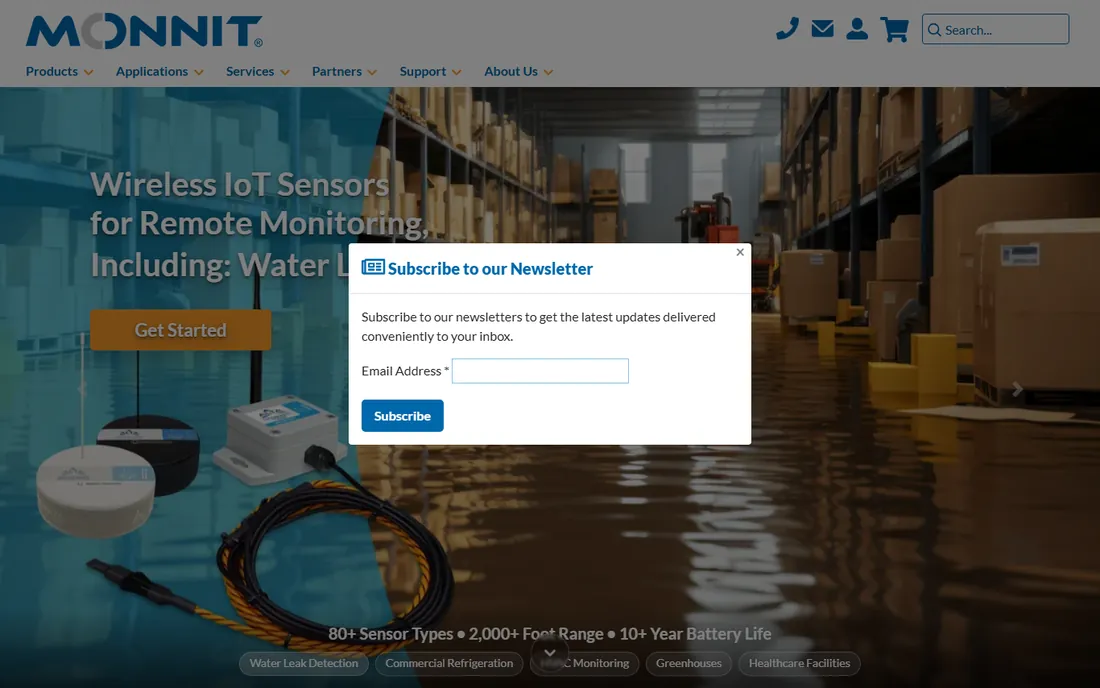
Monnit is one of the most widely deployed wireless sensor platforms for facilities, and temperature is its bread and butter. The sensors come in many variants, including probe sensors for fridges and freezers and ambient sensors for rooms, and they report to the iMonnit cloud software through a gateway. Setup is genuinely straightforward for this category: mount the sensor, connect the gateway, and configure alert thresholds in the dashboard.
The honest catch is that Monnit is a hardware-plus-software purchase, so the total cost depends on how many sensors and gateways your site needs. Pricing is quote-based rather than published, which is normal here but slows down comparison shopping. For a facilities manager covering a building or a small chain of stores, Monnit's range and sensor variety make it a strong default, as long as you get the full quote including the software subscription before committing.
What we like- Wide sensor catalog beyond temperature
- Long wireless range options
- Cloud dashboard with alerts by text, email, and call
Watch out for- Quote-based pricing makes budgeting slow
- Gateway hardware adds to the upfront cost
Starting priceSee website
Free planFree trial
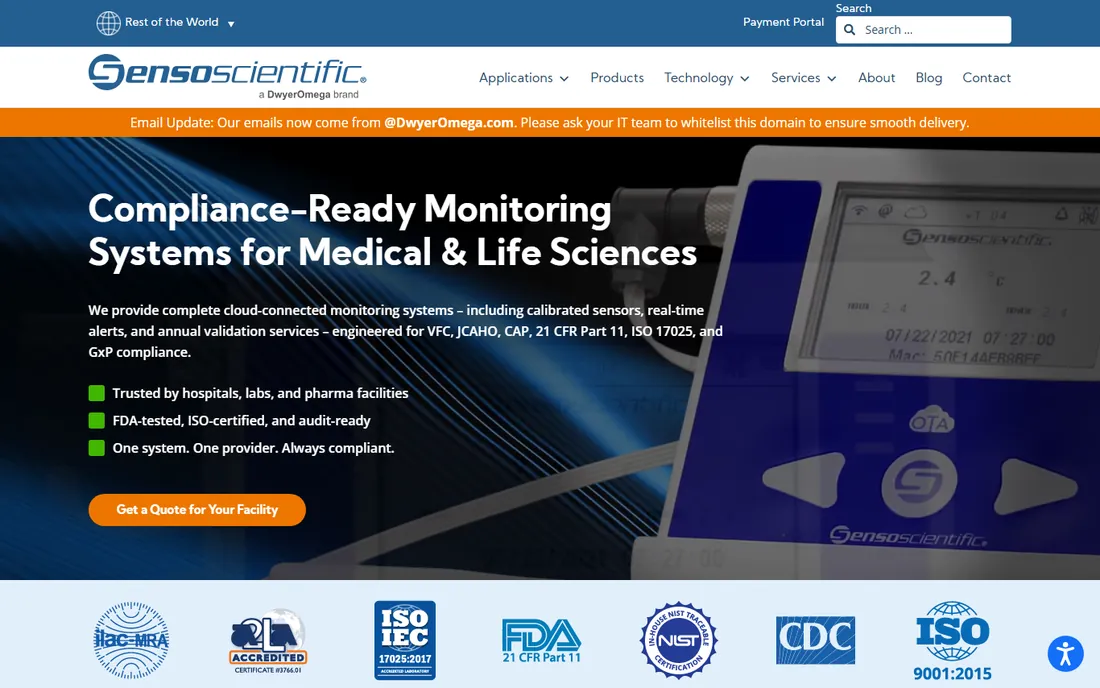
SensoScientific designs its systems for environments where an auditor will eventually ask questions. The WiFi temperature sensors connect directly to your network, which removes the gateway hardware that other systems need, and the cloud software keeps the audit trails, calibration records, and excursion reports that hospitals and pharmacies need for compliance. NIST-traceable calibration certificates are available, which matters when readings have legal weight.
That compliance depth comes at a price, and SensoScientific is positioned above the budget end of the market. A restaurant that just needs freezer alerts is paying for validation features it will never use. But for healthcare, pharma storage, and laboratories, the combination of WiFi simplicity and audit-ready records is exactly the point, and the system is built to satisfy inspectors, not just managers.
What we like- WiFi sensors with no gateway required
- Compliance-focused reporting and audit trails
- NIST-traceable calibration options
Watch out for- Premium pricing for regulated features
- Overkill for simple restaurant or office use
Starting priceSee website
Free planFree trial
Swift Sensors targets the buyer who wants monitoring working this week, not after a three-month IT project. The wireless sensors pair with a gateway, report to a cloud dashboard, and send alerts when temperatures drift out of range. The interface is deliberately simple, which suits operations managers and franchise owners who need to watch dozens of locations without hiring a systems administrator.
The tradeoff for that simplicity is depth. The sensor catalog is narrower than Monnit's, and if you need validated software for pharmaceutical regulations, you will outgrow Swift Sensors quickly. For restaurants, retail, offices, and light industrial facilities, though, it hits the sweet spot: enough reliability and alerting to prevent losses, without the complexity or cost of a regulated-industry platform.
What we like- Easy deployment with minimal configuration
- Clean cloud dashboard
- Good fit for multi-location businesses
Watch out for- Smaller sensor ecosystem than Monnit
- Enterprise validation features are limited
Starting priceSee website
Free planFree trial
ComplianceMate is not a general monitoring platform that happens to work for restaurants; it is a food safety system that happens to include temperature monitoring. Alongside wireless sensors for refrigeration, it digitizes the daily checklists, cooling logs, and HACCP documentation that health inspectors ask for. For a franchise owner, the ability to see every location's compliance status in one dashboard is the real product.
Because it is purpose-built, it is a poor fit outside food service. A warehouse or lab would be paying for restaurant workflows it does not need. Within its niche, though, ComplianceMate replaces both the temperature log clipboard and the sensor system with one platform, which is why chains adopt it. Expect quote-based pricing tied to location count, and ask what the checklist and reporting modules cost, not just the sensors.
What we like- Built specifically for food safety workflows
- Automated HACCP checklists and logs
- Multi-unit franchise management
Watch out for- Narrow focus outside food service
- Pricing requires a sales conversation
#5
Vaisala viewLinc
Best for: validated monitoring in pharma and life sciences
Visit vaisala.com
Starting priceSee website
Free planFree trial
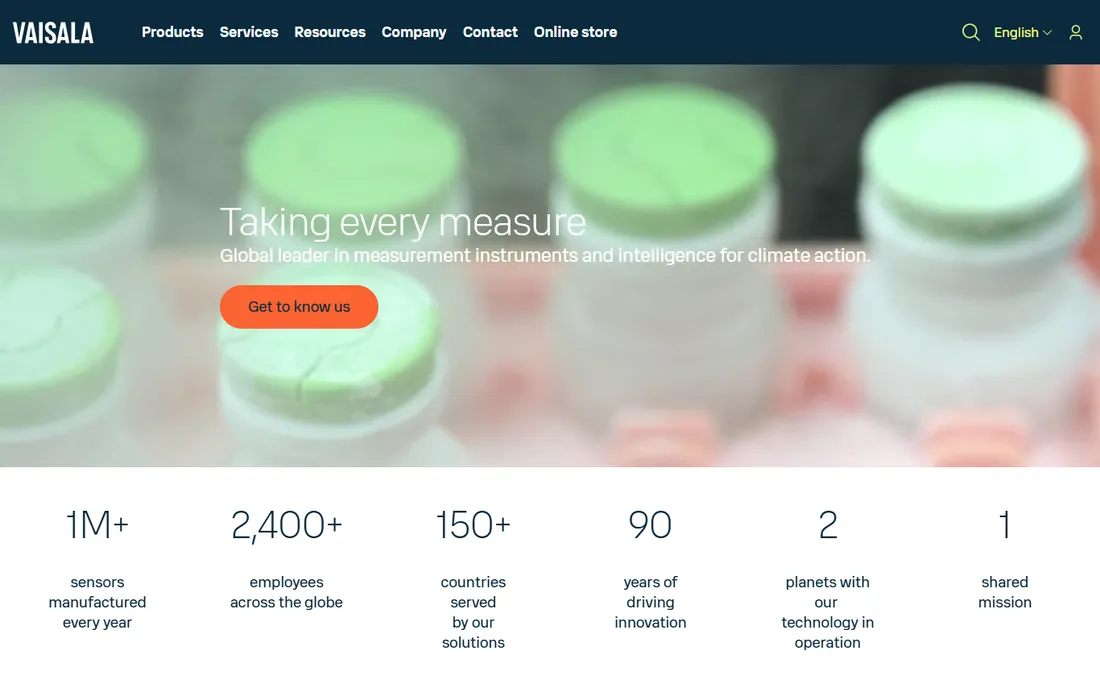
Vaisala is a measurement instrument company first, and viewLinc is its continuous monitoring software for regulated environments. The combination matters: the sensors and transmitters are high-accuracy Vaisala hardware, and the software provides the validated, audit-trailed records that pharmaceutical manufacturers, biotech labs, and hospitals need for GMP compliance. Calibration services and documentation support are part of the offering, not an afterthought.
This is enterprise software with enterprise process. Expect a longer sales cycle, professional installation, and pricing to match. A small clinic or restaurant should look elsewhere. But when a quality department needs a system that survives regulatory inspection, viewLinc's validation pedigree and Vaisala's instrument reputation make it one of the safest choices in the category.
What we like- Enterprise-grade validation support including 21 CFR Part 11
- Highly accurate Vaisala instruments
- Strong calibration services
Watch out for- Enterprise pricing and sales process
- Implementation takes longer than plug-and-play rivals
Starting priceSee website
Free planFree trial
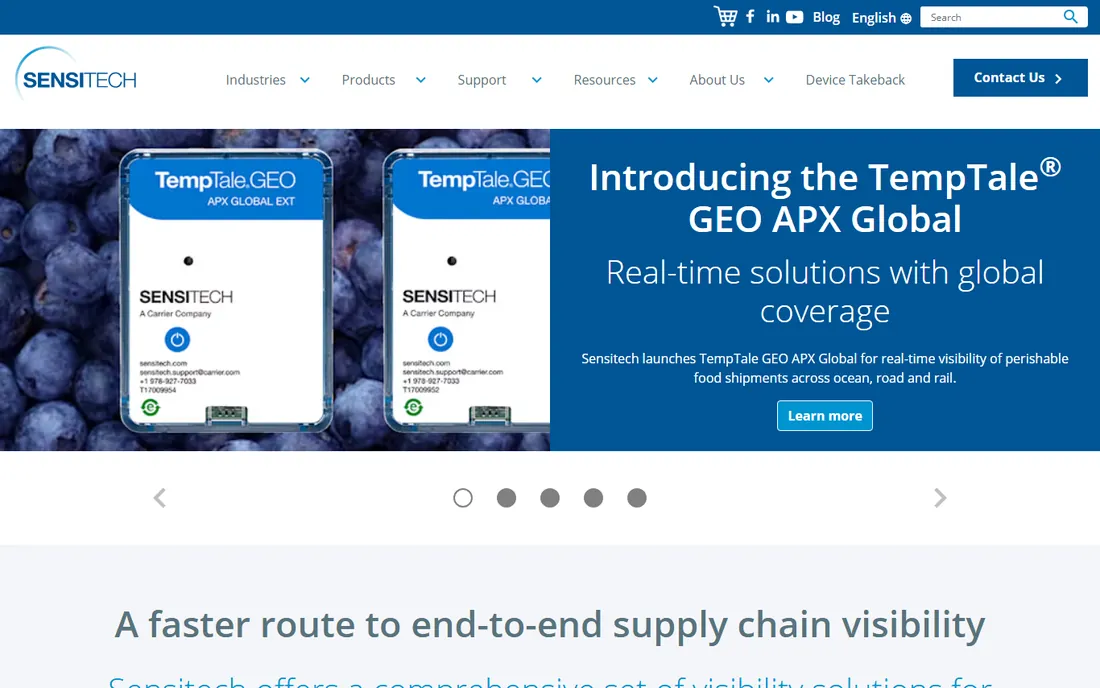
Sensitech, part of Carrier, specializes in the part of the cold chain that fixed-facility systems cannot see: the truck, the container, and the last mile. Its loggers and real-time trackers monitor temperature, humidity, and location during transit, and the software gives shippers and receivers shared visibility with excursion alerts. For pharmaceutical distributors and food logistics companies, this is the difference between discovering spoilage at delivery and preventing it in transit.
The specialization is also the limitation. Sensitech is not the tool for monitoring your building's HVAC or a restaurant freezer; it is for goods in motion. Pricing is enterprise and quote-based, reflecting the scale of the deployments. If your problem is shipments arriving out of spec, start here. If your problem is a walk-in freezer, start with Monnit or Swift Sensors instead.
What we like- Purpose-built for in-transit cold chain
- Real-time shipment tracking and alerts
- Deep pharma and food logistics expertise
Watch out for- Focused on logistics rather than fixed facilities
- Enterprise-oriented pricing
#7
Eupry
Best for: wireless compliance monitoring for pharma and food
Visit eupry.com
Starting priceSee website
Free planFree trial
Eupry is a Danish company offering wireless temperature monitoring aimed squarely at pharmacies, clinics, laboratories, and food businesses that need documented compliance without enterprise complexity. The sensors are wireless with long battery life, the cloud software handles alerting and reporting, and the documentation package supports regulatory requirements. It occupies a middle ground: more compliance-focused than the general facility tools, simpler to buy and run than Vaisala.
The main caveat is scale and reach. Eupry is well established in Europe but has a smaller footprint elsewhere, so support coverage and local calibration services vary by region. For a European pharmacy chain or food business, it is a compelling balance of compliance and simplicity. Buyers elsewhere should confirm local support before committing.
What we like- Wireless sensors with strong battery life
- Compliance-ready documentation
- Straightforward cloud software
Watch out for- Smaller global footprint than Vaisala or Sensitech
- Limited presence outside Europe
#8
XiltriX
Best for: laboratories and cleanrooms needing precise monitoring
Visit xiltrix.com
Starting priceSee website
Free planFree trial
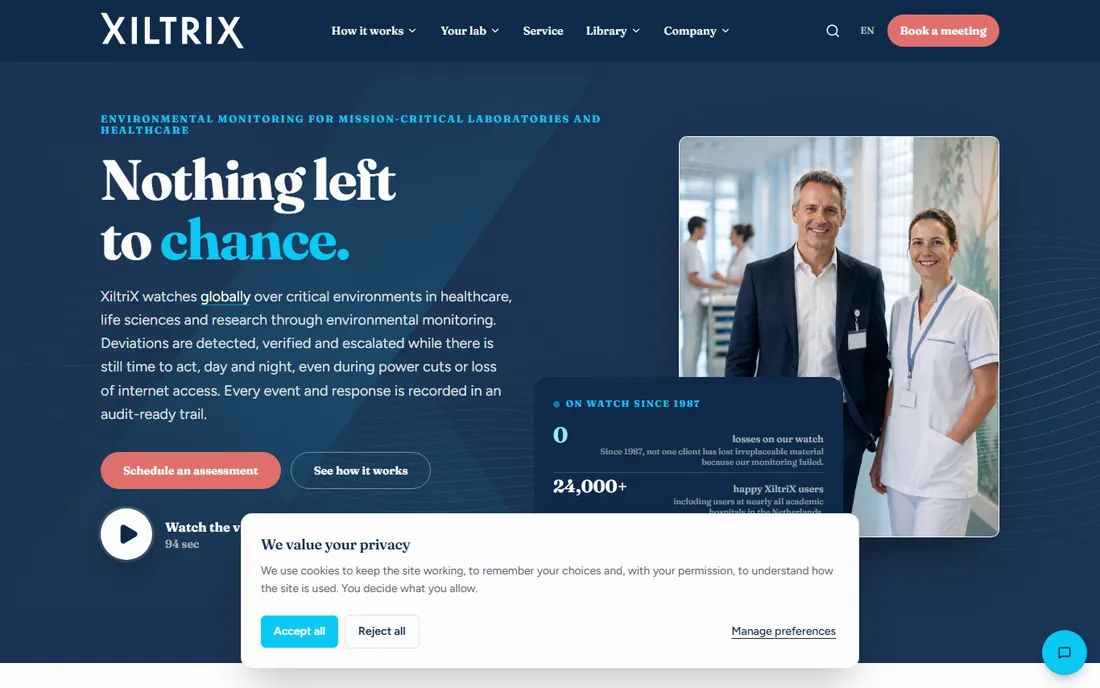
XiltriX has spent decades focused on one environment: the laboratory. Its monitoring systems track temperature, humidity, pressure differentials, and other parameters that labs and cleanrooms care about, with alarming and escalation workflows built for facilities where a freezer failure can destroy years of research. The software supports the documentation and validation that regulated labs require.
That focus makes it irrelevant for restaurants or offices, and the company knows it. Pricing is quote-based and the sales process is consultative, which suits lab managers planning a facility-wide deployment. If you run a lab, vivarium, or cleanroom, XiltriX deserves a place on the shortlist next to Vaisala. If you do not, the other tools on this list will serve you better at lower cost.
What we like- Designed for lab environments with tight tolerances
- Strong alarming and escalation
- Supports validation requirements
Watch out for- Niche focus with limited appeal outside labs
- Quote-only pricing
Buying temperature monitoring that passes audits
Start with the regulation, not the sensor. Food businesses need HACCP-compatible logging, pharmacies and clinics need calibration records and audit trails, and pharmaceutical manufacturers need validated systems with 21 CFR Part 11 controls. Each level of compliance narrows the field and raises the price, so knowing which level applies to you prevents both underbuying and overspending. When in doubt, ask your inspector or quality advisor what they expect to see.
Then map your physical reality. Count every point you need to monitor, note which ones are fridges and freezers versus rooms, and check whether you have WiFi coverage everywhere a sensor will sit. WiFi sensors like SensoScientific's remove gateway hardware but depend on your network; gateway-based systems like Monnit's work where WiFi does not reach but add a device to install and maintain. Battery life, probe cables for sealed units, and alert methods (text, call, email) are the practical details that determine whether the system actually protects you at 2 a.m.
Finally, price the whole package. Get quotes that include sensors, gateways, installation, calibration certificates, and the annual software subscription, because vendors in this category often discount hardware and make it up on the subscription. Ask about contract length, what happens to your historical data if you cancel, and how calibration is handled in year two. The cheapest quote is rarely the cheapest system once all of that is included.
Sensors, gateways, and calibration: what to ask vendors
Ask how the sensor talks to the software. WiFi, LoRa, cellular, and proprietary radio each have different range, battery, and infrastructure implications, and the right answer depends on your building. Ask what happens when the connection drops: good systems buffer readings on the sensor and backfill the gap, while cheap ones simply lose the data, which is exactly the data an auditor wants to see.
Ask about calibration, because an uncalibrated sensor is a guess with a display. Find out whether calibration certificates are included, how often recalibration is recommended, and whether you can swap a sensor for a calibrated one or must send it away. For regulated buyers, NIST-traceable calibration is the standard term to listen for.
Ask about the alerting chain. Who gets notified, by what channel, and what happens if nobody acknowledges? Escalation rules that call a second person after ten minutes are the difference between a monitoring system and an expensive thermometer. Test the alerting during the trial with a real excursion, not just a dashboard demo, because you are buying the 2 a.m. phone call more than the graph.
How we chose
We compared monitoring systems that pair physical sensors with cloud software for temperature oversight, prioritizing alerting reliability, compliance documentation, deployment practicality, and fit for facilities, food service, and cold chain use cases. Pricing in this category is almost entirely quote-based, so we did not rank on price; instead we weighted the total cost drivers buyers should compare, including sensors, gateways, calibration, and subscriptions. We drew on vendor documentation, industry compliance requirements such as HACCP and 21 CFR Part 11, and public user discussions about real-world reliability. No hands-on testing was performed; the assessments reflect documented features and reported buyer experience.
Frequently asked questions
How much does temperature monitoring software cost?
Almost every vendor in this category prices by quote, because the cost depends on sensor count, gateway hardware, installation, and the software subscription together. Expect the software subscription to be an annual per-system or per-location fee, with sensors priced per unit on top. Always get an all-in quote including calibration and year-two subscription costs before comparing vendors.
Do I need WiFi for wireless temperature sensors?
Not necessarily. WiFi sensors connect directly to your network, but many systems use a gateway with longer-range radio, and some offer cellular gateways for locations without reliable network access. Check wireless coverage at each monitoring point during the trial, since a sensor that cannot report is worse than no sensor at all.
What is 21 CFR Part 11 and do I need it?
It is the FDA regulation governing electronic records and signatures, and it applies to pharmaceutical and some healthcare operations. If you are in food service or general facilities management, you do not need it; HACCP-style logging is the relevant standard instead. Do not pay for Part 11 validation features unless your quality department requires them.
How often do temperature sensors need calibration?
It depends on the sensor and the regulation, but annual calibration is the common baseline, and regulated environments often require documented NIST-traceable certificates. Ask vendors whether calibration is included, how it is performed, and what happens to your monitoring coverage while a sensor is away. Some vendors offer swap programs that avoid gaps.
Can temperature monitoring prevent food spoilage or just report it?
It prevents losses by catching excursions early, but only if the alerting chain works. A sensor that logs a freezer failure nobody sees until morning has limited value. Prioritize systems with escalation alerts by text and phone call, and test the full chain during your trial by simulating a real temperature excursion.
What is the difference between a data logger and a monitoring system?
A data logger records temperatures for later download, which is useful for shipment verification but does nothing during an emergency. A monitoring system transmits readings continuously and alerts you in real time. Cold chain shippers often use both: loggers for proof of condition and real-time monitors for intervention.
Sources we checked (8)
- https://www.monnit.com
- https://www.sensoscientific.com
- https://swiftsensors.com
- https://compliancemate.com
- https://www.vaisala.com
- https://www.sensitech.com
- https://www.eupry.com
- https://www.xiltrix.com
Is your product missing or out of date?
We review this list regularly. Vendors can request a listing, send updated pricing or ask about featured placement.

Shihab Mia · Founder, Rankite
Shihab has spent more than a decade helping SaaS and e-commerce brands grow through search. He writes Rankite's software buying guides from pricing pages, documentation and public user reviews. More about Shihab.