How we make this list: we compare pricing pages, product documentation and public user reviews. Rankite is independent; if a vendor ever pays for a featured spot, that listing is clearly labeled Partner.
Key takeaways
- TradingView is the easiest place to start backtesting: it runs in the browser, has a free plan, and Pine Script is simple enough to learn in a weekend.
- Serious quants should look at QuantConnect (free cloud backtesting with Python and C#) or AmiBroker ($299 one-time, famously fast portfolio backtests on Windows).
- MetaTrader 5, NinjaTrader, and TradeStation all offer capable backtesting free with a brokerage account, which makes them the cheapest serious options if you already trade there.
- Backtrader is the pick for Python developers who want a free, open-source framework and do not mind building their own data pipeline.
- No backtest survives bad data: whichever tool you choose, confirm it models commissions, slippage, and survivorship bias before trusting the equity curve.
A trader sketches a moving-average crossover on a napkin, codes it up, and watches the backtest print a beautiful upward curve. Then they trade it live and lose money for three straight months. The difference between those two outcomes usually comes down to the backtesting software: whether it used realistic fills, accounted for costs, and tested on data that includes the losers, not just the survivors.
Quick comparison
| Tool | Best for | Starting price | Free plan |
|---|
 TradingView TradingView | Browser-based backtesting with Pine Script | See website | Yes |
 TrendSpider TrendSpider | No-code automated backtesting | See website | Free trial |
 MetaTrader 5 MetaTrader 5 | Free forex backtesting with Expert Advisors | Free | Yes |
 QuantConnect QuantConnect | Cloud quant research with Python and C# | See website | Yes |
 NinjaTrader NinjaTrader | Futures backtesting with free simulator | Free | Yes |
 TradeStation TradeStation | Stock backtesting with EasyLanguage | Free | Yes |
 AmiBroker AmiBroker | Fast portfolio backtesting on Windows | $299 one-time | No |
 MultiCharts MultiCharts | PowerLanguage backtesting with broker choice | See website | Free trial |
 Backtrader Backtrader | Python developers who want full control | Free | Yes |
Is your product missing or out of date?
We review this list regularly. Vendors can request a listing, send updated pricing or ask about featured placement.
Starting priceSee website
Free planYes

TradingView turned backtesting into something you can do from a Chromebook. The Strategy Tester runs Pine Script strategies on historical data with visual buy/sell markers on the chart, and the free plan is enough to test simple ideas. The real strength is the community: thousands of open-source strategies you can read, fork, and learn from before writing your own.
The limits show up when you get serious. Historical data depth depends on your subscription tier, and true portfolio backtesting across many symbols at once is not its strength. Slippage and commission modeling exist but are basic. Use TradingView to validate ideas fast and cheaply, then move to a heavier tool before sizing real capital.
What we like- Runs entirely in the browser with a generous free plan
- Pine Script is easy to learn
- Huge community sharing open-source strategies
Watch out for- Backtests are limited by plan-level data history
- No portfolio-level multi-asset backtesting on lower tiers
Starting priceSee website
Free planFree trial
TrendSpider is for traders who think in charts, not code. Its Strategy Tester lets you define entry and exit rules visually and backtest them against decades of data, with detailed performance metrics and the ability to deploy strategies as alerts or bots. The automated trendlines, Fibonacci levels, and candlestick pattern recognition save hours of manual chart work.
The tradeoff is flexibility. If your edge depends on custom math, alternative data, or portfolio-level logic, a visual builder will eventually frustrate you. Pricing is subscription-only with a free trial to evaluate. For discretionary traders who want to systematize what they already see on charts, it is the most approachable serious backtester here.
What we like- Strategy Tester needs no coding
- 50+ years of historical data
- Automated pattern recognition and multi-timeframe analysis built in
Watch out for- Subscription pricing with no free tier
- Less flexible than code-based platforms for exotic logic
Starting priceFree
Free planYes
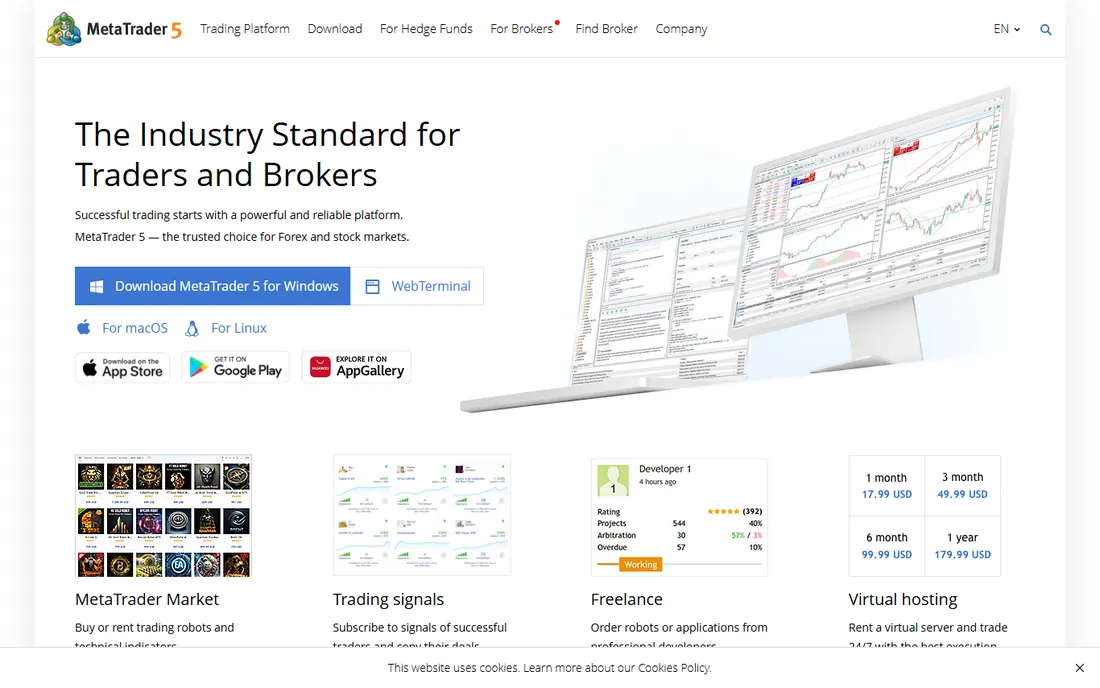
MetaTrader 5 is the free workhorse of retail backtesting. The built-in Strategy Tester runs multi-threaded backtests and optimizations on real tick data, and the MQL5 language lets you code anything from simple EAs to full trading robots. Thousands of free indicators and Expert Advisors in the community mean you rarely start from zero.
The catch is the ecosystem. MT5 is built around forex and CFD brokers, so stock and futures traders will find data and broker support thinner. Backtest quality depends heavily on your broker's data feed, and MQL5, while capable, is less pleasant than Python. Still, for the price (free), nothing else gives retail forex traders this much backtesting power.
What we like- Completely free platform
- Multi-threaded Strategy Tester with real tick data
- Massive library of free and paid Expert Advisors
Watch out for- Primarily a forex and CFD platform
- MQL5 has a learning curve
- Broker data quality varies
Starting priceSee website
Free planYes
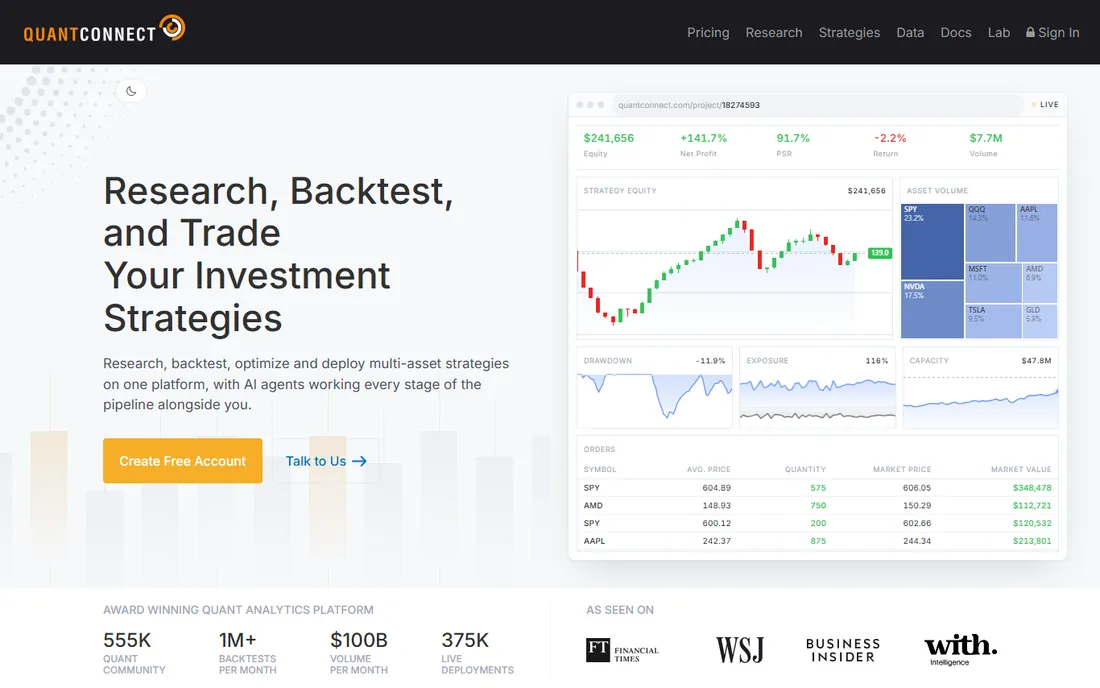
QuantConnect is the closest thing retail traders get to an institutional quant platform. The free tier includes cloud backtesting on point-in-time data (which avoids look-ahead bias, the silent killer of backtests), with support for stocks, options, futures, forex, and crypto in Python or C#. The underlying LEAN engine is open source, so you can run it locally too.
Free has limits: backtest minutes, data resolution, and live deployment slots scale with paid plans. The platform rewards people who think like researchers, with parameter optimization, out-of-sample testing, and a full path from idea to paper trading to live deployment. If you code and you are serious about strategy validation, start here.
What we like- Free cloud backtesting with point-in-time data
- Supports equities, options, futures, forex, and crypto
- Open-source LEAN engine
Watch out for- Serious data and compute cost extra
- Learning curve for the research-to-deployment pipeline
Starting priceFree
Free planYes
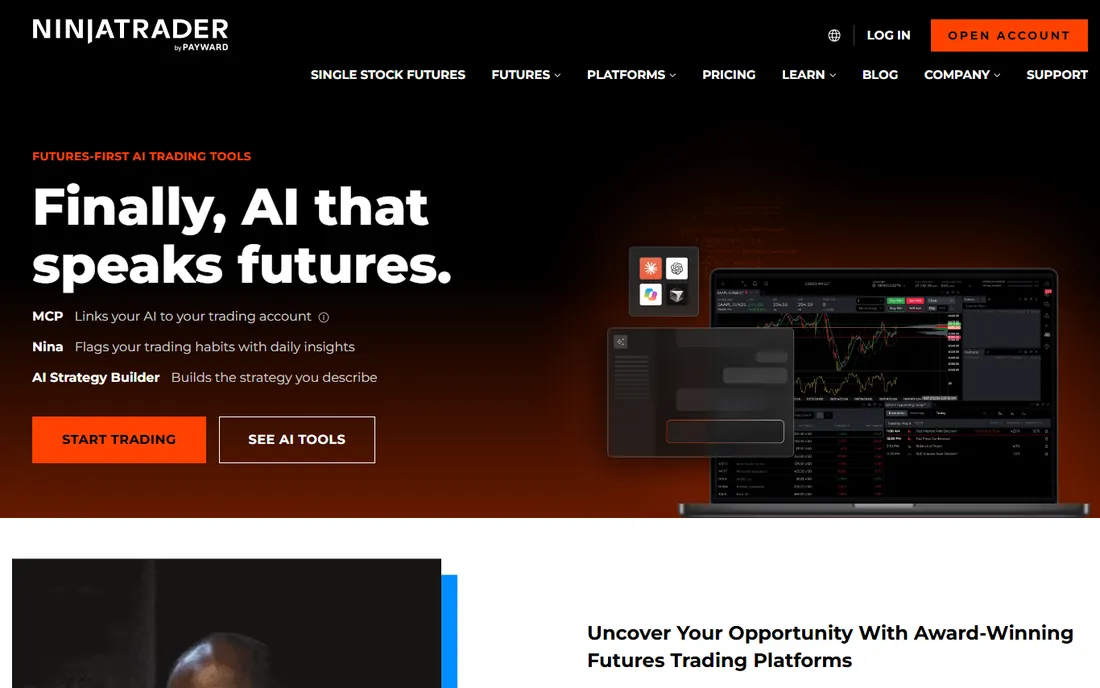
NinjaTrader gives away the platform and charges for brokerage, which makes it one of the cheapest serious backtesting setups available. The free simulator includes backtesting and strategy development in NinjaScript (C#), and the futures focus means deep support for the instruments day traders actually trade. Commissions from $0.09 per micro contract keep live testing cheap.
It is unapologetically a futures platform. Stock and forex traders will find better homes elsewhere. The interface carries two decades of history, and some of the best add-ons are paid. But for futures backtesting at zero platform cost, it is hard to beat.
What we like- Platform and simulator are free
- Strong futures focus with $50 intraday margins
- NinjaScript (C#) for custom strategies
Watch out for- Futures-centric, weaker for stocks and forex
- Advanced order-flow tools cost extra
Starting priceFree
Free planYes
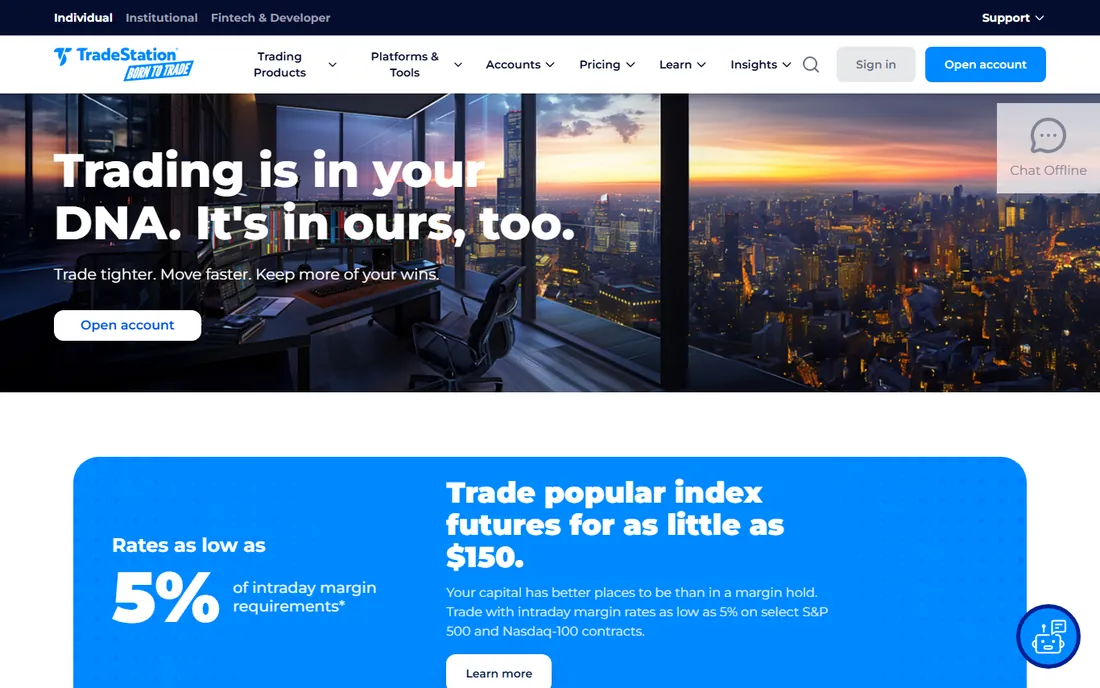
TradeStation practically invented retail strategy backtesting, and EasyLanguage remains one of the most readable scripting languages for trading logic. The platform is free with an account, the simulator lets you paper-trade strategies, and the historical stock data is deep and clean. For US equity system traders, it is still a benchmark.
The obvious limitation is the brokerage tie-in. You get the most from TradeStation as a TradeStation customer; using it purely as a research tool while trading elsewhere adds friction. Forex and futures traders should look at MT5 or NinjaTrader instead. But for stocks, the combination of free platform, readable code, and good data is compelling.
What we like- Free platform with brokerage account
- EasyLanguage is beginner-friendly
- Deep historical stock data
Watch out for- Tied to the TradeStation brokerage for the best experience
- Futures and forex support is thinner
Starting price$299 one-time
Free planNo
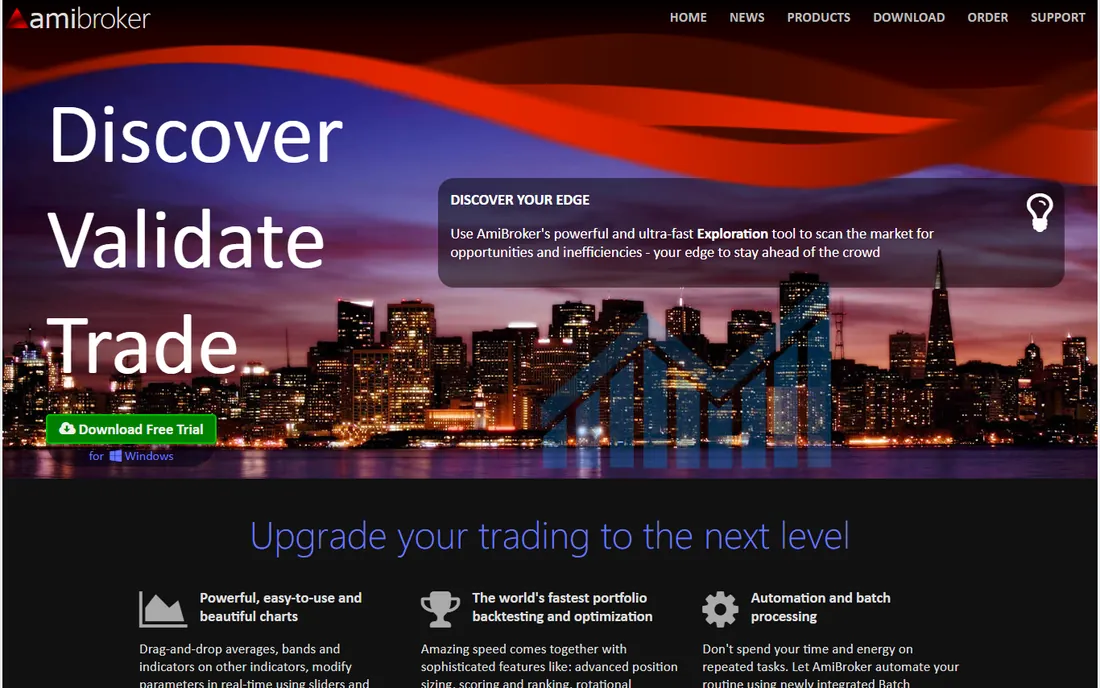
AmiBroker's reputation rests on one thing: speed. Its portfolio backtester chews through thousands of symbols and complex position-sizing rules faster than almost anything in its price class. Licenses are perpetual (Standard $299, Professional $379), with 24 months of upgrades included, so there is no subscription treadmill. AFL, its formula language, packs remarkable power into single lines of code.
You will need a separate data feed (a real ongoing cost), and the Windows-only, no-frills interface will not win design awards. There is no free tier, though the trial lets you verify the speed claims yourself. For systematic stock traders who backtest portfolios rather than single symbols, AmiBroker remains the value king.
What we like- Famously fast portfolio-level backtests
- Perpetual licenses from $299
- AFL is concise and powerful
Watch out for- Windows only
- Data feed is separate and costs extra
- Dated interface
Starting priceSee website
Free planFree trial
MultiCharts is what TradeStation users graduate to when they want broker independence. It speaks PowerLanguage (EasyLanguage-compatible), connects to a wide range of brokers and data feeds, and offers serious backtesting with brute-force and genetic optimization plus portfolio-level testing. The replayable historical data mode lets you practice as if markets were live.
Pricing is quote-based rather than published, and a free trial is available for evaluation. The interface packs a lot in and can overwhelm beginners. Choose MultiCharts when you like the EasyLanguage workflow but want to trade through your own broker and data feed.
What we like- Broker-neutral with wide connectivity
- PowerLanguage compatible with EasyLanguage
- Strong optimization and portfolio testing
Watch out for- Pricing not published on the site
- Windows-centric
- Interface feels crowded to newcomers
Starting priceFree
Free planYes
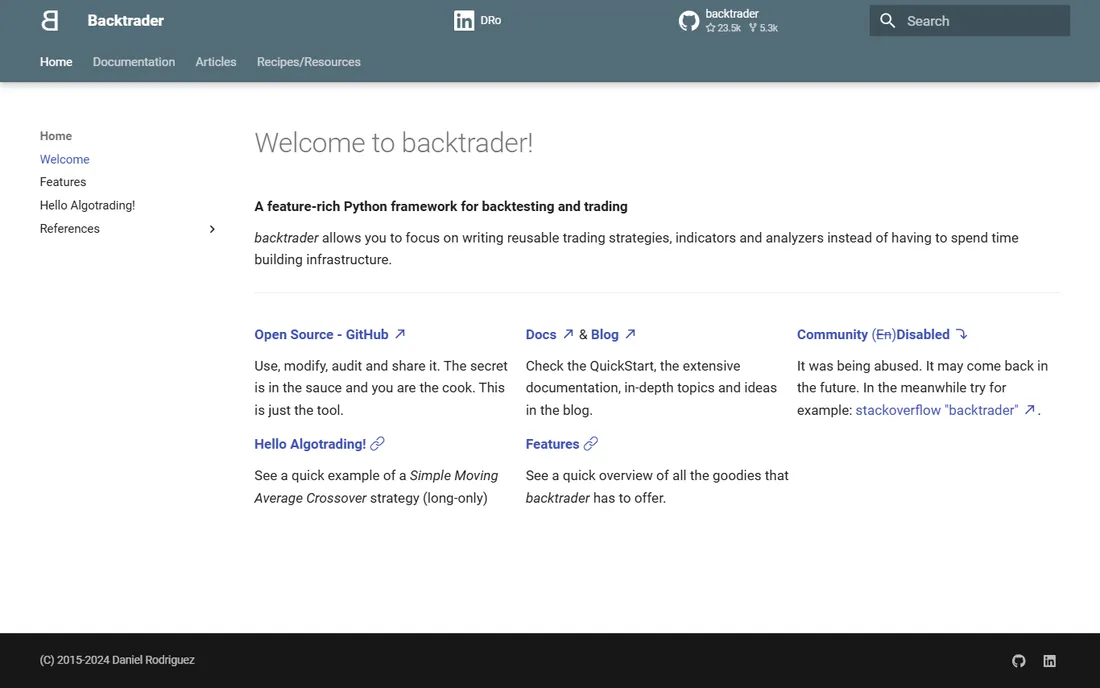
Backtrader is the Python backtesting framework that taught a generation of quants. It is free, open source, and gives you complete control: custom commissions, slippage models, position sizers, analyzers, and live-trading bridges. If you can dream up a backtest assumption, you can code it. The documentation is extensive and the community has answered nearly every question already.
The price of that control is effort. There is no data included, no cloud, and no hand-holding; you wire up feeds, handle corporate actions, and maintain the code. Note also that active development has slowed, so check the GitHub pulse before building a business on it. For Python developers who want to own their entire stack, it is still the most flexible free option.
What we like- Free and open source
- Full control over every backtest assumption
- Large community and extensive docs
Watch out for- You build the data pipeline yourself
- No built-in data
- Development has slowed
What actually makes a backtest trustworthy
A backtest is only as honest as its assumptions, and most disappointing live results trace back to the same handful of sins. First, survivorship bias: if your historical data only includes companies that still exist, your strategy never had to survive the delistings and bankruptcies. Second, look-ahead bias: using data in a signal that would not have been available at the time, like revised earnings numbers. Third, costs: commissions, spreads, and slippage turn many beautiful equity curves flat.
Before trusting any platform, check four things. Does it use point-in-time data? Can you model realistic commissions and slippage per trade? Does it support walk-forward or out-of-sample testing, not just in-sample optimization? And can it handle corporate actions (splits, dividends, mergers) correctly? The tools above vary widely on these. QuantConnect and AmiBroker are strong across the board; browser-based tools tend to be weaker on corporate actions and cost modeling. Whatever you choose, assume your first backtest is lying to you and try to prove it wrong before risking capital.
Paper trade before you pay for data
Here is a practical sequence that saves beginners real money. Start free: code the idea in TradingView Pine Script or Backtrader and see if the logic even works. If the equity curve looks interesting, rebuild it in a stricter environment (QuantConnect's free tier or AmiBroker's trial) with realistic costs and out-of-sample testing. Only then consider paying for premium data or a subscription.
Paper trading is the step most people skip and most regret skipping. Run the strategy on live data without real money for at least a month, ideally through different market conditions. Watch for the specific ways live trading differs: fills at worse prices than the backtest assumed, signals that repaint or arrive late, and the psychological urge to override the system. If the paper results land inside the backtest's expected range, you have something worth sizing carefully. If they do not, you just saved yourself tuition paid to the market.
How we chose
We picked the nine tools that working traders actually use for backtesting, from browser-based (TradingView, TrendSpider) to broker platforms (MetaTrader 5, NinjaTrader, TradeStation) to quant frameworks (QuantConnect, AmiBroker, MultiCharts, Backtrader). We verified each vendor's homepage and took pricing only from vendor pricing or product pages, using "See website" where the vendor does not publish prices and "Free" where the platform is genuinely free. We weighed data quality features (point-in-time data, corporate actions, tick data), cost modeling (commissions, slippage), programming language accessibility, and asset-class coverage. We cross-checked reputations against trader communities on Reddit, Elite Trader, and review sites. We did not claim hands-on testing.
Frequently asked questions
Can I backtest for free?
Yes. TradingView's free plan, MetaTrader 5, NinjaTrader's simulator, TradeStation's simulator, QuantConnect's free tier, and Backtrader all let you backtest without paying. Free tiers usually limit data history, the number of backtests, or advanced features, but they are enough to validate whether an idea deserves more investment.
How much historical data do I need for a reliable backtest?
More than you think. A common rule is at least 5 to 10 years covering different market regimes (bull, bear, high and low volatility). Testing on two years of a bull market proves almost nothing. This is one reason data depth matters when choosing a platform: a tool with only two years of history cannot validate a strategy properly no matter how good its engine is.
What is walk-forward testing and do I need it?
Walk-forward testing optimizes your strategy on one period of data, then tests it on the following unseen period, then rolls forward and repeats. It is the best defense against overfitting (curve-fitting your rules to past data). If your platform supports it, use it. If it does not, at least split your data into in-sample and out-of-sample periods manually and only trust the out-of-sample results.
Do backtesting results include dividends and stock splits?
Good platforms adjust for them; weak ones do not. Unadjusted splits will make your charts and signals wrong, and missing dividends understates returns for long strategies. Before trusting a backtest, check whether the platform handles corporate actions in its data. This is a quiet but important differentiator between professional-grade tools and casual ones.
Should I learn to code to backtest properly?
It helps enormously, but it is not mandatory to start. TrendSpider and TradingView's simpler tools let non-coders test ideas visually. But code-based platforms (Python, Pine Script, EasyLanguage, MQL5) give you control over assumptions that visual builders hide. If you plan to trade systematically for years, learning Python or Pine Script is one of the highest-return investments you can make.
Sources we checked (9)
- https://tradingview.com
- https://trendspider.com
- https://metatrader5.com/
- https://quantconnect.com/
- https://ninjatrader.com
- https://tradestation.com/
- https://www.amibroker.com
- https://multicharts.com/
- https://backtrader.com/
Is your product missing or out of date?
We review this list regularly. Vendors can request a listing, send updated pricing or ask about featured placement.

Shihab Mia · Founder, Rankite
Shihab has spent more than a decade helping SaaS and e-commerce brands grow through search. He writes Rankite's software buying guides from pricing pages, documentation and public user reviews. More about Shihab.