How we make this list: we compare pricing pages, product documentation and public user reviews. Rankite is independent; if a vendor ever pays for a featured spot, that listing is clearly labeled Partner.
Key takeaways
- Thomson Reuters ONESOURCE and Longview Tax are the two most established provision engines, with ONESOURCE stronger on research integration and Longview on close-cycle workflow.
- CSC Corptax and Tax Technologies (TTI) appeal to teams that want the whole corporate tax lifecycle, not just the provision, in one system.
- Oracle Tax Reporting Cloud fits companies already running Oracle ERP, where provision data flows from the same system as the books.
- Bloomberg Tax Provision suits teams that already use Bloomberg research and want provision, workpapers and fixed assets connected.
- PowerPlan is the specialist pick for asset-intensive companies like utilities, where fixed-asset tax data dominates the provision.
Quick comparison
Is your product missing or out of date?
We review this list regularly. Vendors can request a listing, send updated pricing or ask about featured placement.
The best tax provision software
Starting priceSee website
Free planNo
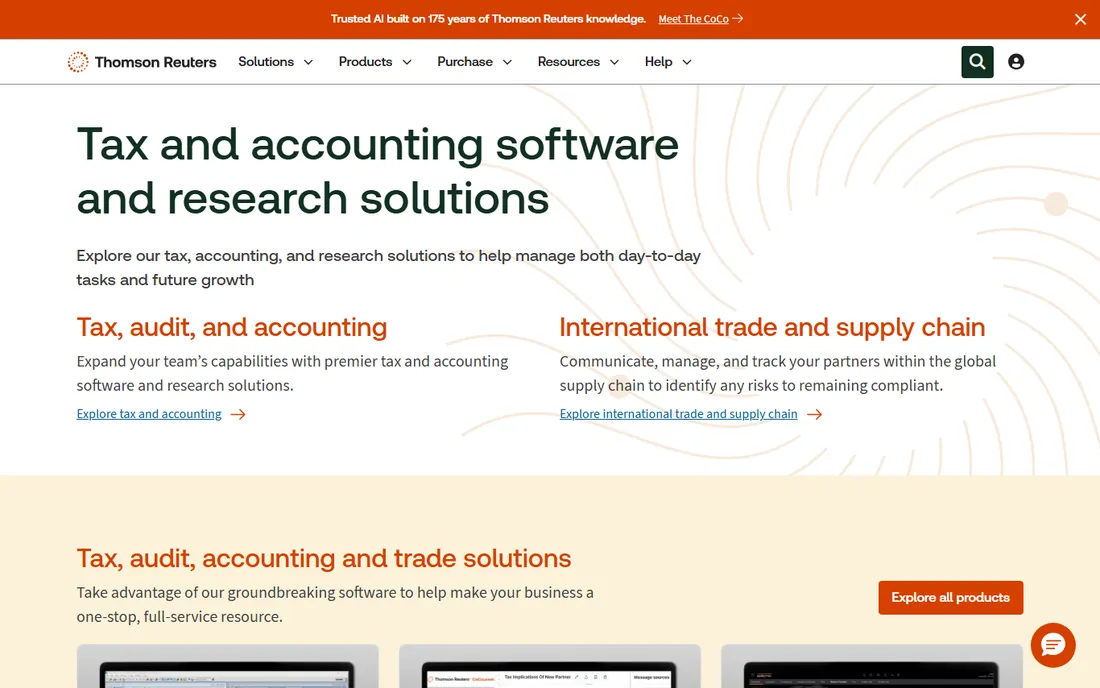
ONESOURCE is the default shortlist name in corporate tax for a reason. The provision module automates data import, calculates the provision in seconds according to vendor materials, and generates standard disclosures like rate reconciliations and deferred tax rollforwards. Because it sits inside the wider ONESOURCE suite, compliance, transfer pricing and research can share the same data instead of living in separate silos.
The honest catch is scale of commitment. This is enterprise software with enterprise timelines and enterprise contracts. Small tax teams may find the implementation heavier than the problem. For large departments standardizing their whole tax operation, though, it is the reference platform.
What we like- Deep integration with Thomson Reuters tax research
- Dedicated modules for uncertain tax positions
- Strong global coverage
Watch out for- Pricing is quote-only and implementations take time
- The suite breadth can mean paying for modules you do not use
Starting priceSee website
Free planNo
Longview Tax comes from insightsoftware's Longview platform, which grew up in financial consolidation and planning. That heritage shows: the provision process plugs into close cycles with controls, documentation and repeatability built in, rather than treating provision as a standalone exercise. Data flows from the field to the footnote, in the vendor's phrasing.
It fits tax teams that want provision owned by tax but connected to finance systems, with less reliance on manual trial balance handoffs. As a standalone purchase it is capable, but the value compounds for companies already using Longview for close or planning.
What we like- Built on a corporate performance platform close to the close process
- Repeatable workflows with controls
- Multi-entity and multi-currency consolidation
Watch out for- Strongest when paired with other Longview modules
- Less known outside finance teams than ONESOURCE
Starting priceSee website
Free planNo
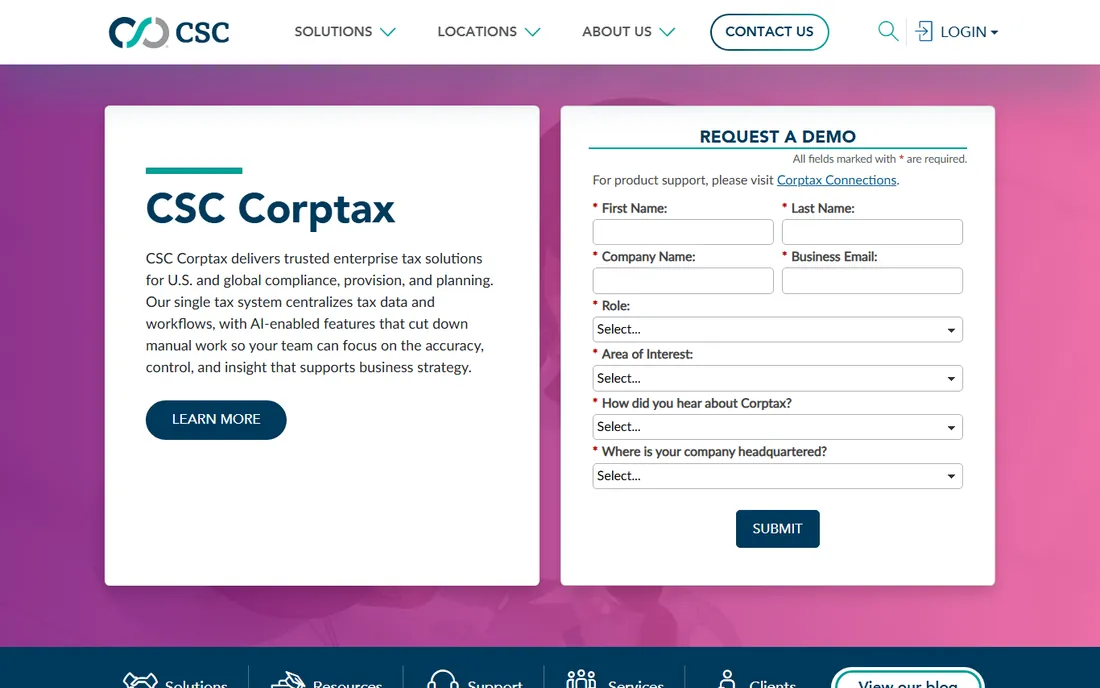
Corptax, now part of CSC, takes the single-system idea seriously: one tax database feeding provision, compliance, planning and analytics. For teams tired of reconciling three tools against each other, that architecture is the whole pitch. The vendor reports supporting around a thousand corporate clients across a hundred countries, with heavy Fortune 500 representation.
The product shows its age in places, and implementations are not quick. But for large US multinationals that want one system of record for corporate tax, Corptax remains a fixture on every serious shortlist.
What we like- Single system for provision, compliance and planning
- Strong data transparency and governance
- Long support track record with large corporates
Watch out for- Enterprise-only pricing and implementation
- Interface reflects its long history
Starting priceSee website
Free planNo
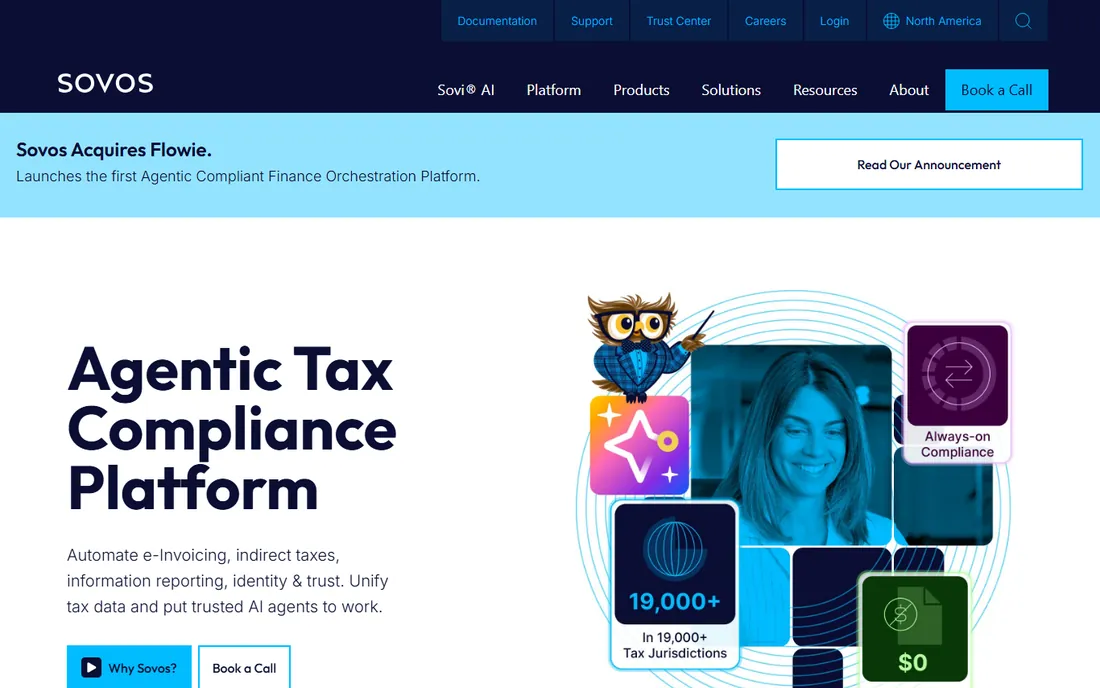
Sovos built its name on always-on compliance: e-invoicing mandates, VAT, sales tax, and information reporting across the globe. Its provision capability sits inside that wider platform, which makes it interesting for companies whose tax complexity is international first. One vendor, one data model, fewer handoffs between direct and indirect tax teams.
If your provision pain is purely domestic ASC 740 work, Sovos may be broader than you need. If your tax department juggles global e-invoicing mandates and provision together, the combined platform argument is strong.
What we like- Huge global regulatory footprint across some 200 countries
- Strong in e-invoicing and indirect tax alongside provision
- Large transaction volumes handled
Watch out for- Provision is one piece of a very broad platform
- Best value comes from adopting multiple Sovos modules
Starting priceSee website
Free planNo
Oracle Tax Reporting Cloud exists to keep tax close to the books. For companies running Oracle Fusion ERP, provision data can flow from the same system that holds the financials, which removes the export-and-reconcile step that eats close weeks. The tool covers the standard provision cycle with the audit trail Oracle customers expect.
Outside Oracle environments, the integration advantage fades and buyers should compare pure-play provision vendors. Inside them, it is often the path of least resistance, and finance teams like having tax in the same cloud as everything else.
What we like- Provision aligned with Oracle financial reporting
- Native data flows from Oracle ERP
- Enterprise security and scale
Watch out for- Makes most sense inside an Oracle estate
- Licensing follows Oracle's enterprise model
Starting priceSee website
Free planNo

Bloomberg Tax Provision connects the calculation to the research behind it. Tax professionals can move from a provision number straight into the underlying tax law research without switching platforms, and workpapers and fixed asset management live in the same suite. Customer stories on the vendor's site emphasize time saved over spreadsheet processes.
The product is aimed at corporate tax departments and large accounting firms rather than small businesses. Pricing is custom, and like most suite vendors, Bloomberg's best economics come from using several of its products together.
What we like- Tight connection to Bloomberg tax research and workpapers
- Fixed asset management in the same suite
- Strong adoption among large firms
Watch out for- Quote-only enterprise pricing
- The suite model rewards adopting multiple Bloomberg products
Starting priceSee website
Free planNo
Tax Technologies, Inc. does one thing: corporate income tax software. The Tax Series covers planning, provision and compliance for income tax specifically, and the company leans on deep tax-law knowledge plus long-term client relationships. Each client gets a dedicated support representative who knows their business and their database.
That focus is the appeal and the limit. You will not get VAT, e-invoicing or transfer pricing here. For tax departments whose headache is specifically the US corporate income tax cycle, a specialist vendor with attentive support can beat a giant suite.
What we like- Purpose-built for corporate income tax provision and compliance
- Dedicated support representatives per client
- No outside ownership changes in company history
Watch out for- Smaller vendor with less brand recognition
- Narrower scope than suite competitors
Starting priceSee website
Free planNo
PowerPlan serves the companies whose provision is dominated by fixed assets: utilities, energy, pipelines, telecom. Its income tax module connects with asset accounting and regulatory reporting, which matters enormously when rate cases and tax fixed assets drive the numbers. The customer list reads like a utility index.
If your company is asset-light, this is not your tool. If depreciation, cost segregation and regulatory accounting shape your provision, PowerPlan's specialization is exactly what generic provision engines lack.
What we like- Built for asset-intensive industries
- Strong fixed-asset tax handling
- Deep utility and energy customer base
Watch out for- Niche focus means less fit for asset-light companies
- Enterprise sales cycle
Starting priceSee website
Free planNo
Vertex is the name most tax departments know from sales tax determination and compliance. Its platform also covers tax data management and reporting that feeds the provision process, with pre-built integrations to major ERPs. Companies already standardized on Vertex for indirect tax can extend the relationship rather than adding another vendor.
Buyers should be clear-eyed: if the primary need is ASC 740 provision depth, the pure-play provision vendors above lead. Vertex earns its place when the tax department's center of gravity is indirect tax and the provision needs to draw on the same data.
What we like- Market leader in indirect tax determination
- Strong ERP integrations
- Provision connects to wider tax data management
Watch out for- Provision is secondary to its indirect tax strength
- Enterprise pricing
What to check before you buy
Start with your data sources. Provision software is only as good as the trial balance feed into it, so map exactly how data moves from your ERP or consolidation system into each candidate. Ask for a live walkthrough using your chart of accounts structure, not the vendor's demo data. Check how the tool handles your specific complexities: multi-entity consolidation, foreign currency, uncertain tax positions, and state apportionment if you operate across states.
Then probe the audit trail. Auditors will ask how every provision number was produced, so the tool must log adjustments, lock periods, and produce documentation without manual assembly. Ask about implementation timelines honestly, including who does the data mapping work. And confirm the disclosure outputs match what your auditors expect, down to the footnote formats.
When spreadsheets stop being enough
Most tax departments do not buy provision software because they love software. They buy it when the spreadsheet process breaks: the file gets too big to open reliably, only one person understands the formulas, or an audit finding forces change. Common tipping points are crossing into multiple jurisdictions, adding entities faster than headcount, or a restatement scare.
If you are not there yet, a well-structured workbook with version control can still work. The honest test is whether your provision process survives the departure of its owner. If the answer is no, the risk case for software writes itself, and the vendors above are where the evaluations start.
How we chose
We focused on tools built specifically for the corporate income tax provision process under ASC 740, not general tax preparation or sales tax products. Candidates had to be live, supported products with corporate tax departments as customers in 2026. We verified each vendor's current homepage and product positioning, and we excluded consumer tax prep tools, pure research databases without calculation engines, and ERP-native features that do not include a dedicated provision module. Pricing in this category is universally quote-based, so every entry lists "see website" rather than invented figures.
Frequently asked questions
What is tax provision software?
Software that automates the income tax provision process: calculating current and deferred income taxes, usually under ASC 740, and producing the tax footnote disclosures for financial statements. It replaces spreadsheet-driven processes with controlled, auditable workflows.
Who needs tax provision software?
Corporate tax departments at mid-size and large companies, especially those with multiple entities, jurisdictions, or currencies. Small businesses with simple tax situations generally do not need it.
How much does tax provision software cost?
Vendors price by quote based on company size, entity count and modules. Expect enterprise contracts; none of the established vendors publish list prices. Budget for implementation services on top of the license.
How long does implementation take?
Typically several months, driven by data mapping from your ERP and configuration of your provision methodology. Simpler deployments at smaller companies move faster; global multi-entity rollouts take longer.
Can provision software handle multiple countries?
The leading tools handle multi-entity, multi-currency consolidation and support both US GAAP and IFRS reporting. Global compliance depth varies, so verify coverage for your specific jurisdictions during evaluation.
Does it replace our ERP's tax features?
Usually it complements them. ERPs handle transaction taxes and basic reporting; provision tools add the ASC 740 calculation engine, disclosure generation and audit trail that ERPs generally lack.
Sources we checked (11)
- https://tax.thomsonreuters.com/
- https://www.longview.com/
- https://corptax.com/
- https://www.sovos.com/
- https://www.oracle.com/
- https://pro.bloombergtax.com/
- https://taxtechnologies.com/
- https://www.powerplan.com/
- https://www.vertexinc.com/
- https://houseblend.io/articles/pdfs/asc-740-tax-provision-software-onesource-longview-netsuite.pdf
- https://legalitcost.com/c/tax-provision-software/guide/pdf
Is your product missing or out of date?
We review this list regularly. Vendors can request a listing, send updated pricing or ask about featured placement.

Shihab Mia · Founder, Rankite
Shihab has spent more than a decade helping SaaS and e-commerce brands grow through search. He writes Rankite's software buying guides from pricing pages, documentation and public user reviews. More about Shihab.
 Longview Tax
 CSC Corptax
 Sovos
Sovos Oracle Tax Reporting Cloud
 Bloomberg Tax Provision
 Tax Technologies Tax Series
 PowerPlan
 Vertex