How we make this list: we compare pricing pages, product documentation and public user reviews. Rankite is independent; if a vendor ever pays for a featured spot, that listing is clearly labeled Partner.
Key takeaways
- TurboTax Business and H&R Block are the mainstream DIY choices, with TurboTax leading on guidance and H&R Block on human help.
- TaxAct, TaxSlayer and FreeTaxUSA offer the same federal forms for less money, with FreeTaxUSA the cheapest credible option.
- Drake Tax and Wolters Kluwer CCH serve tax professionals, not DIY filers; hire a pro rather than buying these yourself.
- Cash App Taxes and IRS Free File cover simple situations free, but small business complexity usually needs more.
Quick comparison
Is your product missing or out of date?
We review this list regularly. Vendors can request a listing, send updated pricing or ask about featured placement.
The best tax preparation software for small business
Starting priceSee website
Free planNo
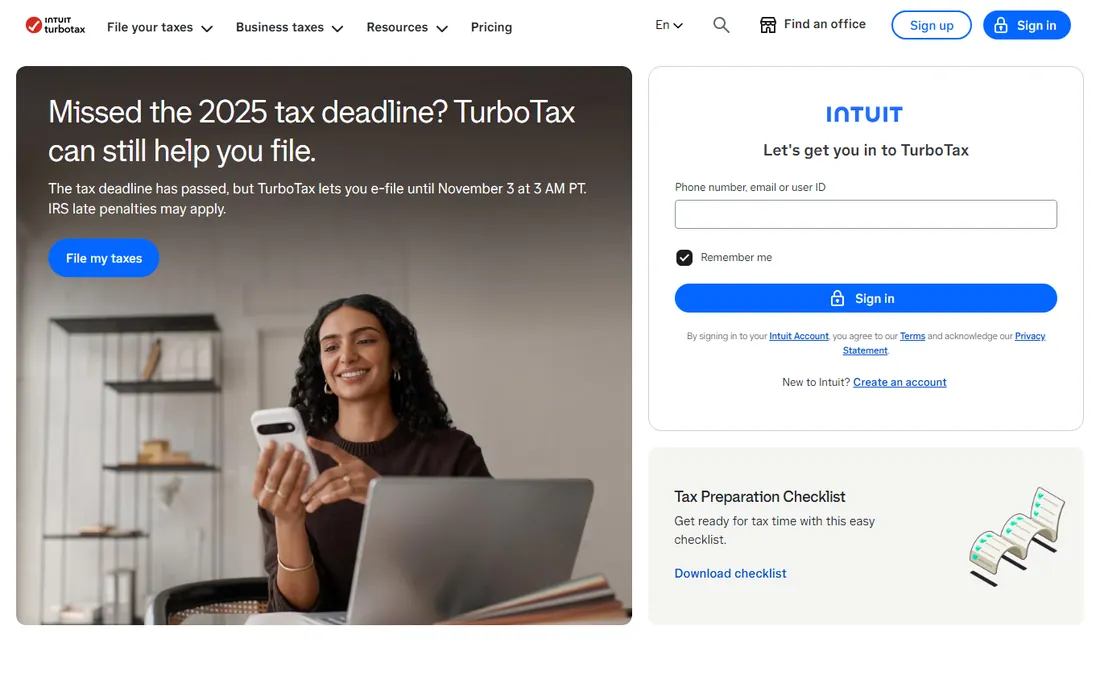
TurboTax Business is the product most small business owners reach for, and the interview format is why. It walks through business income, deductions, depreciation and entity-specific forms with explanations that non-accountants understand. Partnerships, S corporations, C corporations and estates are covered, with state returns available.
It is the priciest DIY option, and the upsell prompts irritate. The business product is separate from TurboTax personal, which confuses first-timers. But for owners determined to file themselves, TurboTax's guidance catches mistakes that cheaper tools miss, which is worth real money at tax time.
What we like- Best interview guidance in the category
- Handles partnerships, S corps and C corps
- Strong import features
Watch out for- The most expensive DIY option
- Upsells throughout
- Business version is separate from personal
Starting priceSee website
Free planFree trial
H&R Block's advantage is humans. Beyond the DIY software, thousands of offices and online tax pros stand ready when the return gets complicated. That escalation path matters for small business owners who start confident and hit a wall in March. The software itself covers business entities solidly, usually at lower prices than TurboTax.
The interview experience is less polished, and office quality varies by location. But the hybrid model, software plus humans, is genuinely useful. Owners who want a safety net behind their DIY filing should compare H&R Block first.
What we like- Human help in offices and online
- Solid business coverage
- Often cheaper than TurboTax
Watch out for- Interface trails TurboTax
- Upsells exist
- Office quality varies
Starting priceSee website
Free planNo
TaxAct has competed on price for decades, offering the same federal business forms for meaningfully less than TurboTax or H&R Block. The business editions cover partnerships, corporations and sole proprietors, with state filing available. Price-lock guarantees address the surprise-pricing complaints the industry is known for.
The guidance and polish trail the leaders; confident filers do fine, nervous ones may miss the hand-holding. But the forms are the forms, and the IRS accepts them identically. For owners comfortable with taxes who resent premium pricing, TaxAct's value is proven.
What we like- Lower prices than the big two
- Solid business forms
- Price-lock guarantees
Watch out for- Guidance is thinner
- Interface is functional
- Support tiers vary
Starting priceSee website
Free planNo
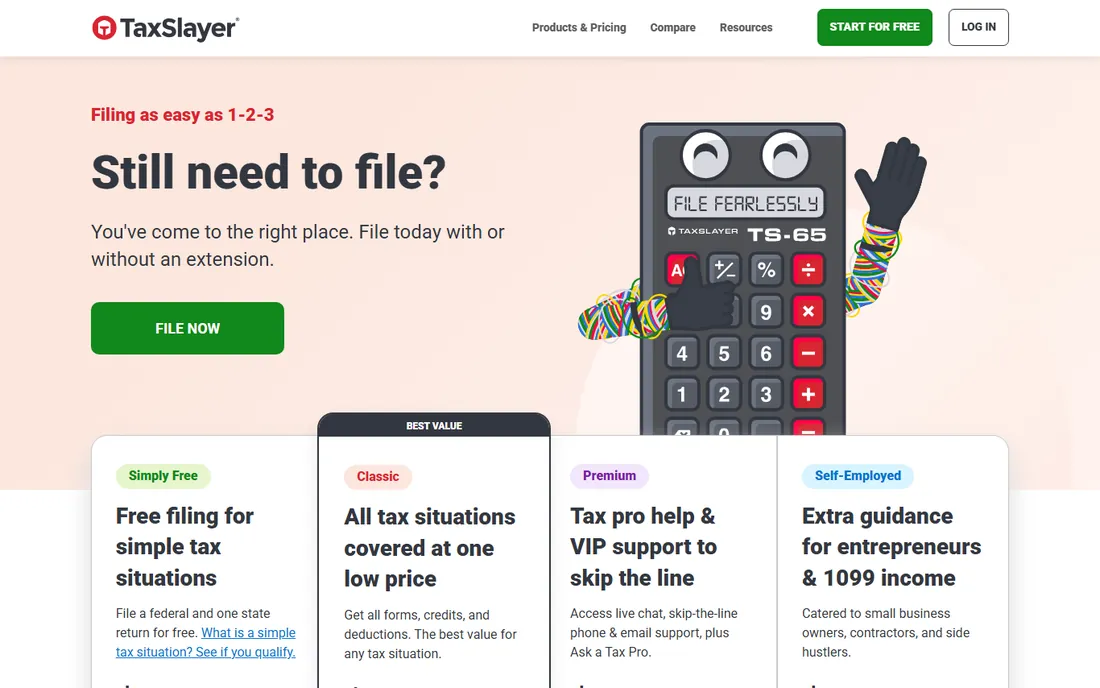
TaxSlayer built its reputation on affordable filing, historically serving military families free. The paid tiers extend to self-employed and small business situations at prices well below the leaders. The interface is straightforward without pretense.
Business depth is basic compared to TurboTax Business; complex entities should look elsewhere. But for sole proprietors and simple LLCs, TaxSlayer's low prices cover the actual need without paying for guidance that confident filers do not use.
What we like- Low prices
- Straightforward interface
- Military-friendly history
Watch out for- Business features are basic
- Guidance is thinner
- Smaller ecosystem
Starting priceFree
Free planYes
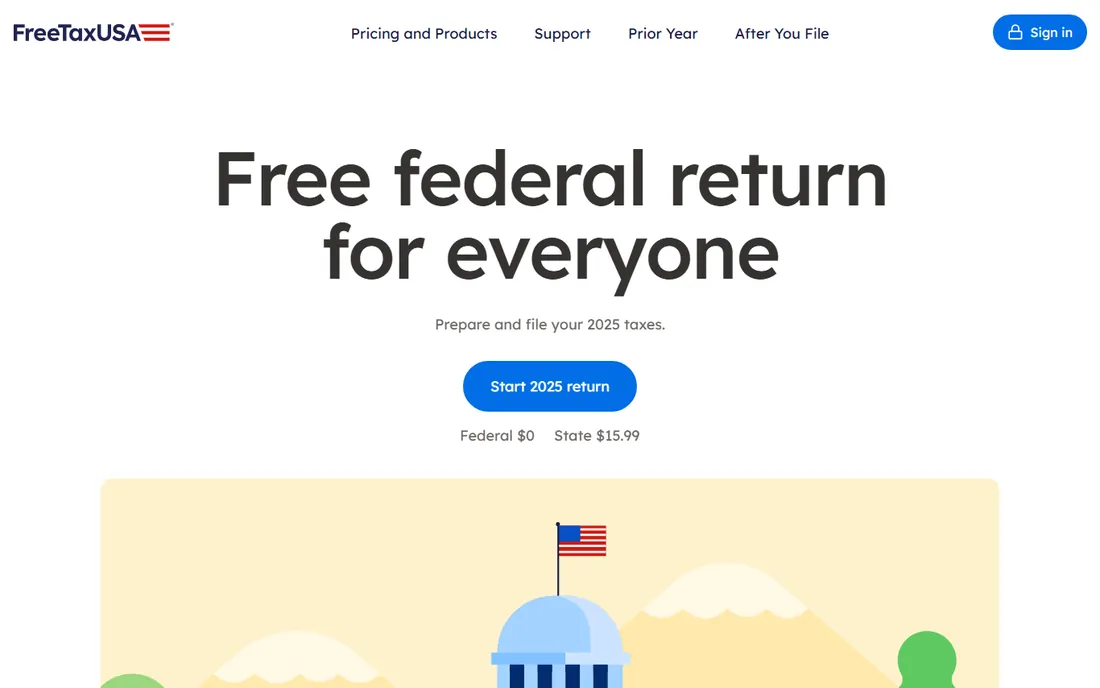
FreeTaxUSA's proposition is blunt: federal tax filing free, with an inexpensive deluxe tier for extras. Business schedules for sole proprietors are supported, and the math is honest. For the price-sensitive owner with a straightforward situation, it is the cheapest credible path to a filed return.
State returns cost extra, the interface is plain, and support is basic. Complex entities need more. But the federal forms are identical to what expensive software produces. When the situation is simple, paying more buys little.
What we like- Federal filing free
- Very low deluxe pricing
- Handles business schedules
Watch out for- State filing costs extra
- Interface is plain
- Support is basic
Starting priceFree
Free planYes

Cash App Taxes, formerly Credit Karma Tax, files simple returns completely free. The interface is clean, the price is zero, and straightforward W-2 plus simple self-employment income works fine.
Business complexity is the limit. Partnerships, S corps and C corps are beyond it, and even sole proprietors with depreciation should consider paid tools. But for the simplest business situations, free and correct beats expensive and equivalent.
What we like- Completely free
- Simple interface
- Good for straightforward returns
Watch out for- Limited business support
- No complex entities
- Support is minimal
Starting priceSee website
Free planNo
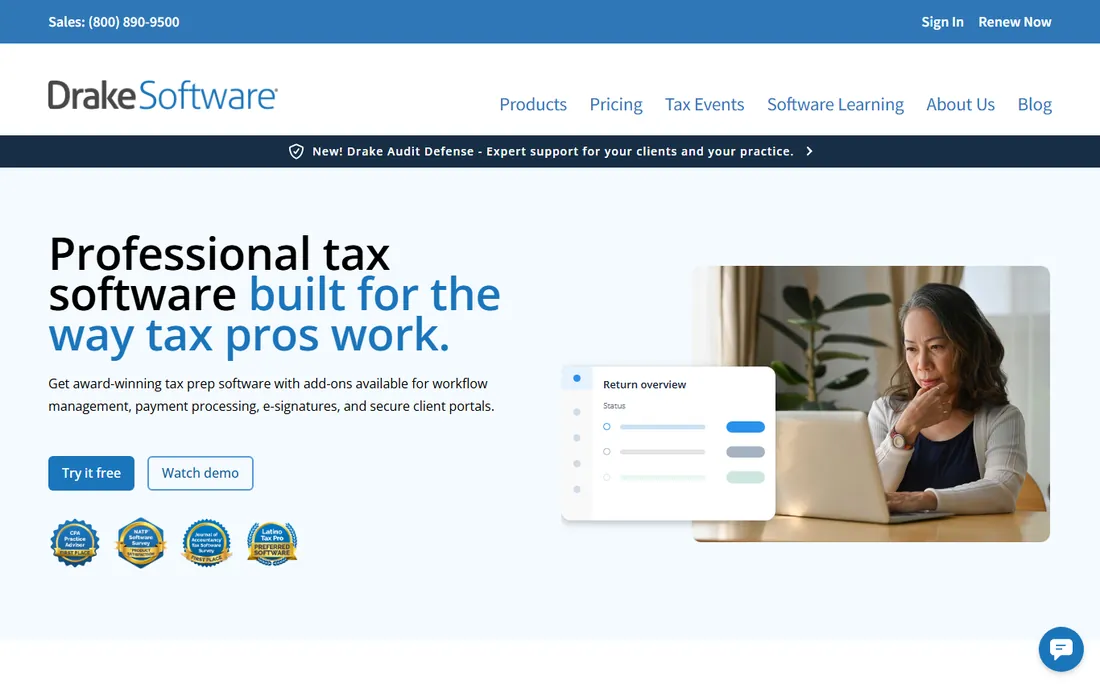
Drake Tax is what many independent tax preparers actually use: professional-grade preparation software at prices independents can afford. It handles the full range of business returns efficiently, with the speed that high-volume preparers demand. The value reputation among pros is excellent.
It is not DIY software; buyers are tax professionals. The interface prioritizes speed over beauty. But small business owners choosing a preparer benefit from knowing the tools: a Drake-based preparer often charges less than one on premium platforms, with equal accuracy.
What we like- Professional-grade at accessible prices
- Fast and efficient
- Strong among independent preparers
Watch out for- For professionals only
- Interface is utilitarian
- Learning curve for newcomers
Starting priceSee website
Free planNo
Wolters Kluwer's CCH tax products serve professional firms handling complex business returns. The integration with CCH tax research is the differentiator: preparers research and file in one ecosystem. Complex entities, multi-state and consolidated returns are handled properly.
Pricing and complexity are professional-grade. DIY filers should not consider it. But businesses with genuinely complex tax situations should hire firms on professional platforms like CCH rather than attempting DIY software.
What we like- Deep professional tax research integration
- Handles complex entities
- Firm workflow tools
Watch out for- Enterprise pricing
- For firms, not DIY
- Complexity needs training

#9
IRS Free File
Best for: Free filing for eligible taxpayers
Visit irs.gov
Starting priceFree
Free planYes
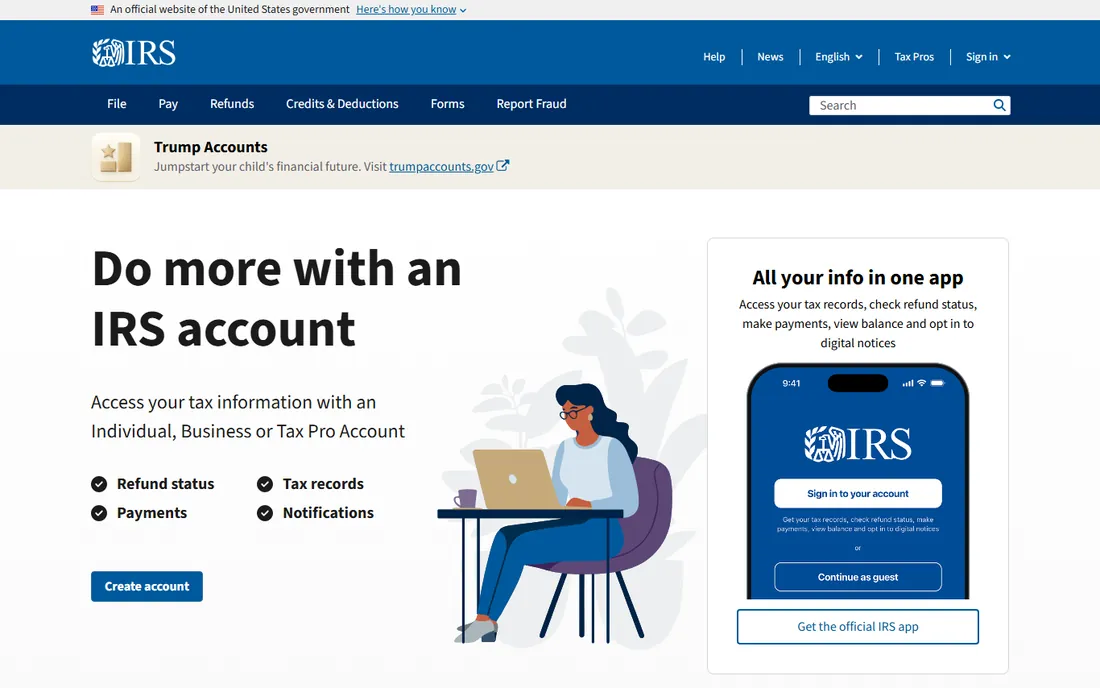
IRS Free File lets eligible taxpayers file free through IRS partner companies, with income limits that cover many small business owners. The program is legitimate, the software is real tax software, and the price is zero. Awareness remains surprisingly low.
Eligibility has income caps, and business return options vary by participating provider. But qualifying owners should check it before paying anyone. Free through the IRS beats cheap anywhere else.
What we like- Actually free through IRS partners
- No upsells in the program
- Legitimate
Watch out for- Income limits apply
- Business options vary by provider
- Awareness is low
Starting priceSee website
Free planNo
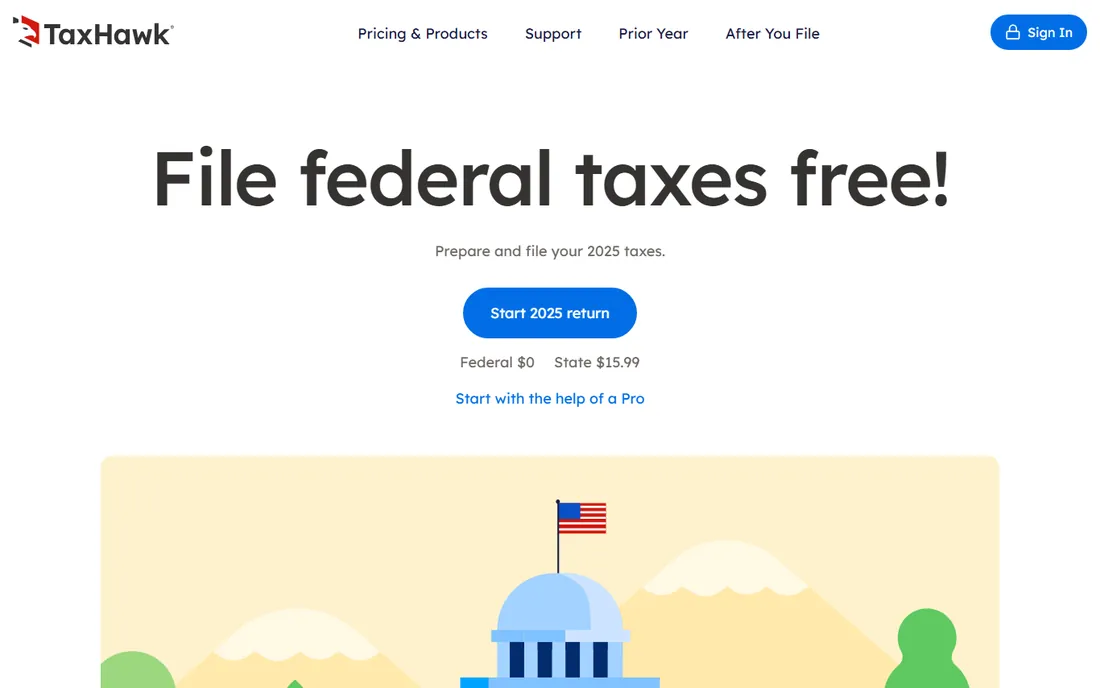
TaxHawk, from the same company as FreeTaxUSA, offers simple affordable filing with a clean interface. It suits straightforward situations where the owner wants low cost without the FreeTaxUSA branding. The shared corporate parent suggests reliable fundamentals.
It is less known with limited business depth. But as an affordable simple option from an established tax software company, it fills the budget niche honestly.
What we like- Affordable
- Simple interface
- From the FreeTaxUSA company
Watch out for- Less known
- Business depth is limited
- Smaller support
How we chose
We covered DIY business tax software, free options and professional platforms, since small business owners encounter all three. Each product was verified as currently offered. Pricing came from vendor pages where published and was marked honestly where it was not. We weighed entity coverage, guidance quality, price and support. No vendor paid for placement and we claimed no hands-on testing. Tax law changes yearly, so verify current-year form support before buying.
DIY vs hiring a preparer
The honest breakpoint is complexity. Sole proprietors with clean books can DIY successfully with TurboTax Business, TaxAct or FreeTaxUSA. Partnerships, S corporations, multi-state operations, inventory and depreciation schedules push toward professional preparation.
The cost comparison should include your time and error risk, not just software versus preparer fees. A $500 preparer fee that finds $2,000 in missed deductions is cheap. And audit support from a preparer has value DIY software cannot provide. When in doubt, pay for a consultation even if you file yourself.
What to check before you choose
Confirm entity and form coverage for your specific business type. Partnerships, S corps and C corps need different products than sole proprietors, and buying the wrong edition wastes the purchase. Check state support too; some tools handle certain states better.
Verify prior-year import and bookkeeping integration. Pulling last year's return and connecting accounting software saves hours and reduces transcription errors. And check the audit support terms: what help the vendor provides if the IRS comes calling varies enormously and matters exactly when it matters.
Estimated taxes and quarterly discipline
The annual filing gets the attention, but estimated taxes cause the pain. Self-employed owners and S corp shareholders generally must pay quarterly estimates, and the penalties for underpayment add up quietly. The discipline is simple in theory: set aside a percentage of every payment received, in a separate account, before it mixes with operating money. In practice, almost nobody does this without a system.
The percentage depends on your total tax picture: income tax, self-employment tax and state tax combined. Many owners use 25 to 30 percent as a starting rule of thumb, then adjust with their preparer after the first full year. The separate account is the key behavioral trick. Money in the operating account feels spendable; money in the tax account feels spoken for. Online banks make sub-accounts free and instant.
Quarterly deadlines, typically April, June, September and January, sneak up on busy owners. Calendar reminders a week before each deadline prevent the scramble. And the safe harbor rules are worth knowing: paying 100 percent of last year's tax, or 110 percent at higher incomes, through estimates and withholding generally avoids underpayment penalties even if this year's income is higher. Your preparer should confirm the exact thresholds.
The software helps here too. Most tax platforms estimate next year's quarterly payments from the current return. Use those vouchers or electronic payments rather than inventing your own numbers. And if income is seasonal or lumpy, the annualized installment method can reduce estimates in slow quarters, though it complicates the return. The goal is boring compliance: money set aside, deadlines met, no penalties, no April surprises.
Frequently asked questions
What is the best tax software for small business?
TurboTax Business offers the best guidance for DIY business filing. H&R Block adds human help options. TaxAct and FreeTaxUSA offer the best value. Complex businesses should hire a preparer using professional tools like Drake Tax or CCH.
How much does business tax software cost?
DIY business editions typically run from free to around $200 depending on entity complexity and vendor. Professional preparation costs more but includes expertise. Free options like IRS Free File and Cash App Taxes cover simple situations.
Can I do my own business taxes?
Sole proprietors with clean records usually can, using DIY software. Partnerships and corporations involve K-1s, basis calculations and elections that challenge non-professionals. Honest self-assessment of your tax knowledge should drive the decision.
What is the difference between TurboTax Business and TurboTax Self-Employed?
TurboTax Business handles entity returns: partnerships, S corporations, C corporations, estates and trusts. Self-Employed, now part of the personal lineup, handles sole proprietors and freelancers filing Schedule C. Buy the one matching your entity type.
When should a small business hire a tax preparer?
Hire when the business has employees, inventory, multiple owners, multi-state activity, or significant deductions you are unsure about. Also hire in the first year of a new entity type. The preparer's fee often pays for itself in found deductions and avoided errors.
Sources we checked (10)
- https://turbotax.intuit.com
- https://www.hrblock.com
- https://www.taxact.com
- https://www.taxslayer.com
- https://www.freetaxusa.com
- https://cash.app
- https://www.drakesoftware.com
- https://www.cch.com
- https://www.irs.gov
- https://www.taxhawk.com
Is your product missing or out of date?
We review this list regularly. Vendors can request a listing, send updated pricing or ask about featured placement.

Shihab Mia · Founder, Rankite
Shihab has spent more than a decade helping SaaS and e-commerce brands grow through search. He writes Rankite's software buying guides from pricing pages, documentation and public user reviews. More about Shihab.
 TurboTax Business
 H&R Block
 TaxAct
 TaxSlayer
 FreeTaxUSA
 Cash App Taxes
 Drake Tax
 Wolters Kluwer CCH
 TaxHawk