How we make this list: we compare pricing pages, product documentation and public user reviews. Ratings come from G2, Capterra or Trustpilot, with the date we checked them.
Key takeaways
- Morningstar Investor is the strongest choice for long-term fundamental research, with analyst ratings, fair value estimates, and portfolio checks at $249 per year.
- Seeking Alpha Premium suits investors who want many viewpoints, combining contributor analysis with quant ratings at $299 per year.
- Zacks Premium is built around earnings revisions, and its Rank system gives earnings-focused investors a single, consistent starting screen.
- Stock Rover and Koyfin offer the deepest screening and data for investors who build their own models, while Finviz remains the fastest free screener.
- TradingView is the best charting-first platform here, and its free plan covers a large share of everyday research needs.
Quick comparison
| Tool | Best for | Starting price | Free plan |
|---|
 Morningstar Investor | Long-term investors who research funds and stocks on fundamentals | $249 per year | No |
 Seeking Alpha Premium | Investors who want contributor analysis plus quant ratings in one place | $299 per year | Yes |
 Zacks Premium | Investors focused on earnings estimates and revisions | $249 per year | Yes |
 TradingView | Charting, technical research, and community trade ideas | $12.95 per month | Yes |
 Stock Rover | Investors who screen on hundreds of metrics and manage portfolios | $29 per month | Yes |
 TipRanks | Tracking analyst ratings, price targets, and insider activity | See website | Yes |
 Finviz | Fast, free screening and market maps | Free | Yes |
 Koyfin | Custom dashboards and global market data | $39 per month | Yes |
Is your product missing or out of date?
We review this list regularly. Vendors can request a listing, send updated pricing or ask about featured placement.
#1Morningstar Investor
Best for: Long-term investors who research funds and stocks on fundamentals1.7/5 on
Trustpilot (136 reviews, checked Oct 2026)
Visit morningstar.com
Starting price$249 per year
Free planNo
Morningstar has long been the reference point for fund research, and its Investor product extends that discipline to stocks. Analyst ratings, fair value estimates, economic moat assessments, and capital allocation ratings give a long-term investor a consistent framework for judging a company, rather than a stream of headlines. Portfolio tools then show how individual holdings combine, including sector exposure and overlap, which matters more as a portfolio grows.
The $249 annual price is the main barrier, and it only makes sense if you actually read the research. A casual investor who checks prices once a week will get little from it, while an investor building a long-term portfolio will use the analyst notes and valuation work regularly. Morningstar is also weaker for fast technical trading than TradingView or Finviz, so pair it with a charting tool if timing matters to you.
What we like- Independent analyst research
- Fair value estimates and moat ratings
- Portfolio X-Ray style checks across holdings
Watch out for- Annual price is higher than free screeners
- Interface rewards patient study, not quick trading
- Some advanced data sits behind higher tiers
#2
Seeking Alpha Premium
Best for: Investors who want contributor analysis plus quant ratings in one place
Visit seekingalpha.com
Starting price$299 per year
Free planYes
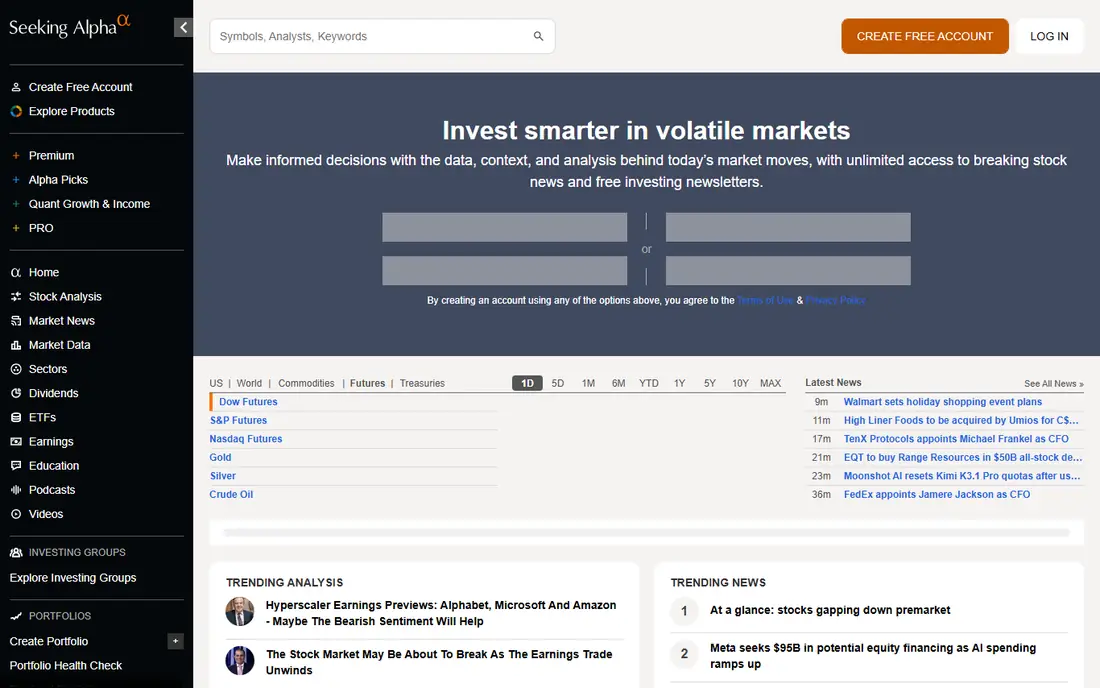
Seeking Alpha combines two research styles that usually live apart. On one side, thousands of contributors publish detailed theses on individual stocks, often with financial models and bear cases included. On the other, a quant system rates stocks on value, growth, momentum, profitability, and revisions, giving readers a data-driven counterweight to any single article. Premium adds full access to that library, screeners, and research tools.
The risk is also the strength: contributor articles vary in quality, and a confident thesis is not proof. Read the author disclosure, check whether the author holds the stock, and compare the quant rating with the article before acting. At $299 per year, Seeking Alpha Premium suits investors who read research daily. Occasional readers should start with the free tier and see how often they hit its limits.
What we like- Large library of contributor articles
- Quant Ratings across thousands of stocks and ETFs
- Screeners and earnings coverage
Watch out for- Contributor quality varies, so readers must check authors
- Highest annual price in this list
- Free access is limited
#3
Zacks Premium
Best for: Investors focused on earnings estimates and revisions
Visit zacks.com
Starting price$249 per year
Free planYes
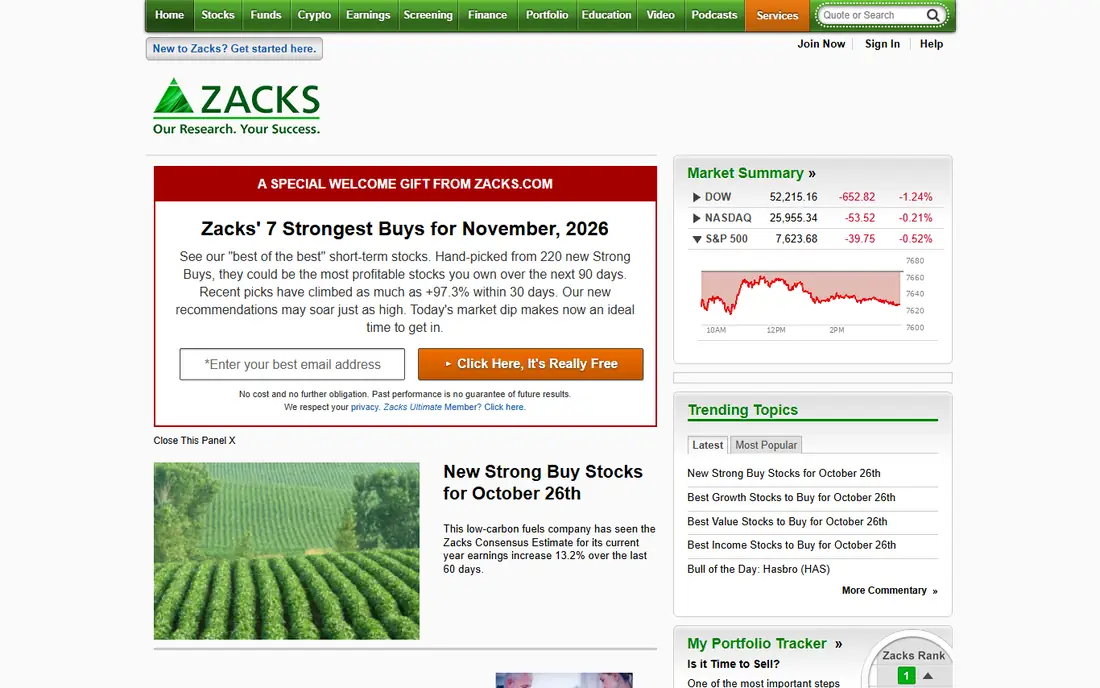
Zacks built its reputation on one idea: earnings estimate revisions tend to lead price moves, so tracking them closely gives investors an edge. The Zacks Rank sorts stocks by that signal, and Premium screens let you filter the list by style, including value, growth, momentum, and income. Daily research reports and earnings calendars then help you follow the companies on your shortlist through reporting season.
That focus is also a limit. An earnings-driven system will favor stocks with rising estimates, which can pull a long-term investor toward short-term trades. Use Zacks as a screening and monitoring tool, and pair it with fundamental work from Morningstar or your own reading of company filings before making a decision. Check the current pricing page, since Zacks offers several subscription bundles.
What we like- Zacks Rank based on earnings estimate revisions
- Premium screens by value, growth, momentum, and income
- Daily research reports
Watch out for- Short-term earnings focus can clash with long-term plans
- Marketing language around picks needs careful reading
- Full premium access is quote-based in some sources
#4TradingView
Best for: Charting, technical research, and community trade ideas4.5/5 on
G2 (75 reviews, checked Oct 2026)
Visit tradingview.com
Starting price$12.95 per month
Free planYes
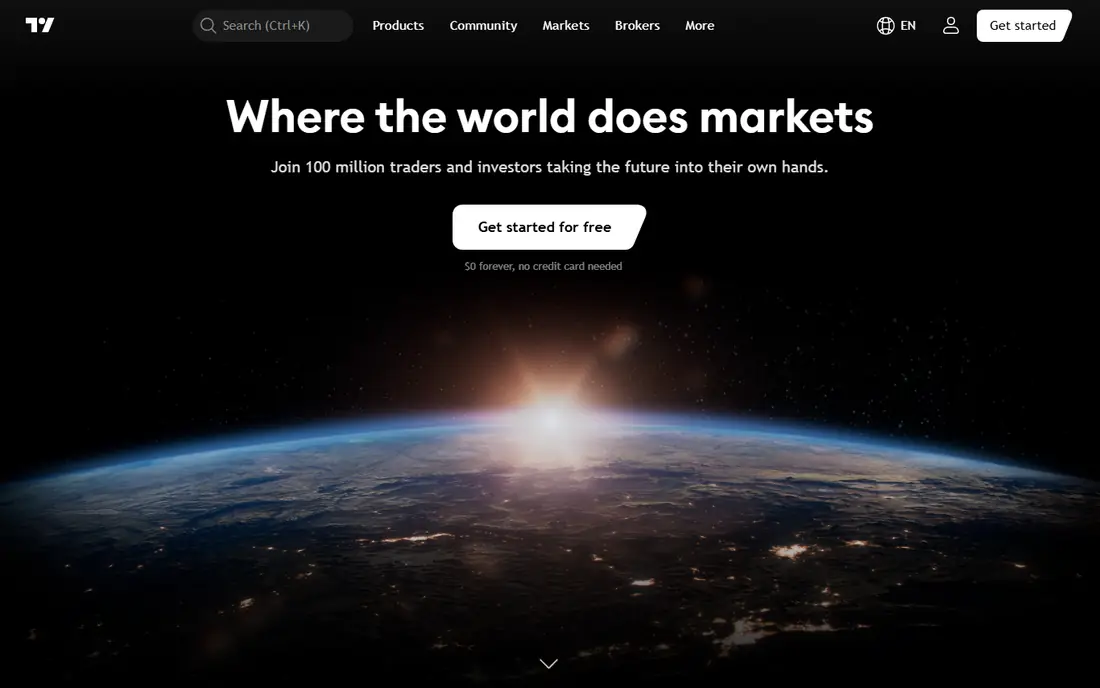
TradingView is the charting standard for individual investors, and for good reason. Charts load fast, indicators are easy to add, and the Pine Script library lets advanced users build custom signals. Coverage spans stocks, ETFs, futures, currencies, and crypto across many exchanges, so a multi-asset investor can research in one place. The free Basic plan already covers core charting, which makes it the best free starting point for technical research.
Fundamental research is where TradingView lags. Financial statements and screeners exist, but they lack the depth of Stock Rover or Koyfin, and community trade ideas should be treated as discussion, not advice. Paid plans from $12.95 per month when billed annually add more charts, indicators, and alerts. Choose TradingView when charts drive your process, and add a fundamental platform when valuation work matters.
What we like- Excellent charts across stocks, ETFs, and global markets
- Large indicator and scripting library
- Free Basic plan is genuinely useful
Watch out for- Fundamental data is thinner than Morningstar or Stock Rover
- Community ideas vary widely in quality
- Paid tiers rise with features
#5
Stock Rover
Best for: Investors who screen on hundreds of metrics and manage portfolios
Visit stockrover.com
Starting price$29 per month
Free planYes
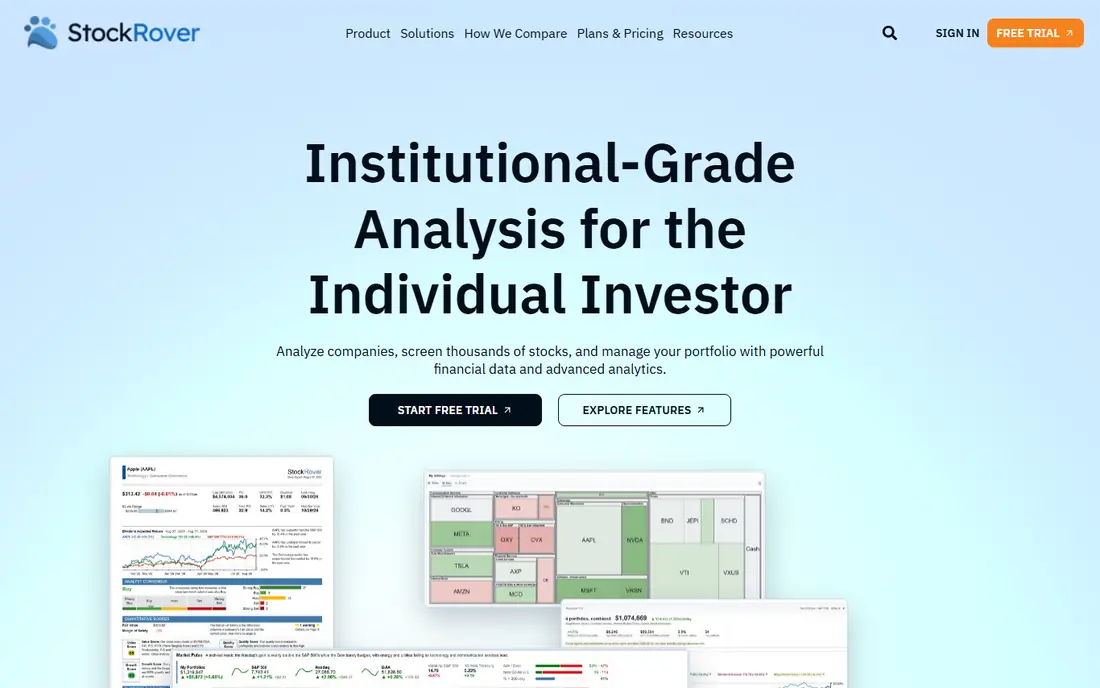
Stock Rover is built for investors who want to build their own screens rather than follow someone else list. Its screener covers hundreds of financial metrics, supports custom formulas, and pairs with portfolio analytics that track performance, sector exposure, and diversification against benchmarks. Research reports pull fundamentals, income, risk, and peer comparisons onto one page, which saves hours of tab-hopping during earnings season.
The density that power users love can overwhelm beginners. Expect to spend time learning the layout, saving custom views, and testing screens before the tool feels natural. Premium starts at $29 per month, with higher tiers for advisors and deeper history. Stock Rover suits a serious DIY investor with a defined screening process, not someone looking for a simple watchlist.
What we like- Screener with 800 plus metrics and custom formulas
- Deep portfolio analytics
- Research reports for stocks, ETFs, and funds
Watch out for- Learning curve is steep for new investors
- Desktop-style interface feels dense
- Higher tiers cost substantially more
#6
TipRanks
Best for: Tracking analyst ratings, price targets, and insider activity
Visit tipranks.com
Starting priceSee website
Free planYes
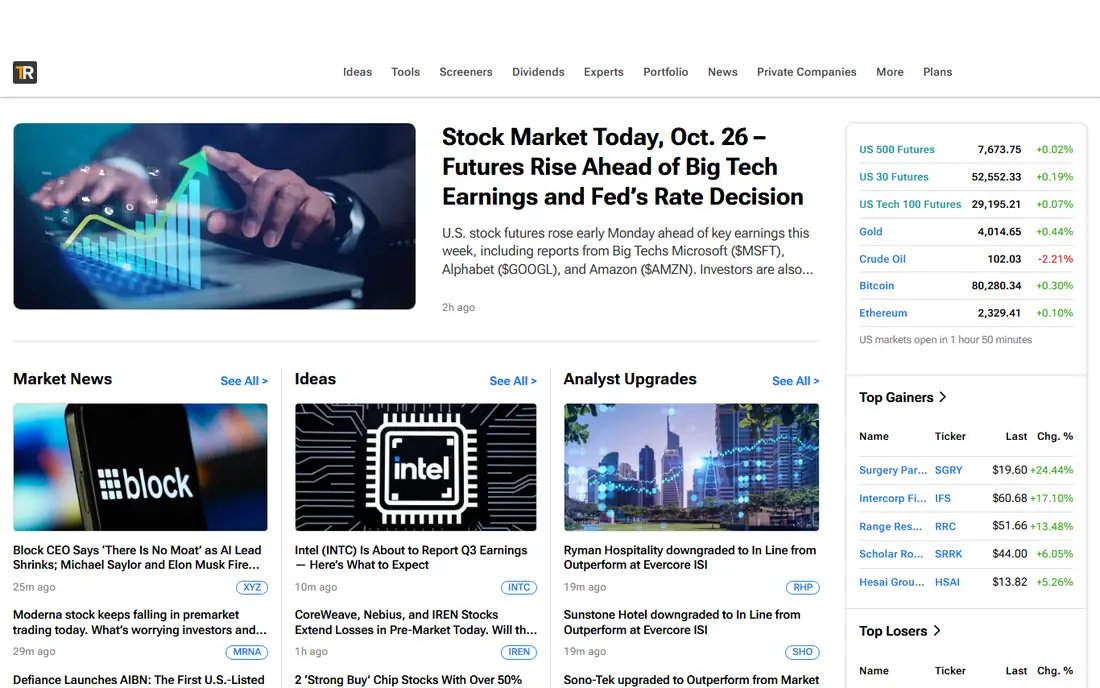
TipRanks answers a practical question: what do Wall Street analysts, insiders, and large holders actually think about a stock right now? Its daily analyst ratings table, price target summaries, and Smart Score combine several factors into a quick read, while insider transaction and hedge fund pages show where informed money is moving. For an investor who follows analyst coverage, that aggregation saves a great deal of manual checking.
Consensus has limits, and TipRanks does not hide them if you read carefully: ratings change, price targets lag news, and a strong consensus can still be wrong. Use it to find questions, such as why analysts disagree on a stock, then read the underlying research. Check the pricing page before subscribing, since TipRanks offers several premium tiers with different data access.
What we like- Aggregates analyst ratings and price targets
- Smart Score summarizes multiple factors
- Insider and hedge fund activity tracking
Watch out for- Premium pricing is not published clearly on the homepage
- Scores can change quickly
- Analyst consensus is not a guarantee
Starting priceFree
Free planYes
Finviz remains the fastest free way to screen US stocks. Its screener filters by valuation, performance, technicals, and insider activity, and its heat maps show the whole market in one view, which helps an investor spot sector moves before drilling into a single stock. Insider trading tables add a useful signal for investors who follow management buying and selling. The free plan covers most everyday screening.
Elite, at $39.50 per month or $299.50 per year in recent comparisons, adds real-time data, advanced charts, and longer financial history. Most beginners will not need it at first. Finviz is best used as a discovery tool: find candidates free, then research them properly on Morningstar, Stock Rover, or in company filings before investing.
What we like- Free screener with many filters
- Heat maps and market overview at a glance
- Insider trading tables
Watch out for- Free data is delayed for some uses
- Elite features such as real-time data need payment
- Interface is dense and dated
#8Koyfin
Best for: Custom dashboards and global market data4.8/5 on
G2 (134 reviews, checked Oct 2026)
Visit koyfin.com
Starting price$39 per month
Free planYes
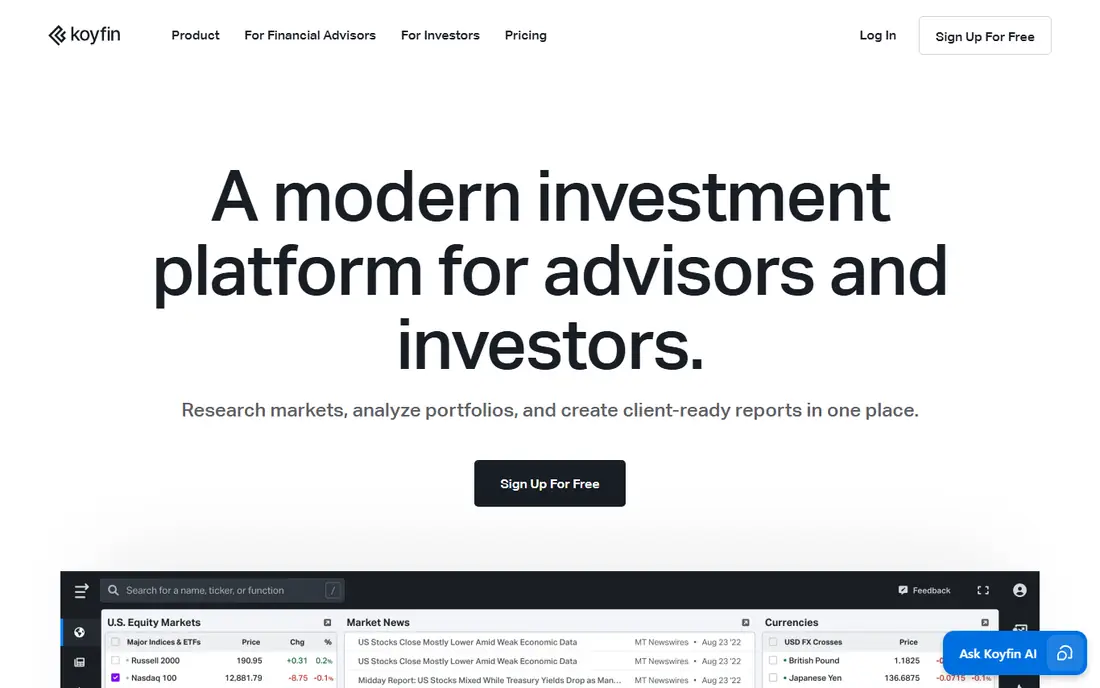
Koyfin is the dashboard platform in this list. Instead of fixed pages, you build views from watchlists, charts, financials, news, transcripts, and macro data, arranged the way you think. Coverage spans global equities, ETFs, mutual funds, yields, currencies, commodities, and economics, which suits investors who follow markets beyond US stocks. Its equity screener filters across a large global universe with thousands of criteria.
That flexibility needs setup. A new user faces a blank canvas, and building a useful dashboard takes an hour or more of choices. The free plan lets you learn the system, while Plus at $39 per month adds deeper history and features. Koyfin suits investors who enjoy building their own research workspace and want global data in one place, rather than a single-country screener.
What we like- Fully customizable dashboards
- Global stocks, ETFs, funds, yields, and economics in one place
- Transcripts and macro views
Watch out for- Plus plan at $39 per month is a step up from free
- Dashboard building takes setup time
- Advisor features may exceed individual needs
How we chose
We compared pricing pages, product documentation, and public reviews, and we checked each vendor homepage to confirm the product still exists and fits stock research. We favored platforms with transparent pricing, a clear research method, and coverage a US investor can actually use, rather than platforms that sell picks without explaining their process. Where pricing sources disagreed, we used the most recent comparable figure and marked the rest for a check on the vendor pricing page.
We also separated research from advice. A screener, a rating, and a contributor article are inputs to a decision, not decisions themselves. That is why this list mixes analyst research, quant systems, screeners, and charting tools: a careful investor usually needs more than one input, and no single score should decide a purchase.
Researching a stock without rushing
This is not financial advice. Nothing in this article recommends buying or selling any specific stock, and past performance of any rating system does not guarantee future results. Use these platforms to gather information, compare viewpoints, and check your own assumptions, and consider speaking with a licensed financial adviser before making investment decisions, especially when retirement savings are involved.
Start with the primary source: the company latest annual report, quarterly filing, and earnings call transcript, all available free through SEC EDGAR. Then use a platform in this list to compare valuation, earnings trends, and analyst views. Write down your thesis in two sentences, including what would prove it wrong, before you buy. That habit matters more than any subscription, because it forces you to notice when the facts change.
Finally, watch the total cost of research. A $299 annual subscription needs to improve decisions enough to justify itself after taxes and trading costs, which is harder on a small portfolio than a large one. Start free, track how often you use each feature for a month, and only pay for the platform whose features you actually open every week.
Frequently asked questions
What is the best stock research platform for beginners?
Finviz is the best free starting point for screening, and TradingView is the best free starting point for charting. Once you want deeper fundamentals, Morningstar Investor gives a clear, consistent framework at $249 per year. Start free, learn one platform well, and add a paid subscription only when a free limit blocks work you do every week.
Do I need to pay for stock research?
Not at first. Free plans from Finviz, TradingView, Stock Rover, TipRanks, and Koyfin cover screening, charting, and basic analyst data. Paid plans add deeper history, more metrics, and full analyst research, which matter once you manage a larger portfolio or research stocks daily. Compare the free plan against your actual workflow before paying.
Are analyst ratings reliable?
Analyst ratings are useful inputs, not guarantees. Analysts disagree, targets lag news, and coverage favors large companies over small ones. Use TipRanks or Seeking Alpha to see the range of views, read the reasoning behind the rating, and check it against company filings and valuation. A rating should prompt research, not replace it.
What is the difference between a screener and a research platform?
A screener filters a universe of stocks by criteria you choose, such as valuation or dividend yield, and returns a candidate list. A research platform adds depth on each candidate: financial statements, analyst research, portfolio tools, and valuation models. Most investors need both, which is why Finviz pairs well with Morningstar or Stock Rover.
Can these platforms replace a financial adviser?
No. These platforms provide data and analysis, while an adviser considers your goals, tax situation, risk tolerance, and full financial picture. If you are investing retirement savings, planning around a major life event, or unsure about risk, speak with a licensed adviser. Research tools inform a decision, but they do not make it for you.
How do I avoid biased research?
Check who wrote the analysis and whether they hold the stock, compare at least two independent sources, and read the bear case as carefully as the bull case. Be wary of any service that promises returns or uses past picks as proof of future success. Primary filings, audited financials, and earnings transcripts are the least biased sources available.
Sources we checked (9)
- https://www.morningstar.com
- https://seekingalpha.com
- https://www.zacks.com
- https://www.tradingview.com
- https://www.stockrover.com
- https://www.tipranks.com
- https://finviz.com
- https://www.koyfin.com
- https://www.dombey.capital/blog/the-12-best-stock-research-tools-for-individual-investors
Is your product missing or out of date?
We review this list regularly. Vendors can request a listing, send updated pricing or ask about featured placement.

Shihab Mia · Founder, Rankite
Shihab has 5+ years in B2B and SaaS SEO. He writes Rankite's software buying guides from pricing pages, documentation and public user reviews. More about Shihab.