How we make this list: we compare pricing pages, product documentation and public user reviews. Rankite is independent; if a vendor ever pays for a featured spot, that listing is clearly labeled Partner.
Key takeaways
- Ramp, Brex and BILL Spend and Expense all offer a genuinely free core tier, which makes them the cheapest way to get cards plus expense tracking for a small team.
- Expensify is the pick for companies that want expense reporting without switching corporate cards, with a free plan and paid tiers billed per active user.
- Navan is the only tool here that bundles real corporate travel booking with expense management, a fit for teams that fly often.
- Pleo and Spendesk lead in Europe, with stronger multi-currency and VAT handling than most US-first tools.
- Zoho Expense and Rydoo are the budget reporting specialists: cheap or free for tiny teams, with receipt scanning and approvals as the core.
Quick comparison
| Tool | Best for | Starting price | Free plan |
|---|
 Ramp Ramp | Free all-in-one spend platform | $0 per user/month; Plus $15 per user/month | Yes |
 Expensify Expensify | Expense reporting without new cards | See website | Yes |
 Brex Brex | Startups and global teams | $0 per user/month; Premium $12 per user/month | Yes |
 BILL BILL | Teams already using BILL for AP | $0 per user/month (Spend and Expense) | Yes |
 Navan Navan | Travel plus expense in one app | See website | Yes |
 Pleo Pleo | European teams and multi-currency spend | See website | Free trial |
 Spendesk Spendesk | European mid-market spend control | See website | No |
 Zoho Expense Zoho Expense | Small teams on a tight budget | See website | Yes |
 Mesh Payments Mesh Payments | Global enterprises, card flexibility | Free | Yes |
 Rydoo Rydoo | Simple mobile-first expense reports | See website | Free trial |
Is your product missing or out of date?
We review this list regularly. Vendors can request a listing, send updated pricing or ask about featured placement.
Receipts pile up in glove boxes, card statements arrive with mystery charges, and month-end close turns into a week of chasing people for paperwork. That is the problem every tool below exists to fix. Some do it with corporate cards that enforce policy at the moment of purchase. Others focus on turning receipt photos into clean, approved reports. A few bundle in travel booking, bill pay or procurement, so finance gets one system instead of four. The right choice depends less on the feature list and more on how your team actually spends: on cards or reimbursements, at home or across borders, with ten employees or two hundred.
Starting price$0 per user/month; Plus $15 per user/month
Free planYes
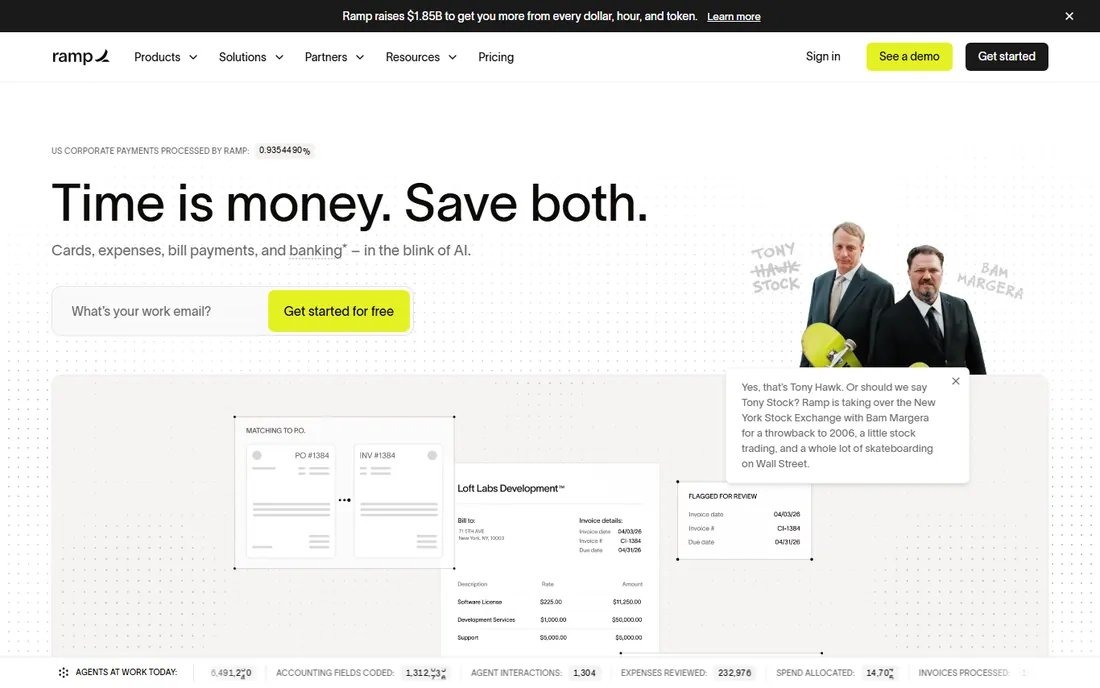
Ramp starts from a simple pitch: the core platform costs nothing, and the company earns from card interchange instead of software fees. For a small business, that means unlimited physical and virtual corporate cards, expense management with receipt matching, standard bill pay, reimbursements and accounting sync at $0 per user per month. The free tier is not a trial, so a team can run on it indefinitely if its workflows fit.
What sets Ramp apart is how much automation ships in that free tier. Receipts get collected and matched to transactions, spending policies are checked automatically, and an AI reviewer flags out-of-policy spend before it reaches a human. The catch is the ceiling. Teams that need procurement workflows, HRIS integrations, multi-entity management or deeper ERP connections will land on Ramp Plus at $15 per user per month, and the per-seat math adds up fast as headcount grows. Ramp also works best when the company actually uses Ramp cards, since that is how the free model sustains itself.
What we like- Core platform is genuinely free, including cards, expenses and bill pay
- Automated receipt matching and policy checks cut review time
- Cashback on card spend
Watch out for- Advanced features like procurement and multi-entity support sit behind the paid Plus tier
- International capabilities are still catching up to US features
Starting priceSee website
Free planYes
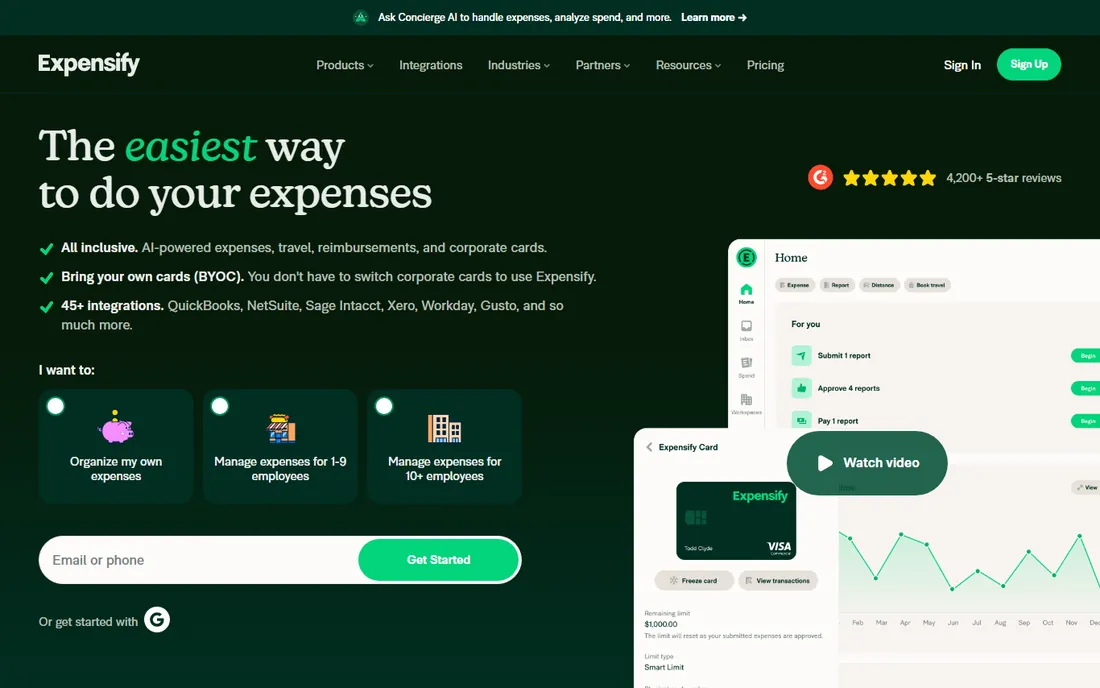
Expensify is the veteran of this list and the most flexible about how you pay for things. Unlike the card-first platforms, it does not require you to switch corporate cards. Employees keep spending the way they do today, snap photos of receipts with the SmartScan feature, and Expensify turns those photos into coded, approved expense reports. The platform also handles bill pay, invoicing, reimbursements and travel booking, so it can stretch beyond pure reporting.
The honest catch is the pricing maze. Expensify has restructured its tiers more than once, and the price you pay depends on which plan you pick, whether you commit annually, and whether your team uses the Expensify Card. There is a free plan that covers the basics, and paid plans are billed per active user per month, which is fair for teams with occasional submitters. Just read the current pricing page carefully before you commit, because the numbers on review sites are often one restructure out of date.
What we like- Works with your existing cards instead of forcing a card switch
- Strong SmartScan receipt capture
- Per-active-user billing means you only pay for people who submit expenses
Watch out for- Pricing structure has changed several times and is confusing to compare across plans
- The best rates require adopting the Expensify Card
Starting price$0 per user/month; Premium $12 per user/month
Free planYes
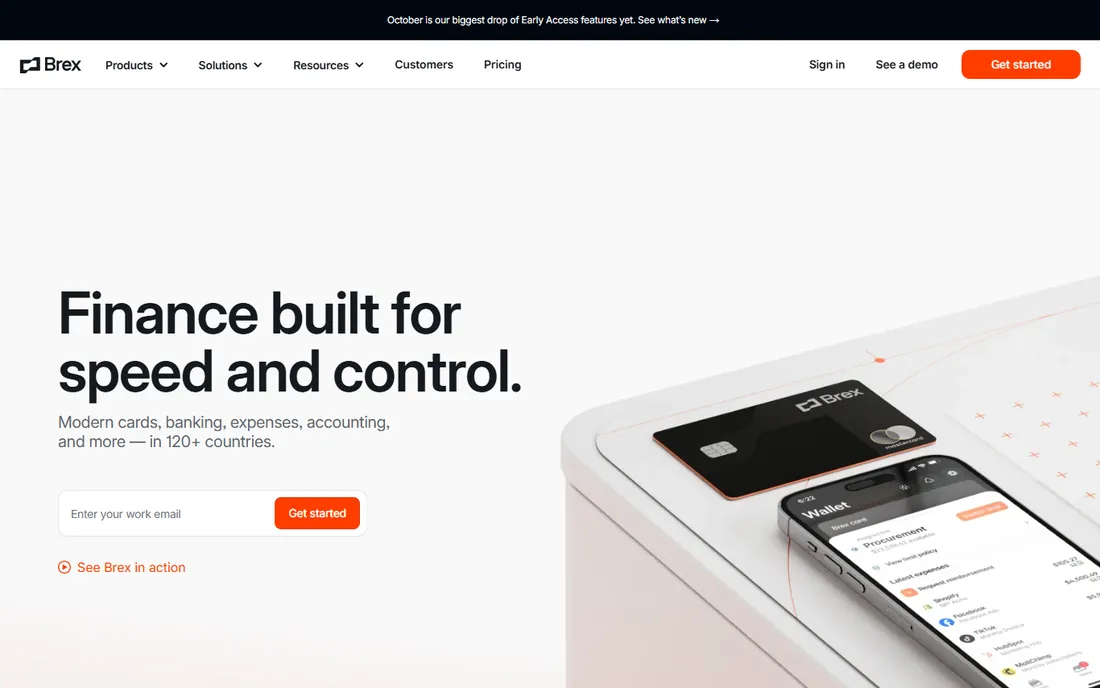
Brex built its name serving startups, and the free Essentials plan still reflects that: global card acceptance, AI-powered custom spend rules, travel booking, bill pay, reimbursements and accounting integrations at $0 per user per month. Cards work in a long list of countries with local-currency options, which makes Brex one of the stronger picks for distributed teams that spend across borders.
The step up to Premium, at $12 per user per month, adds multiple customizable expense policies, dynamic approval chains, multi-entity support and deeper ERP and HRIS integrations. Smaller companies can often live happily on Essentials for a long time. The real gate is eligibility: Brex underwrites card applicants on the business's financial profile, and not every company qualifies. If your business is very early or runs thin on cash reserves, check eligibility before you plan around it.
What we like- Free Essentials tier includes cards, bill pay, travel booking and real-time reporting
- Strong global card acceptance and local-currency options
- AI-powered spend rules
Watch out for- Multiple customizable expense policies require the paid Premium tier
- Not every business qualifies for a Brex card
Starting price$0 per user/month (Spend and Expense)
Free planYes
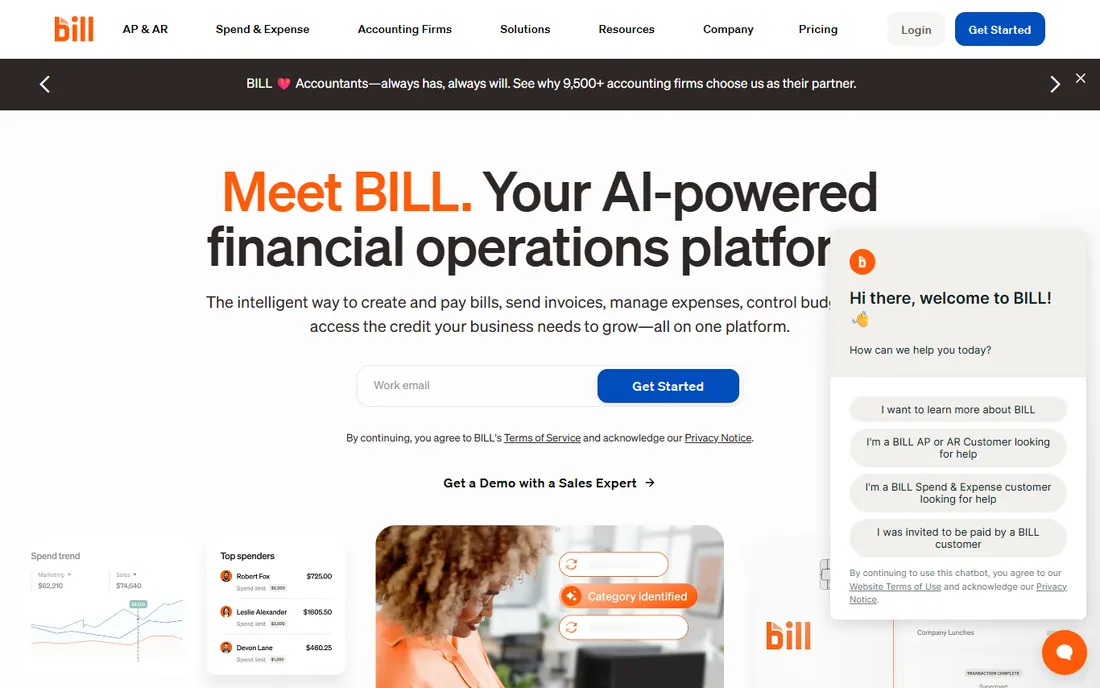
BILL Spend and Expense, the product formerly known as Divvy, is BILL's answer to card-based spend control, and it is free: no subscription, no per-user software fees. Teams get corporate cards with customizable limits, real-time budget tracking and automatic expense categorization. Because budgets are set before anyone spends, out-of-policy purchases get stopped at the register instead of surfacing in a report weeks later.
The natural home for this tool is a company already running BILL for accounts payable. Together, the card product and the AP product cover most of a small business's money-out workflows in one login. On its own, the Spend and Expense side is deliberately narrower than a full finance platform, and onboarding asks for more business documentation than a pure software signup because BILL is also underwriting a credit line. If you only want cards and tracking with no interest in credit, expect a few extra questions.
What we like- Spend and Expense is free with no per-user software fees
- Budgets are enforced before spend, not after
- Pairs naturally with BILL's accounts payable platform
Watch out for- Card issuance involves a credit application that can feel heavy for tiny teams
- Expense features alone do not replace a full AP workflow
Starting priceSee website
Free planYes
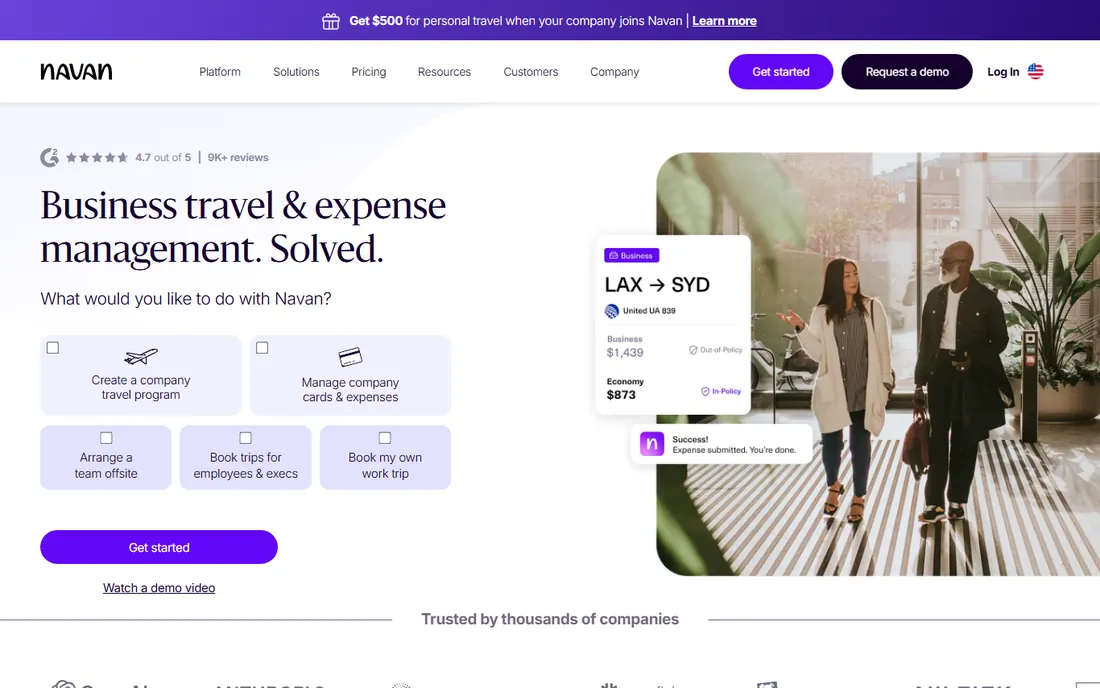
Navan, formerly TripActions, is the travel-first entry on this list. Employees book flights and hotels inside the app, company policy is enforced during booking, and the trip data flows straight into expense reports without manual entry. Travelers get 24/7 support when plans go sideways, and the platform rewards employees who book under budget, which aligns traveler comfort with company savings.
For a team that flies often, that combination is hard to match with a pure expense tool. The trade-off is cost structure. Navan's free tier covers small companies, but expense management is free for only a few users, and costs scale per user past that. Teams that travel rarely will not get much value from the booking side, and should compare Navan against the cheaper reporting-only tools before committing.
What we like- Real travel booking with negotiated rates built into the same app as expenses
- Free tier covers small teams
- Rewards that nudge employees to book under budget
Watch out for- The free tier is genuinely limited, with expense features free for only a handful of users
- Pricing past the free tier adds up per seat
#6
Pleo
Best for: European teams and multi-currency spend
Visit pleo.io
Starting priceSee website
Free planFree trial
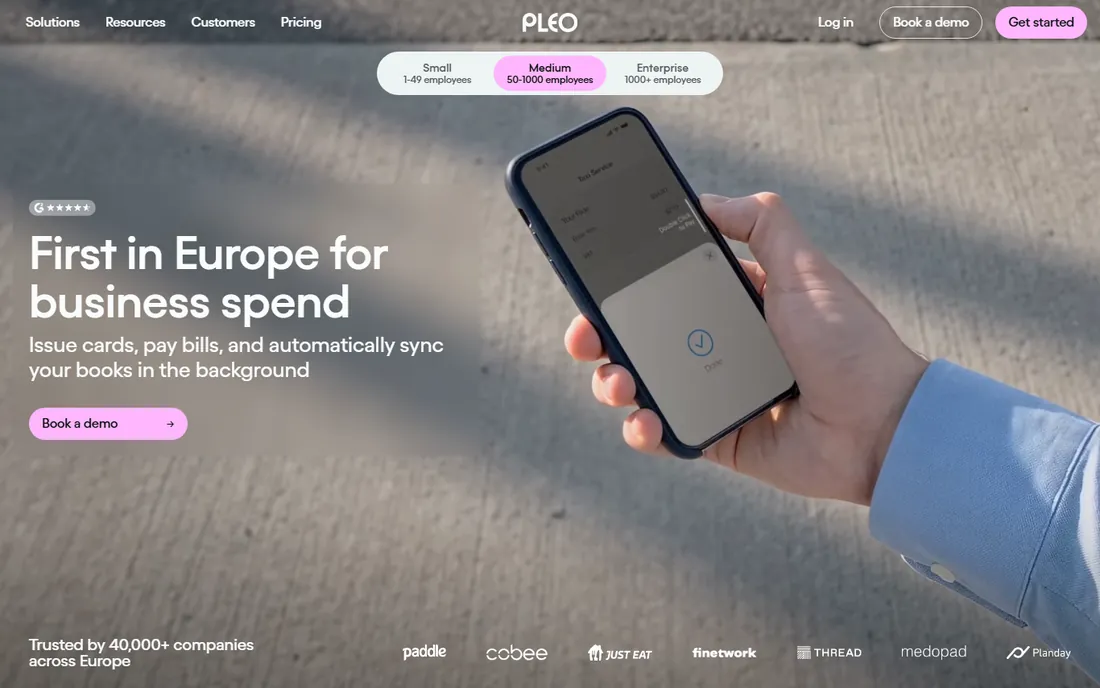
Pleo is the European counterpart to the US card platforms, and it shows in the details. The platform combines smart company cards, automated expenses and accounts payable with the kind of multi-currency and tax handling that European finance teams actually need. Spending limits, approval workflows and real-time tracking come standard, and the interface is famously easy for non-finance employees to adopt.
The catch for a US reader is that Pleo's pricing is published per region, and the company has moved away from its old free starter tier. There is a free trial, so you can test the workflow with your team before paying. Pleo makes the most sense for companies with European entities or frequent cross-border spend. A purely domestic US team will usually find a simpler fit among the US-first tools.
What we like- Built for European finance workflows, including VAT handling
- Smart company cards with real-time visibility
- Free trial to test before committing
Watch out for- Pricing is region-specific and harder to compare for US buyers
- Higher tiers get expensive as you add users
Starting priceSee website
Free planNo
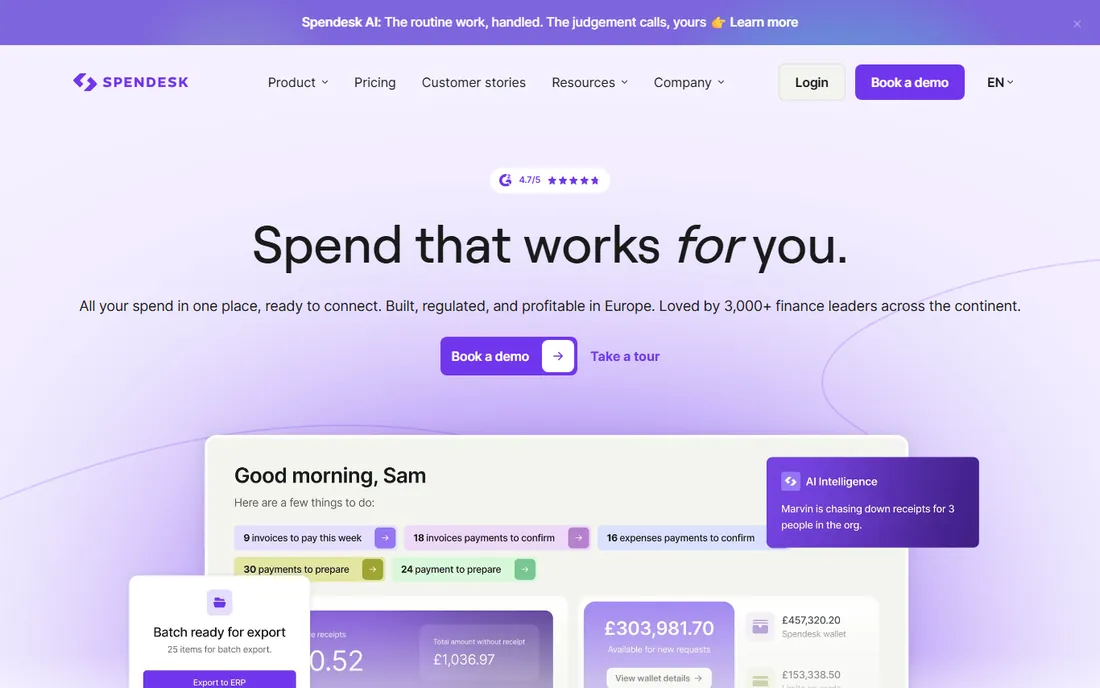
Spendesk sits a step upmarket from Pleo, aimed at European mid-market companies that want the whole spend cycle in one place. Beyond cards and expense reports, it covers procurement, invoice processing and accounting automation, with approval workflows that route purchase requests before money moves. The company runs its own regulated payment institution in Europe, which gives it direct control over card processing.
That depth comes with enterprise-style buying. Pricing is quote-based, there is no free plan, and you will talk to sales before you see numbers. For a 200-person company with a real procurement process, the consolidation can be worth it. For a 20-person team that just needs receipt tracking, Spendesk is more platform than the problem requires.
What we like- Full spend management plus procurement in one platform
- Strong approval workflows and budget controls
- Purpose-built for European mid-market companies
Watch out for- Quote-based pricing means no public starting price
- No free plan, demos only
Starting priceSee website
Free planYes
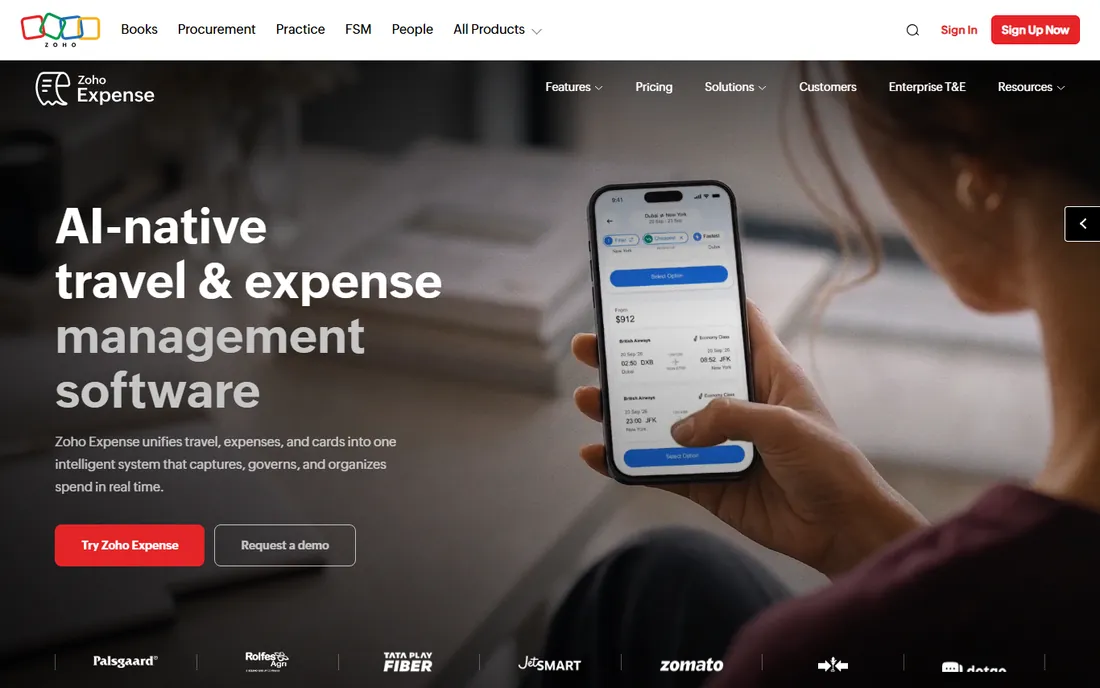
Zoho Expense is the budget specialist of this list. The free plan covers up to 3 users with expense reports, receipt autoscans, mileage tracking and accounting integrations, which is enough for a freelancer or micro-team to digitize receipts at zero cost. Paid plans add corporate card reconciliation, multi-level approvals, cash advances and, at the top end, travel booking and per diem automation.
The natural buyer is already inside the Zoho ecosystem, where Zoho Expense syncs cleanly with Zoho Books. Even standalone, it is one of the cheapest ways to get structured approvals and policy checks. Just watch the limits: the free tier caps both users and monthly receipt scans, and growing teams will graduate to a paid plan sooner than the marketing suggests.
What we like- Free plan covers up to 3 users
- Receipt autoscans and GPS mileage tracking even at low tiers
- Deep integration with Zoho Books and the wider Zoho suite
Watch out for- Free tier limits users and receipt scans
- Advanced automation and per diems need paid plans
Starting priceFree
Free planYes
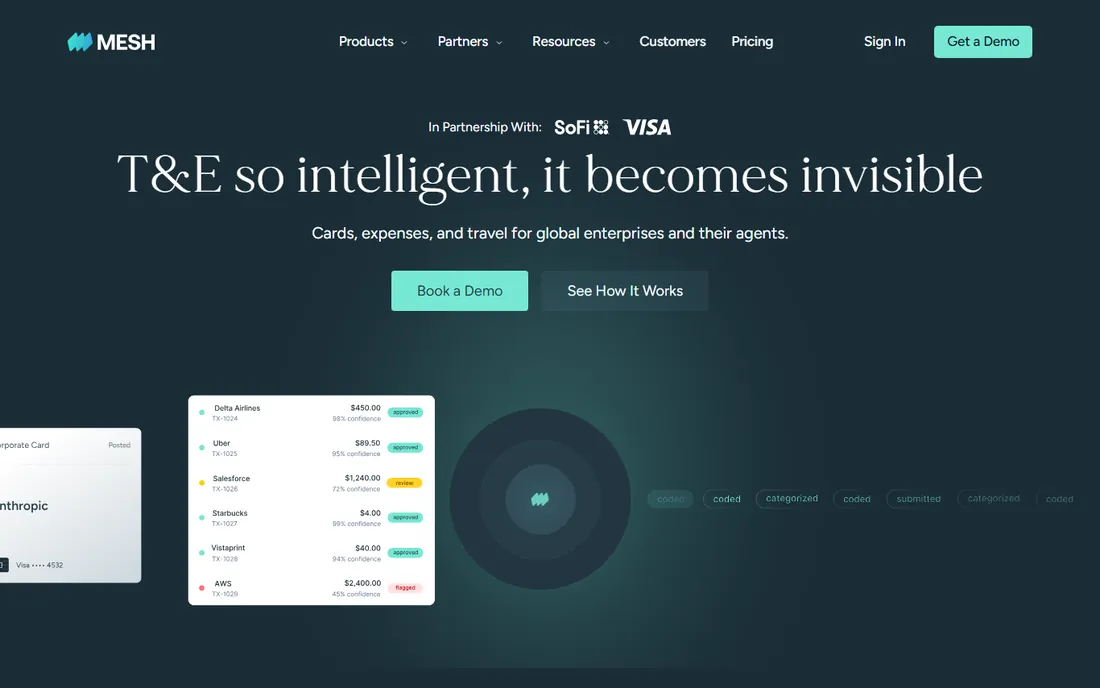
Mesh Payments takes an unusual position: an all-in-one travel and expense platform for global enterprises that is available at no cost, with the company stating plainly that there are no hidden fees. The platform combines corporate cards, expense management and travel booking, with AI-powered automation, customizable policies and multi-currency support across multiple entities.
Its most distinctive trait is flexibility about cards. Unlike closed ecosystems that force you onto their cards, Mesh can sit alongside your existing corporate cards from other banks while adding its own spend controls and visibility on top. That makes it a realistic option for large companies that cannot rip out existing banking relationships. The trade-off is go-to-market: Mesh sells to enterprises, so expect conversations with sales rather than a credit-card signup, and small teams should look elsewhere.
What we like- Core platform offered at no cost with no hidden fees
- Works alongside your existing corporate cards instead of replacing them
- Multi-currency and multi-entity support
Watch out for- Enterprise positioning means the sales process is heavier than self-serve tools
- Smaller teams may find it more platform than they need
Starting priceSee website
Free planFree trial
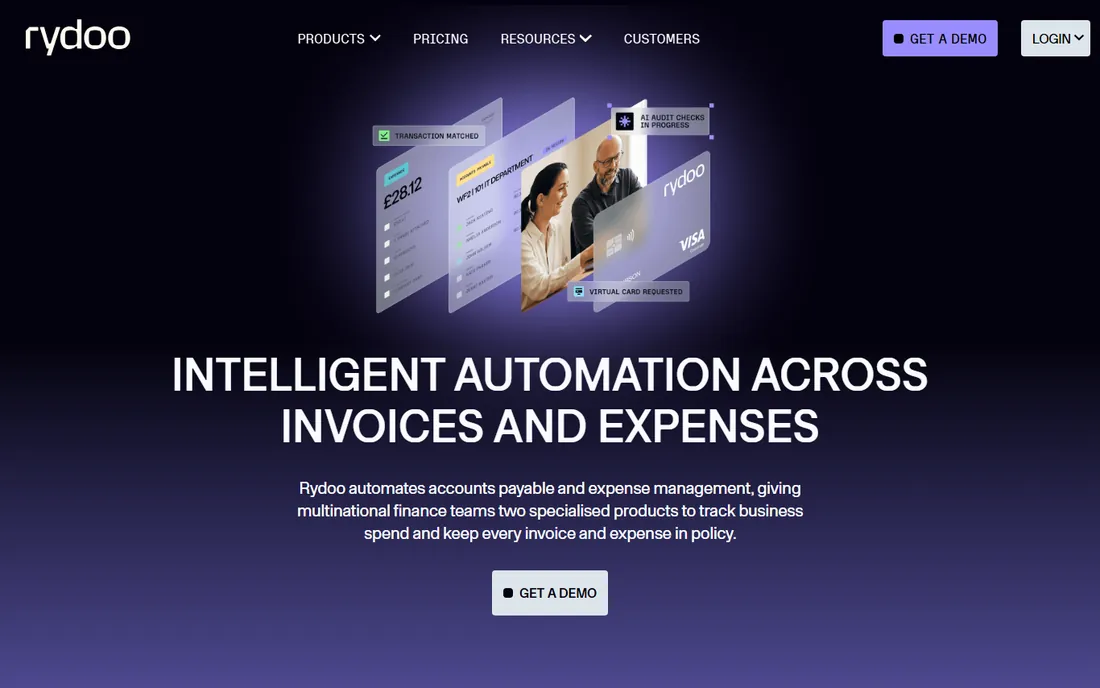
Rydoo, the Belgian expense tool formerly known as Xpenditure, keeps the scope deliberately tight: employees submit expenses in real time from their phones, receipts are scanned with OCR, and approvers clear them in a simple workflow. There are no corporate cards, no procurement module and no travel booking to configure. For companies that reimburse out-of-pocket spend rather than issuing cards, that focus is a feature, not a gap.
The honest trade-off is breadth. If you later want cards, budgets or bill pay, you will be shopping for a second tool. Rydoo also offers a free trial rather than a free plan, so there is a clock on your evaluation. It fits best as a clean, modern replacement for spreadsheet expense reports at companies with straightforward reimbursement workflows.
What we like- Real-time expense submission from a strong mobile app
- OCR receipt scanning removes manual data entry
- Straightforward approvals without a heavy platform
Watch out for- Narrower feature set than the all-in-one platforms
- No free plan, trial only
How we chose
We started from vendor pricing pages, product documentation and help centers, then cross-checked features and limits against public reviews on G2, Capterra and Reddit threads from finance teams. A tool made this list only if it is a real, buyable product today that a US small or mid-size business can sign up for, with expense tracking as a core job rather than a side feature. We weighted transparent pricing, a usable free or trial tier, receipt capture quality, approval flexibility and accounting integrations, and we penalized tools that hide pricing entirely or require a sales call for basic plans. No vendor paid for placement, and we did not claim hands-on testing we did not do.
What to check before you buy
Cards or reimbursements first
Decide how your team spends before you compare features. If everyone will carry a company card, the card-first platforms (Ramp, Brex, BILL) give you pre-spend control that a reporting tool cannot match. If employees mostly spend their own money and get reimbursed, a reporting specialist like Expensify, Zoho Expense or Rydoo fits better and costs less.
Count the real users, not the headcount
Several tools bill per active user, meaning you pay only for people who submit expenses in a given month. Others bill per seat regardless. Map your actual submitters, approvers and cardholders against each pricing model. A 50-person company with 12 travelers can look very different on per-active-user pricing than on per-seat pricing.
Check the accounting integration early
Every tool here claims QuickBooks or Xero integration, but the depth varies. Confirm whether transactions sync automatically with the right categories and tax codes, or whether someone still exports a CSV at month end. If you run NetSuite, Sage Intacct or a multi-entity setup, verify that integration is included in your tier, because several vendors reserve it for paid plans.
Trial the receipt workflow with real receipts
Receipt scanning quality decides whether employees actually adopt the tool. Run a two-week trial with real crumpled receipts, foreign currency and long restaurant bills. If the OCR misreads vendors or amounts regularly, finance will spend the saved time fixing data instead.
Expense tracking for very small teams
If you have fewer than ten people, you do not need a platform. Zoho Expense's free plan covers three users, Expensify's free tier handles basic reporting, and Ramp or Brex give you cards plus tracking at no software cost. Start with one of those, and only move to a paid tier when a specific limit starts hurting: scan caps, approval complexity or multi-entity needs. The most common mistake small teams make is buying the mid-market platform two years before they need it.
Frequently asked questions
What is the cheapest way to track business expenses?
For most small teams, a free tier from Ramp, Brex or BILL Spend and Expense costs nothing in software fees and includes corporate cards with built-in expense tracking. If you prefer to keep your existing cards, Zoho Expense and Expensify both offer free plans for basic reporting. The real cost to compare is per-user pricing once you outgrow the free tier, plus any payment or reimbursement fees.
Do I need corporate cards to use expense tracking software?
No. Tools like Expensify, Zoho Expense and Rydoo are built for reimbursement workflows where employees spend their own money and submit reports. Card-first platforms like Ramp, Brex and BILL issue their own corporate cards, which gives you stronger pre-spend control but requires a credit application and a switch in how the team pays.
How does per-active-user pricing work?
With per-active-user pricing, you are billed only for people who submit at least one expense in a given month, not for everyone with an account. Expensify uses this model. It favors companies where a small subset of employees travels or spends, since occasional submitters cost you nothing in quiet months. Always confirm the definition of active on the vendor's pricing page, because it varies.
Can expense software handle international spending and VAT?
Some handle it much better than others. Pleo and Spendesk were built for European finance workflows and handle multi-currency and VAT more naturally. Brex and Mesh also support global teams with local-currency cards. If your team spends across borders regularly, test the currency conversion, receipt handling and tax coding during the trial rather than trusting the feature list.
How long does it take to set up expense tracking software?
Simple reporting tools like Zoho Expense or Rydoo can be running in a day or two: invite users, set categories, connect accounting. Card-based platforms take longer because card issuance involves a business credit application, typically one to two weeks. Enterprise rollouts with custom policies, multi-entity structures and ERP integrations can take a month or more.
Should a freelancer use business expense tracking software?
A freelancer with simple finances can usually manage inside their accounting software. Expense tracking tools earn their keep once you have employees submitting expenses, travel regularly, or need clean records for taxes. Zoho Expense's free plan for up to three users and Expensify's free tier are the low-risk starting points if you want to try.
Sources we checked (12)
- https://ramp.com/pricing
- https://ramp.com/blog/best-spend-management-software
- https://www.brex.com/spend-trends/expense-management/business-expense-tracking-software
- http://www.bill.com/product/pricing
- https://www.bill.com/blog/best-expense-management-software
- https://www.pleo.io/en/lp/pricing-tooltips
- https://www.zoho.com/expense/
- https://meshpayments.com/faq
- https://navan.com/pricing
- https://www.spendesk.com/
- https://www.rydoo.com/
- https://use.expensify.com
Is your product missing or out of date?
We review this list regularly. Vendors can request a listing, send updated pricing or ask about featured placement.

Shihab Mia · Founder, Rankite
Shihab has spent more than a decade helping SaaS and e-commerce brands grow through search. He writes Rankite's software buying guides from pricing pages, documentation and public user reviews. More about Shihab.