How we make this list: we compare pricing pages, product documentation and public user reviews. Rankite is independent; if a vendor ever pays for a featured spot, that listing is clearly labeled Partner.
Key takeaways
- Expense software has a strange business model: the best tools are free. Ramp, Brex and BILL give away the software because they earn on the corporate cards you run through it.
- The category splits in two. Card-first platforms (Ramp, Brex, BILL) control spending before it happens. Report-first tools (Expensify, Zoho Expense, SAP Concur) process reimbursements after it happens.
- Ramp (free core, Plus $15/user/month) is the best overall for US companies that will use its cards. Brex (free Essentials, ~$12/user/month Premium) suits venture-backed startups with international teams.
- Expensify ($5/user/month Collect) remains the simplest classic expense-report tool, and Zoho Expense (free tier, paid from ~$4/user/month) is the budget pick.
- SAP Concur, Airbase, Navan and Pleo cover enterprise travel, procurement controls, travel-heavy teams and European companies respectively.
Quick comparison
| Tool | Best for | Starting price | Free plan |
|---|
 Ramp Ramp | US companies that want cards and expense control free | Free; Plus $15/user/month | Yes |
 Brex Brex | Venture-backed startups and distributed companies | Free (Essentials); ~$12/user/month Premium | Yes |
 BILL Spend & Expense BILL Spend & Expense | Teams that want card-based budgeting free | Free | Yes |
 Expensify Expensify | Teams that just want expense reports done simply | $5/user/month (Collect) | Free trial (7 days) |
 Zoho Expense Zoho Expense | Budget-conscious teams, especially Zoho users | Free; paid from ~$4/user/month | Yes |
 SAP Concur SAP Concur | Large enterprises with complex travel and strict policy | See website | No |
 Navan Navan | Companies where travel is half the expense problem | Free (eligible plans); custom enterprise pricing | Yes (free tier) |
 Airbase Airbase | Mid-market companies that need procure-to-pay controls | See website | No |
 Pleo Pleo | European teams that want smart company cards | From ~£8/user/month (UK) | No |
Is your product missing or out of date?
We review this list regularly. Vendors can request a listing, send updated pricing or ask about featured placement.
The best expense tracking software
Expense tracking software captures receipts, enforces policies, routes approvals and syncs to accounting. Nine tools below, covering both the card-first and report-first worlds.
#1
Ramp
Best for: US companies that want cards and expense control free
Visit ramp.com
Starting priceFree; Plus $15/user/month
Free planYes
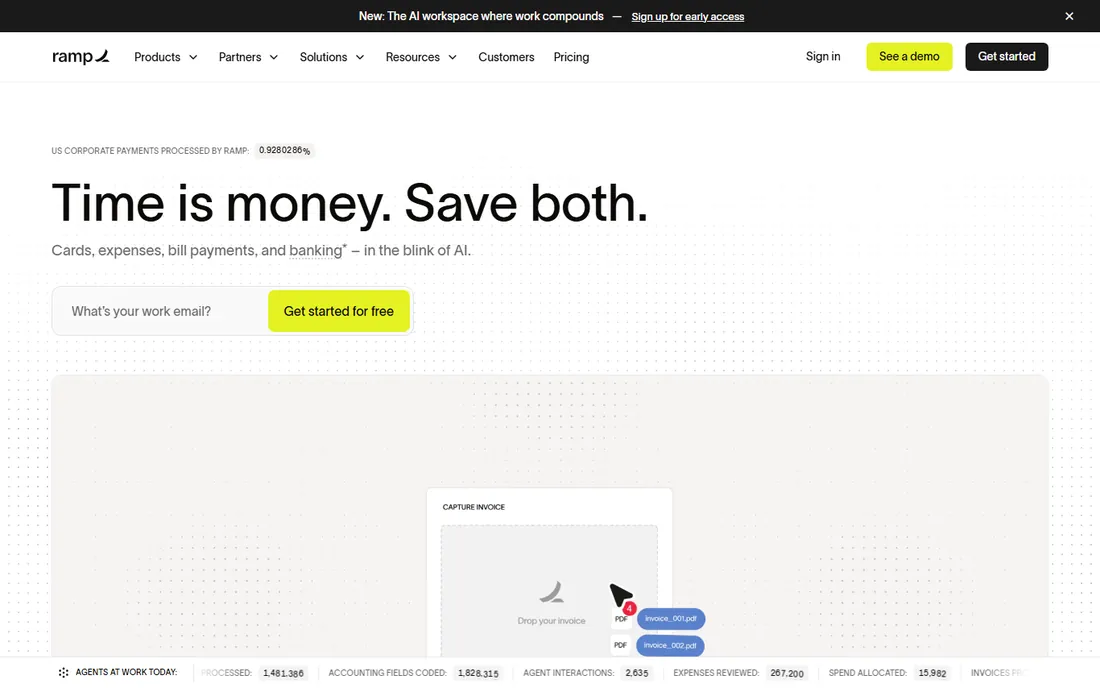
Ramp gives away the software because the cards pay for it. The free tier includes corporate cards with built-in spend controls, expense management, bill pay, procurement and accounting integrations. Ramp Plus at $15 per user per month adds advanced approvals, custom controls and dedicated support.
The model only works if you run spending through Ramp cards, which means US-entity eligibility and card adoption. For companies that do, it is the best value in finance software: a full spend platform for zero software cost. G2's 4.8 rating reflects how rarely free feels this complete.
What we like- Free core platform with corporate cards, bill pay and expense management
- Strong pre-spend controls and automation
- Fast-growing feature set
Watch out for- Free tier requires using Ramp cards
- Plus at $15/user/month adds up for large teams
- International coverage lags Brex
#2
Brex
Best for: Venture-backed startups and distributed companies
Visit brex.com
Starting priceFree (Essentials); ~$12/user/month Premium
Free planYes
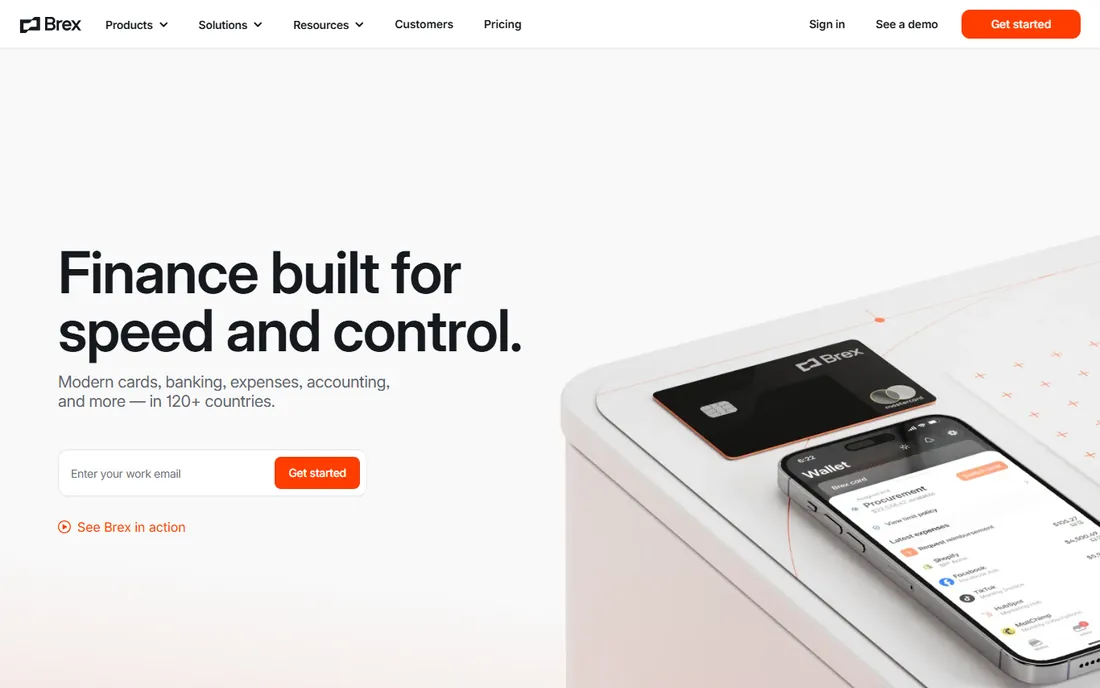
Brex built its name on startups: corporate cards for companies traditional banks would not underwrite, paired with expense management that actually understands venture-backed burn. Essentials is free; Premium at roughly $12 per user per month adds advanced controls, custom policies and deeper integrations.
The edge over Ramp is international: multi-entity support and global teams are more native here. The trade is a slightly less generous free tier and custom enterprise pricing. If your team spans countries or you are pre-profitability, Brex is the startup-native choice.
What we like- Free Essentials tier with cards and expense management
- Stronger international and multi-entity support than Ramp
- Startup-friendly underwriting
Watch out for- Premium around $12/user/month for advanced features
- Enterprise pricing is custom
- Rewards and credit terms vary by qualification
#3
BILL Spend & Expense
Best for: Teams that want card-based budgeting free
Visit bill.com
Starting priceFree
Free planYes
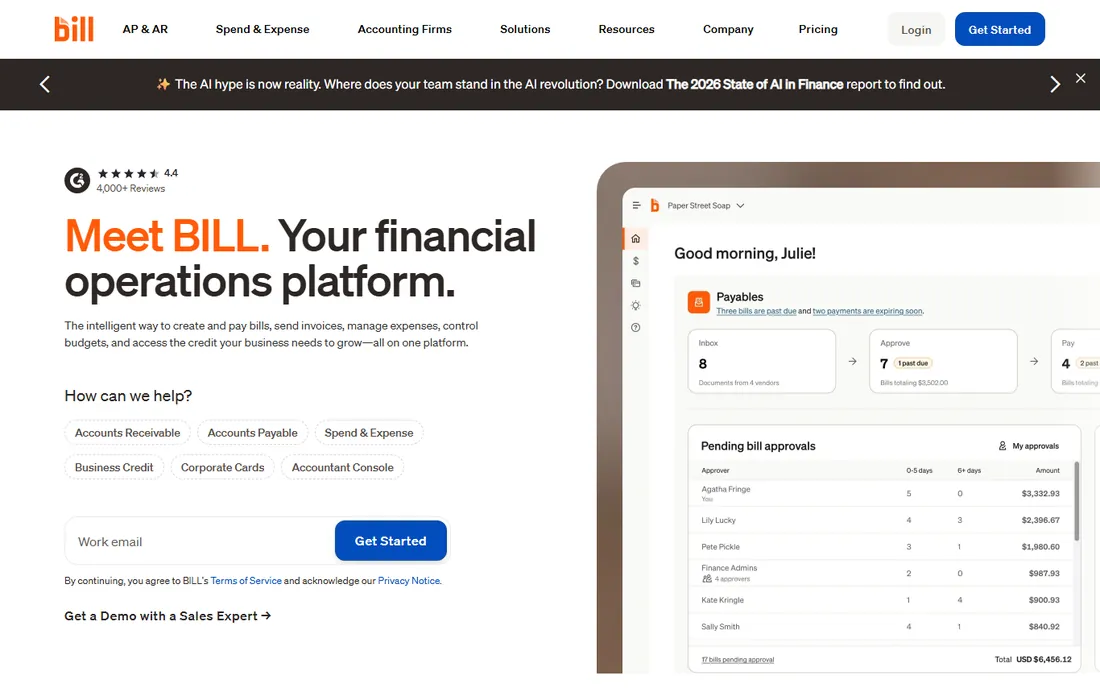
BILL Spend & Expense (the former Divvy) is the purest free play: the platform costs nothing because BILL earns on card interchange. You get budgets, virtual and physical cards, expense management and reimbursements with real-time visibility into spend against budget.
It is simpler than Ramp or Brex: fewer bells, less automation depth, no travel booking. But for a small business that wants budget discipline without a software bill, it is hard to argue with free. Pairs naturally with BILL's accounts-payable platform if you outgrow the basics.
What we like- Completely free spend and expense platform
- Real-time budgets with virtual cards
- Integrates with the broader BILL AP platform
Watch out for- Requires BILL cards
- Less travel and procurement depth than Ramp or Airbase
- Support is thinner than paid competitors
Starting price$5/user/month (Collect)
Free planFree trial (7 days)
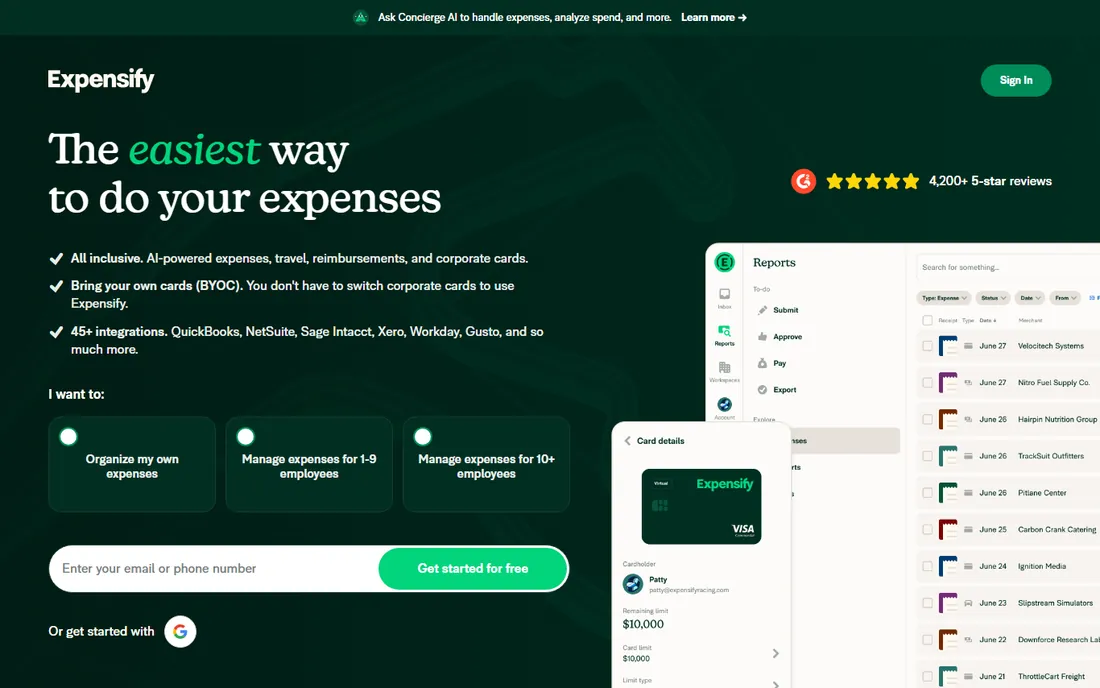
Expensify is the classic: snap a receipt, SmartScan extracts the data, the report builds itself, approvals flow, accounting syncs. Collect at $5 per user per month covers the core; Control at $9 adds advanced policy, multi-level approvals and deeper integrations.
It does not require its own cards, which is both the appeal and the limit: it processes spending rather than controlling it upfront. For small and midsize teams with straightforward reimbursement needs, it remains the simplest tool that does the job. Receipt-heavy teams should shortlist it first.
What we like- The fastest receipt-to-report flow in the category
- SmartScan OCR is genuinely excellent
- Simple per-user pricing with no card requirement
Watch out for- Works with any cards, which means weaker pre-spend control
- $9/user/month Control tier needed for deeper policy
- 7-day trial is short
#5
Zoho Expense
Best for: Budget-conscious teams, especially Zoho users
Visit zoho.com
Starting priceFree; paid from ~$4/user/month
Free planYes
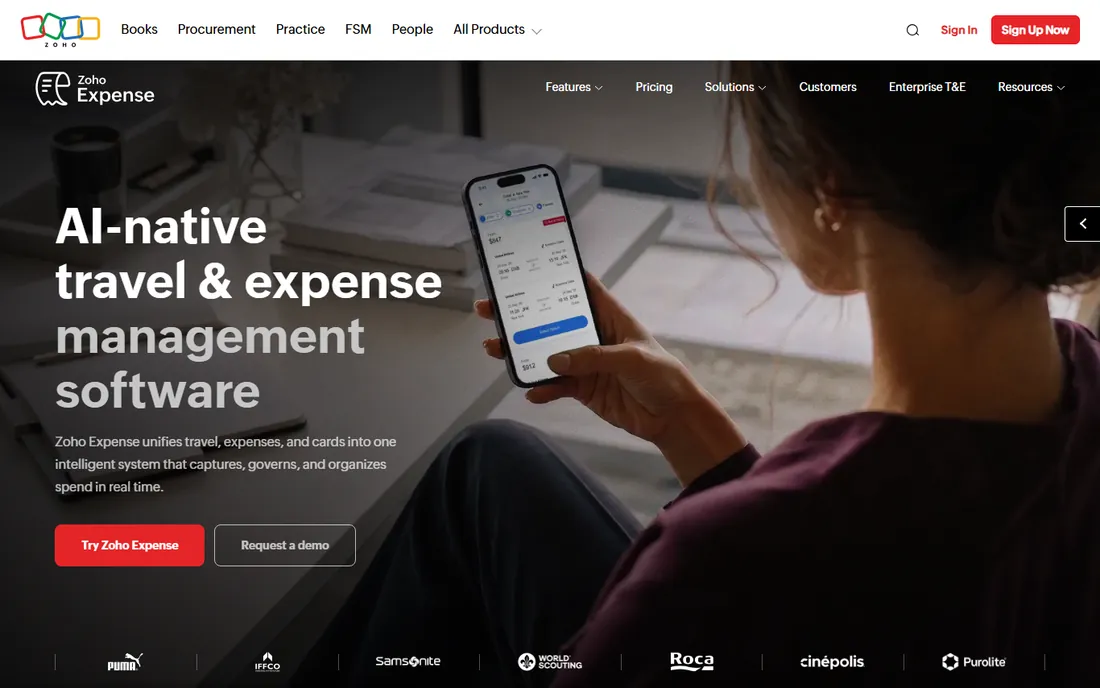
Zoho Expense is the budget pick that keeps surprising. A free tier covers small teams, paid plans run roughly $4 to $8 per user per month, and the feature set includes travel management, per-diems, multi-currency and solid approval workflows. Inside the Zoho ecosystem, expense-to-accounting is genuinely one click.
It will not match Ramp's automation or Expensify's OCR polish, and it is clearly built to keep you in Zoho's world. But for cost-conscious teams, especially outside the US where the card-first platforms are weaker, it delivers 80 percent of the functionality at a fraction of the price.
What we like- Free tier plus paid plans from around $4 per user
- Travel booking and per-diem support included
- Deep integration with Zoho Books and the Zoho suite
Watch out for- Receipt OCR and automation lag the leaders
- Advanced analytics and integrations need higher tiers
- Works best inside the Zoho ecosystem
#6
SAP Concur
Best for: Large enterprises with complex travel and strict policy
Visit concur.com
Starting priceSee website
Free planNo
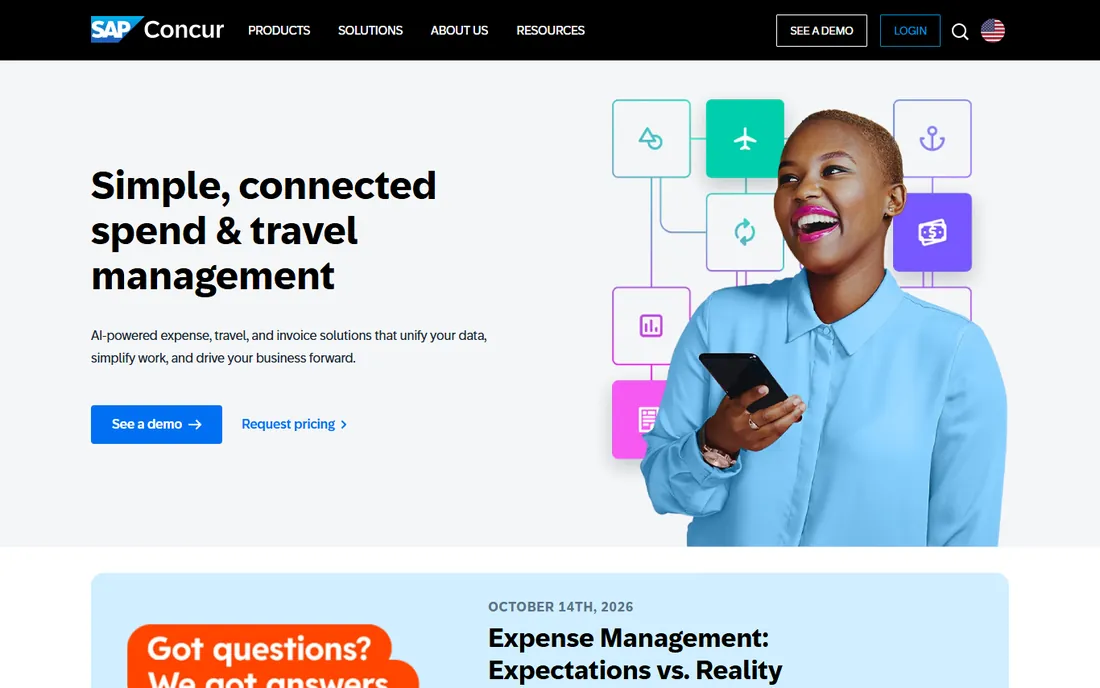
SAP Concur is the enterprise standard for a reason: no other tool handles complex travel policy, multi-country compliance and deep SAP integration at global scale. Pricing is quote-based, with public pricing around $7 per expense report on selected plans, and enterprise deals are negotiated.
Everything about Concur assumes an enterprise: demos not trials, implementations not signups, administrators not users. The interface is the industry's favorite complaint. But for a 5,000-person company with travelers in 40 countries, it is the only tool on this list built for that job.
What we like- The deepest travel-and-expense policy engine in the industry
- Global coverage with local compliance
- Massive integration ecosystem
Watch out for- Quote-based pricing with per-report costs
- Implementation is a project
- Users love to hate the interface
#7
Navan
Best for: Companies where travel is half the expense problem
Visit navan.com
Starting priceFree (eligible plans); custom enterprise pricing
Free planYes (free tier)
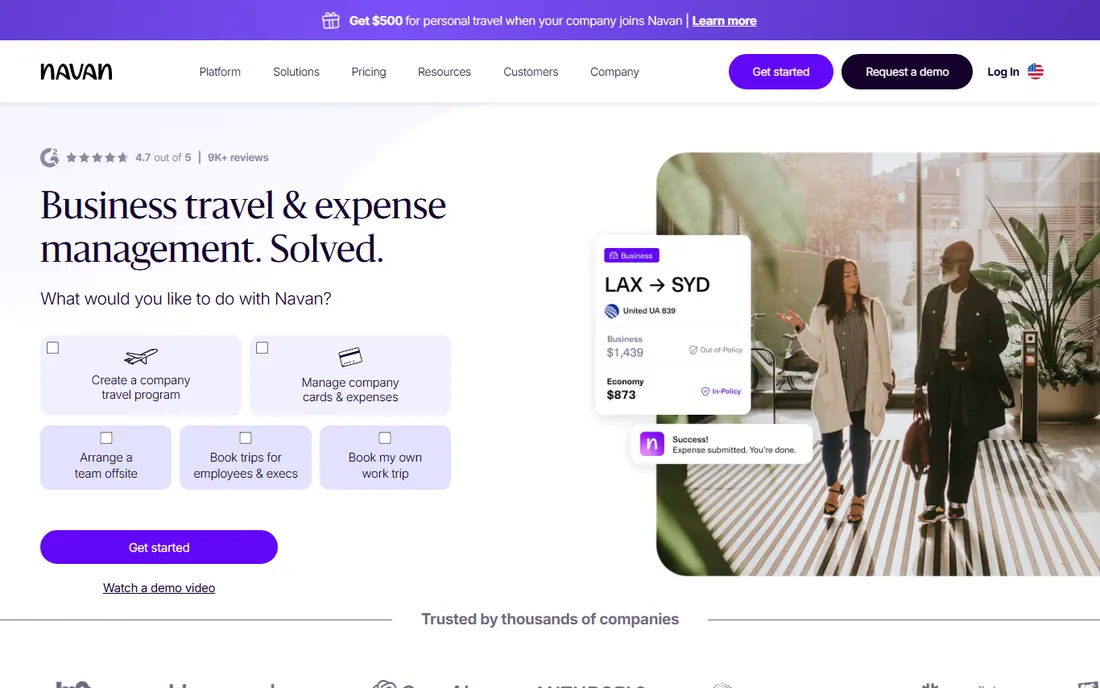
Navan (formerly TripActions) merged travel booking with expense management, which makes sense: for travel-heavy companies, the trip and the expense report are the same workflow. Eligible plans are free; enterprise pricing is custom. The traveler experience, with real human support, is the best in the category.
It is not a procurement platform or a general spend tool; it is travel plus expenses done well. Sales teams, consulting firms and any company where T&E dominates the expense ledger should evaluate it. The free tier makes the pilot cheap.
What we like- Travel booking and expenses in one platform
- Free tier for eligible plans
- Strong traveler experience with 24/7 support
Watch out for- Free tier has eligibility limits
- Enterprise pricing is custom
- Less procurement depth than Airbase
#8
Airbase
Best for: Mid-market companies that need procure-to-pay controls
Visit airbase.com
Starting priceSee website
Free planNo
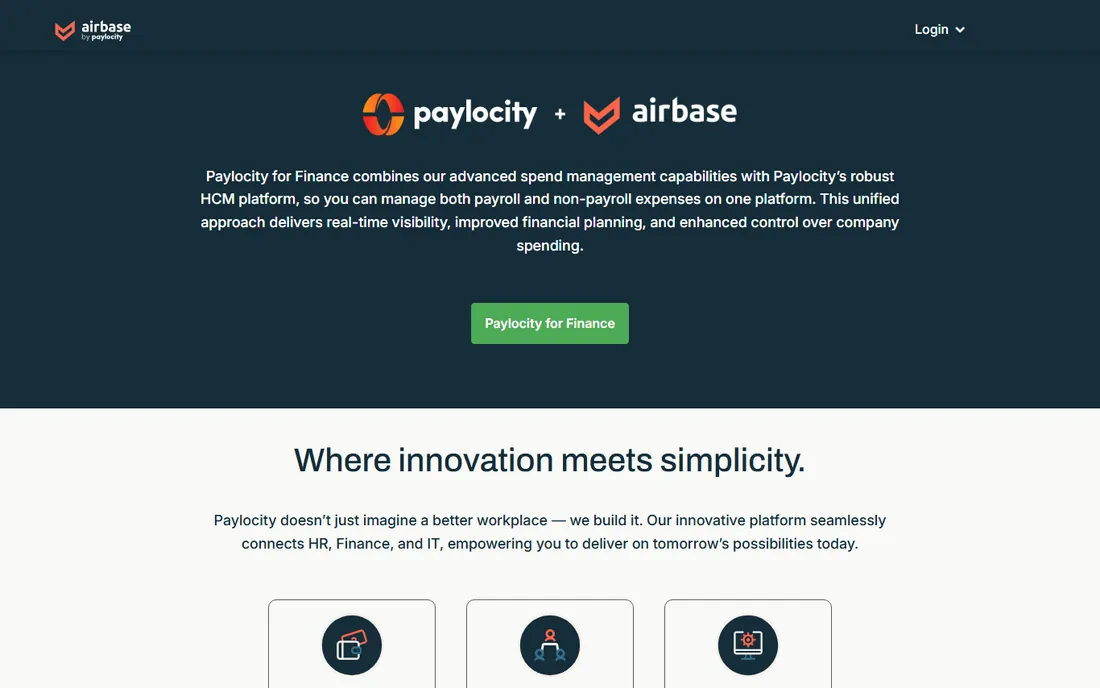
Airbase, now part of Paylocity, is the control freak's expense platform in the best sense: every dollar gets requested, approved and tracked before it is spent, across cards, purchase orders, invoices and reimbursements. It is procure-to-pay for the mid-market, not just expense reports.
That depth needs a sales conversation: quote-based pricing, no free tier, demo-led evaluation. It suits US mid-market companies where finance wants real pre-spend control across all purchasing, not just T&E. Simple reimbursement teams should look at Expensify or Zoho instead.
What we like- True procure-to-pay: purchase requests, approvals, POs, cards and expenses in one flow
- Strong policy enforcement before spending
- Now backed by Paylocity
Watch out for- Quote-based pricing only
- Demo-based evaluation
- Overkill for simple reimbursement needs
#9
Pleo
Best for: European teams that want smart company cards
Visit pleo.io
Starting priceFrom ~£8/user/month (UK)
Free planNo
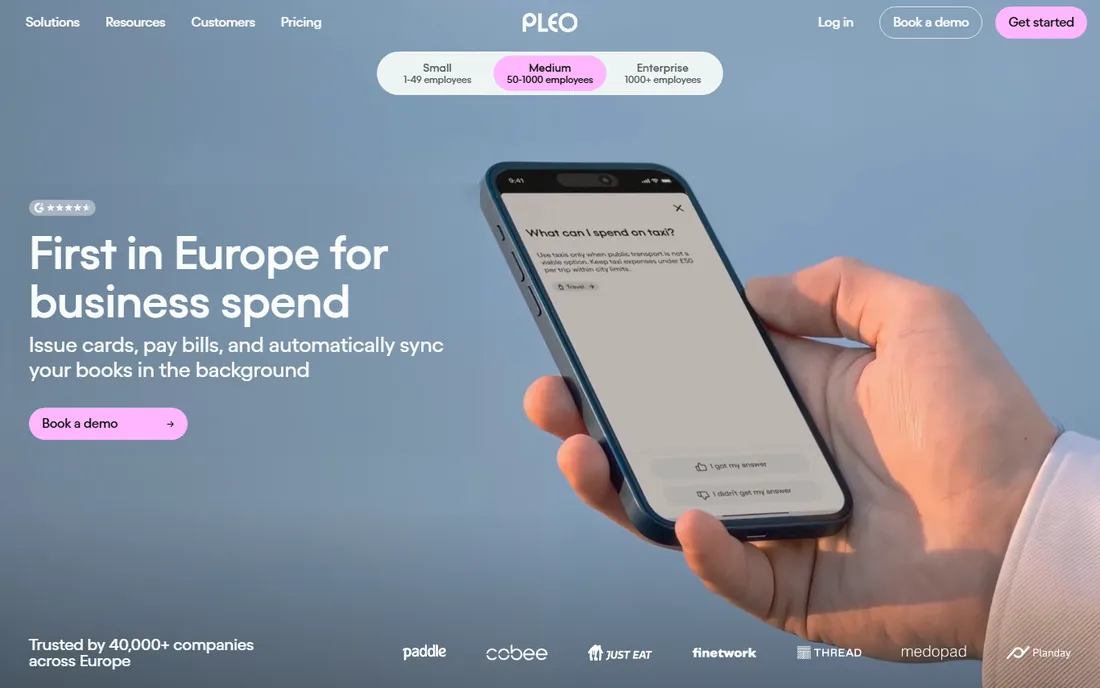
Pleo is the European answer to Ramp and Brex: smart company cards paired with expense management, built for how European companies actually operate. UK plans start around £8 per user per month, with pricing varying by market. The interface is consistently rated among the category's best.
It is the natural pick for European SMEs that find the US card-first platforms a poor fit. Multi-entity European groups get proper local handling instead of an American product with a currency toggle. US-centric teams should stick with Ramp or Brex.
What we like- Built for European companies with local entities and compliance
- Smart cards with real-time limits and receipt capture
- Clean, well-loved interface
Watch out for- UK pricing from ~£8/user/month with regional variation
- US coverage is thinner
- No free tier
How we chose
We split the category by its real dividing line: card-first platforms versus report-first tools, because they solve different problems. Every price above comes from the vendor's pricing page or from September 2026 comparisons that verified those pages. We read G2 and Capterra reviews for all nine, weighting approval-workflow quality, accounting-integration depth and receipt-capture accuracy. We covered the US, European and enterprise ends of the market, and we flagged where "free" means "free if you use our cards," because that condition is the whole business model.
Card-first versus report-first: the fork in the road
Card-first platforms (Ramp, Brex, BILL, Pleo, Navan) issue the cards and control spending before it happens: limits, merchant restrictions, real-time policy checks. The software is often free because interchange revenue pays for it. Choose this fork when you can move company spending onto the platform's cards and want prevention, not processing.
Report-first tools (Expensify, Zoho Expense, SAP Concur, Airbase) process spending after it happens: receipts, reports, approvals, reimbursements. They work with whatever cards you already carry. Choose this fork when the team already uses bank cards, operates in countries the card platforms do not serve, or needs deep policy and audit trails.
Most companies pick card-first for new spending and keep a report tool for reimbursements. That hybrid is normal and fine. The mistake is buying both for the same job.
Corporate card interchange, the fee merchants pay on each transaction, funds the free tier of this industry. Every dollar your team spends on a Ramp or Brex card earns the platform a cut, which is why the software costs you nothing. Understanding this explains the pricing pages: "free" always comes with "requires our cards," and premium tiers ($15/user/month for Ramp Plus, ~$12 for Brex Premium) sell advanced controls to companies with complex needs.
This also explains who should not use free platforms. If your spending cannot move to their cards (certain countries, government contracts, existing banking relationships), the free tier is unavailable in practice and you are back to per-user pricing. Model the real cost: card rewards and cashback often offset the premium tiers, so compute net cost after rewards, not the sticker price.
Frequently asked questions
What is the best free expense tracking software?
Ramp, Brex (Essentials) and BILL Spend & Expense are all genuinely free, funded by card interchange. Zoho Expense has a free tier for basic needs. "Free" requires using the platform's corporate cards on the card-first tools; if you cannot, Zoho Expense's free tier is the fallback.
Ramp versus Brex: which is better?
Ramp wins on free-tier completeness and automation depth for US companies; Brex wins on international and multi-entity support for distributed startups. Both are free at the entry tier. US-only teams usually pick Ramp; venture-backed teams spanning countries usually pick Brex.
Is Expensify still worth it in 2026?
Yes, for its job. Expensify remains the simplest classic expense-report tool: best-in-class receipt scanning, $5/user/month entry, no card requirement. It loses to Ramp and Brex on pre-spend control and automation, but for straightforward reimbursements it is still the fastest option.
What is the best expense tracking software for small business?
BILL Spend & Expense (free) or Ramp (free) if you will use their cards; Zoho Expense (free tier) if you will not; Expensify ($5/user/month) for the simplest receipt-to-reimbursement flow. All four suit teams under 50 without a finance department.
Do we need corporate cards to use expense software?
For card-first platforms (Ramp, Brex, BILL, Pleo), yes: the free software requires running spend through their cards. Report-first tools (Expensify, Zoho Expense, SAP Concur) work with any cards or cash reimbursements. Pick the category that matches your banking reality.
What is the best expense software for international teams?
Brex for US-headquartered companies with global teams, Pleo for European companies, SAP Concur for enterprises with travelers in dozens of countries. Multi-currency support varies widely: verify your specific currencies and entities before buying, not just the marketing claim.
Sources we checked (6)
- https://blog.reviewaitool.com/2026/09/23/best-spend-management-and-finance-automation-ramp-2026/
- https://www.business-software.com/blog/4-budget-and-expense-tracking-apps/
- https://kurums.com/best-ai-expense-management-software-2026-comparison/
- https://www.ofx.com/en-us/blog/best-expense-management-software-solutions/
- https://ramp.com/blog/best-spend-management-software
- https://www.spendesk.com/blog/best-expense-management-software/
Is your product missing or out of date?
We review this list regularly. Vendors can request a listing, send updated pricing or ask about featured placement.

Shihab Mia · Founder, Rankite
Shihab has spent more than a decade helping SaaS and e-commerce brands grow through search. He writes Rankite's software buying guides from pricing pages, documentation and public user reviews. More about Shihab.