How we make this list: we compare pricing pages, product documentation and public user reviews. Rankite is independent; if a vendor ever pays for a featured spot, that listing is clearly labeled Partner.
Key takeaways
- Serum 2 ($249 one-time) remains the reference wavetable synth for electronic producers; Vital (free) gets you 80 percent of the way there.
- Omnisphere ($499) is the sound designer's library: unmatched breadth for film, TV and ambient work.
- Pigments ($199) is the best all-rounder for learning synthesis: every engine type with a superb interface.
- Diva ($179) is the analog purist's pick; Phase Plant ($199) is the modular tinkerer's playground.
- Start free with Vital or Surge XT; buy when you know exactly which sound you cannot make.
Quick comparison
| Tool | Best for | Starting price | Free plan |
|---|
 Serum 2 Serum 2 | Electronic music producers who want the industry-standard wavetable synth | $249 one-time | No |
 Vital Vital | Producers who want professional wavetable synthesis for free | Free (Plus $25 one-time, Pro $80 one-time) | Yes |
 Omnisphere Omnisphere | Composers for film, TV and games who need an enormous sound palette | $499 one-time | No |
 Pigments Pigments | Producers and learners wanting multiple synthesis engines in one interface | $199 one-time | No |
 Massive X Massive X | NI ecosystem users wanting deep, performable wavetable synthesis | $199 one-time | No |
 Diva Diva | Producers chasing authentic analog synth tone in software | $179 one-time | No |
 Phase Plant Phase Plant | Sound designers who want modular, snap-together synthesis | $199 one-time | No |
 Alchemy Alchemy | Logic Pro users who want a flagship synth included with their DAW | $199.99 (Logic Pro, one-time) | Free trial (90 days) |
 Surge XT Surge XT | Anyone wanting a free, open-source synth with professional depth | Free | Yes |
Is your product missing or out of date?
We review this list regularly. Vendors can request a listing, send updated pricing or ask about featured placement.
The best software synths
You have $200, a track that needs a bassline, and forty browser tabs of synth demos. Every plugin promises "analog warmth" and "infinite possibilities," which tells you nothing. The real differences are simpler: how the synth sounds out of the box, how fast you can shape it, and whether you will still reach for it in a year. These nine cover the actual market, from free workhorses to the $499 flagship.
#1
Serum 2
Best for: Electronic music producers who want the industry-standard wavetable synth
Visit xferrecords.com
Starting price$249 one-time
Free planNo
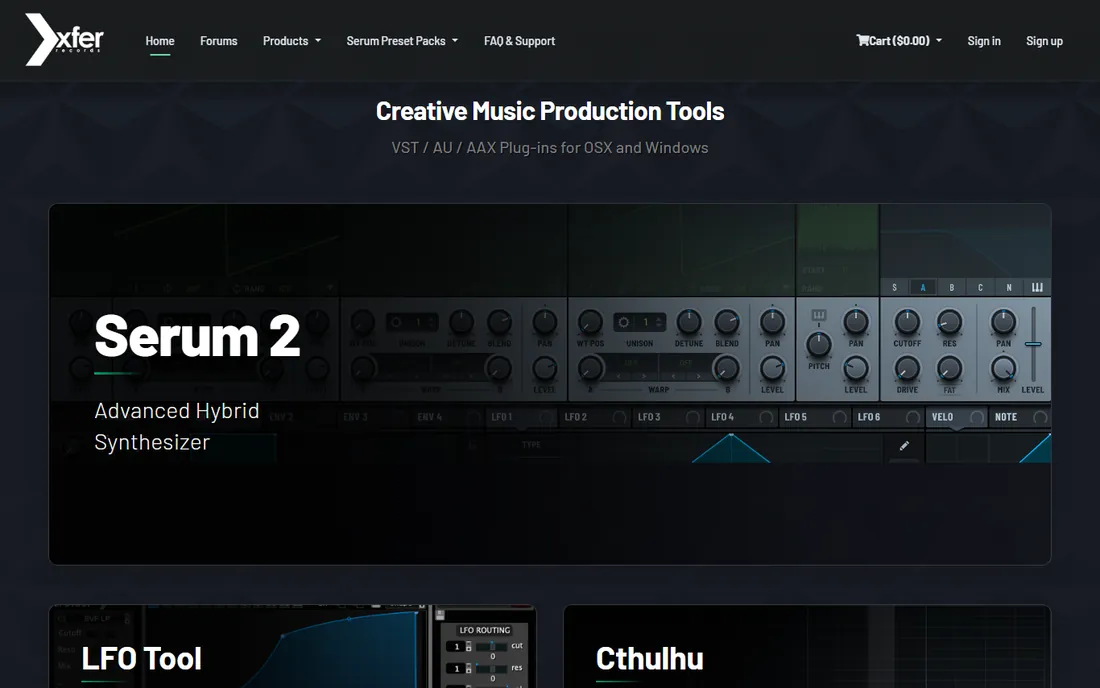
Serum defined modern wavetable synthesis, and Serum 2 extends the lead: granular and spectral oscillators, multisampling, an overhauled effects section with flexible routing, and a clip sequencer that turns the synth into a performance instrument. The preset ecosystem is unmatched; whatever sound you imagine, someone has built it. At $249 with lifetime free updates, it is a buy-once tool, not a subscription trap.
The honest catch is the free competition. Vital does most of what Serum 1 did for nothing, and Serum 2's new tricks matter mainly to sound designers. If you produce bass music, dubstep, EDM or pop, Serum 2 is still the expected tool on collaborations. If you are learning, start with Vital and buy Serum when a specific preset pack or tutorial demands it.
What we like- The reference workflow: visual wavetables, drag-and-drop modulation, huge preset ecosystem
- Serum 2 adds granular, spectral and sample oscillators plus a clip sequencer
- Free upgrade path for Serum 1 owners shows long-term support
Watch out for- $249 is steep when Vital is free
- CPU-hungry with unison stacks and complex FX chains
#2
Vital
Best for: Producers who want professional wavetable synthesis for free
Visit vital.audio
Starting priceFree (Plus $25 one-time, Pro $80 one-time)
Free planYes
Vital is the miracle of the synth world: a free wavetable synth that competes with $200 instruments. The free Basic tier gives you the entire engine (three wavetable oscillators with spectral warping, filters, modulation, effects) with 75 presets; paid tiers ($25 Plus, $80 Pro, or $5 per month subscription) add presets, wavetables and perks without touching the engine. It runs natively on Apple Silicon and Linux too.
The honest catch is the ecosystem. Serum's decade of presets, tutorials and artist packs does not exist for Vital at the same scale, though the community is large and growing. For sound designers who build their own patches, that hardly matters. Download the free version first; most producers never need to pay.
What we like- Free tier includes the complete synthesis engine with no paywalled features
- Spectral warping oscillators with a superb visual interface
- Plus ($25) and Pro ($80) add presets while keeping the engine free
Watch out for- Preset library is thinner than Serum's
- Text-to-wavetable is limited on the free tier
Starting price$499 one-time
Free planNo
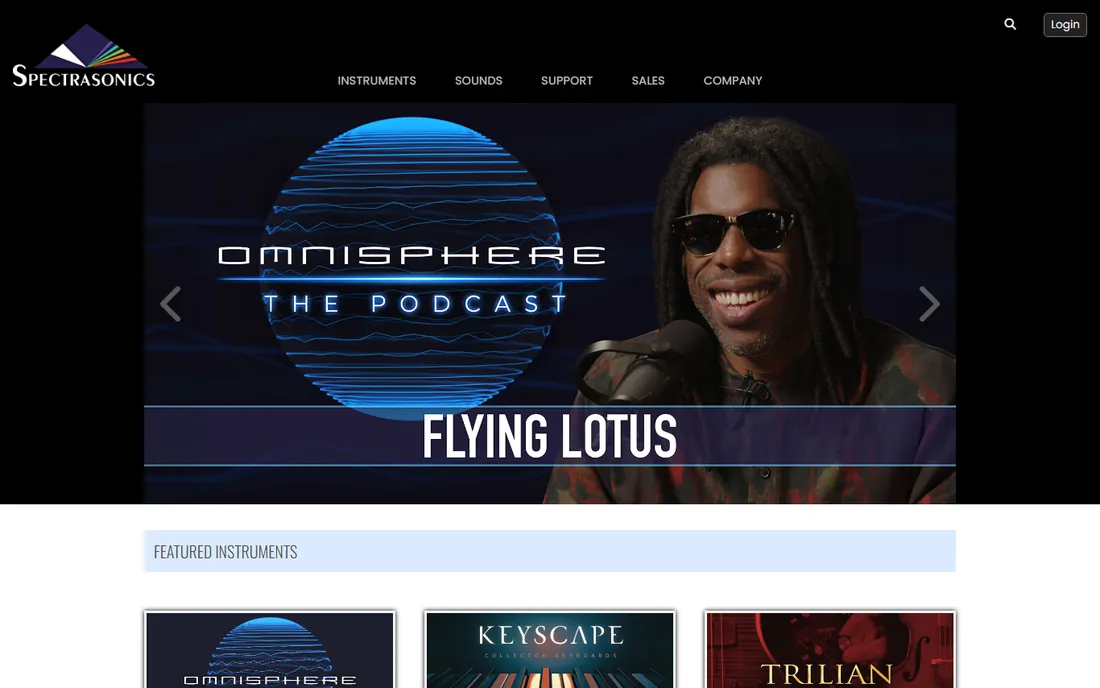
Omnisphere is less a synth than an institution: a hybrid instrument combining synthesis with a sampled library so large it ships on its own drive. Film and TV composers reach for it because whatever the cue needs (pads, pulses, textures, world instruments), Omnisphere probably has it. Spectrasonics' update history is legendary; owners have received years of major new features free.
The honest catch is focus. For an EDM producer, Omnisphere is a $499 preset library when Serum costs half and does the genre better. Its strength is breadth for composition, not surgical sound design for club tracks. If you score to picture or produce ambient and cinematic music, it is the single most useful purchase in software synthesis.
What we like- Vastest factory library in software synthesis (tens of thousands of sounds)
- Hardware synth integration lets real synths control it
- Constant free updates have added features for over a decade
Watch out for- $499 is the highest price here
- Size and depth can overwhelm producers who just need a bass
#4
Pigments
Best for: Producers and learners wanting multiple synthesis engines in one interface
Visit arturia.com
Starting price$199 one-time
Free planNo
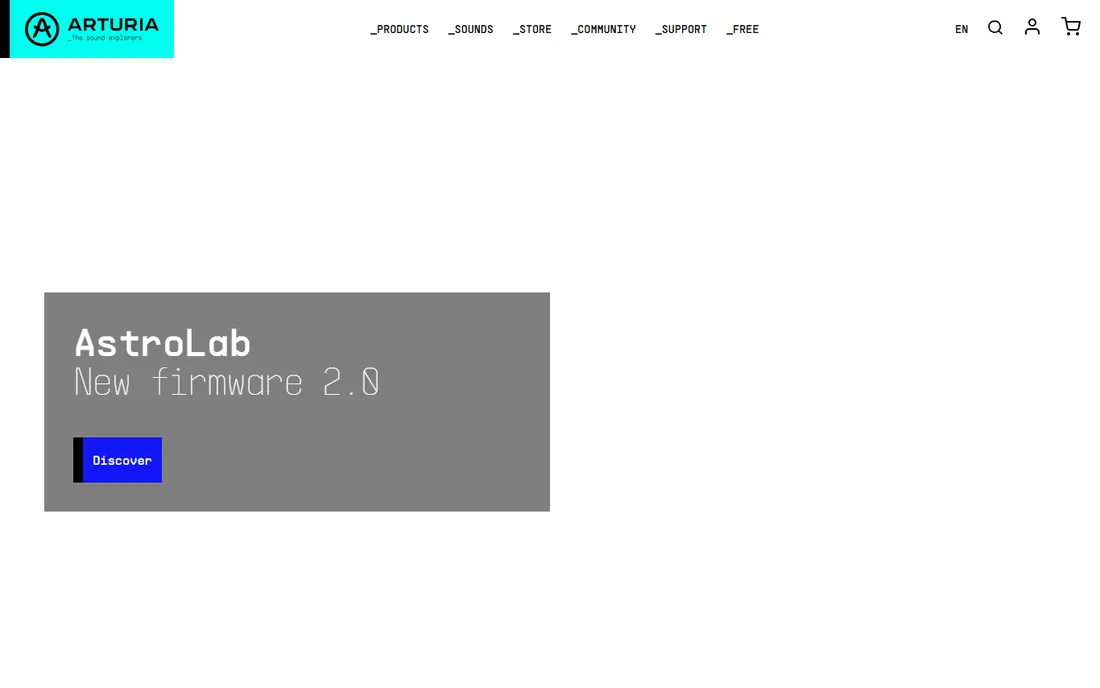
Pigments is the synth to learn synthesis on and the synth to keep afterwards. It combines five engines (analog, wavetable, sample, granular, harmonic) with Arturia's characteristically clear visual interface, so you can see exactly what every knob does. At $199 it undercuts most rivals while covering more ground, and Arturia has a habit of adding whole new engines in free updates.
The honest catch is specialization. Pigments' wavetable engine will not out-Serum Serum, and its analog will not out-Diva Diva. But for the producer who wants one synth that does everything well, that tradeoff is the point. It is also the friendliest $199 in this list for a beginner who wants to understand what they are hearing.
What we like- Wavetable, virtual analog, sample, granular and harmonic engines in one synth
- Arguably the best interface in software synthesis
- Arturia's update cadence keeps adding engines free
Watch out for- Jack of all trades means less depth per engine than specialists
- Preset library smaller than Serum or Omnisphere
Starting price$199 one-time
Free planNo

Massive X is the successor to the synth that defined a decade of bass music, rebuilt with a new engine, flexible routing and a streamlined performance page. At $199 (with loyalty pricing from $149 for existing NI customers, per NI's pricing page), it sits in the standard flagship tier. Komplete owners may already have it, which makes the effective price zero.
The honest catch is the workflow. Massive X's interface is powerful but idiosyncratic; producers raised on Serum's visual clarity often bounce off it. It is also demanding on CPU. For NI loyalists and sound designers who enjoy deep modulation systems, it rewards the investment. For everyone else, demo it against Serum 2 and Pigments before deciding.
What we like- $199 price published on NI's own pricing page
- Deep routing and modulation with a performer-friendly Play page
- Included in Komplete bundles for existing NI users
Watch out for- Interface divides opinion and has a learning curve
- Heavy CPU usage on complex patches
#6
Diva
Best for: Producers chasing authentic analog synth tone in software
Visit u-he.com
Starting price$179 one-time
Free planNo
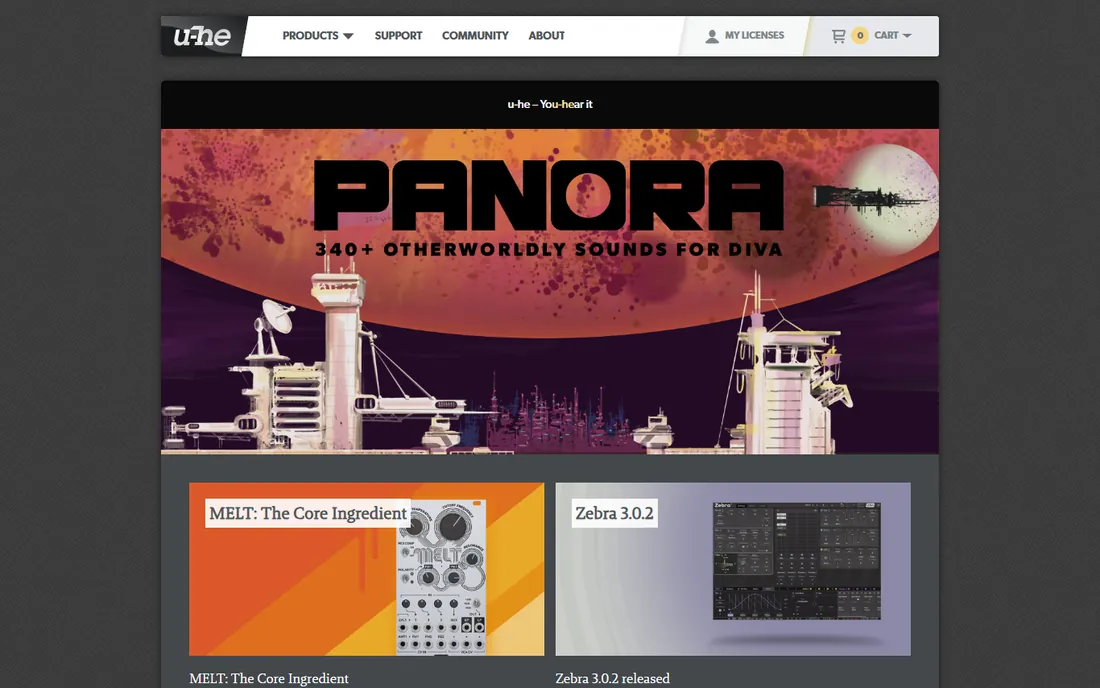
Diva is the answer to "which soft synth sounds most like real analog hardware." Its component-level modeling of classic oscillators and filters produces a warmth and movement that still wins blind tests, and the module-swapping design lets you build hybrids (Minimoog oscillators through a Jupiter filter) that never existed in hardware. At $179 it is also cheaper than most flagships.
The honest catch is the CPU meter. Diva in its best quality mode is famously hungry; producers freeze or bounce tracks as a matter of routine. It is also strictly a subtractive analog synth in an era of wavetables and granular engines. For bass, leads and pads with genuine analog character, nothing touches it; for modern sound design, pair it with a wavetable synth.
What we like- The most convincing analog emulation in software, per a decade of shootouts
- Mix-and-match oscillator and filter modules from five classic synths
- U-he's support and update history are exemplary
Watch out for- Notorious CPU usage in Divine quality mode
- Limited to subtractive analog, no wavetables or FM
#7
Phase Plant
Best for: Sound designers who want modular, snap-together synthesis
Visit kilohearts.com
Starting price$199 one-time
Free planNo

Phase Plant takes the opposite approach from fixed-architecture synths: you build your instrument from snap-together modules (oscillators, samplers, noise, filters, effects), connecting anything to anything. For sound designers, that freedom is intoxicating; wavetable, FM, granular and sample-based patches all live in one window with Kilohearts' excellent effects. At $199 it competes directly with Serum and Pigments.
The honest catch is guidance. Beginners can feel lost without a fixed signal path to learn, and the factory presets do not showcase the depth the way Serum's do. It also benefits from Kilohearts' paid effect expansions. For the tinkerer who outgrew fixed synths, though, Phase Plant is the most fun $199 in synthesis.
What we like- Open modular architecture: any generator, modulator or effect snaps in anywhere
- Excellent value with the Kilohearts ecosystem
- Clean, fast workflow for complex patches
Watch out for- Factory preset library is modest
- The open design can feel directionless for beginners
#8
Alchemy
Best for: Logic Pro users who want a flagship synth included with their DAW
Visit apple.com
Starting price$199.99 (Logic Pro, one-time)
Free planFree trial (90 days)
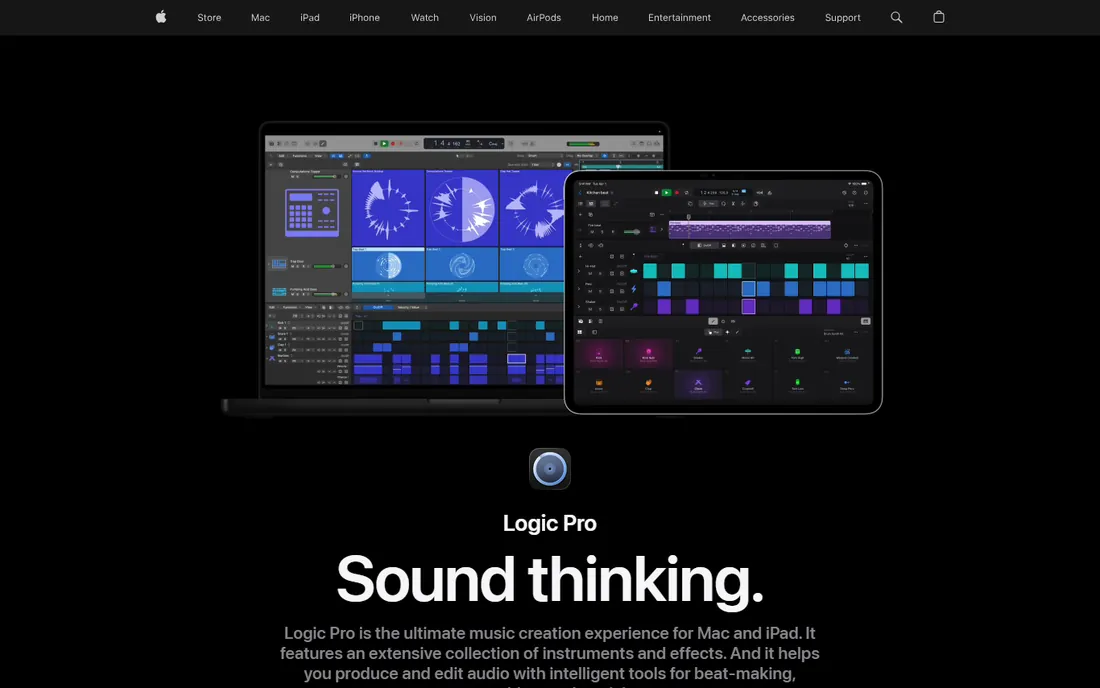
Alchemy is the best synth most producers have never bought, because it comes inside Logic Pro. Apple's acquisition turned Camel Audio's flagship into a Logic exclusive with additive, spectral, formant, granular and sampling engines plus an enormous preset library. For the $199.99 Logic Pro price (with a 90-day free trial), you get a DAW and a flagship synth together.
The honest catch is the lock-in: Alchemy does not exist outside Logic Pro, and Logic Pro does not exist outside the Mac. If you are already a Logic user, learn Alchemy before buying anything else; it covers more ground than synths costing twice the DAW's price. If you use another DAW, it is irrelevant to you.
What we like- Included with Logic Pro ($199.99), making the effective synth price zero for Logic users
- Deep additive, spectral, granular and sampling engines
- Huge preset library
Watch out for- Logic Pro only, so no use in other DAWs
- Mac only
Starting priceFree
Free planYes
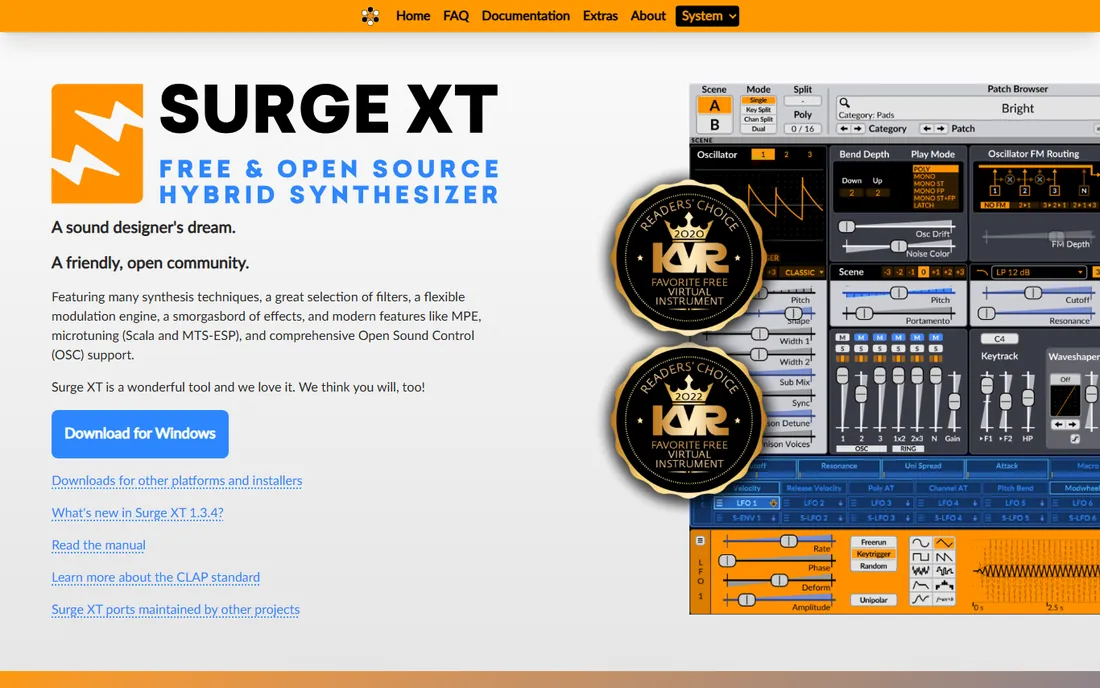
Surge XT is the open-source community's gift to producers: a deep hybrid synthesizer, free forever, with no feature gates. It covers subtractive, FM and wavetable synthesis with a modulation system and effects section that embarrass some paid plugins. Development is active, the preset community is generous, and it runs everywhere including Linux.
The honest catch is presentation. The interface prioritizes function over beauty, and finding the perfect preset takes more digging than in Serum or Omnisphere. But the sound is genuinely professional, and the price is zero. Every producer should have Surge XT installed; it is the free synth that makes paid ones justify themselves.
What we like- Completely free and open source with no tiers or upsells
- Deep hybrid synthesis (subtractive, FM, wavetable) with excellent effects
- Active development and a strong preset community
Watch out for- Interface is powerful but less polished than commercial rivals
- Preset library smaller than the big commercial synths
Wavetable vs analog vs everything else
Most buying confusion comes from engine types. Wavetable synths (Serum 2, Vital, Massive X, Phase Plant, Pigments' wavetable engine) excel at modern electronic sounds: aggressive basses, evolving leads, digital textures. Analog emulations (Diva, Pigments' analog engine) excel at warmth: classic bass, pads and leads with organic movement. Hybrids (Omnisphere, Alchemy, Surge XT) cover everything with varying depth.
Match the engine to your music. Bass music, dubstep, EDM and pop: wavetable first. House, techno and synthwave: analog character matters more. Film and ambient: the hybrid libraries of Omnisphere or Alchemy. Most producers eventually own one of each, which is why the free options (Vital for wavetable, Surge XT for hybrid) are such a gift: they let you learn your preference before spending.
What to check before you buy
Start with your DAW. Logic users should master Alchemy before spending a dollar; FL Studio users get capable stock synths too; Ableton users should weigh Wavetable and Operator against third-party options. The synth you already own is always the cheapest.
Then check the CPU cost. Diva, Serum 2 and Omnisphere can all strain modest machines; Vital and Surge XT are lighter. If your computer is older, factor in the hidden cost of freezing tracks or upgrading hardware.
Finally, demo with intent. Load the same MIDI into each demo, build the same bass sound, and time yourself. The synth that gets you to the sound fastest is the right one regardless of reviews. And check the preset ecosystem for your genre: Serum's dominance in bass music is a network effect as much as a sound-quality verdict.
How we chose
We started with the synths producers actually discuss: best wavetable synth, Serum vs Vital, best analog emulation plugin, best synth for beginners. For each candidate we checked the vendor's own site or store for pricing, then cross-checked capabilities against documentation and producer discussion on Reddit, forums and music tech press. Where pricing was promotional or time-limited, we used the regular price. Discontinued or abandonware synths were excluded.
Frequently asked questions
What is the best free software synth?
Vital. Its free tier includes the complete synthesis engine, competing with $200 instruments. Surge XT is the other essential free synth, covering hybrid synthesis with no paywalls. Between them, a beginner needs nothing else.
Is Serum 2 worth $249?
If you produce electronic music professionally, yes: the workflow, preset ecosystem and tutorial compatibility make it the industry standard. If you are learning or on a budget, Vital covers most of the same ground free. Buy Serum when a specific need (collaboration, preset packs, courses) demands it.
What is the difference between Serum and Vital?
Both are wavetable synths with visual interfaces. Serum 2 ($249) has a larger preset ecosystem, more oscillator types (granular, spectral, sample) and deeper effects. Vital (free) has the core wavetable experience with spectral warping and a cleaner price. Many producers own both.
Which synth is best for beginners?
Pigments ($199) for a paid option: the interface teaches synthesis visually across five engines. Vital (free) for no budget: full engine, great interface, zero cost. Avoid starting with modular or ultra-deep synths until the basics click.
Do I need Omnisphere?
Only if you compose for picture or need its vast library. At $499 it is the priciest option here, and its strength is breadth for film, TV and ambient work. Electronic producers get more from Serum 2 or Vital at lower cost.
Can software synths replace hardware?
For most production, yes: Diva convincingly covers analog, and the digital engines do things no hardware can. Hardware still offers hands-on workflow and specific character, but no sonic necessity. Many professionals are fully in the box.
Sources we checked (2)
- https://vital.audio/subscribed/
- https://www.native-instruments.com/en/pricing/massive-x/
Is your product missing or out of date?
We review this list regularly. Vendors can request a listing, send updated pricing or ask about featured placement.

Shihab Mia · Founder, Rankite
Shihab has spent more than a decade helping SaaS and e-commerce brands grow through search. He writes Rankite's software buying guides from pricing pages, documentation and public user reviews. More about Shihab.