How we make this list: we compare pricing pages, product documentation and public user reviews. Rankite is independent; if a vendor ever pays for a featured spot, that listing is clearly labeled Partner.
Key takeaways
- Start free: Vital (full synth engine, free) and Surge XT (open source, free) cover most beginners completely.
- Serum 2 ($249) is the modern standard for electronic music, with rent-to-own at $9.99/month through Splice.
- For analog warmth, u-he Diva ($179) remains the benchmark; for sheer depth, Omnisphere ($499) is the sound-design workstation.
- Pigments 6 ($199) is the most versatile all-rounder, with a free Pigments Play version to try first.
Quick comparison
| Tool | Best for | Starting price | Free plan |
|---|
 Xfer Serum 2 Xfer Serum 2 | Producers making modern electronic, pop and hip-hop | $249 (rent-to-own $9.99/month for 25 months via Splice) | No (3-day trial through Splice rent-to-own) |
 Vital Vital | Anyone who wants professional synthesis without paying | Free (Plus $25, Pro $80, subscription $5/month) | Yes (Vital Basic, full synth engine) |
 Native Instruments Massive X Native Instruments Massive X | Sound designers who want deep routing and evolving textures | $199 | No |
 Arturia Pigments 6 Arturia Pigments 6 | Producers who want many synthesis types in one instrument | $199 | Pigments Play (free streamlined version) |
 u-he Diva u-he Diva | Producers chasing authentic analog hardware sound | $179 | No |
 Kilohearts Phase Plant Kilohearts Phase Plant | Modular thinkers who build sounds from snapin effects | $199 | No |
 Spectrasonics Omnisphere Spectrasonics Omnisphere | Film, TV and game composers needing a vast sound palette | $499 | No |
 TAL-U-No-LX TAL-U-No-LX | Eighties-style pads, basses and chorus-drenched keys on a budget | $60 | No (demo available) |
 Surge XT Surge XT | Free open-source synthesis with pro-level depth | Free | Yes (fully open source) |
Is your product missing or out of date?
We review this list regularly. Vendors can request a listing, send updated pricing or ask about featured placement.
The best software synthesizer
The problem is not finding a good soft synth. The problem is that there are fifty good ones, they all demo well, and the differences that matter (modulation depth, CPU load, preset ecosystem) only show up after you have lived with one for a month. This list cuts through that: nine synthesizers that working producers actually buy, from the free Vital that embarrasses paid plugins to the $499 Omnisphere that scores films, with the real prices and the honest trade-offs.
Starting price$249 (rent-to-own $9.99/month for 25 months via Splice)
Free planNo (3-day trial through Splice rent-to-own)
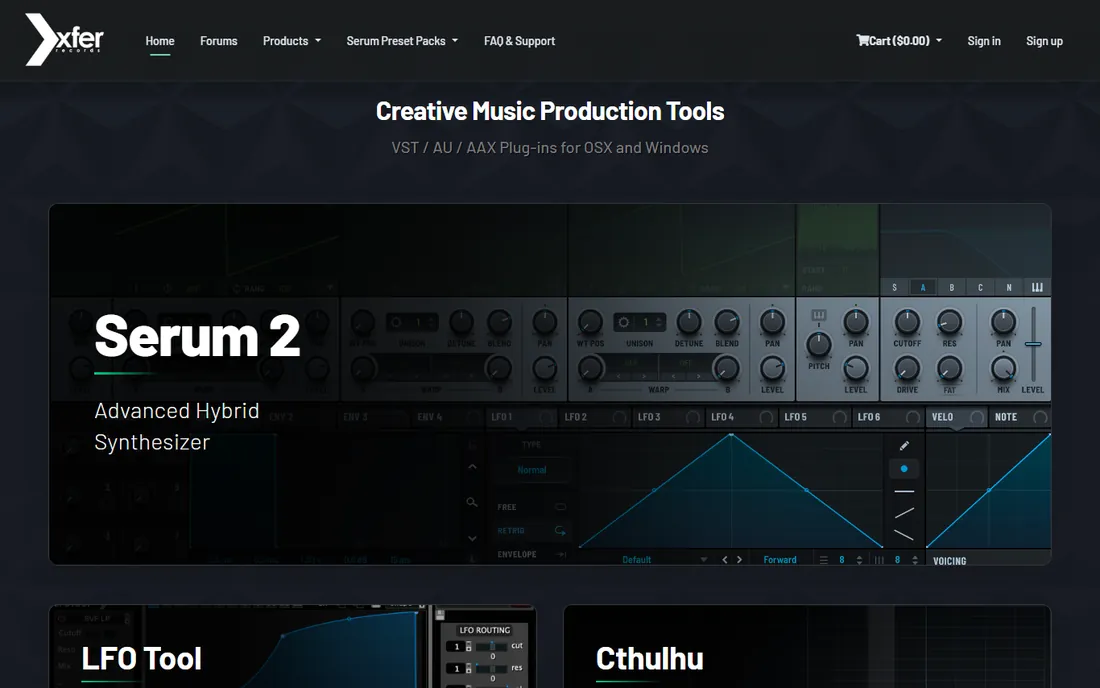
Serum 2 is the synth a generation of producers learned on, rebuilt bigger. The 2025 release kept the visual wavetable workflow that made the original famous and added four new oscillator types (multisample, sample, granular, spectral), an arpeggiator and clip sequencer, and a reworked effects engine with multiband routing. Thousands of presets ship with it, and the third-party preset market is larger than any competitor's. If you make electronic music, this is the reference instrument everything else gets compared to.
The price is $249 with lifetime free updates, and existing Serum owners upgraded free. Splice offers rent-to-own at $9.99 per month for 25 months with a 3-day trial, which is the sensible path if the upfront cost stings. The honest caveat is CPU: Serum 2 is heavier than its predecessor, so older machines will feel it on stacked instances. For everyone else, it is the safest single synth purchase in this list.
What we like- Industry-standard workflow with unmatched visual wavetable editing
- Serum 2 adds granular, spectral, multisample and sample oscillators plus an arpeggiator
- Enormous third-party preset and wavetable ecosystem
Watch out for- Highest learning curve payoff requires commitment
- CPU usage rose notably versus the original Serum
#2
Vital
Best for: Anyone who wants professional synthesis without paying
Visit vital.audio
Starting priceFree (Plus $25, Pro $80, subscription $5/month)
Free planYes (Vital Basic, full synth engine)
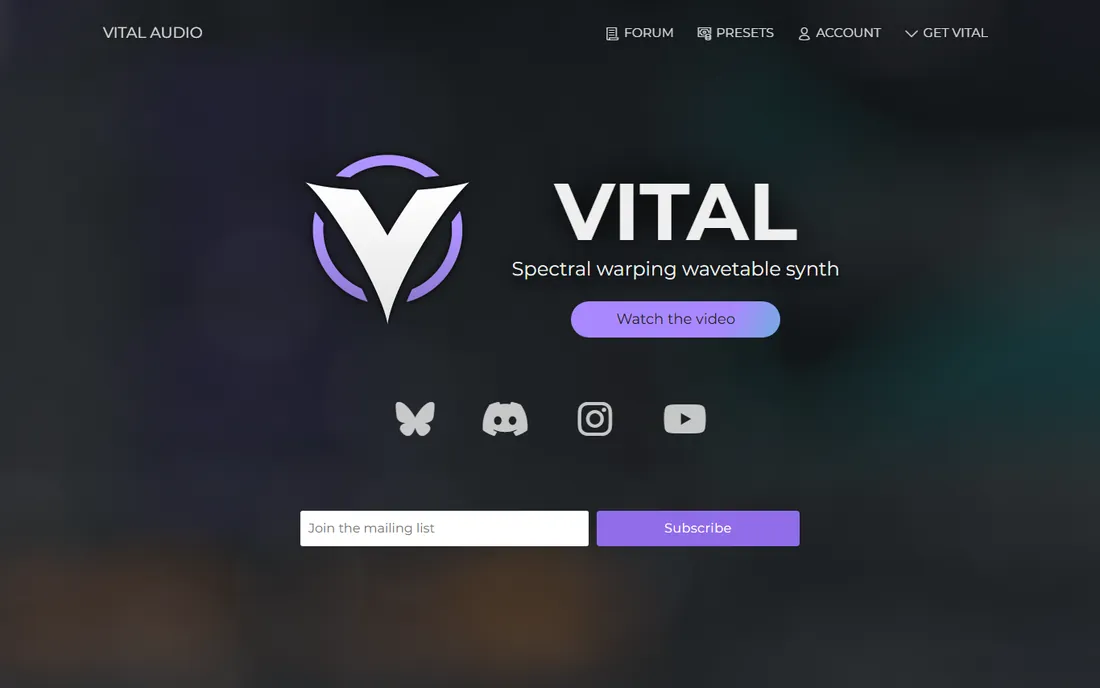
Vital did something no synth had done before: gave away the full engine for free. Vital Basic includes all three wavetable oscillators, the modulation system, filters, effects, MPE support and the spectral warping that makes it special, with the paid tiers (Plus $25, Pro $80, or $5 per month) adding factory presets, wavetables and perks rather than capability. The text-to-wavetable feature, which turns typed words into oscillator shapes, remains a delightful party trick with real sound-design uses.
The trade-off is community scale. Serum's preset ecosystem dwarfs Vital's, so producers who live on preset packs will find less to buy. But for learning synthesis or building sounds from scratch, nothing touches the value: a free instrument this deep would have cost $200 five years ago. Download Vital before spending money on anything else in this list.
What we like- The free Basic tier includes the complete synthesis engine, not a demo
- Spectral warping and text-to-wavetable are genuinely unique
- Visual interface rivals synths costing hundreds
Watch out for- Paid tiers mostly add presets and wavetables rather than features
- Smaller preset ecosystem than Serum
Starting price$199
Free planNo

Massive X is the successor to the synth that defined dubstep-era bass, rebuilt for the long haul. Its routing system is the star: virtually any output can modulate any input, which makes evolving pads, morphing basses and generative textures unusually easy to construct. The Performer modulators let you draw up to eight bars of modulation patterns, and the sound has a weight that cuts through dense mixes.
It is not a casual purchase. The interface is dense, the modulation depth takes study, and it runs as a plugin only with no standalone mode. At $199 (with loyalty pricing from $149 for existing NI customers) it competes directly with Serum 2 and Pigments 6. Choose Massive X when routing flexibility and NI ecosystem integration matter more to you than preset count or beginner-friendliness.
What we like- Flexible routing lets any output modulate any input for complex evolving sounds
- Excellent wavetable and oscillator quality with a distinct character
- Regular free updates and expansion presets
Watch out for- Interface divides opinion and the learning curve is steep
- No standalone mode, plugin only
#4
Arturia Pigments 6
Best for: Producers who want many synthesis types in one instrument
Visit arturia.com
Starting price$199
Free planPigments Play (free streamlined version)
Pigments 6 is the polymath of soft synths. Where most instruments do one synthesis type well, Pigments ships six engines, from wavetable and virtual analog to granular, harmonic and the newer modal engine, all behind an interface that stays readable at high complexity. The modulation system is deep without being forbidding, and the generative sequencer with probability and polyrhythms is a composition tool in its own right.
The $199 list price needs context: Arturia discounts Pigments aggressively, with sale prices as low as $99, so patient buyers rarely pay full price. There is also Pigments Play, a free streamlined version released in 2026, which is the ideal trial. Buy Pigments when you want one synth that can plausibly cover any genre rather than the single best tool for one job.
What we like- Six engines (wavetable, virtual analog, granular, harmonic, modal, sample) in one interface
- Colorful visual workflow that makes complex modulation approachable
- Over 1,600 factory presets
Watch out for- Jack-of-all-trades means no single engine is the deepest available
- Arturia's frequent sales punish anyone who pays full price
#5
u-he Diva
Best for: Producers chasing authentic analog hardware sound
Visit u-he.com
Starting price$179
Free planNo
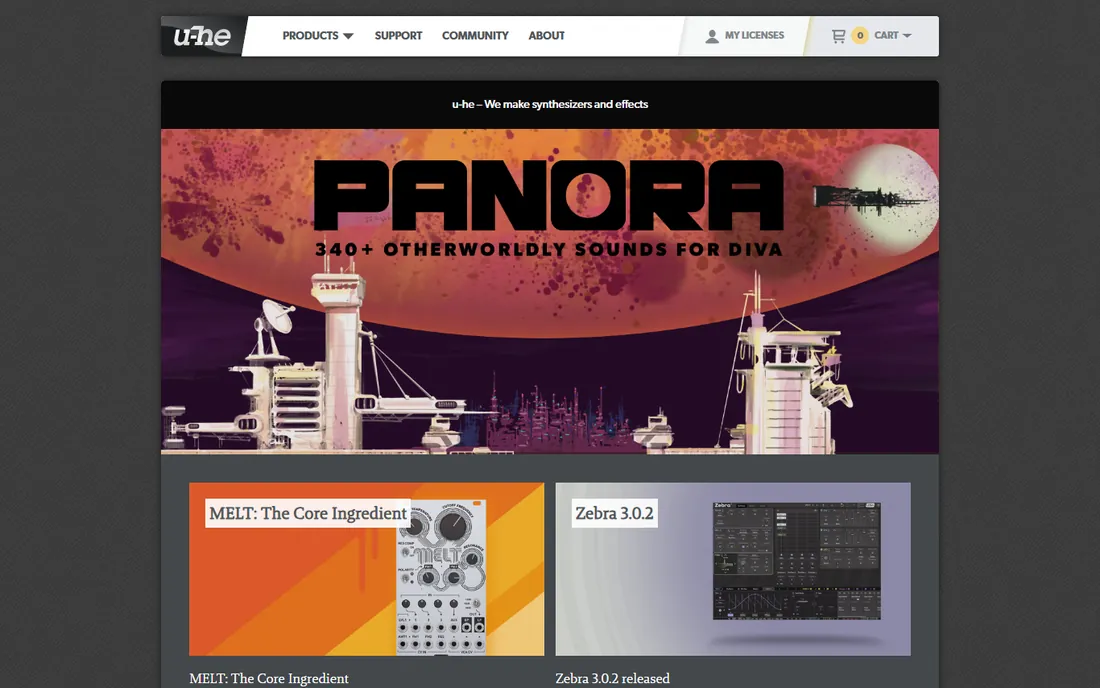
Diva's trick is architectural honesty. Instead of one generic analog emulation, it models the actual circuits of classic hardware, section by section, and lets you combine oscillators from one legendary synth with the filter of another. The result is the plugin producers reach for when a track needs genuine analog weight rather than a digital approximation. It has held that reputation for over a decade without serious challenge.
The cost is CPU. Diva in its highest quality mode is famously hungry, and large projects need freezing and bouncing. At $179 it is also a single-purpose instrument in a market of multi-engine competitors. None of that matters to its devotees: if analog character is the priority, Diva is still the answer, and the occasional bundle deals (like the 2026 Bitwig promotion) make it cheaper for the patient.
What we like- Component-level modeling of classic oscillator, filter and envelope circuits
- Mix-and-match modules let you build a custom dream synth
- Widely considered the most analog-sounding plugin available
Watch out for- Notoriously CPU-hungry, especially in divine quality mode
- Interface and workflow feel dated next to Vital or Pigments
#6
Kilohearts Phase Plant
Best for: Modular thinkers who build sounds from snapin effects
Visit kilohearts.com
Starting price$199
Free planNo

Phase Plant treats a synthesizer like a modular rack. Oscillators, filters, modulators and effects snap together in any configuration with no fixed signal path, which makes it the most flexible architecture here for experimental sound design. Kilohearts' snapin effects double as modules, so a distortion or granular effect can sit anywhere in the voice chain, not just at the end.
Budget carefully: $199 buys Phase Plant, but the complete snapin collection is a separate purchase, and the instrument is at its best with the full set. Kilohearts Essentials (the free snapin bundle) softens this, and all premium products include lifetime updates. Choose Phase Plant when modular freedom matters more than a giant preset library.
What we like- Open modular architecture: add unlimited oscillators, filters and effects in any order
- The snapin ecosystem means every effect is also a modular building block
- Lifetime free updates included
Watch out for- The $199 price is a floor, since the full snapin library costs extra
- Factory preset library is thinner than Serum or Pigments
#7
Spectrasonics Omnisphere
Best for: Film, TV and game composers needing a vast sound palette
Visit spectrasonics.net
Starting price$499
Free planNo
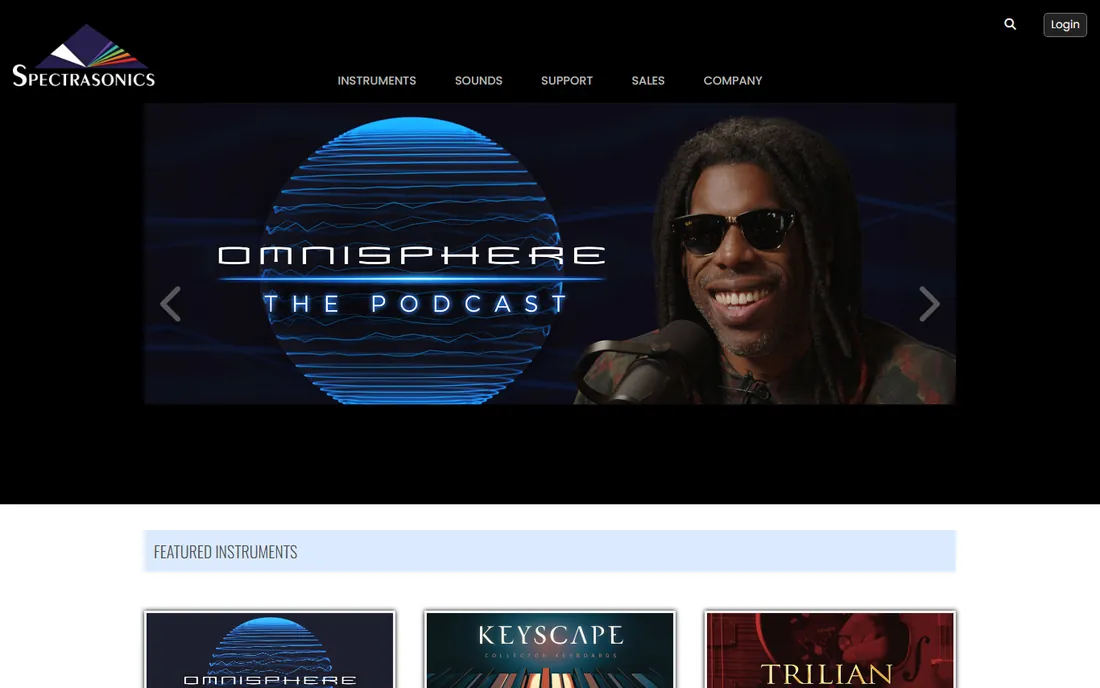
Omnisphere is less a synthesizer than a scoring institution. Its library blends wavetable, granular and virtual analog synthesis with a massive sampled core, totaling over 14,000 sounds that cover everything from evolving atmospheres to punchy electronic basses. The hardware integration feature is genuinely singular: connect a supported hardware synth and Omnisphere maps its controls to the software engine.
At $499 it costs more than several competitors combined, and beginners can drown in the options. This is a purchase for composers and serious sound designers who will use a fraction of its depth daily. For everyone else, the cheaper synths here cover 90 percent of the territory. When a trailer or score needs that last 10 percent, studios buy Omnisphere without blinking.
What we like- Enormous library (14,000+ sounds) spanning synthesis and deep sampling
- Unique hardware synth integration turns 65+ hardware synths into controllers
- 57 effects units and deep modulation
Watch out for- By far the most expensive synth here
- The scale can overwhelm producers who want quick results
#8
TAL-U-No-LX
Best for: Eighties-style pads, basses and chorus-drenched keys on a budget
Visit tal-software.com
Starting price$60
Free planNo (demo available)
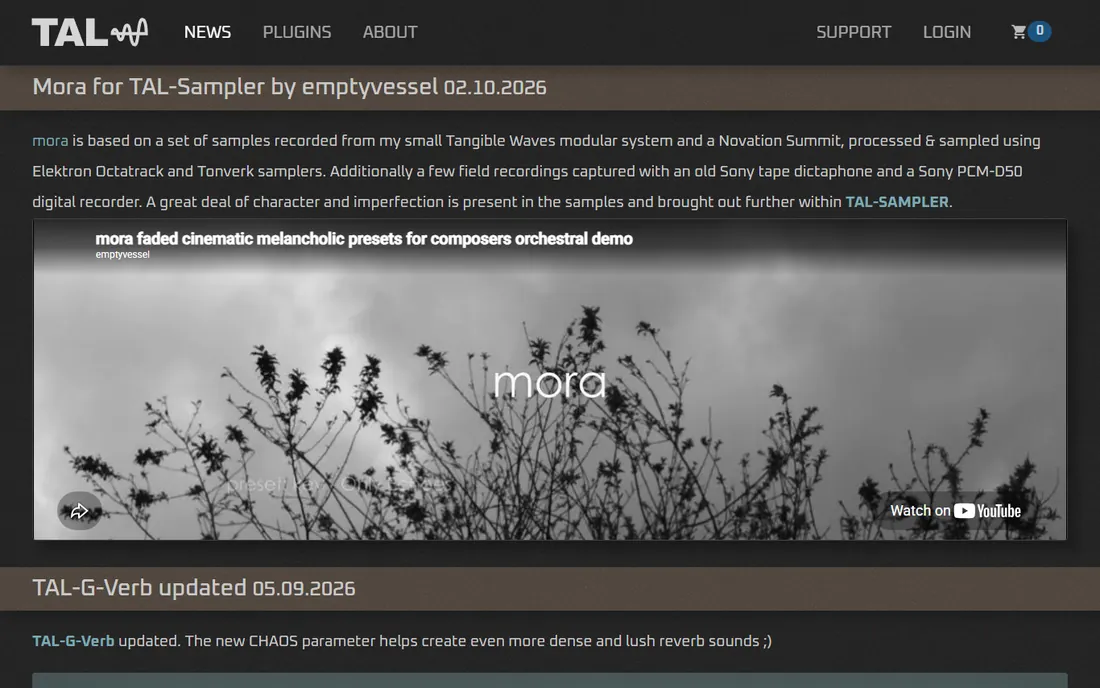
TAL-U-No-LX does one thing: it is a Juno-60, lovingly recreated down to the chorus circuit that defined a decade of synth pop. The interface mirrors the hardware's simplicity, which means you will be making usable sounds within minutes rather than studying a manual. For synthwave, retrowave, indie pop and lo-fi, its pads and basses sit in mixes with almost no effort.
The limitation is the point. There is no wavetable editor, no granular engine, no modular routing. At $60 it is an impulse buy next to the $199 heavyweights, and it earns its place as a specialist: when a track needs that specific chorus-drenched warmth, nothing else here does it faster or cheaper.
What we like- Faithful emulation of the Roland Juno-60, including its famous chorus
- Simple interface you can learn in an afternoon
- $60 is a fraction of competitors' prices
Watch out for- Single-purpose by design: it does the Juno sound and little else
- No wavetable or modern synthesis features
Starting priceFree
Free planYes (fully open source)
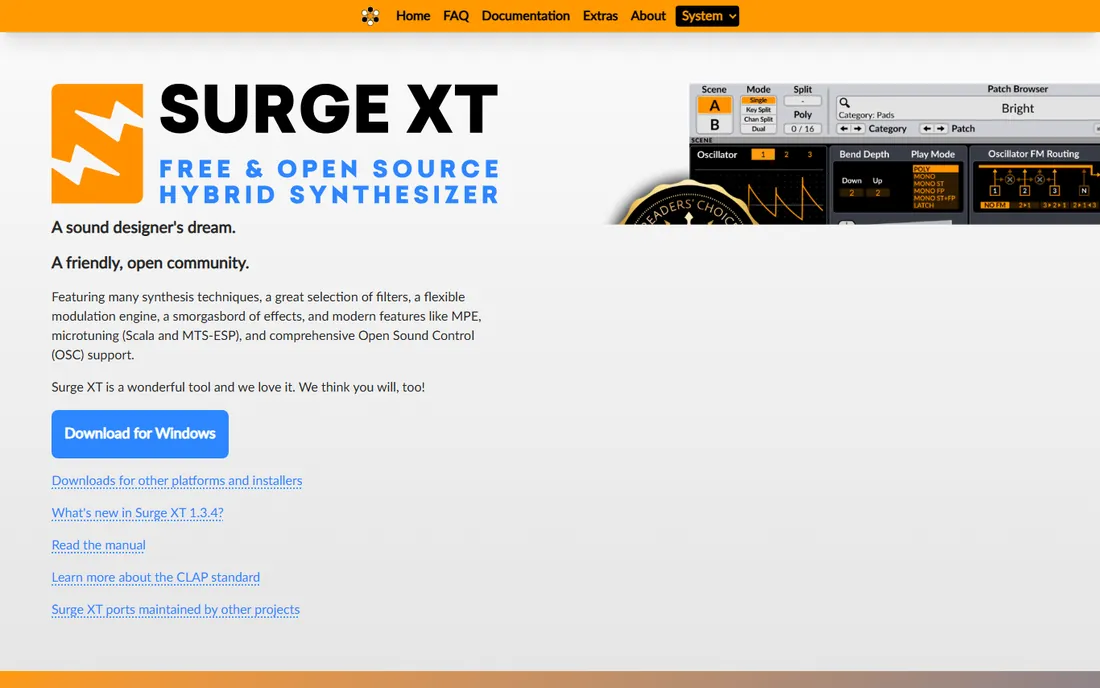
Surge XT is the open-source sleeper of this list. It is a full hybrid synthesizer with subtractive, wavetable and FM engines, a deep modulation system and a capable effects section, free forever with no paid tier waiting to upsell you. Development is active and community-driven, and it runs on Windows, Mac and Linux in all major plugin formats.
It will not win beauty contests against Vital or Pigments, and the factory presets, while good, cannot match commercial libraries. But as a second or third synth, or as the only synth for a producer on Linux or a zero budget, it is remarkable. Pair it with Vital and you have two world-class free instruments covering nearly every synthesis task.
What we like- Completely free and open source with no tiered features
- Deep hybrid engine (subtractive, wavetable, FM) with extensive modulation
- Active community and constant development
Watch out for- Interface is functional rather than beautiful
- Preset library is solid but smaller than commercial rivals
Wavetable vs analog-modeled vs modular: which engine fits you
The nine synths here cluster into three philosophies, and matching the philosophy to your music matters more than comparing feature lists. Wavetable synths (Serum 2, Vital, Massive X) excel at modern electronic sounds: aggressive basses, evolving leads and precise digital textures. If your reference tracks are EDM, dubstep, pop or hip-hop, start here. Analog-modeled synths (Diva, TAL-U-No-LX) trade digital precision for warmth, drift and character; they suit synthwave, indie, funk and anything where the synth should sound like a physical instrument.
Modular and multi-engine synths (Phase Plant, Pigments 6, Omnisphere, Surge XT) are for explorers who want many synthesis types or open-ended routing in one purchase. They take longer to learn but replace several specialist instruments. A practical rule: your first synth should be a wavetable instrument (Vital if free, Serum 2 if buying), your second should be whatever your first cannot do. Most producers never need a third.
How we chose
We started with the synthesizers producers actually discuss and buy: the wavetable standards, the analog-modeling benchmarks, the modular options and the serious free instruments. For each candidate we checked the vendor's own pricing page for current prices, confirmed the product is actively maintained in 2026, and compared synthesis engines, modulation depth, preset ecosystem, CPU efficiency and format support. We favored instruments with staying power (large user bases, continued updates) over novelties, and included free options that genuinely compete with paid ones rather than as token gestures.
How to choose your first (or next) soft synth
Match the synth to the music first and the budget second. Electronic producers should start with wavetable: Vital costs nothing and teaches the same concepts as Serum 2, so there is no reason to pay before you know what wavetables do. Producers chasing vintage tones should demo Diva and TAL-U-No-LX, because analog modeling is a taste thing that specs cannot convey. Film and game composers should look at Omnisphere's library size against their actual needs; many buy it for 5 percent of its sounds.
Then check the practical constraints. CPU load varies enormously: Diva and Serum 2 can strain older machines, while Vital and Surge XT are lighter. Format support matters on Apple Silicon Macs and Linux systems; all nine here cover VST3 and AU where relevant, but verify your DAW's exact requirements. Finally, factor in the preset economy. A synth with a huge third-party preset market (Serum 2, Pigments) saves sound-design time you might rather spend writing music. Rent-to-own through Splice exists for Serum 2 and several competitors, which turns a $249 decision into a $9.99 monthly experiment.
Frequently asked questions
Do I need to pay for a synth plugin as a beginner?
No. Vital gives you a complete professional wavetable synth for free, and Surge XT adds a deep hybrid engine at no cost. Learn synthesis on those; you will know exactly what you are missing (usually presets or a specific character) before spending money. Most beginners who buy first end up owning an expensive preset player.
What is the real difference between Serum 2 and Vital?
Serum 2 is the broader, deeper instrument: more oscillator types (including granular and spectral), a bigger preset ecosystem and tighter integration with professional workflows. Vital matches it on core wavetable synthesis and interface quality, for free. If you design sounds from scratch, Vital covers most of it; if you buy presets or need granular and multisample engines, Serum 2 earns its price.
Will these synths work in my DAW?
Almost certainly. All nine ship as VST3 plugins for Windows and Mac, most also offer AU for Logic and Pro Tools-compatible AAX where relevant, and Surge XT and Vital cover Linux too. Check the vendor's system requirements page for Apple Silicon native support and your DAW's plugin format before buying.
How much CPU do software synthesizers use?
It varies more than any other factor here. Diva in high-quality mode and Serum 2 with unison stacks are the heaviest; Vital, Surge XT and TAL-U-No-LX are comparatively light. Every DAW lets you freeze or bounce tracks to audio, which is the standard workflow for finishing songs on modest machines regardless of which synth you choose.
Can one synth cover every genre?
Pigments 6 and Omnisphere come closest, with multiple engines and huge libraries spanning electronic, cinematic and pop. But most working producers use two or three specialists: a wavetable synth for modern sounds, an analog-modeled one for warmth, and sometimes a sampler. Start with one versatile instrument and add a specialist only when you keep hitting the same wall.
Are rent-to-own plans worth it?
For expensive synths, yes. Splice's rent-to-own (for example, $9.99 per month for 25 months for Serum 2) lets you use the full plugin while paying, with no interest and the ability to pause. If you finish the payments, you own it. It is the lowest-risk way to find out whether a $249 synth earns its place in your template.
Sources we checked (10)
- https://xferrecords.com
- https://vital.audio
- https://www.native-instruments.com/en/pricing/massive-x/
- https://www.arturia.com
- https://u-he.com
- https://kilohearts.com/shop/
- https://www.spectrasonics.net
- https://tal-software.com
- https://surge-synthesizer.github.io
- https://hyperbits.com/blog/synth-plugins/
Is your product missing or out of date?
We review this list regularly. Vendors can request a listing, send updated pricing or ask about featured placement.

Shihab Mia · Founder, Rankite
Shihab has spent more than a decade helping SaaS and e-commerce brands grow through search. He writes Rankite's software buying guides from pricing pages, documentation and public user reviews. More about Shihab.