How we make this list: we compare pricing pages, product documentation and public user reviews. Ratings come from G2, Capterra or Trustpilot, with the date we checked them.
Key takeaways
- Published per-developer prices range from $20 (Haystack Growth, Typo Starter) to $59 (LinearB Enterprise) per month on annual billing.
- Swarmia is free for companies with fewer than 10 developers and sells individual modules from $5 per developer per month.
- LinearB requires a minimum of 50 billable contributors on Essentials, which rules it out for very small teams, but it offers a 45-day free trial.
- DX is now part of Atlassian (the acquisition closed in November 2025), a sign of wider consolidation, so check vendor roadmaps before signing multi-year deals.
- Jellyfish, DX, Faros AI, Allstacks and Span price by quote and are aimed mainly at larger engineering organizations.
Quick comparison
| Tool | Best for | Starting price | Free plan |
|---|
 LinearB | Mid-size and large teams wanting workflow automation | $29 per contributor/month (Essentials, billed annually) | Free trial (45 days) |
 Jellyfish | Enterprises aligning engineering with finance | See website | No |
 Swarmia | Growing teams that want metrics plus developer surveys | $45 per developer/month (Standard, billed annually) | Yes (companies with fewer than 10 developers) |
 DX | Organizations measuring developer experience | See website | No |
 Haystack | Smaller teams focused on delivery risk | $20 per member/month (Growth, billed annually) | Free trial (14 days) |
 Waydev | Teams that want reports for executives without extra seats | See website | Free trial |
 Faros AI | Large companies managing AI coding spend | See website | No |
 Typo | Budget-conscious teams wanting AI code review included | $20 per developer/month (Starter, billed annually) | Free trial (14 days) |
 Allstacks | Delivery forecasting and software capitalization | See website | No |
 Span | Teams running coding agents at scale | See website | No |
Is your product missing or out of date?
We review this list regularly. Vendors can request a listing, send updated pricing or ask about featured placement.
#1
LinearB
Best for: Mid-size and large teams wanting workflow automation
Visit linearb.io
Starting price$29 per contributor/month (Essentials, billed annually)
Free planFree trial (45 days)
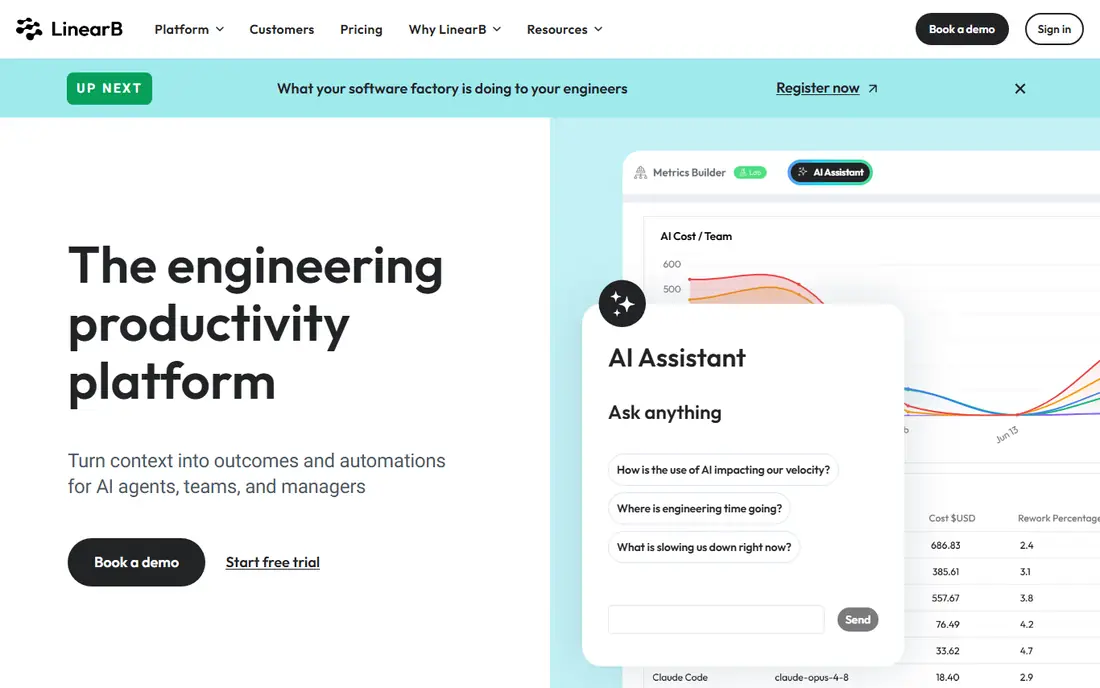
LinearB is one of the best-known names in engineering metrics, and it has always paired measurement with action. Beyond dashboards for cycle time, DORA metrics and review speed, it automates parts of the pull request workflow, such as routing reviews and flagging risky changes, so teams can fix bottlenecks rather than just look at them.
Pricing is public. Essentials costs $29 per contributor per month with a 50-user minimum and up to five admins, and Enterprise costs $59 with a 100-user minimum, unlimited admins and support for GitHub on-premises, GitLab, Bitbucket and Azure DevOps. Billing is annual only.
The minimums are the main catch. A 20-person team would still pay for 50 seats on Essentials, and teams on GitLab or Bitbucket need Enterprise.
What we like- Public pricing
- Long 45-day free trial with no payment method
- Workflow automation on pull requests alongside metrics
Watch out for- 50-contributor minimum on Essentials and 100 on Enterprise
- Essentials supports GitHub Cloud only
Starting priceSee website
Free planNo
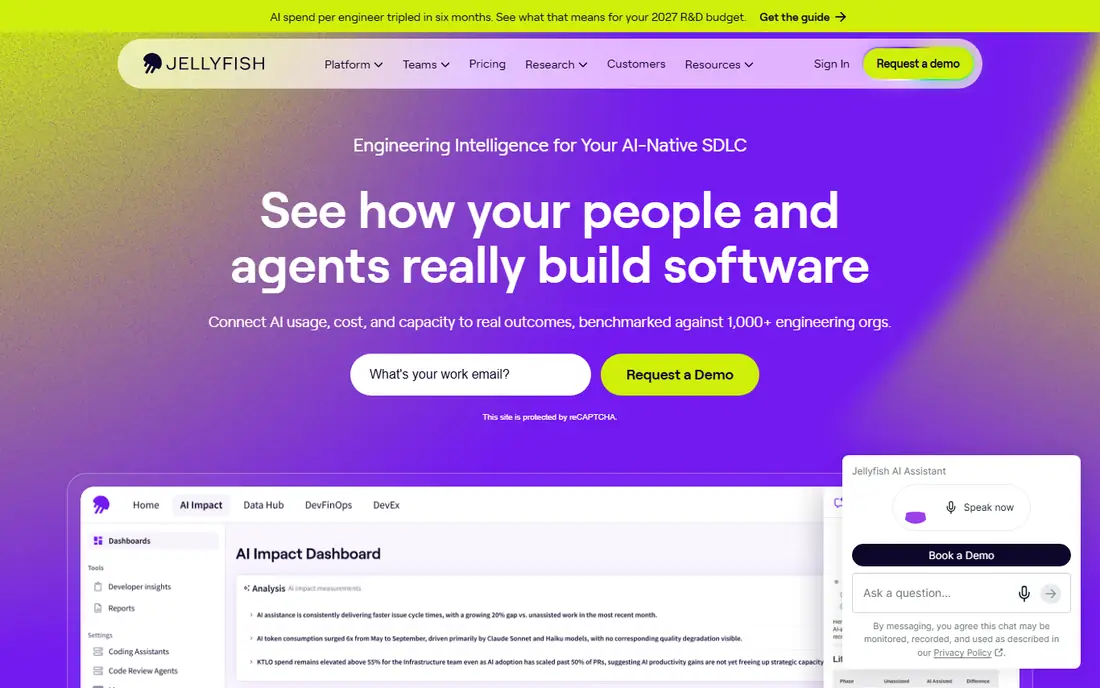
Jellyfish is built for the conversation between engineering leaders, the CFO and the board. Its standout capability is allocation: showing how engineering time splits across new features, maintenance, support and strategic initiatives, then feeding that into DevFinOps reports and software capitalization. Finance teams that currently chase engineers for time estimates will see the value quickly.
It also covers operational metrics (throughput, cycle time, DORA), a life cycle explorer for where work stalls, developer surveys, and an AI Impact module that tracks AI tool adoption, token cost and vendor comparisons. Jellyfish says it benchmarks against more than 1,000 engineering organizations, and it holds a 4.5 out of 5 rating on G2.
Pricing depends on seat count and modules (AI Impact, Developer Productivity, DevFinOps), and you need a quote. For a 30-person startup, Jellyfish is likely more platform than needed.
What we like- Strong resource allocation and software capitalization reporting
- Benchmarks against 1,000+ engineering organizations
- Custom metrics in plain English or SQL
Watch out for- Quote-only pricing
- Heavier setup than lighter tools
#3
Swarmia
Best for: Growing teams that want metrics plus developer surveys
Visit swarmia.com
Starting price$45 per developer/month (Standard, billed annually)
Free planYes (companies with fewer than 10 developers)
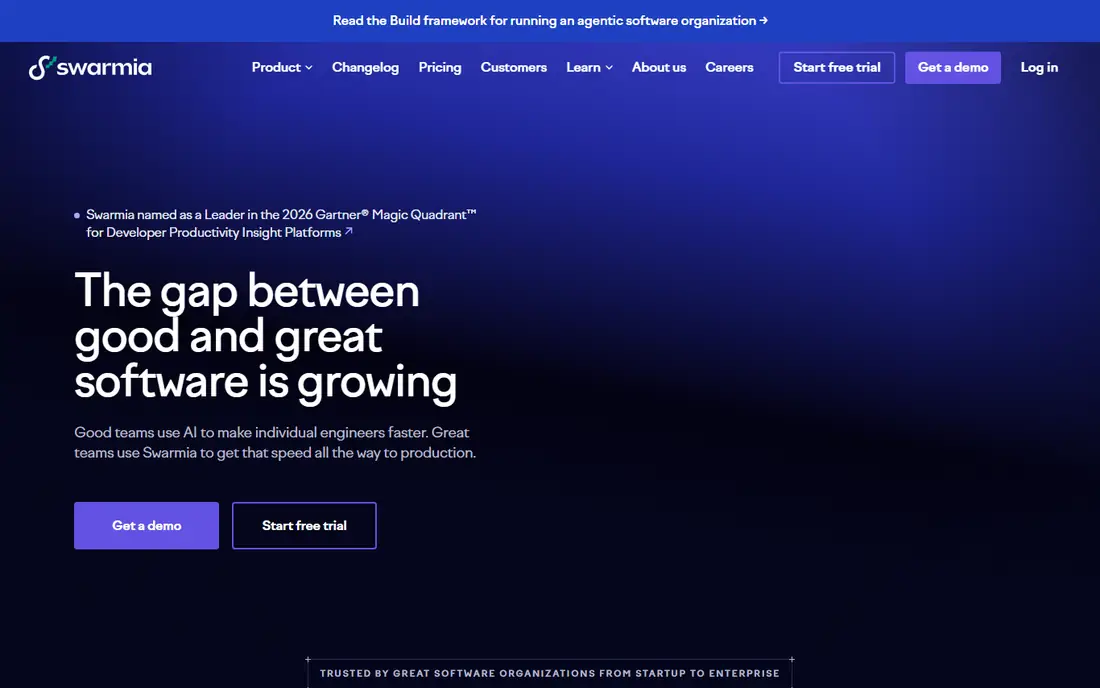
Swarmia, based in Finland, has a reputation for being developer-friendly. Its working agreements feature lets teams set their own targets, such as review time or work-in-progress limits, and get nudges in Slack when they drift. That approach helps avoid the "surveillance tool" reaction that metrics platforms sometimes get from engineers.
Pricing is unusually flexible. The full Standard plan is $45 per developer per month and Enterprise is $55, both billed annually. You can also buy single modules: AI adoption and cost tracking for $5, developer surveys for $9, software capitalization for $18, and productivity and AI impact metrics for $23. Companies with fewer than 10 developers can use Standard features free, and startups affiliated with partner programs get 30 to 50 percent off the first year.
Only developers added to teams are billed, so product managers and executives can view dashboards without adding cost. The downside is that a full Standard license costs more per head than several rivals.
What we like- Free for small teams
- Modular pricing from $5 per developer
- Only developers on teams count toward the bill
Watch out for- Full Standard plan is pricier than LinearB Essentials
- Monthly prices are not published
#4
DX
Best for: Organizations measuring developer experience
Visit getdx.com
Starting priceSee website
Free planNo
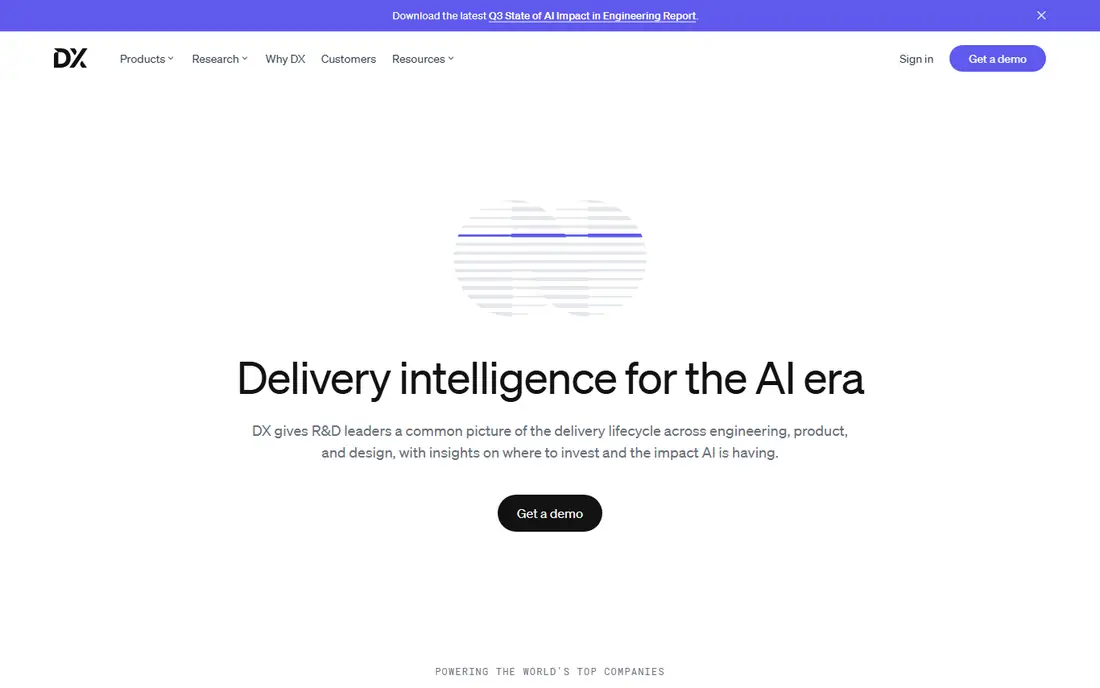
DX combines system metrics with structured developer surveys, and it is the tool most associated with measuring developer experience. Its Developer Experience Index, DevSat surveys and experience sampling capture friction that Git data alone cannot show, such as slow local builds or unclear requirements. The DX Core 4 framework gives leaders a balanced set of productivity measures with published benchmarks.
DX has also invested heavily in AI measurement, tracking AI-generated code by commit, pull request, team, agent and repository, with usage analytics and impact analysis. Named customers include Adyen, Dropbox, Vanguard and Booking.com. Atlassian completed its acquisition of DX in November 2025 and plans to fold it into its software collection alongside Bitbucket, Compass and Rovo Dev.
Pricing is by demo. Teams heavily invested in GitHub and Linear rather than Atlassian tools should ask how integrations and pricing will evolve under the new owner.
What we like- Research-backed surveys and the DX Core 4 framework
- AI measurement down to commit, PR, team and agent level
- Now backed by Atlassian
Watch out for- Quote-only pricing
- Atlassian ownership may shape the roadmap toward its own tools
Starting price$20 per member/month (Growth, billed annually)
Free planFree trial (14 days)
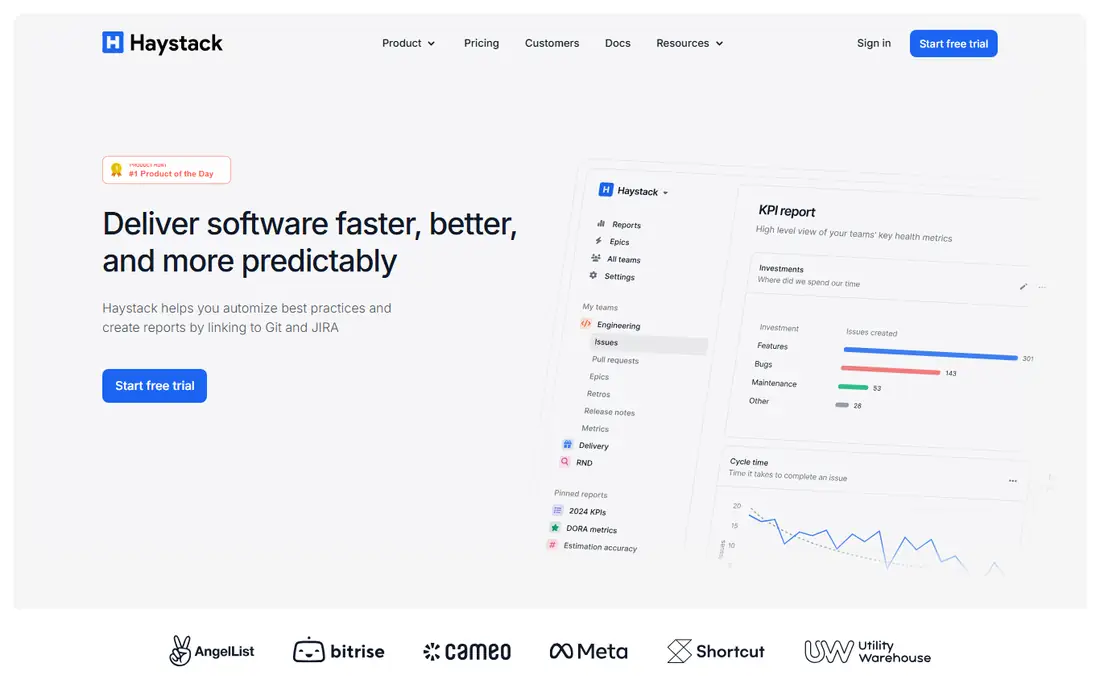
Haystack focuses on delivery: is the sprint on track, which epics are at risk, and what changed this week. It connects Jira and Git, detects risks automatically and sends them to Slack, and posts status updates so managers do not have to chase people in standups.
The Growth plan costs $20 per member per month with an annual commitment and is suggested for teams under 100 engineers. It includes unlimited alerts, 12 months of historical data and email, Slack and account specialist support. Enterprise is custom, adds on-premises integrations and a dedicated performance specialist, and targets teams of 100 or more. The 14-day trial needs no credit card.
Testimonials on its site come from engineering leaders at Robinhood, Box, The Economist and OutSystems. The tradeoff is depth: Haystack is lighter on finance reporting and AI cost tracking than Jellyfish or Faros AI.
What we like- Lowest published entry price in this list
- Automated risk alerts and status updates in Slack
- Simple setup with Jira and Git
Watch out for- Growth plan keeps 12 months of history
- On-premises integrations only on Enterprise
#6
Waydev
Best for: Teams that want reports for executives without extra seats
Visit waydev.co
Starting priceSee website
Free planFree trial
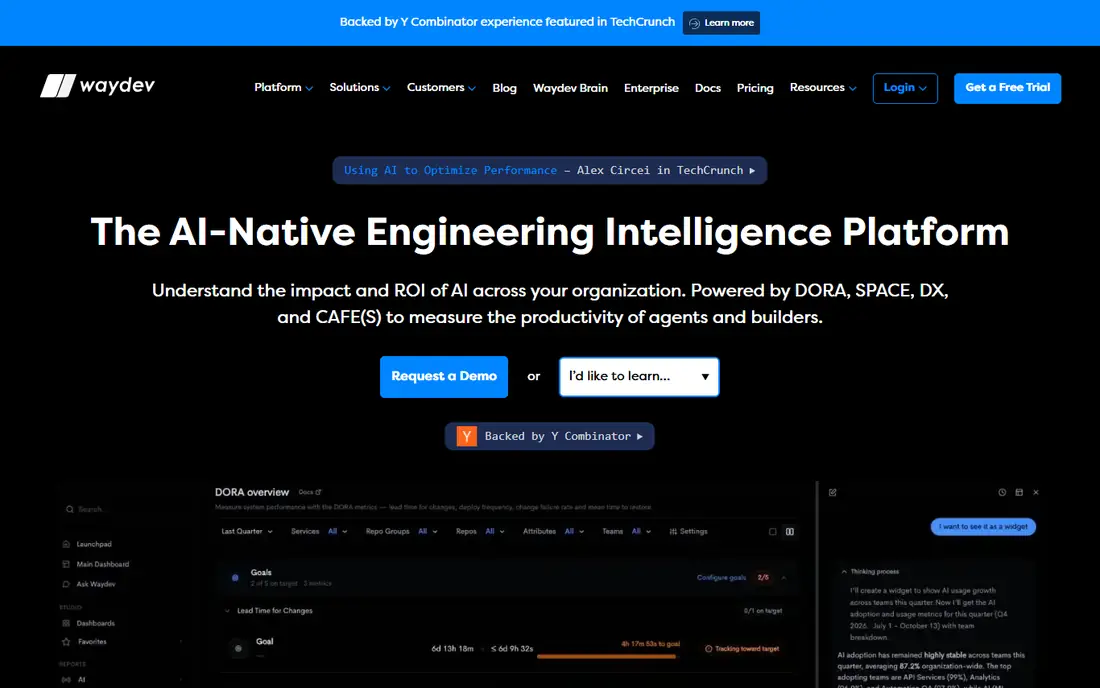
Waydev is one of the earlier engineering analytics vendors and bills per active contributor, while managers and executives join free as operational users (5 on Pro, 20 on Premium, unlimited on Enterprise). That suits organizations where many stakeholders want to view reports but only developers generate data.
Plans differ mainly by limits. Pro covers 100 repositories with 6 months of data, Premium covers 150 repositories with 24 months of data and 200 AI agent queries per month, and Enterprise removes the caps. Waydev offers a free proof of concept and a 90-day money-back guarantee, which lowers the risk of trying it.
The pricing page asks you to request a quote for each plan rather than listing per-contributor prices, so budget for a sales call. Teams with more than 150 repositories will land on Enterprise.
What we like- Managers and executives are free operational users
- 90-day money-back guarantee
- Waydev Agent for natural-language questions on Premium
Watch out for- Prices are not published on the pricing page
- Pro plan limited to 100 repositories and 6 months of data
#7
Faros AI
Best for: Large companies managing AI coding spend
Visit faros.ai
Starting priceSee website
Free planNo
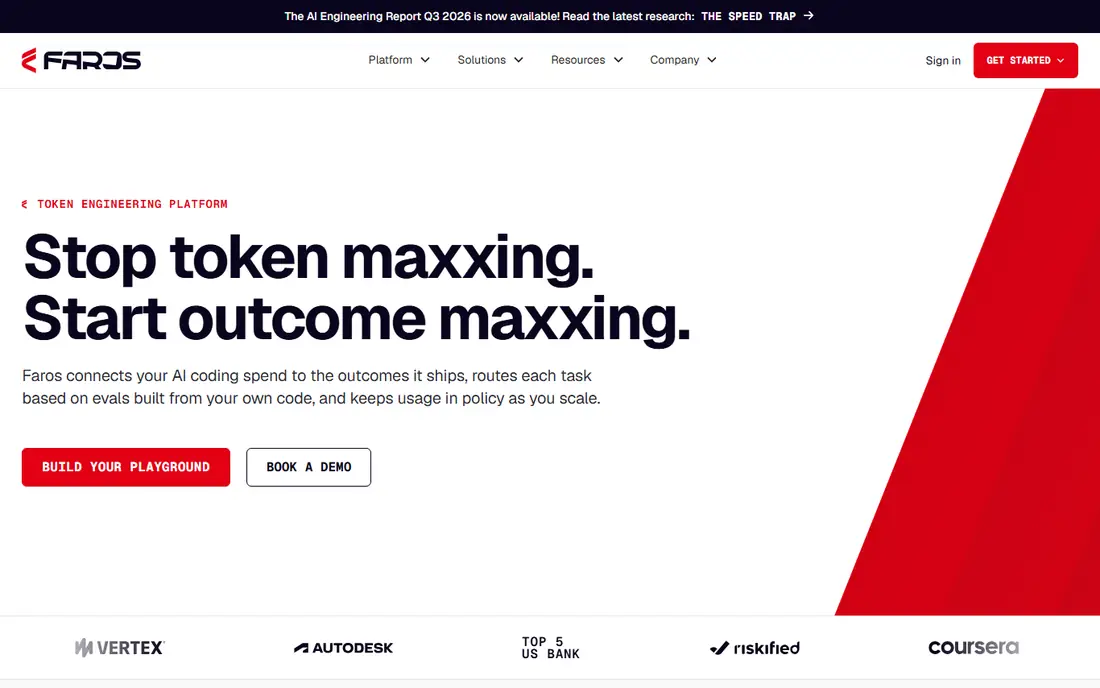
Faros AI has repositioned itself around a question many CTOs now face: what are we getting for our AI coding spend? Its platform observes token spend and outcomes across coding agents and teams, recommends model routing and context changes to reduce waste, and applies governance policies for which models, budgets and data are allowed.
An "engineering world model" links live data from code, tickets and agents, and a time machine feature replays merged pull requests to test how alternative model routes would have performed. Named customers include Autodesk, Coursera, Discord, SmartBear and Globant.
The catch is fit. If you mainly need DORA metrics and sprint reporting, Faros AI's AI-cost focus may be more than you need, and pricing is by demo only.
What we like- Links token usage to engineering outcomes
- Model routing to cut AI spend
- Governance controls for models, budgets and data
Watch out for- Quote-only pricing
- Product focus has shifted toward AI engineering rather than classic delivery metrics
#8
Typo
Best for: Budget-conscious teams wanting AI code review included
Visit typoapp.io
Starting price$20 per developer/month (Starter, billed annually)
Free planFree trial (14 days)
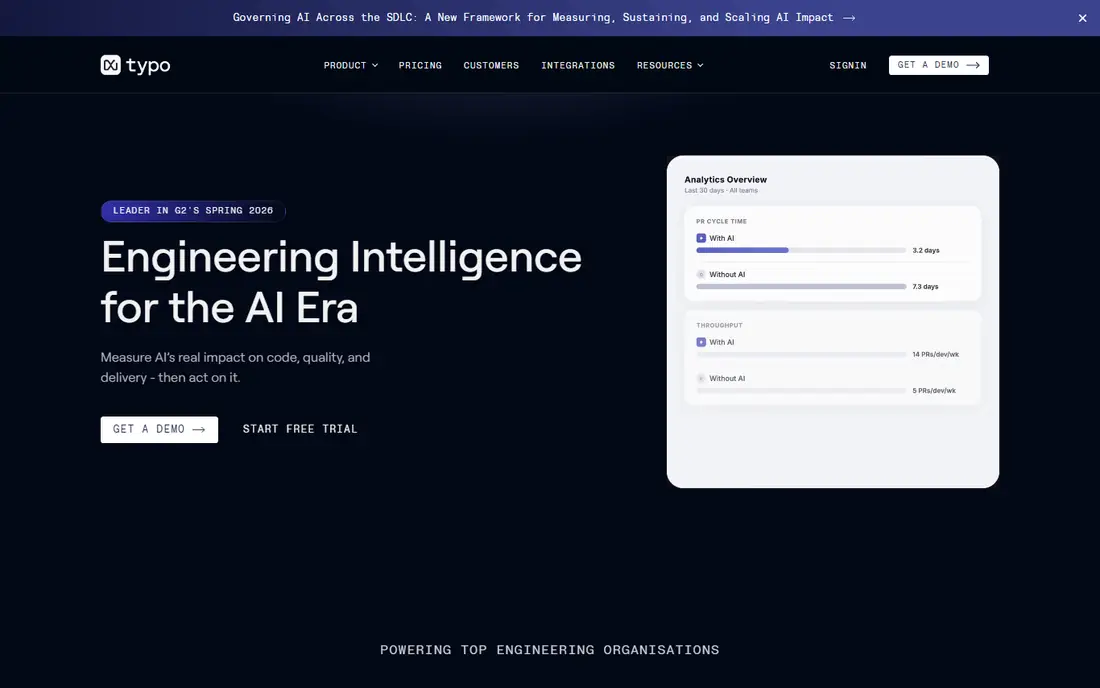
Typo bundles delivery analytics with code quality tools, which makes it good value for a small or mid-size team. Starter, at $20 per developer per month on annual billing, includes delivery insights, AI code impact, team performance, developer experience surveys, unlimited repositories and six months of data history.
Pro, at $28, adds code health analysis, automated pull request reviews, AI PR summaries, AI-suggested fixes, code coverage and unlimited history, plus a dedicated success manager. Billing counts only developers who committed code in the past 30 days, so occasional contributors do not inflate the bill.
Typo is younger than LinearB or Jellyfish, with fewer published enterprise references. Run the 14-day trial on real repositories and compare its review suggestions with your existing tools.
What we like- Low entry price with unlimited repositories
- Pro adds automated PR reviews and code health
- Billed only for developers active in the last 30 days
Watch out for- Starter keeps only 6 months of history
- Smaller company with a shorter track record
Starting priceSee website
Free planNo
Allstacks targets leaders who need to answer "when will it ship?" with evidence. Its engineering intelligence product calculates DORA metrics, traces delays to root causes across Jira, GitHub, GitLab and Jenkins, forecasts delivery timelines and measures whether AI tools add velocity or rework.
Software cost capitalization is a strong second use case. Allstacks maps development activity to people and projects to produce audit-ready reports without asking engineers to fill in timesheets. Enverus says it finished capitalization reports nearly three quarters faster, and Progress Software reports cutting cycle time by a third across 40 teams (both vendor case studies).
Allstacks has also launched Product Studio, an AI workspace for writing and reviewing requirements. Pricing requires a demo.
What we like- Delivery forecasting and root-cause tracing for delays
- Audit-ready capitalization reports without timesheets
- Named a Visionary in the 2026 Gartner Magic Quadrant for Developer Productivity Insight Platforms
Watch out for- Pricing not published
- Newer Product Studio module broadens scope beyond analytics
Starting priceSee website
Free planNo
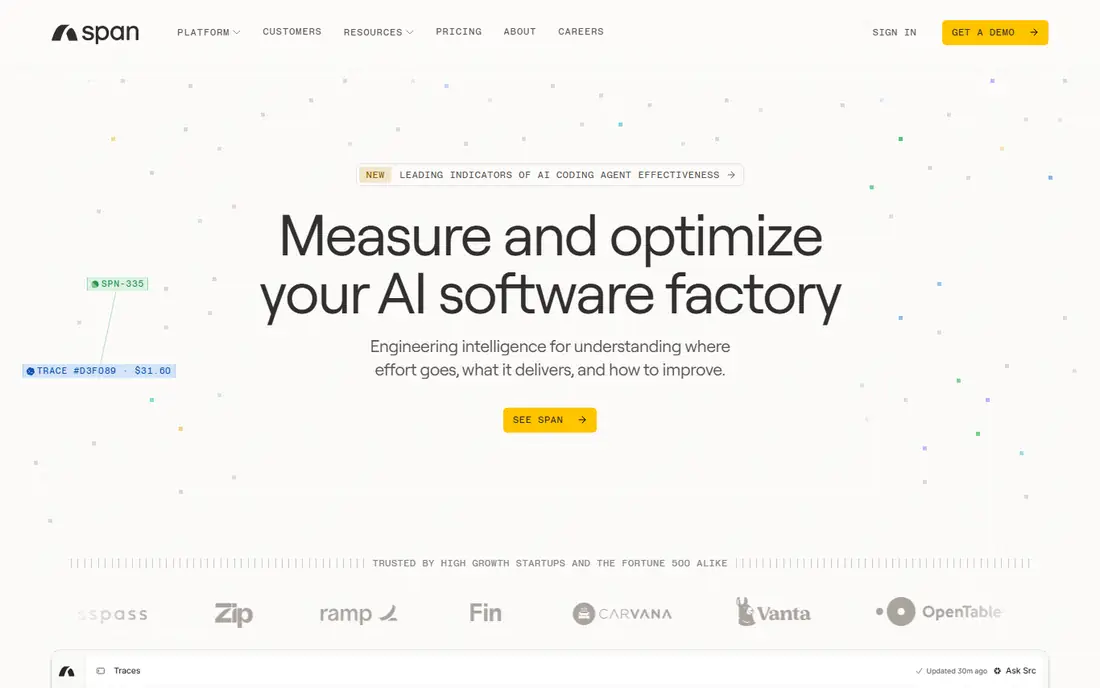
Span is built for engineering teams where a large share of code now comes from AI agents. It records agent sessions, including prompts, tool calls, model choices and token spend, then links those traces to tickets, pull requests and production outcomes. That lets a leader see which agent setups produce merged, stable code and which burn tokens on dead ends.
Reporting covers ROI, budget against actuals, time and token allocation by project, and benchmarks from 103 teams. It integrates with Slack, Claude Code, MCP, an API and a CLI, and it supports SSO and SCIM. Testimonials on its site come from Ramp, Carvana and Writer.
For teams that have not adopted coding agents widely, Span's core value is limited, and a classic delivery analytics tool will be a better first purchase. Pricing is by demo.
What we like- Captures agent traces (prompts, tool calls, file edits, token spend) and links them to tickets and PRs
- SOC 2 Type II with PII redaction
- DevFinOps support for R&D capitalization and tax credits
Watch out for- Pricing not published
- Most useful for teams already using coding agents heavily
How we chose
We started from the vendors listed in G2's software development analytics and engineering intelligence categories, Gartner's developer productivity insight coverage and recurring recommendations from engineering leaders on Reddit and Hacker News. We removed products that have been discontinued or are winding down, then read each remaining vendor's pricing page, documentation and integration list in October 2026.
We compared tools on supported Git and issue trackers, DORA and flow metrics, developer experience surveys, AI adoption and cost tracking, finance features such as capitalization, pricing model, minimum seats and trial terms. We did not deploy these tools against our own repositories. Customer results quoted above are vendor case studies.
Start with the question you need answered
If leadership asks "where does engineering time go?", look at allocation and capitalization tools such as Jellyfish, Allstacks or Swarmia's capitalization module. If the question is "why are we slow?", choose a tool strong on cycle time and workflow, such as LinearB, Haystack or Typo. If it is "is AI paying off?", compare DX, Faros AI, Span and the AI modules of Jellyfish and Swarmia.
Count seats the way the vendor does
Pricing units vary: per contributor, per developer on a team, per active developer in the last 30 days, or per member. Minimums matter too, with LinearB requiring 50 contributors on Essentials. Model your real headcount, including contractors, before comparing quotes.
Confirm your toolchain is supported on your plan
Check support for your Git host (GitHub Cloud, GitHub Enterprise Server, GitLab, Bitbucket, Azure DevOps), your issue tracker and your CI/CD system. Some vendors restrict on-premises or non-GitHub support to enterprise plans.
Plan the rollout with engineers, not around them
Metrics tools fail when developers see them as surveillance. Share dashboards with teams, focus on team-level rather than individual metrics, and let teams set their own targets. Swarmia's working agreements and DX's surveys are built around this approach.
Frequently asked questions
What are software development analytics tools?
They are platforms that connect to Git, issue trackers and CI/CD to measure how software gets built. Typical metrics include cycle time, deployment frequency, change failure rate, review time and how engineering effort is allocated. Many now also measure AI coding tool adoption and cost.
What are DORA metrics?
DORA metrics are four delivery measures from Google's DevOps Research and Assessment program: deployment frequency, lead time for changes, change failure rate and time to restore service. Most tools in this guide, including LinearB, Jellyfish, Swarmia, Haystack and Allstacks, report them.
Which engineering analytics tool is best for a small team?
Swarmia is free for companies with fewer than 10 developers, and Haystack and Typo start at $20 per person per month with free trials. LinearB's 50-contributor minimum makes it costly for very small teams. Start with a free tier or trial and focus on two or three metrics.
Do these tools measure individual developer performance?
Most can show individual activity, but vendors and experienced leaders recommend focusing on team-level metrics. Ranking individuals by commits or lines of code encourages gaming and damages trust. Use the data to find process bottlenecks, not to grade people.
Can these tools measure the impact of AI coding assistants?
Yes, increasingly. DX, Jellyfish, Swarmia, Faros AI, Span, Typo and Allstacks all offer AI adoption or impact measurement, from tracking AI-generated code to linking token spend with outcomes. The depth varies, so ask vendors to demo AI reporting on your own data.
Sources we checked (13)
- https://linearb.io/pricing
- https://jellyfish.co/pricing/
- https://jellyfish.co/
- https://www.swarmia.com/pricing/
- https://getdx.com/
- https://www.businesswire.com/news/home/20251110683591/en/Atlassian-Completes-Acquisition-of-DX-Advancing-Engineering-Intelligence-for-Enterprises
- https://www.usehaystack.io/pricing
- https://waydev.co/pricing/
- https://www.faros.ai/
- https://www.faros.ai/pricing
- https://typoapp.io/pricing
- https://www.allstacks.com
- https://www.span.app
Is your product missing or out of date?
We review this list regularly. Vendors can request a listing, send updated pricing or ask about featured placement.

Shihab Mia · Founder, Rankite
Shihab has 5+ years in B2B and SaaS SEO. He writes Rankite's software buying guides from pricing pages, documentation and public user reviews. More about Shihab.