How we make this list: we compare pricing pages, product documentation and public user reviews. Ratings come from G2, Capterra or Trustpilot, with the date we checked them.
Key takeaways
- CaseWorthy and FAMCare are the purpose-built picks for human services agencies that need defensible funder reporting; both are quote-priced, so budget a sales conversation.
- Small nonprofits and community programs that want to start fast should look at Social Work Portal (21-day free trial, no credit card) and CharityTracker, which are built for quick setup.
- Behavioral health agencies have a specialist option in Exym, an EHR built around mental health billing and compliance workflows.
- None of the nine publish prices openly, so the real comparison happens in demos: ask about per-user fees, implementation costs, and what reporting is included versus extra.
Quick comparison
| Tool | Best for | Starting price | Free plan |
|---|
 CaseWorthy CaseWorthy | Human services agencies that need audit-ready outcome reporting | See website (quote-based) | No |
 Penelope Penelope | Multi-service nonprofits that need one configurable client record | See website (quote-based) | No |
 FAMCare FAMCare | Agencies whose funding depends on defensible reporting | See website (quote-based) | No |
 CharityTracker CharityTracker | Community networks coordinating assistance across agencies | See website (quote-based) | No |
 Bonterra Apricot Bonterra Apricot | Nonprofits that already fundraise or manage donors on Bonterra | See website (quote-based) | No |
 Casebook Casebook | Government and nonprofit teams that want transparent per-user pricing | See website (per-user pricing, quote-based) | No |
 Social Work Portal Social Work Portal | Small teams and solo practitioners who need to start this week | See website (quote-based) | Free trial (21 days, no credit card) |
 Exym Exym | Behavioral health agencies that bill for clinical services | See website (quote-based) | No |
 PlanStreet PlanStreet | Community-based care programs that want automation without enterprise complexity | See website (quote-based) | No |
Is your product missing or out of date?
We review this list regularly. Vendors can request a listing, send updated pricing or ask about featured placement.
The best social work case management software
Your caseworkers each keep their own spreadsheet. Intake forms live in three different places, and nobody agrees on which version is current. Then grant reporting month arrives and two staff members disappear for a fortnight into copy-paste work, reconstructing numbers a funder will question anyway. That is the problem social work case management software exists to solve: one shared record for every client, from intake through outcomes, with reporting that holds up when money is on the line.
The nine platforms below cover the real market, from enterprise-grade human services systems to simple tools a five-person nonprofit can run. None of them publish prices, which is the honest reality of this category: expect demos, discovery calls, and quotes shaped by your user count and programs.
#1
CaseWorthy
Best for: Human services agencies that need audit-ready outcome reporting
Visit caseworthy.com
Starting priceSee website (quote-based)
Free planNo
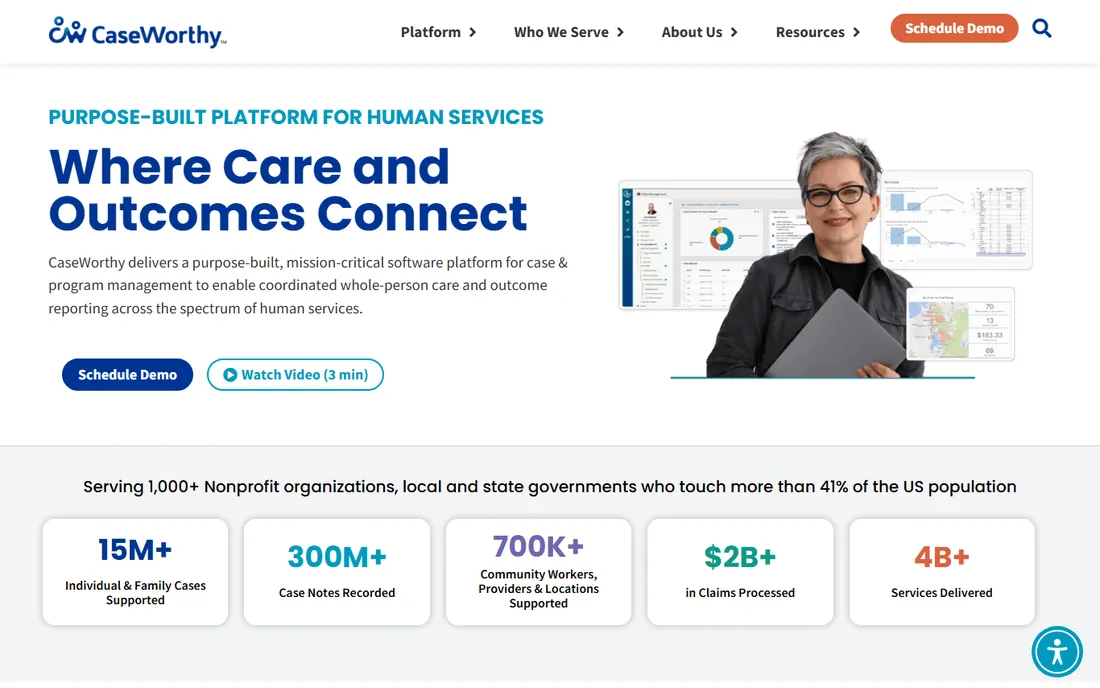
CaseWorthy is the platform agencies pick when funder reporting is the whole game. It was designed for nonprofits, government agencies, and community organizations running programs like aging services, behavioral health, homelessness response, and workforce development. The pitch is whole-person care: one connected record per client across every program, instead of a separate database for each grant.
Two things stand out. The no-code builder lets your own staff adapt workflows, forms, and assessments without paying the vendor for every change, which matters because programs change constantly. The built-in AI assistant drafts documentation and flags insights, aimed at the single biggest cost in casework: staff time spent typing. The catch is the buying process. Pricing is entirely quote-based, and a platform this deep takes real implementation effort. If your reporting needs are simple, you will pay for capacity you never use.
What we like- Purpose-built for human services rather than adapted from a generic CRM
- No-code workflow builder lets staff adapt forms without vendor help
- AI copilot drafts case notes and surfaces insights
Watch out for- No published pricing, so budgeting starts with a sales call
- Depth means longer implementation than simpler tools
Starting priceSee website (quote-based)
Free planNo
Penelope has been around the human services world for years, built for organizations juggling clients across several service areas. Its strength is consolidation: case histories, family records, and program data in one place, with configurable workflows and reporting that managers use to compare service delivery across sites. A client portal keeps the people you serve in the loop rather than locked out of their own records.
The honest context is the ownership change. Social Solutions, Penelope's maker, is now part of Bonterra, and the homepage reflects that. That usually means deeper integrations with fundraising and donor tools, but also a roadmap driven by the bigger suite. Pricing is quote-based with no public tiers. Penelope suits mid-size to larger nonprofits that want a proven, configurable system and are comfortable buying into the Bonterra ecosystem.
What we like- Long track record with human services organizations
- Flexible data collection across multiple service areas
- Client portal for engagement
Watch out for- Now part of Bonterra, so the product roadmap follows the larger suite
- No public pricing
#3
FAMCare
Best for: Agencies whose funding depends on defensible reporting
Visit famcare.net
Starting priceSee website (quote-based)
Free planNo
FAMCare sells one outcome: reporting you can defend. Its whole design starts from the premise that most reporting problems are really data collection problems, so it pushes standardized documentation, structured assessments, and consistent workflows from intake onward. Service planning, outcomes tracking, and document management all feed dashboards that leadership and funders can read without a data analyst translating.
The multi-funder management is the concrete differentiator. Agencies juggling several grants can track funding sources and program activities separately while staying compliant with each funder's rules. Third-party directories list pricing around $20 per user per month plus a platform fee, but the vendor does not publish prices, so treat that as a rumor until you get a quote. FAMCare fits agencies where grant renewals are existential and reporting eats staff time today.
What we like- Reporting-first design with real-time dashboards
- Multi-funder tracking keeps grants separate and compliant
- Tailored setups for child welfare, aging, housing, and behavioral health
Watch out for- Quote-only pricing with a platform fee on top of per-user costs
- Tailored implementations take time to configure
Starting priceSee website (quote-based)
Free planNo
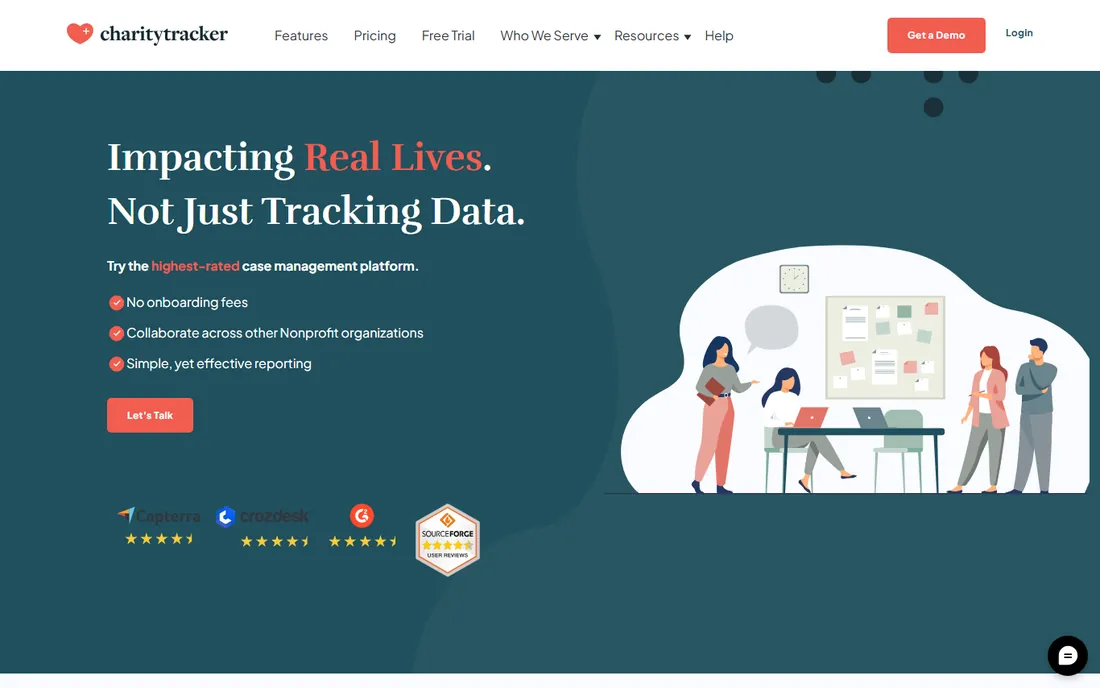
CharityTracker approaches the problem sideways. Instead of one agency's deep case record, it builds a shared network: when a client seeks assistance, participating agencies can see what help has already been given, which cuts duplication and fraud. That makes it the natural pick for United Ways, community action agencies, churches, and coalitions coordinating emergency assistance across many small providers.
Setup is deliberately light: no setup fees, no contracts, cancel anytime, according to the vendor's own positioning. Reporting focuses on what funders ask for: who was served, what was given, and what changed over time. The trade-off is depth. If your caseworkers do intensive clinical documentation, goal tracking, and treatment planning, the bigger platforms offer more. For coordination and assistance tracking across a community, little else does what CharityTracker does.
What we like- Referral network model lets agencies see assistance history across organizations
- Quick to get running with no setup fees
- Reporting built for grantors
Watch out for- Less depth for complex clinical casework than the enterprise platforms
- Pricing not published
#5
Bonterra Apricot
Best for: Nonprofits that already fundraise or manage donors on Bonterra
Visit bonterratech.com
Starting priceSee website (quote-based)
Free planNo
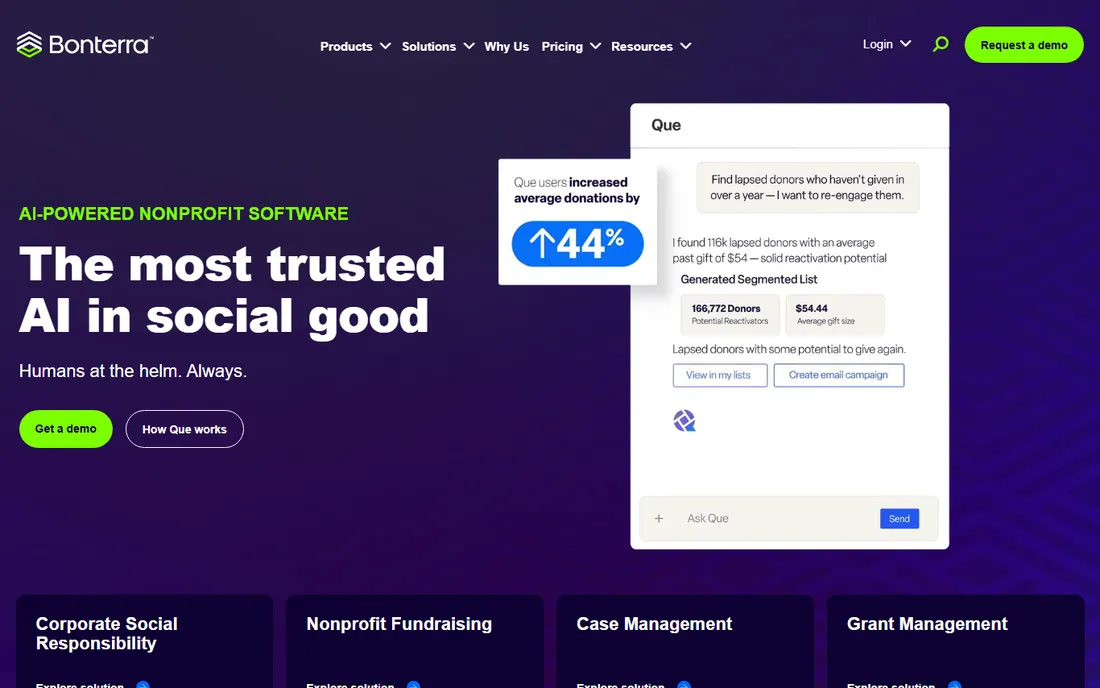
Apricot is Bonterra's case management product, and its logic is the suite. If your organization already runs fundraising, donor management, or grants on Bonterra, adding Apricot means client outcomes and donor data live in one system, which is exactly the story funders want to hear. Its heritage is outcomes measurement: tracking what changed for clients, not just what services were delivered.
For a nonprofit starting from scratch, the calculus is different. Buying into an enterprise suite for case management alone can mean more platform than a small team needs, with implementation to match. But for mid-size nonprofits already on Bonterra, or ones planning to consolidate fundraising and programs on one vendor, Apricot is the coherent choice. Pricing is quote-based, as with everything in this category.
What we like- Lives inside the Bonterra suite, so client and donor data can share a roof
- Strong outcomes measurement heritage
- Large nonprofit user base
Watch out for- Makes most sense inside the Bonterra ecosystem
- Standalone buyers may find simpler tools faster
#6
Casebook
Best for: Government and nonprofit teams that want transparent per-user pricing
Visit casebook.net
Starting priceSee website (per-user pricing, quote-based)
Free planNo
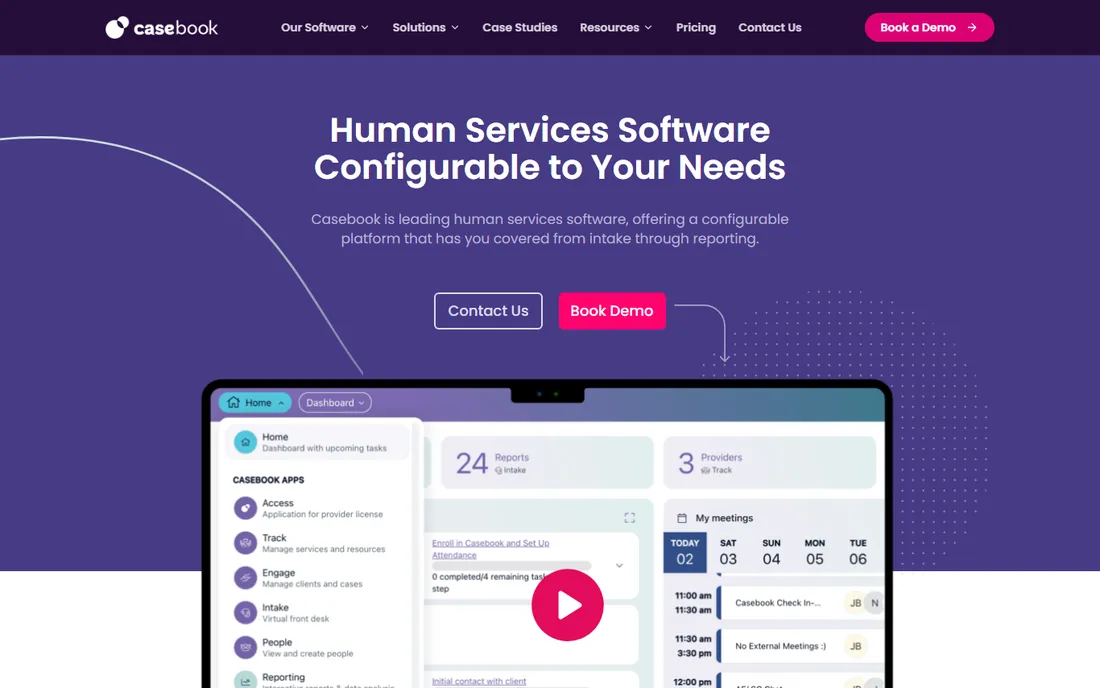
Casebook positions itself as the configurable middle ground: a platform your team shapes around its programs, covering intake, assessments, case notes, and reporting in one system. Its customer list leans public sector, including tribal organizations and county agencies, which tells you something about its compliance posture and reporting depth.
The pricing model is the notable part. Casebook talks openly about per-user pricing and choosing the user count that fits, which is refreshingly straightforward next to competitors that hide everything. The actual per-user rate is still quote-based, so "transparent model, opaque number" is the fair summary. For agencies that want configurability without enterprise-suite weight, and a vendor used to government procurement, Casebook deserves a demo.
What we like- Per-user pricing model scales with headcount
- Configurable from intake through reporting
- Serves government, tribal, and nonprofit customers
Watch out for- No published per-user rate
- Configuration still needs thoughtful setup
Starting priceSee website (quote-based)
Free planFree trial (21 days, no credit card)
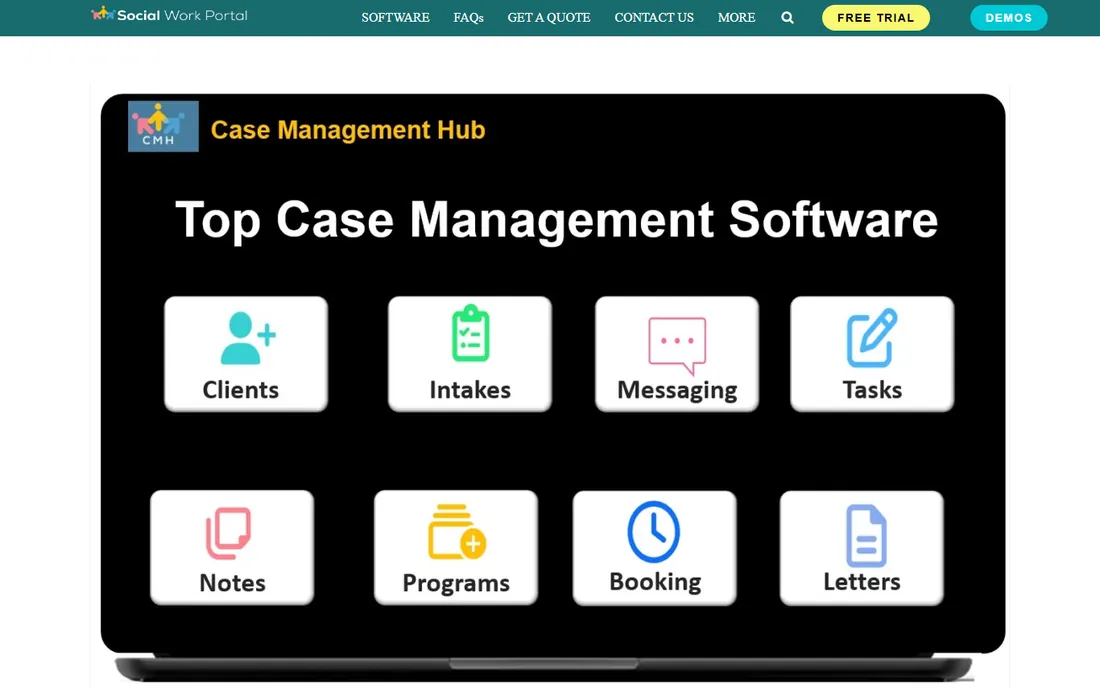
Social Work Portal is the fast-start option. It was built specifically for social workers, case managers, therapists, and counselors, and it shows: SOAP and DAP notes, intake forms, scheduling, and reporting in one system, with HIPAA-conscious workflows. The 21-day free trial with no credit card is the most generous try-before-you-buy in this roundup, and setup is measured in minutes, not months.
The trade-off is scale and track record. A five-person counseling practice or a small nonprofit program can be running this week. A county agency with 200 caseworkers and complex compliance needs will want the deeper platforms above. But for small teams drowning in spreadsheets, the combination of purpose-built design and a real free trial makes this the easiest yes on the list.
What we like- 21-day free trial with no credit card required
- Built specifically for social workers, not adapted from sales software
- Covers intake, notes, scheduling, and reporting in one place
Watch out for- Less proven at large-agency scale than the enterprise names
- Pricing beyond the trial is quote-based
#8
Exym
Best for: Behavioral health agencies that bill for clinical services
Visit exym.com
Starting priceSee website (quote-based)
Free planNo
Exym is the specialist. Where the others are case management platforms that handle clinical work, Exym is an electronic health record built for behavioral health agencies first. That shows up in billing: eligibility checks, claims tracking, and resubmission workflows are core, not add-ons. Outcome measurement uses a built-in library of standard clinical measures, and the vendor reports a long uptime track record.
For a mental health agency, a substance use program, or a foster care organization that bills Medicaid or county contracts, that specialization is the point. Generic case management tools make billing an afterthought; Exym treats it as the job. For non-clinical programs like workforce development or housing navigation, the clinical depth is unnecessary weight. Pricing is quote-based.
What we like- EHR built for behavioral health, not a generic case tool with clinical features bolted on
- Strong billing and claims workflows
- Foster care and residential program support
Watch out for- Behavioral health focus means less fit for non-clinical social programs
- No public pricing
#9
PlanStreet
Best for: Community-based care programs that want automation without enterprise complexity
Visit planstreet.com
Starting priceSee website (quote-based)
Free planNo
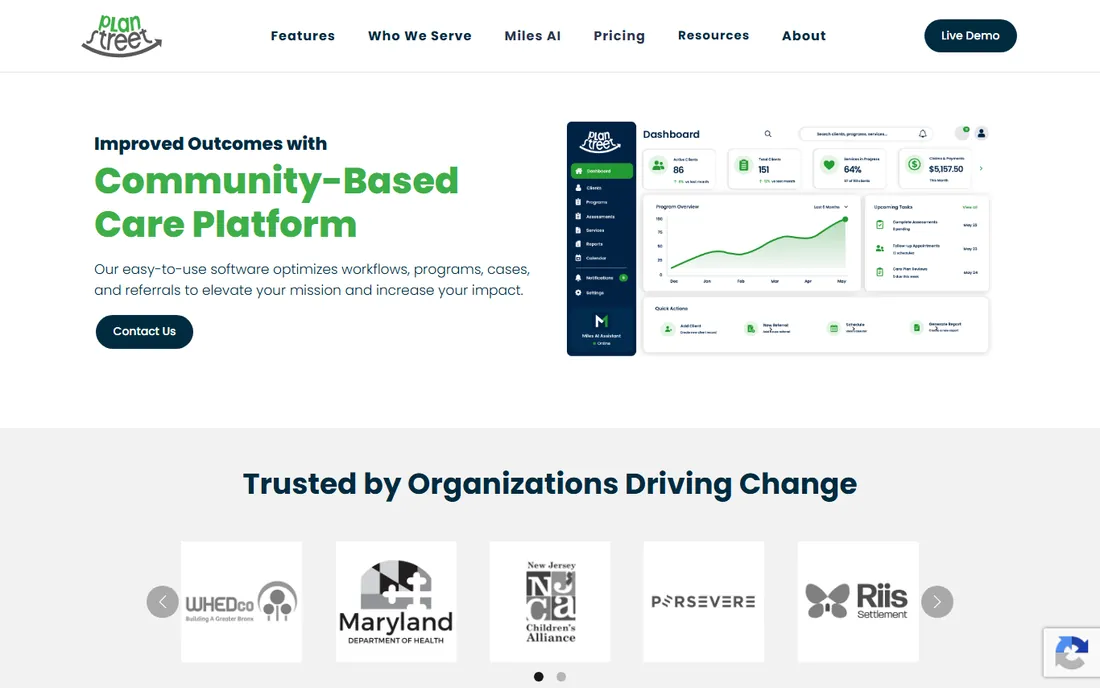
PlanStreet targets the middle of the market: nonprofits and public sector programs that need real workflow automation but cannot run an enterprise implementation. Intake forms come with validation and conditional logic, so the right questions appear based on earlier answers. Grant tracking, referrals, and skills training management sit alongside case management, and analytics run on Power BI for impact reporting.
The pitch is flexibility without the enterprise price tag or timeline: configurable interfaces and custom reports that adapt as programs change. The honest caveat is vendor size. PlanStreet does not have the installed base of CaseWorthy or Bonterra, so reference checks matter more. For a mid-size program that has outgrown spreadsheets but is not ready for a six-month implementation, it is worth a look. Pricing is quote-based.
What we like- Workflow automation with conditional intake forms
- Grant tracking built in
- Power BI-powered analytics for impact reporting
Watch out for- Smaller vendor footprint than the category leaders
- No published pricing
Frequently asked questions
How much does social work case management software cost?
Almost every vendor in this category prices by quote, based on user count, programs, and implementation scope. Third-party directories float figures like $20 to $30 per user per month for some platforms, but vendors do not publish prices, so treat those as rumors. Budget for an implementation fee on top of subscription costs, and ask what reporting and training are included versus extra.
What is the difference between case management software and an EHR?
Case management software tracks the whole client journey: intake, assessments, service plans, case notes, referrals, and outcomes. An EHR (electronic health record) adds clinical depth: diagnoses, treatment plans, e-prescribing, and medical billing. Behavioral health agencies that bill for clinical services usually need the EHR side, which is why Exym leads with it. Non-clinical programs can skip the clinical machinery.
Do we need HIPAA-compliant software?
If your case records include health information, yes. Most platforms in this roundup are built with HIPAA-conscious workflows, encryption, and role-based access. Confirm it in writing during procurement: ask for the vendor's HIPAA compliance documentation and whether they will sign a Business Associate Agreement. Do not take a marketing badge as proof.
How long does implementation take?
It depends on the platform's depth. Simple tools like Social Work Portal can be running in days. Configurable platforms like Casebook or PlanStreet typically take weeks. Enterprise systems like CaseWorthy or FAMCare, with migrated data and custom workflows, can take months. Ask every vendor for a realistic timeline with reference customers of your size.
Can small nonprofits afford case management software?
Yes, but choose the right tier of tool. A five-person program does not need an enterprise platform; Social Work Portal's free trial and CharityTracker's light setup are built for that scale. The expensive mistake is buying enterprise depth for small-team needs, then paying implementation fees for capacity you never use.
What should we ask in a demo?
Ask to see your own workflow, not the vendor's script: intake to case note to report, using a realistic client scenario. Ask what happens when a program changes mid-year, who configures it, and what that costs. Ask for the full fee picture: subscription, implementation, training, data migration, and support tiers. And ask for two reference customers shaped like you.
What to check before you sign
The demo is theater; the contract is reality. Before you sign anything, get the full fee schedule in writing: subscription, per-user fees, implementation, data migration, training, and support tiers, plus what a mid-contract program change costs. Ask who owns your data and how you export it if you leave; some vendors make extraction painful.
Second, test reporting with your real funder requirements. Bring an actual grant report to the demo and ask the vendor to build it live. If they cannot, that tells you everything. Third, confirm compliance paperwork: HIPAA Business Associate Agreement, SOC 2 report, data encryption, and where data is hosted. Finally, call references, and not the ones the vendor volunteers first. Ask them what broke, how support responded, and what they wish they had known before signing.
Mistakes agencies make when buying
The most common mistake is buying for the grant you have, not the programs you will run. Agencies pick a tool that fits today's reporting, then a new funder arrives with different requirements and the system cannot adapt without expensive vendor work. Favor platforms your own staff can reconfigure.
The second mistake is underestimating data migration. Moving years of case records, with their inconsistencies and gaps, is where implementations stall. Budget time for cleanup, and ask the vendor exactly what migration includes. The third is ignoring the people who will actually type into the system. If caseworkers find the tool painful, documentation quality drops, and your beautiful reporting runs on bad data. Put frontline staff in the demo room.
How we chose
We started with the searches buyers actually run: social work case management software and its close variants. For each candidate we opened the vendor's own homepage, checked plan and pricing pages for published prices, and compared feature lists, compliance posture, and fit for different agency sizes against public reviews on G2, Capterra, SourceForge, and practitioner discussion. Where no vendor-published price exists we wrote "See website" rather than repeating third-party estimates as fact. The shortlist mixes enterprise human-services platforms with simpler tools, because a county agency and a five-person nonprofit are not buying the same thing.
Sources we checked (11)
- https://caseworthy.com/
- https://socialsolutions.com/
- https://www.famcare.net
- https://charitytracker.com/
- https://bonterratech.com/
- https://casebook.net/
- https://socialworkportal.com/
- https://exym.com/
- https://planstreet.com/
- https://www.g2.com/categories/case-management
- https://www.capterra.com/case-management-software/
Is your product missing or out of date?
We review this list regularly. Vendors can request a listing, send updated pricing or ask about featured placement.

Shihab Mia · Founder, Rankite
Shihab has 5+ years in B2B and SaaS SEO. He writes Rankite's software buying guides from pricing pages, documentation and public user reviews. More about Shihab.