How we make this list: we compare pricing pages, product documentation and public user reviews. Rankite is independent; if a vendor ever pays for a featured spot, that listing is clearly labeled Partner.
Key takeaways
- Native Instruments Kontakt 8 is the industry platform. If you buy third-party sample libraries, you almost certainly need the full version.
- Serato Sample is the fastest way to chop a record into playable beats, with time-stretching that keeps everything in key.
- Decent Sampler, TX16Wx and Grace prove that free samplers can be genuinely good, each with a different personality.
- TAL-Sampler and Arturia Emulator II V are character pieces: they make samples sound like beloved old hardware, which is exactly the point.
- Battery 4 remains the drum-sampling specialist, though it focuses on kits rather than melodic instruments.
Quick comparison
Is your product missing or out of date?
We review this list regularly. Vendors can request a listing, send updated pricing or ask about featured placement.
The best sampling software
Starting price$299 one-time
Free planFree trial (Kontakt Player runs licensed libraries only)
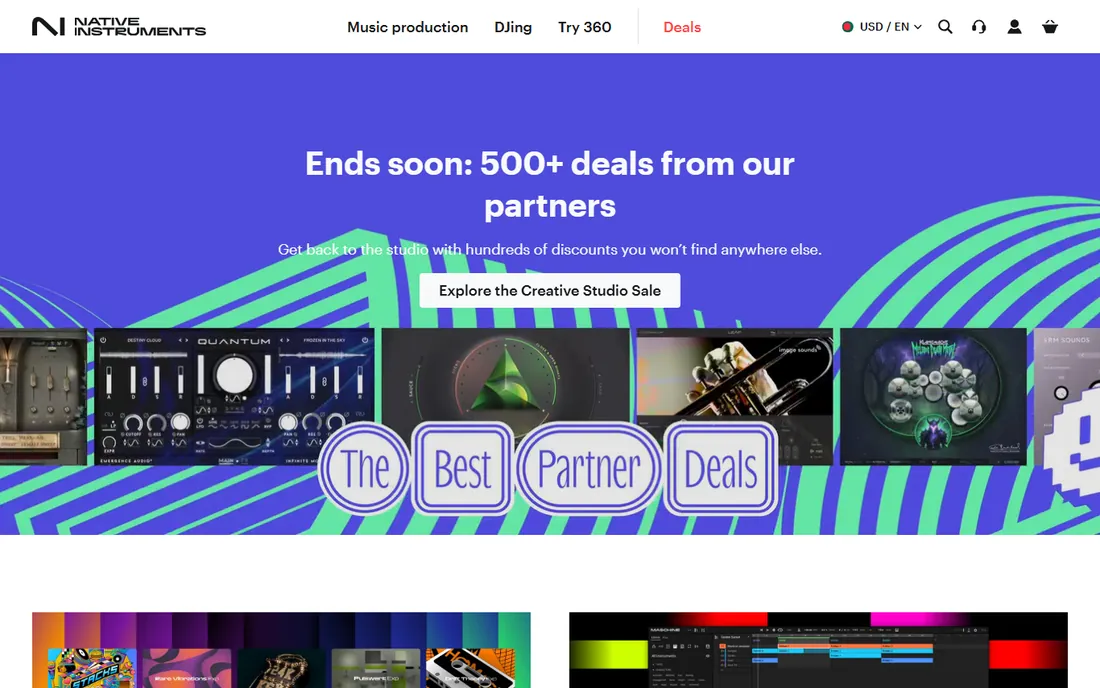
Kontakt is less a sampler than a platform. Orchestral libraries, pianos, world instruments and sound-design tools from hundreds of developers run inside it, and the full version opens up editing, scripting and unlicensed libraries that the free Kontakt Player refuses to load. Version 8 added chord tools, the Leap loop manipulator and a 900-plus instrument factory library.
The honest catch is the price and the weight. At $299 with a 50GB-plus install, it is a serious purchase for anyone who only needs to play a few sounds. But if your workflow involves buying sample libraries, there is no real alternative: the libraries you want simply require it.
What we like- Runs thousands of third-party libraries
- Deep scripting and editing
- Huge factory library
Watch out for- Expensive
- Large disk footprint
- Overkill if you never buy libraries
Starting priceFree
Free planYes
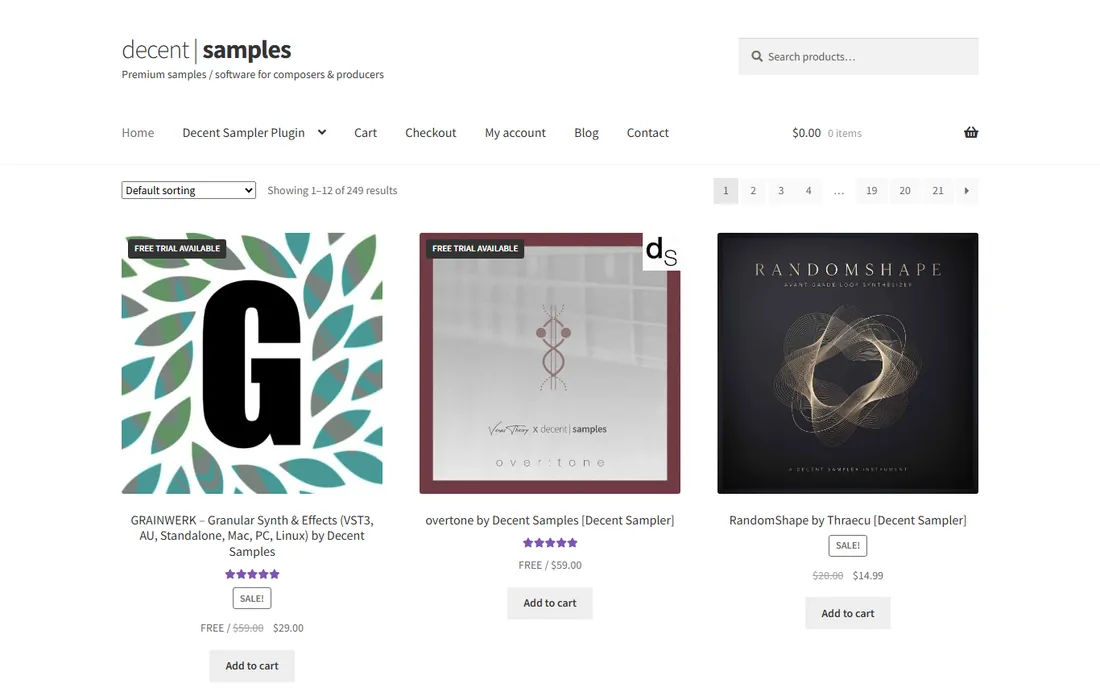
Decent Sampler is the open-hearted answer to Kontakt's walled garden. The plugin is free on every desktop platform plus iOS, and a growing community of developers releases libraries in its format, many of them free. For producers on a budget, or anyone curious about sampling without spending, it removes every barrier.
The honest catch is depth. The engine is deliberately simpler than Kontakt's, and libraries built for Kontakt will not load here. Think of it as the friendly neighborhood sampler: wonderful for what it covers, not a replacement for the industry standard.
What we like- Completely free
- Runs on Windows, Mac, Linux and iOS
- Growing library ecosystem
Watch out for- Simpler engine than Kontakt
- Tied to the Decent Sampler format
Starting price$129 one-time
Free planFree trial
Serato Sample does one job better than anything else: it turns any audio into playable chops. Drop in a soul record and its pitch-and-time engine, the same technology behind Serato DJ, keeps every slice in key and in time while you trigger 32 pads. Version 2 added stem separation, so vocals, drums and melody split apart for independent chopping.
The honest catch is scope. This is a beatmaker's instrument, not a platform for building orchestral templates. If your sampling life is flipping records into hip-hop and electronic tracks, it is the fastest tool here. If you need multisampled pianos, look at Kontakt.
What we like- Legendary pitch and time-stretch
- 32 pad chopping
- Stem separation
Watch out for- Built for chopping, not deep instrument design
- No standalone library ecosystem

#4
TX16Wx Software Sampler
Best for: Sound designers who want depth without paying
Visit tx16wx.com
Starting priceFree (Professional version 99 EUR)
Free planYes
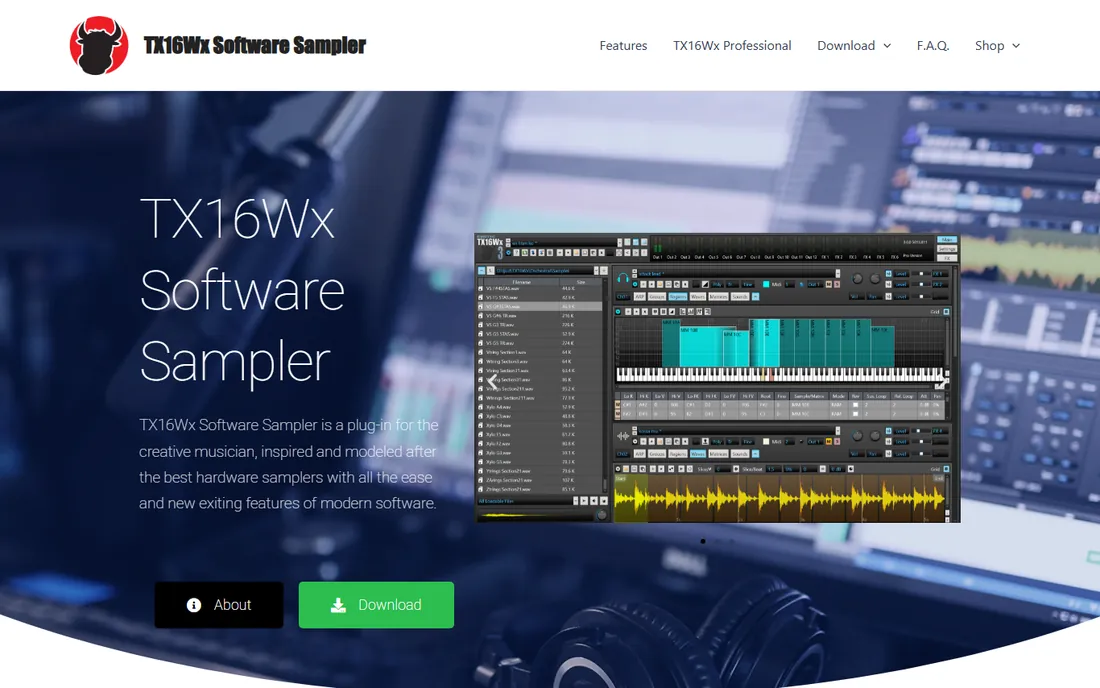
TX16Wx is the freeware overachiever of this list. Modeled on Yamaha's classic TX16W hardware, it offers deep modulation, multiple filters, extensive mapping options and broad format support, all for free. Version 3.1 added disk streaming and better SFZ import. A 99 EUR Professional version adds effects and advanced features.
The honest catch is the learning curve and the library. The interface packs enormous power into small space, which overwhelms beginners, and you will build more sounds from scratch than with Kontakt's ready-made libraries. Patient sound designers get a pro-grade tool for nothing.
What we like- Remarkably deep for freeware
- Great modulation
- Reads many formats
Watch out for- Dense interface intimidates newcomers
- Smaller preset library than paid rivals
Starting priceSee website
Free planFree trial
TAL-Sampler is a love letter to old hardware samplers. Its emulations of classic DACs, from the E-mu II to the Akai S1000, recreate the gritty, warm crunch that defined entire genres, and the analog-modeled filters and modulation keep it musical rather than gimmicky. Loading a clean sample and roughing it up here is genuinely joyful.
The honest catch is that the character is the product. Nobody buys TAL-Sampler for a pristine concert grand; they buy it to make things sound like 1987. If lo-fi texture is what you are after, nothing does it more authentically at this price. For everything else, keep a cleaner sampler alongside it.
What we like- Faithful vintage DAC emulations
- Analog-modeled filters
- Fast, fun workflow
Watch out for- Niche sound by design
- Not for realistic acoustic instruments
Starting price$199 one-time
Free planFree trial
Battery 4 is the drum specialist. Its grid of color-coded cells, each with independent effects, routing and modulation, remains the quickest way to build and perform electronic and acoustic kits. The Time Machine Pro stretching, solid EQ and convolution reverb give every hit professional polish, and it integrates tightly with MIDI controllers.
The honest catch is focus and age. Battery does drums and percussion brilliantly and little else, and the interface shows its 2013 origins next to newer tools. Beatmakers who live on drums will not care. Everyone else should weigh whether a general sampler covers their kit needs too.
What we like- Cell-based kit workflow
- Per-cell effects and routing
- Huge factory kit library
Watch out for- Drums only
- The core design dates to 2013
Starting priceFree
Free planYes
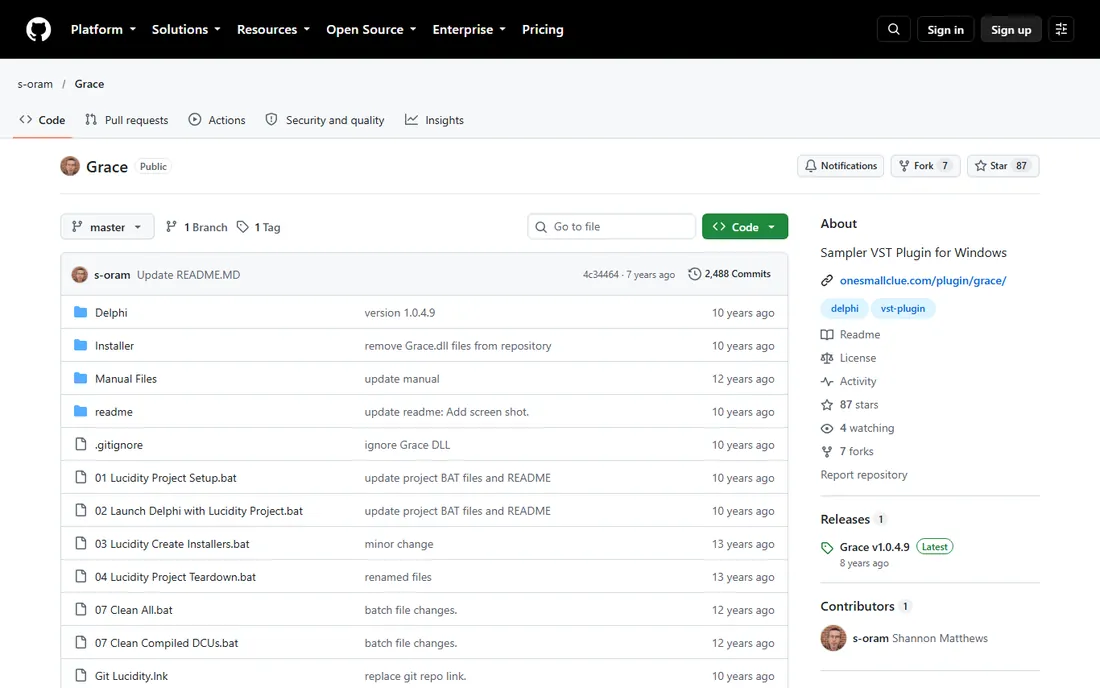
Grace, from One Small Clue, is the minimalist's sampler. It loads your WAVs, maps them across the keyboard, and stays out of the way, with a clean interface that reviewers have praised for years as the best freeware workflow for common sampling tasks. It is tiny, stable and free.
The honest catch is the platform and the feature ceiling. It is Windows-only, it lacks round-robin sample alternation that realistic instruments need, and development has been quiet. For quick mapping jobs on a PC it remains excellent; for serious library building it is not the tool.
What we like- Free
- Streamlined workflow
- Stable and light on CPU
Watch out for- Windows only
- No round-robin support
- Development is quiet

#8
Arturia Emulator II V
Best for: 80s texture and character sampling
Visit arturia.com
Starting price$149 one-time
Free planFree trial
The original E-mu Emulator II defined the sound of 80s pop, from Depeche Mode to film scores, and Arturia's emulation bottles that 8-bit crunch and warm analog filter faithfully. You can import your own samples to give them the retro treatment, and the 250-plus presets cover the iconic sounds immediately.
The honest catch is the same as TAL-Sampler's: this is a flavor, not a foundation. It will not replace Kontakt for orchestral work or Serato for chopping. But when a track needs instant vintage character, few plugins deliver it this convincingly, and $149 is fair for the inspiration alone.
What we like- Authentic E-mu II grit and filter
- Import your own samples
- 250-plus presets
Watch out for- A character instrument, not a workhorse
- Arturia ecosystem upsells
Free versus paid: where the line actually sits
The free tier in sampling is unusually strong. Decent Sampler, TX16Wx and Grace all do real work for zero dollars, and Kontakt Player plus Serato's trial let you audition the paid world first. A beginner can genuinely start, finish and release music without spending anything here.
Payment buys three things: library compatibility, depth and character. Kontakt's $299 is really a ticket to the third-party library market. Battery 4 and Serato Sample charge for specialized workflows done brilliantly. TAL-Sampler and Emulator II V sell vintage character you cannot quite fake with free tools. Spend when a specific limitation blocks you, not before.
What actually matters in a sampler
Start with the library question. If you plan to buy orchestral, piano or world-instrument libraries, check which sampler they require; most commercial libraries demand the full version of Kontakt. That single fact decides the purchase for many composers before any feature comparison begins.
Next, match the engine to the job. Chopping breaks for beats points to Serato Sample. Building drum kits points to Battery 4. Designing sounds from raw recordings rewards TX16Wx's depth. Chasing vintage grit means TAL-Sampler or Emulator II V. General library playback on a budget means Decent Sampler or Grace.
Finally, mind the formats. Kontakt, Decent Sampler, SFZ and WAV all describe different ecosystems, and libraries rarely cross over. Also worth knowing: Logic Pro owners already have capable built-in options in Sampler and Quick Sampler, and FL Studio includes slicing tools for beats, though those are beat-chopping utilities rather than full sampling platforms.
How we chose
We verified that every product is current and purchasable, checking vendor sites, pricing pages and retailer listings from October 2026. We excluded discontinued samplers and anything that was not genuinely a music sampling instrument. Prices come from vendor pages or current retailer listings; where pricing was unclear we said so instead of guessing. We weighted real-world producer feedback on forums and review sites over marketing claims.
Frequently asked questions
Do I need the full version of Kontakt, or is Kontakt Player enough?
Player runs only licensed libraries that were specifically encoded for it. The moment you buy an unlicensed third-party library, or want to build your own instruments, you need the full $299 version. Check the requirements of the libraries you want before deciding.
Can free samplers sound professional?
Absolutely. The sound comes from the samples and your programming, not the price of the engine. Decent Sampler and TX16Wx both host excellent free libraries, and countless released tracks were built on free tools. Paid samplers buy convenience, compatibility and character, not inherently better audio.
What is the difference between a sampler and a sample library?
The sampler is the engine that plays sounds; the library is the recorded sounds themselves. Kontakt is a sampler, while a 50GB orchestral collection is a library that needs a sampler to run. Confusing the two is the most common beginner mistake in this category.
VST, AU, AAX: does the format matter?
Only for compatibility with your DAW. VST3 works nearly everywhere on Windows and Mac, AU is Mac-only for Logic Pro, and AAX is required for Pro Tools. Every sampler here ships in the formats its audience needs, so check your DAW's requirements and move on.
I use FL Studio. Do I need a separate sampler?
FL Studio includes slicing and beat tools that cover chopping well, but they are not full multisampling platforms. If you only flip breaks into beats, you may never need more. If you want to play realistic instruments or build layered patches, add one of the dedicated samplers above.
Sources we checked (8)
- https://equipboard.com/items/native-instruments-kontakt-8
- https://www.decentsamples.com/product/decent-sampler-plugin/?swcfpc=1
- https://serato.com/sample/pricing
- https://rekkerd.org/cwitec-updates-tx16wx-sampler-plugins-to-v3-1/
- https://www.kvraudio.com/product/tal-sampler-by-tal-software/marketplace-instructions
- https://equipboard.com/items/native-instruments-battery-4
- https://github.com/s-oram/Grace
- https://www.arturia.com/products/software-instruments/emulator-ii-v/sound-design
Is your product missing or out of date?
We review this list regularly. Vendors can request a listing, send updated pricing or ask about featured placement.

Shihab Mia · Founder, Rankite
Shihab has spent more than a decade helping SaaS and e-commerce brands grow through search. He writes Rankite's software buying guides from pricing pages, documentation and public user reviews. More about Shihab.
 Decent Sampler
 Serato Sample
 TAL-Sampler
 Native Instruments Battery 4
 Grace
Grace