How we make this list: we compare pricing pages, product documentation and public user reviews. Rankite is independent; if a vendor ever pays for a featured spot, that listing is clearly labeled Partner.
Key takeaways
- UiPath and Automation Anywhere remain the RPA leaders, with UiPath strongest on community and Automation Anywhere on cloud.
- Microsoft Power Automate wins by bundling: already included or cheap inside Microsoft 365.
- Blue Prism, now SS&C Blue Prism, serves enterprises wanting governed, centralized automation.
- Sema4.ai, formerly Robocorp, is the open-source-rooted option for Python-friendly teams.
Quick comparison
| Tool | Best for | Starting price | Free plan |
|---|
 UiPath UiPath | Enterprise RPA with the largest ecosystem | Free | Yes |
 Automation Anywhere Automation Anywhere | Cloud-native intelligent automation | See website | Free trial |
 SS&C Blue Prism SS&C Blue Prism | Governed enterprise automation | See website | No |
 Microsoft Power Automate Microsoft Power Automate | Automation inside Microsoft 365 | See website | Free trial |
 Appian Appian | Process automation plus low-code apps | See website | Free trial |
 Nintex Nintex | Workflow automation for business users | See website | Free trial |
 Sema4.ai Sema4.ai | Python-based open-source-rooted RPA | Free | Yes |
 ElectroNeek ElectroNeek | Affordable RPA for MSPs and SMBs | See website | Free trial |
 Pega Pega | Enterprise process and case automation | See website | Free trial |
 WorkFusion WorkFusion | AI-driven automation for operations | See website | No |
Is your product missing or out of date?
We review this list regularly. Vendors can request a listing, send updated pricing or ask about featured placement.
Starting priceFree
Free planYes
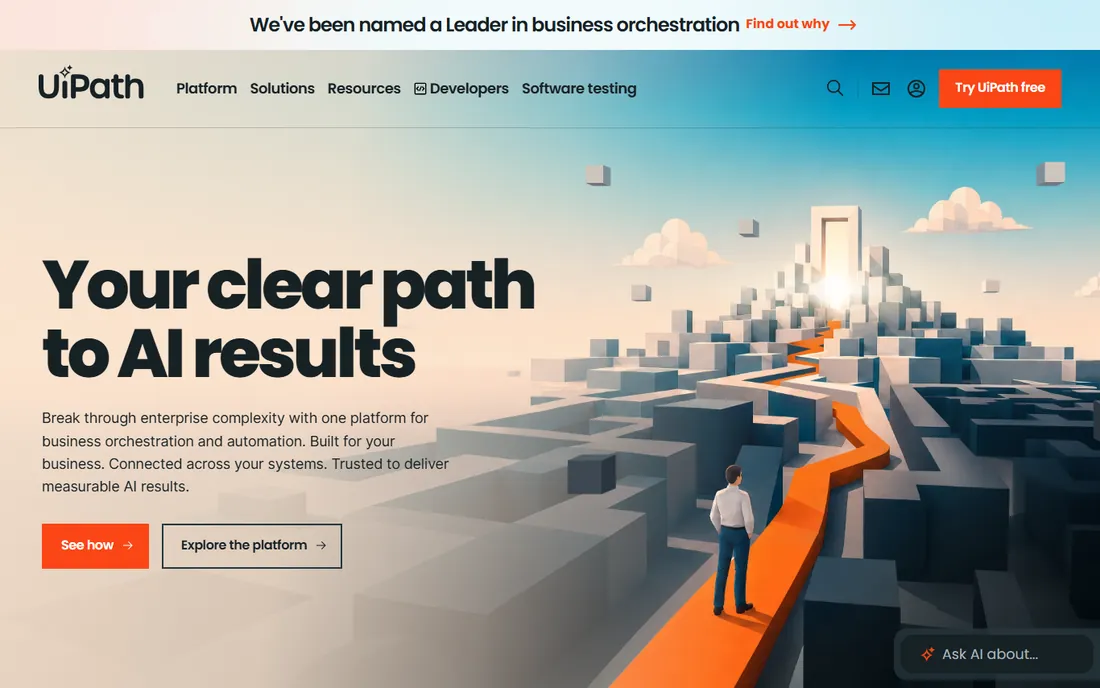
UiPath defined enterprise RPA and still leads it. The Studio designer, Orchestrator control plane and marketplace of pre-built components form the most complete automation platform, now extended with AI agents and document understanding. The free Community edition and enormous user community lower the learning barrier.
Enterprise licensing is significant, and realizing value needs a center of excellence, not just licenses. Platform breadth adds complexity. But for organizations committing to automation at scale, UiPath's ecosystem depth and momentum make it the default choice.
What we like- Largest RPA community and marketplace
- Strong AI integration
- Free community edition
Watch out for- Enterprise pricing is significant
- Platform complexity grows
- Needs dedicated CoE
Starting priceSee website
Free planFree trial
Automation Anywhere bet on cloud-native RPA early, and the architecture shows: browser-based bot building, elastic scaling and AI-powered document processing without infrastructure projects. Process discovery tools help find automation candidates. The cloud model suits distributed enterprises.
Pricing is quote-based, and heavily regulated on-prem requirements fit less naturally. The community and marketplace trail UiPath's. But for cloud-first enterprises wanting intelligent automation without infrastructure, Automation Anywhere's architecture is the modern answer.
What we like- Cloud-native architecture
- Strong document automation
- Good process discovery
Watch out for- Pricing by quote
- Cloud model limits some on-prem needs
- Ecosystem trails UiPath
Starting priceSee website
Free planNo
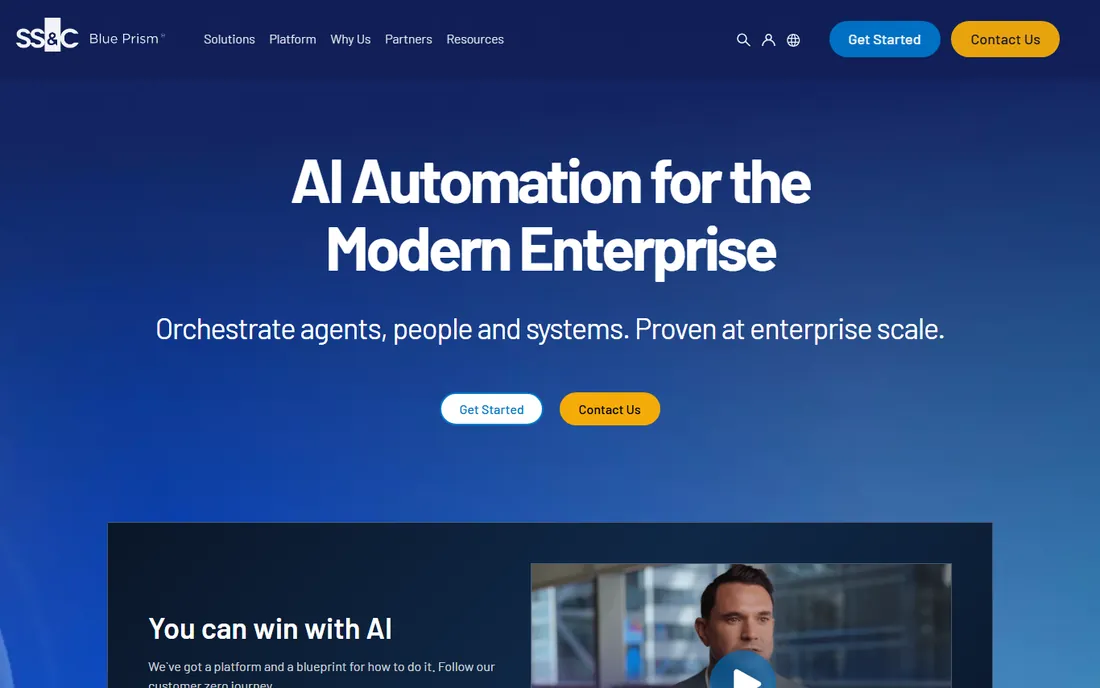
Blue Prism, now SS&C Blue Prism, built its reputation on governed automation for banks and regulated enterprises. The control room, audit trails and centralized management satisfy compliance demands that looser platforms cannot. SS&C ownership adds financial software stability.
It is enterprise-priced with enterprise sales, and accessibility trails UiPath and Microsoft. But for regulated industries where automation governance is the requirement, Blue Prism's control-first design remains the trusted choice.
What we like- Strong governance and control room
- Trusted in banking and regulated industries
- SS&C backing
Watch out for- Enterprise pricing and sales
- Less accessible than rivals
- Innovation pace is steady
Starting priceSee website
Free planFree trial
Power Automate brings automation to the Microsoft masses. Cloud flows connect hundreds of apps, desktop flows handle UI automation, and much of it is included or inexpensive inside Microsoft 365. For the enormous Microsoft base, automation starts without new vendors or big budgets.
At true RPA scale, depth trails UiPath and Automation Anywhere. Premium connectors require higher licenses, and enterprise governance needs deliberate design. But the adoption math is unbeatable: when automation is already in the subscription, it gets used.
What we like- Included or cheap with Microsoft 365
- Huge connector library
- Desktop flows for UI automation
Watch out for- Depth trails pure RPA at scale
- Premium connectors cost extra
- Governance needs planning
Starting priceSee website
Free planFree trial
Appian combines low-code application development with RPA and process automation, which suits case management and approval-heavy processes. Bots handle the repetitive steps inside applications built on the same platform. Process modeling depth exceeds pure RPA tools.
It is a platform purchase, not a point RPA tool, with pricing to match. Organizations wanting only RPA should look elsewhere. But for process-centric automation where apps and bots belong together, Appian's unity is the attraction.
What we like- Low-code apps plus RPA in one
- Strong process modeling
- Good for case management
Watch out for- Platform pricing
- RPA is one module
- Needs Appian commitment
Starting priceSee website
Free planFree trial
Nintex made workflow automation accessible to business users, with roots in SharePoint that spread it widely. Forms, workflows, document generation and RPA combine for the document-heavy processes that dominate office work. The business-user focus keeps adoption high.
Pure RPA depth trails the specialists, and pricing is quote-based. But for organizations whose automation needs center on workflows and documents rather than screen-scraping at scale, Nintex's approachability wins.
What we like- Business-user-friendly workflow design
- Strong SharePoint heritage
- Document automation
Watch out for- RPA depth trails specialists
- Pricing by quote
- Ecosystem is narrower
#7
Sema4.ai
Best for: Python-based open-source-rooted RPA
Visit sema4.ai
Starting priceFree
Free planYes
Sema4.ai, formerly Robocorp, brings Python-native RPA with open-source roots. Developers write automation in Python with proper tooling: version control, testing, CI/CD. The approach suits engineering-led teams that find drag-and-drop RPA constraining.
The rebrand is still settling in the market, and the enterprise footprint is smaller than the leaders. Python skills are required. But for teams that think in code, Sema4's developer-first model is more productive and maintainable than visual RPA.
What we like- Python-native automation
- Open-source roots
- Developer-friendly
Watch out for- Rebrand still settling
- Smaller enterprise footprint
- Needs Python skills
Starting priceSee website
Free planFree trial
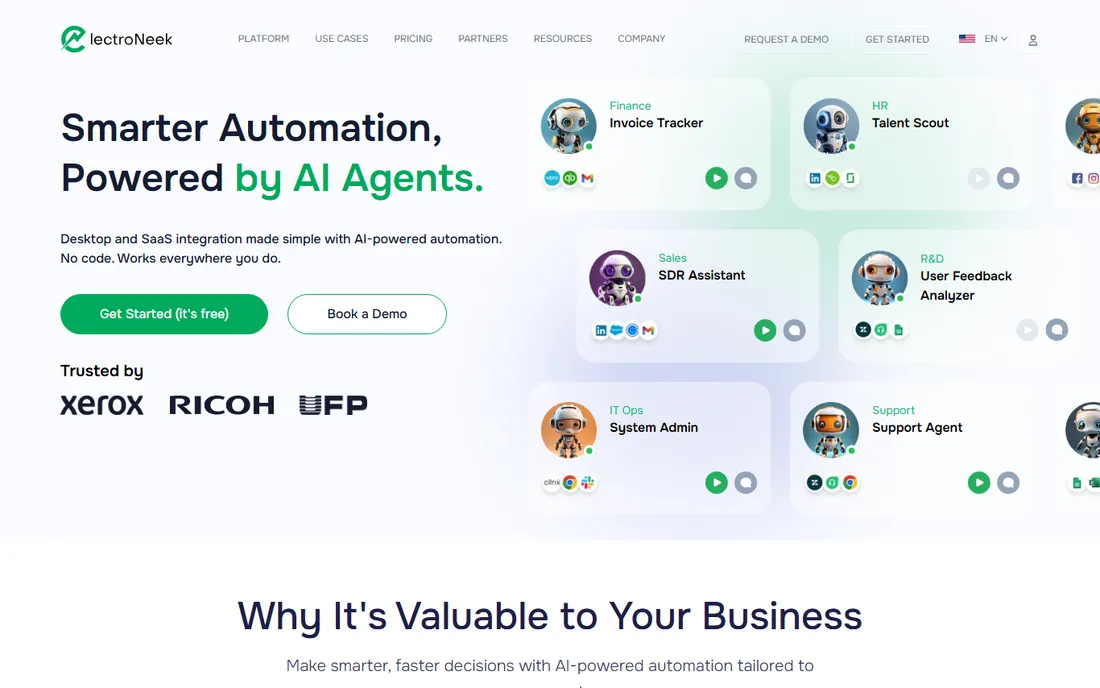
ElectroNeek targets the underserved middle: MSPs and SMBs priced out of enterprise RPA. Unlimited bot runners on some plans change the economics dramatically, and the MSP model lets service providers build automation businesses. The price-to-capability ratio is excellent.
The vendor is smaller with a thinner ecosystem, and enterprise governance trails the leaders. But for the large market that enterprise RPA pricing excludes, ElectroNeek's accessibility is the point.
What we like- Affordable pricing
- MSP-friendly model
- Unlimited bot runners on some plans
Watch out for- Smaller vendor
- Ecosystem is thinner
- Enterprise features trail leaders
#9
Pega
Best for: Enterprise process and case automation
Visit pega.com
Starting priceSee website
Free planFree trial
Pega approaches automation from business process management: case management, decisioning and workflows with RPA handling the repetitive steps. Banks, insurers and governments run critical processes on it. The AI-driven decisioning adds intelligence beyond screen automation.
This is enterprise platform territory with pricing and complexity to match. Simple RPA needs should look elsewhere. But for organizations automating complex, judgment-heavy processes end to end, Pega's process-first depth is unmatched.
What we like- Deep case management and BPM
- AI-driven decisions
- Proven at enterprise scale
Watch out for- Enterprise pricing and complexity
- Platform commitment
- Overkill for simple RPA
Starting priceSee website
Free planNo
WorkFusion sells AI workers for operations: pre-built automation for banking operations, insurance and other document-heavy functions. The use-case-first approach means faster value for the specific jobs it covers, without building bots from scratch.
It is niche rather than general-purpose RPA, with enterprise sales to match. But operations leaders with the specific problems WorkFusion targets get packaged automation instead of a platform project.
What we like- AI workers for specific operations roles
- Strong in banking operations
- Pre-built use cases
Watch out for- Niche positioning
- Enterprise sales
- Less general-purpose RPA
How we chose
We covered enterprise RPA platforms, Microsoft's bundled option, low-code process vendors and accessible alternatives. Each product was verified as currently offered, noting Robocorp's rebrand to Sema4.ai. Pricing is quote-based across most of this category, so we marked it honestly. We weighed bot-building experience, orchestration, AI capabilities, governance and ecosystem. No vendor paid for placement and we claimed no hands-on testing.
The AI agent convergence
RPA is converging with AI agents, and buyers should understand the direction. Traditional RPA excels at deterministic, repetitive tasks in stable interfaces. AI agents handle judgment, unstructured data and changing conditions. The leaders now offer both: UiPath's agentic automation, Automation Anywhere's AI agents, Microsoft's Copilot integration.
The practical implication is to buy platforms with a credible AI story, not pure screen-scraping tools. The processes worth automating increasingly mix deterministic steps with judgment calls. Platforms spanning both will age better than either alone.
What to check before you choose
Start with process selection, not vendor selection. The best RPA tool fails on bad processes: unstable applications, constant exceptions and unclear rules. Pick three stable, high-volume, rule-based processes for the pilot. Success there funds everything else.
Verify the governance model early. Who builds bots, who approves them, how credentials are managed and what gets audited determine whether RPA scales or becomes shadow IT. And budget the center of excellence: licenses are the smaller cost next to the people who build, maintain and govern the bots.
Building the automation pipeline
Successful RPA programs run on pipelines, not projects. The pattern that works: a continuous intake of automation ideas, a quick assessment of each, development of the winners, and a backlog that never empties. Without the pipeline, RPA becomes a one-time project that fades when the initial enthusiasm does. With it, automation compounds year after year.
Idea intake should be open to the whole organization. The best automation candidates come from the people doing the work: the analyst who copies data between systems for two hours every Monday, the clerk who retypes invoices. A simple submission form and a regular review meeting surface more candidates than any consultant's assessment. Reward submissions, even ones that do not get built, to keep ideas flowing.
Assessment needs a consistent scorecard: hours saved, error reduction, process stability, system access availability and exception rate. Processes with stable interfaces, clear rules and high volume score highest. Anything requiring frequent human judgment or running on systems about to be replaced scores low. Kill bad candidates fast; a failed bot damages confidence more than a rejected idea.
Governance scales with the pipeline. Small programs manage with a part-time coordinator; large ones need the full center of excellence with intake, development, infrastructure and support roles. Either way, track the metrics that matter: hours returned to the business, error rates before and after, bot uptime and maintenance load. Report them quarterly to leadership. Visible value sustains funding, and sustained funding builds the pipeline. That is the flywheel.
Frequently asked questions
What is the best RPA software?
UiPath leads enterprise RPA with the largest ecosystem. Automation Anywhere leads cloud-native intelligent automation. Microsoft Power Automate is the best value inside Microsoft 365. SS&C Blue Prism suits governed regulated deployments. The best depends on scale, cloud stance and existing stack.
How much does RPA software cost?
Enterprise RPA is priced by quote, typically tens of thousands annually and up for meaningful deployments. Power Automate offers the cheapest entry inside Microsoft 365. ElectroNeek targets affordable pricing for SMBs. Always budget implementation and CoE staffing beyond licenses.
What is the difference between RPA and AI agents?
RPA automates deterministic, rule-based tasks by mimicking human interface actions. AI agents handle reasoning, unstructured data and changing conditions. Modern platforms combine both: agents decide, robots execute. Buyers should evaluate the combined capability.
Is Microsoft Power Automate real RPA?
Yes, with qualifications. Desktop flows provide UI automation, and cloud flows cover API-based automation. At massive bot scale with complex orchestration, pure-play RPA platforms offer more depth. For most organizations' actual needs, Power Automate's RPA is genuinely capable.
What happened to Robocorp?
Robocorp rebranded to Sema4.ai, continuing its Python-native, open-source-rooted automation approach. The product philosophy is unchanged. Existing users were transitioned to the new branding.
Sources we checked (10)
- https://www.uipath.com
- https://www.automationanywhere.com
- https://www.blueprism.com
- https://www.microsoft.com
- https://appian.com
- https://www.nintex.com
- https://sema4.ai
- https://electroneek.com
- https://www.pega.com
- https://www.workfusion.com
Is your product missing or out of date?
We review this list regularly. Vendors can request a listing, send updated pricing or ask about featured placement.

Shihab Mia · Founder, Rankite
Shihab has spent more than a decade helping SaaS and e-commerce brands grow through search. He writes Rankite's software buying guides from pricing pages, documentation and public user reviews. More about Shihab.