How we make this list: we compare pricing pages, product documentation and public user reviews. Ratings come from G2, Capterra or Trustpilot, with the date we checked them.
Key takeaways
- Lightspeed Retail is the deepest inventory-first POS for specialty retailers with complex variants and vendor catalogs.
- Square for Retail and Shopify POS give small retailers inventory tracking bundled with the POS they already use.
- Zoho Inventory is the budget standout with a real free plan and paid tiers from $29 a month.
- Cin7 and inFlow serve multichannel sellers that need serious order and warehouse management beyond the POS.
- Sortly, Katana and Veeqo cover niches: visual mobile tracking, product manufacturing and free Amazon-seller shipping tools.
Quick comparison
| Tool | Best for | Starting price | Free plan |
|---|
 Lightspeed Retail Lightspeed Retail | Specialty retailers with complex variants and vendor catalogs | $89/month (billed annually) | Free trial |
 Square for Retail Square for Retail | Small boutiques that want inventory with their POS | Free | Yes |
 Shopify POS Shopify POS | Retailers selling online and in person on Shopify | $29/month (billed annually) | Free trial |
 Zoho Inventory Zoho Inventory | Growing multichannel brands on a budget | Free; from $29/month (billed annually) | Yes |
 Cin7 Cin7 | Multichannel sellers that have outgrown their POS inventory | From $349/month | No |
 inFlow Inventory inFlow Inventory | Product businesses that want ease of use with real depth | $129/month (billed annually) | Free trial |
 Sortly Sortly | Teams that track inventory visually from a phone | $24/month (billed annually) | Free trial |
 Katana Katana | Retailers that also make what they sell | See website | Yes |
 Veeqo Veeqo | Amazon and multichannel sellers who ship themselves | Free; inventory from $19/month | Yes |
Is your product missing or out of date?
We review this list regularly. Vendors can request a listing, send updated pricing or ask about featured placement.
The best retail inventory management software
#1
Lightspeed Retail
Best for: Specialty retailers with complex variants and vendor catalogs
Visit lightspeedhq.com
Starting price$89/month (billed annually)
Free planFree trial
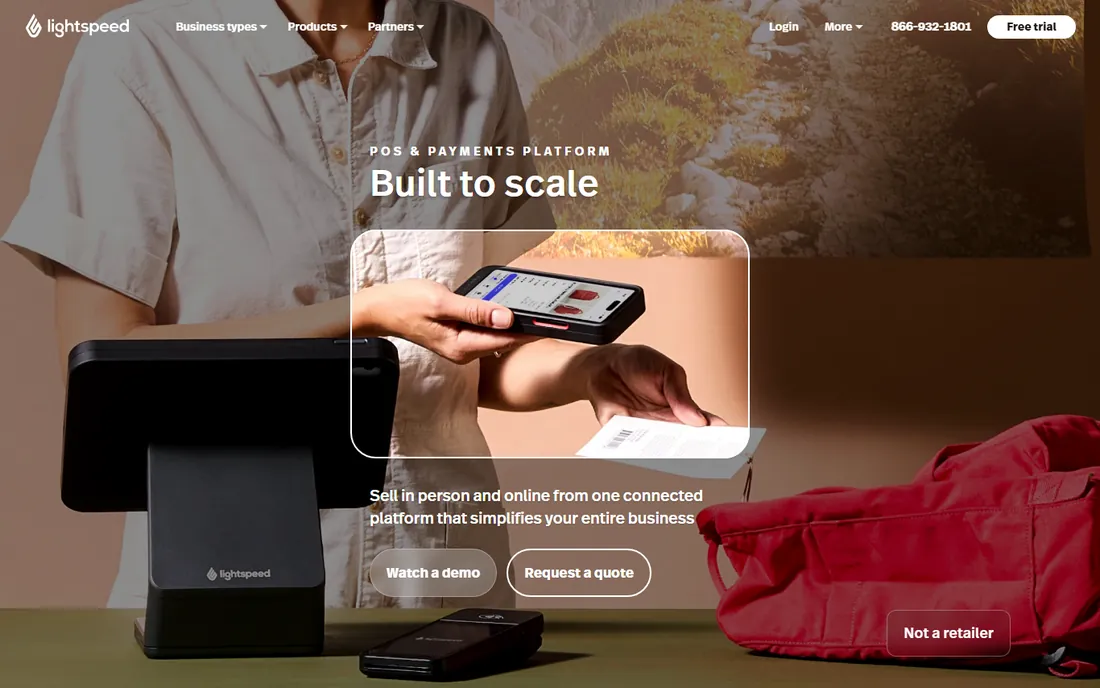
Lightspeed Retail is the inventory-first POS. It handles the situations that break simpler systems: apparel matrices with size and color variants, serialized products, special orders, layaways and multi-store transfers. Purchase orders flow from vendor catalogs through NuORDER, and inventory updates across locations automatically.
The built-in ecommerce keeps online and in-store stock on the same numbers, and loyalty plus CRM from the Core tier up help independent retailers compete with chains. Reporting covers sell-through, margins and staff performance in real depth.
The honest catch is cost. Basic starts at $89 a month billed annually, and you will want Core at $149 for the reporting and integrations that justify the platform. For a bike shop, boutique or pro shop with thousands of variant SKUs, the feature gap is worth it. For a simple gift shop, Square or Shopify saves real money.
What we like- Matrix SKUs, serial tracking and purchase order workflows
- NuORDER supplier catalog integration
- Built-in ecommerce on every plan
Watch out for- The priciest option for simple shops
- Best features need Core or Plus tiers
- Extra registers cost $59 a month each
#2
Square for Retail
Best for: Small boutiques that want inventory with their POS
Visit squareup.com
Starting priceFree
Free planYes
Square for Retail puts inventory management where small retailers already live: inside Square's POS. Stock updates in real time across locations and online channels, purchase orders and vendor profiles handle reordering, and barcode label printing plus mobile stock counts cover the stockroom basics. COGS tracking and sell-through reports give owners the numbers that matter.
The free plan is real, not a teaser: core POS and inventory cost nothing, with Square taking its standard processing fees. The Plus plan adds smart inventory features, multi-location stock management and barcode label printing after a 30-day trial.
The trade-off is depth. Vendor management, matrix variants and advanced purchasing lag Lightspeed, and scaling to many locations gets expensive with hardware. For a boutique opening its first or second store, Square is the easiest yes in this category.
What we like- Genuine free plan with core inventory
- Real-time stock sync across locations and channels
- No long-term contracts
Watch out for- Advanced inventory features need the paid Plus plan
- Weaker purchase order and vendor management than Lightspeed
- Hardware costs add up
#3
Shopify POS
Best for: Retailers selling online and in person on Shopify
Visit shopify.com
Starting price$29/month (billed annually)
Free planFree trial

Shopify POS wins the omnichannel game. If your online store runs on Shopify, the POS shares one inventory, one customer database and one order system with it. Sell online, pick up in store, return at any location: the stock numbers stay correct everywhere without sync tools or workarounds.
Every plan includes POS Lite with core retail features, and POS Pro adds unlimited staff accounts, advanced inventory reporting and cross-location returns for $89 a month per location. The app store fills gaps like advanced purchase orders or vendor management.
The catches are familiar to Shopify users. Retail-specific depth does not match Lightspeed, and the monthly bill grows with POS Pro, apps and processing fees. For retailers whose ecommerce already lives on Shopify, though, nothing else syncs this cleanly.
What we like- The smoothest online-to-offline inventory sync
- POS Lite included on every plan
- Massive app ecosystem for specialized needs
Watch out for- POS Pro costs $89 a month extra per location
- Retail reporting depth trails Lightspeed
- Transaction fees unless you use Shopify Payments
#4
Zoho Inventory
Best for: Growing multichannel brands on a budget
Visit zoho.com
Starting priceFree; from $29/month (billed annually)
Free planYes
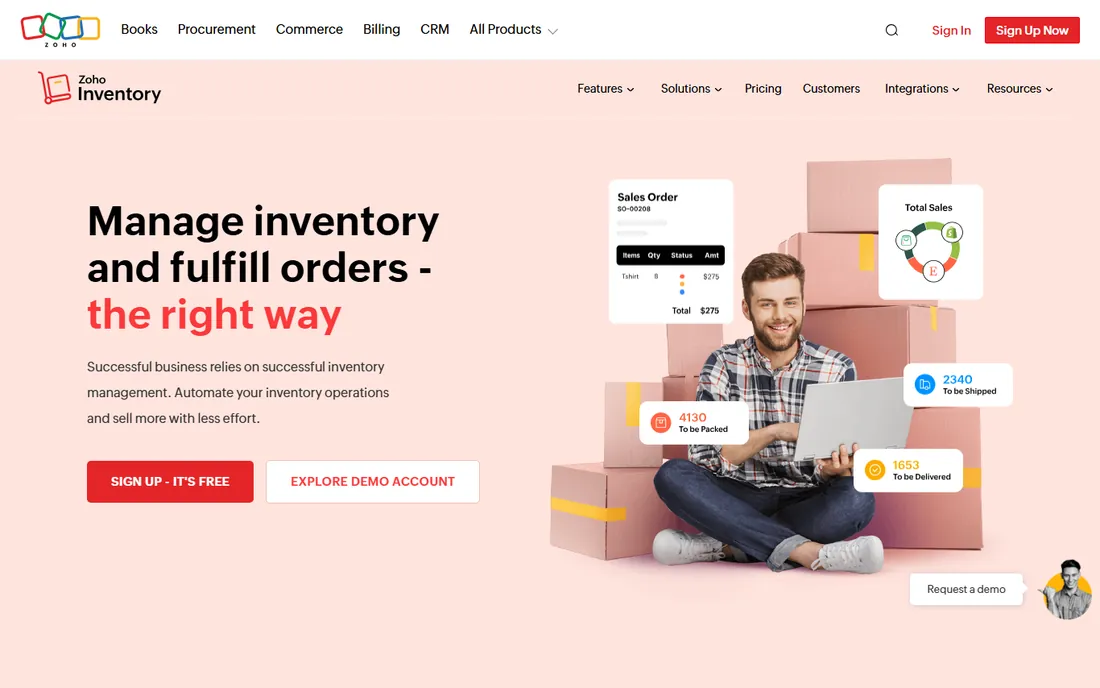
Zoho Inventory is the value pick for multichannel sellers. It syncs stock across Amazon, Shopify, eBay and other channels, handles multi-warehouse transfers, batch and serial tracking, and integrates with major shipping carriers for labels and rates. The Zoho ecosystem means accounting, CRM and email marketing connect natively.
The free plan covers 50 orders a month with one user, which is genuinely useful for new sellers. Paid tiers start at $29 a month billed annually and scale to 15,000 orders across 10 locations.
The honest limits are manufacturing and forecasting. Composite items cover simple bundles, but real MRP needs another tool, and demand planning is basic reorder rules. For retailers who sell across marketplaces and want inventory software that does not cost more than the stock, Zoho is hard to beat.
What we like- Free plan for up to 50 orders a month
- Strong Amazon, Shopify and shipping integrations
- Part of the huge Zoho ecosystem
Watch out for- No real demand forecasting, only reorder rules
- Light manufacturing features
- The free plan caps at one user and one location
#5
Cin7
Best for: Multichannel sellers that have outgrown their POS inventory
Visit cin7.com
Starting priceFrom $349/month
Free planNo
Cin7 is what retailers graduate to when POS inventory stops being enough. It unifies inventory across ecommerce, wholesale, retail and 3PL warehouses with real-time visibility, then adds demand forecasting, automated purchasing and EDI for B2B trading partners. The 700-plus integration library connects nearly every sales channel and accounting system.
Cin7 Core suits smaller multichannel operations, while Cin7 Omni adds built-in EDI for complex supply chains. AI forecasting helps growing brands buy smarter instead of guessing.
The catch is the entry price: $349 a month with no free plan or trial tier puts it firmly in growth-stage territory. Implementation is a project, not a signup. Retailers doing serious volume across channels will find the ROI; everyone else should start cheaper.
What we like- 700+ integrations with AI forecasting
- True multichannel order and warehouse management
- Strong B2B and EDI capabilities
Watch out for- Starts at $349 a month with no free tier
- Implementation takes real effort
- Overkill for single-channel retailers
Starting price$129/month (billed annually)
Free planFree trial
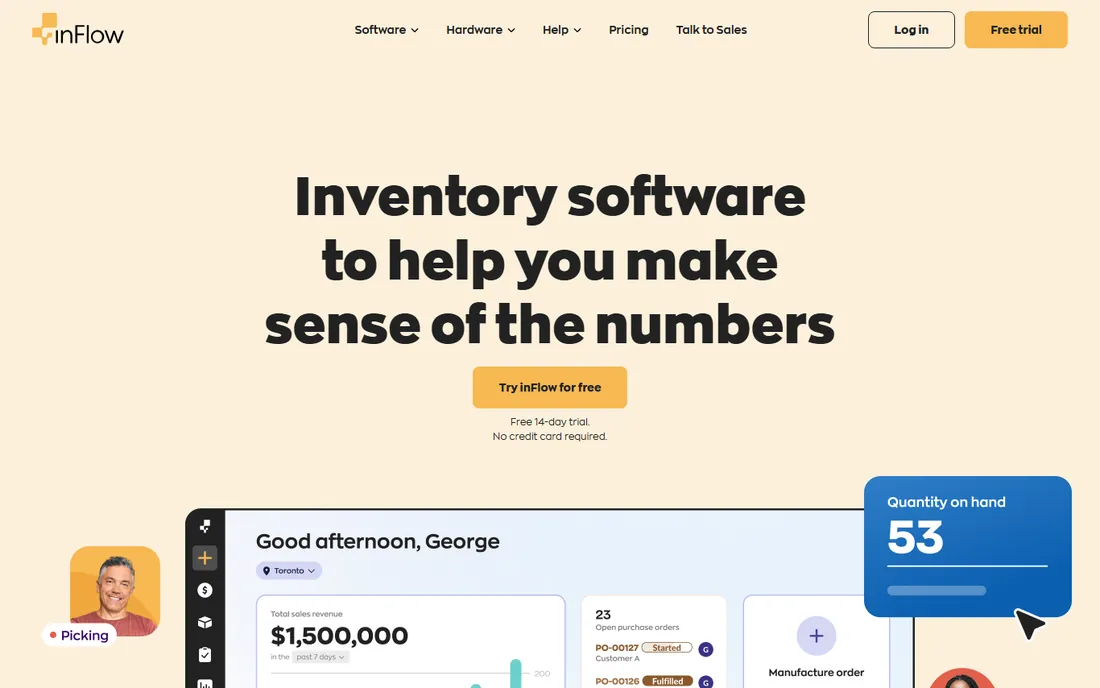
inFlow has spent years refining one thing: inventory software that regular humans can use. Stock tracking, sales and purchase orders, reordering and barcoding all live in an interface that reviewers consistently call the easiest in the category. A 14-day trial with no credit card lets teams prove that before paying.
The depth is real underneath. Batch and serial tracking, multi-location stock, a B2B showroom and guided onboarding with a customer success manager come on the plans. Integrations cover QuickBooks, Xero, Shopify and ShipStation.
Pricing starts at $129 a month billed annually for the Entrepreneur plan, which is steep next to Zoho but fair for what it replaces. Manufacturing, API access and extra integrations are paid add-ons, so model the full stack. Product businesses that have bounced off complex ERPs tend to stay with inFlow.
What we like- Beautifully simple interface teams actually adopt
- Strong barcode, batch and serial tracking
- In-house support from Toronto and Lisbon
Watch out for- Priced above simpler tools at $129 a month
- Manufacturing features cost extra
- Add-ons for API and integrations inflate the bill
#7
Sortly
Best for: Teams that track inventory visually from a phone
Visit sortly.com
Starting price$24/month (billed annually)
Free planFree trial
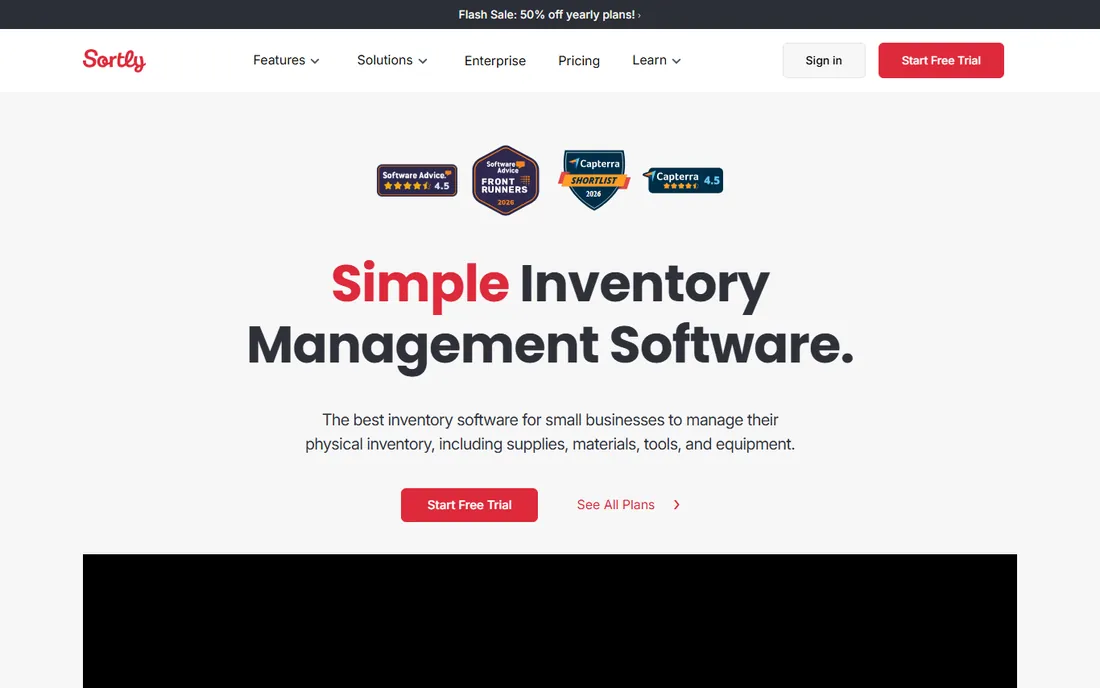
Sortly is inventory tracking stripped to what small teams actually do: photograph items, organize them in folders, scan barcodes to count, and get alerted when stock runs low. The mobile app works offline in stockrooms and warehouses, and the visual approach means anyone can find and identify items without training.
Plans start at $24 a month billed annually for Advanced, with Ultra at $74 adding purchase orders and barcode label creation. A 14-day free trial needs no credit card.
The honest limit is scope. Sortly tracks stock; it does not run sales orders, purchasing workflows or manufacturing. Retailers that need order management should pair it with a POS or pick Zoho. For back rooms, equipment and supplies, it is the simplest tool that works.
What we like- Photo-first tracking makes items instantly identifiable
- Excellent mobile app with offline barcode scanning
- Low stock alerts and simple reports
Watch out for- Not a real order management or POS system
- Reporting is basic next to dedicated tools
- No manufacturing features at all
Starting priceSee website
Free planYes
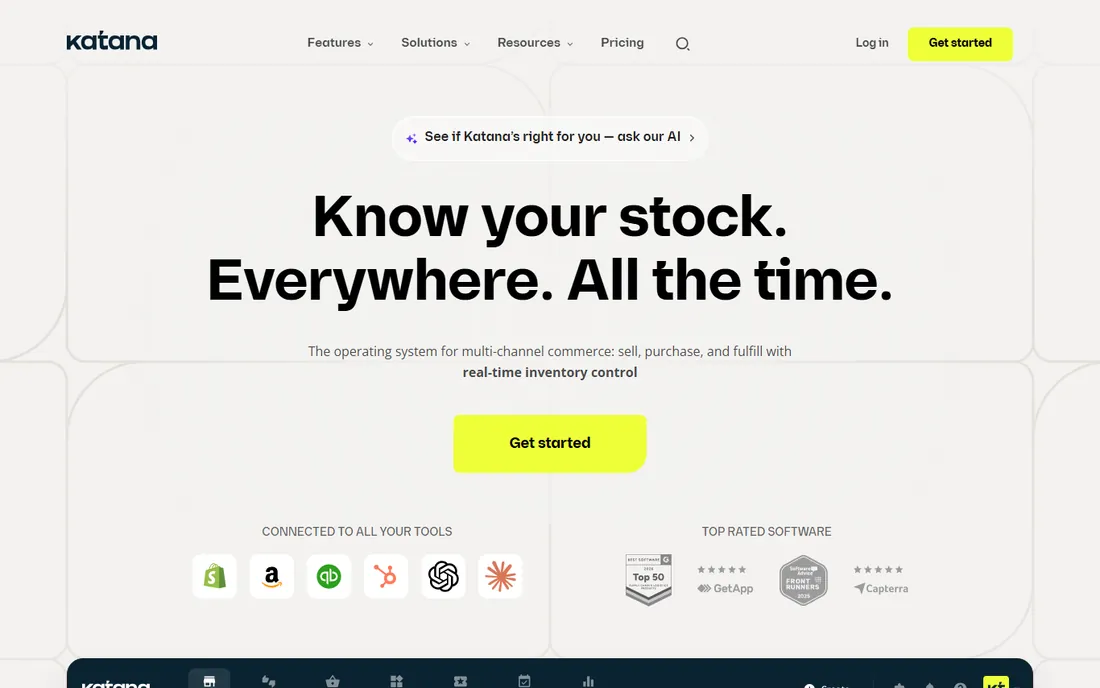
Katana serves the retailer-manufacturer hybrid: brands that sell on Shopify and Amazon while producing goods in-house or through co-manufacturers. Materials, work orders and finished goods share one system with sales orders, so stock numbers reflect what is actually available, not what the spreadsheet guessed.
Multi-level bills of materials, batch tracking and expiry management suit food, cosmetics and regulated products. Live Shopify sync prevents oversells during peak seasons, and the visual interface keeps production understandable.
The catch is that Katana moved to custom quote-based pricing, so expect a sales conversation rather than a signup page. A free tier lets teams explore first. If you only resell and never produce, simpler tools cost less; if production is the business, Katana earns its keep.
What we like- Inventory and production in one visual system
- Real-time multi-channel stock sync
- Lot and serial traceability built in
Watch out for- Pricing is now custom and quote-based
- The free tier is limited
- Implementation help matters for complex setups
#9
Veeqo
Best for: Amazon and multichannel sellers who ship themselves
Visit veeqo.com
Starting priceFree; inventory from $19/month
Free planYes
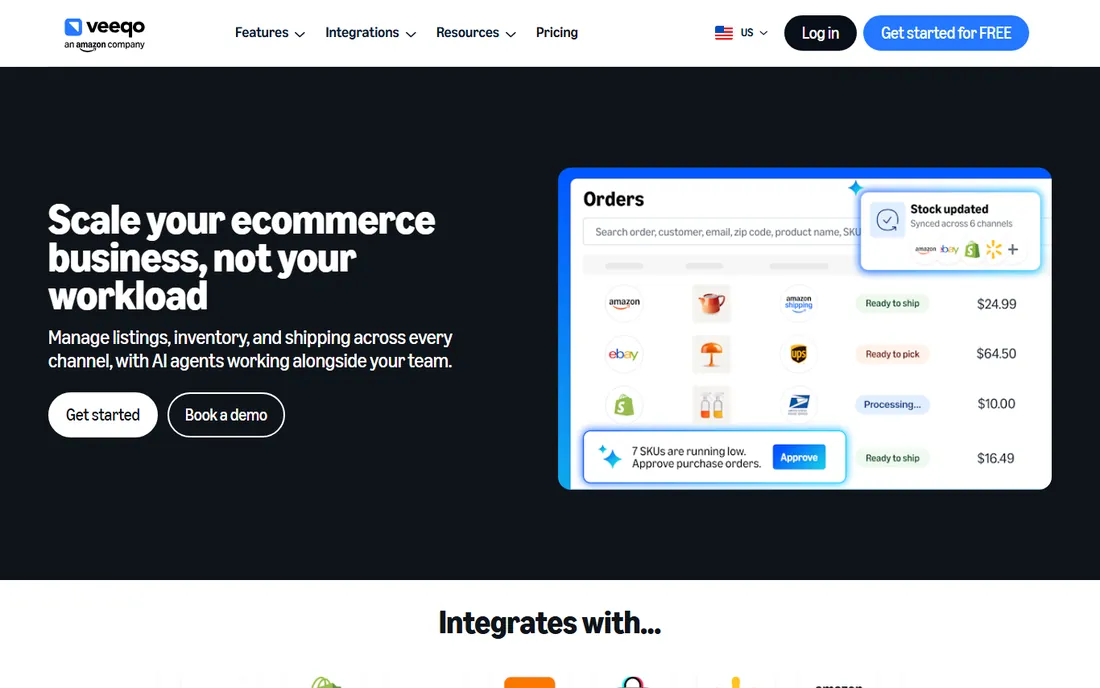
Veeqo is Amazon's free multichannel shipping platform, and it is genuinely free: unlimited users, unlimited shipments, discounted carrier rates and up to 5% back in credits. For sellers fulfilling their own orders across Amazon, Shopify and other channels, the shipping savings alone justify the signup.
Inventory management is available from $19 a month on top, adding stock tracking across channels to the free order and shipping core. Over 100,000 sellers use it, mostly in the Amazon ecosystem.
The honest caveats are the ownership and the focus. Amazon owns Veeqo, which gives some multichannel sellers pause, and the platform is shipping-first: inventory and purchasing depth trail Cin7 and inFlow. As a free shipping layer with light inventory, though, it is unmatched value.
What we like- Free shipping software with unlimited users and shipments
- Discounted carrier rates with cashback
- Inventory management from $19 a month
Watch out for- Amazon-owned, so competitors' marketplaces may feel second-class
- Inventory features are an add-on, not the core
- Support is built for shippers
How we chose
We compared vendor pricing pages, documentation and feature lists against public reviews on G2, Capterra, TrustRadius and SoftwareWorld, plus retail-community discussions on Reddit. We favored tools with transparent current pricing, real trial or free options and a clear fit for small to mid-size US retailers. We did not test any platform hands-on, so treat this as research synthesis; confirm current prices on the vendor's site before buying.
What to check before you buy
Start with your sales channels. A single-store boutique needs POS-first inventory like Square or Lightspeed. A multichannel seller needs channel sync like Zoho or Cin7. Buying POS depth when you sell on marketplaces, or marketplace sync when you run one register, wastes money both ways.
Count the real monthly cost. Software is only part of it: payment processing fees, hardware, barcode printers, label stock and add-ons like POS Pro or API access all hit the same budget. Model a full year, not the headline price.
Check the variant and unit handling. Apparel, footwear and beauty need matrix variants; food and supplements need batch and expiry tracking; electronics need serial numbers. Shortlist only tools that handle your product type natively.
Finally, plan the data migration. Product catalogs, supplier lists and opening stock levels all need to move cleanly. Ask each vendor what migration help is included; a messy cutover costs more in stock errors than the software costs in a year.
When inventory software is not enough
Inventory software tracks stock, but growing retailers eventually need the layers around it. Demand forecasting upgrades to dedicated planning tools when reorder rules stop working. Warehouse operations need a real WMS past a certain scale. And accounting stays in QuickBooks or Xero, which is why every tool on this list integrates with them. Buy the inventory layer for today's problems, and make sure it integrates with tomorrow's.
Frequently asked questions
What is the best retail inventory management software?
For specialty retailers, Lightspeed Retail leads on inventory depth. Small boutiques do best with Square for Retail, omnichannel Shopify sellers with Shopify POS, and budget multichannel brands with Zoho Inventory. The right pick depends on your channels and product complexity.
How much does retail inventory management software cost?
Expect $0 to $90 a month for small-retail tools: Square and Zoho offer free plans, Sortly starts at $24, Shopify at $29 and Lightspeed at $89. Multichannel platforms run higher: inFlow from $129, Cin7 from $349 a month.
Can I manage inventory with just my POS system?
For a single store with simple products, yes: Square, Shopify and Lightspeed all include inventory tracking in the POS. Once you add warehouses, marketplaces or wholesale, a dedicated inventory platform like Zoho, inFlow or Cin7 handles what the POS cannot.
What is the difference between an IMS and an ERP?
An inventory management system tracks stock, orders and purchasing. An ERP adds accounting, HR, CRM and manufacturing planning in one suite. Most small to mid-size retailers need an IMS; ERPs like NetSuite enter the picture at much larger scale and cost.
Does retail inventory software integrate with QuickBooks?
Yes, all the serious options do. Lightspeed, Cin7, inFlow, Zoho Inventory and Katana all sync with QuickBooks Online or Xero, keeping inventory values and purchase costs aligned with your books.
Is there free retail inventory management software?
Yes. Square for Retail, Zoho Inventory and Veeqo all offer genuinely free plans, and Sortly and Shopify offer free trials. Free plans cover basic tracking; expect to pay as locations, users or order volume grow.
Sources we checked (13)
- https://lightspeedhq.com/
- https://squareup.com
- https://www.shopify.com
- https://www.zoho.com/inventory/
- https://cin7.com/
- https://inflowinventory.com/
- https://www.sortly.com
- https://katanamrp.com
- https://veeqo.com/
- https://www.posbull.com/pricing/lightspeed-retail
- https://bushe.co/blog/shopify-pricing/
- https://www.inflowinventory.com/software-pricing
- https://www.techrepublic.com/article/best-inventory-management-software/
Is your product missing or out of date?
We review this list regularly. Vendors can request a listing, send updated pricing or ask about featured placement.

Shihab Mia · Founder, Rankite
Shihab has 5+ years in B2B and SaaS SEO. He writes Rankite's software buying guides from pricing pages, documentation and public user reviews. More about Shihab.