How we make this list: we compare pricing pages, product documentation and public user reviews. Ratings come from G2, Capterra or Trustpilot, with the date we checked them.
Key takeaways
- Khan Academy Kids and Duolingo ABC are completely free, with no ads, and both cover early reading for ages 2 to 8.
- Reading Eggs offers the most structured phonics path for a first grader, with placement checks and a large book library.
- ABCmouse suits families who want reading plus math, science, and art in one subscription for ages 2 to 8.
- Epic gives a first grader the widest choice of books to read independently, with read to me audio on many titles.
- Starfall and Teach Your Monster to Read work well as low cost practice alongside school reading, not as a full curriculum on their own.
Quick comparison
| Tool | Best for | Starting price | Free plan |
|---|
 Khan Academy Kids | Free all round early learning | Free | Yes |
 Reading Eggs | Structured phonics path | $69.99 per year | Free trial |
 ABCmouse | Reading plus other subjects | $79.99 per year | Free trial |
 Epic | Largest kids book library | $84.99 per year | Free trial |
 Duolingo ABC | Free phonics practice | Free | Yes |
 Starfall | Low cost phonics reinforcement | $35.00 per year | Yes |
 Teach Your Monster to Read | Game based phonics | $8.99 one-time purchase | Yes |
 HOMER | Personalized reading path | $59.99 per year | Free trial |
Is your product missing or out of date?
We review this list regularly. Vendors can request a listing, send updated pricing or ask about featured placement.
The best reading apps for 1st graders
Starting priceFree
Free planYes
Khan Academy Kids covers kindergarten through second grade reading with phonics, sight words, writing, and early math in one free app. The content was built with early learning specialists, and the app carries no ads and no in app purchases. That matters for a first grader, since a child can open a book or game without hitting a paywall or an ad break.
The app suits families who want a safe daily routine without a subscription. A child can read a story, play a letter game, and practice a skill in a short session, and a parent can check progress without managing payments. The trade-off is depth: families who want a long, sequenced phonics program with detailed reading level reports may want to pair it with a paid phonics app.
What we like- Completely free with no ads
- Covers phonics, sight words, and comprehension
- Teacher tools for assignments
- Offline books and games
Watch out for- Not a dedicated phonics program only
- Reading depth is lighter than Reading Eggs
- Progress reports are simpler than paid rivals
Starting price$69.99 per year
Free planFree trial
Reading Eggs is built around one job: moving a child from letter sounds to fluent reading. A placement test sets the starting lesson, then short lessons build letter sound knowledge, blending, sight words, and comprehension in order. Each lesson ends with a check, and parents can see lessons completed, books read, and skills covered.
The library adds thousands of e-books with quizzes, so a child can practice reading real books at a matched level after each lesson block. A 30 day free trial lets a family check whether the lesson style suits their child before paying. Reading Eggs fits first graders who need steady phonics instruction, especially children who are behind their class reading level or who need more repetition than school provides.
What we like- Step by step phonics lessons
- Placement test sets the starting level
- Library of e-books with quizzes
- Detailed parent progress reports
Watch out for- Annual price is higher than free options
- Screen rewards can distract some children
- Math content is a separate add-on in some plans
Starting price$79.99 per year
Free planFree trial
ABCmouse gives a first grader a guided path through reading, math, science, social studies, art, and music. The reading path includes books, songs, puzzles, and games, and children earn tickets and customize an avatar as they finish activities. Up to three child profiles share one account, which helps families with younger siblings.
The breadth is both the strength and the limit. A child who loves variety will stay engaged longer than with a reading only app, but a child who needs focused phonics work may move through reading more slowly. The annual web price is $79.99 per year, with a 30 day free trial on web signups. ABCmouse fits families who want one subscription for several subjects and a clear path to follow each day.
What we like- More than 13,000 activities
- Step by step learning path to grade 2
- Up to 3 child profiles
- Ad free with rewards and avatars
Watch out for- Reading is one subject among many
- Assessment Center costs extra
- Monthly price is high compared with the annual plan
#4Epic
Best for: Largest kids book library4.2/5 on
G2 (940 reviews, checked Oct 2026)
Visit getepic.com
Starting price$84.99 per year
Free planFree trial
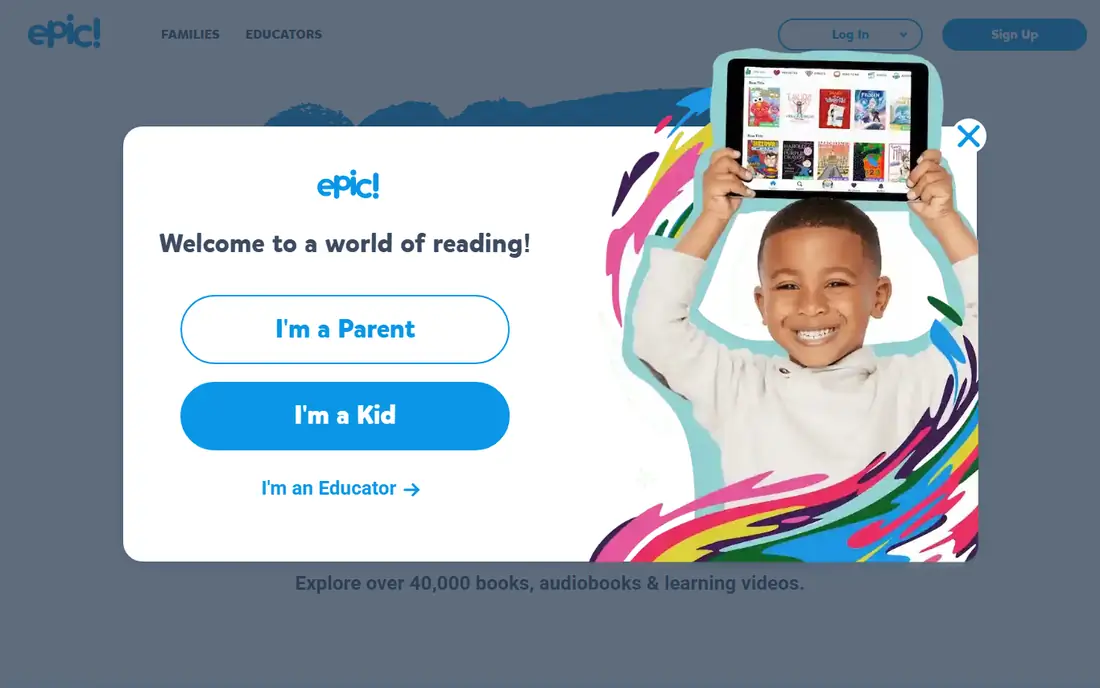
Epic is a digital library rather than a teaching program. A first grader can browse picture books, early chapter books, audiobooks, and videos, and many titles include read to me audio that highlights words as they are spoken. That audio support helps a new reader follow a story above their independent reading level.
The value depends on how much a child reads. A child who finishes several books a week will use the library well, while a child who reads one book a week may do just as well with a public library app. Epic costs $84.99 per year for home use, with monthly billing also available. It fits families who want volume and choice, and who pair it with phonics practice from school or another app.
What we like- Very large library for ages 2 to 12
- Read to me audio on many books
- Quizzes and videos included
- Works on phones, tablets, and web
Watch out for- Not a phonics teaching program
- Choice can overwhelm a new reader
- Home subscription costs more than school access
Starting priceFree
Free planYes
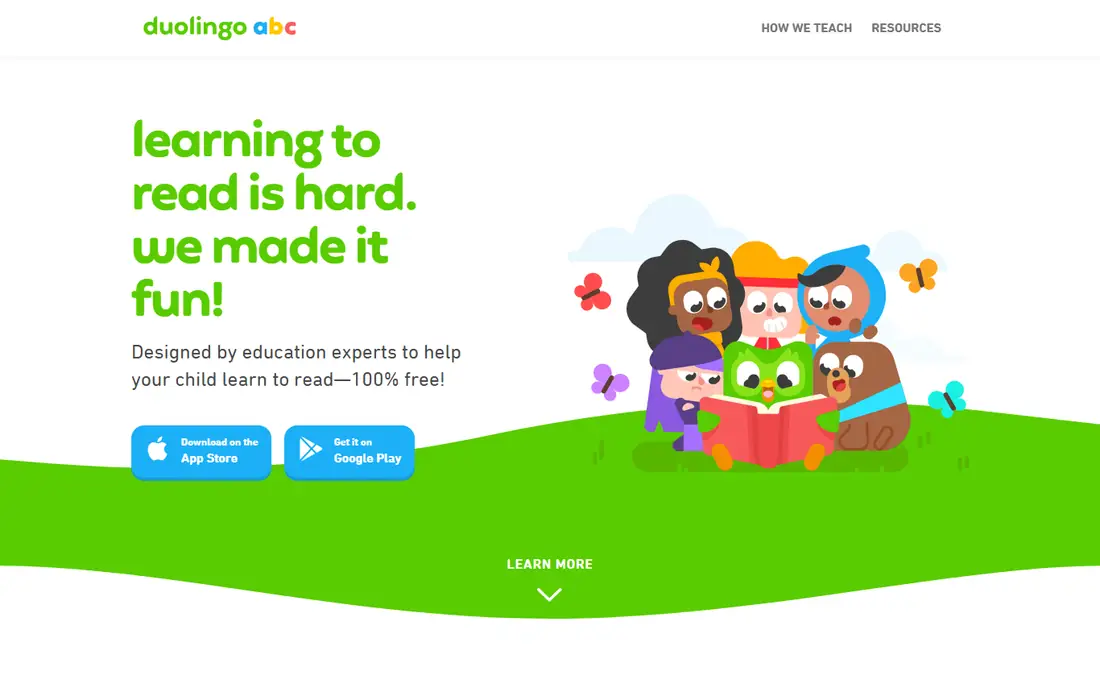
Duolingo ABC teaches early reading through short lessons built around letters, sounds, sight words, and simple stories. The lessons use the same short, game like format as the main Duolingo app, but the content is designed for children in pre-K through grade 2. There are no ads and no paid tier in the app.
The app works best as daily phonics practice in ten to fifteen minute sessions. A child can complete a lesson, read a short story, and repeat a tricky sound without a parent managing a subscription. It does not replace a library or a full reading program, but as a free companion to school reading it is hard to beat.
What we like- Completely free
- Short phonics lessons with stories
- No ads
- Simple interface for young children
Watch out for- Covers only early reading, not a full library
- Less parent reporting than paid apps
- Content depth ends sooner than Reading Eggs
Starting price$35.00 per year
Free planYes
Starfall has taught early reading online for years, and its strength is a clear, simple phonics progression. Children start with letter names and sounds, move to blending and word families, then read short stories and nonfiction passages. The free section covers a good share of the early content, and the paid membership adds the full library of activities.
The annual membership costs $35.00 per year, which makes it one of the cheapest paid options here. The design looks older than ABCmouse or Epic, and some children may prefer a more modern game style. Starfall fits families who want low cost, no fuss phonics reinforcement and who do not need a large book library.
What we like- Low annual price
- Clear phonics progression from letters to readers
- Free content available without paying
- Works on web and mobile
Watch out for- Visual design looks dated next to newer apps
- No detailed parent dashboard
- Fewer books than Epic or Reading Eggs
Starting price$8.99 one-time purchase
Free planYes
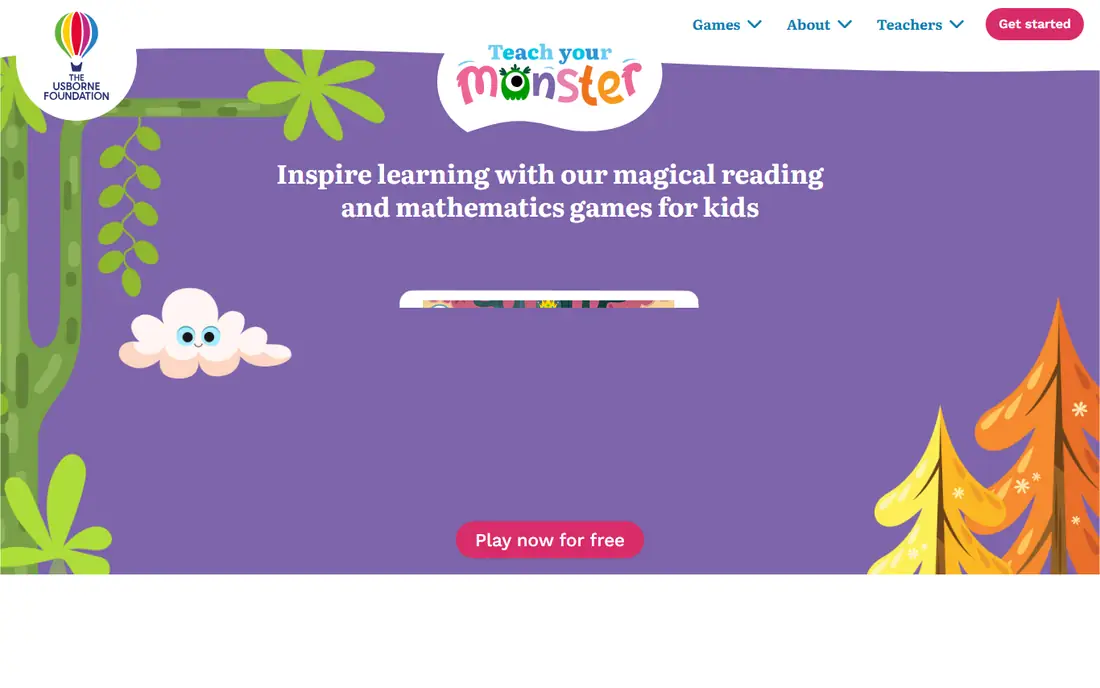
Teach Your Monster to Read turns phonics into a game. A child creates a monster, then travels through a game world where each level teaches letter sounds, blending, and reading words in context. The web version is free, and the mobile app costs $8.99 as a one-time purchase with no subscription.
The game format helps children who resist worksheet style practice, since the reading work is part of play rather than a separate task. The content covers the early reading range well, but it ends sooner than a full program such as Reading Eggs. It fits as a fun practice app alongside school reading, especially for a first grader who needs more motivation to practice letter sounds.
What we like- One-time app price with free web play
- Full game world built around phonics
- Covers letters through early sentences
- No subscription on the app
Watch out for- Game style suits some children more than others
- Reading range ends at early grade 2 level
- Parent reports are basic
Starting price$59.99 per year
Free planFree trial
HOMER builds a reading path from a short setup that asks about a child age, interests, and current reading level. The path mixes stories, songs, and games matched to that profile, and parents can adjust the level as the child grows. The app covers ages 2 to 8, which spans preschool through early grade school.
The personal touch helps a first grader who reads below or above grade level, since the starting point adjusts to the child rather than the grade label. The annual price is $59.99 per year, so families should use the free trial to check the fit. HOMER fits parents who want a tailored path and a mix of story and game content in one app.
What we like- Personalized path based on age, interests, and level
- Mix of stories, songs, and games
- Covers ages 2 to 8
- Parent dashboard with progress
Watch out for- Annual price is close to Epic
- Reading depth is lighter than Reading Eggs
- Some content repeats across levels
How we chose
We compared vendor pricing pages, app store listings, and public reviews from parents and teachers, and we checked each product against first grade reading needs: letter sounds, blending, sight words, simple comprehension, and books at a matched level. We favored apps with a free plan or trial, an ad free experience for children, and clear parent progress information. We also weighed the honest limit of each app, such as a library that does not teach phonics or a phonics program with a small book collection, because first graders usually need both practice and books.
How to pick for a first grader
A first grader needs two things from a reading app: teaching and reading time. Most families do better with one teaching app and one source of books than with five subscriptions running at once.
Start free, then add one paid app if needed
Begin with Khan Academy Kids and Duolingo ABC for two to three weeks. Watch whether the child can sound out new words, remember sight words, and finish a short book. If progress stalls or the child needs a longer sequenced program, add Reading Eggs or HOMER on a trial and compare the results before paying for a year.
Match the app to the reading gap
A child who knows letters but struggles to blend sounds needs a phonics app such as Reading Eggs, Starfall, or Teach Your Monster to Read. A child who reads well but reads little needs a library such as Epic or a public library app. A child who needs both can pair a free phonics app with a library app and skip a paid bundle.
Keep sessions short and shared
Fifteen to thirty minutes a day is enough for most first graders, and reading together helps more than solo screen time alone. Sit nearby for the first sessions, ask the child to read a page aloud, and talk about the story after it ends. Check the parent dashboard weekly, not daily, and change the level or app when the work becomes too easy or too hard.
Check safety and cost controls
Choose apps with no ads and no in app purchase prompts aimed at children, and turn off purchase permissions on the device. Read the renewal terms before a trial ends, since annual plans renew automatically. Cancel a trial the same week you start it if you are unsure, and rejoin later if the child asks for the app by name.
Frequently asked questions
What is the best free reading app for 1st graders?
Khan Academy Kids is the strongest free choice, since it covers phonics, sight words, and comprehension with no ads and no purchases. Duolingo ABC is a strong free second app for focused phonics practice. Together they cover most first grade reading practice without any payment.
Do reading apps really help a first grader learn to read?
Apps help most when they add practice to school teaching, read aloud time, and printed books. A phonics app can give a child more repetition with letter sounds than a classroom alone, and a library app can add reading volume. An app alone, without a teacher or parent checking progress, helps less.
How much screen time is right for reading practice?
Fifteen to thirty minutes of focused reading practice a day works well for most first graders. Keep the session in one sitting when possible, and balance it with printed books and reading aloud. If a child is frustrated or tired, a shorter session with a parent reading aloud is better than a longer solo session.
Is ABCmouse or Reading Eggs better for grade 1?
Reading Eggs is better for focused phonics teaching, with a sequenced path and placement checks. ABCmouse is better for families who want reading plus math, science, and art in one subscription. A child who mainly needs reading help will gain more from Reading Eggs, while a child who wants variety may stay engaged longer with ABCmouse.
Can a first grader use Epic without knowing how to read well?
Yes, because many Epic titles include read to me audio that reads the story aloud while highlighting words. A new reader can follow along, listen, and join in on familiar words. Epic works best alongside a phonics app, since it builds reading volume and vocabulary rather than teaching letter sounds step by step.
Should I pay for a reading app before trying the free ones?
No. Start with Khan Academy Kids, Duolingo ABC, and the free parts of Starfall, and use a paid trial only after you know what your child needs. A paid app is worth it when the child uses it several days a week and the parent dashboard shows clear progress. If use drops after the first week, cancel before the trial renews.
Sources we checked (8)
- https://www.khanacademy.org/kids
- https://readingeggs.com
- https://www.abcmouse.com
- https://www.getepic.com
- https://abc.duolingo.com
- https://www.starfall.com
- https://www.teachyourmonstertoread.com
- https://www.learnwithhomer.com
Is your product missing or out of date?
We review this list regularly. Vendors can request a listing, send updated pricing or ask about featured placement.

Shihab Mia · Founder, Rankite
Shihab has 5+ years in B2B and SaaS SEO. He writes Rankite's software buying guides from pricing pages, documentation and public user reviews. More about Shihab.