How we make this list: we compare pricing pages, product documentation and public user reviews. Rankite is independent; if a vendor ever pays for a featured spot, that listing is clearly labeled Partner.
Key takeaways
- Ramp is the best all-in-one pick if you also want corporate cards and AP in the same platform, with procurement starting at $15 per user per month.
- Tradogram gives small teams the lowest entry price, with a free Basic tier and paid plans from $99 per month, plus real sourcing and vendor management.
- Precoro and Procurify suit companies that have outgrown basic PO tools and need genuine budget control across departments or locations.
- If international suppliers are a big part of your spend, Tipalti's tax compliance and global payments are hard to match, but expect a quote-based sales process.
Quick comparison
| Tool | Best for | Starting price | Free plan |
|---|
 Ramp Ramp | Small businesses that want procurement, cards, and AP in one platform | $15 per user/month | No |
 Precoro Precoro | Growing companies that need tight PO control across departments and locations | $499/month (Core, billed annually) | No |
 Tradogram Tradogram | Small businesses that want sourcing, vendor management, and POs without enterprise pricing | $99/month | Free trial |
 Procurify Procurify | Mid-market teams formalizing purchasing with pre-spend budget control | See website | No |
 ControlHub ControlHub | Small teams and hardware startups that want purchase orders created in one click | See website | No |
 Fraxion Fraxion | Mid-sized companies that want procure-to-pay with embedded spend analytics | $399/month (10-25 employees) | No |
 ProcureDesk ProcureDesk | Finance-led teams whose biggest pain is AP accuracy and invoice matching | $1,250/month (Growth, billed annually) | Free trial (14 days) |
 Tipalti Tipalti | Businesses paying suppliers, freelancers, or partners across borders | See website | No |
 Order.co Order.co | Multi-location teams buying physical goods at volume | See website | No |
Is your product missing or out of date?
We review this list regularly. Vendors can request a listing, send updated pricing or ask about featured placement.
The best purchasing software for small businesses
#1
Ramp
Best for: Small businesses that want procurement, cards, and AP in one platform
Visit ramp.com
Starting price$15 per user/month
Free planNo
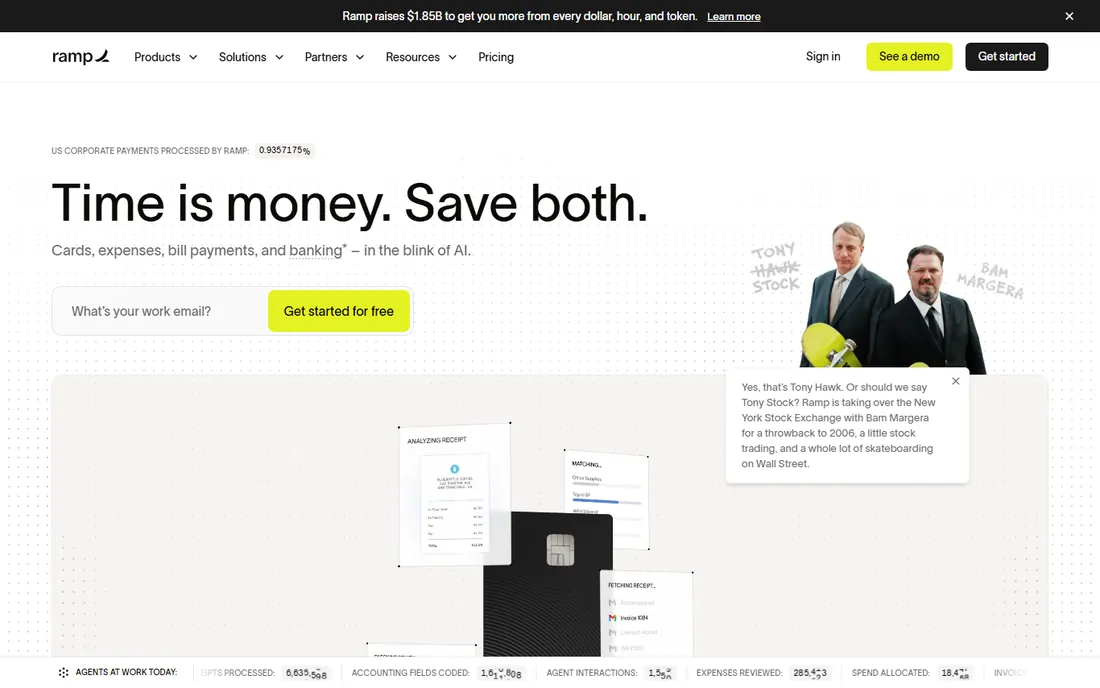
Ramp started as a corporate card company and its procurement product shows that history. AI agents handle vendor research, contract checks, and compliance reviews before a request reaches an approver, and employees describe what they need in plain language instead of memorizing forms. For a small business with no procurement staff, the software does research that would otherwise land on the owner.
Basic AI intake is free for Ramp customers, but fuller capabilities like workflow orchestration and renewal management are an add-on to Ramp Plus. Invoices get two- and three-way matching, and Ramp even matches card transactions to POs, which most competitors don't attempt.
What we like- AI intake turns plain-language requests into purchase orders
- Combines procurement with cards, expenses, AP, and travel
- Purchase orders sync with QuickBooks Online and NetSuite
Watch out for- Advanced procurement features are an add-on to the paid Ramp Plus tier
- Procurement depth is lighter than procurement-first tools
#2
Precoro
Best for: Growing companies that need tight PO control across departments and locations
Visit precoro.com
Starting price$499/month (Core, billed annually)
Free planNo
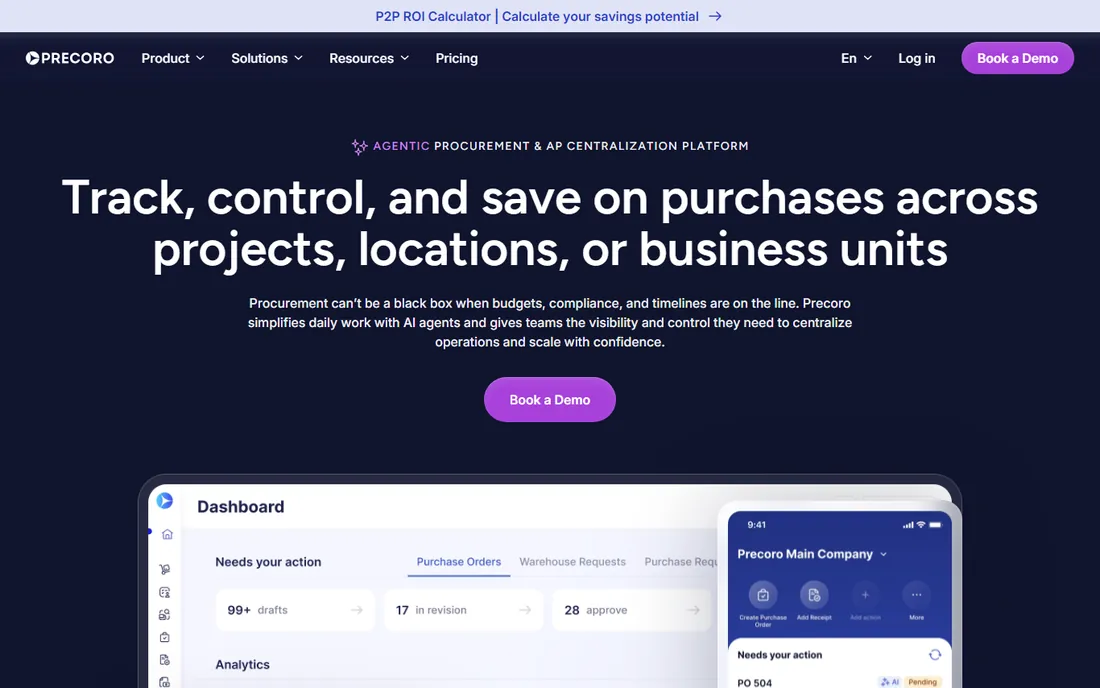
Precoro is built for companies whose purchasing has scattered across departments, projects, or locations. Core covers purchase requests, POs, two- and three-way matching, automated approvals, and QuickBooks Online and Xero integrations. The Automation plan adds AP automation, e-invoicing, a supplier portal, and RFPs. Setup runs two to eight weeks with no IT involvement, a realistic timeline for a small business.
The honest limitation is architectural: Precoro is a control layer on top of your accounting system, not a replacement for it. If you need genuine inventory management, the stock features will feel thin. Reviewers praise the interface and real-time budget visibility but note the mobile app trails the desktop. Published pricing from $499 per month makes budgeting straightforward, which is rarer in this category than it should be.
What we like- Published pricing with no quote required
- Multi-entity and multi-location support in one account
- AI agents for intake, invoice matching, and AP
Watch out for- Works alongside your ERP rather than replacing it
- Inventory features are lightweight
#3
Tradogram
Best for: Small businesses that want sourcing, vendor management, and POs without enterprise pricing
Visit tradogram.com
Starting price$99/month
Free planFree trial
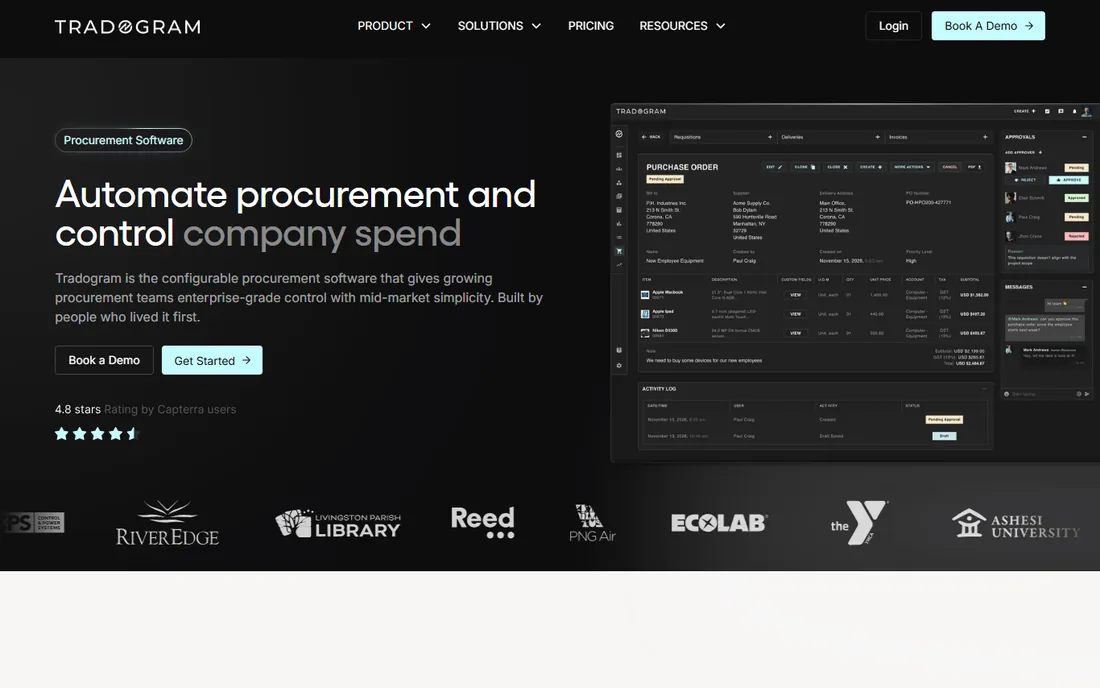
Tradogram packs unusual depth into small-business pricing: requisitions, approvals, POs, receiving, invoice processing, budgets, contracts, inventory, and strategic sourcing with structured RFQ events. TradoScan AI captures invoice data with OCR and runs three-way matching before anything gets paid. Most teams configure first workflows within days with no IT dependency.
Tradeoffs appear as you scale. Reviewers praise the support and short learning curve but flag rigidity in custom fields, and the most consistent complaint is commercial: customizations you pay for get rolled out to every customer. Multi-currency threshold configuration can also get fiddly. For straightforward purchasing where vendor comparison matters, a free starting tier and $99-per-month paid plans are difficult to beat.
What we like- Free Basic tier for a single user
- RFQ and RFP events with side-by-side bid comparison
- TradoScan AI invoice capture with three-way matching
Watch out for- Paid customizations get rolled out to all customers
- The mobile app covers basics while advanced work needs the desktop
#4
Procurify
Best for: Mid-market teams formalizing purchasing with pre-spend budget control
Visit procurify.com
Starting priceSee website
Free planNo
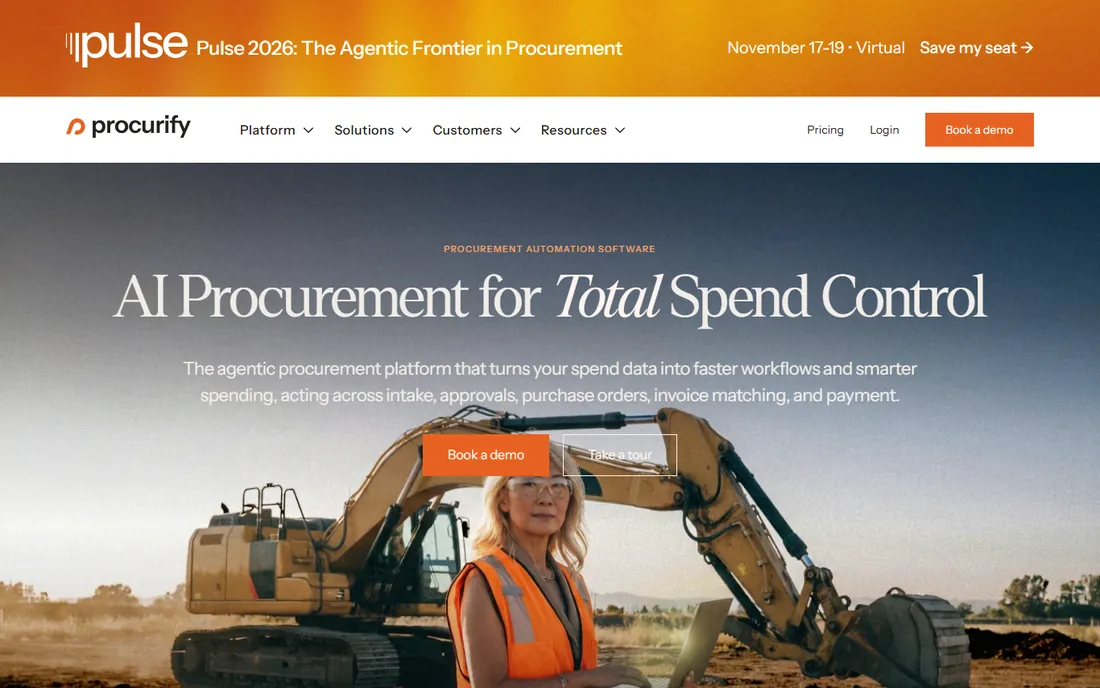
Procurify concentrates on the moment before money is committed: the request, the approval, the PO, and the budget it draws against. Its mobile app lets managers approve from anywhere, and real-time budget visibility shows remaining funds before anyone signs off. Spending cards are pre-loaded Visa debit cards tied to the same budgets as purchase orders, closing the loophole where card spend escapes procurement. Integrations cover NetSuite, Sage Intacct, Dynamics 365, and QuickBooks Online.
The catch is commercial. Pricing is quote-only, and reviewers repeatedly note that capabilities arrive as separately licensed modules, so the total climbs past the first conversation. Operationally, Procurify handles requests and approvals beautifully, but getting the PO to the vendor and tracking fulfillment is less automated than with Order.co. It fits companies of roughly 100 to 1,000 people that have outgrown spreadsheets but don't want enterprise complexity.
What we like- Strong requester experience with a highly rated mobile app
- Pre-loaded spending cards tied to the same budgets as POs
- Top-ranked mid-market procure-to-pay platform by G2
Watch out for- Quote-only pricing with separately licensed modules that add up
- Fulfillment is less automated than the approval side
#5
ControlHub
Best for: Small teams and hardware startups that want purchase orders created in one click
Visit controlhub.com
Starting priceSee website
Free planNo
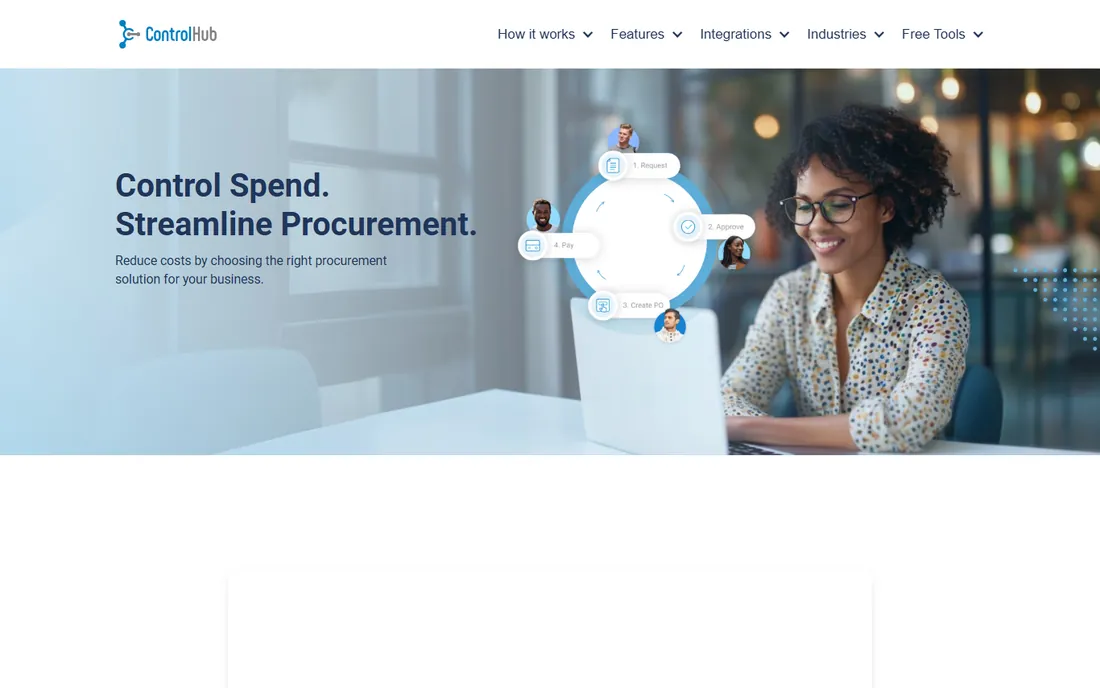
ControlHub's signature feature does what it promises: an approved request becomes a purchase order in one click, sent to the vendor without retyping. Around that core sit requisitions, approvals, PO receiving, invoice processing with three-way matching, supplier management, virtual cards, and real-time budget tracking with a full audit trail. It has a devoted niche among hardware and robotics startups, where purchasing mixes off-the-shelf parts, custom fabrication, and urgent prototype orders.
Reviewers highlight how approval times collapse once the system is live, with one team going from one-to-three-day approvals to about an hour. The gaps: no published pricing, so even rough budgeting needs a sales call, and the marketing leans hard into hardware, leaving other industries guessing about fit. The workflows are generic enough for most small businesses, but ask for a demo in your context first.
What we like- One-click PO generation from approved requests
- Loyal following among hardware and robotics startups
- Virtual cards with QuickBooks Online and NetSuite sync
Watch out for- No published pricing
- Product messaging leans heavily toward hardware companies
#6
Fraxion
Best for: Mid-sized companies that want procure-to-pay with embedded spend analytics
Visit fraxion.biz
Starting price$399/month (10-25 employees)
Free planNo
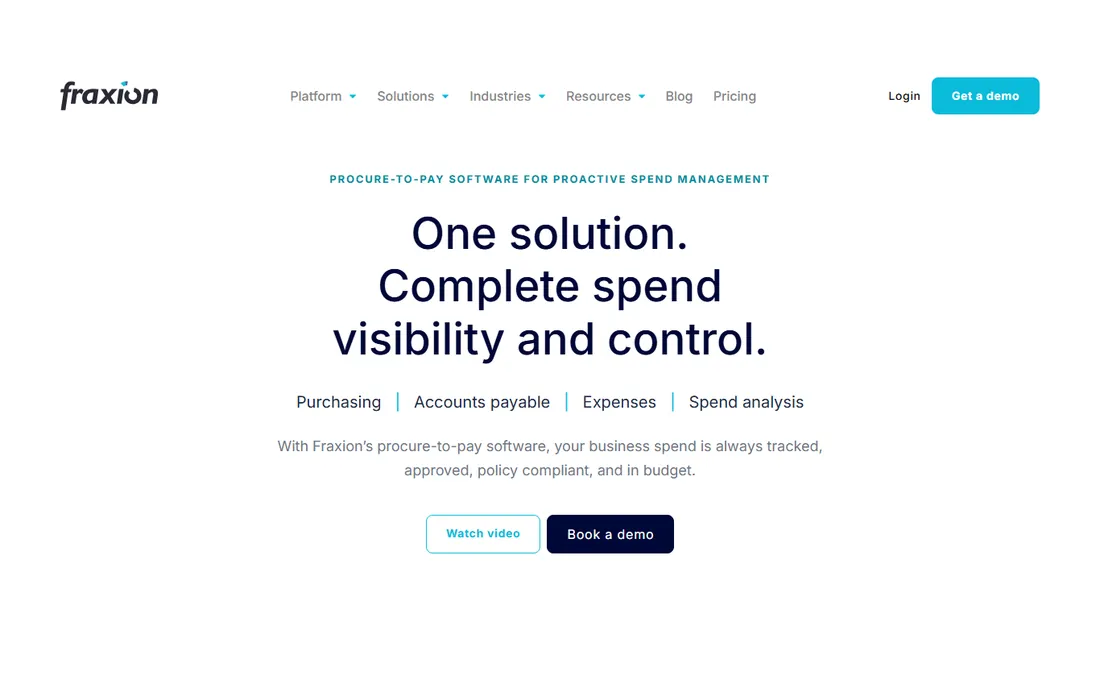
Fraxion's unusual strength at this price is genuine spend analytics inside the product. Most tools in this range give you reports to export; Fraxion gives you dashboards and benchmarking without a separate BI project. Approval workflows are configurable with a detailed audit trail, and the mobile app handles purchase, expense, and invoice approvals with live budget visibility. Integration coverage includes 50-plus PunchOut catalogs and major accounting systems.
Pricing starts at $399 per month for 10 to 25 employees, clearly above the entry-level tools here. Pick it when purchasing volume or compliance needs outgrow a simple PO tool but you're not ready for enterprise software with six-figure contracts.
What we like- Spend analytics, dashboards, and benchmarking built into the platform
- Strong audit trail on every approval
- Feature-rich mobile app
Watch out for- $399 per month starting price is steep for very small teams
- Can be more than lean teams need
#7
ProcureDesk
Best for: Finance-led teams whose biggest pain is AP accuracy and invoice matching
Visit procuredesk.com
Starting price$1,250/month (Growth, billed annually)
Free planFree trial (14 days)
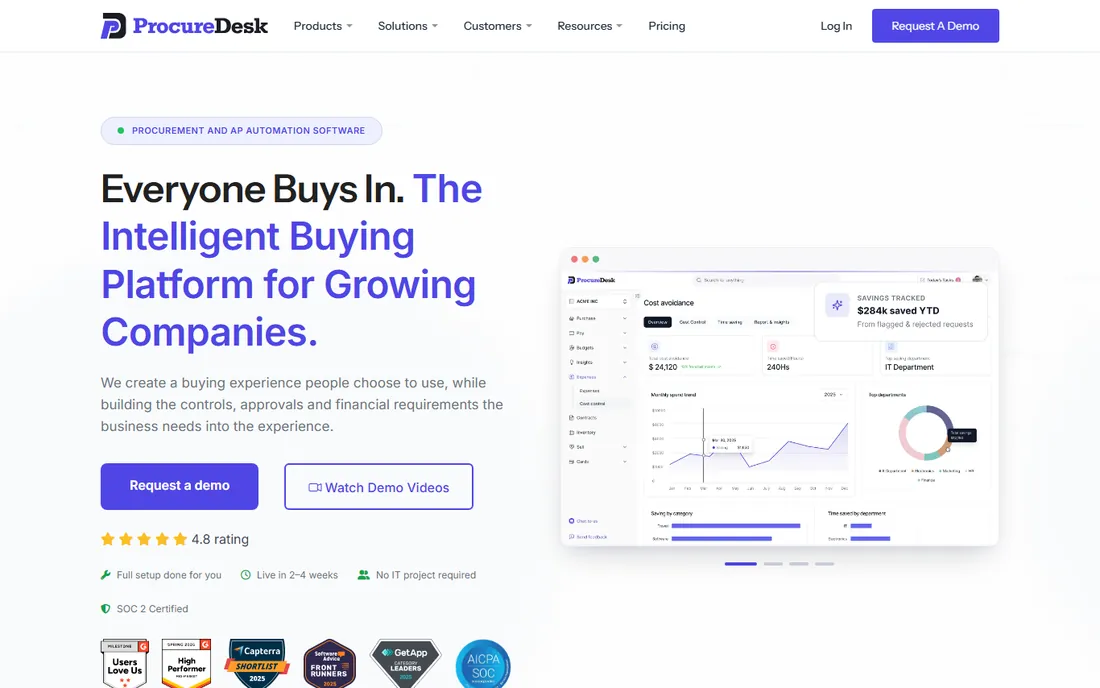
ProcureDesk approaches purchasing from the finance side: get the request and approval right, match every invoice three ways, and sync everything to the accounting system in real time. Its integrations stand out, with bidirectional sync across QuickBooks Online, Desktop, and Enterprise, NetSuite, Sage Intacct, and Business Central, and it even covers the Sage Intacct Web Services license competitors make you buy. Punchout catalogs let employees shop approved supplier sites directly, and onboarding is white-glove and free.
Plan around one limitation: ProcureDesk doesn't execute payments. You pay from your accounting system or connect a third-party tool, which many finance teams actually prefer. Pricing is published, a rarity worth crediting: Growth runs $1,250 per month billed annually, with a 14-day trial. It fits companies processing 50-plus POs or 100-plus invoices monthly where AP accuracy is the priority.
What we like- Real-time bidirectional sync with QuickBooks, NetSuite, Sage Intacct, and Business Central
- Punchout catalogs
- Free white-glove onboarding with 2-4 week go-live
Watch out for- No built-in payment execution, so you pay from your accounting system or a third party
- Pricing steps up noticeably between tiers
#8
Tipalti
Best for: Businesses paying suppliers, freelancers, or partners across borders
Visit tipalti.com
Starting priceSee website
Free planNo
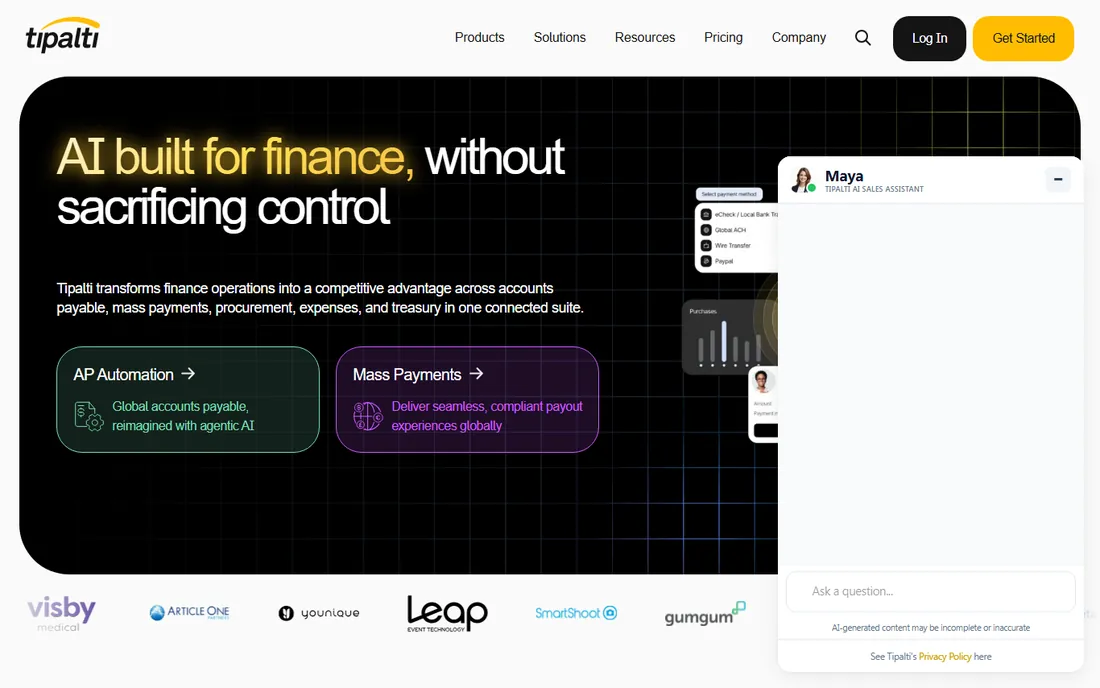
Tipalti started in global mass payments and built outward into AP automation, supplier management, and procurement. If you pay freelancers, agencies, or suppliers abroad, its self-service supplier onboarding, tax compliance handling, and validation rules solve problems the other tools here don't touch. Suppliers manage their own bank details and tax forms through a portal. PO management with two- and three-way matching sits alongside invoice automation and an optional expense module.
Pricing is quote-based with no public tiers, so budgeting needs a sales cycle. And while the payments engine is deeply proven, the procurement side is newer and less battle-tested than procurement-first competitors. It integrates with QuickBooks, NetSuite, and other majors. Treat this as a specialist pick: if every supplier is domestic, a simpler tool will serve you better.
What we like- Payments in 120 currencies across 200-plus countries
- Supplier self-onboarding with tax form collection
- More than 26,000 automated payment validation rules
Watch out for- Quote-based pricing with no public tiers
- The procurement module is newer than its payments engine
#9
Order.co
Best for: Multi-location teams buying physical goods at volume
Visit order.co
Starting priceSee website
Free planNo
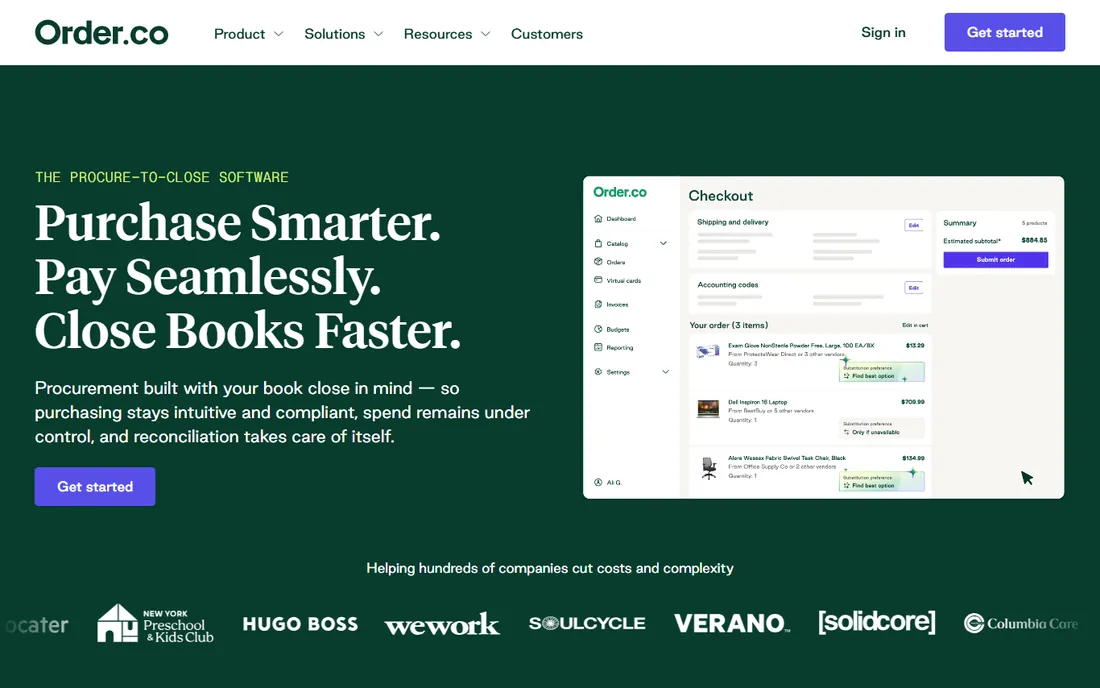
Order.co is the only tool here that doesn't stop at the approval. Once a request clears, the platform generates the PO, sends it to the vendor, places the order, and tracks fulfillment, with invoice matching built in because the bill flows through the same system. Buyers shop curated catalogs from a 40,000-plus vendor network, and every line item is coded to the right GL account, cost center, and entity at purchase time.
For multi-location businesses buying supplies or MRO goods across sites, that end-to-end automation removes real administrative work. Pricing is custom and tied to spend volume and location count. Note it targets indirect spend, not direct production materials.
What we like- Curated catalogs with automated ordering and fulfillment, not just approvals
- 40,000-plus vendor network
- Line-item GL coding applied at purchase
Watch out for- Custom quote-only pricing tied to spend volume
- Built for indirect goods rather than direct materials
How we chose
We compared tools with real small-business adoption rather than enterprise suites with a small-business tier bolted on. Every product above is live today and serves small or mid-sized companies. Pricing comes from each vendor's own website or published materials; where a vendor doesn't publish pricing we say so instead of guessing. Weaknesses reflect recurring patterns in public G2 and Capterra reviews. We did not test-drive the software.
What to look for before you buy
Match the tool to your buying volume
A team placing twenty orders a month needs something different from one placing two hundred. Lightweight tools like Tradogram and ControlHub shine under fifty monthly orders, where speed matters more than governance. Past hundreds of orders, the matching and ERP sync depth of ProcureDesk, Precoro, or Fraxion starts paying for itself. Buying too much software is as costly as buying too little, because complexity kills adoption.
Check how approvals actually route
Every vendor promises configurable approval workflows. Ask whether routing can split by amount, department, project, and vendor type at once, what happens when an approver is on vacation, and whether requesters can see where a request sits without asking finance. The answers separate tools that remove bottlenecks from tools that digitize them.
Confirm the accounting integration syncs both ways
"Integrates with QuickBooks" can mean anything from a nightly CSV export to real-time bidirectional sync. Ask which objects sync, how often, and who pays for connector licenses. A shallow integration means your team reconciles by hand at month-end, which defeats the purpose.
Ask about the total cost, not the starting price
Published prices rarely include everything. Implementation, punchout setup, advanced AP modules, and multi-entity support often sit in higher tiers. Get the three-year total in writing before signing, and confirm what happens to your data if you leave.
Pricing explained: what the monthly fee usually covers
Pricing falls into three patterns. Per-user pricing, like Ramp's $15 per user per month or Tradogram's $99 per month starting tier, scales with team size. Flat-rate platform pricing, like Precoro's $499 or Fraxion's $399 per month, covers the whole company and gets cheaper per head as you grow. Quote-only pricing, used by Procurify, Tipalti, Order.co, and ControlHub, means the vendor prices on users, volume, and modules; always ask for the three-year total.
Watch the standard exclusions: implementation fees, punchout catalog setup, advanced AP automation, multi-entity support, and API access frequently live in higher tiers. Free trials are worth using with your real approval chain rather than a canned demo.
Frequently asked questions
What is purchasing software?
Purchasing software, sometimes called procurement software, manages buying from request to payment. Employees submit requests, managers approve them against budgets, the system generates purchase orders, and invoices get matched before payment. The goal is control without bureaucracy: stopping duplicate orders and surprise invoices while keeping purchasing fast.
How much does purchasing software cost for a small business?
Entry-level tools start around $99 per month (Tradogram) or $15 per user per month (Ramp). Mid-range platforms with real budget controls run $399 to $499 per month (Fraxion, Precoro). Heavier mid-market options like ProcureDesk publish plans around $1,250 per month billed annually.
Do I need purchasing software if I already use QuickBooks?
QuickBooks handles purchase orders but not approval workflows, pre-commitment budget checks, punchout catalogs, or three-way matching. If one or two people do all the buying, QuickBooks alone may be enough. Once approvals move over email, a procurement layer on top of QuickBooks pays for itself in fewer errors and faster closes.
How long does implementation take?
Expect days to weeks. Tradogram customers often configure first workflows within days, Precoro quotes two to eight weeks, and ProcureDesk's onboarding runs two to four weeks. Timelines stretch with ERP mapping, punchout setup, or multi-entity configuration.
Can approvers handle requests from their phones?
Most tools offer mobile approvals; test before you buy. Procurify and Fraxion get the strongest mobile marks in reviews. Tradogram and ControlHub cover requests and approvals on mobile but push advanced configuration to the desktop.
Sources we checked (14)
- https://ramp.com/procurement
- https://ramp.com/blog/procurement-software-small-business
- https://precoro.com
- https://www.tradogram.com/product-overview
- https://www.tradogram.com/blog/12-best-purchasing-software-for-small-mid-size-companies
- https://www.g2.com/products/tradogram/pricing
- https://www.procurify.com/blog/best-spend-management-software/
- https://www.controlhub.com/procure-to-pay-software
- https://www.fraxion.biz/blog/best-purchase-order-software
- https://www.fraxion.biz/blog/fraxion-vs-tradogram
- https://www.procuredesk.com/purchase-order-software-compatible-sage-intacct/
- https://www.procuredesk.com/best-purchase-order-software-for-quickbooks/
- https://tipalti.com/blog/quickbooks-add-ons/
- https://www.order.co/blog/procurement/indirect-procurement-software/
Is your product missing or out of date?
We review this list regularly. Vendors can request a listing, send updated pricing or ask about featured placement.

Shihab Mia · Founder, Rankite
Shihab has spent more than a decade helping SaaS and e-commerce brands grow through search. He writes Rankite's software buying guides from pricing pages, documentation and public user reviews. More about Shihab.