How we make this list: we compare pricing pages, product documentation and public user reviews. Ratings come from G2, Capterra or Trustpilot, with the date we checked them.
Key takeaways
- Traditional publishers pay you, while self-publishing platforms and service companies charge you or take a cut, so the money flow tells you which route you are on.
- Most Big Five publishers do not accept unsolicited manuscripts, so a literary agent is the normal first step for a traditional deal.
- Amazon KDP and IngramSpark are the most used self-publishing platforms, with free setup and very different distribution strengths.
- Vanity presses that charge thousands and take your rights are the trap to avoid: keep your rights and check every contract clause before paying.
Quick comparison
Is your product missing or out of date?
We review this list regularly. Vendors can request a listing, send updated pricing or ask about featured placement.
The best publishing companies
Starting priceNo upfront cost
Free planYes
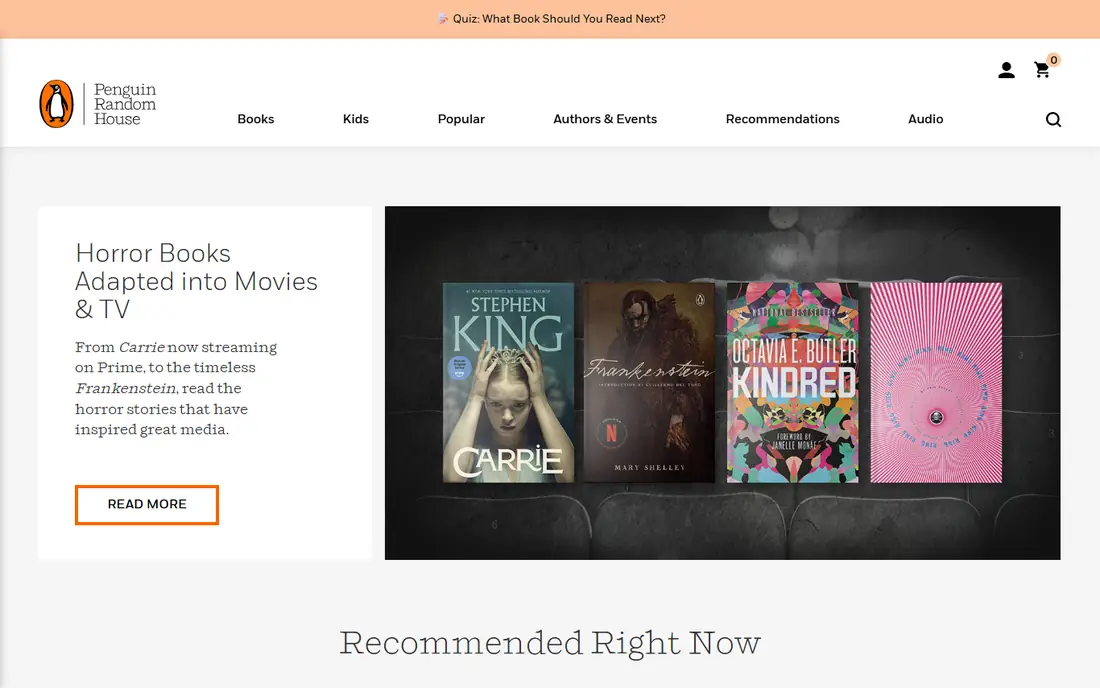
Penguin Random House is the largest trade publisher in the world, formed by the merger of Penguin and Random House, with imprints covering literary fiction, commercial fiction, children's books, cookbooks, memoir and history. A deal here brings professional editing, cover design, distribution and publicity that no self-published author can easily match, plus an advance paid against future royalties. For a manuscript with broad commercial appeal, this is the top of the traditional ladder.
The path in is narrow. The company does not accept unsolicited submissions, so in most cases a literary agent is still required, and competition for those agent slots is fierce. Print royalties typically run 15 to 25 percent on hardcovers, with ebooks around 25 percent of net receipts, which is far below self-publishing rates. Choose this route when prestige, reach and a professional team matter more than royalty percentage or speed.
What we like- Global distribution across 20 countries
- Deep editorial and marketing teams
- Prestigious imprints across genres
Watch out for- Does not accept unsolicited submissions
- Highly competitive to get signed
- Print royalties are modest next to self-publishing
Starting priceNo upfront cost
Free planYes
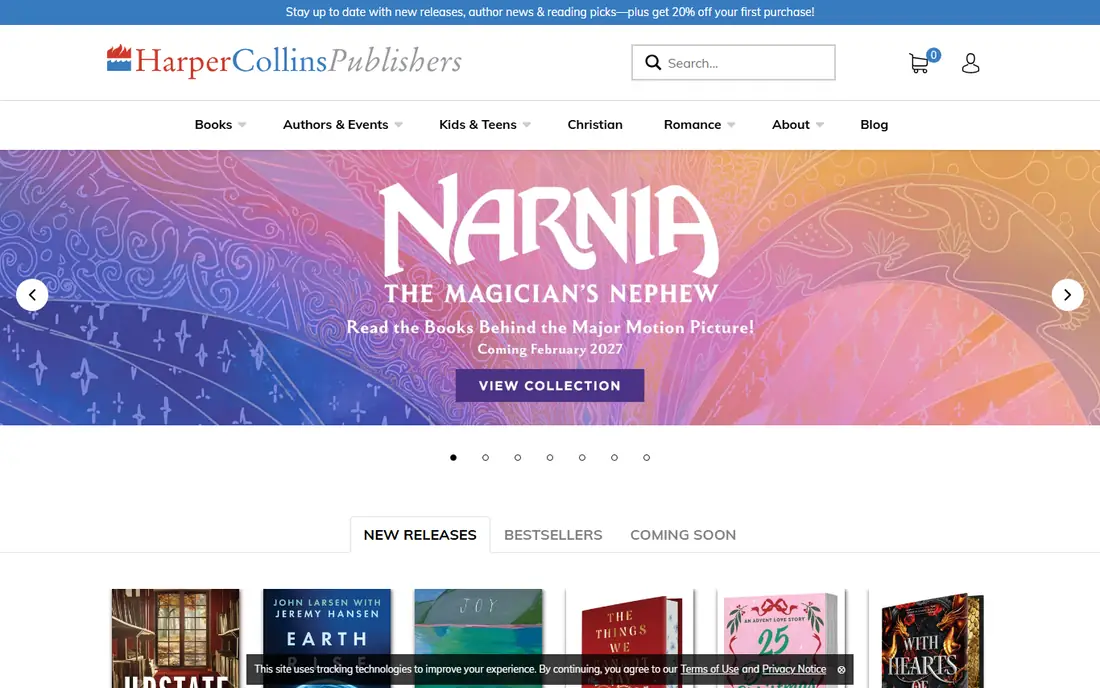
HarperCollins is one of the Big Five and one of the oldest names in the business, with imprints spanning nearly every commercial genre. Its scale brings the same advantages as its largest rivals: experienced editors, wide retail distribution, foreign rights teams and marketing muscle for books that break out. For genre fiction, memoir and practical nonfiction, HarperCollins has deep benches.
The downsides mirror the rest of traditional publishing. An agent is required in most cases, timelines from accepted manuscript to published book often run a year or more, and royalty rates on print trail self-publishing by a wide margin. Authors who want control over cover, price and timing will chafe here. Pick HarperCollins when a traditional deal with a storied house is the goal and patience is available.
What we like- More than 200 years in publishing
- Strong imprints for fiction, nonfiction and children's books
- Global distribution
Watch out for- Agent required in most cases
- Slow timelines from deal to shelf
- Lower print royalties than self-publishing
Starting priceNo upfront cost
Free planYes
Simon and Schuster rounds out the Big Five with a strong list in commercial fiction, nonfiction, children's books and audio. Its distribution arm also serves independent presses, including hybrid presses such as She Writes Press, which speaks to the strength of its retail reach. A Simon and Schuster deal brings the full traditional package: editing, design, publicity and placement in bookstores nationwide.
Entry is competitive, and unsolicited submissions are not accepted in most cases, so an agent remains the gatekeeper. Royalty rates follow standard traditional terms, and authors give up control over pricing and cover decisions. For writers who want a major house behind a commercial manuscript, Simon and Schuster belongs on the query list alongside its Big Five peers.
What we like- Strong distribution, including for partner presses
- Respected imprints for fiction and nonfiction
- Good audiobook program
Watch out for- Does not accept unagented submissions in most cases
- Competitive entry
- Standard traditional royalty rates
Starting priceNo upfront cost
Free planYes
Hachette Book Group is the US arm of a global publishing group, with imprints including Little, Brown, Grand Central and Orbit for science fiction and fantasy. Its literary reputation is strong, and its commercial lists cover thrillers, romance, business and celebrity memoirs. Distribution and marketing support match the other Big Five houses, with particular strength in literary fiction and genre series.
The usual traditional limits apply: an agent is required in most cases, acquisitions are selective, and the road from manuscript to shelf is long. Authors who self-publish can be on sale within days, while a Hachette book may take more than a year to appear. Choose Hachette when literary credibility and a major house's backing are worth the wait and the lower royalty rate.
What we like- Strong literary and commercial lists
- Respected imprints such as Little, Brown
- Good digital and audio programs
Watch out for- Agent required in most cases
- Selective acquisitions
- Slower process than self-publishing
Starting priceNo upfront cost
Free planYes
Macmillan is the smallest of the Big Five by revenue but carries an outsized reputation, especially through Tor Books for science fiction and fantasy and a strong children's division. Authors often describe its culture as more independent-minded than its larger rivals, and its imprints have long track records with debut novelists. For genre writers, particularly in science fiction and fantasy, Macmillan's Tor imprint is a destination in itself.
The entry barriers are the same as elsewhere in traditional publishing: an agent is required in most cases, competition is stiff, and royalty rates follow standard terms. Speed is also a factor, since traditional timelines run long. Pick Macmillan when the manuscript fits its standout imprints and a traditional deal with a respected house is the priority.
What we like- Respected imprints including Tor for science fiction and fantasy
- Reputation for author-friendly culture
- Strong children's lists
Watch out for- Agent required in most cases
- Competitive entry
- Standard traditional royalties
Starting priceFree
Free planYes
Amazon KDP is the most used self-publishing platform in the world, and its appeal is simple: free tools, fast publication and the largest ebook store as the shop window. Ebook royalties run 35 or 70 percent depending on price and territory, and paperbacks pay 60 percent of list price minus printing costs in most cases. Books typically appear on Amazon within about 72 hours of upload, which is a different universe from traditional timelines.
The limits are distribution and workload. KDP reaches Amazon well but bookstores and libraries poorly, and every job a publisher would do, editing, cover design, layout and marketing, falls on the author or on freelancers the author hires. Print costs eat into paperback earnings, especially for long books. Use KDP when speed, control and Amazon reach matter most, and pair it with IngramSpark if bookstore distribution matters too.
What we like- Free setup and publishing
- Ebook royalties of 35 or 70 percent
- Books live on Amazon within about 72 hours
Watch out for- Amazon-centric distribution
- Print royalties lower after printing costs
- You arrange editing, cover and marketing
Starting priceFree
Free planYes
IngramSpark is the distribution answer to KDP's Amazon focus. As part of Ingram, the largest book wholesaler, it places print books and ebooks with bookstores, libraries and online retailers beyond Amazon, using print-on-demand so no inventory is needed. Setup has carried no fee since 2023, ebook revenue runs 85 percent of net, and a 1.5 percent market access fee applies to books enabled for distribution.
The interface is less friendly than KDP's, and print costs vary by trim size, page count and color, so pricing a paperback takes care. Many authors use both platforms: KDP for Amazon sales and IngramSpark for everywhere else. Pick IngramSpark when bookstore and library availability matters, which is often the case for authors who do events, signings or local press.
What we like- Distribution to bookstores and libraries worldwide
- Ebook revenue of 85 percent of net
- Print-on-demand with no inventory
Watch out for- 1.5 percent market access fee on distributed books
- Interface is less friendly than KDP
- Print costs vary by format
Starting priceFree
Free planYes
Draft2Digital is the simplest route to wide ebook distribution. Upload once, and the book reaches Apple Books, Barnes and Noble, Kobo and other stores, with Draft2Digital keeping about 10 percent of the retail price and a one-time $20 activation fee in some cases. There is no exclusivity, so authors can also publish direct on Amazon through KDP at the same time.
The trade off is scope and margin. Draft2Digital handles ebooks only, so print distribution needs IngramSpark or another partner, and the 10 percent cut means less per sale than publishing direct where that is possible. Its interface is notably friendly, which matters for first-time authors. Use Draft2Digital when wide ebook reach with minimal admin is the goal, and accept the smaller per-sale share as the price of simplicity.
What we like- One upload reaches many ebook stores
- About 10 percent of retail price kept
- No exclusivity
- Simple interface
Watch out for- Ebook only, no print distribution
- Smaller cut per sale than direct platforms
- Fewer marketing tools than KDP
How we chose
We split the field into its three real routes, traditional, self-publishing platform and hybrid or service company, and picked the strongest names in each rather than ranking unlike things against each other. Traditional picks rest on scale, distribution and imprint reputation, while platform picks rest on cost, royalty terms and distribution reach. Pricing and royalty figures come from publisher guides, author organizations and platform documentation published in 2026.
We also weighed author risk. Companies that charge large fees while taking rights or permanent royalty cuts were excluded, and the article warns against that model directly. No publisher here was used hands-on for this guide; the picks rest on published terms, industry reporting and documented policies, not on personal publishing experience.
What to check before you choose
First decide which route fits your goal. A traditional deal suits manuscripts with broad commercial appeal and authors who want a professional team and bookstore reach, but it needs an agent and patience. Self-publishing suits authors who want control, speed and higher royalties, and who can arrange editing and cover design themselves or hire freelancers for roughly $1,000 to $5,000 for a professional launch.
Read every contract before signing or paying. Keep your rights wherever possible, confirm who controls price and cover, and check what happens to your files if the company closes. Beware any company that contacts you unsolicited offering to publish your book, and be wary of packages from $5,000 to $30,000 that promise marketing miracles. A named contact, a clear timeline and a straight answer on costs are the minimum signs of a legitimate partner.
Frequently asked questions
What is the best publisher for a first-time author?
For most first-time authors who want to publish this year, a reputable self-publishing platform such as Amazon KDP or IngramSpark is the practical choice, since traditional publishers rarely accept unagented work. If a traditional deal is the goal, query literary agents first and expect months of submissions before an offer.
How much does it cost to publish a book?
A traditional deal costs the author nothing upfront, since the publisher pays an advance and royalties. Self-publishing tools are free, while a professional launch with freelance editing and design typically runs $1,000 to $5,000. Full-service packages run $699 to $10,000, and most hybrid deals run $3,000 to $15,000 or more.
Do traditional publishers accept submissions directly?
Most major publishers do not accept unsolicited submissions, and their guides state that an agent is still required in most cases. Independent presses run occasional open windows, and self-publishing platforms accept authors year-round. Check each publisher's submissions page before sending anything.
What royalties do authors earn?
Traditional print royalties often run 15 to 25 percent on hardcovers, with ebooks around 25 percent of net receipts. KDP pays 35 or 70 percent on ebooks, IngramSpark pays 85 percent of net on ebooks, and Draft2Digital keeps about 10 percent of retail price. Individual contracts vary, so read the terms for your book.
Are publishers that charge money legitimate?
Yes, self-publishing is a service industry, and paying for editing, design, printing and distribution is normal. What is not legitimate is a company that charges a large fee and also takes your rights or a permanent royalty cut. Keep your rights and your royalties where possible, and walk away from vague contracts.
Can I publish on both KDP and IngramSpark?
Yes, and many authors do. KDP covers Amazon sales with fast setup, while IngramSpark covers bookstores, libraries and other retailers through print-on-demand. Use both when you want the widest reach, and price each edition with printing costs in mind.
Sources we checked (0)
Is your product missing or out of date?
We review this list regularly. Vendors can request a listing, send updated pricing or ask about featured placement.

Shihab Mia · Founder, Rankite
Shihab has 5+ years in B2B and SaaS SEO. He writes Rankite's software buying guides from pricing pages, documentation and public user reviews. More about Shihab.
 Penguin Random House
 HarperCollins
 Simon and Schuster
 Hachette Book Group
 Macmillan
 Amazon KDP
 IngramSpark
 Draft2Digital