How we make this list: we compare pricing pages, product documentation and public user reviews. Ratings come from G2, Capterra or Trustpilot, with the date we checked them.
Key takeaways
- IngramSpark is the best route into bookstores and libraries, with distribution to more than 40,000 retailers.
- Draft2Digital is the easiest wide-distribution aggregator, sending one upload to dozens of stores for about 10 percent of retail.
- Smashwords, now run by Draft2Digital, suits authors who want direct ebook sales with coupons and author-controlled pricing.
- Lulu is the best print specialist, with premium formats and up to 80 percent of profit on direct sales.
- Kobo Writing Life and Apple Books both pay 70 percent on qualifying ebooks and reach readers Amazon does not.
Quick comparison
Is your product missing or out of date?
We review this list regularly. Vendors can request a listing, send updated pricing or ask about featured placement.
The best alternatives to Kindle Direct Publishing
Starting price$0
Free planYes, title setup
IngramSpark is the standard alternative for authors who want bookstores and libraries to stock their print books. Its catalogue reaches more than 40,000 retailers and libraries worldwide, and it lets publishers set the wholesale discount and returns policy that bookstores expect. KDP hardcovers are not eligible for expanded distribution, so IngramSpark is also the route for a hardcover that needs wholesale reach.
Title setup is now free in many cases, though older guides still cite a $49 per title fee that is waived during promotional periods, so check the current terms before uploading. Ebook royalties run near 40 to 45 percent net, and print royalties near 60 percent minus printing costs. The settings take care: a discount that is too low discourages bookstores, while returns enabled without thought can produce surprise charges. For authors who want their book orderable in a physical store, IngramSpark is essential.
What we like- Distribution to 40,000 plus retailers
- Bookstore and library reach
- Hardcover distribution
Watch out for- Royalty math is complex
- Returns and discount settings need care
Starting price$20 one-time activation
Free planYes
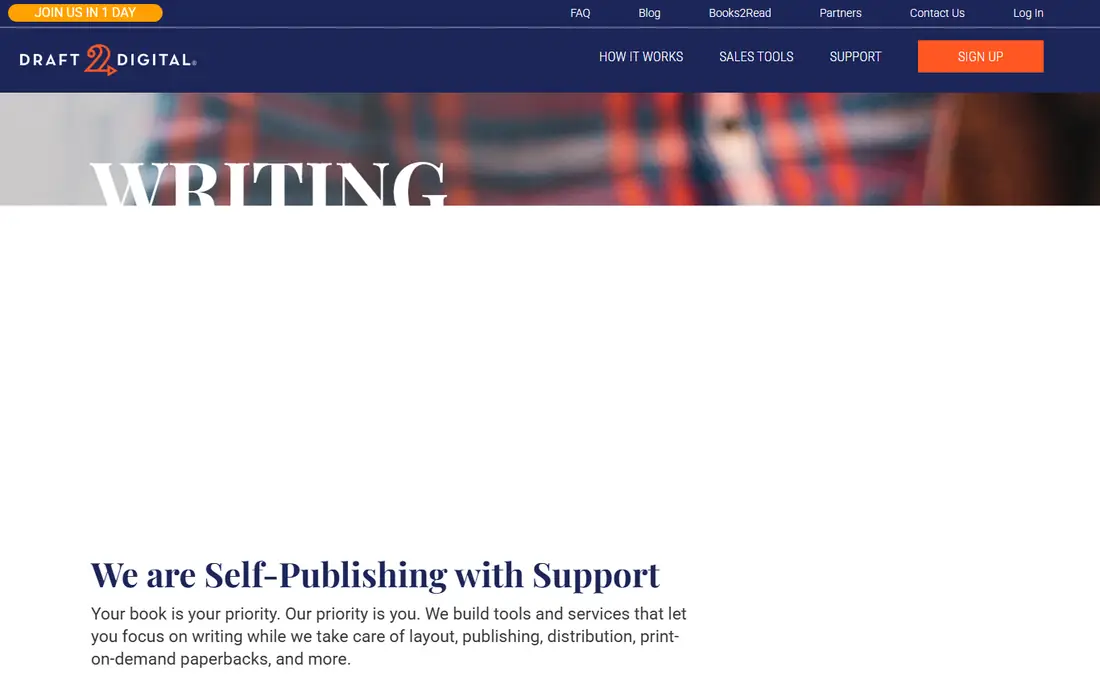
Draft2Digital is the easiest way to go wide with ebooks. Upload once, and the platform distributes to Apple Books, Barnes and Noble, Kobo, Scribd, OverDrive and dozens more, with no exclusivity requirement. The cost is a $20 one-time print activation in some cases and about 10 percent of the retail price per ebook sale, leaving roughly 60 percent net to the author after the retailer's share.
That 10 percent buys real convenience: one dashboard, one metadata record, and one payment instead of separate accounts at every store. Print distribution runs through partners rather than a native press, so print-focused authors usually pair Draft2Digital with IngramSpark. For an ebook author who wants every major store except Amazon from a single upload, Draft2Digital is the default choice.
What we like- One upload reaches dozens of stores
- No exclusivity
- Print via partners
Watch out for- Takes about 10 percent of retail per sale
- Print options are partner-based
Starting price$0
Free planYes
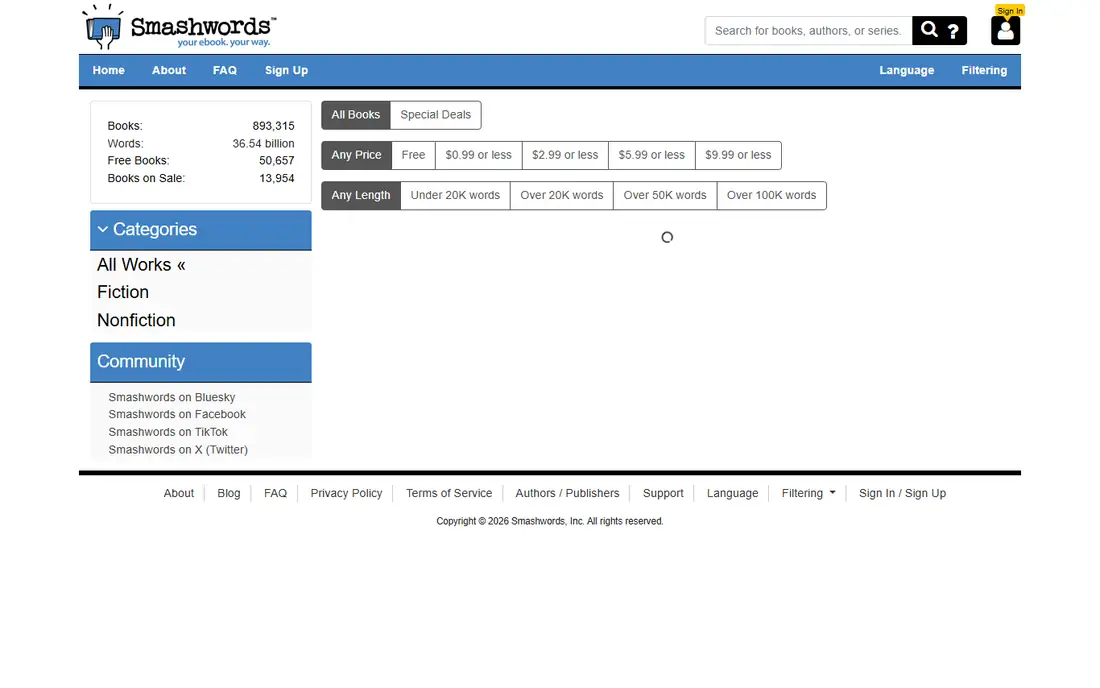
Smashwords has been run by Draft2Digital since 2022, and the two platforms now share much of their distribution. Smashwords still suits authors who want direct ebook sales with coupons: create a coupon, share it with a mailing list, and sell at a discount the author controls. Publishing is free, and the author keeps near 60 percent net on distributed sales.
The overlap with Draft2Digital means most authors should pick one of the two rather than managing both, since the same stores receive the same files. Smashwords' own storefront is smaller than Apple or Kobo, so its value is in direct sales tools rather than discovery. For an author with an existing audience who wants coupon-driven launches, Smashwords remains useful.
What we like- Free to publish
- Coupon codes for direct sales
- Author-controlled pricing
Watch out for- Now run by Draft2Digital, so features overlap
- Storefront is smaller than major retailers
Starting price$0
Free planYes
Lulu is the best print specialist among KDP alternatives, with premium print quality, jacketed hardcovers, photo books and specialty formats that KDP handles less well. Publishing is free, with print costs charged per book, and direct sales from a Lulu storefront pay up to 80 percent of profit. Distribution also runs through the Ingram network for retail reach.
Retail distribution is more limited than IngramSpark's direct wholesale setup, and per-unit print costs run higher than KDP's, which squeezes margins on retail sales. For authors selling direct from their own website, special editions, or premium formats such as photo books, Lulu's quality and direct margins make it the best print-first choice.
What we like- Premium print quality
- Jacketed hardcovers
- Up to 80 percent of profit on direct sales
Watch out for- Retail distribution is limited
- Per-unit print costs run higher than KDP
Starting price$0
Free planYes
Barnes and Noble Press is the direct route to NOOK readers and Barnes and Noble's online store, and it is free to publish. Ebook royalties run near 40 to 65 percent depending on price and channel, with print on demand available for paperbacks. For an author with a US audience, Barnes and Noble is the largest bookstore chain in the country, and its readers skew toward print and literary fiction.
The audience is far smaller than Amazon's, and discovery tools are limited, so Barnes and Noble Press works best as one channel in a wide strategy rather than a sole platform. Used alongside Draft2Digital or IngramSpark, it captures a readership that Amazon-only publishing misses entirely.
What we like- Free to publish
- Reaches NOOK and Barnes and Noble readers
- Print on demand
Watch out for- Smaller audience than Amazon
- Discovery tools are limited
Starting price$0
Free planYes
Kobo Writing Life is the best direct platform for international readers, with particular strength in Canada and Europe. Publishing is free, and ebooks priced above the qualifying threshold earn 70 percent, with library sales running through OverDrive. Kobo's devices and apps are popular outside the United States, which makes it the most important non-Amazon store for authors with a Canadian or European audience.
The US audience is smaller than Amazon's or Barnes and Noble's, so Kobo should be part of a wide strategy rather than the only channel. For an author who already reaches readers in Canada, the United Kingdom or continental Europe, Kobo Writing Life is the highest-royalty direct store available.
What we like- Free to publish
- 70 percent on qualifying ebooks
- Strong in Canada and Europe
Watch out for- Smaller US audience
- Library sales run through OverDrive
Starting price$0
Free planYes
Apple Books pays 70 percent on ebooks at any price, with no price matching pressure and no print option. Publishing is free, and the store reaches every iPhone, iPad and Mac owner through the preinstalled Books app. For an author whose readers are heavily Apple-based, that combination of high royalty and built-in audience is attractive.
The audience is limited to Apple devices, there is no print path, and the approval process can take longer than Amazon's. Apple Books works best inside a wide strategy, reached either directly or through Draft2Digital, rather than as a sole platform. For ebook-only authors with an Apple-heavy readership, the 70 percent royalty at any price is unmatched.
What we like- Free to publish
- 70 percent at any price
- No price matching pressure
Watch out for- Apple devices only
- No print option
- Approval process takes longer
Starting price$13.99 per month
Free planYes, 1 book
PublishDrive takes a different approach from Draft2Digital: a subscription starting near $13.99 per month billed annually, with zero percent commission on sales, instead of a per-sale cut. That math favors prolific authors: an author selling hundreds of copies a month keeps more under a flat subscription than under Draft2Digital's 10 percent, while an author selling a handful of copies pays more. A free plan covers one book across three channels for testing the fit.
PublishDrive also bundles AI-assisted metadata and marketing tools, and its store coverage rivals Draft2Digital's. For an author with a backlist of several books and steady monthly sales, the subscription model is the cheapest wide-distribution option. For a debut author with one book, Draft2Digital's free start is the safer choice.
What we like- Zero percent commission on subscription plans
- Wide store coverage
- AI tools
Watch out for- Monthly cost suits prolific authors better
- Free plan covers only one book
How we chose
We compared self-publishing platforms on royalty rates, distribution reach, print quality, upfront cost and exclusivity. We used vendor pricing pages and recent comparison guides for rates, and we favored platforms with free publishing or published subscription prices. We did not claim hands-on testing. Instead we weighed what each platform pays, where it sells, and what it costs to start, so authors can match a platform to their audience and backlist size.
Going wide without losing your mind
The most successful indie authors rarely pick just one platform. A common 2026 strategy is to publish on KDP for Amazon discoverability, use Draft2Digital for wide ebook distribution, and add IngramSpark for bookstore and library print reach. That combination covers the three places readers actually buy, without managing a dozen separate accounts.
Keep metadata consistent across platforms: the same title, subtitle, description, categories and keywords everywhere, so readers find the same book no matter where they search. Use one ISBN per edition where required, and remember that a free ISBN from a platform usually ties that edition to that platform. An author-owned ISBN costs money upfront but keeps every edition under the author's control, which matters when moving between distributors later.
Frequently asked questions
Do I need to leave KDP to use these alternatives?
No. Most of these platforms work alongside KDP, as long as you do not enroll in KDP Select, which requires 90-day exclusivity. Publish on KDP for Amazon, then use Draft2Digital or IngramSpark for everywhere else.
Which alternative pays the highest ebook royalty?
Apple Books and Kobo Writing Life both pay 70 percent on qualifying ebooks. Draft2Digital pays roughly 60 percent net after its 10 percent cut, and IngramSpark pays near 40 to 45 percent net on ebooks, though its print distribution reach is unmatched.
How do I get my book into physical bookstores?
Use IngramSpark, which distributes to more than 40,000 retailers and libraries and lets you set the wholesale discount and returns policy that bookstores expect. KDP's expanded distribution reaches some stores, but bookstores generally prefer Ingram's catalogue.
Is wide distribution better than Kindle Unlimited?
It depends on genre and audience. Romance, thriller and other high-volume fiction genres often earn more from Kindle Unlimited page reads than from wide sales. Literary fiction, nonfiction and children's books usually do better wide, since their readers shop across many stores.
What does publishing cost upfront?
Most platforms are free to publish: Draft2Digital, Smashwords, Lulu, Barnes and Noble Press, Kobo and Apple Books charge no setup fee. IngramSpark title setup is now free in many cases, and PublishDrive starts near $13.99 per month. Print costs are deducted from royalties, not paid upfront.
Sources we checked (8)
- https://myaccount.ingramspark.com
- https://www.draft2digital.com
- https://www.smashwords.com
- https://www.lulu.com
- https://press.barnesandnoble.com
- https://writinglife.kobobooks.com
- https://books.apple.com
- https://publishdrive.com
Is your product missing or out of date?
We review this list regularly. Vendors can request a listing, send updated pricing or ask about featured placement.

Shihab Mia · Founder, Rankite
Shihab has 5+ years in B2B and SaaS SEO. He writes Rankite's software buying guides from pricing pages, documentation and public user reviews. More about Shihab.
 IngramSpark
 Draft2Digital
 Smashwords
 Lulu
 Barnes & Noble Press
 Kobo Writing Life
 Apple Books
 PublishDrive