How we make this list: we compare pricing pages, product documentation and public user reviews. Rankite is independent; if a vendor ever pays for a featured spot, that listing is clearly labeled Partner.

Key takeaways
- Real estate development software splits into three jobs: developer-side financial control (Northspyre), construction execution (Procore, Buildertrend, Autodesk Forma, RedTeam, Fieldwire, JobTread) and capital program management (Kahua, CMiC). Know which seat you sit in before you buy.
- Residential developers and commercial developers buy different tools: Buildertrend and JobTread serve homebuilders and remodelers, while Procore, Autodesk Forma and CMiC serve commercial and heavy civil work.
- Every platform here is quote-based except Fieldwire, which publishes transparent per-user pricing with a limited free tier. Budget for implementation services on top of the license.
- Autodesk Construction Cloud has been renamed Autodesk Forma. Fieldwire continues to operate as Fieldwire by Hilti. CoConstruct was acquired by Buildertrend and is not listed separately here.
Quick comparison
| Tool | Best for | Starting price | Free plan |
|---|
 Procore Procore | Large general contractors, developers and owners running complex commercial projects | See website (volume-based pricing) | No |
 Buildertrend Buildertrend | Home builders, remodelers and specialty contractors who need sales through closeout | See website (custom quote) | No |
 Autodesk Forma Autodesk Forma | Teams already invested in Autodesk design tools and BIM workflows | See website (custom quote) | No |
 JobTread JobTread | Small to mid-sized contractors who want one price and fast setup | See website (one simple price, all features included) | No |
 Northspyre Northspyre | Real estate developers and owners managing projects from acquisition to stabilization | See website (custom quote) | No |
 Kahua Kahua | Owners and program managers running large, complex capital programs | See website (custom quote) | No |
 RedTeam RedTeam | Growing commercial GCs who want Procore-class features without enterprise pricing | See website (volume-based, predictable) | No |
 CMiC CMiC | Large contractors that want ERP financials and project management on one database | See website (custom quote) | No |
 Fieldwire by Hilti Fieldwire by Hilti | Field teams and subcontractors who need fast plans, tasks and punch lists | See website (per-user pricing) | Yes (limited tier) |
Is your product missing or out of date?
We review this list regularly. Vendors can request a listing, send updated pricing or ask about featured placement.
The best project management software for real estate development
Picture a developer running three ground-up multifamily projects while two more sit in pre-development. The GC runs Procore on the big job, the framer texts photos from a flip phone, the budget lives in a spreadsheet nobody trusts, and the lender wants a draw report by Friday. That gap, between the money side and the dirt side, is exactly what these tools exist to close. The best project management software for real estate development depends on which side of that gap you own.
#1
Procore
Best for: Large general contractors, developers and owners running complex commercial projects
Visit procore.com
Starting priceSee website (volume-based pricing)
Free planNo

Procore is the default answer in commercial construction, and for good reason. The platform covers the full project lifecycle: preconstruction bidding, document management, RFIs and submittals, drawings, punch lists, daily logs, scheduling, budgeting and job costing, all connected so field updates flow into financial reporting in real time. Its pricing model is unusual in a good way for developers: you pay based on annual construction volume, not per user, which removes the usual resistance to inviting every stakeholder onto the platform.
The honest caveat is scale. Procore is built for companies with real project volume and dedicated project management staff. Small residential builders will find it heavy and expensive, and even mid-sized GCs should budget for implementation services. For developers managing portfolios of commercial, multifamily or mixed-use projects, though, it remains the benchmark everything else is compared against.
What we like- The broadest construction platform with project management, financials, BIM, scheduling and analytics in one system
- Unlimited user licenses, so owners and subs join without per-seat friction
- Mature marketplace with hundreds of integrations including major ERPs
Watch out for- Volume-based pricing puts it out of reach for small contractors
- The breadth requires real implementation effort and training to get value
#2
Buildertrend
Best for: Home builders, remodelers and specialty contractors who need sales through closeout
Visit buildertrend.com
Starting priceSee website (custom quote)
Free planNo
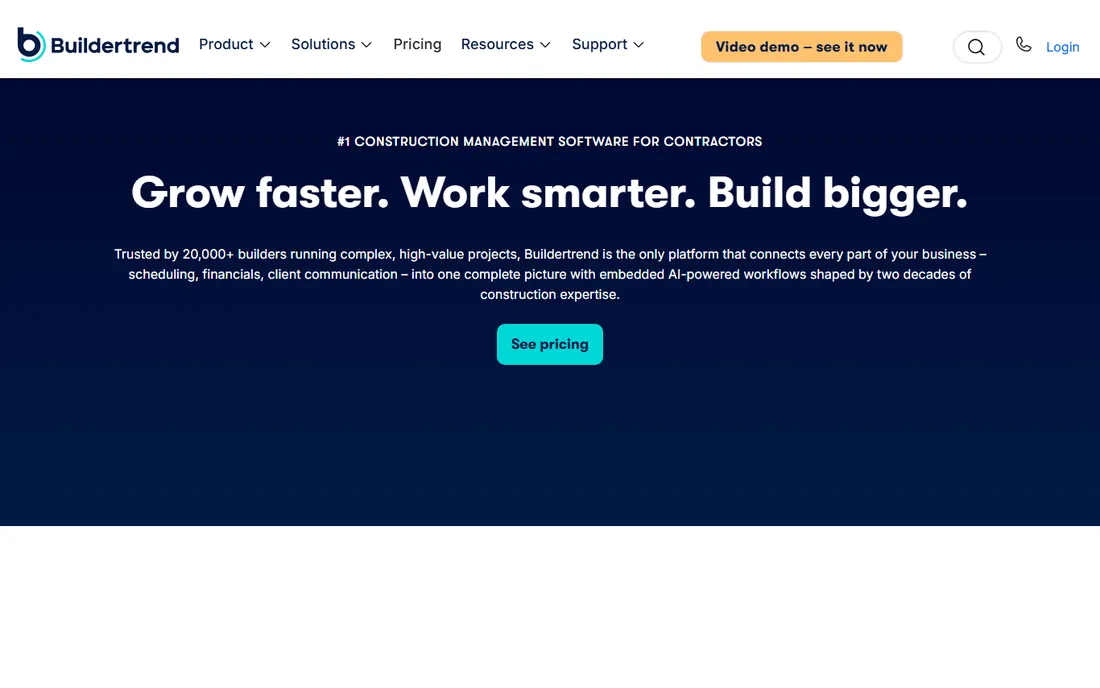
Buildertrend owns the residential side of this market. Where Procore thinks in terms of GCs and owners, Buildertrend thinks in terms of the builder who also has to sell the job: CRM and lead tracking, estimates that connect directly to job costing, selections management, change orders, client portals with real-time visibility and online payments. For a custom home builder or remodeler, that sales-to-closeout coverage is the whole business in one platform.
The acquisition of CoConstruct in 2021 consolidated the residential segment, and Buildertrend has since expanded into commercial work too, but its DNA is residential. Pricing is quote-based and the 12-week onboarding program tells you this is a serious commitment, not a signup-and-go app. If your development work is residential, start here. If it is commercial or heavy civil, start with Procore or Autodesk Forma.
What we like- Purpose-built for residential construction with CRM, estimating, scheduling, financials and client portals
- Strong client communication features that generate referrals
- Guided onboarding program with dedicated managers
Watch out for- Residential-first, so commercial developers get less fit
- Pricing is quote-only and the full feature set can take months to adopt completely
Starting priceSee website (custom quote)
Free planNo
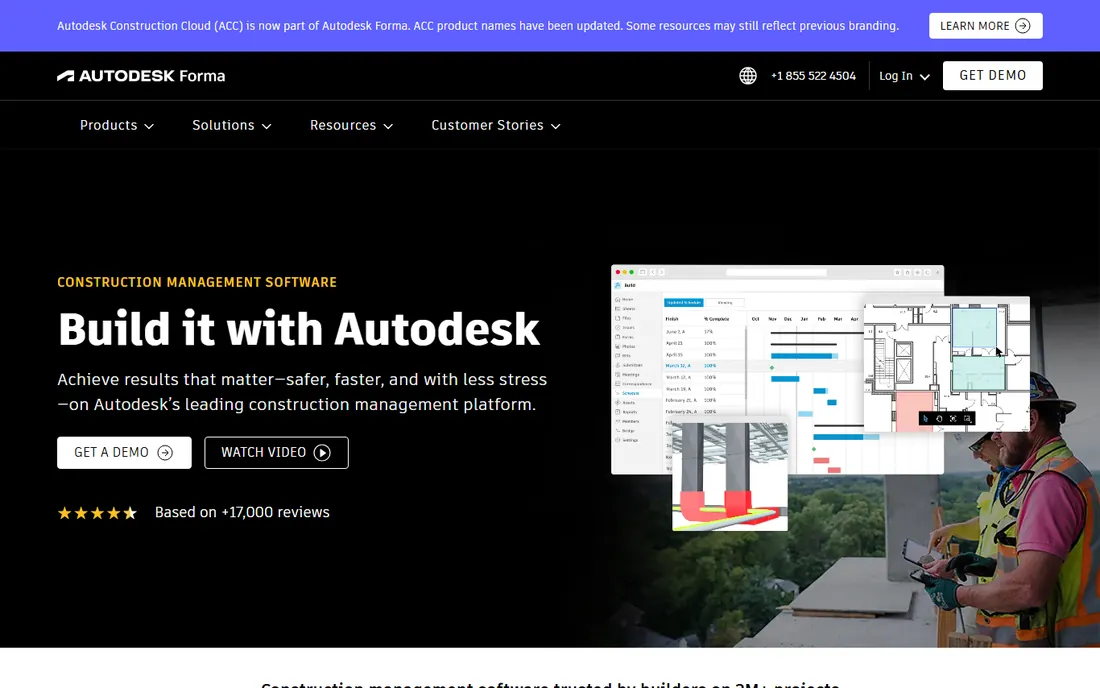
Autodesk Forma is the new name for Autodesk Construction Cloud, and buyers should use the current name going forward. The platform combines Autodesk Build (project and field management), Takeoff (2D and 3D estimating), BIM Collaborate and Docs into one connected environment. The strategic advantage is obvious: if your architects and engineers already live in Revit and AutoCAD, the design-to-construction data flow is shorter here than anywhere else.
The fit is design-led projects and teams with BIM maturity. Contractors who never touch a model will not get the headline benefits, and the platform's enterprise DNA shows in both pricing and implementation. But for developers running complex projects where design coordination drives cost, the BIM-native approach genuinely differentiates it from Procore.
What we like- Deep BIM and design-data integration no competitor can match
- Modules for build, takeoff, docs and cost management that share one data environment
- 400-plus integrations including ERPs and analytics tools
Watch out for- The rename from Autodesk Construction Cloud to Autodesk Forma is still rippling through documentation and partner content
- Enterprise pricing and complexity for smaller teams
#4
JobTread
Best for: Small to mid-sized contractors who want one price and fast setup
Visit jobtread.com
Starting priceSee website (one simple price, all features included)
Free planNo
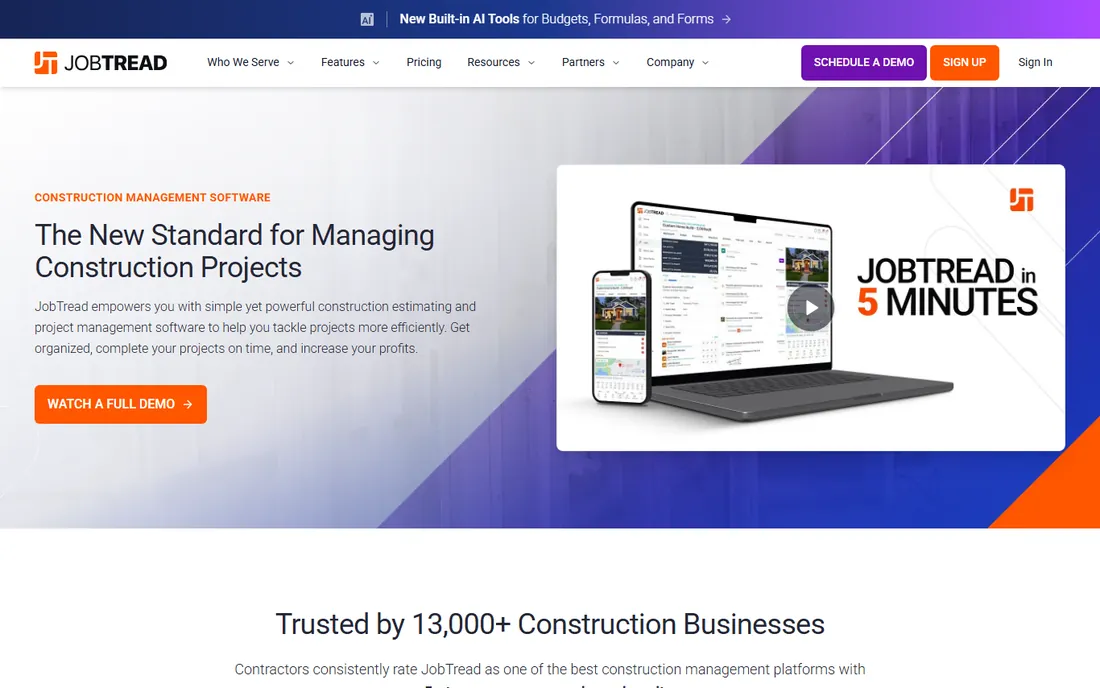
JobTread is the budget-first choice for small and mid-sized contractors, and its pitch is refreshingly simple: one price, all features, unlimited jobs and unlimited portal users. The platform covers sales and estimating through project management to job finances, with a 30-day money-back guarantee on monthly subscriptions that lowers the risk of trying it. Reviewers consistently praise the support and the estimating tools, and it carries a stack of G2 and Capterra awards for ease of use and value.
For a developer self-performing work or a GC running residential and light commercial jobs, JobTread hits the sweet spot between spreadsheet chaos and enterprise software. It will not run a billion-dollar capital program, and it does not try to. The one frustration is that the "simple price" is not published on the website, so the simplicity stops at the pricing page.
What we like- One flat price with all features, unlimited jobs, documents and portal users
- Budget-first design with strong estimating, job costing and change order tools
- Consistently top-rated customer support on review sites
Watch out for- No published price on the site, so you still have to talk to sales
- Less depth for large commercial programs than Procore or CMiC
- Smaller integration ecosystem
#5
Northspyre
Best for: Real estate developers and owners managing projects from acquisition to stabilization
Visit northspyre.com
Starting priceSee website (custom quote)
Free planNo
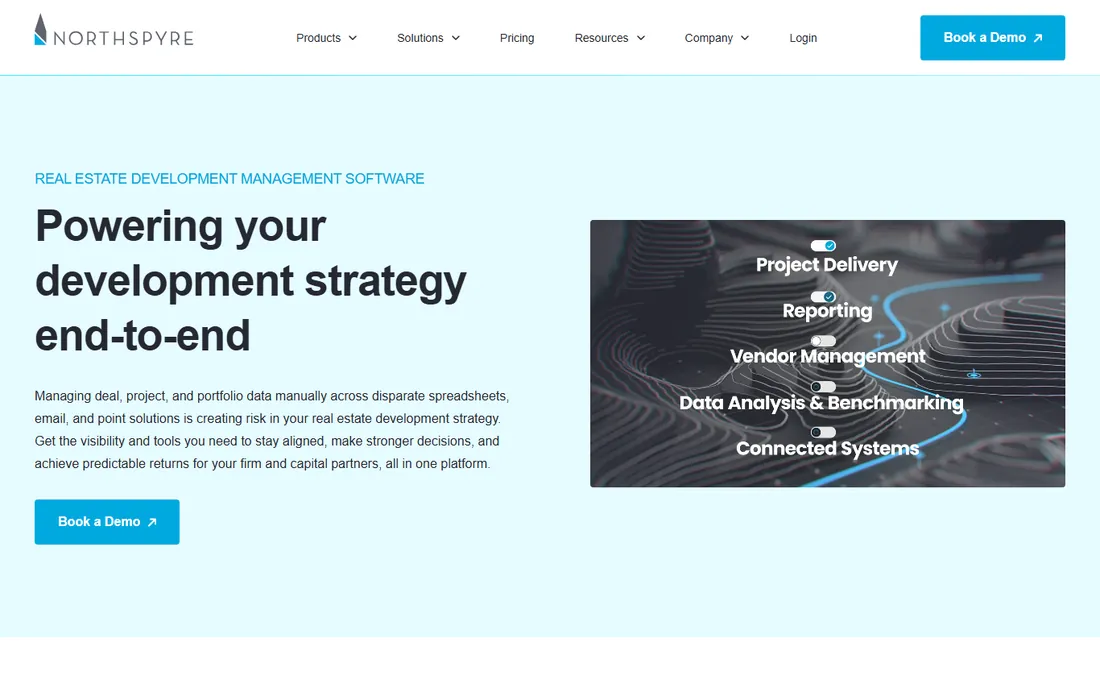
Northspyre is the only tool here built specifically for developers rather than contractors, and that distinction is the whole point. Construction tools manage the build; Northspyre manages the development: deal underwriting and pipeline, budget creation from historical cost data, bid management, draw and funding workflows, change order negotiation and portfolio-level analytics across every project. It is designed for the developer's finance and project management teams, not the GC's field staff.
The pitch is predictable outcomes: automated admin, real-time financial visibility and benchmarks drawn from billions in managed project volume. The customer base is national developers and owner-operators, and the platform integrates with the accounting systems developers already use. The gap to understand is that Northspyre does not run the jobsite. Pair it with Procore, Buildertrend or Fieldwire on the construction side and it completes the picture.
What we like- The only platform here built for the developer's seat, covering deal modeling, budgeting, draw management and portfolio analytics
- Automation that replaces spreadsheet-based development accounting
- Purpose-built for multifamily, office, retail, hospitality and mixed-use
Watch out for- Enterprise pricing for a specialized audience
- Developers who also self-perform construction will still need a field tool alongside it
#6
Kahua
Best for: Owners and program managers running large, complex capital programs
Visit kahua.com
Starting priceSee website (custom quote)
Free planNo
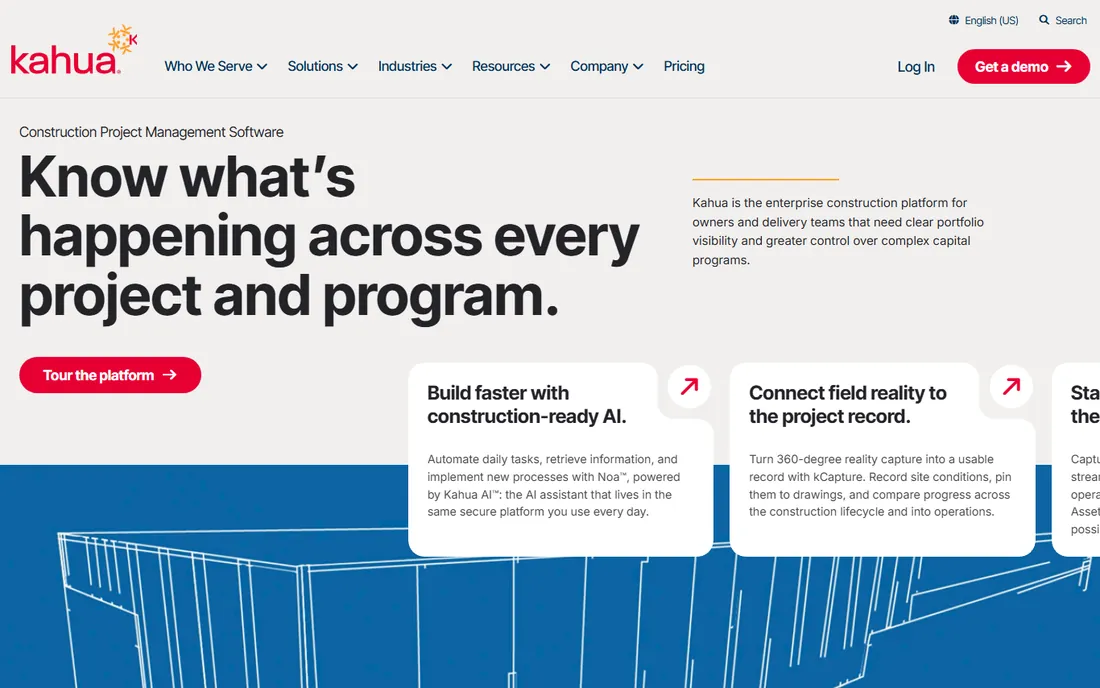
Kahua plays in the capital-program space, where the owner manages dozens of projects as a portfolio rather than running individual jobs. The platform covers capital planning and funding, cost and risk control, project delivery and asset handover, with a low-code layer that lets each organization adapt workflows to its own governance. Its asset-centric approach to handover is a genuine differentiator for owners who operate what they build: hospitals, universities, agencies and corporate real estate teams.
The security story matters here. Kahua is FedRAMP-authorized, which makes it one of the few construction platforms cleared for federal work, and it serves government, healthcare and education owners heavily. For a private developer running a handful of projects, this is more platform than needed. For an owner-operator with a real capital program and compliance requirements, it belongs on the shortlist.
What we like- Asset-centric project management with strong handover and lifecycle features
- Low-code platform lets owners build custom apps without re-platforming
- FedRAMP-authorized with the security posture public owners require
Watch out for- Built for complex programs, so smaller developers will find it heavy
- Quote-only enterprise pricing with services-led implementations
#7
RedTeam
Best for: Growing commercial GCs who want Procore-class features without enterprise pricing
Visit redteam.com
Starting priceSee website (volume-based, predictable)
Free planNo
RedTeam is the mid-market commercial GC's alternative to Procore, and it says so openly. The platform connects preconstruction through closeout with estimating, scheduling, document management, job costing and financials, with the emphasis on knowing whether a job is making money before it is too late. Its pricing philosophy is the differentiator: volume-based like Procore, but marketed as predictable, with an explicit promise of no surprise increases at renewal.
The product has two flavors, RedTeam Flex for full commercial management and RedTeam Go for smaller contractors, which lets companies grow within the family. Reviewers note the financial reporting strength and the hands-on support. The tradeoff is ecosystem: fewer integrations, fewer pre-built connectors and less market gravity than the giants. For a growing GC that feels overcharged by enterprise platforms, that tradeoff usually pencils out.
What we like- Pricing tied to project volume with a price-lock approach that avoids renewal surprises
- Real-time job costing, change order control and field-to-finance integration
- Built specifically for small and mid-sized commercial GCs
Watch out for- Smaller ecosystem and fewer third-party integrations than Procore
- The brand is less known, which can matter when owners mandate a platform
#8
CMiC
Best for: Large contractors that want ERP financials and project management on one database
Visit cmicglobal.com
Starting priceSee website (custom quote)
Free planNo
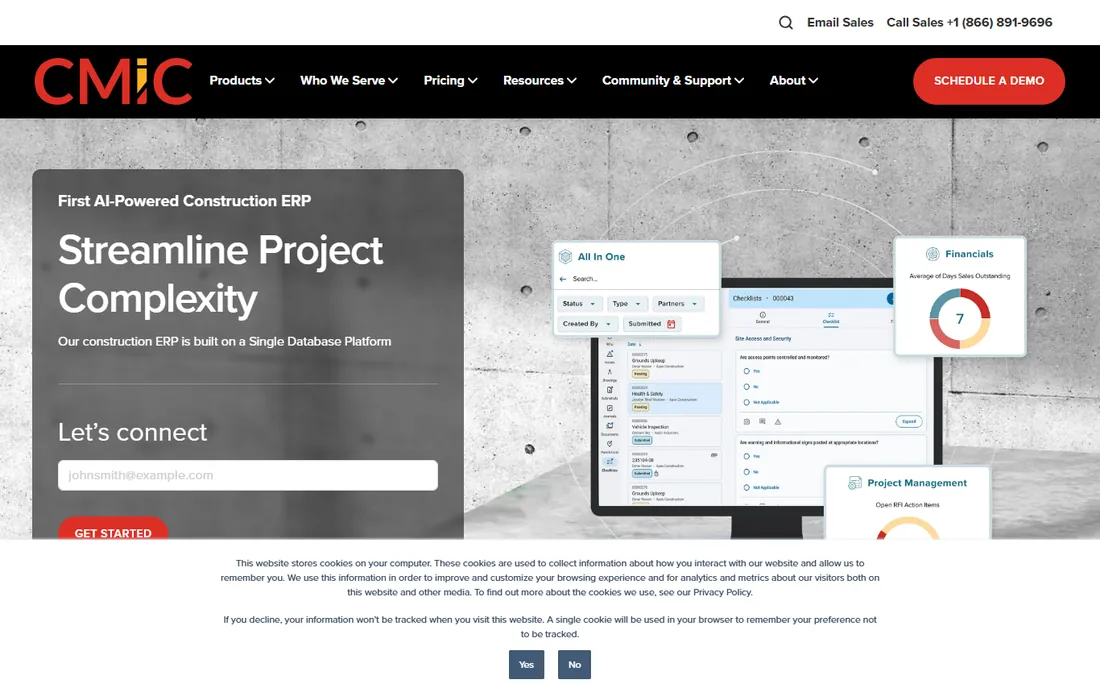
CMiC is the ERP-first option, and that framing decides the sale. Where Procore bolts financials onto a project management platform, CMiC starts from a single database that runs construction accounting, job costing, project controls, human capital management and payroll as one system. For large GCs and heavy civil contractors, eliminating the reconciliation between the PM tool and the accounting system is worth real money: no duplicate entry, no sync failures, one source of financial truth.
The cost of that unity is implementation. CMiC deployments are ERP projects with ERP timelines and consulting bills, and the platform is overkill for anyone below the mid-market. But a quarter of ENR's top 400 contractors use it, and for developers who self-perform at scale or contractors where financial control is the top priority, the single-database architecture is the strongest argument in the category.
What we like- True single-database ERP: financials, project management, project controls, HCM and payroll share one system with no sync issues
- Deep construction accounting including union payroll and equipment management
- Strong in heavy civil and large GC segments
Watch out for- ERP implementations are long and expensive, with consulting costs dwarfing the license
- The interface and UX reflect its ERP heritage rather than modern SaaS design
#9
Fieldwire by Hilti
Best for: Field teams and subcontractors who need fast plans, tasks and punch lists
Visit fieldwire.com
Starting priceSee website (per-user pricing)
Free planYes (limited tier)
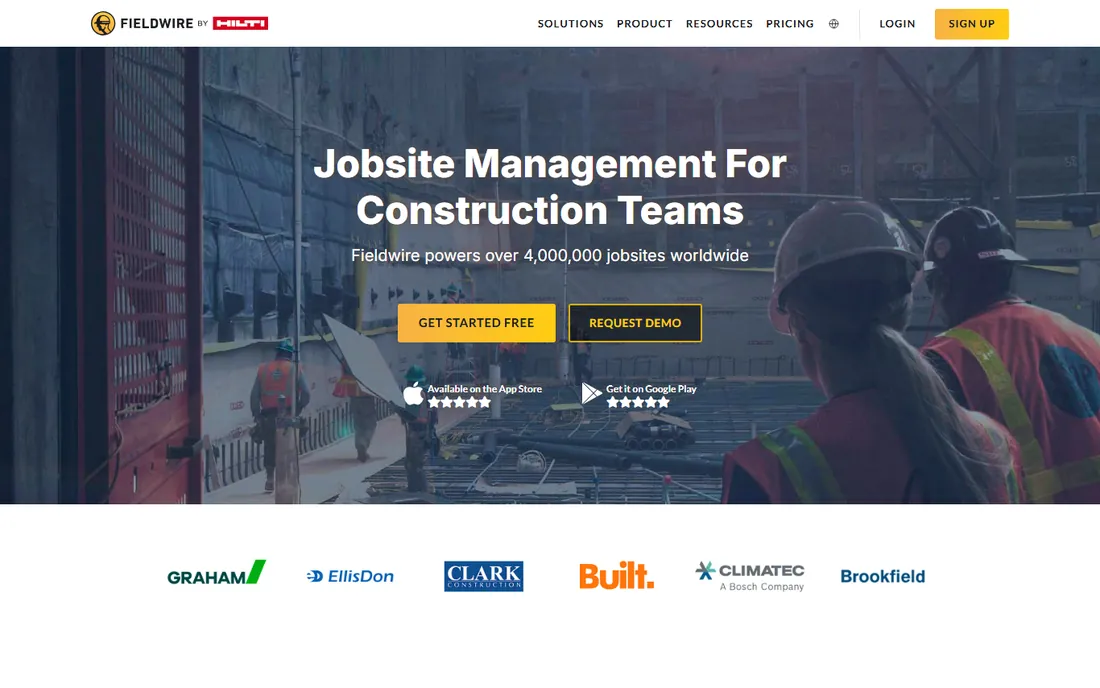
Fieldwire is the field-first tool, built for the people doing the work rather than the people managing the spreadsheet. Plan viewing with automatic versioning and hyperlinks, task management, punch lists, daily reports, custom forms and photo documentation all work on mobile, much of it offline, which is why adoption rates are the product's real selling point. It operates as Fieldwire by Hilti following the 2021 acquisition, with Hilti's backing behind continued development.
The pricing is the most transparent in this roundup: published per-user tiers with unlimited sheets and projects on paid plans, plus a limited free tier for small teams to start. The limitation is scope. Fieldwire does not do estimating, deep financials or developer-side budgeting, so most companies use it alongside a heavier platform. For a developer, that makes it the ideal complement: Northspyre or Procore for the money, Fieldwire for the field.
What we like- Field-first mobile experience that foremen actually adopt, with offline access
- Transparent per-user pricing with unlimited sheets and projects on paid plans
- Backed by Hilti with 4 million-plus projects run on the platform
Watch out for- Not a full financial or estimating platform, so it complements rather than replaces Procore-class tools
- Advanced features like RFIs and budgeting sit on higher tiers
Expect quote-based pricing almost everywhere. Procore prices on annual construction volume with unlimited users. Buildertrend, Autodesk Forma, Kahua, CMiC and Northspyre all sell custom annual contracts scoped to company size, project volume and modules. RedTeam ties pricing to project volume with a predictability promise. JobTread sells one flat price with everything included but does not publish the number, and Fieldwire publishes per-user tiers with a limited free plan.
The license is only part of the budget. Implementation services, data migration, ERP integrations and training are scoped separately, and for the enterprise platforms they routinely match or exceed the first year of software. Ask every vendor for the all-in first-year number, including services, and negotiate a pilot: a paid trial on one live project tells you more about adoption than any demo. For developers, also budget the pairing: a developer-side platform like Northspyre plus a field tool like Fieldwire is two contracts, not one.
Matching the software to your development role
Start from your seat at the table. If you are the developer or owner managing capital, Northspyre is the only purpose-built choice here, and Kahua fits if you run a formal capital program with compliance needs. If you are the GC executing the work, Procore is the commercial default, Buildertrend the residential default, RedTeam the value alternative and JobTread the simple one. If design coordination drives your risk, Autodesk Forma earns its place. If financial control across a large contracting business is the priority, CMiC's ERP architecture wins.
Most development companies end up with two tools, not one: something for the money and something for the field. Northspyre plus Fieldwire, Procore plus your accounting ERP, Buildertrend plus QuickBooks. Map the handoff between the two before you buy, because the integration between your developer platform and your construction platform is where these stacks succeed or fail. A clean data flow from budget to draw to job cost is worth more than any single feature.
How we chose
We started with the searches developers run: project management software for real estate development, construction management software and developer project management platforms. For each candidate we opened the vendor's own site, checked for published pricing, read product documentation and practitioner discussion on Reddit and G2, and compared development-lifecycle coverage, construction depth, financial control and company-size fit. Every price shown comes from the vendor's own pages; where pricing is quote-only we wrote "See website" rather than repeating third-party estimates. CoConstruct was removed from the list after confirming its acquisition by Buildertrend, and Autodesk Construction Cloud is listed under its current name, Autodesk Forma.
Frequently asked questions
What is the difference between construction PM software and developer-focused platforms?
Construction PM tools like Procore, Buildertrend and Fieldwire manage the build: schedules, drawings, RFIs, punch lists and job costing for the contractor. Developer-focused platforms like Northspyre manage the development: deal underwriting, budgets, draws, funding and portfolio analytics for the owner. Many companies need one of each.
Do I need Procore or Buildertrend for a single development project?
Probably not. These platforms pay off across portfolios and repeat projects, where standardized workflows and historical cost data compound. For a single project, a lighter tool like Fieldwire for the field plus your existing accounting software usually covers it, and you avoid a heavy implementation for a one-time job.
Can these tools replace my accounting software?
Mostly no. Procore, Buildertrend and RedTeam integrate with QuickBooks, Sage and other accounting systems rather than replacing them. CMiC is the exception: it is a full construction ERP with accounting built in. Northspyre sits above accounting as a development management layer. Plan the integration, not the replacement.
How long does implementation take?
It ranges from days to a year. Fieldwire and JobTread can be running in weeks. Buildertrend runs a structured 12-week onboarding program. Procore, Autodesk Forma, Kahua and CMiC are multi-month implementations with professional services, especially when ERP integration is involved. Ask for a phased plan with a live pilot project.
Do these tools work for international projects?
Procore, Autodesk Forma, CMiC and Fieldwire all operate globally with multi-currency and multi-language support. Buildertrend and JobTread are strongest in North America, Australia and New Zealand. Northspyre is US-focused. Confirm currency, tax and compliance coverage for your markets during the demo.
Sources we checked (9)
- https://www.procore.com/
- https://buildertrend.com/
- https://construction.autodesk.com/
- https://jobtread.com/
- https://www.northspyre.com/
- https://kahua.com/
- https://redteam.com/
- https://cmicglobal.com/
- https://www.fieldwire.com/
Is your product missing or out of date?
We review this list regularly. Vendors can request a listing, send updated pricing or ask about featured placement.

Shihab Mia · Founder, Rankite
Shihab has spent more than a decade helping SaaS and e-commerce brands grow through search. He writes Rankite's software buying guides from pricing pages, documentation and public user reviews. More about Shihab.