How we make this list: we compare pricing pages, product documentation and public user reviews. Rankite is independent; if a vendor ever pays for a featured spot, that listing is clearly labeled Partner.
Key takeaways
- Trimble AutoBid Mechanical is the best-known name in mechanical estimating, with deep labor databases built for commercial HVAC, piping, and plumbing work.
- FastDUCT and FastPIPE from FastEST split duct and pipe estimating into two focused tools, which suits shops that specialize in one trade.
- Wendes Systems is the only tool on this list with a clearly advertised free trial, making it the easiest to evaluate hands-on.
- QuoteSoft includes a year of unlimited support with purchase, a meaningful perk for shops without in-house IT.
- Almost every tool in this category keeps pricing behind a quote, so plan your evaluation around demos and trials rather than price lists.
Quick comparison
Is your product missing or out of date?
We review this list regularly. Vendors can request a listing, send updated pricing or ask about featured placement.
The best mechanical estimating software
Starting priceSee website
Free planNo
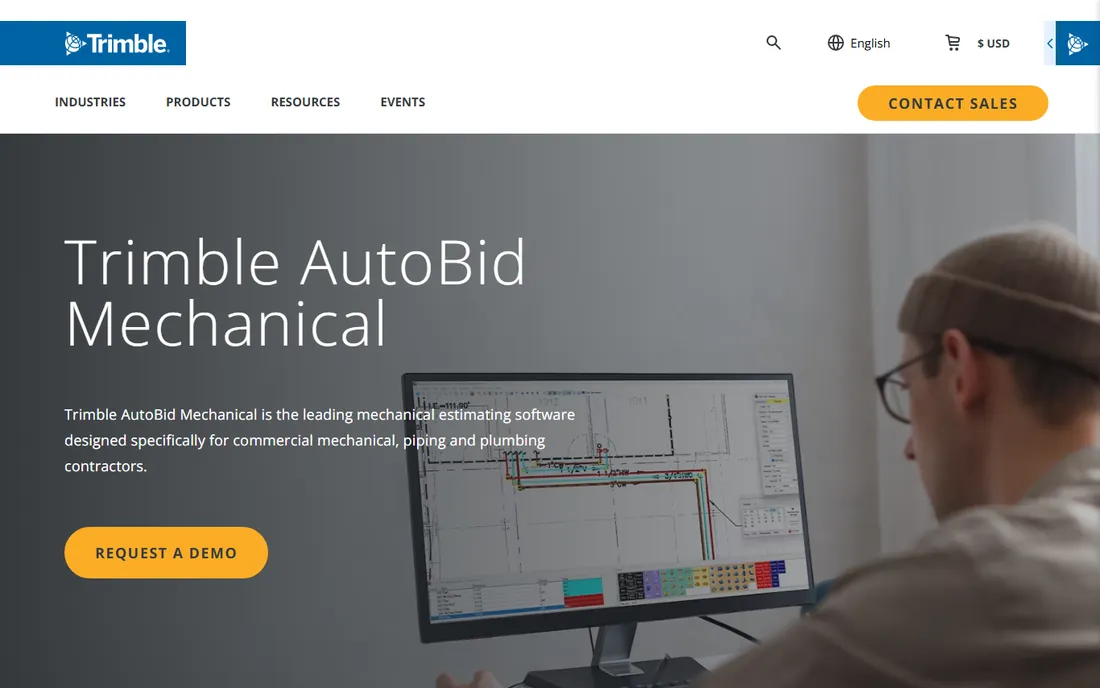
Ask ten commercial mechanical estimators what they use and most will name AutoBid. The product earned that position through its databases: decades of labor units for duct, pipe, and plumbing fittings, organized so an estimator can price a complex system without building every assembly from scratch. It handles the full estimating workflow from takeoff through bid summary, and it connects to Trimble's broader MEP ecosystem for layout and project management.
The honest weakness is transparency. Trimble publishes no pricing for AutoBid, and the buying process runs through sales, which makes it hard to compare against alternatives on cost. The interface also shows its age compared with cloud-native tools. Still, for a commercial mechanical contractor bidding hospitals, schools, and high-rises, the depth of the labor database is the deciding factor, and nothing else in this list matches it.
What we like- Deep labor and material databases for HVAC, piping, and plumbing
- Integrates with Trimble's MEP layout and project tools
- Long track record on large commercial jobs
Watch out for- Pricing is quote-only with nothing published
- Desktop heritage means the interface feels dated next to newer cloud tools
Starting priceSee website
Free planNo
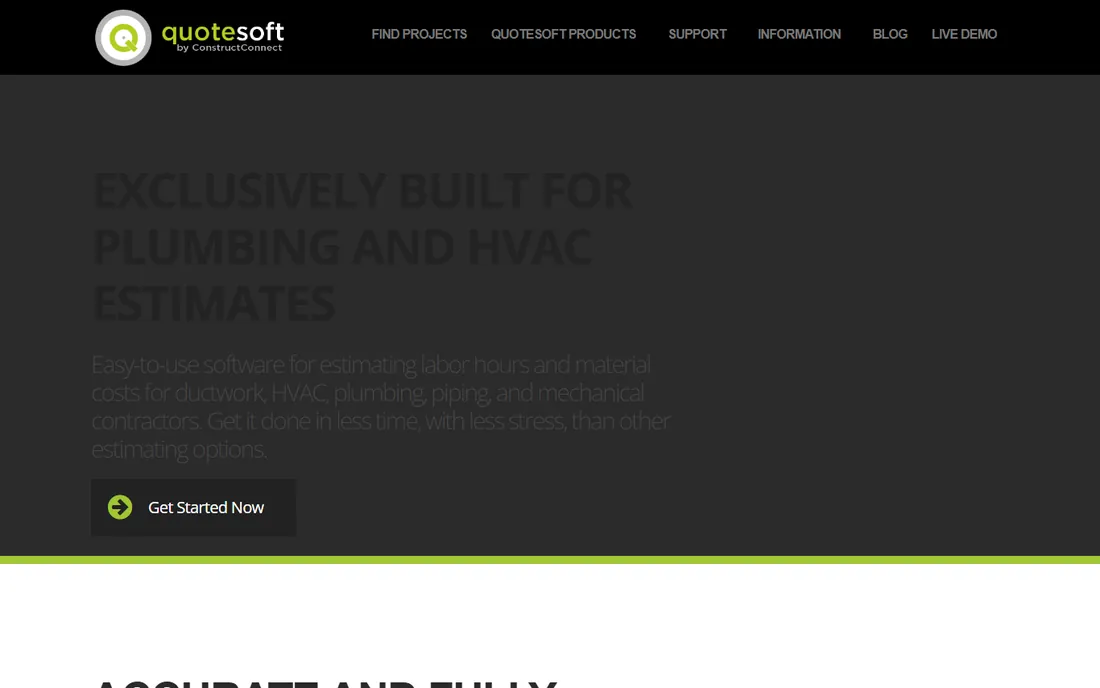
QuoteSoft has served HVAC and plumbing contractors for decades with a simple proposition: estimating software built around how those trades actually bid. The duct, pipe, and plumbing modules each come with material and labor databases tuned to the trade, and the takeoff tools work with CAD drawings so estimators can measure digitally instead of with a wheel. It is the kind of tool a shop buys once and uses for years.
The standout perk is support. QuoteSoft includes a full year of unlimited support with purchase, which matters a lot for smaller shops that do not have IT staff. On the other side, pricing stays behind a quote and the product is desktop software, so estimators who want to work from a browser or share bids with the field in real time will find it limiting. For a mid-size HVAC or plumbing contractor with a dedicated estimator, it remains a strong, dependable choice.
What we like- Dedicated duct, piping, and plumbing modules
- A year of unlimited support comes with the purchase
- Integrates with CAD for digital takeoff
Watch out for- Pricing is not published
- Desktop software with no cloud option for field access
Starting priceSee website
Free planNo
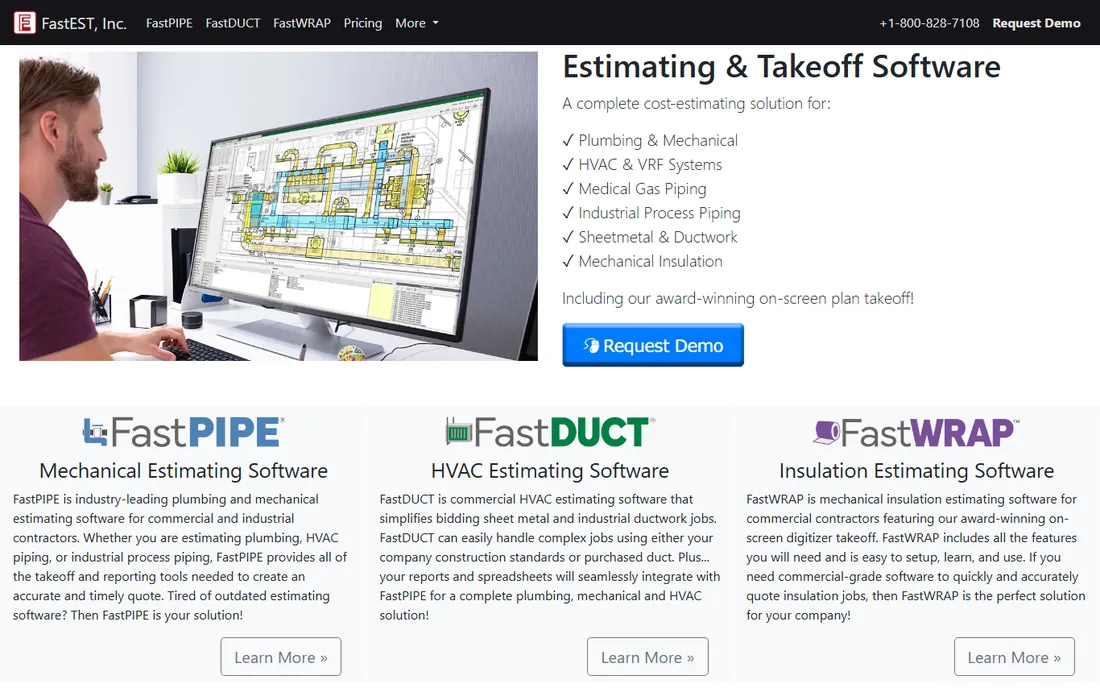
FastDUCT does one thing and does it well: ductwork estimating. From FastEST, it provides takeoff, labor, and material pricing purpose-built for sheet metal and duct systems, with databases that understand fittings, gauges, and fabrication in a way general estimating tools do not. A duct shop can go from plans to a finished bid without translating its work into someone else's categories.
Specialization is the tradeoff. If your shop also runs pipe, you will need FastPIPE alongside it, and if you run plumbing too, you are now managing two or three products. Pricing is also quote-only. But for a contractor whose work is mostly duct, a tool that speaks the trade's language beats a generic estimator every time, and FastDUCT has been that tool for a long time.
What we like- Built specifically for ductwork takeoff and estimating
- Pairs with FastPIPE for shops that do both
- Focused workflow with no clutter
Watch out for- Handles duct only, so multi-trade contractors need a second tool
- No published pricing
Starting priceSee website
Free planNo
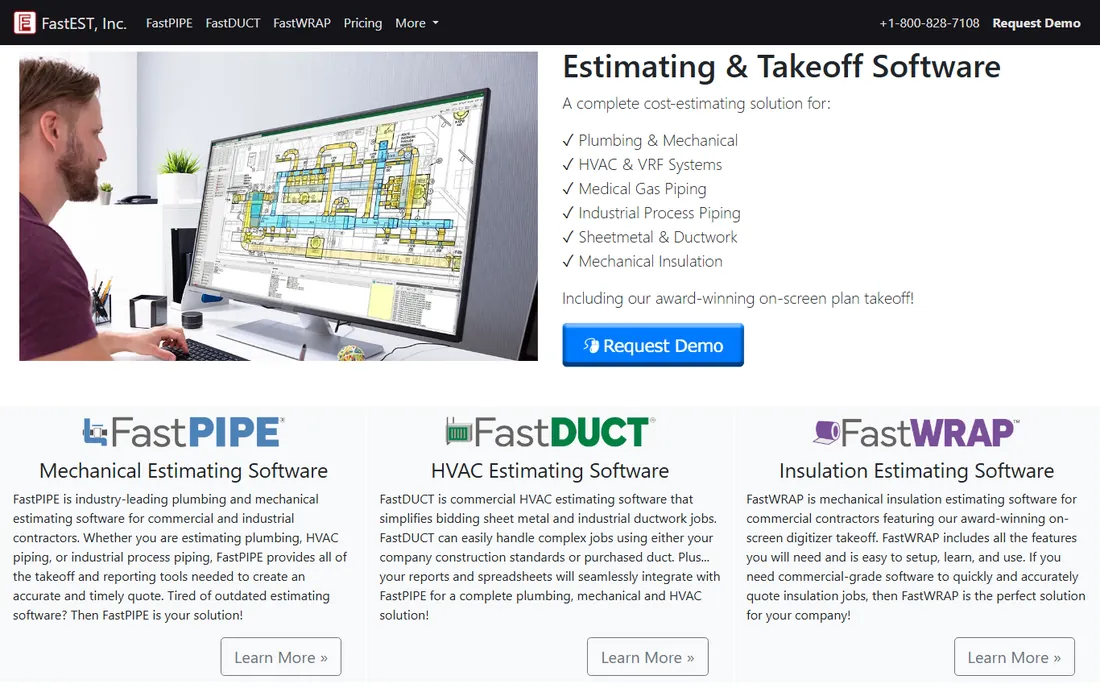
FastPIPE is FastDUCT's sibling, built on the same FastEST platform but aimed squarely at piping. It handles takeoff, material pricing, and labor for pipe systems with the fittings, valves, and hangers that general tools tend to oversimplify. Shops that run both duct and pipe can keep both products in one workflow, which is the main reason FastEST sells them as a pair.
Like its sibling, FastPIPE is a specialist tool, and specialists cost extra. A mechanical contractor doing both trades buys two licenses, and neither product publishes pricing. But the quality of the takeoff matters more than the license math on a big piping job, and estimators who live in pipe systems tend to stay with FastPIPE once they learn it.
What we like- Purpose-built for piping takeoff and estimating
- Shares the FastEST workflow with FastDUCT
- Material and labor data tuned to pipe systems
Watch out for- Piping only, so it is a second purchase for duct shops
- No public pricing information
Starting priceSee website
Free planNo
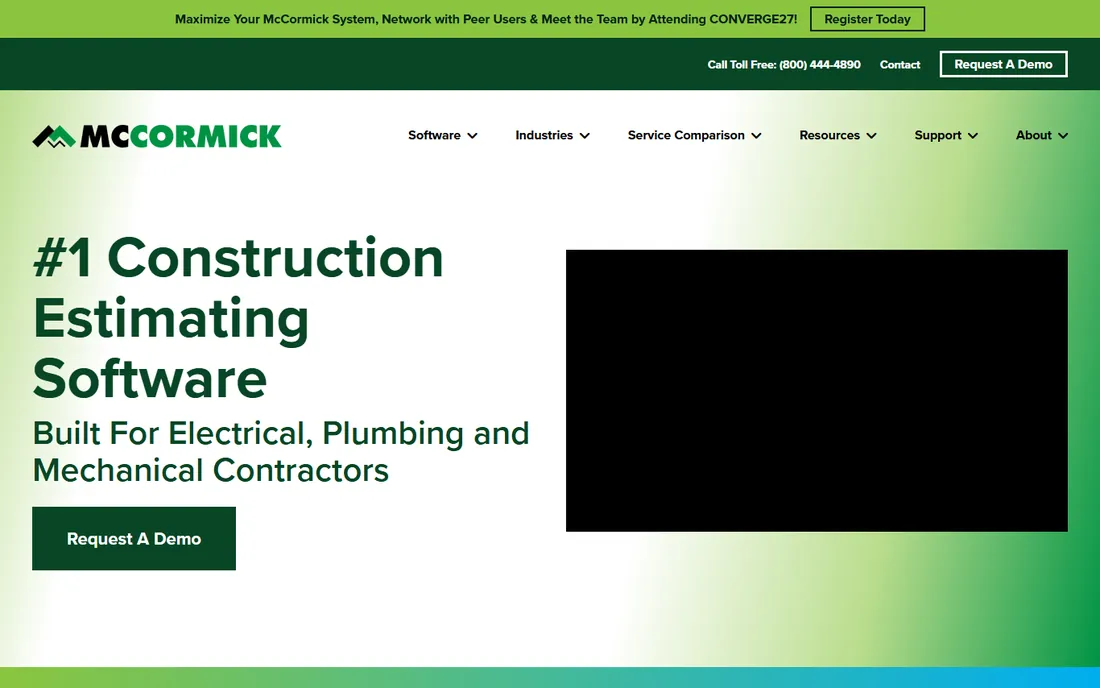
McCormick Systems has been around long enough to watch estimating move from paper to desktop to cloud, and its product covers the full mechanical scope: HVAC, plumbing, and related trades in one package. Beyond basic takeoff and estimating, it includes tools for design-build work and change orders, which matter because change orders are where mechanical contractors actually make or lose money.
The product's age shows in two ways. The interface is functional rather than beautiful, and pricing requires a sales conversation. Neither is a dealbreaker for the shops McCormick serves: established mechanical contractors who value a complete, proven system over a pretty demo. If your firm bids across multiple mechanical trades and wants one estimating platform for all of them, McCormick deserves a demo.
What we like- Covers estimating across electrical, plumbing, and HVAC trades
- Design-build and change-order tools included
- Long history with mechanical contractors
Watch out for- No published pricing
- Interface reflects its long history rather than modern design trends
Starting priceSee website
Free planFree trial
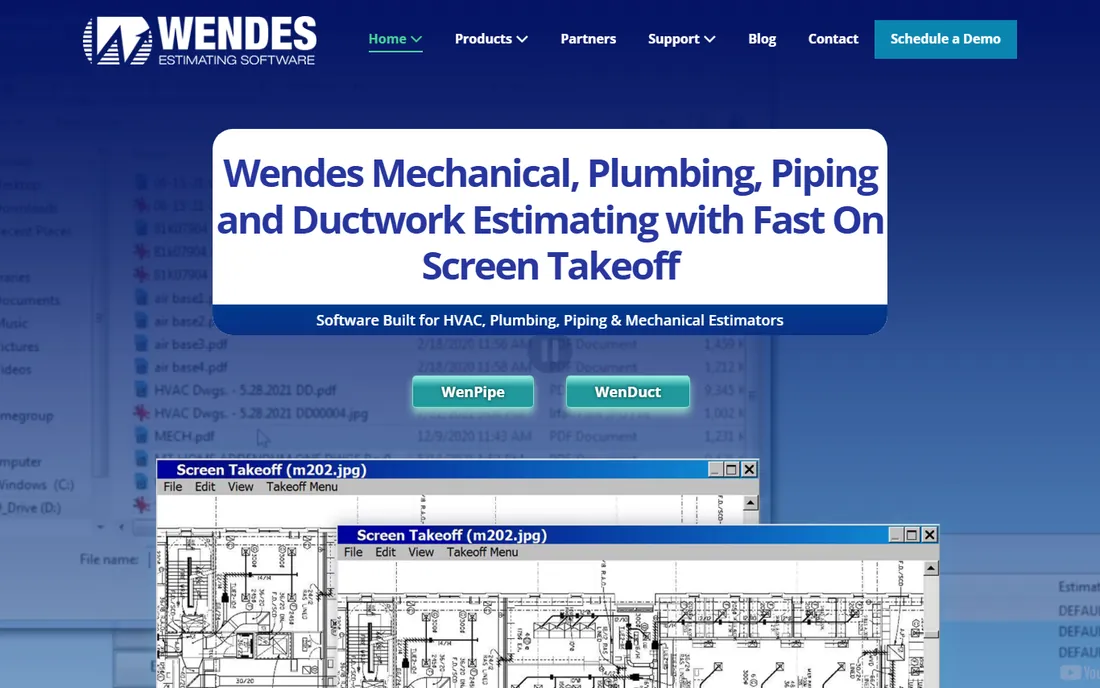
Wendes Systems is the specialist's specialist, with WenDuct for sheet metal ductwork and WenPipe for piping, plus a clear orientation toward fabrication. The company openly offers free trial software from its homepage, which makes it the easiest tool on this list to evaluate without a sales call. For a shop that fabricates its own duct or pipe, the fabrication-aware estimating is a genuine advantage.
The caveat is scale. Wendes is a smaller vendor, so you will find fewer public reviews and less community discussion than for Trimble or QuoteSoft products. Pricing is also quote-based. But the free trial removes most of the risk: download it, run a real job through it, and see whether the fabrication focus matches how your shop prices work.
What we like- WenDuct and WenPipe modules for sheet metal and piping
- Free trial software advertised on the homepage
- Focused on the fabrication side of the trade
Watch out for- No published pricing
- Smaller vendor with less third-party review coverage

#7
Trimble Estimation MEP
Best for: cloud-based MEP estimating teams
Visit trimble.com
Starting priceSee website
Free planNo
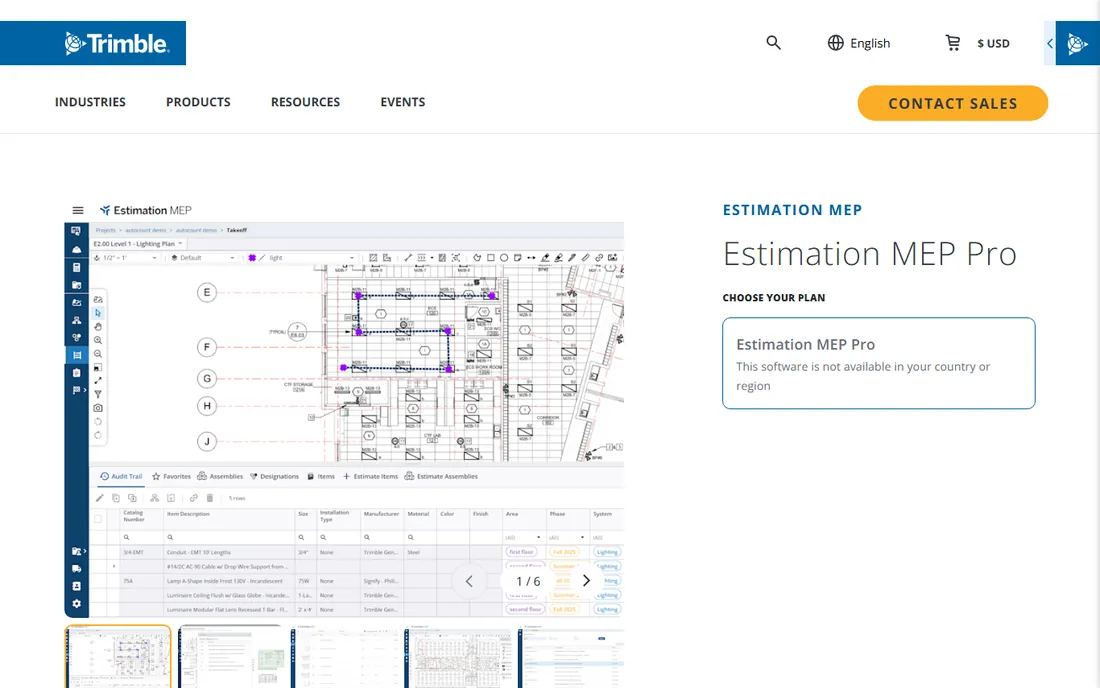
Trimble Estimation MEP is the cloud answer to AutoBid's desktop legacy. It brings MEP estimating into a browser-based subscription, priced per user per year, and ties into the wider Trimble construction platform for firms that run Trimble layout, scanning, or project tools. For a mechanical contractor standardizing on Trimble across the business, having estimating in the same ecosystem simplifies data flow from bid to field.
The limitation is right there on the pricing page, which shows a placeholder where the price should be. You will talk to sales, and the value proposition is strongest for firms already invested in Trimble. A standalone mechanical shop with no other Trimble products may find a focused tool like QuoteSoft or FastDUCT simpler to adopt. But for Trimble shops, this is the natural estimating choice.
What we like- Cloud-based estimating within the Trimble MEP ecosystem
- Connects with Trimble's construction and layout tools
- Subscription model with per-user pricing
Watch out for- Pricing page shows a placeholder instead of a number, so expect a sales quote
- Best value only if your firm already uses Trimble products
Starting priceSee website
Free planNo
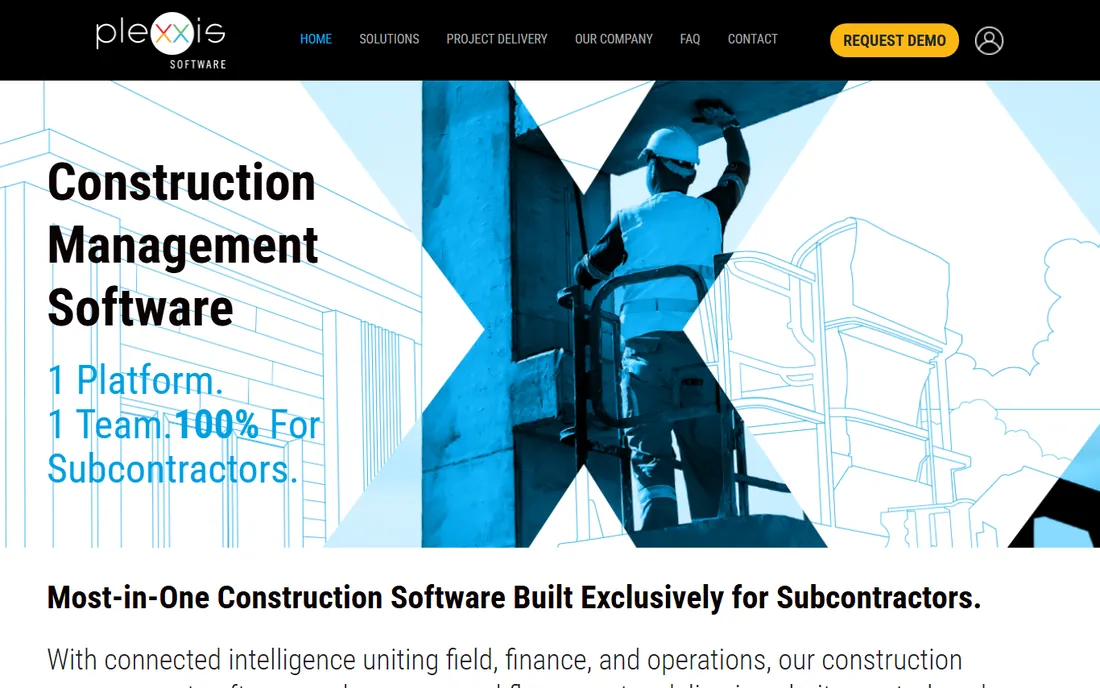
Plexxis is not really an estimating tool so much as a business system that includes estimating. It combines bidding with project management, accounting, document control, and operations in one platform, aimed at large mechanical and electrical contractors who are tired of stitching five systems together. The pitch is a single database from the first takeoff to the final invoice, which eliminates the re-entry errors that plague multi-system shops.
That breadth is also the warning. Plexxis is a major implementation, not a download-and-bid product, and its pricing targets enterprise budgets. A 20-person mechanical shop does not need it. A 200-person contractor running complex commercial work across multiple offices might. Evaluate it against ERP systems, not against takeoff tools.
What we like- Combines estimating with project management, accounting, and operations
- Built for large mechanical and electrical contractors
- Single database from bid to closeout
Watch out for- Far more complex than a standalone estimator
- Quote-only pricing aimed at enterprise budgets
The labor database is the real product
Here is the uncomfortable truth about mechanical estimating software: the takeoff features are commodities, but the labor database is not. Any decent tool can measure duct from a PDF. What separates the winners is how accurately the built-in labor units predict your actual field hours, because labor is the biggest and least forgiving line in a mechanical bid.
That is why the old names in this category still dominate. Decades of collected labor data for fittings, hangers, valves, and welds cannot be built overnight, and it is the main thing you are buying with products like AutoBid, QuoteSoft, and FastDUCT. When you demo any of these tools, spend less time on the interface and more time on the labor units. Run a system you have already built, compare the software's hours against your actuals, and see whose database knows your trade better. The prettiest takeoff on this list is worthless if its labor numbers do not match your crews.
How we chose
We did not test any of these tools in a lab. Our research started with each vendor's own pricing page, product documentation, and feature lists, then cross-checked against public reviews on G2, Capterra, and contractor forums including Reddit, where estimators discuss what they actually bid with. We prioritized trade-specific depth for HVAC, piping, and plumbing, the quality and transparency of labor databases, integration with CAD and takeoff workflows, and fit for different company sizes, from specialty duct shops to large multi-trade mechanical contractors.
What to check before you buy mechanical estimating software
Mechanical estimating is unforgiving, so the evaluation should be too. These are the checks that matter most.
Match the tool to your trade mix
A duct-only shop and a full mechanical contractor need different tools. FastDUCT or WenDuct fits the first; AutoBid, McCormick, or Plexxis fits the second. Buying a multi-trade platform for a single-trade shop means paying for databases you will never open.
Test the labor units against your history
This is the single most important demo step. Take a job you have completed, run it through the software, and compare the estimated labor hours with what the job actually took. A tool whose database matches your crews within a few percent is worth more than any feature on a checklist.
Check the takeoff workflow
Most estimators now take off from digital plans, so confirm the tool handles your plan formats and your drawing quality. CAD integration helps on design-heavy jobs; simple PDF takeoff is enough for plan-and-spec work. Ask how the tool handles revisions, because mechanical plans always change.
Count the total cost, not the license
Quote-only pricing hides the real number, so ask about implementation, training, database updates, and annual support. QuoteSoft's included year of support is a genuine saving. Plexxis-level systems need implementation budgets. Get the three-year cost in writing before you compare.
Frequently asked questions
How much does mechanical estimating software cost?
Almost every vendor in this category requires a quote, so there is no useful published range. Expect pricing to scale with your trade modules, user count, and database depth. Plan for the software plus training and annual database or support renewals, and get the full three-year cost during the demo.
Which software is best for a small HVAC contractor?
QuoteSoft and Wendes both suit smaller shops, with Wendes offering the clearest free trial. If your work is mostly duct, FastDUCT is worth a look. Small contractors should avoid enterprise platforms like Plexxis, which are built and priced for much larger firms.
Can these tools import my old estimates?
Most established tools can import data from spreadsheets and, in some cases, from competing products. Ask specifically about this during the demo, because migrating years of assemblies and pricing is where implementations succeed or fail. Bring a sample file to the demo and watch them import it.
Do I need CAD to use mechanical estimating software?
No. All of these tools work with PDF plans, and most estimators take off from PDFs. CAD integration helps when you receive native CAD files or want to measure directly from design models, but it is a bonus rather than a requirement for plan-and-spec bidding.
How long does it take to learn mechanical estimating software?
Expect a few weeks of regular use to become productive and a few months to use the labor databases confidently. The tools with the longest histories, like AutoBid and McCormick, have the most training resources available. Budget training time for your estimator the way you would budget any other project cost.
Sources we checked (7)
- https://mep.trimble.com/en/products/trimble-autobid-mechanical
- https://quotesoft.com
- https://fastest-inc.com/
- https://mccormicksys.com/
- https://www.wendes.com
- https://www.trimble.com/en/products/estimation-mep-pro/buy
- https://www.plexxis.com/
Is your product missing or out of date?
We review this list regularly. Vendors can request a listing, send updated pricing or ask about featured placement.

Shihab Mia · Founder, Rankite
Shihab has spent more than a decade helping SaaS and e-commerce brands grow through search. He writes Rankite's software buying guides from pricing pages, documentation and public user reviews. More about Shihab.
 Trimble AutoBid Mechanical
 QuoteSoft
 FastDUCT
 FastPIPE
 McCormick Systems
 Wendes Systems
 Plexxis