How we make this list: we compare pricing pages, product documentation and public user reviews. Rankite is independent; if a vendor ever pays for a featured spot, that listing is clearly labeled Partner.
Key takeaways
- Budget decides the platform more than features do: under $2,000 a month, Choozle and AdRoll are the realistic choices; above $10,000, the DSPs open up.
- StackAdapt is the strongest all-round self-serve programmatic ad platform for mid-market teams, with no published minimum and real CTV and native inventory.
- Criteo is the specialist for ecommerce and retail brands, running on purchase-intent data across web, social, video and CTV.
- The Trade Desk and Yahoo DSP serve the enterprise end, with deeper inventory and data but minimum spends and sales-led contracts.
- Quantcast pairs its ad platform with audience intelligence from measuring over 100 million web destinations, a useful edge for prospecting.
Quick comparison
| Tool | Best for | Starting price | Free plan |
|---|
 Choozle Choozle | Small-budget programmatic | $99/month (Choozle Go) | No |
 AdRoll AdRoll | Pay-as-you-go ecommerce retargeting | Pay-as-you-go (no fixed minimum) | No |
 StackAdapt StackAdapt | Self-serve mid-market programmatic | See website (no official minimum) | No |
 Basis Basis | Agencies running media operations | See website (quote-based) | No |
 Simpli.fi Simpli.fi | Local and regional programmatic targeting | See website (quote-based) | No |
 Criteo Criteo | Ecommerce and retail brands | See website (CPC/CPM based) | No |
 Quantcast Quantcast | Prospecting with audience data | See website (quote-based) | No |
 The Trade Desk The Trade Desk | Enterprise omnichannel buying | See website (quote-based) | No |
 Yahoo DSP Yahoo DSP | Enterprise buying with Yahoo inventory | See website (quote-based) | No |
Is your product missing or out of date?
We review this list regularly. Vendors can request a listing, send updated pricing or ask about featured placement.
If your monthly media budget is $2,000, half of this list is not for you. If it is $100,000, the other half is not. Programmatic ad platforms span an unusual range: self-serve tools that start at $99 a month and enterprise DSPs that expect five-figure monthly commitments before they return your call. The platforms below are organized so you can find your tier first, then compare the options inside it.
Under $2,000 a month: self-serve entry
Starting price$99/month (Choozle Go)
Free planNo
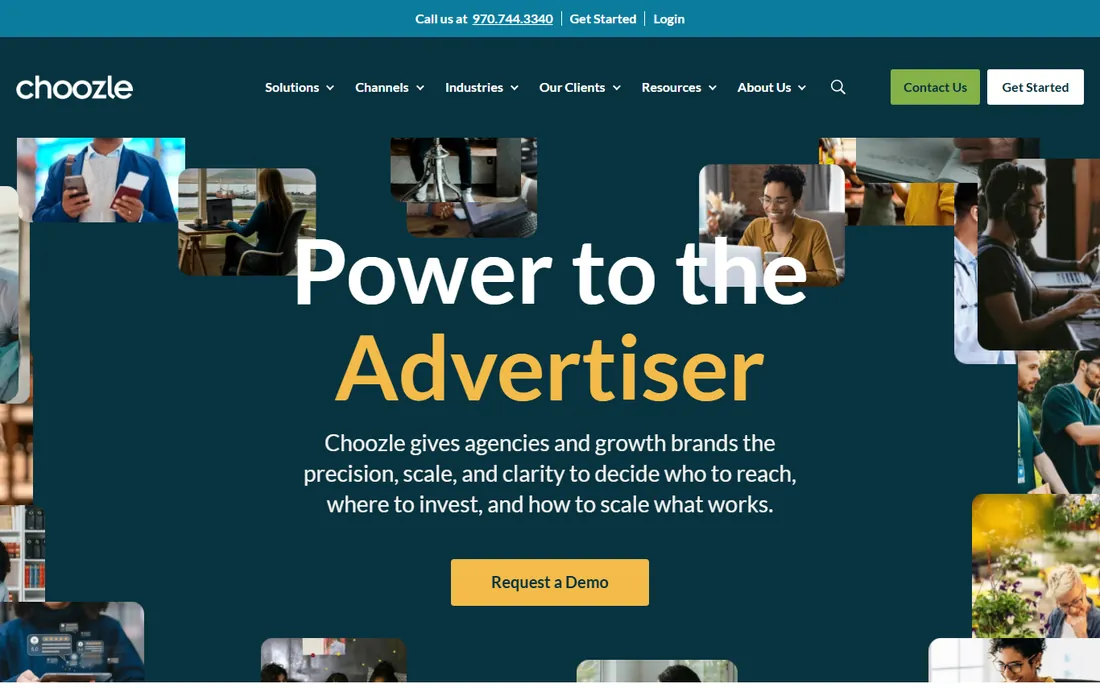
Choozle is built for the buyers the big DSPs ignore: freelancers, small businesses and small agencies. Choozle Go costs $99 a month and puts a genuine self-serve programmatic platform in your hands, with real-time reporting at the campaign, ad group and creative level and budget pacing tools that keep small budgets from burning through in a day.
Be realistic about what $99 buys. The inventory depth and data options are thinner than what StackAdapt or The Trade Desk offer, and some features cost extra. Reviewers praise the lack of minimum spend while noting that fees can accumulate. As a way to run real programmatic campaigns or learn the mechanics before scaling up, it has no cheaper rival.
What we like- The cheapest published entry into programmatic at $99 a month
- Covers display, video, mobile, audio and CTV with first, second and third-party data targeting
- White-label options for small agencies
Watch out for- No free trial
- The entry tier has thinner inventory and data than enterprise DSPs
- Support quality gets mixed reviewer reports
Starting pricePay-as-you-go (no fixed minimum)
Free planNo
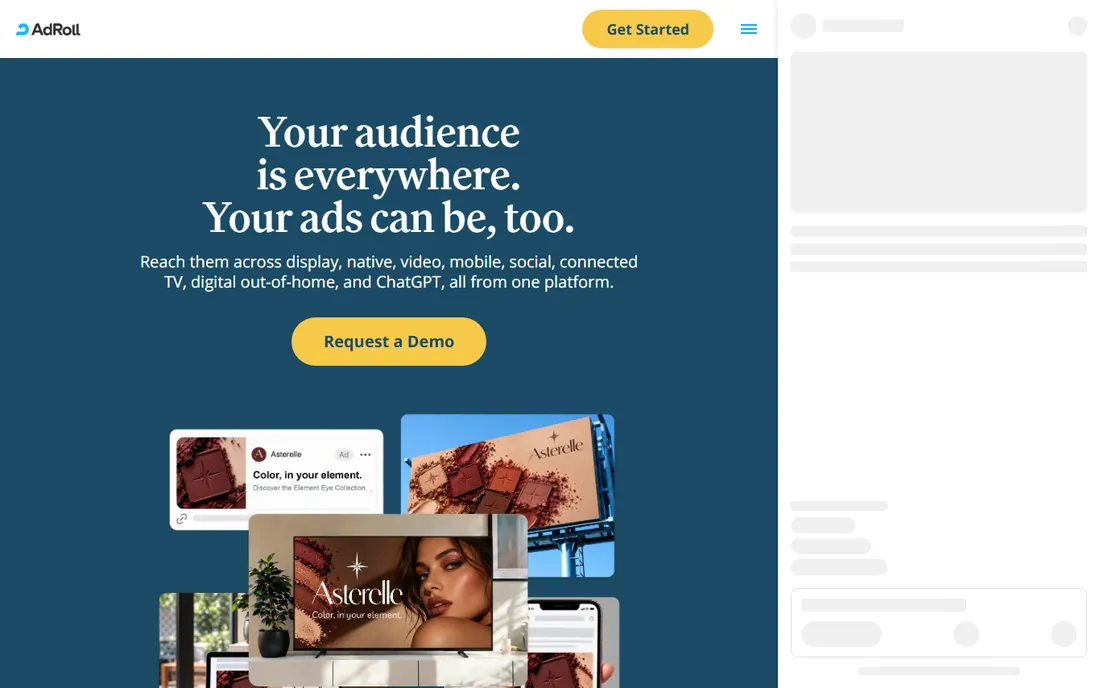
AdRoll is the simplest on-ramp to programmatic for an ecommerce brand. There is no fixed minimum and no contract: you fund the account and run display and social retargeting from the self-serve platform. Integrations with Klaviyo and Mailchimp sync audiences and attribution into the email tools stores already use.
The framing matters. AdRoll is a retargeting platform with programmatic buying underneath, not a full DSP for finding new customers at scale. Upper-funnel work belongs on a real DSP. But for recovering abandoned carts and re-engaging site visitors without learning programmatic mechanics, it is the path of least resistance.
What we like- Pay-as-you-go with no fixed minimum, rare in programmatic
- Deep retargeting experience from nearly two decades in the business
- Shopify merchants earn 10 percent of spend back in credits
Watch out for- Retargeting-first, so prospecting and upper-funnel are weaker
- The Advanced Package is where managed services and the real upsell live
- Less of a full DSP than a retargeting platform
Starting priceSee website (no official minimum)
Free planNo
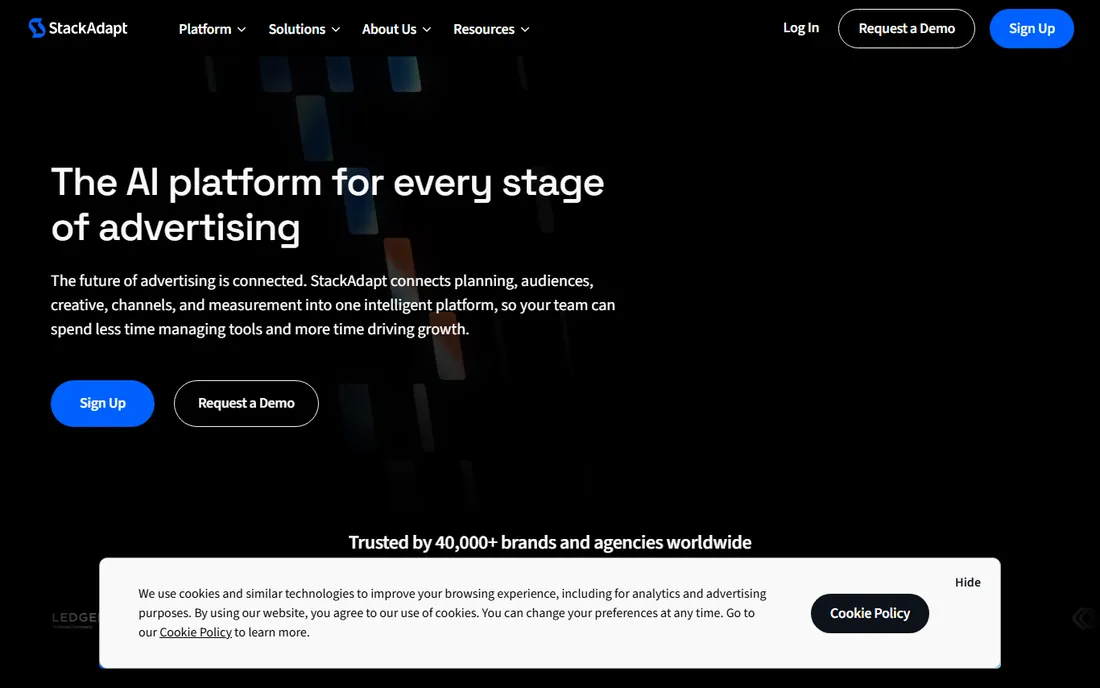
StackAdapt is where most mid-market programmatic happens. It opened self-serve signup broadly, publishes no official minimum spend, and reviewer after reviewer describes it as more accessible than The Trade Desk. Native advertising is its historic strength; video, CTV, audio and display have filled out around it, with solid contextual targeting for cookie-restricted environments.
The honest caveat is pricing opacity. StackAdapt discloses no percentage, no minimum and no rate card; third-party reviews put managed offerings around $15,000 a month and up while self-serve works well below that. Get the fee structure in writing before you scale. For teams spending $5,000 to $50,000 a month that want real programmatic without an enterprise contract, this is the first platform to evaluate.
What we like- The most accessible serious DSP, with self-serve signup and no published minimum
- Strong native, video and CTV inventory
- Contextual and first-party-data targeting built for the post-cookie era
Watch out for- No published pricing, so you negotiate without a reference point
- Managed services and some advanced features sit behind higher spend tiers
- Smaller data marketplace than The Trade Desk
Starting priceSee website (quote-based)
Free planNo
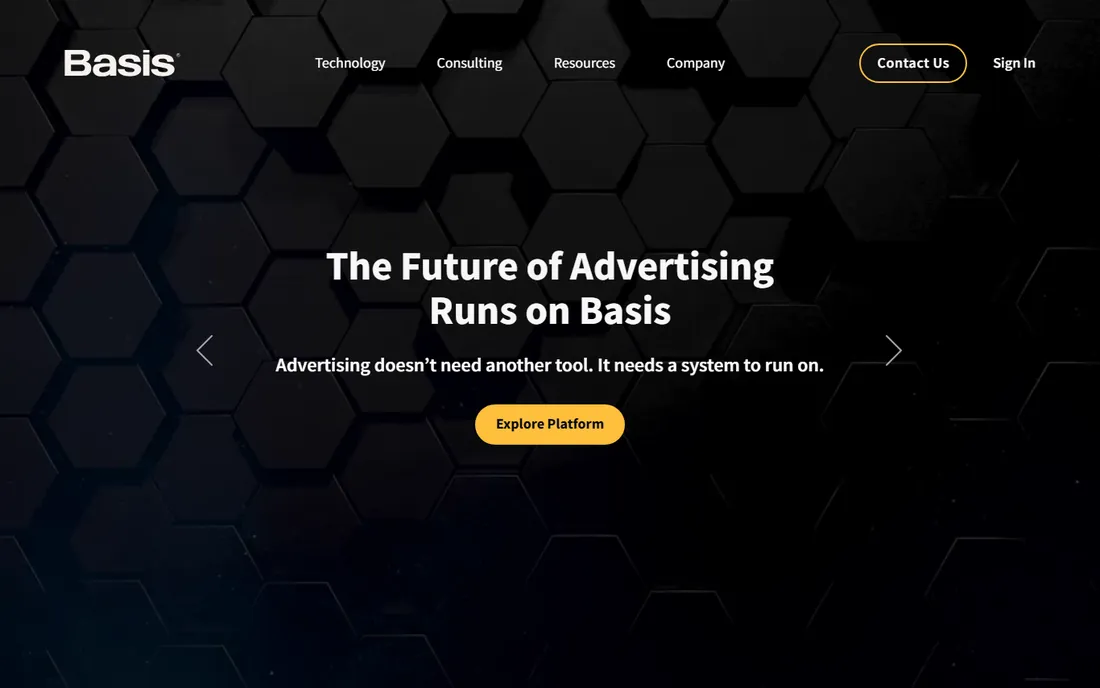
Basis (from Basis Technologies) is the agency platform. It wraps programmatic buying in the operational layer agencies live in: media planning, vendor management, billing reconciliation and reporting. If your agency plans in spreadsheets and buys in a separate DSP, Basis consolidates the workflow and the billing.
Pricing is a SaaS license plus a percentage of media; third-party reports cite around $1,000 a month plus 10 to 15 percent of spend, but confirm the numbers in a sales conversation. The value is operational, not inventory: fewer tools, cleaner billing, automated workflows. Direct brands buying their own media should compare StackAdapt or Simpli.fi first.
What we like- Combines the DSP with media planning, workflow, billing and business intelligence tools
- Strong automation for campaign management
- Designed around how agencies actually operate
Watch out for- Quote-based SaaS licensing plus a percentage of media spend
- Agency-oriented, so direct brands get less value
- The inventory story is thinner than pure DSPs
#5
Simpli.fi
Best for: Local and regional programmatic targeting
Visit simpli.fi
Starting priceSee website (quote-based)
Free planNo
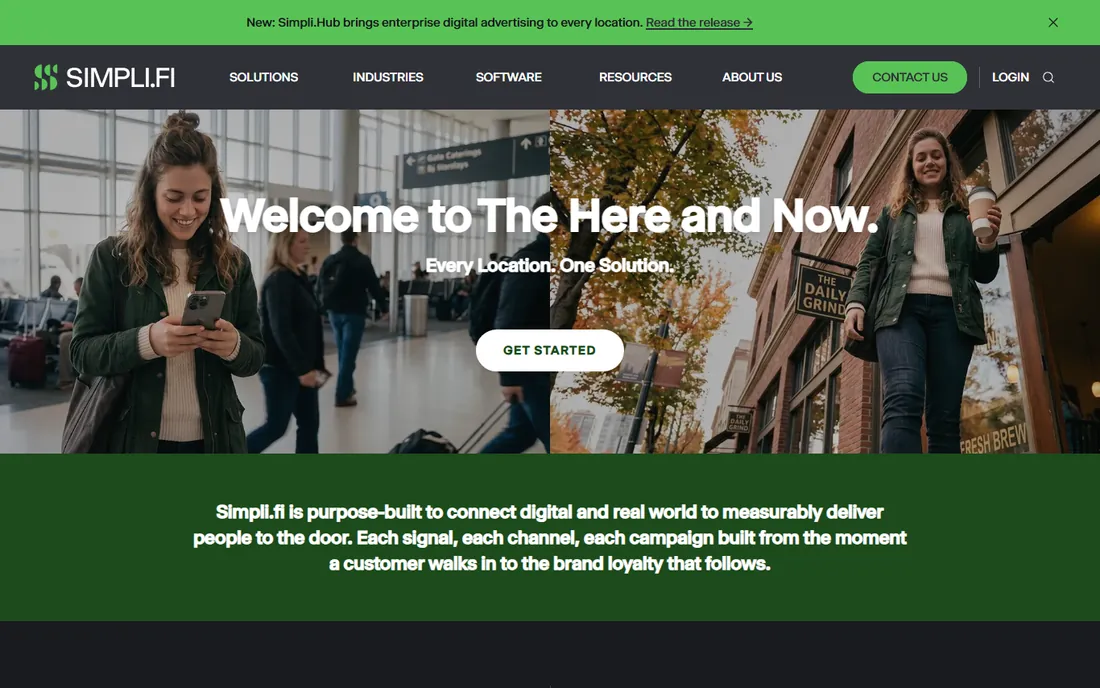
Simpli.fi owns local programmatic. Its geo-fencing targets households, businesses and event attendees with unusual precision: a dealer group can target shoppers who visited rival lots, a retailer can target event foot traffic. For franchises, multi-location brands and local media groups, that granularity is the product.
Reviewers praise the absence of campaign budget minimums and flexible CPM-based pricing, though Simpli.fi publishes no rates and targeting premiums accumulate. Support and implementation get strong marks from local advertisers. National brand campaigns are better served by The Trade Desk's scale. If your advertising is inherently local, start here.
What we like- Granular local targeting with addressable geo-fencing down to households and events
- No campaign budget minimums according to reviewers
- Strong for franchises and multi-location brands
Watch out for- No published pricing and limited transparency
- CPM-based with targeting premiums that add up
- Less suited to national brand campaigns
Starting priceSee website (CPC/CPM based)
Free planNo
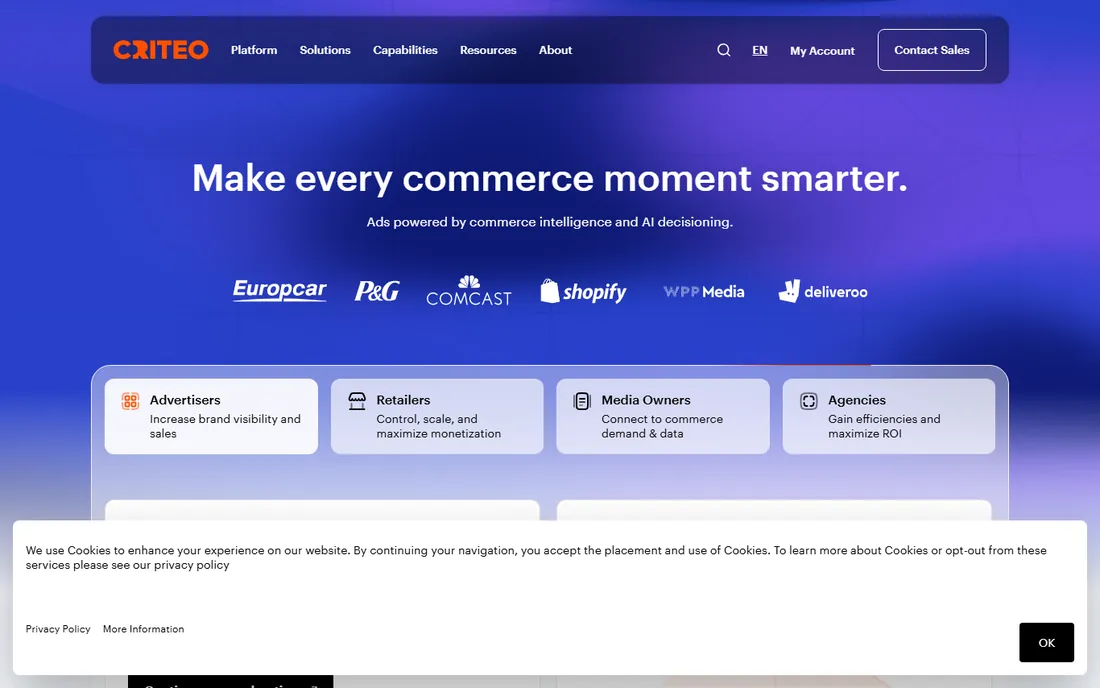
Criteo is the commerce specialist. Its Commerce Growth platform is built on shopper purchase data and predicts what customers will buy next, then optimizes targeting, bidding and creative across web, social, video and CTV. Product recommendations and dynamic creative optimization are native, not bolted on.
Pricing runs on CPC or CPM with no published list; third-party analysis suggests SMB entry can be a few hundred dollars a month in media while enterprises spend tens of thousands. If you sell products online, the purchase-intent data is the argument. If you sell services, the advantage thins out and a general DSP fits better.
What we like- Commerce data from one of the largest shopper datasets in programmatic
- Runs across web, social, video and CTV with predictive bidding
- Dynamic creative and product recommendations built in
Watch out for- No published price list, pricing is CPC/CPM based and negotiated
- Weakest outside retail and ecommerce
- Agencies report less transparency than independent DSPs
Starting priceSee website (quote-based)
Free planNo
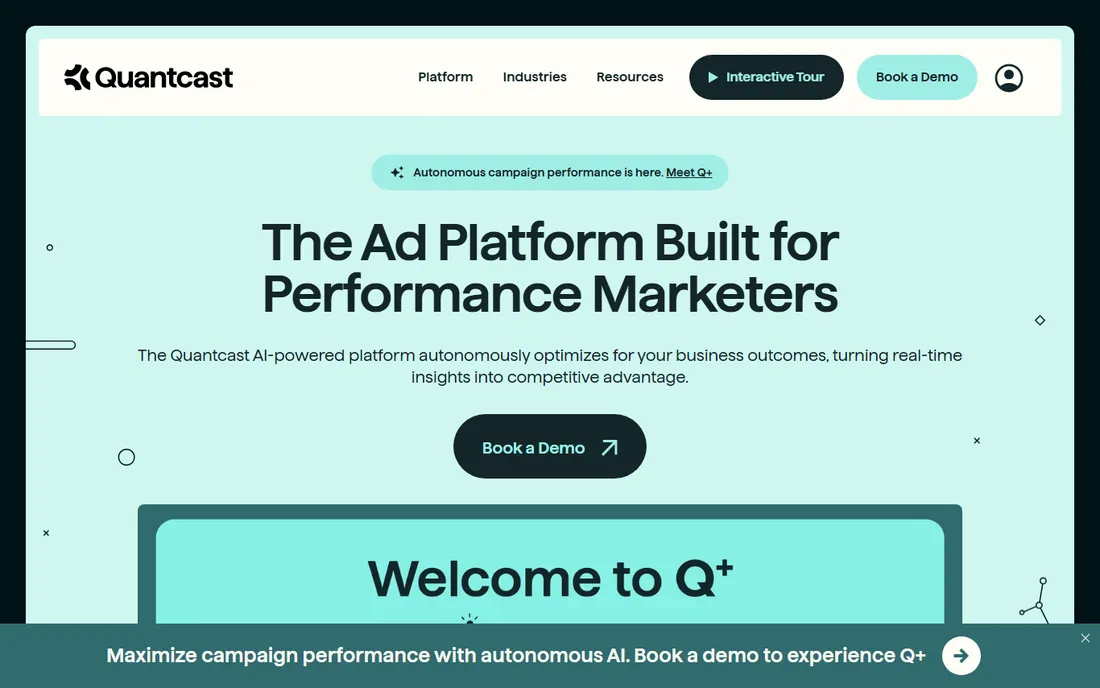
Quantcast pairs its DSP with one of the largest audience measurement footprints in the industry, built from direct measurement across more than 100 million web destinations. The practical payoff is prospecting: the platform models which audiences are most likely to buy and optimizes toward them, which suits brands that have exhausted their retargeting pools.
Pricing is quote-based; third-party media indexes report minimum spends in the low thousands per month, but confirm the current figure with sales. The platform leans toward managed service. Evaluate it when prospecting is your bottleneck and you want audience modeling deeper than a standard DSP offers.
What we like- Audience intelligence from direct measurement across a huge web footprint
- AI-driven prospecting that finds lookalike customers
- Free trial and free tier options reported on the platform side
Watch out for- Quote-based DSP pricing with reported minimums in the low thousands per month
- Managed-service orientation
- Less inventory breadth than the largest DSPs
Starting priceSee website (quote-based)
Free planNo
The Trade Desk is the enterprise benchmark. It is independent: it owns no media, which is why agencies trust its bidding to be neutral. Inventory spans display, video, audio, native and connected TV with a large third-party data marketplace, and its AI bidding optimizes across channels.
Everything about the commercial model is enterprise-shaped: custom contracts, meaningful minimum spends, a platform that assumes programmatic expertise. Third-party buyer reports put typical entry well into five figures a month. Below $50,000 a month, StackAdapt serves you better. Above it, with an agency or in-house trading desk, this is the standard.
What we like- The largest independent DSP with the broadest inventory and data marketplace
- Strong CTV and audio
- Transparent bidding mechanics that agencies trust
Watch out for- Enterprise minimums and sales-led contracts exclude small budgets
- Expects an experienced media buyer to operate it
Starting priceSee website (quote-based)
Free planNo
Yahoo DSP (formerly Verizon Media's DSP) gives programmatic access to Yahoo's owned properties: Yahoo, AOL, TechCrunch and Engadget, plus third-party exchanges. Its identity and cookieless targeting tools are a genuine differentiator as third-party cookies fade.
Pricing is quote-based with reported minimum monthly commitments in the $5,000 to $10,000 range, and there is no self-serve trial for small buyers. It sits between StackAdapt and The Trade Desk: more accessible than the enterprise giants, less flexible than the self-serve middle. Consider it when Yahoo's audience or its identity solutions matter to your plan.
What we like- Exclusive access to Yahoo's owned inventory and audiences
- Omnichannel buying across display, video, CTV and audio
- Identity solutions built for the cookieless era
Watch out for- Quote-based with reported minimum commitments of $5,000 to $10,000 a month
- Smaller data marketplace than The Trade Desk
- US-centric strength
$2,000 to $15,000 a month: the self-serve middle
Starting price$99/month (Choozle Go)
Free planNo
Choozle is built for the buyers the big DSPs ignore: freelancers, small businesses and small agencies. Choozle Go costs $99 a month and puts a genuine self-serve programmatic platform in your hands, with real-time reporting at the campaign, ad group and creative level and budget pacing tools that keep small budgets from burning through in a day.
Be realistic about what $99 buys. The inventory depth and data options are thinner than what StackAdapt or The Trade Desk offer, and some features cost extra. Reviewers praise the lack of minimum spend while noting that fees can accumulate. As a way to run real programmatic campaigns or learn the mechanics before scaling up, it has no cheaper rival.
What we like- The cheapest published entry into programmatic at $99 a month
- Covers display, video, mobile, audio and CTV with first, second and third-party data targeting
- White-label options for small agencies
Watch out for- No free trial
- The entry tier has thinner inventory and data than enterprise DSPs
- Support quality gets mixed reviewer reports
Starting pricePay-as-you-go (no fixed minimum)
Free planNo
AdRoll is the simplest on-ramp to programmatic for an ecommerce brand. There is no fixed minimum and no contract: you fund the account and run display and social retargeting from the self-serve platform. Integrations with Klaviyo and Mailchimp sync audiences and attribution into the email tools stores already use.
The framing matters. AdRoll is a retargeting platform with programmatic buying underneath, not a full DSP for finding new customers at scale. Upper-funnel work belongs on a real DSP. But for recovering abandoned carts and re-engaging site visitors without learning programmatic mechanics, it is the path of least resistance.
What we like- Pay-as-you-go with no fixed minimum, rare in programmatic
- Deep retargeting experience from nearly two decades in the business
- Shopify merchants earn 10 percent of spend back in credits
Watch out for- Retargeting-first, so prospecting and upper-funnel are weaker
- The Advanced Package is where managed services and the real upsell live
- Less of a full DSP than a retargeting platform
Starting priceSee website (no official minimum)
Free planNo
StackAdapt is where most mid-market programmatic happens. It opened self-serve signup broadly, publishes no official minimum spend, and reviewer after reviewer describes it as more accessible than The Trade Desk. Native advertising is its historic strength; video, CTV, audio and display have filled out around it, with solid contextual targeting for cookie-restricted environments.
The honest caveat is pricing opacity. StackAdapt discloses no percentage, no minimum and no rate card; third-party reviews put managed offerings around $15,000 a month and up while self-serve works well below that. Get the fee structure in writing before you scale. For teams spending $5,000 to $50,000 a month that want real programmatic without an enterprise contract, this is the first platform to evaluate.
What we like- The most accessible serious DSP, with self-serve signup and no published minimum
- Strong native, video and CTV inventory
- Contextual and first-party-data targeting built for the post-cookie era
Watch out for- No published pricing, so you negotiate without a reference point
- Managed services and some advanced features sit behind higher spend tiers
- Smaller data marketplace than The Trade Desk
Starting priceSee website (quote-based)
Free planNo
Basis (from Basis Technologies) is the agency platform. It wraps programmatic buying in the operational layer agencies live in: media planning, vendor management, billing reconciliation and reporting. If your agency plans in spreadsheets and buys in a separate DSP, Basis consolidates the workflow and the billing.
Pricing is a SaaS license plus a percentage of media; third-party reports cite around $1,000 a month plus 10 to 15 percent of spend, but confirm the numbers in a sales conversation. The value is operational, not inventory: fewer tools, cleaner billing, automated workflows. Direct brands buying their own media should compare StackAdapt or Simpli.fi first.
What we like- Combines the DSP with media planning, workflow, billing and business intelligence tools
- Strong automation for campaign management
- Designed around how agencies actually operate
Watch out for- Quote-based SaaS licensing plus a percentage of media spend
- Agency-oriented, so direct brands get less value
- The inventory story is thinner than pure DSPs
#5
Simpli.fi
Best for: Local and regional programmatic targeting
Visit simpli.fi
Starting priceSee website (quote-based)
Free planNo
Simpli.fi owns local programmatic. Its geo-fencing targets households, businesses and event attendees with unusual precision: a dealer group can target shoppers who visited rival lots, a retailer can target event foot traffic. For franchises, multi-location brands and local media groups, that granularity is the product.
Reviewers praise the absence of campaign budget minimums and flexible CPM-based pricing, though Simpli.fi publishes no rates and targeting premiums accumulate. Support and implementation get strong marks from local advertisers. National brand campaigns are better served by The Trade Desk's scale. If your advertising is inherently local, start here.
What we like- Granular local targeting with addressable geo-fencing down to households and events
- No campaign budget minimums according to reviewers
- Strong for franchises and multi-location brands
Watch out for- No published pricing and limited transparency
- CPM-based with targeting premiums that add up
- Less suited to national brand campaigns
Starting priceSee website (CPC/CPM based)
Free planNo
Criteo is the commerce specialist. Its Commerce Growth platform is built on shopper purchase data and predicts what customers will buy next, then optimizes targeting, bidding and creative across web, social, video and CTV. Product recommendations and dynamic creative optimization are native, not bolted on.
Pricing runs on CPC or CPM with no published list; third-party analysis suggests SMB entry can be a few hundred dollars a month in media while enterprises spend tens of thousands. If you sell products online, the purchase-intent data is the argument. If you sell services, the advantage thins out and a general DSP fits better.
What we like- Commerce data from one of the largest shopper datasets in programmatic
- Runs across web, social, video and CTV with predictive bidding
- Dynamic creative and product recommendations built in
Watch out for- No published price list, pricing is CPC/CPM based and negotiated
- Weakest outside retail and ecommerce
- Agencies report less transparency than independent DSPs
Starting priceSee website (quote-based)
Free planNo
Quantcast pairs its DSP with one of the largest audience measurement footprints in the industry, built from direct measurement across more than 100 million web destinations. The practical payoff is prospecting: the platform models which audiences are most likely to buy and optimizes toward them, which suits brands that have exhausted their retargeting pools.
Pricing is quote-based; third-party media indexes report minimum spends in the low thousands per month, but confirm the current figure with sales. The platform leans toward managed service. Evaluate it when prospecting is your bottleneck and you want audience modeling deeper than a standard DSP offers.
What we like- Audience intelligence from direct measurement across a huge web footprint
- AI-driven prospecting that finds lookalike customers
- Free trial and free tier options reported on the platform side
Watch out for- Quote-based DSP pricing with reported minimums in the low thousands per month
- Managed-service orientation
- Less inventory breadth than the largest DSPs
Starting priceSee website (quote-based)
Free planNo
The Trade Desk is the enterprise benchmark. It is independent: it owns no media, which is why agencies trust its bidding to be neutral. Inventory spans display, video, audio, native and connected TV with a large third-party data marketplace, and its AI bidding optimizes across channels.
Everything about the commercial model is enterprise-shaped: custom contracts, meaningful minimum spends, a platform that assumes programmatic expertise. Third-party buyer reports put typical entry well into five figures a month. Below $50,000 a month, StackAdapt serves you better. Above it, with an agency or in-house trading desk, this is the standard.
What we like- The largest independent DSP with the broadest inventory and data marketplace
- Strong CTV and audio
- Transparent bidding mechanics that agencies trust
Watch out for- Enterprise minimums and sales-led contracts exclude small budgets
- Expects an experienced media buyer to operate it
Starting priceSee website (quote-based)
Free planNo
Yahoo DSP (formerly Verizon Media's DSP) gives programmatic access to Yahoo's owned properties: Yahoo, AOL, TechCrunch and Engadget, plus third-party exchanges. Its identity and cookieless targeting tools are a genuine differentiator as third-party cookies fade.
Pricing is quote-based with reported minimum monthly commitments in the $5,000 to $10,000 range, and there is no self-serve trial for small buyers. It sits between StackAdapt and The Trade Desk: more accessible than the enterprise giants, less flexible than the self-serve middle. Consider it when Yahoo's audience or its identity solutions matter to your plan.
What we like- Exclusive access to Yahoo's owned inventory and audiences
- Omnichannel buying across display, video, CTV and audio
- Identity solutions built for the cookieless era
Watch out for- Quote-based with reported minimum commitments of $5,000 to $10,000 a month
- Smaller data marketplace than The Trade Desk
- US-centric strength
$15,000 a month and up: enterprise DSPs
Starting price$99/month (Choozle Go)
Free planNo
Choozle is built for the buyers the big DSPs ignore: freelancers, small businesses and small agencies. Choozle Go costs $99 a month and puts a genuine self-serve programmatic platform in your hands, with real-time reporting at the campaign, ad group and creative level and budget pacing tools that keep small budgets from burning through in a day.
Be realistic about what $99 buys. The inventory depth and data options are thinner than what StackAdapt or The Trade Desk offer, and some features cost extra. Reviewers praise the lack of minimum spend while noting that fees can accumulate. As a way to run real programmatic campaigns or learn the mechanics before scaling up, it has no cheaper rival.
What we like- The cheapest published entry into programmatic at $99 a month
- Covers display, video, mobile, audio and CTV with first, second and third-party data targeting
- White-label options for small agencies
Watch out for- No free trial
- The entry tier has thinner inventory and data than enterprise DSPs
- Support quality gets mixed reviewer reports
Starting pricePay-as-you-go (no fixed minimum)
Free planNo
AdRoll is the simplest on-ramp to programmatic for an ecommerce brand. There is no fixed minimum and no contract: you fund the account and run display and social retargeting from the self-serve platform. Integrations with Klaviyo and Mailchimp sync audiences and attribution into the email tools stores already use.
The framing matters. AdRoll is a retargeting platform with programmatic buying underneath, not a full DSP for finding new customers at scale. Upper-funnel work belongs on a real DSP. But for recovering abandoned carts and re-engaging site visitors without learning programmatic mechanics, it is the path of least resistance.
What we like- Pay-as-you-go with no fixed minimum, rare in programmatic
- Deep retargeting experience from nearly two decades in the business
- Shopify merchants earn 10 percent of spend back in credits
Watch out for- Retargeting-first, so prospecting and upper-funnel are weaker
- The Advanced Package is where managed services and the real upsell live
- Less of a full DSP than a retargeting platform
Starting priceSee website (no official minimum)
Free planNo
StackAdapt is where most mid-market programmatic happens. It opened self-serve signup broadly, publishes no official minimum spend, and reviewer after reviewer describes it as more accessible than The Trade Desk. Native advertising is its historic strength; video, CTV, audio and display have filled out around it, with solid contextual targeting for cookie-restricted environments.
The honest caveat is pricing opacity. StackAdapt discloses no percentage, no minimum and no rate card; third-party reviews put managed offerings around $15,000 a month and up while self-serve works well below that. Get the fee structure in writing before you scale. For teams spending $5,000 to $50,000 a month that want real programmatic without an enterprise contract, this is the first platform to evaluate.
What we like- The most accessible serious DSP, with self-serve signup and no published minimum
- Strong native, video and CTV inventory
- Contextual and first-party-data targeting built for the post-cookie era
Watch out for- No published pricing, so you negotiate without a reference point
- Managed services and some advanced features sit behind higher spend tiers
- Smaller data marketplace than The Trade Desk
Starting priceSee website (quote-based)
Free planNo
Basis (from Basis Technologies) is the agency platform. It wraps programmatic buying in the operational layer agencies live in: media planning, vendor management, billing reconciliation and reporting. If your agency plans in spreadsheets and buys in a separate DSP, Basis consolidates the workflow and the billing.
Pricing is a SaaS license plus a percentage of media; third-party reports cite around $1,000 a month plus 10 to 15 percent of spend, but confirm the numbers in a sales conversation. The value is operational, not inventory: fewer tools, cleaner billing, automated workflows. Direct brands buying their own media should compare StackAdapt or Simpli.fi first.
What we like- Combines the DSP with media planning, workflow, billing and business intelligence tools
- Strong automation for campaign management
- Designed around how agencies actually operate
Watch out for- Quote-based SaaS licensing plus a percentage of media spend
- Agency-oriented, so direct brands get less value
- The inventory story is thinner than pure DSPs
#5
Simpli.fi
Best for: Local and regional programmatic targeting
Visit simpli.fi
Starting priceSee website (quote-based)
Free planNo
Simpli.fi owns local programmatic. Its geo-fencing targets households, businesses and event attendees with unusual precision: a dealer group can target shoppers who visited rival lots, a retailer can target event foot traffic. For franchises, multi-location brands and local media groups, that granularity is the product.
Reviewers praise the absence of campaign budget minimums and flexible CPM-based pricing, though Simpli.fi publishes no rates and targeting premiums accumulate. Support and implementation get strong marks from local advertisers. National brand campaigns are better served by The Trade Desk's scale. If your advertising is inherently local, start here.
What we like- Granular local targeting with addressable geo-fencing down to households and events
- No campaign budget minimums according to reviewers
- Strong for franchises and multi-location brands
Watch out for- No published pricing and limited transparency
- CPM-based with targeting premiums that add up
- Less suited to national brand campaigns
Starting priceSee website (CPC/CPM based)
Free planNo
Criteo is the commerce specialist. Its Commerce Growth platform is built on shopper purchase data and predicts what customers will buy next, then optimizes targeting, bidding and creative across web, social, video and CTV. Product recommendations and dynamic creative optimization are native, not bolted on.
Pricing runs on CPC or CPM with no published list; third-party analysis suggests SMB entry can be a few hundred dollars a month in media while enterprises spend tens of thousands. If you sell products online, the purchase-intent data is the argument. If you sell services, the advantage thins out and a general DSP fits better.
What we like- Commerce data from one of the largest shopper datasets in programmatic
- Runs across web, social, video and CTV with predictive bidding
- Dynamic creative and product recommendations built in
Watch out for- No published price list, pricing is CPC/CPM based and negotiated
- Weakest outside retail and ecommerce
- Agencies report less transparency than independent DSPs
Starting priceSee website (quote-based)
Free planNo
Quantcast pairs its DSP with one of the largest audience measurement footprints in the industry, built from direct measurement across more than 100 million web destinations. The practical payoff is prospecting: the platform models which audiences are most likely to buy and optimizes toward them, which suits brands that have exhausted their retargeting pools.
Pricing is quote-based; third-party media indexes report minimum spends in the low thousands per month, but confirm the current figure with sales. The platform leans toward managed service. Evaluate it when prospecting is your bottleneck and you want audience modeling deeper than a standard DSP offers.
What we like- Audience intelligence from direct measurement across a huge web footprint
- AI-driven prospecting that finds lookalike customers
- Free trial and free tier options reported on the platform side
Watch out for- Quote-based DSP pricing with reported minimums in the low thousands per month
- Managed-service orientation
- Less inventory breadth than the largest DSPs
Starting priceSee website (quote-based)
Free planNo
The Trade Desk is the enterprise benchmark. It is independent: it owns no media, which is why agencies trust its bidding to be neutral. Inventory spans display, video, audio, native and connected TV with a large third-party data marketplace, and its AI bidding optimizes across channels.
Everything about the commercial model is enterprise-shaped: custom contracts, meaningful minimum spends, a platform that assumes programmatic expertise. Third-party buyer reports put typical entry well into five figures a month. Below $50,000 a month, StackAdapt serves you better. Above it, with an agency or in-house trading desk, this is the standard.
What we like- The largest independent DSP with the broadest inventory and data marketplace
- Strong CTV and audio
- Transparent bidding mechanics that agencies trust
Watch out for- Enterprise minimums and sales-led contracts exclude small budgets
- Expects an experienced media buyer to operate it
Starting priceSee website (quote-based)
Free planNo
Yahoo DSP (formerly Verizon Media's DSP) gives programmatic access to Yahoo's owned properties: Yahoo, AOL, TechCrunch and Engadget, plus third-party exchanges. Its identity and cookieless targeting tools are a genuine differentiator as third-party cookies fade.
Pricing is quote-based with reported minimum monthly commitments in the $5,000 to $10,000 range, and there is no self-serve trial for small buyers. It sits between StackAdapt and The Trade Desk: more accessible than the enterprise giants, less flexible than the self-serve middle. Consider it when Yahoo's audience or its identity solutions matter to your plan.
What we like- Exclusive access to Yahoo's owned inventory and audiences
- Omnichannel buying across display, video, CTV and audio
- Identity solutions built for the cookieless era
Watch out for- Quote-based with reported minimum commitments of $5,000 to $10,000 a month
- Smaller data marketplace than The Trade Desk
- US-centric strength
Self-serve vs managed: the choice that decides everything
The platform matters less than the buying model. Self-serve (Choozle, StackAdapt, AdRoll) means you or your team operate the DSP: audiences, bids, creative, exclusions. It is cheaper and you keep control, but it demands a few hours a week from someone who understands programmatic. Managed service (typical at The Trade Desk, Yahoo DSP and Quantcast) means the vendor or your agency runs it. It costs more and you see less, but it works without in-house expertise.
The expensive mistake is buying self-serve and then never touching it. Unmanaged programmatic drifts: budgets pace badly, frequency climbs, fraud creeps in. If nobody on your team will log in weekly, pay for managed service or do not buy programmatic at all.
How we chose
We built this list around buying reality rather than feature checklists, grouping platforms by the budget tier where they actually work. Most programmatic platforms do not publish pricing, so seven of the nine tools here show "See website" instead of third-party estimates dressed up as facts. We compared on what decides DSP purchases: inventory breadth, CTV and video capability, audience data depth, fee transparency, minimum spends and the self-serve versus managed model. We read buyer reviews on G2, TrustRadius, Capterra and Reddit for the recurring complaints: hidden fees, minimum-spend traps, reporting opacity and support quality at small budgets.
The two fees inside every programmatic bill
DSP pricing confuses buyers because the platform fee and the media spend are separate. You pay the exchange for impressions and the DSP a tech fee, usually a percentage of spend, for the buying. Enterprise DSPs layer minimums on top: a spend commitment, a platform fee, or both. A $10,000 monthly budget on a DSP charging 15 percent in tech fees is really $8,500 of media. Ask for the full fee picture in writing, platform fee, minimums, third-party data fees and any managed-service charges, before you commit.
Frequently asked questions
What is the best programmatic ad platform for beginners?
Choozle at $99 a month is the cheapest way to run real programmatic campaigns yourself. AdRoll's pay-as-you-go model is the simplest for ecommerce retargeting. Both assume you will learn the basics of audiences and bidding.
How much budget do I need for programmatic advertising?
Under $2,000 a month, Choozle and AdRoll are the realistic options. From $2,000 to $15,000, StackAdapt, Basis, Simpli.fi, Criteo and Quantcast fit. Enterprise DSPs like The Trade Desk and Yahoo DSP expect $10,000 to $50,000-plus monthly commitments.
What is the difference between a DSP and a programmatic ad platform?
The terms overlap. A DSP (demand-side platform) is the technology that bids on impressions in real time. A programmatic ad platform is the product you log into, which may be a pure DSP or a DSP wrapped in planning, creative and reporting tools, like Basis or Criteo.
Is programmatic advertising worth it for small businesses?
It can be, at the right tier. Retargeting site visitors through AdRoll or running modest prospecting on Choozle routinely beats the alternative of doing nothing with your site traffic. Enterprise DSPs are not worth it at small budgets because minimums and fees eat the return.
Do programmatic platforms charge a percentage of ad spend?
Most do. Enterprise DSPs typically charge tech fees around 10 to 15 percent of media spend, sometimes with monthly minimums. Self-serve platforms may charge a flat subscription (Choozle's $99) plus your media spend, or pure pay-as-you-go (AdRoll).
Sources we checked (12)
- https://www.stackadapt.com
- https://www.choozle.com/pricing/
- https://www.adroll.com/pricing/
- https://basis.com
- https://www.simpli.fi
- https://www.criteo.com/platform/commerce-growth/
- https://www.quantcast.com
- https://www.thetradedesk.com
- https://www.yahooinc.com/advertising/
- https://www.g2.com/compare/choozle-vs-stackadapt
- https://www.trustradius.com/compare-products/choozle-vs-stackadapt
- https://www.itqlick.com/criteo/pricing
Is your product missing or out of date?
We review this list regularly. Vendors can request a listing, send updated pricing or ask about featured placement.

Shihab Mia · Founder, Rankite
Shihab has spent more than a decade helping SaaS and e-commerce brands grow through search. He writes Rankite's software buying guides from pricing pages, documentation and public user reviews. More about Shihab.