How we make this list: we compare pricing pages, product documentation and public user reviews. Rankite is independent; if a vendor ever pays for a featured spot, that listing is clearly labeled Partner.
Key takeaways
- Arena PLM is the cloud-native standard for electronics and medical device companies managing BOMs and change orders.
- Propel at $73 per user per month is the modern pick for manufacturers in the Salesforce ecosystem.
- OpenBOM at $25 per user per month is the affordable entry point for small to mid-size manufacturers.
- Siemens Teamcenter and PTC Windchill dominate large enterprises, but expect six-figure implementations.
Quick comparison
Is your product missing or out of date?
We review this list regularly. Vendors can request a listing, send updated pricing or ask about featured placement.
The best product lifecycle management software
Starting priceSee website
Free planFree trial
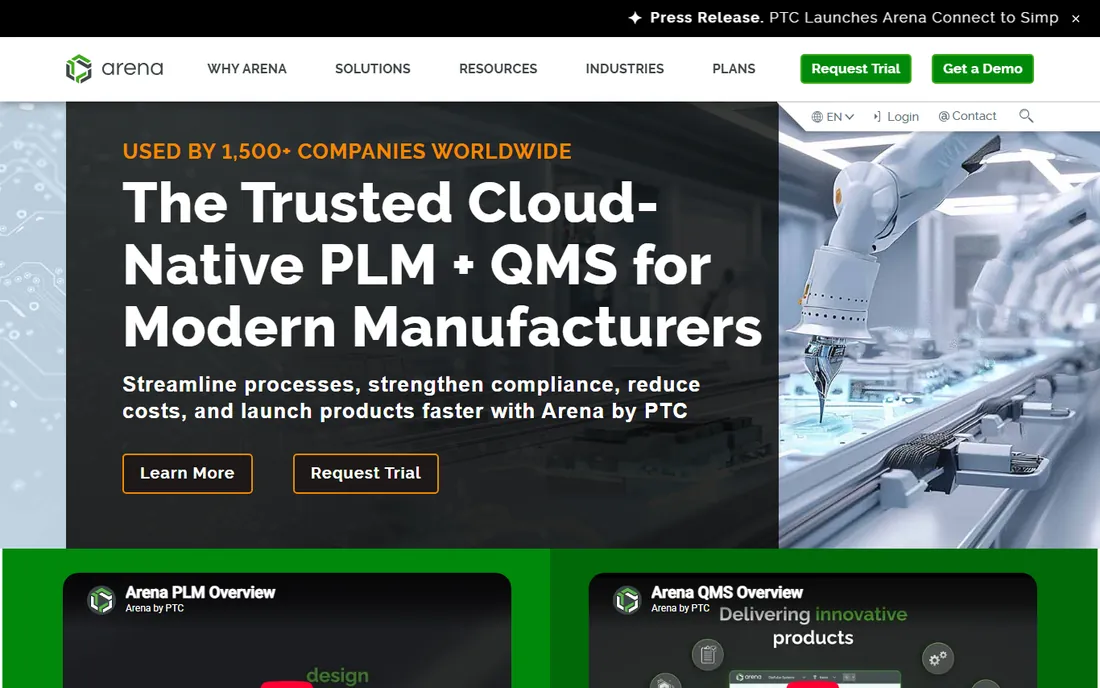
Arena PLM (owned by PTC) is the cloud PLM most electronics, medical device and aerospace suppliers actually use. Bills of materials, engineering change orders, document control and quality processes run in one system that suppliers can access through a collaboration portal. Because it was born in the cloud, deployment is measured in weeks, not the quarters legacy PLM demands.
Pricing is quote-based and scales with users. The PTC acquisition brought investment but also roadmap questions for long-time customers. For a mid-size manufacturer that needs real change control without an enterprise IT project, Arena is the benchmark to beat.
What we like- Cloud-native with fast deployment
- Strong BOM and change management
- Supplier collaboration portal
Watch out for- Quote-based pricing
- PTC ownership changes the roadmap calculus
Starting priceSee website
Free planNo
Teamcenter is the market share leader for a reason: it manages the entire product lifecycle for automotive, aerospace and industrial companies at enormous scale. Multi-CAD data management, requirements, systems engineering, manufacturing process planning and service lifecycle all connect through a digital thread with 3D visualization.
This is enterprise software in every sense. Costs run from tens of thousands to millions, and implementations need dedicated teams. Smaller manufacturers should look elsewhere. For a large enterprise standardizing product data globally, Teamcenter is the safe choice.
What we like- Broadest PLM footprint in the industry
- Digital thread with 3D visualization
- Massive integration ecosystem
Watch out for- Expensive and complex
- Implementations are major programs
Starting priceSee website
Free planNo
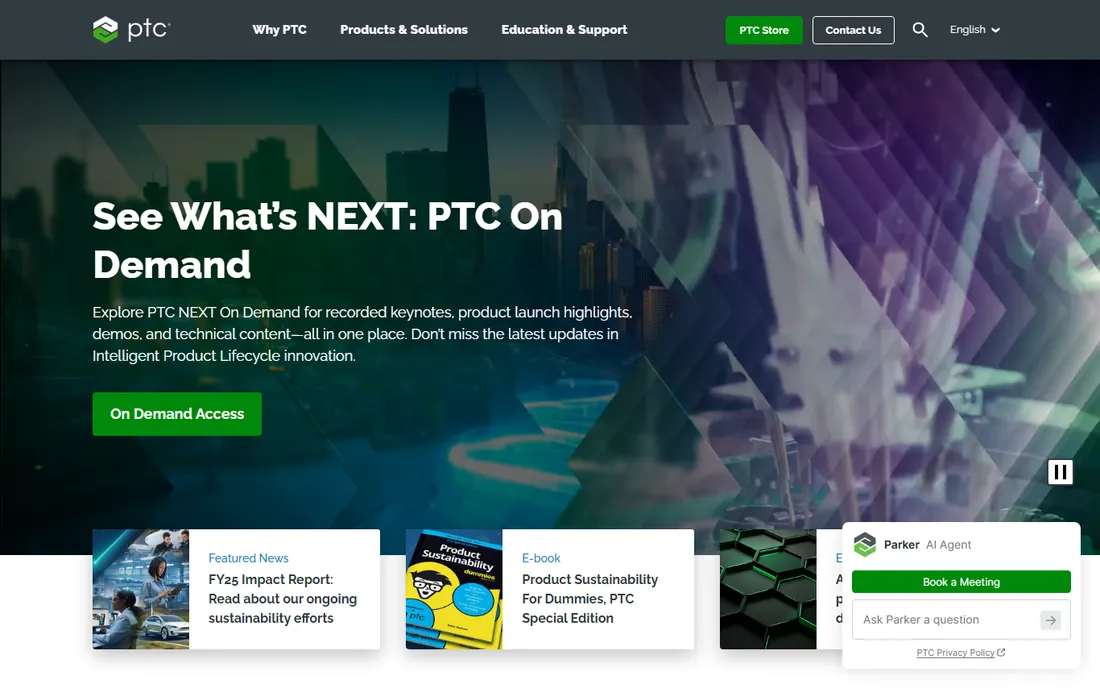
Windchill is PTC's enterprise PLM, strong in organizations that design in multiple CAD systems. It manages the full product definition with configuration control, change management and supplier collaboration, and connects to PTC's IoT and augmented reality portfolio for the digital thread story.
Licensing is complex and costs are enterprise-grade. Mid-size manufacturers often find Arena (also PTC) a better fit. Windchill suits mid to large manufacturers with serious configuration management needs and the IT resources to run it.
What we like- Strong multi-CAD data management
- Lifecycle-aware BOMs
- Deep IoT and AR integration via PTC
Watch out for- Complex licensing
- Heavyweight for small teams
Starting price$73/user/month
Free planFree trial
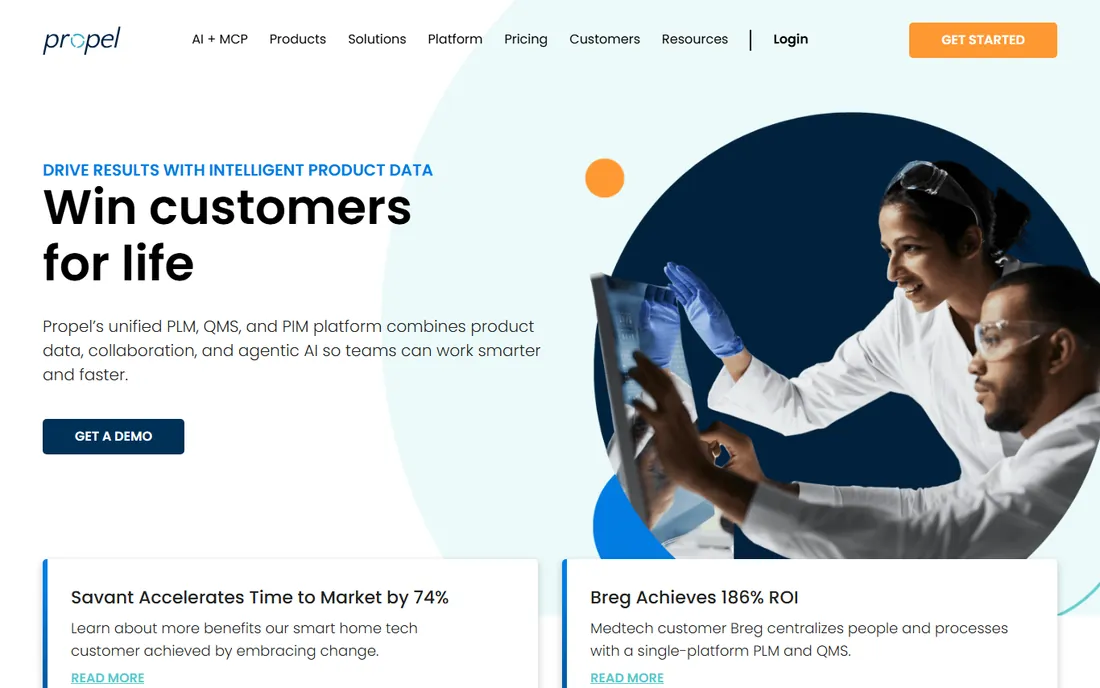
Propel rebuilt PLM for the cloud era on the Salesforce platform. Product records, quality management and product information management live in one modern interface with AI assistance for change reviews and risk identification. Companies already running Salesforce get single sign-on, shared data and familiar administration.
Pricing starts at $73 per user per month billed annually, with minimums that put it out of reach for tiny teams. You are buying into the Salesforce ecosystem, for better and worse. For fast-growing manufacturers that live in Salesforce, Propel is the most modern option available.
What we like- Modern interface on Salesforce
- Unified PLM, QMS and PIM
- AI-assisted change workflows
Watch out for- Minimum user counts
- Tied to the Salesforce platform
Starting priceSee website
Free planFree plan
Aras takes the opposite approach from locked-down suites: an open, low-code PLM platform that customers adapt deeply to their processes. Requirements, BOMs, change, quality and manufacturing planning are all covered, and upgrades preserve customizations, which is the traditional PLM upgrade nightmare solved.
The Community Edition is free for up to 50 named users, making Aras the only enterprise-grade PLM you can genuinely try at scale. Paid subscriptions are quote-based. It fits organizations with unique processes and the technical staff to shape the platform.
What we like- Open and highly customizable
- Free Community Edition
- Low-code platform
Watch out for- Customization needs expertise
- Enterprise subscriptions are quote-based
Starting priceSee website
Free planNo
Oracle Agile PLM serves enterprises already committed to Oracle's ERP and supply chain stack. Product data flows into procurement, manufacturing and compliance without integration projects. Regulated industries value its mature change control and audit trails.
The interface feels dated next to cloud-native competitors, and Oracle's enterprise sales process is what it is. Pricing is quote-based. If your company runs Oracle end to end, Agile PLM is the path of least resistance. Otherwise, modern alternatives will feel a decade newer.
What we like- Deep integration with Oracle ERP and SCM
- Strong for regulated industries
- Proven at scale
Watch out for- Dated user experience
- Oracle sales and contracting
Starting priceSee website
Free planFree trial
Fusion Manage (formerly Fusion Lifecycle) brings PLM to teams that design in Autodesk tools. Change management, BOMs, supplier collaboration and new product introduction workflows connect directly to the CAD data engineers already produce. Configuration is flexible without heavy coding.
Pricing is quote-based. The value concentrates in Autodesk-centric shops; multi-CAD enterprises get more from Teamcenter or Windchill. For a design-led manufacturer standardizing on Autodesk, Fusion Manage extends the investment naturally.
What we like- Native CAD integration
- Configurable workflows
- Familiar to Autodesk users
Watch out for- Quote-based pricing
- Weaker outside Autodesk-centric shops
Starting price$25/user/month
Free planFree plan
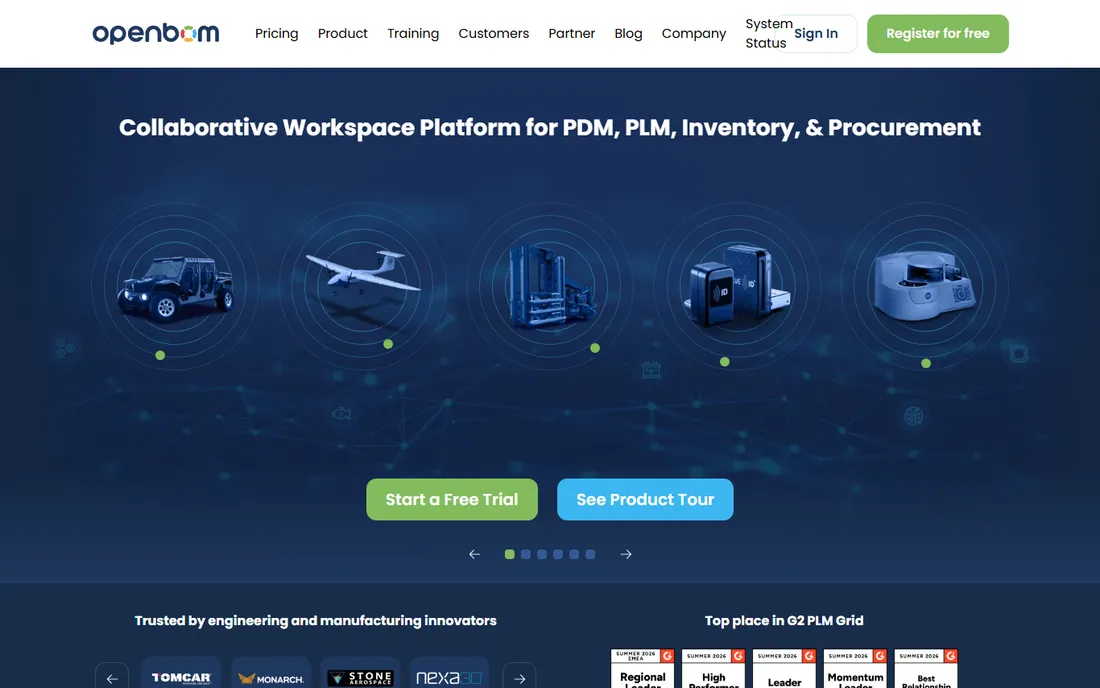
OpenBOM is PLM for the rest of us: cloud-based BOM management, change orders, vendor lists and purchasing that a small manufacturer can start using this week. Real-time collaboration means engineering, procurement and suppliers work from the same data. CAD integrations cover the major tools.
At $25 per user per month with a free tier, it is an order of magnitude cheaper than enterprise PLM. Advanced quality management and compliance workflows are thinner. For small to mid-size manufacturers drowning in spreadsheet BOMs, OpenBOM is the pragmatic first step into real PLM.
What we like- Affordable and easy to start
- Real-time BOM collaboration
- Integrates with major CAD tools
Watch out for- Less depth than enterprise PLM
- Limited advanced quality workflows

#9
Dassault ENOVIA
Best for: Design-heavy global teams
Visit 3ds.com
Starting priceSee website
Free planNo
ENOVIA is Dassault Systemes' collaborative PLM, strongest where design happens in CATIA or SOLIDWORKS. It connects design, engineering, manufacturing and supply chain on the 3DEXPERIENCE platform with collaboration tools built for distributed teams.
Pricing and implementation are enterprise-grade, and the value concentrates in the Dassault ecosystem. Design-heavy industries like automotive, aerospace and industrial equipment are its home turf. For global teams already on 3DEXPERIENCE, ENOVIA completes the picture.
What we like- Tight CATIA and SOLIDWORKS integration
- Strong collaboration
- Global deployment proven
Watch out for- Enterprise pricing and complexity
- Dassault ecosystem lock-in
How to scope a PLM project
Start with the BOM. Every PLM decision flows from how you manage bills of materials today and where they break: spreadsheet chaos, revision confusion, supplier misalignment. If the BOM problem is small, OpenBOM may be enough. If it spans engineering, manufacturing and service globally, you are in Teamcenter or Windchill territory.
Count the integrations. CAD, ERP, MES and CRM connections make or break PLM value. Cloud-native tools integrate through modern APIs; legacy suites often need middleware and consultants.
Budget for implementation, not just licenses. PLM software typically costs $10,000 to $500,000+ per year in licenses, and implementation can match or exceed the license cost. The vendors that quote licenses without implementation scoping are the ones that surprise you later.
Cloud vs on-premise in PLM
Cloud PLM (Arena, Propel, OpenBOM) deploys faster, updates automatically and suits distributed teams and suppliers. On-premise or private cloud (Teamcenter, Windchill, ENOVIA) appeals to defense, aerospace and companies with strict data sovereignty rules. Most new PLM purchases go cloud unless regulation says otherwise. Even traditional vendors now lead with cloud offerings.
Data migration: the CAD and BOM challenge
PLM implementations do not fail on software features. They fail on data migration, specifically the decades of CAD files, bills of materials and documents scattered across network drives, old PDM systems and engineers' local machines. This is the work nobody budgets enough for and everybody underestimates. A typical mid-size manufacturer has hundreds of thousands of files with inconsistent naming, duplicate parts under different numbers, and BOMs that exist only in someone's spreadsheet. Moving this into a structured PLM system is archaeology, and it determines whether the new system is trusted or ignored.
Start with a data audit before any migration planning. Sample the existing data: what percentage of CAD files have correct metadata, how many duplicate part numbers exist, which BOMs match the actual product structure. The audit results set the real scope. Common findings: 20 to 40 percent of legacy data needs cleansing before migration, and some historical data is not worth migrating at all. Decide explicitly what migrates and what stays archived. Migrating everything including the junk just moves the mess into an expensive new system. A good rule: active products migrate fully, obsolete products migrate as read-only archives, and anything untouched in five years stays where it is.
Part number discipline is the foundation everything else rests on. If the same physical part exists under three numbers, the PLM system will faithfully preserve that confusion forever. Deduplication must happen before migration, and it requires engineering judgment, not just software. Assign part owners, run the dedup as a project with a deadline, and freeze new part creation during the cleanup. This is tedious, political work, which is why it gets skipped, and skipping it is why migrated PLMs contain the same chaos as the old drives, just in a nicer interface.
CAD integration testing deserves its own phase. The PLM must check CAD files in and out correctly, maintain references between assemblies and parts, and handle the specific CAD versions engineering actually uses. Test with real production data, not samples: large assemblies, complex references, the files engineers complain about. Verify that metadata flows from CAD attributes into PLM fields automatically; manual metadata entry after migration guarantees the data goes stale within months. Also confirm performance over VPN for remote engineers, since check-out times on large assemblies can make or break daily adoption.
Plan the cutover as a project, not an event. Run the old and new systems in parallel for at least one product cycle so engineers can verify the migrated data against real work. Freeze the legacy system as read-only at a defined date to prevent divergence. Train on the migrated data, not demo data; engineers trust what they recognize. And keep the migration team available for at least three months post-launch, because data issues surface when real work hits the system, not during testing. The migration is done when engineers stop asking where the old files are, not when the import script finishes.
Frequently asked questions
What does PLM software actually do?
It manages product data from concept to retirement: designs, BOMs, change orders, supplier information, quality records and compliance documentation. The goal is one trusted source of product truth instead of scattered files and spreadsheets.
How much does PLM software cost?
Small-team cloud PLM starts around $25 per user per month. Mid-market platforms run $60,000 to $150,000+ per year all-in. Enterprise PLM can exceed $500,000 per year with implementation. Always budget implementation separately.
What is the difference between PLM and PDM?
PDM (product data management) focuses on design files and engineering documents. PLM is broader, covering the full lifecycle including manufacturing, quality, suppliers and service. Many vendors offer PDM as an entry point to full PLM.
How long does PLM implementation take?
Cloud PLM for a mid-size manufacturer: weeks to a few months. Enterprise PLM: 6 to 18 months is normal. Data migration and process alignment, not software installation, consume most of the timeline.
Do small manufacturers need PLM?
They need BOM and change control, which is PLM's core. Tools like OpenBOM or Arena deliver it without enterprise overhead. Spreadsheets stop working somewhere around 50 to 100 active parts; that is the signal to adopt real PLM.
Can PLM integrate with our ERP?
Yes, and it should. BOMs, item masters and change orders flow between PLM and ERP. Native integrations exist for major ERP pairings (Oracle, SAP); others use APIs or middleware. Confirm your specific ERP pairing during evaluation.
How we chose
We compared the PLM platforms manufacturers actually evaluate, from small-team cloud tools to enterprise suites. Pricing comes from vendor pages and recent published comparisons; enterprise pricing is quote-based across the category. We weighted BOM and change management depth, deployment model, CAD and ERP integrations, and fit for different company sizes. No hands-on testing was performed; assessments rest on documentation and public reviews.
Sources we checked (12)
- https://www.arenasolutions.com/
- https://www.siemens.com/
- https://www.ptc.com/
- https://www.propelsoftware.com/pricing
- https://aras.com/
- https://www.oracle.com/
- https://www.autodesk.com/
- https://www.openbom.com/pricing
- https://www.3ds.com/
- http://selecthub.com/c/plm-software/
- https://www.cotocus.com/blog/top-10-product-lifecycle-management-plm-tools-in-2025-features-pros-cons-comparison/
- https://softwareconnect.com/roundups/best-product-lifecycle-management-software/
Is your product missing or out of date?
We review this list regularly. Vendors can request a listing, send updated pricing or ask about featured placement.

Shihab Mia · Founder, Rankite
Shihab has spent more than a decade helping SaaS and e-commerce brands grow through search. He writes Rankite's software buying guides from pricing pages, documentation and public user reviews. More about Shihab.
 Arena PLM
 Siemens Teamcenter
 PTC Windchill
 Propel
 Aras Innovator
 Oracle Agile PLM
 Autodesk Fusion Manage
 OpenBOM