How we make this list: we compare pricing pages, product documentation and public user reviews. Rankite is independent; if a vendor ever pays for a featured spot, that listing is clearly labeled Partner.
Key takeaways
- The CFO question that drives these purchases is simple: who are our suppliers, what are we spending with each, and which contracts renew when. Every tool here answers it at a different company size.
- Coupa, SAP Ariba, Jaggaer, Ivalua and GEP SMART are the enterprise tier, with full source-to-pay suites covering supplier onboarding, performance, risk and sourcing at global scale.
- Precoro and Procurify serve the mid-market with faster implementations, published starting prices and supplier portals that do not require an army of consultants.
- Zip is the intake-first option: it orchestrates purchasing from the request forward and layers on top of the ERP and procurement systems you already run.
- Supplier management specifically means onboarding, performance scorecards, contract visibility and risk monitoring. If a tool only does purchase orders, it is not supplier management software.
Quick comparison
| Tool | Best for | Starting price | Free plan |
|---|
 Coupa Coupa | Enterprise spend management | See website | No |
 SAP Ariba SAP Ariba | Large SAP-run enterprises | See website | No |
 Jaggaer Jaggaer | Complex direct and indirect sourcing | See website | No |
 Ivalua Ivalua | Configurable source-to-pay | See website | No |
 GEP SMART GEP SMART | Unified procurement with AI analytics | See website | No |
 Precoro Precoro | Mid-market purchasing centralization | See website | No |
 Procurify Procurify | Mid-market spend control | See website | No |
 Zip Zip | Intake-to-pay orchestration | See website | No |
Is your product missing or out of date?
We review this list regularly. Vendors can request a listing, send updated pricing or ask about featured placement.
The best procurement software for supplier management
Starting priceSee website
Free planNo
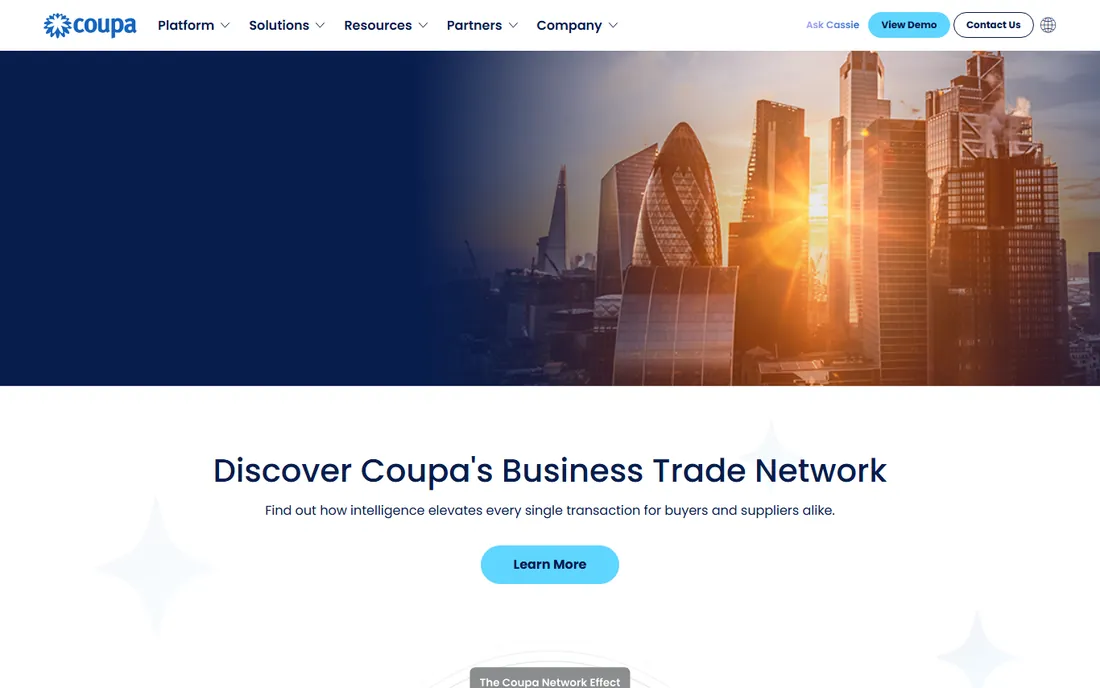
Coupa is the default answer when an enterprise says "spend management." The platform covers the full cycle from sourcing and supplier management through procurement, invoicing and payments, and its differentiator is the community data: with $10 trillion in spend intelligence across its customer base, Coupa can benchmark your supplier pricing and performance against peers, which turns supplier negotiations from guesswork into data. More than half the Fortune 500 runs on it.
For supplier management specifically, Coupa handles supplier onboarding, information management, performance tracking and risk monitoring inside the same system that processes the purchase orders, so the supplier record is never a stale spreadsheet. AI agents now accelerate approval cycles and surface risk before it becomes a problem. The honest catch is everything enterprise: quote-based pricing, long sales cycles, and implementations measured in quarters. Mid-market companies will find Precoro or Procurify faster and cheaper. For the large enterprise, Coupa's breadth and benchmark data are unmatched.
What we like- $10 trillion in community spend intelligence benchmarks your suppliers
- Unified sourcing, procurement, invoicing and payments
- 55% of the Fortune 500 as customers
Watch out for- Quote-based enterprise pricing with long sales cycles
- Implementation is a program, not a project
Starting priceSee website
Free planNo
SAP Ariba is less a product than an ecosystem. The Ariba Network connects millions of buyers and suppliers, which means supplier discovery, onboarding and transacting happen inside the largest business commerce network in the world. For a company already running SAP ERP, Ariba's procurement, sourcing, contracts and supplier management modules share data natively with finance, which eliminates the integration tax that standalone tools pay.
Supplier management in Ariba covers the full lifecycle: discovery and qualification, onboarding, performance management, risk assessment, and contract compliance, all tied to the spend analytics that show where money actually goes. The honest catch is that Ariba makes the most sense inside SAP. Outside an SAP environment, the integration effort and licensing complexity erode the value, and smaller companies will drown in it. Pricing is famously opaque, with buyer contracts varying widely. But for the global enterprise standardized on SAP, Ariba remains the structural choice.
What we like- Deepest supplier network in the industry
- Native integration with SAP ERP
- End-to-end supplier lifecycle from discovery to risk management
Watch out for- Pricing complexity is legendary
- Best value only materializes inside an existing SAP environment
Starting priceSee website
Free planNo
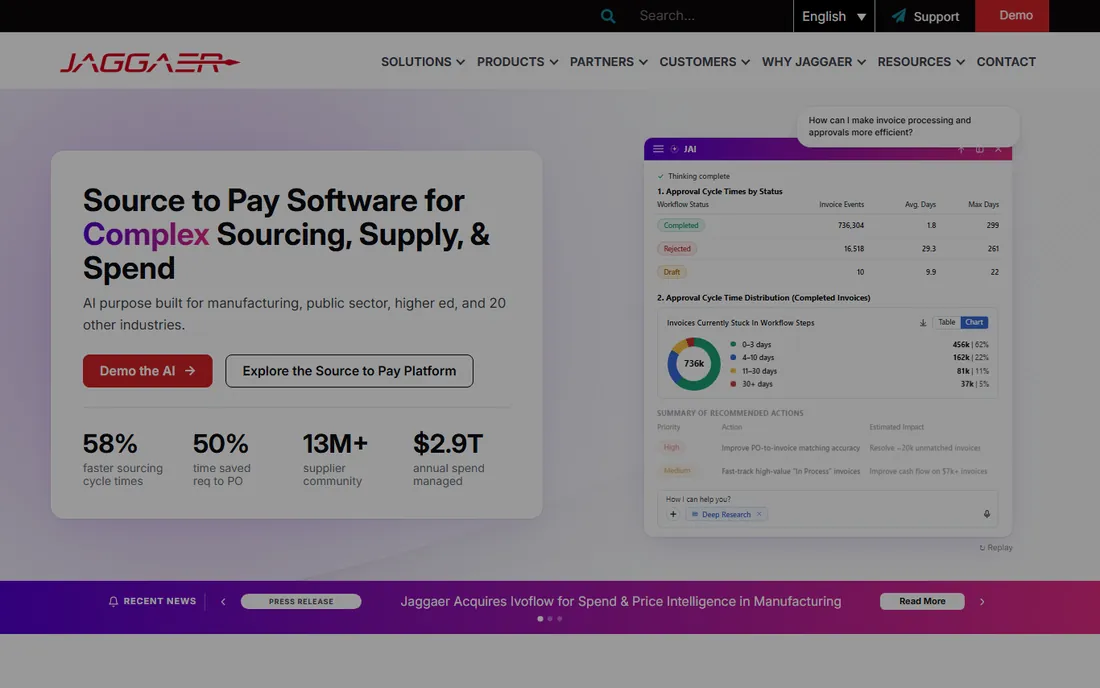
Jaggaer earns its place for buyers whose procurement is genuinely complicated. Where many platforms focus on indirect spend (office supplies, services), Jaggaer handles direct materials, complex category sourcing and supply chain collaboration alongside the standard procure-to-pay flow. It claims 1,300+ enterprises managing $2.9 trillion in annual spend, with particular strength in manufacturing, the public sector, higher education and healthcare.
The supplier management depth matches the complexity. Supplier discovery, qualification, performance tracking, risk monitoring and contract management run in one connected platform, and the sourcing module supports the multi-round events that direct-materials buying requires. Integration is pragmatic: 40+ ERP connectors including SAP, Oracle, Workday and Microsoft Dynamics. The honest catch is that Jaggaer assumes a mature procurement function. Configuration demands expertise, implementations are enterprise-grade, and a 50-person company will find it overwhelming. For complex industries, though, few platforms go as deep.
What we like- Handles direct materials and complex categories, not just indirect spend
- Strong in manufacturing, public sector and higher education
- 40+ ERP integrations
Watch out for- Enterprise sales and implementation cycles
- Interface and configuration demand procurement expertise
Starting priceSee website
Free planNo
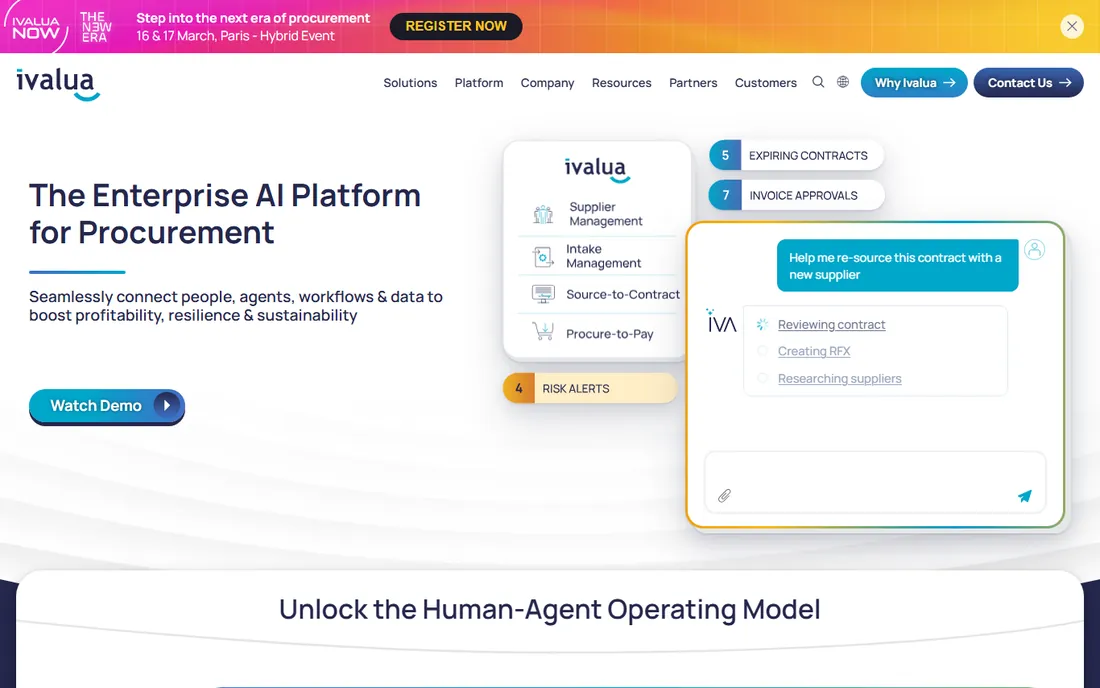
Ivalua's pitch is that procurement is never standard, so the software should not force standard processes. The platform's no-code and low-code tools let procurement teams configure workflows, approval chains and supplier processes to match how the company actually buys, rather than adapting the company to the software. It covers the full source-to-pay cycle across indirect goods, services, direct materials and complex categories in a single platform.
For supplier management, that configurability matters most in onboarding and performance. Supplier registration, qualification criteria, scorecards and risk workflows can all be shaped to the company's categories instead of squeezed into templates. Ivalua also maintains the industry's leading customer retention rate over two decades, which says something about long-term fit. The honest catch is the flip side of flexibility: configuring the platform well requires skilled people, and implementations are not the two-week affairs the mid-market tools promise. Pricing is quote-based. For enterprises with genuinely unique procurement processes, Ivalua is the best-fitting suite.
What we like- No-code/low-code configurability for unique workflows
- Manages all spend types including direct materials
- Industry-leading customer retention over 20+ years
Watch out for- Quote-based pricing
- Configurability means implementations need skilled resources
#5
GEP SMART
Best for: Unified procurement with AI analytics
Visit gep.com
Starting priceSee website
Free planNo
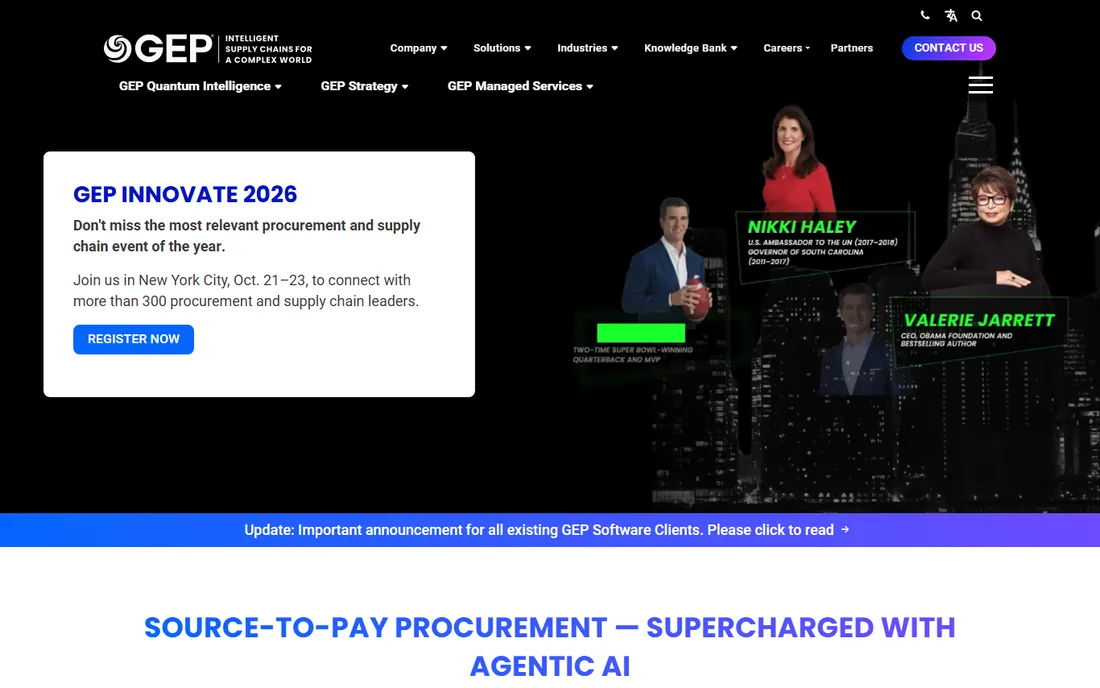
GEP SMART is the software arm of a company that also does procurement consulting and outsourcing, which gives it unusual depth in how procurement actually operates. The platform unifies sourcing, procurement, supplier management, contracts and spend analytics, with AI-driven insights layered across all of it. For the global enterprise trying to consolidate fragmented buying across regions, that unified analytics layer is the selling point: one view of spend, suppliers and contracts instead of regional silos.
Supplier management covers onboarding, performance, risk and collaboration, and the AI analytics identify savings opportunities and supplier risks that rule-based systems miss. GEP's consulting background means implementations come with genuine process expertise attached. The honest catch is the enterprise shape of everything: sales cycles, pricing and implementation all run at enterprise pace, and smaller companies will find the platform and the process heavier than they need. For the multinational unifying procurement, GEP SMART belongs on every shortlist.
What we like- Single platform for procurement, sourcing and spend analytics
- AI-powered insights across the suite
- Strong for global enterprises unifying fragmented buying
Watch out for- Enterprise positioning with long sales cycles
- The consulting heritage shows in implementation style
Starting priceSee website
Free planNo
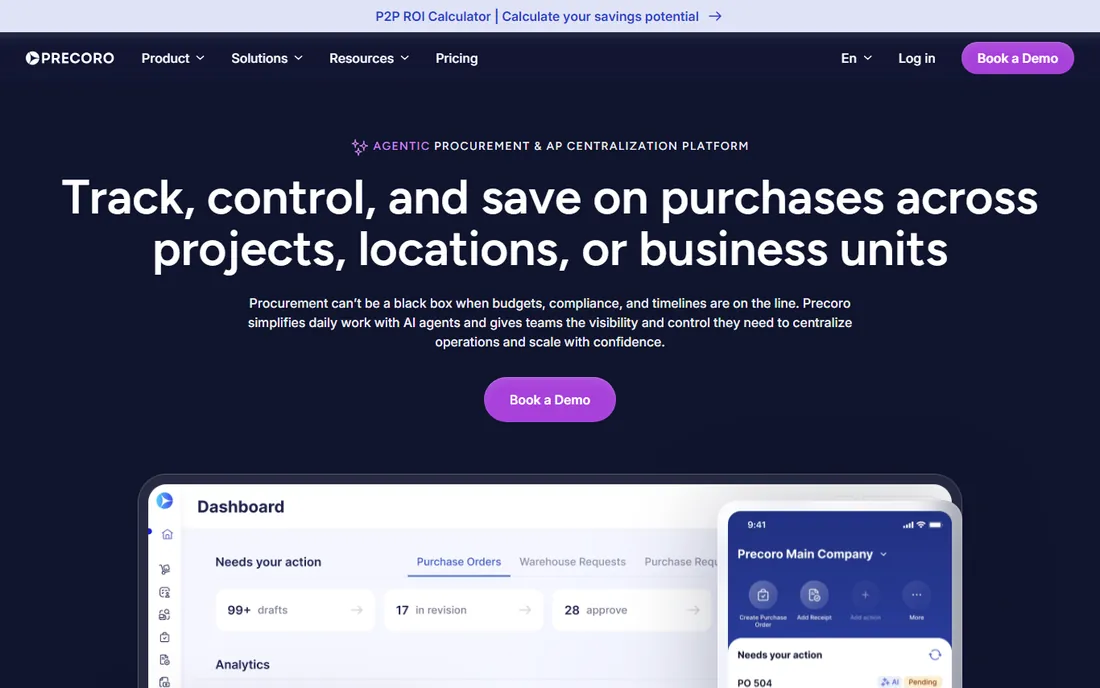
Precoro is what the mid-market actually buys when it outgrows spreadsheets and email approvals. The platform centralizes the full purchasing cycle: intake, approvals, purchase orders, receipts, invoices, payments, budgets and suppliers, with AI agents handling routine work like invoice data extraction. Implementation runs 2 to 8 weeks with white-glove support and no IT involvement, which is a different universe from the enterprise suites' quarterly rollouts.
The supplier management module punches above the price class. Customizable supplier registration forms collect tax documents, certifications and insurance; vendors get a self-service portal to update catalogs and respond to RFPs; contracts live in one searchable place with renewal alerts; and delivery performance tracking identifies which suppliers deliver on time. Multi-entity and multi-currency support handles companies buying across legal entities. The honest catch is ceiling: strategic sourcing events and advanced supplier risk analytics are thinner than in Coupa or Jaggaer. But for distributed mid-market teams that need control without consultants, Precoro is the sweet spot.
What we like- Go-live in 2-8 weeks with no IT involvement
- Supplier portal with self-service onboarding and catalogs
- Multi-entity and multi-currency support
Watch out for- No public pricing
- Advanced sourcing features trail the enterprise suites
Starting priceSee website
Free planNo
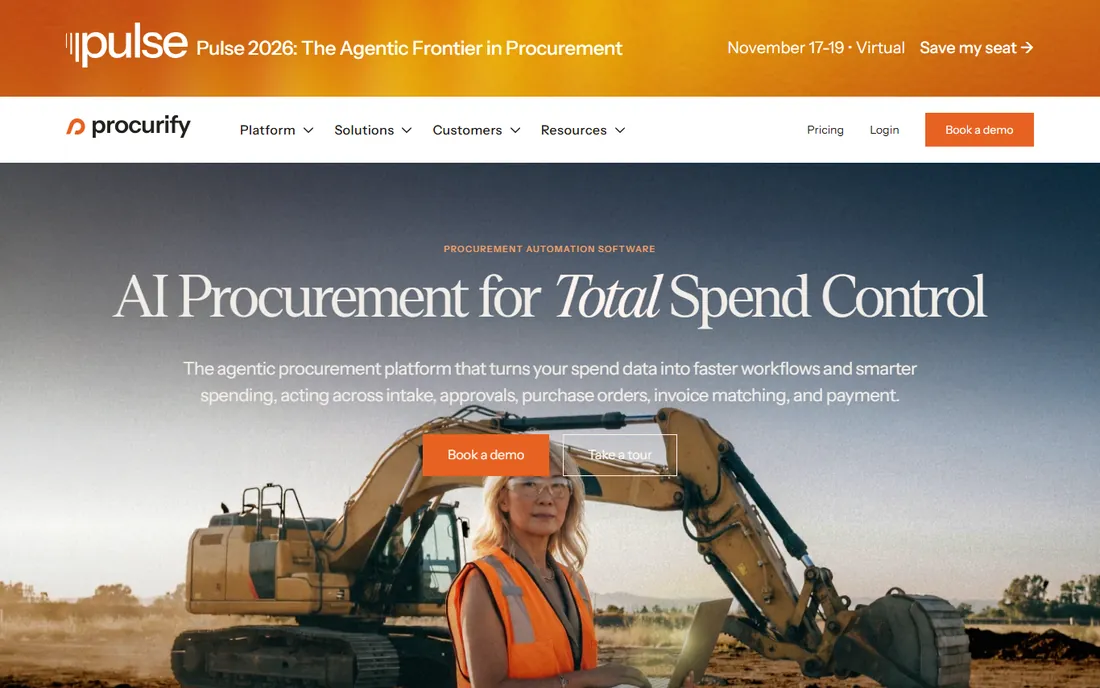
Procurify positions itself as enterprise control without enterprise drag, and the product backs it up. The platform runs the full spend lifecycle from intake to payment: AI agents draft purchase requests, code invoices and run three-way matching using the organization's own data, while audit trails, approval routing and ERP integrations keep finance comfortable. Integrations cover NetSuite, QuickBooks, Sage Intacct and Microsoft Dynamics 365 Business Central, which matters because mid-market finance teams live in those ERPs.
For supplier management, Procurify keeps vendor records, purchase history and spend data connected to the buying workflow, so supplier decisions draw on real transaction history rather than anecdote. The mobile experience is strong, which matters for approvers who live on their phones. The honest catch is pricing opacity: despite the mid-market positioning, pricing is quote-based, so budgeting requires a sales conversation. And like Precoro, strategic sourcing depth trails the enterprise suites. For growing companies that want purchasing discipline with minimal overhead, Procurify is one of the two best mid-market answers.
What we like- Full intake-to-pay lifecycle with AI drafting requests and coding invoices
- Strong ERP integrations including NetSuite and QuickBooks
- G2 Leader for mid-market procure-to-pay
Watch out for- Quote-based pricing despite the mid-market focus
- Advanced sourcing is not the strength
Starting priceSee website
Free planNo
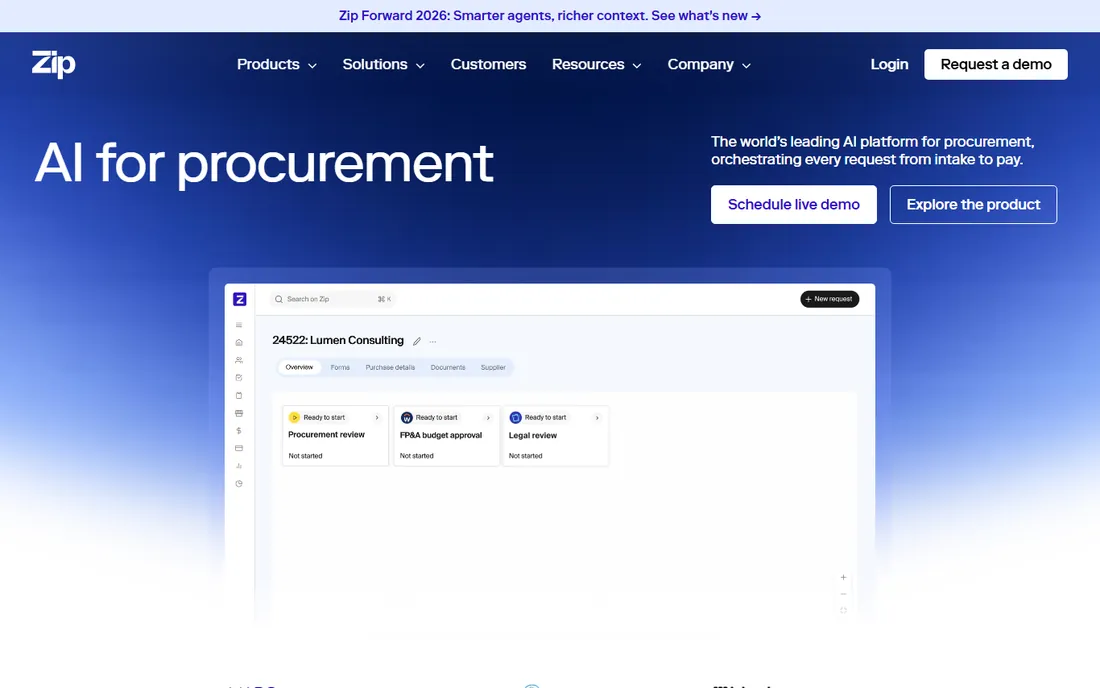
Zip starts where procurement actually breaks: the intake. Employees buy things outside the process because requesting is painful, and Zip fixes the front door with guided intake, smart approvals and AI agents, then orchestrates everything downstream through purchase orders, suppliers and payments. It integrates with SAP, Oracle, Workday, NetSuite and the rest of the stack rather than asking the company to rip anything out. Customers include OpenAI, Snowflake, Canva, Coinbase and Anthropic, and the company reports $10.5 billion in savings delivered.
For supplier management, Zip's angle is orchestration: supplier onboarding, information and risk checks plug into the intake flow, so compliance happens at the request stage instead of as an afterthought. The platform was the only procurement orchestration vendor in the 2026 Gartner Magic Quadrant for Source-to-Pay Suites. The honest catch is architectural: Zip orchestrates procurement across your existing systems, which is perfect if you have an ERP and need control, but it is not a full source-to-pay suite replacement for Coupa or SAP Ariba. Companies choosing between the two should decide whether their gap is intake discipline or end-to-end suite depth.
What we like- Starts from the purchase request, fixing off-process buying
- Layers over existing ERP and procurement systems
- Strong enterprise customer base including OpenAI and Snowflake
Watch out for- Orchestration-first design means it complements rather than replaces a full suite
- Pricing is quote-based
Supplier onboarding, scorecards and risk: what to evaluate
Supplier management breaks into four jobs, and you should score every vendor on each. Onboarding is first: can suppliers register themselves, submit tax forms, certifications and insurance documents, and get approved through a workflow, or does procurement chase PDFs over email. Precoro, Coupa and Zip all offer supplier portals; the enterprise suites add deeper qualification workflows.
Performance scorecards come second. The platform should track on-time delivery, quality, responsiveness and spend concentration per supplier, and surface the data where buyers actually see it. Ask for a live scorecard demo with real-looking data, not slides. Third is contract visibility: every supplier agreement searchable in one place, with renewal and expiration alerts. Missed renewals that auto-extend at bad rates are one of the most expensive failures in procurement, and Gatekeeper-style contract discipline (or its equivalent inside these suites) pays for itself.
Fourth is risk monitoring: financial health signals, geographic concentration, compliance status and ESG factors. The enterprise suites (Coupa, SAP Ariba, Jaggaer, Ivalua, GEP) invest most here; the mid-market tools cover the basics. Match the depth to your exposure. A company with three domestic suppliers needs less than one with 400 suppliers across Southeast Asia.
Implementation reality by company size
Enterprise suites take quarters, not weeks. Coupa, SAP Ariba, Jaggaer, Ivalua and GEP SMART implementations involve process design, data migration, integration work and change management, and the total cost of the project often exceeds the first year's license. That is normal and worth it at scale, but go in with eyes open: assign an internal owner with real authority, clean your supplier master data before migration, and phase the rollout by region or category rather than attempting a big bang.
Mid-market tools are genuinely faster. Precoro quotes 2 to 8 weeks to go live, and Procurify runs a dedicated implementation team with no engineering resources required on your side. The trade is scope: you get purchasing discipline and supplier basics quickly, not a transformed sourcing function. For most companies under 500 employees, that trade is correct.
Zip sits in between. Because it layers over existing systems, technical implementation is lighter than a suite replacement, but the change management is real: you are retraining how every employee buys things. Budget as much for adoption as for software. Whichever tier you choose, run a pilot with one department and one category before committing the whole company; procurement software that works in the demo but dies in adoption is the most common failure mode in this category.
How we chose
We defined supplier management as onboarding, performance tracking, contract visibility and risk monitoring, and excluded pure purchase-order tools that do none of those. We compared the enterprise source-to-pay suites on depth across those four jobs, and the mid-market and orchestration tools on implementation speed, usability and value. Sources were vendor documentation and 2026 product pages, analyst evaluations including Gartner's Magic Quadrant, and peer review data from G2. We did not claim hands-on testing.
Frequently asked questions
What is supplier management software?
Supplier management software handles the vendor side of procurement: onboarding and qualifying suppliers, tracking performance with scorecards, managing contracts and renewals, and monitoring risk. It is distinct from purchasing software, which handles requisitions and purchase orders. The best platforms, like Coupa and SAP Ariba, do both in one system.
How much does procurement software cost?
Enterprise suites (Coupa, SAP Ariba, Jaggaer, Ivalua, GEP SMART) are quote-based and typically run into six figures annually for mid-size deployments. Mid-market tools like Precoro and Procurify are also quote-based, though at much lower levels; check each vendor's pricing page for current numbers. Implementation services are usually extra. Always get the full three-year cost including implementation before comparing.
What is the difference between Coupa and SAP Ariba?
Both are enterprise source-to-pay suites, but Coupa is a standalone cloud platform known for spend benchmarking across its customer community, while SAP Ariba is part of the SAP ecosystem with the industry's largest supplier network. Companies standardized on SAP ERP usually get more value from Ariba; companies wanting a best-of-breed cloud suite often prefer Coupa.
Do small businesses need supplier management software?
Most small businesses do not need a full suite. If you have a handful of suppliers and simple purchasing, a mid-market tool like Precoro or Procurify, or even well-run processes in your accounting software, is enough. Supplier management software earns its keep when supplier count, spend complexity or compliance requirements exceed what spreadsheets and email can track.
What is procurement orchestration?
Procurement orchestration, pioneered by Zip, coordinates the purchasing process from intake through payment across the systems a company already runs. Instead of replacing the ERP or the procurement suite, it fixes the front door: guided intake, smart approvals and automated routing that keep buying inside the process. It suits companies whose biggest problem is off-process spending rather than missing suite functionality.
Sources we checked (11)
- https://www.coupa.com/
- https://www.sap.com
- https://jaggaer.com/
- https://www.ivalua.com/
- https://www.gep.com
- https://precoro.com
- https://procurify.com/
- https://ziphq.com/
- https://www.spendesk.com/blog/best-procurement-software/
- https://procurement360.io/blog/top-10-procure-to-pay-software-2026/
- https://infraspeak.com/en/blog/supplier-relationship-management-srm-software
Is your product missing or out of date?
We review this list regularly. Vendors can request a listing, send updated pricing or ask about featured placement.

Shihab Mia · Founder, Rankite
Shihab has spent more than a decade helping SaaS and e-commerce brands grow through search. He writes Rankite's software buying guides from pricing pages, documentation and public user reviews. More about Shihab.