How we make this list: we compare pricing pages, product documentation and public user reviews. Ratings come from G2, Capterra or Trustpilot, with the date we checked them.
Key takeaways
- Wholesalers need customer-specific pricing, case and pallet units, and house accounts. Most retail POS tools do none of this well, so the shortlist is shorter than it looks.
- NCR Voyix Counterpoint is the wholesale specialist: tiered pricing, volume discounts, contract pricing and case/pack/unit selling built in. Pricing is quote-only.
- Erply ($59/month flat on third-party listings, free account to start) and KORONA POS ($59/month per terminal, unlimited free trial) give smaller distributors real inventory depth without a sales call.
- Lightspeed Retail starts at $89/month (billed annually) with advanced inventory and supplier tools. Square for Retail has a genuinely free plan, with Plus at $49/month per location per recent reviews.
- Cin7 ($349/month) is inventory software with a POS attached, the right shape for multichannel sellers. Shopify POS Pro ($89/month per location) fits wholesalers already running on Shopify.
Quick comparison
| Tool | Best for | Starting price | Free plan |
|---|
 Erply Erply | Distributors selling through stores, a warehouse and a webshop | See website (custom quotes; free account to start) | Free account (self-serve start) |
 NCR Voyix Counterpoint NCR Voyix Counterpoint | Wholesale counters with tiered pricing, volume discounts and house accounts | See website (custom quote only) | No (demo available) |
 Lightspeed Retail Lightspeed Retail | Specialty retailers and wholesalers with complex, variant-heavy catalogs | $89/month (Basic plan, billed annually; $109 month-to-month) | Free trial (no credit card required, per reviewers) |
 KORONA POS KORONA POS | Businesses that want transparent pricing and no processing lock-in | $59/month per terminal (Core plan) | Unlimited free trial (no credit card, per reviewers) |
 Square for Retail Square for Retail | Small wholesalers and cash-and-carry counters starting cheap | $0 (Free plan); Plus $49/month per location (per recent reviews) | Yes (permanent free plan; 30-day Plus trial) |
 Shopify POS Shopify POS | Wholesalers already selling online through Shopify | POS Lite included free with Shopify plan; POS Pro $89/month per location ($79 billed annually) | Free trial (3 days, extendable with $1/month promo) |
 Retail Pro Retail Pro | Mid-market and enterprise chains with heavy promotional pricing | See website (quote-based, sold through partners) | No (demo and consultation available) |
 Cin7 Cin7 | Multichannel sellers where inventory control is the real job | $349/month (Core plan) | Free trial (14 days) |
 Acumatica Acumatica | Distributors that want the POS living inside their ERP | See website (quote-based, unlimited-user licensing) | No (demo available) |
 Clover Clover | Counter setups where hardware choice matters most | See website (sold through resellers; direct software plans vary) | Free trial (30 days on direct software plans, per reviewers) |
Is your product missing or out of date?
We review this list regularly. Vendors can request a listing, send updated pricing or ask about featured placement.
The best POS software for wholesale business
A wholesale counter runs on different math than a retail register. Your customers buy in cases, not singles. Prices change by account, by volume, and by contract. Some buyers pay now, others pay on net-30 terms, and the tax-exempt ones need their paperwork straight. A POS built for coffee shops will make you fight it every day. These ten systems handle, or at least tolerate, the way wholesalers actually sell.
#1
Erply
Best for: Distributors selling through stores, a warehouse and a webshop
Visit erply.com
Starting priceSee website (custom quotes; free account to start)
Free planFree account (self-serve start)
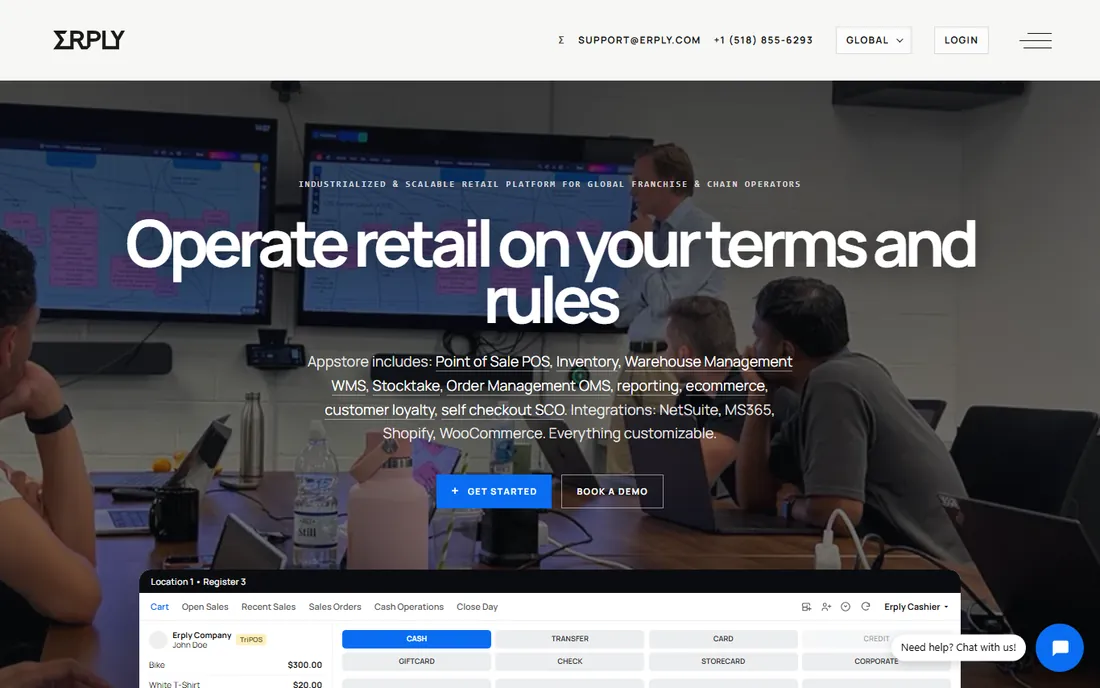
Wholesalers that sell through stores, a warehouse and a webshop tend to end up on Erply. The platform treats the POS as one module inside a wider retail system: inventory, warehouse management, order management, ecommerce and CRM share one database. That matters when a phone order, a counter sale and a web order all pull from the same pallet. It supports offline checkout, multi-store operations and franchises, with data hosting options across the US, EU and other regions.
The catch is pricing opacity. Erply advertises a free start, but plan prices are not published clearly and third-party listings disagree with each other. Expect a sales conversation before you know your number. Implementation also takes more work than a plug-and-play register, since the inventory side has real depth. If you want one system from counter to warehouse without an enterprise budget, Erply is worth the quote.
What we like- One stock picture across POS, warehouse and ecommerce
- Purchase orders, supplier management and stock transfers included
- Open API with integrations for Shopify, WooCommerce, QuickBooks and NetSuite
Watch out for- Public pricing is unclear and changes often, so budget with a quote
- The interface feels dated next to newer cloud POS tools
#2
NCR Voyix Counterpoint
Best for: Wholesale counters with tiered pricing, volume discounts and house accounts
Visit ncr.com
Starting priceSee website (custom quote only)
Free planNo (demo available)
If your counter does cash-and-carry and your back office runs on terms, Counterpoint was built for exactly that split. This is the wholesale specialist of the group: multiple price levels per customer, volume discounts, contract pricing for specific accounts, tax-exempt account tracking and house accounts with accounts receivable. Inventory handles thousands of SKUs across warehouses, with stock transfers, serialized items and wholesale-specific reports like margin by client and sales by rep. It also plays well in hybrid businesses that run retail and wholesale side by side.
The trade is weight. Counterpoint is sold through partners, implementation is a project rather than a signup, and pricing is entirely quote-based. Smaller distributors may find it more system than they need. For a distributor, contractor supply house or multi-branch wholesaler with complex pricing, it is the benchmark the others get measured against.
What we like- Tiered pricing, volume discounts and contract pricing per account
- Sells in cases, packs, pallets or single units
- Purchase orders, vendor management, serialized inventory and multi-warehouse transfers
Watch out for- No published pricing, so every deal starts with a sales process
- Heavier implementation than cloud-first competitors
#3
Lightspeed Retail
Best for: Specialty retailers and wholesalers with complex, variant-heavy catalogs
Visit lightspeedhq.com
Starting price$89/month (Basic plan, billed annually; $109 month-to-month)
Free planFree trial (no credit card required, per reviewers)
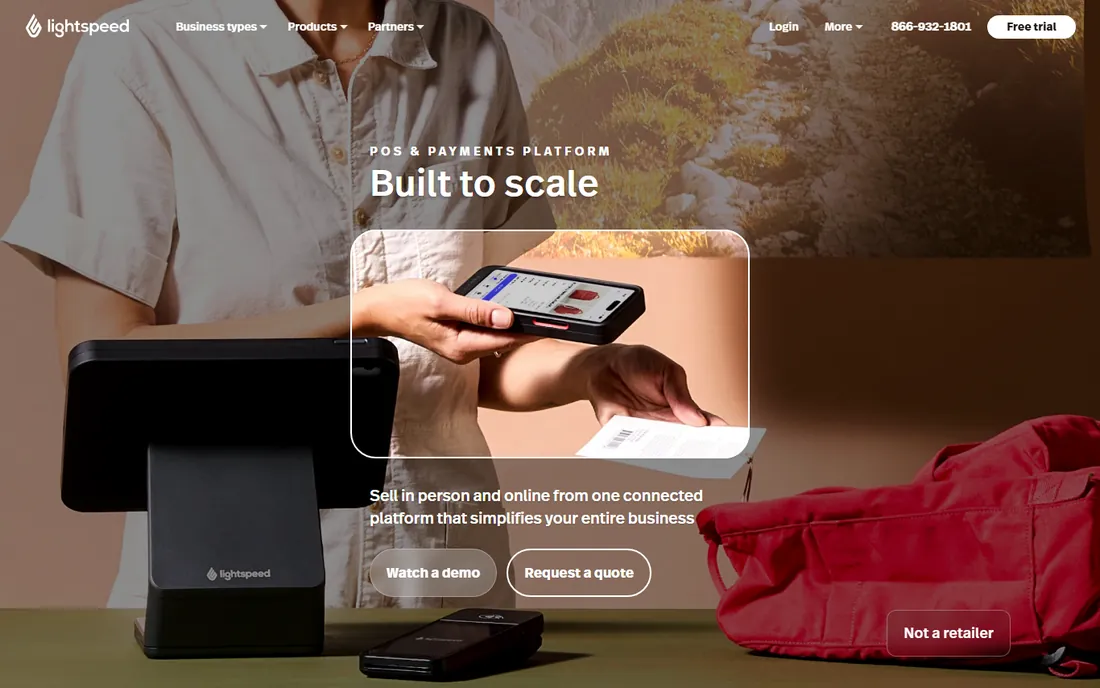
Lightspeed is the inventory nerd of retail POS, and wholesale-adjacent businesses feel it immediately. Matrix products, serial number tracking, landed cost tracking, purchase orders and vendor catalog access come standard, and even the Basic plan includes Lightspeed Wholesale and NuORDER catalog access. Multi-location stock, advanced sales and inventory reporting, and loyalty arrive on higher tiers. Payments run through Lightspeed Payments at 2.6% + 10 cents in person, the same rate for every card brand.
The honest catch is cost and lock-in. Basic at $89 per month covers one register; extra registers are $59 each per month. Using your own processor triggers an additional monthly fee tied to volume. And the plan structure pushes growing operations toward Core or Plus fast. For a wholesaler with thousands of variant SKUs and real purchasing workflows, the depth justifies it. For a simple counter, it is overkill.
What we like- Advanced inventory with matrix SKUs, serial tracking and purchase order workflows
- Supplier catalogs and NuORDER integration on every plan
- Built-in ecommerce and 24/7 chat support
Watch out for- Expensive for what it is, and the best features sit on Core ($149) and Plus ($289)
- Extra monthly fee if you use a third-party payment processor
#4
KORONA POS
Best for: Businesses that want transparent pricing and no processing lock-in
Visit koronapos.com
Starting price$59/month per terminal (Core plan)
Free planUnlimited free trial (no credit card, per reviewers)
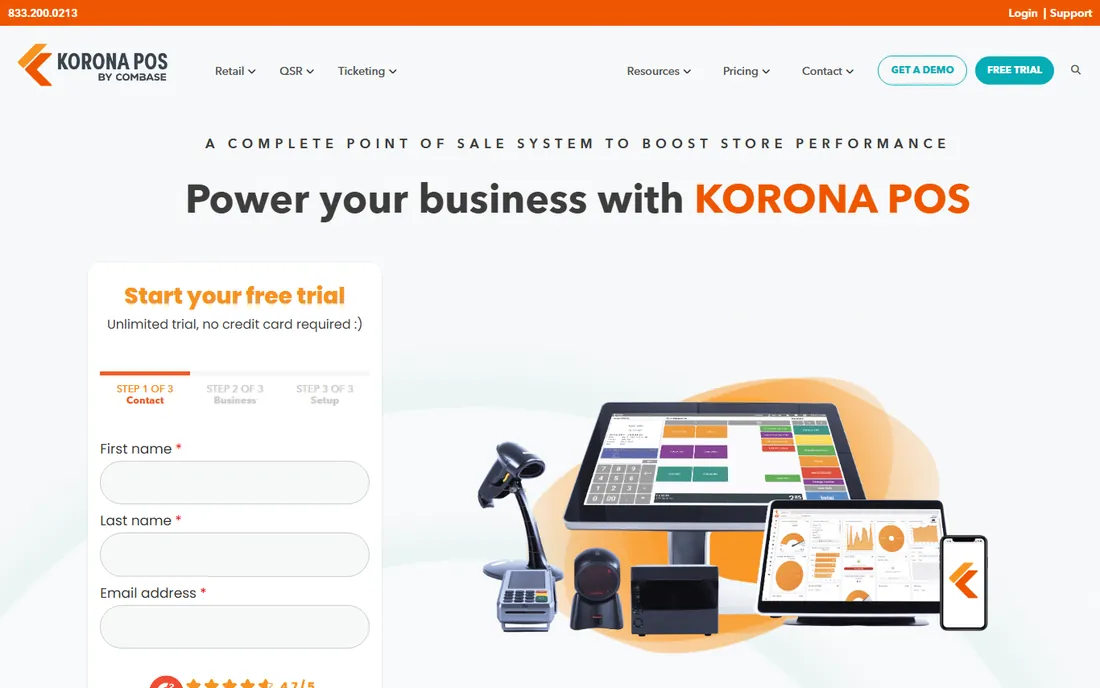
KORONA sells on one idea: no contracts, no payment-processing lock-in, no hidden fees. You can keep your current processor or shop for a better rate, and KORONA never takes a percentage of sales. Plans run $59, $79 or $99 per terminal per month, each keeping the features of the tier below. Core covers checkout, the product database, gift cards, promotions and an open API. Retail adds stock management, barcode automation, supplier ordering and customer management. An invoicing module adds quotes, rentals, delivery notes and collective invoices for $10 more per terminal, which is the piece wholesalers billing on account will want.
Support is US-based, by phone, chat or email, with 24/7 coverage for critical sales issues. Hardware is flexible: use existing equipment or buy pre-configured. The weakness is that wholesale-specific pricing tiers are thinner than Counterpoint's, and multi-terminal setups get pricey. For an independent distributor that hates contracts, it is the cleanest deal here.
What we like- Month-to-month with no contracts and no forced payment processor
- Per-terminal pricing with unlimited users
- Invoicing module (+$10/month) covers quotes, delivery notes and collective invoices
Watch out for- Per-terminal pricing adds up with many registers
- Advanced inventory tools need the Retail ($79) or Plus ($99) tiers
#5
Square for Retail
Best for: Small wholesalers and cash-and-carry counters starting cheap
Visit squareup.com
Starting price$0 (Free plan); Plus $49/month per location (per recent reviews)
Free planYes (permanent free plan; 30-day Plus trial)
The free plan is why Square appears on every wholesale shortlist. For $0 you get the retail POS app, an online store, basic inventory tools and invoicing, with unlimited products and transactions. Plus at $49 per month per location adds advanced inventory, stock transfers, vendor management, barcode label printing and COGS reporting, plus discounted processing. Premium is quote-based for larger operations.
The catch is the ecosystem walls. Square requires Square Payments, so you cannot negotiate processing elsewhere, and the wholesale features (customer-specific pricing, terms, case quantities) are shallow compared with Counterpoint or Erply. It fits a small cash-and-carry operation, a distributor counter, or a wholesaler testing a retail front. If your business runs on contracts and terms, you will outgrow it.
What we like- Genuinely free entry plan with POS, online store and basic inventory
- Plus adds vendor management, barcode labels and COGS reports
- Month-to-month with no contracts
Watch out for- Must use Square Payments, so no rate shopping
- Thin B2B pricing and terms features next to wholesale specialists
#6
Shopify POS
Best for: Wholesalers already selling online through Shopify
Visit shopify.com
Starting pricePOS Lite included free with Shopify plan; POS Pro $89/month per location ($79 billed annually)
Free planFree trial (3 days, extendable with $1/month promo)

For a wholesaler already selling direct on Shopify, the POS decision is mostly made. POS Lite comes free with every Shopify plan for basic in-person selling. POS Pro at $89 per month per location adds staff permissions, smart inventory, omnichannel workflows like buy-online-pick-up-in-store, and retail analytics, with unlimited registers inside each location. The native B2B layer gives each company its own catalog, price list, payment terms and checkout, so trade buyers see only their products and prices.
The catch is the stack math. A Shopify subscription sits underneath the POS fee, and Pro multiplies per location. The heavier wholesale features, unlimited catalogs, deposits and partial payments, stay on Shopify Plus. If Shopify is already your online home, this is the path of least resistance. If it is not, do not adopt Shopify just for the POS.
What we like- One product catalog, inventory pool and customer database for online and in-store
- Native B2B layer with company price lists, catalogs and payment terms on Shopify
- Unlimited registers per Pro location
Watch out for- POS Pro is billed per location, so multi-store costs stack
- Real B2B depth (custom catalogs, deposits) needs Shopify Plus
#7
Retail Pro
Best for: Mid-market and enterprise chains with heavy promotional pricing
Visit retailpro.com
Starting priceSee website (quote-based, sold through partners)
Free planNo (demo and consultation available)
Retail Pro is the system behind 54,000 stores in 130 countries, and its strength shows in pricing complexity. Promotions apply automatically at the register under almost any rule combination, which is exactly what wholesale and hybrid businesses need when discounts vary by customer, product mix and volume. The platform covers POS, replenishment, inventory, customer management and reporting, with an API and app marketplace for integrations including SAP. It runs on mobile, laptop and desktop across iOS, Android and Windows.
The trade is enterprise gravity. Everything is quote-based and partner-delivered, so small distributors should expect a sales cycle and a services bill. Support quality varies by partner. For a growing chain or a distributor with serious promotional pricing, it scales where lighter tools break. For a single counter, it is too much system.
What we like- Deep, flexible promotions engine that applies complex discount rules automatically
- Runs on iOS, Android and Windows with offline-capable POS
- 130-country footprint with 54,000 stores on the platform
Watch out for- Quote-only pricing through a partner network
- Implementation is a project, not a signup
#8
Cin7
Best for: Multichannel sellers where inventory control is the real job
Visit cin7.com
Starting price$349/month (Core plan)
Free planFree trial (14 days)
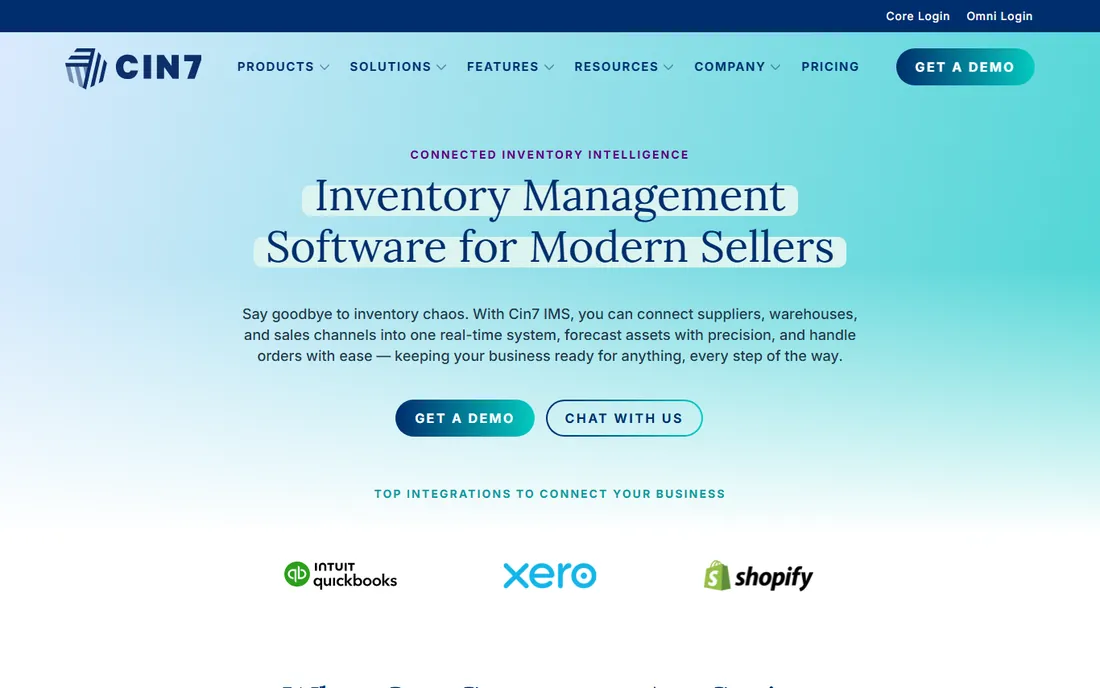
Cin7 is not a POS first. It is inventory software that happens to include a POS, and that is precisely why it belongs on a wholesale list. Core starts at $349 per month and covers order management, multi-location stock, purchasing and manufacturing basics, with 700+ integrations spanning Shopify, Amazon, WooCommerce, Xero and QuickBooks. The built-in EDI on higher tiers replaces the third-party EDI services wholesalers selling into large retailers usually pay for separately. A B2B portal, advanced automation and wholesale order workflows arrive as you move up the tiers.
The honest catch is price and focus. At $349 to start, it costs more than most POS tools here before you ring a single sale, and the checkout experience is functional rather than delightful. But if your pain is inventory accuracy across channels, warehouses and wholesale accounts, Cin7 attacks the actual problem. Pair it with its POS for counter sales, or run the POS elsewhere and let Cin7 own the stock.
What we like- True multichannel inventory with 700+ integrations and built-in EDI for big-box retail buyers
- B2B portal and wholesale order management on higher tiers
- Strong warehouse and manufacturing depth
Watch out for- The POS is secondary to the inventory platform
- Entry price is steep for small distributors
#9
Acumatica
Best for: Distributors that want the POS living inside their ERP
Visit acumatica.com
Starting priceSee website (quote-based, unlimited-user licensing)
Free planNo (demo available)
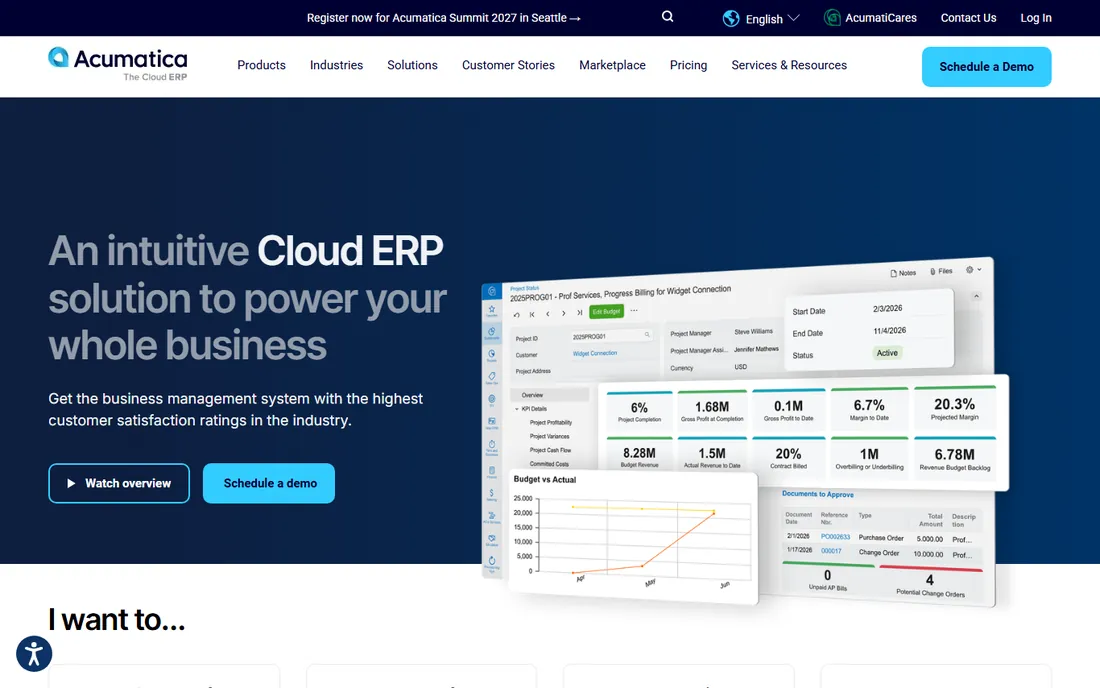
When the POS has to live inside the ERP, distributors look at Acumatica. AcuPOS is the native point-of-sale for its cloud ERP, built for wholesale distributors, manufacturers and retailers that want counter sales, real-time inventory and register reconciliation on the same database as purchasing, warehousing, financials and CRM. The licensing model charges by resources used rather than per user, so adding counter staff costs nothing extra. The distribution edition covers the wholesale workflows that pure POS tools bolt on: landed costs, lot and serial tracking, advanced warehousing.
The catch is that this is an ERP project with ERP pricing, sold and implemented through partners. The POS itself is competent rather than best-in-class at checkout. Choose Acumatica when the business has outgrown separate systems and wants one database from purchase order to counter sale. Do not choose it if you only need a better register.
What we like- Native POS (AcuPOS) inside a full distribution ERP: financials, purchasing, warehousing and CRM on one database
- Unlimited users with no per-seat fees
- Strong wholesale distribution workflows
Watch out for- ERP-scale pricing and implementation
- POS depth is thinner than dedicated POS vendors
#10
Clover
Best for: Counter setups where hardware choice matters most
Visit clover.com
Starting priceSee website (sold through resellers; direct software plans vary)
Free planFree trial (30 days on direct software plans, per reviewers)
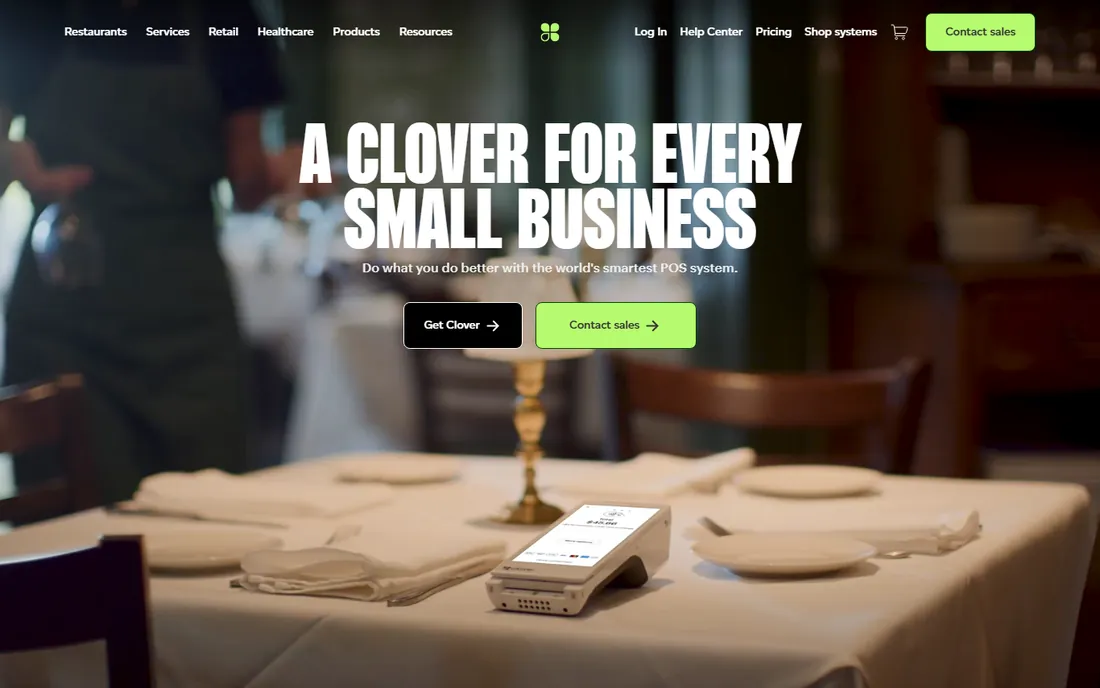
Clover wins on hardware, not on wholesale depth. The device lineup covers mobile readers, the Flex handheld, the Mini and the full Station with customer-facing display, and the app marketplace adds inventory, loyalty and ordering extensions. Direct software plans start with Register Lite and scale to full Register with inventory and employee management, with a 30-day free trial on the software.
The catch is the buying experience. Clover sells through resellers, banks and merchant providers, so the same system can carry very different prices, fees and contract terms depending on where you buy it. Wholesale features like customer-specific pricing and terms are basic. It suits a counter that needs good hardware and simple checkout, bought carefully from a reputable provider. Get every fee in writing before signing.
What we like- Wide hardware range from the $59 Go reader to the full Station setup
- Large app marketplace for extending features
- 24/7 US-based support
Watch out for- Pricing varies by reseller, bank or provider, so quotes are hard to compare
- Wholesale-specific features are thin
- Long-term contracts appear through some resellers
What wholesale POS pricing really includes
Headline prices hide the real cost of a wholesale POS. Start with the register math: per-terminal pricing (KORONA at $59 to $99, Lightspeed at $89 plus $59 per extra register, Clover and Square per location) multiplies fast across counters and warehouses. A three-register distributor pays very different totals on each system, so model your register count before comparing.
Then add processing. Square and Lightspeed expect their own payment processing; KORONA lets you bring any processor. The rate difference on wholesale ticket sizes, often hundreds or thousands of dollars per sale, can dwarf the software subscription. Ask for the effective rate on your average ticket, not the headline percentage.
Finally, price the wholesale features as line items. Customer-specific price lists, EDI, B2B portals and multi-warehouse inventory often live on higher tiers or paid modules: KORONA's invoicing module, Cin7's upper tiers, Shopify's Plus plan. A system that looks cheap at entry can cost double once the wholesale features are switched on. Get the full configuration quoted, in writing, before you compare.
How we chose
We started with what wholesalers actually search for: wholesale POS software, distribution POS and B2B point of sale. For each candidate we opened the vendor homepage, checked whether wholesale features (tiered pricing, case quantities, terms, purchase orders, multi-warehouse inventory) exist in the product or only in marketing copy, and verified pricing on the vendor's own pricing page where published. Where pricing was quote-only or inconsistent across sources, we wrote "See website" instead of guessing. We checked feature claims against public reviews on G2 and Capterra and practitioner discussion on Reddit, and favored tools with real wholesale depth over generic retail POS systems with a wholesale page.
Counter sales, back office, or both: matching the system to your operation
Wholesale businesses buy POS systems for three different jobs, and the right pick depends on which one dominates. Counter-first operations, cash-and-carry, will-call, contractor supply, need fast checkout with customer pricing applied automatically. Counterpoint, KORONA and Square fit here, in descending order of wholesale depth.
Back-office-first distributors care more about purchasing, warehousing and terms than about the register. Cin7 and Acumatica win this comparison, with the POS as a secondary module. If most orders arrive by phone, email or EDI and the counter is an afterthought, buy for the back office.
Hybrid businesses that run retail and wholesale together need both, plus clean reporting that separates the two. Lightspeed, Retail Pro and Shopify handle the hybrid model best, with Erply as the value pick. Name your dominant job before you demo anything: the vendor will happily sell you the other two as well.
Frequently asked questions
What is the best POS for a wholesale distribution business?
NCR Voyix Counterpoint is the most wholesale-native option, with tiered pricing, contract pricing, case and pallet units and house accounts built in. For smaller distributors that want published pricing, Erply and KORONA POS cover the core wholesale workflows. Multichannel sellers should look at Cin7, and distributors already on Shopify should evaluate Shopify POS with its B2B layer.
How much does wholesale POS software cost?
Entry points range from free (Square for Retail) to $59 per month per terminal (KORONA), $89 per month (Lightspeed Basic, billed annually) and $349 per month (Cin7 Core). Quote-based systems (Counterpoint, Retail Pro, Acumatica) vary widely. Model your register count, processing volume and required modules before comparing, since the headline price rarely reflects a wholesale configuration.
Can a regular retail POS handle wholesale?
For simple cash-and-carry, yes: Square, Clover or Shopify POS will ring sales fine. Once you need customer-specific price lists, volume discounts, payment terms or case quantities, a generic retail POS becomes painful. That is the line where wholesale-native tools earn their price.
Do I need EDI in my POS?
Only if you sell into large retailers or distributors that require it. Cin7 includes built-in EDI on higher tiers, which can replace a separate EDI service. Smaller wholesalers selling to independent shops do not need it.
Should the POS and inventory be one system?
For wholesalers, usually yes. Split systems create the classic failure: the counter sells stock the warehouse already promised to a wholesale account. Erply, Cin7, Acumatica and Counterpoint keep one stock picture. If you keep systems separate, budget for integration work and daily reconciliation.
What about payment processing lock-in?
It matters more in wholesale because ticket sizes are large. Square requires Square Payments; Lightspeed charges extra for third-party processors; KORONA lets you use any processor with no cut of sales. On high average tickets, a half-point rate difference outweighs any software subscription.
Sources we checked (13)
- https://erply.com
- https://www.ncr.com
- https://www.lightspeedhq.com/
- https://koronapos.com
- https://koronapos.com/pricing/
- https://squareup.com/
- https://www.shopify.com
- https://retailpro.com/
- https://www.cin7.com/
- https://acumatica.com/
- https://www.clover.com/
- https://www.g2.com/categories/point-of-sale-pos
- https://www.capterra.com/point-of-sale-software/
Is your product missing or out of date?
We review this list regularly. Vendors can request a listing, send updated pricing or ask about featured placement.

Shihab Mia · Founder, Rankite
Shihab has 5+ years in B2B and SaaS SEO. He writes Rankite's software buying guides from pricing pages, documentation and public user reviews. More about Shihab.