How we make this list: we compare pricing pages, product documentation and public user reviews. Ratings come from G2, Capterra or Trustpilot, with the date we checked them.
Key takeaways
- The best portfolio tracker apps in 2026 are led by Sharesight for tax reporting, Delta for mobile stock and crypto tracking, and Kubera for net worth.
- This article is not financial advice. A tracker shows what you own and what it did, but it does not tell you what to buy or sell.
- Free plans suit small portfolios, while paid plans suit investors with many holdings, dividends, and tax reporting needs.
- Account connections save time, but check security: prefer read only connections and strong passwords with two factor authentication.
- A tracker answers what you own, while monitoring answers what changed about why you own it, and most investors eventually need both views.
Quick comparison
Is your product missing or out of date?
We review this list regularly. Vendors can request a listing, send updated pricing or ask about featured placement.
The best portfolio tracker apps
#1Sharesight
Best for: Tax reporting and performance3.5/5 on
G2 (1 reviews, checked Oct 2026)
Visit sharesight.com
Starting priceSee website
Free planYes
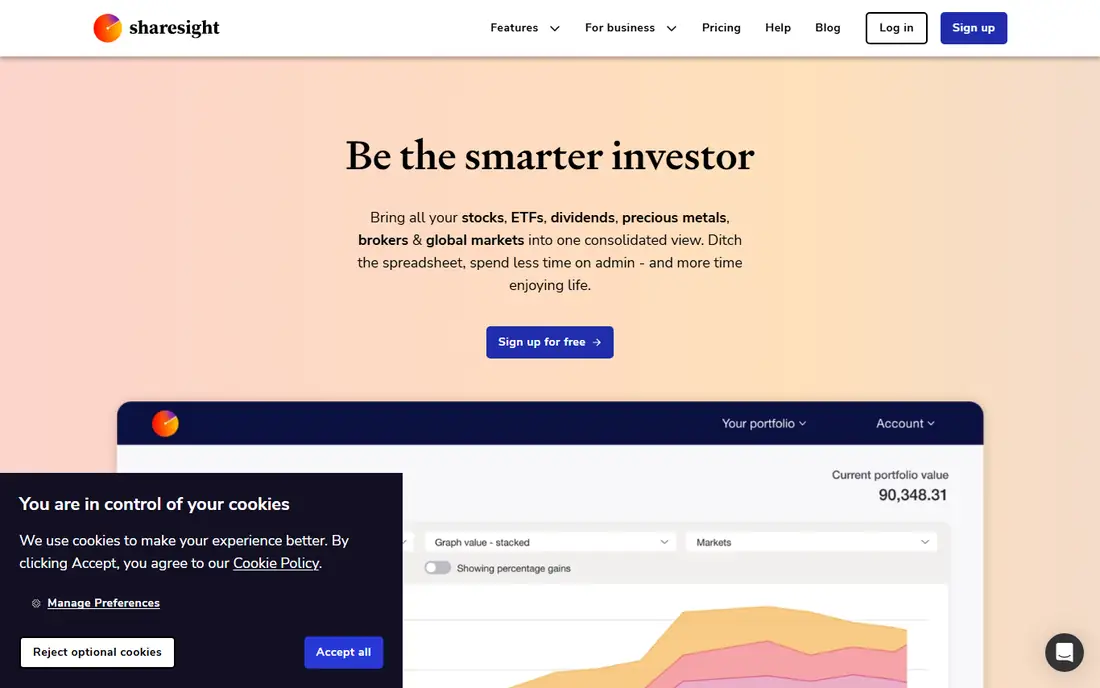
Sharesight is the best portfolio tracker for tax reporting and performance, with automatic handling of splits, consolidations, bonus shares, and special dividends, plus tax reports on paid plans. The free plan covers up to 10 holdings, while paid plans start at 7 dollars per month on annual billing for 30 holdings, with Standard at 18 dollars and Premium at 23.25 dollars per month on annual billing.
The limits are caps and geography. The free plan is small, and Sharesight's deepest tax machinery reflects Australian and New Zealand rules, although it supports US securities and produces US tax reports. For an investor who wants consolidated records, dividend history, and tax reporting, Sharesight leads the field.
What we like- Strong tax reports
- Automatic corporate actions
- Dividend history
Watch out for- Free plan capped at 10 holdings
- Deepest tax features suit Australia and New Zealand
Starting price$9.99 per month
Free planYes
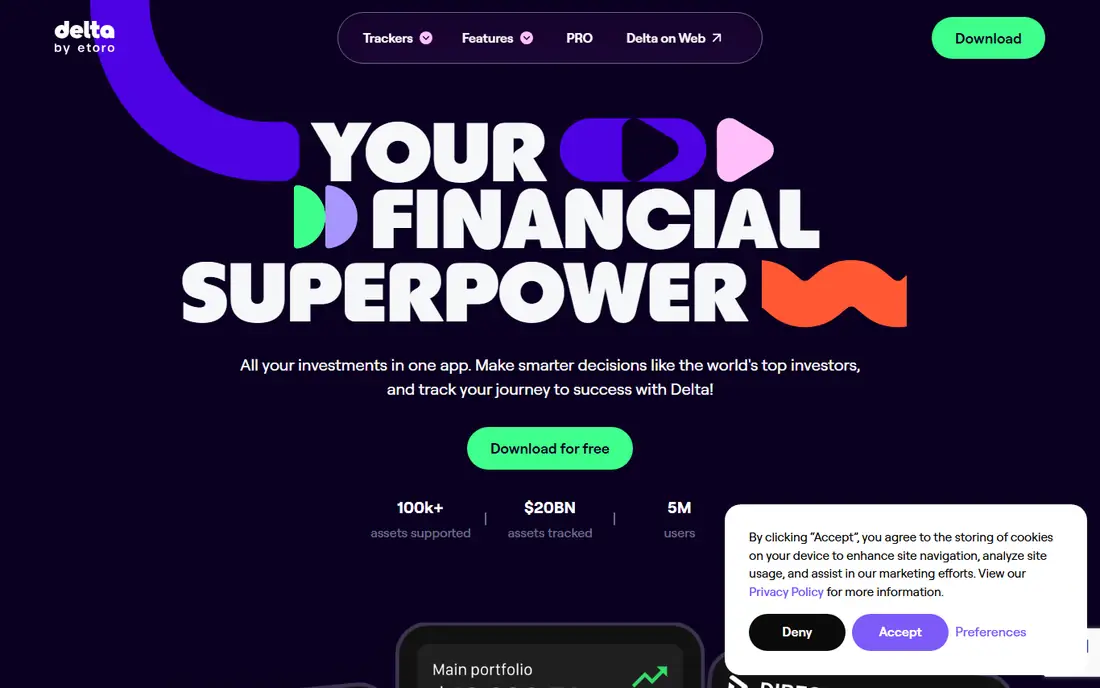
Delta is the most comprehensive multi asset tracker for mobile, covering stocks, ETFs, crypto, DeFi positions, commodities, and private investments in one clean app. It connects to over 300 crypto exchanges and 50 plus stock brokers through read only API or CSV import, and shows time weighted returns, money weighted returns, profit and loss by asset, and allocation across sectors and geographies. Pro starts at 9.99 dollars per month.
The limits are Pro gating and desktop depth. Advanced analytics need the paid plan, and the desktop version is less deep than research focused rivals. For investors who hold both crypto and traditional assets and want one mobile view, Delta is the clear first choice overall.
What we like- Stocks, crypto, ETFs, and DeFi in one app
- Strong mobile design
- 300 plus exchange connections
Watch out for- Advanced features need Pro
- Desktop version less deep than rivals
Starting price$250 per year
Free planNo
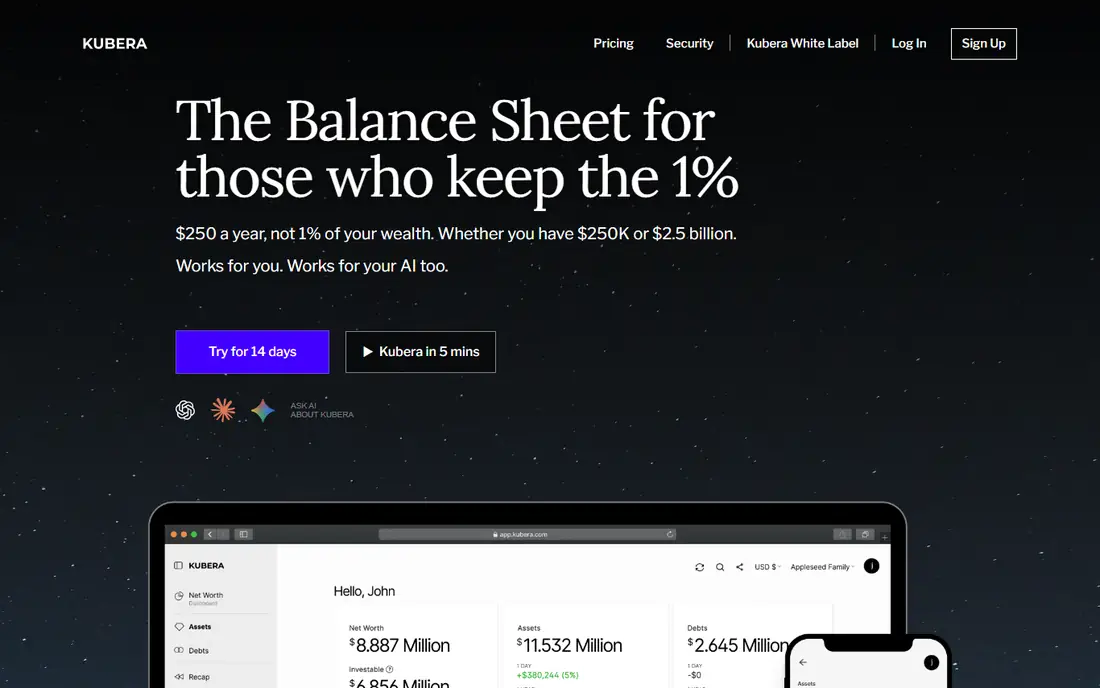
Kubera is a net worth product rather than a tax reporting product, tracking public and private holdings in one balance sheet, including real estate, vehicles, private stock through Carta, crypto, and physical assets alongside brokerage accounts. Essentials costs 250 dollars per year, and a Black tier at 2,500 dollars per year adds family office features.
The limits are price and analysis depth. Kubera has no free plan and its portfolio analysis is lighter than Sharesight or Stock Rover, and it offers no budgeting. For high net worth investors with complex and alternative assets, Kubera is the strongest balance sheet tracker.
What we like- Real estate, private stock, and crypto in one balance sheet
- Multiple entities
Watch out for- No free plan
- 250 dollars per year
- Light portfolio analysis
- No budgeting
Starting price$249 per year
Free planNo
Morningstar Investor offers deep fund and ETF research, with portfolio X ray look through that shows what your funds actually hold underneath, plus independent analyst ratings. It costs 249 dollars per year or 34.95 dollars per month, with a trial for new users.
The limits are price and focus. Morningstar suits fund investors more than stock pickers, and its data leans US focused. For an investor whose portfolio sits mostly in funds and ETFs, Morningstar's look through analysis is unmatched for fund research.
What we like- Deep fund research
- Portfolio X ray look through
- Independent ratings
Watch out for- 249 dollars per year
- Trial only free access
- US focused data
Starting priceSee website
Free planYes
Stock Rover combines brokerage linking with deep research tools, including risk metrics, rebalancing, correlation analysis, and alerts on price, fundamentals, and earnings. Premium starts at 348 dollars per year, with higher tiers reaching 588, 948, and 1,788 dollars per year for deeper data.
The limits are density and price. The interface is data dense and can overwhelm casual investors, and premium tiers are expensive. For a research driven investor who wants deep fundamental data alongside portfolio tracking, Stock Rover is a top choice.
What we like- Brokerage linking
- Risk metrics
- Rebalancing and correlation tools
Watch out for- Data dense interface
- North American focus
- Premium tiers are expensive
Starting priceSee website
Free planYes
Yahoo Finance pairs portfolio tracking with market news, so investors see headlines next to their holdings in one place. The free plan covers basic tracking, while paid tiers add performance, volatility risk, and diversification views, with Bronze at 95.40 dollars per year, Silver at 239.40 dollars, and Gold at 479.40 dollars.
The limits are depth and ads. Free users see ads, and analysis is lighter than specialist trackers. For a casual investor who wants tracking next to news without a new subscription, Yahoo Finance is the best free starting point available today.
What we like- Free core tracking
- News next to holdings
- Huge market coverage
Watch out for- Advanced views need paid tiers
- Ads on free plan
- Analysis lighter than specialists
Starting price$79.99 per year
Free planYes
Snowball Analytics suits dividend investors and multi currency portfolios, with earnings, dividend, and split calendars, automatic connections with over 1,000 brokers, and dividend forecasting. The free plan covers basics, while Starter costs 79.99 dollars per year, Investor 149.99 dollars, and Expert 249.99 dollars.
The limits are focus. Snowball's strength is dividends and events, so growth investors who care little about income may find it less useful. For a dividend investor who wants a clear income calendar and reliable broker connections, Snowball Analytics is the best fit.
What we like- Dividend and event calendars
- Automatic connections with 1,000 plus brokers
- Multi currency
Watch out for- Dividend focus may not suit growth investors
- Paid plans needed for full features
Starting priceSee website
Free planYes
Ziggma offers low cost portfolio checkups and analysis, scoring your portfolio on diversification, risk, and fees, with a simple interface that suits investors who want a quick health check. The free plan covers basic scoring, while paid plans start around 12.99 dollars per month.
The limits are scope. Ziggma suits portfolio checkups better than a whole household balance sheet, and deeper analysis needs a paid plan. For an investor who wants a fast, low cost portfolio score without a heavy setup, Ziggma is a good choice.
What we like- Portfolio scores and risk analysis
- Low cost checkups
- Simple interface
Watch out for- Less suited to a whole household balance sheet
- Paid plans for deeper analysis
How we chose
We ranked apps by account connections, performance analytics, tax reporting, asset coverage, and cost, favoring apps that sync holdings automatically over manual entry tools. We gave extra weight to tax reporting and dividend tracking, since those are the features that save real time at tax season. We also weighed security, preferring read only connections and strong authentication, since a tracker holds a full view of your wealth. Finally, we checked multi currency support, since investors holding foreign stocks or crypto need accurate conversion, and a tracker that mishandles currency gives a false picture of performance.
Buying guide
Start by listing what you own. A stock only investor needs a different tool from someone holding crypto, real estate, and private stock. Match the tracker to your asset mix before comparing prices, since the cheapest tool that misses half your holdings is no bargain, and a tracker that only covers one broker will leave you stitching views together by hand.
Next, check connections and import options. Automatic broker and exchange connections save hours, but confirm your brokers are supported and that connections are read only, so the app cannot move your money. If a broker is missing, check CSV import quality before committing.
Finally, test the tax and dividend reports before tax season. Run a report for last year, check that dividends, splits, and corporate actions look right, and confirm the report format works for your tax preparer. A tracker that fails at tax time has failed its most important job. Also check how the app handles corporate actions like mergers and spin offs, since those events change your holdings in ways a simple price update cannot capture, and a tracker that misses them will show wrong cost basis all year.
Frequently asked questions
Is a portfolio tracker app safe?
Reputable trackers use read only connections, encryption, and two factor authentication, so they can view holdings but cannot move money. Use strong passwords, enable two factor authentication, and avoid apps that ask for trading passwords.
Do I need a paid portfolio tracker?
Not always. Free plans suit small portfolios with few holdings, while paid plans suit investors with many holdings, dividends, and tax reporting needs. Start free and upgrade when the free plan caps your holdings.
What is the difference between a tracker and a broker app?
A broker app shows only the accounts held at that broker, while a tracker pulls all your accounts, across brokers and asset types, into one view. A tracker also adds performance, dividend, and tax reporting across the whole portfolio.
Can a tracker tell me what to buy?
No. A tracker shows what you own and what it did. It is not financial advice, and investment decisions should rest on your own research or advice from a licensed professional.
How often should I check my portfolio?
For long term investors, monthly or quarterly checks beat daily checks, since daily moves tempt impulsive trades. Use alerts for big moves or dividend events, and review the full portfolio on a set schedule.
Sources we checked (0)
Is your product missing or out of date?
We review this list regularly. Vendors can request a listing, send updated pricing or ask about featured placement.

Shihab Mia · Founder, Rankite
Shihab has 5+ years in B2B and SaaS SEO. He writes Rankite's software buying guides from pricing pages, documentation and public user reviews. More about Shihab.
 Delta
 Kubera
 Morningstar Investor
 Stock Rover
 Yahoo Finance
 Snowball Analytics
 Ziggma