How we make this list: we compare pricing pages, product documentation and public user reviews. Rankite is independent; if a vendor ever pays for a featured spot, that listing is clearly labeled Partner.
Key takeaways
- WooCommerce reports more than 4 million online stores built on it, powering 31 percent of the top 1 million ecommerce sites.
- Wix says 300 million-plus sites have been built on its platform, with 90,000-plus created daily.
- Squarespace plans start at $19 a month after a 14-day free trial; Shift4Shop charges $41 a month for its enterprise-grade plan.
- WooCommerce is the only fully open source option here: the software is free, though hosting and extensions cost money.
- The core trade-off is control versus convenience: WooCommerce and Adobe Commerce offer maximum control, while Shopify, Wix, and Squarespace handle everything for you.
Quick comparison
| Tool | Best for | Starting price | Free plan |
|---|
 Shopify Shopify | All-in-one commerce for any size | See website | Free trial |
 BigCommerce BigCommerce | Open SaaS with B2B strength | See website | Free trial |
 WooCommerce WooCommerce | Open source WordPress commerce | Free | Yes |
 Wix eCommerce Wix eCommerce | Easy store building with AI | See website | Yes |
 Squarespace Commerce Squarespace Commerce | Design-forward stores | $19/month | Free trial (14 days) |
 Adobe Commerce Adobe Commerce | Enterprise B2B and B2C | See website | No |
 Ecwid Ecwid | Adding a store to any website | See website | Yes |
 Shift4Shop Shift4Shop | Feature-rich value plan | $41/month | No |
Is your product missing or out of date?
We review this list regularly. Vendors can request a listing, send updated pricing or ask about featured placement.
WooCommerce reports more than 4 million online stores built on it, powering 31 percent of the top 1 million ecommerce sites. Building an online store is no longer a technical project: every platform here lets a non-developer launch a store, and the differences are in cost structure, control, and scale.
The market splits three ways. Hosted platforms (Shopify, BigCommerce, Wix, Squarespace, Shift4Shop, Ecwid) handle hosting, security, and updates for a monthly fee. Open source options (WooCommerce, Adobe Commerce) give you the software free and leave the running to you. Your catalog size, technical resources, and growth plans decide which camp fits.
Here are eight platforms worth comparing.
Starting priceSee website
Free planFree trial

Shopify is the default choice for starting an online store: add products, customize the store, set up payments, and sell everywhere people shop, online and in person, across social and AI channels. The App Store's 21,000-plus apps cover nearly any specialized need, and Shop Pay's checkout converts up to 50 percent higher than guest checkout according to an external study.
Shopify Capital offers funding for inventory and growth, with $5 billion loaned to merchants so far. A free trial is available. It suits anyone from solo entrepreneurs to enterprises who want commerce handled end to end without technical overhead.
What we like- The largest commerce ecosystem with 21,000-plus apps
- Best-converting checkout claim backed by a 2023 study
- Sells online, in person, and on social
Watch out for- Monthly fees plus transaction fees add up
- Advanced customization needs apps or developers
Starting priceSee website
Free planFree trial
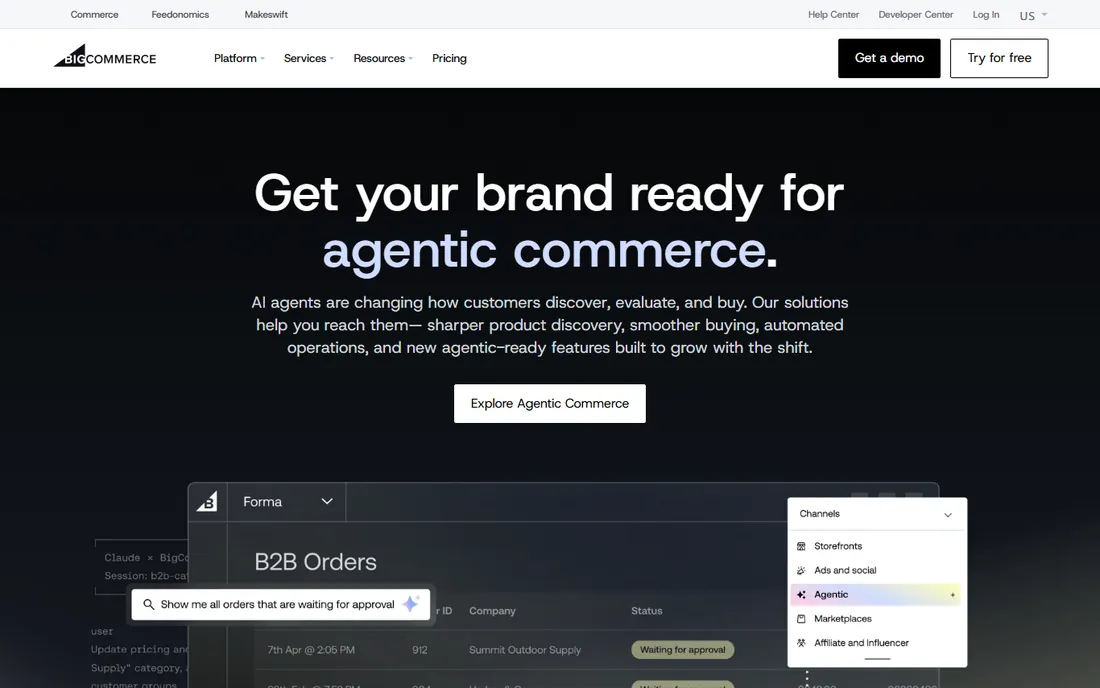
BigCommerce positions itself as the open SaaS alternative: launch quickly with drag-and-drop tools, then customize deeply with full API and code access when you need more. It handles B2B portals, multiple storefronts for brands and regions, subscriptions, and complex product configurations natively.
The 2026-era pitch includes agentic commerce features: AI-enriched product discovery, brand agents, and an AI assistant called Companion. A free trial needs no credit card, and most stores go live within 30 days. It fits growing brands that want openness without managing servers.
What we like- Open platform with full API and code access
- Strong B2B and multi-storefront features
- Free trial with no credit card
Watch out for- Smaller app ecosystem than Shopify
- Pricing not published on the page reviewed
Starting priceFree
Free planYes
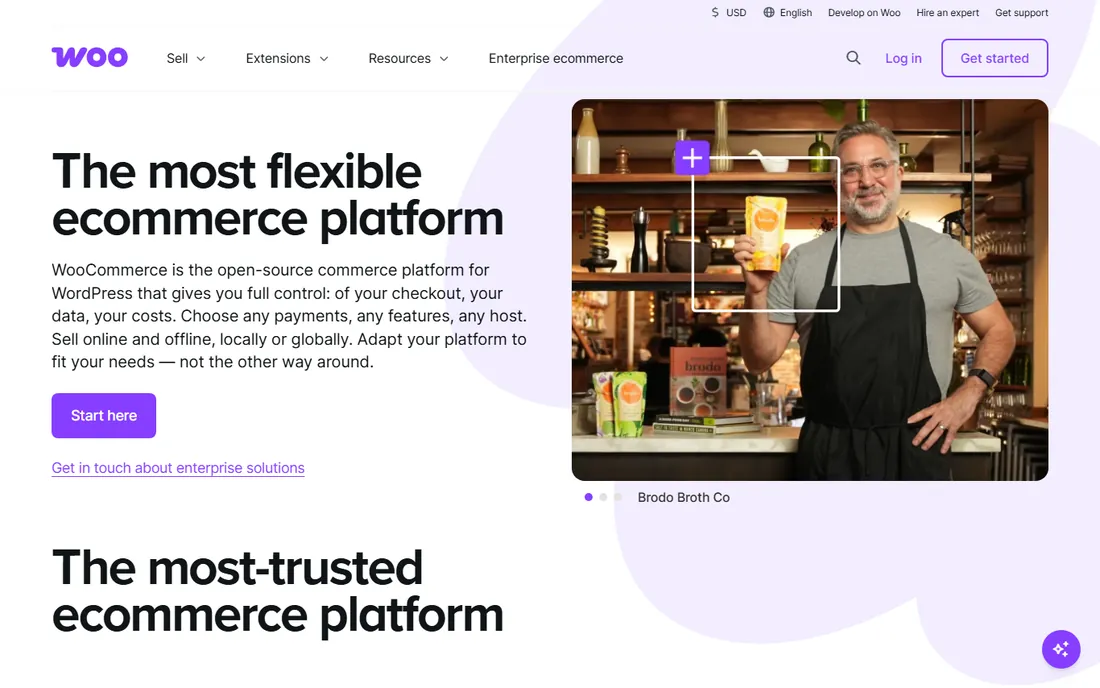
WooCommerce is the open source commerce platform for WordPress: full control of your checkout, your data, and your costs, with your choice of payments, features, and host. More than 4 million stores run on it, and 43 percent of the internet runs on WordPress, giving it unmatched reach.
Brands like Scrub Daddy, Mint Mobile, and Nutribullet run on WooCommerce. The software is free; you pay for hosting, themes, and extensions. It suits businesses that want maximum control, already use WordPress, or need customization no hosted platform allows.
What we like- Free open source software with no ceiling on customization
- 4M-plus stores and 31% of top ecommerce sites
- You own your data and checkout
Watch out for- You manage hosting, security, and updates
- Costs appear in hosting and extensions
#4
Wix eCommerce
Best for: Easy store building with AI
Visit wix.com
Starting priceSee website
Free planYes
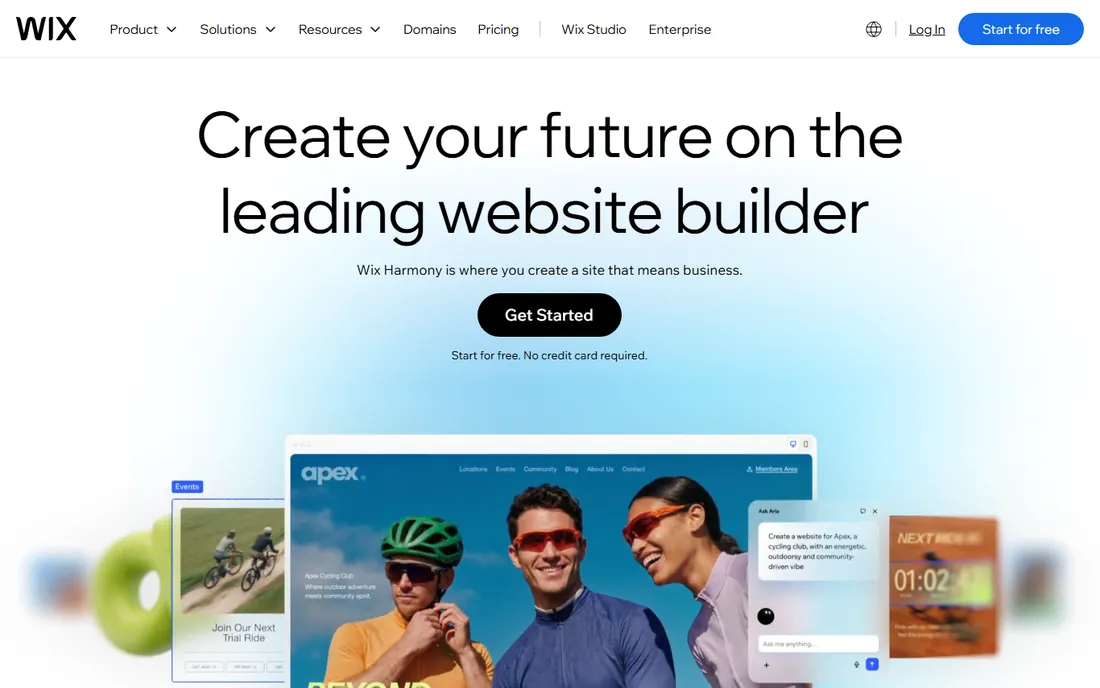
Wix brings its AI website builder and drag-and-drop editor to ecommerce: sell products, services, and memberships from one dashboard with zero plugins, plus bookings, payments, and marketing tools. More than 300 million sites have been built on Wix, with 90,000-plus created daily.
You can start free with no credit card; selling requires a premium plan. It suits small businesses and creators who want a beautiful store fast, especially when the site also needs bookings, blogs, or portfolios alongside the shop.
What we like- Start free with no credit card
- 300M-plus sites built on the platform
- AI website builder plus drag-and-drop freedom
Watch out for- Ecommerce features need a paid plan
- Less scalable than dedicated commerce platforms
Starting price$19/month
Free planFree trial (14 days)

Squarespace is the choice for stores where design matters: polished templates, Blueprint AI (a TIME Best Invention of 2025) that builds sites from a few questions, and built-in tools for products, subscriptions, gift cards, and digital downloads. Fourteen million-plus entrepreneurs run businesses on it, with $36 billion-plus earned.
After a 14-day free trial, subscriptions start at $19 a month, with advanced plans adding ecommerce features and lower processing fees. It suits brands, artists, and boutiques where the store's look is part of the product.
What we like- Beautiful templates with award-winning design heritage
- Subscriptions start at $19 a month
- 14-day trial with no credit card
Watch out for- Smaller ecommerce feature set than Shopify
- Fewer third-party integrations
Starting priceSee website
Free planNo
Adobe Commerce, formerly Magento, is the enterprise commerce platform: multiple storefronts for brands and regions from one admin, millions of SKUs, B2B quoting and workflows, and integrations with ERP, CRM, and PIM systems. AI merchandising includes semantic search, 13 product recommendation types, and agentic content generation.
It runs on auto-scaling multicloud infrastructure that handles flash sales over 200,000 orders per hour, with PCI Level 1 certification. Pricing is quote-based with no free tier. It fits enterprises and B2B sellers with complex catalogs and the budget for professional implementation.
What we like- Enterprise-grade with multi-brand, multi-storefront architecture
- AI merchandising with 13 recommendation types
- Handles 200,000-plus orders per hour
Watch out for- Quote-based enterprise pricing
- Needs developers and significant budget
Starting priceSee website
Free planYes
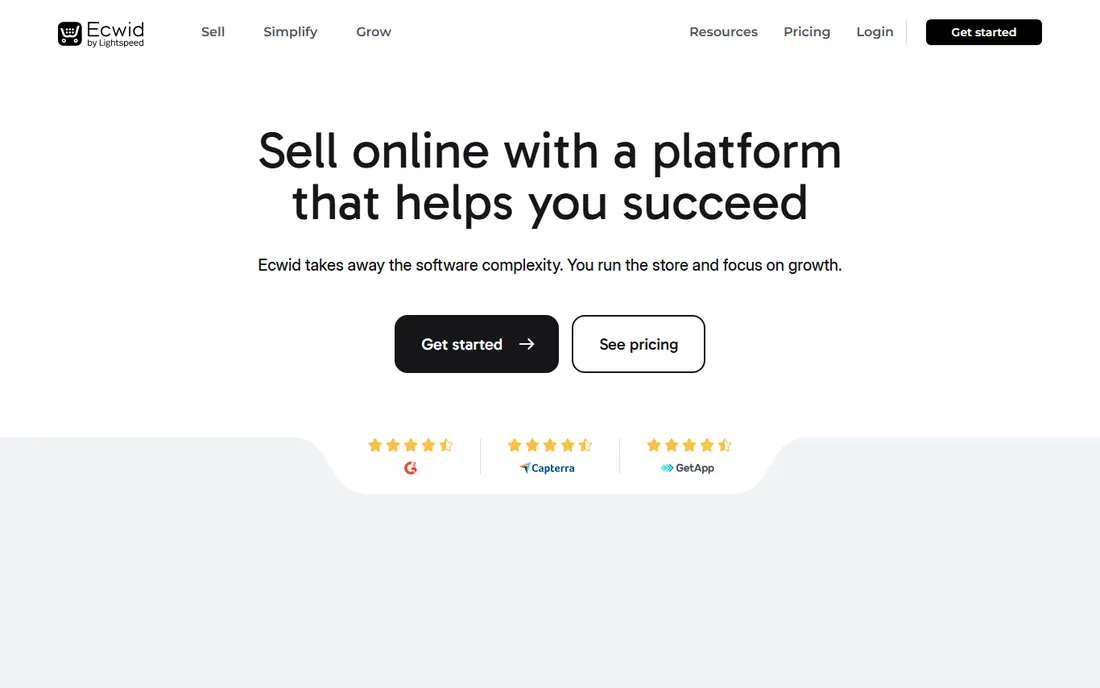
Ecwid's pitch is simple: add a store to any website, or build a new one with its themes. Centralized inventory, order management, automated emails, scheduled discounts, AI-enhanced product photos, and automatic tax calculation come built in, with sales channels like Amazon for scale.
Businesses in 175 countries use it, and a free plan gets you started. It suits anyone with an existing website who wants to start selling without rebuilding: bloggers, restaurants, and small businesses adding commerce to what they have.
What we like- Adds a store to any existing website
- Trusted by businesses in 175 countries
- AI product photos and automated ads included
Watch out for- Less of a full website builder than rivals
- Advanced features need paid plans
Starting price$41/month
Free planNo
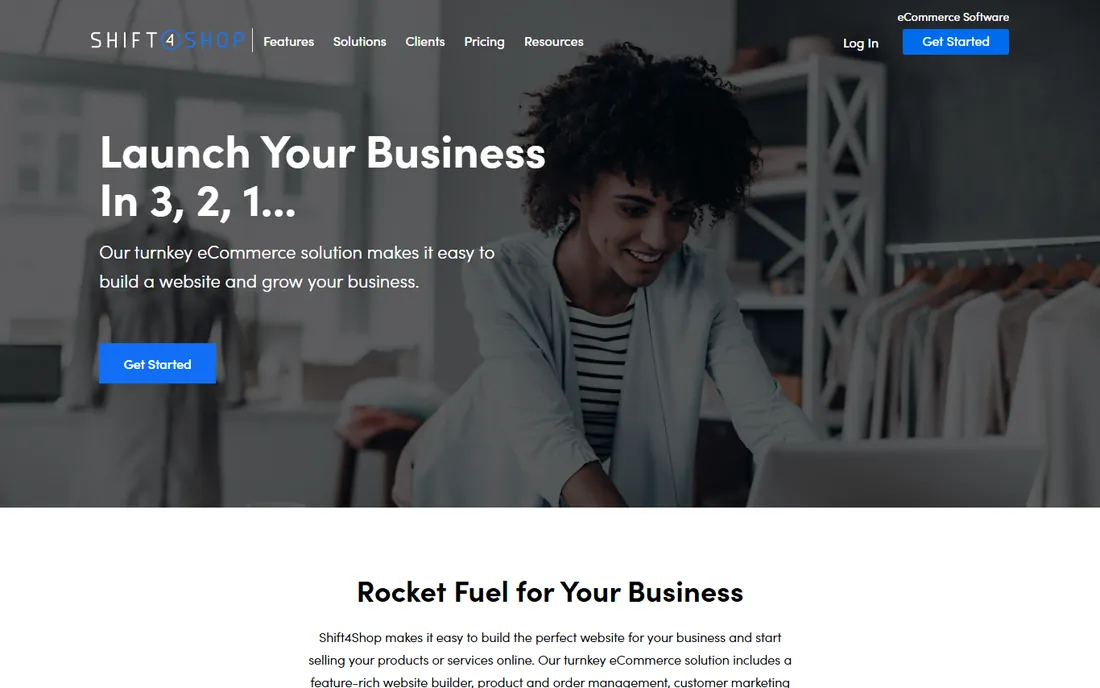
Shift4Shop offers an unlimited, enterprise-grade plan for $41 a month with what it calls the most feature-rich ecommerce software in the industry: marketing tools, inventory management, SEO, real-time shipping, and AI-driven fraud protection from Kount, all built in rather than added via apps.
It reports 200,000-plus customers and $200 billion-plus processed annually, with 100-plus free mobile-friendly themes. There is no free tier. It suits cost-conscious merchants who want enterprise features without enterprise pricing or a patchwork of paid apps.
What we like- $41 a month for an enterprise-grade plan with all features
- 100-plus free themes
- Built-in fraud protection and real-time shipping
Watch out for- No free tier
- Smaller ecosystem and brand recognition than Shopify
How we chose
We compared ecommerce website platforms using official vendor pages, pricing pages, and documentation, focusing on ease of store creation, design quality, payment options, scalability, B2B features, app ecosystems, pricing transparency, and free or trial availability. We checked reviews on G2, Capterra, and merchant communities. We did not claim hands-on testing; assessments reflect documented features and reported user experience.
Start with your catalog and your team. A small catalog and no developers point to Shopify, Wix, or Squarespace. A large or complex catalog with technical resources points to BigCommerce, WooCommerce, or Adobe Commerce. An existing website that needs a store points to Ecwid. Getting this wrong means either paying for power you never use or hitting a ceiling mid-growth.
Model the total cost, not the monthly fee
The sticker price is only part of it. Add transaction fees, payment processing (around 3 percent), app or extension subscriptions, themes, and for open source, hosting and developer time. Shift4Shop's $41 all-in plan and WooCommerce's free software look cheap until you count the extras; Shopify's higher fee can be cheaper than a developer retainer.
Check the checkout and payment options
Checkout is where revenue happens. Confirm the platform supports your payment methods, currencies, and tax needs. Shopify's high-converting checkout and Shop Pay, BigCommerce's 20-plus embedded payment providers, and WooCommerce's any-payment freedom are all strong answers to different needs.
Plan for where you sell, not just your website
Modern commerce is omnichannel: your store, social media, marketplaces, and in person. Check native integrations with Amazon, eBay, Facebook, Instagram, and point-of-sale systems. Ecwid, Shopify, and Shift4Shop all emphasize multichannel selling; confirm the channels you actually use are supported.
Why open source still matters in ecommerce
WooCommerce's 4 million stores prove that many merchants prefer owning their platform to renting it. Open source means no platform can raise your fees, change your terms, or limit your customization. The price is responsibility: hosting, security, and updates are yours. For businesses with technical resources or strong feelings about data ownership, that trade is worth it.
Frequently asked questions
What is the easiest ecommerce platform for beginners?
Wix and Squarespace are the easiest: AI builders, drag-and-drop editors, and beautiful templates with no technical skills needed. Shopify is slightly more involved but still beginner-friendly and scales further. Start free on Wix or trial Squarespace to see which feels right.
Is Shopify or WooCommerce better?
Shopify is better if you want everything handled: hosting, security, updates, and support for a monthly fee. WooCommerce is better if you want control: free software, your choice of hosting, and unlimited customization, but you manage the technical side. Most non-technical sellers choose Shopify; most WordPress users choose WooCommerce.
How much does it cost to build an ecommerce website?
Platform fees range from free (WooCommerce software, Ecwid free plan, Wix free start) to $19 a month (Squarespace), $41 a month (Shift4Shop), and quote-based enterprise (Adobe Commerce, BigCommerce). Add payment processing around 3 percent, plus apps, themes, and for open source, hosting.
Can I sell on Amazon and my own website at the same time?
Yes. Shopify, BigCommerce, Ecwid, WooCommerce, and Shift4Shop all offer multichannel integrations that sync inventory across your store and marketplaces like Amazon and eBay. This is standard practice for growing sellers.
Do I need a developer to run an online store?
Not with hosted platforms: Shopify, Wix, Squarespace, BigCommerce, Ecwid, and Shift4Shop are built for non-developers. WooCommerce can run without a developer for standard stores but benefits from one for customization. Adobe Commerce realistically requires professional developers.
Which platform is best for B2B ecommerce?
BigCommerce and Adobe Commerce lead for B2B, with quoting, bulk pricing, and multi-storefront features. Adobe Commerce suits enterprises with complex needs; BigCommerce suits mid-market companies that want B2B without enterprise overhead. WooCommerce can handle B2B with extensions.
Sources we checked (8)
- https://www.shopify.com/
- https://www.bigcommerce.com/
- https://woocommerce.com/
- https://www.wix.com/
- https://squarespace.com/
- https://www.ecwid.com/
- https://business.adobe.com/products/magento/magento-commerce.html
- https://www.shift4shop.com/
Is your product missing or out of date?
We review this list regularly. Vendors can request a listing, send updated pricing or ask about featured placement.

Shihab Mia · Founder, Rankite
Shihab has spent more than a decade helping SaaS and e-commerce brands grow through search. He writes Rankite's software buying guides from pricing pages, documentation and public user reviews. More about Shihab.