How we make this list: we compare pricing pages, product documentation and public user reviews. Rankite is independent; if a vendor ever pays for a featured spot, that listing is clearly labeled Partner.
Key takeaways
- WooCommerce and Magento Open Source offer the deepest customization because you own the code, but you also own the maintenance.
- Adobe Commerce is the enterprise customization king, with pricing to match: typically $22,000 to $125,000-plus per year.
- BigCommerce at $39 per month gives the most built-in flexibility among SaaS platforms, with headless support and no platform transaction fees.
- Shopify trades customization depth for reliability: great apps and APIs, but the checkout and URL structure have hard limits.
- Total cost of customization includes developers, not just licenses; budget the build before you fall in love with the demo.
Quick comparison
| Tool | Best for | Starting price | Free plan |
|---|
 WooCommerce WooCommerce | businesses that want complete ownership | Free | Yes |
 Adobe Commerce Adobe Commerce | enterprises with complex requirements | See website | No |
 BigCommerce BigCommerce | growing brands wanting SaaS flexibility | $39 per month | Free trial (15 days) |
 Shopify Shopify | brands that prioritize reliability and ecosystem | $39 per month | Free trial (3 days) |
 OpenCart OpenCart | simple stores wanting free open source | Free | Yes |
 PrestaShop PrestaShop | European merchants wanting open source | Free | Yes |
 Shift4Shop Shift4Shop | US merchants wanting a free full-featured platform | Free | Yes |
 Wix Wix | design-led small stores prioritizing simplicity | $29 per month | Free trial |
Is your product missing or out of date?
We review this list regularly. Vendors can request a listing, send updated pricing or ask about featured placement.
Starting priceFree
Free planYes
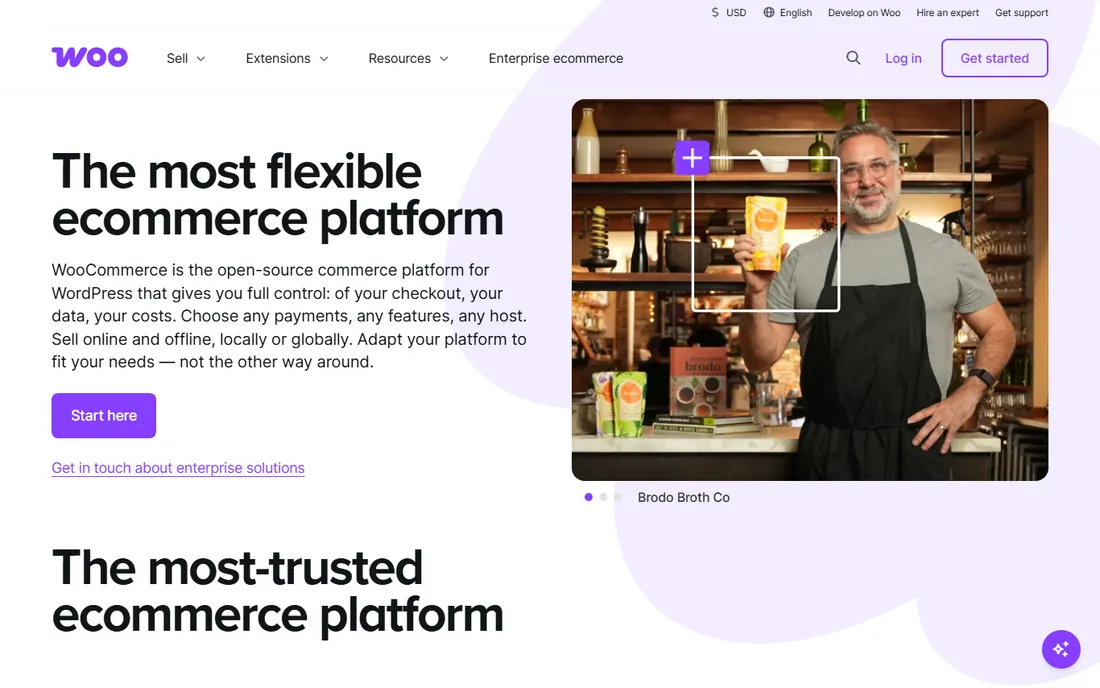
WooCommerce is the most customizable ecommerce platform for one simple reason: it is open source and runs on WordPress, so every line of code is yours to change. Themes, checkout flows, product types, pricing logic, integrations, nothing is off limits if you have a developer. The plugin library covers nearly every feature imaginable, and the WordPress content engine underneath gives you SEO control no SaaS platform matches.
That freedom comes with responsibility. Hosting, SSL, PCI compliance, updates, backups, and performance optimization are all yours. A WooCommerce store on cheap shared hosting can be painfully slow, while the same store on proper infrastructure flies. Budget roughly $50 per month minimum for decent hosting plus premium plugins, and keep a developer on call.
For content-led brands, SEO-driven stores, and businesses with unusual requirements, WooCommerce is unmatched. Just go in understanding that "free" describes the plugin, not the total cost of running a serious store on it.
What we like- Open source with unlimited code customization
- Massive WordPress plugin ecosystem
- No platform transaction fees
Watch out for- You own hosting, security, updates, and performance
- Plugin conflicts are your problem to solve
Starting priceSee website
Free planNo
Adobe Commerce, formerly Magento, is where customization maxes out. Configurable, bundled, and grouped product types with no hard variant caps, multi-storefront architectures, complex pricing rules, and B2B quoting workflows come from an open-source core that developers can extend without limits. For enterprises with genuinely complex commerce, there is no substitute.
The cost structure is enterprise throughout. Adobe Commerce licenses typically run $22,000 to $125,000-plus per year based on gross merchandise volume, and implementation by a qualified agency often exceeds the license cost. Magento Open Source remains free for companies with the in-house expertise to run it, but Adobe's focus is clearly the paid tier.
This is not a small business platform and does not pretend to be. If your catalog, pricing logic, or integration requirements break every SaaS platform you try, Adobe Commerce is the answer. If a $39 SaaS plan covers your needs, buying Adobe Commerce is an expensive way to prove it.
What we like- Deepest customization of any commerce platform
- Handles massive catalogs and complex B2B logic
- Huge extension marketplace
Watch out for- Enterprise pricing from around $22,000 per year
- Requires experienced developers for everything
Starting price$39 per month
Free planFree trial (15 days)
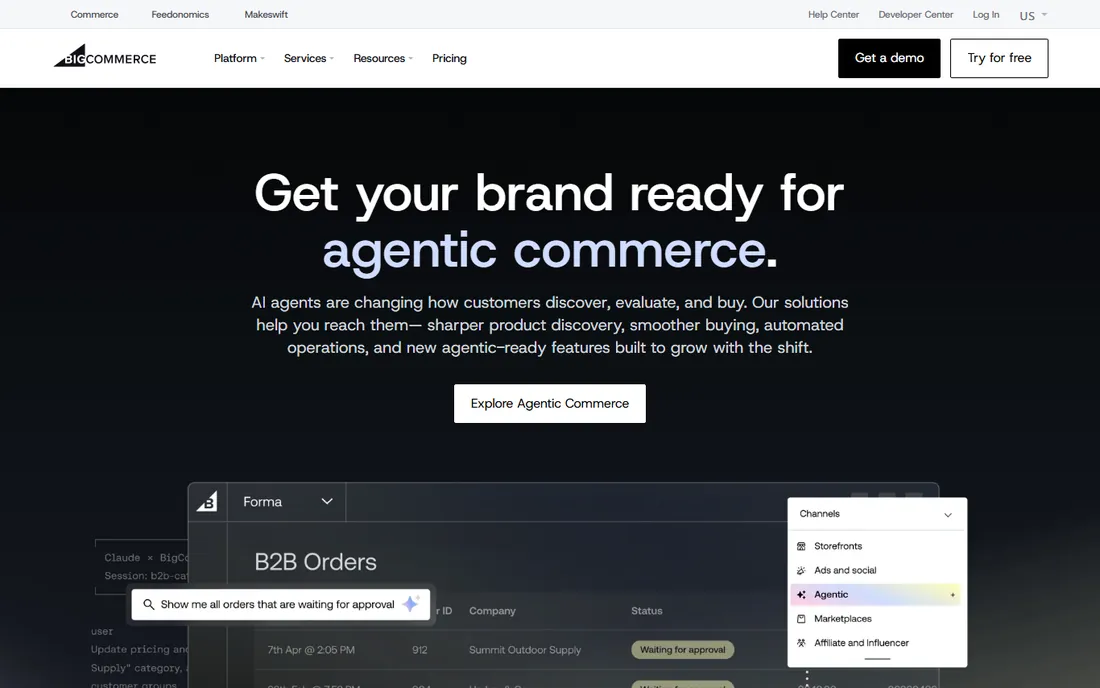
BigCommerce is the SaaS platform for stores that keep hitting Shopify's walls. The Core plan at $39 per month includes features Shopify gates behind higher tiers or apps: faceted search, customer groups, and solid B2B quoting. Headless support is first-class, so developers can build custom storefronts on the BigCommerce engine, and there are no platform transaction fees regardless of payment gateway.
The 2026 pricing restructure renamed the tiers to Core, Growth, and Scale at $39, $105, and $399, holding base prices steady. The catch is the new Open Payment Provider fee: 2% on Core for orders through gateways outside BigCommerce's embedded list, which includes Stripe and PayPal, so most stores avoid it, but B2B purchase orders and offline payments get hit.
For mid-market brands, B2B sellers, and multi-storefront operations, BigCommerce offers the best customization-to-convenience ratio in SaaS. You give up the code-level control of WooCommerce and Magento, but you also give up their maintenance burden.
What we like- Most built-in features of any SaaS platform
- Headless commerce support
- No platform transaction fees
- Strong native B2B
Watch out for- New Open Payment Provider fee on non-embedded gateways
- App marketplace smaller than Shopify's
#4
Shopify
Best for: brands that prioritize reliability and ecosystem
Visit shopify.com
Starting price$39 per month
Free planFree trial (3 days)

Shopify is the default ecommerce platform for good reasons: it is fast, reliable, secure, and supported by an enormous ecosystem. Customization happens through Liquid templating, the app store, APIs, Shopify Functions, and headless builds with Hydrogen. For most growth-stage brands, that toolkit covers everything they need without touching infrastructure.
The limits are real but specific. Checkout customization is restricted below the $2,300-plus Shopify Plus tier. Products cap at three options with 2,048 variants, which breaks complex configurators. URL structures carry Shopify's patterns that SEO purists dislike. And skipping Shopify Payments incurs extra transaction fees.
Shopify's customization story is breadth, not depth: whatever you need probably exists as a polished app, but the platform's core opinions are non-negotiable. For brands that value launch speed and reliability over code-level control, that tradeoff is usually correct.
What we like- Huge app ecosystem with 13,000-plus apps
- Excellent reliability and security handled for you
- Headless via Hydrogen for custom storefronts
Watch out for- Checkout customization limited below Plus
- URL structure has SEO quirks
- Transaction fees without Shopify Payments
Starting priceFree
Free planYes
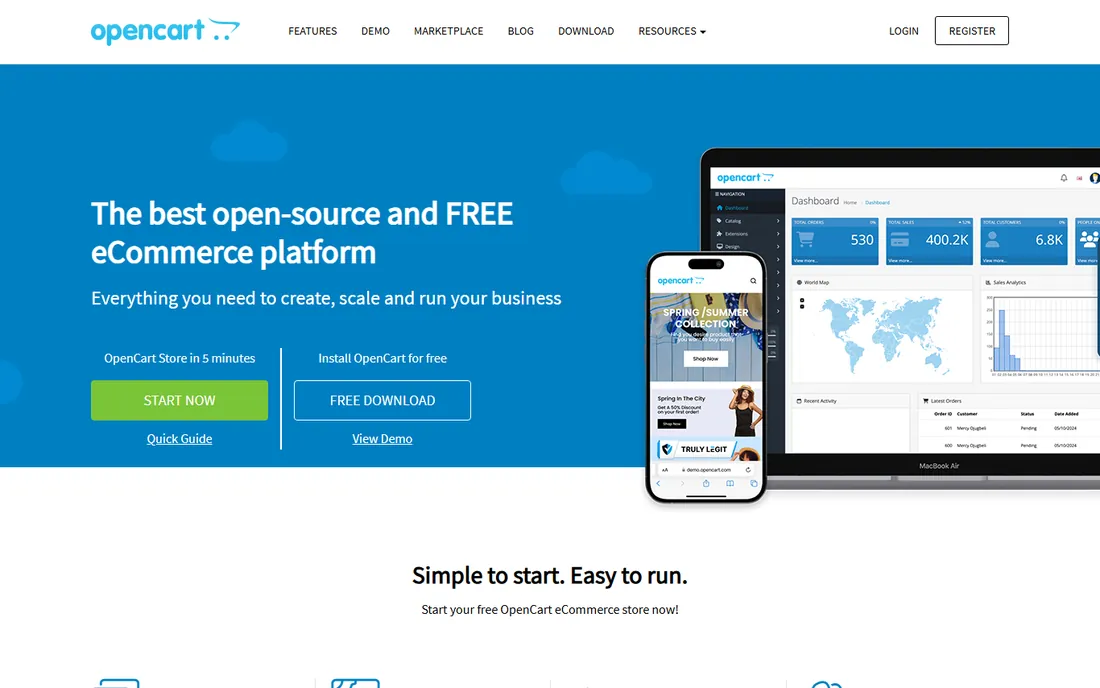
OpenCart is the veteran free open-source cart: lightweight, easy to install, and adequate for straightforward stores with standard product catalogs. The extension marketplace covers payment gateways, shipping, and common features, and the system requirements are modest enough for cheap hosting.
The honest assessment is that OpenCart has aged. The admin interface feels dated, the developer community is a fraction of WooCommerce's, and modern expectations like headless support and advanced marketing tools are thin. It remains perfectly serviceable for a simple store that needs to sell products online without monthly fees.
Choose OpenCart when the requirements are basic, the budget is near zero, and someone technical is available for setup and maintenance. For anything ambitious, WooCommerce's larger ecosystem justifies its greater complexity.
What we like- Free and lightweight
- Straightforward for basic catalogs
- Large extension marketplace
Watch out for- Dated architecture and admin interface
- Smaller developer community than WooCommerce
- You handle all maintenance
Starting priceFree
Free planYes
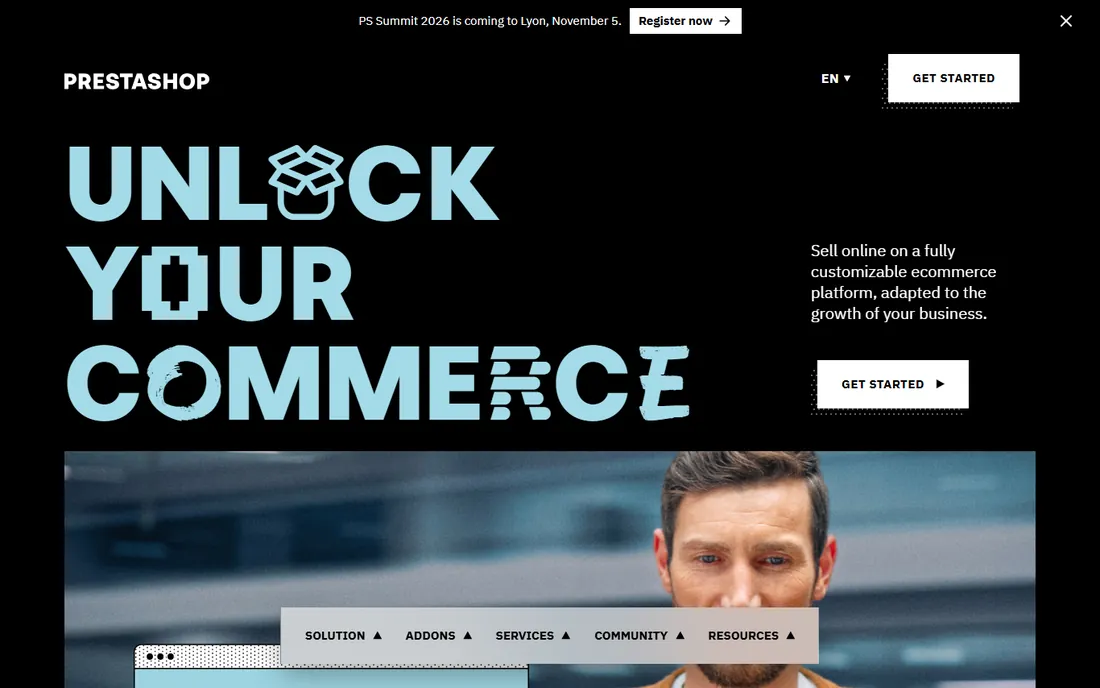
PrestaShop is Europe's answer to open-source ecommerce, with particularly strong multilingual, multicurrency, and tax handling for EU selling. The core platform is free, the module marketplace is extensive, and the community is large enough that most problems have documented solutions.
The pricing reality is module-driven. The platform is free, but many modules merchants consider essential, advanced search, certain payment integrations, marketing tools, carry one-time or subscription fees that add up. Performance at scale needs proper hosting and tuning, like any self-hosted platform.
For EU-based merchants, PrestaShop's localization depth is a genuine advantage over US-centric platforms. For US merchants, the ecosystem is thinner and WooCommerce usually makes more sense. Either way, budget the modules and hosting alongside the free download.
What we like- Free and open source with strong multilingual and multicurrency support
- Large European community
- Extensive module marketplace
Watch out for- Many essential modules are paid
- Performance needs tuning at scale
- US ecosystem smaller
Starting priceFree
Free planYes
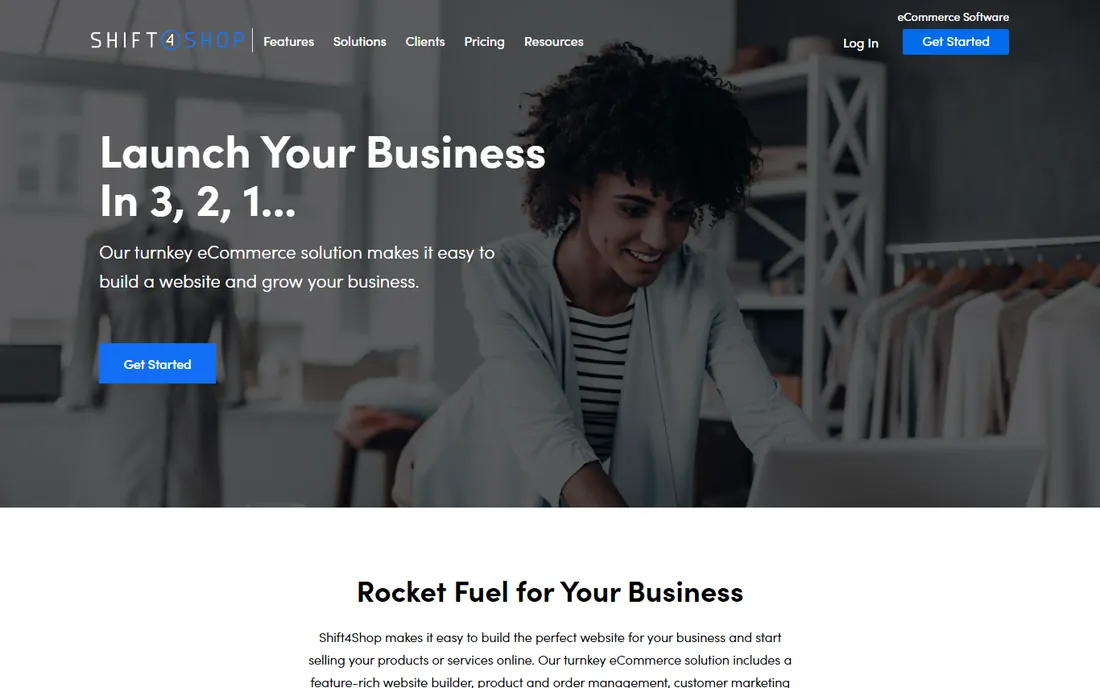
Shift4Shop's pitch is blunt: a full-featured ecommerce platform free for US merchants who process with Shift4 Payments. No feature gating on the free tier, no platform transaction fees, and genuinely capable built-in SEO tools. For budget-conscious merchants, it removes the monthly subscription from the equation entirely.
The platform covers the standard commerce needs: product management, promotions, blogging, and integrations with major shippers and marketplaces. Paid plans from around $39 per month exist for merchants who prefer their own payment processor.
The tradeoffs are ecosystem and polish. The app marketplace is smaller than Shopify's or BigCommerce's, and the design templates lag the leaders. But as a free, capable, US-focused platform, Shift4Shop is the best value most merchants have never heard of.
What we like- Free plan with Shift4 Payments includes full features
- Strong built-in SEO tools
- No transaction fees on the free tier
Watch out for- Free tier requires Shift4 payment processing
- Smaller app ecosystem
- Less design polish than competitors
#8
Wix
Best for: design-led small stores prioritizing simplicity
Visit wix.com
Starting price$29 per month
Free planFree trial
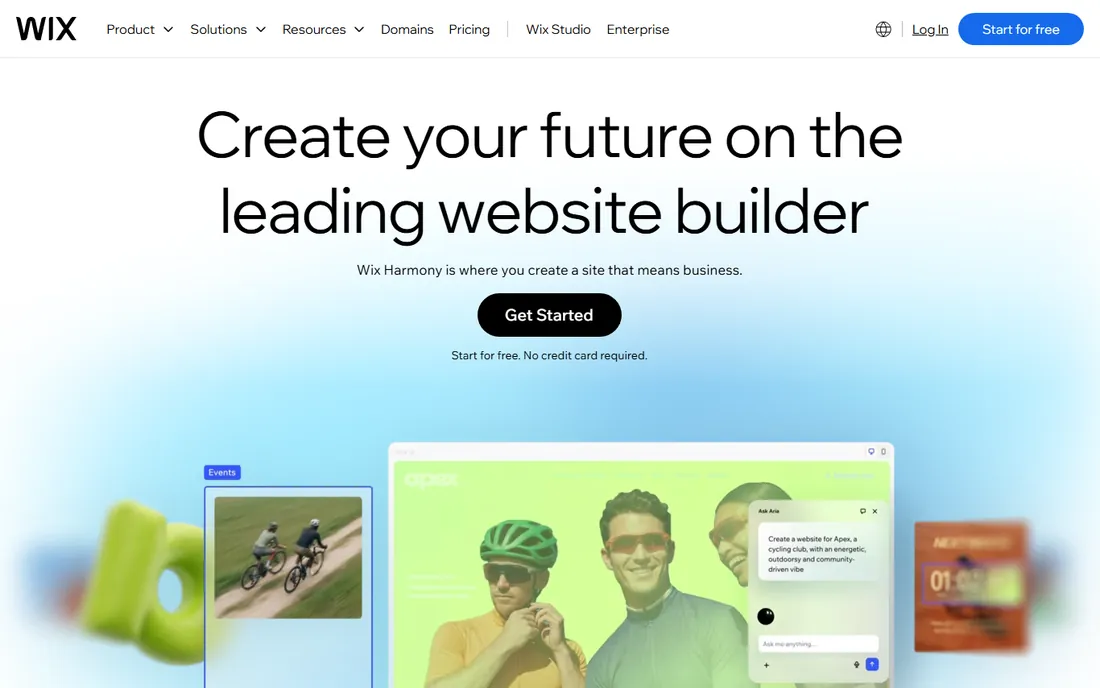
Wix is the design-first website builder with capable ecommerce attached. The drag-and-drop editor produces attractive stores fast, hosting and security are handled, and the Core plan at $29 per month annually adds online selling with no platform transaction fees on Wix Payments. For a small catalog where brand presentation matters most, it is the fastest path to a good-looking store.
Customization depth is where Wix concedes. The platform is template-based with limited code access, product catalog features suit small inventories, and switching templates means rebuilding the site. Velo, Wix's development platform, adds some programmability, but it does not approach WooCommerce or Magento territory.
Pick Wix when the store is small, design matters more than complex commerce logic, and nobody technical is available. For catalogs past a few hundred products or any serious customization, the other platforms on this list pull ahead quickly.
What we like- Beautiful drag-and-drop builder anyone can use
- All-in-one hosting, domains, and marketing
- Quick to launch
Watch out for- Least customizable platform here for serious commerce
- Template switching requires rebuilding
- Weak for large catalogs
How we chose
We ranked platforms by genuine customization depth: code access, checkout control, API completeness, headless support, and extension ecosystems, not marketing claims. We checked each vendor's current pricing page and 2026 pricing roundups, read merchant reviews on G2, Capterra, and Reddit, and weighed the total cost of customization including hosting and developer time. We did not run hands-on builds; prices were verified against vendor pages or roundups current as of October 2026.
Open source vs SaaS: the tradeoff that actually matters
The customization debate is really a responsibility debate. Open-source platforms (WooCommerce, Magento, OpenCart, PrestaShop) give you unlimited control and full ownership of the consequences: security patches, performance, backups, and compliance are yours. SaaS platforms (Shopify, BigCommerce, Wix, Shift4Shop) handle the infrastructure and limit what you can change in exchange.
Neither is universally better. A content-driven brand with developers should own its stack on WooCommerce. A growth-stage DTC brand without engineers should rent reliability on Shopify or BigCommerce. The expensive mistake is choosing open source for the price and discovering the maintenance cost later, or choosing SaaS for simplicity and discovering the platform cannot do what the business needs. Decide based on your team's capabilities, not the license fee.
How to buy for customization without hiring an agency first
Document your actual customization requirements before looking at platforms. List the product types, pricing rules, checkout steps, and integrations you truly need, and separate must-haves from nice-to-haves. Most merchants discover their needs fit a $39 SaaS plan once written down; the ones with genuinely unusual requirements will see it clearly too.
Then test the platform's edges, not its demos. Every demo shows the happy path. Ask how the platform handles your hardest requirement: the 600-variant product, the B2B quote workflow, the custom checkout step. If the answer is "there's an app for that," install the app during the trial and verify. Finally, price the build honestly. A free platform with a $15,000 developer build is not cheaper than a $39 SaaS plan unless the customization genuinely drives revenue.
Frequently asked questions
What is the most customizable ecommerce platform?
Adobe Commerce (Magento) offers the deepest customization with full code access and enterprise architecture, followed closely by WooCommerce. Among SaaS platforms, BigCommerce offers the most built-in flexibility. The right answer depends on whether you have developers: with them, open source wins; without them, SaaS flexibility matters more.
Is WooCommerce really free?
The plugin is free, but running a serious store is not. Budget for hosting (from about $10 per month for basic to much more at scale), premium themes and plugins, SSL, and developer time for setup and maintenance. Many stores spend $50 to $500 per month all-in, which can still beat SaaS at scale but is not zero.
Should I choose Shopify or WooCommerce for customization?
Choose WooCommerce if you need full code control, own your SEO infrastructure, or have developers available. Choose Shopify if you want reliability, fast launch, and a huge app ecosystem without managing servers. WooCommerce wins on depth; Shopify wins on convenience and total cost for teams without technical staff.
What does headless commerce mean?
Headless commerce separates the storefront (what customers see) from the commerce engine (products, cart, checkout) via APIs. It lets developers build fully custom frontends, mobile apps, or IoT experiences on platforms like BigCommerce, Shopify Plus, or Adobe Commerce. It maximizes design freedom but requires significant development resources.
Do I need a developer for Magento?
For Adobe Commerce, yes, effectively. Implementation, customization, and maintenance all require experienced Magento developers, and the ecosystem is built around agency partnerships. Magento Open Source is technically usable by skilled individuals, but production stores need professional development. Budget developer costs as the largest line item.
Which platform is best for B2B ecommerce customization?
BigCommerce has the strongest native B2B features among SaaS platforms: customer groups, quote management, and price lists without heavy customization. Adobe Commerce handles the most complex B2B requirements at enterprise cost. WooCommerce can do B2B well with plugins and development. Shopify's B2B features are strongest on the Plus tier.
Sources we checked (5)
- https://litextension.com/blog/customizable-ecommerce-platform/
- https://interobservers.com/ecommerce-platforms/
- https://www.akoode.com/blog/shopify-vs-woocommerce-vs-magento
- https://www.arcintermedia.com/shoptalk/which-ecommerce-platform-is-best-for-seo-in-2026/
- https://www.optimum7.com/blog/product-configurator-for-bigcommerce-magento-woocommerce-and-shopify.html
Is your product missing or out of date?
We review this list regularly. Vendors can request a listing, send updated pricing or ask about featured placement.

Shihab Mia · Founder, Rankite
Shihab has spent more than a decade helping SaaS and e-commerce brands grow through search. He writes Rankite's software buying guides from pricing pages, documentation and public user reviews. More about Shihab.