How we make this list: we compare pricing pages, product documentation and public user reviews. Rankite is independent; if a vendor ever pays for a featured spot, that listing is clearly labeled Partner.
Key takeaways
- Blogger and WordPress.com let you start a personal blog free today; Blogger even allows a custom domain at just the domain cost.
- Medium and Substack give you a built-in audience, but you trade control over design and monetization.
- Ghost is the best platform for writers who want newsletters, memberships and a real website in one place.
- Squarespace and Wix suit bloggers who want a beautiful site first and a blog section second.
Quick comparison
| Tool | Best for | Starting price | Free plan |
|---|
 WordPress.com WordPress.com | bloggers who want room to grow | From $4 per month | Yes |
 Ghost Ghost | writers building a newsletter audience | From $18 per month | Free trial |
 Substack Substack | email-first personal writing | Free (10% of paid subscription revenue) | Yes |
 Medium Medium | reaching readers without promoting | See website | Yes |
 Blogger Blogger | free hobby blogs with no strings | Free | Yes |
 Wix Wix | a blog inside a polished website | See website | Yes |
 Squarespace Squarespace | beautiful design-led personal blogs | See website | Free trial |
 Write.as Write.as | minimal, distraction-free publishing | See website | Yes |
 Tumblr Tumblr | microblogging and fandom communities | Free | Yes |
Is your product missing or out of date?
We review this list regularly. Vendors can request a listing, send updated pricing or ask about featured placement.
Nine personal blog platforms compared
Starting priceFrom $4 per month
Free planYes
WordPress.com is the hosted version of the world's most popular blogging software. The free plan gets you a yourname.wordpress.com address and core publishing tools immediately, and paid plans from $4 per month (billed yearly) remove ads and add a custom domain, more storage and customization. The upgrade path is the selling point: the same platform can carry a personal diary or a full business site.
The trade-offs are the classic hosted-platform ones. The free tier shows ads to your visitors, and serious customization waits behind paid plans. If you outgrow the hosted version, WordPress.org with your own hosting offers total control. For most personal bloggers, WordPress.com hits the sweet spot of easy start and long runway.
What we like- Huge theme and plugin ecosystem
- Free plan to start
- Scales from hobby to business
Watch out for- Free plan shows WordPress.com ads
- Custom domain needs a paid plan
Starting priceFrom $18 per month
Free planFree trial
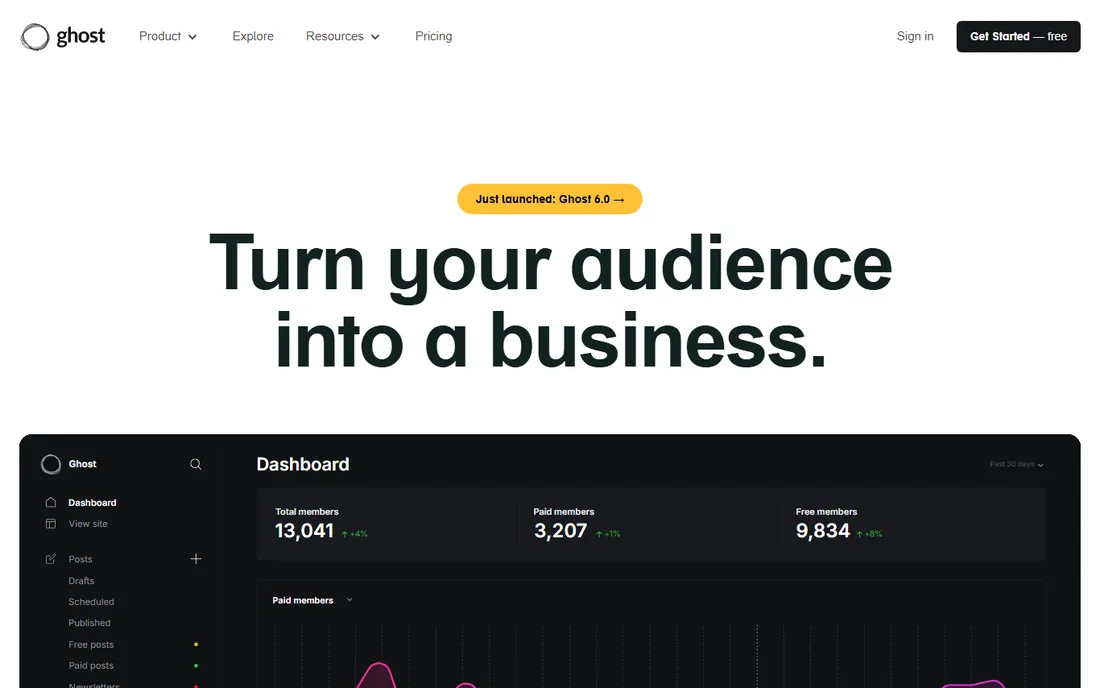
Ghost is the writer's platform: a beautiful editor, built-in email newsletters, and membership tiers with no platform cut on your subscription revenue. Ghost Pro hosting starts at $18 per month billed annually and runs up to $199 for larger publications. The software itself is open source, so technical users can self-host for the cost of a server.
For a personal blog that might one day charge readers, Ghost removes the usual plugin-stitching: publishing, email and payments are one system. The downside is price; at $18 per month it is the most expensive starting point here. Writers serious about building a paid audience will find it worth it.
What we like- Superb editor
- Built-in newsletters and paid memberships with 0% platform fee
- Fast and clean
Watch out for- Pricier than rivals
- Self-hosting the free version needs technical skill
Starting priceFree (10% of paid subscription revenue)
Free planYes
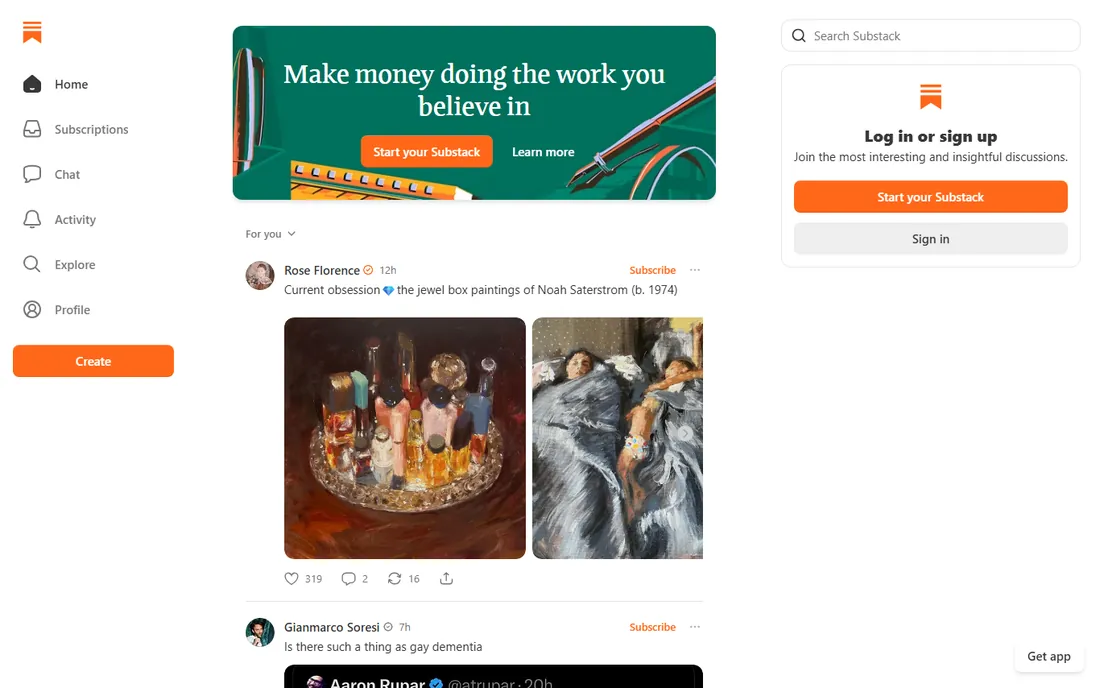
Substack made the newsletter the blog. Sign up, write, publish, and your posts go out by email and live on your yourname.substack.com page. Publishing is free; if you charge readers, Substack takes 10% of subscription revenue. A custom domain is available for a one-time $50 fee.
The simplicity is the whole pitch and the whole limitation. Design options are minimal, and you are building on someone else's platform with their rules. For personal essays, commentary and niche expertise delivered by email, nothing gets you publishing faster.
What we like- Zero setup
- Free to publish
- Built-in paid subscriptions and audience tools
Watch out for- Limited design control
- 10% cut of paid revenue
- Custom domain costs $50 one-time
Starting priceSee website
Free planYes
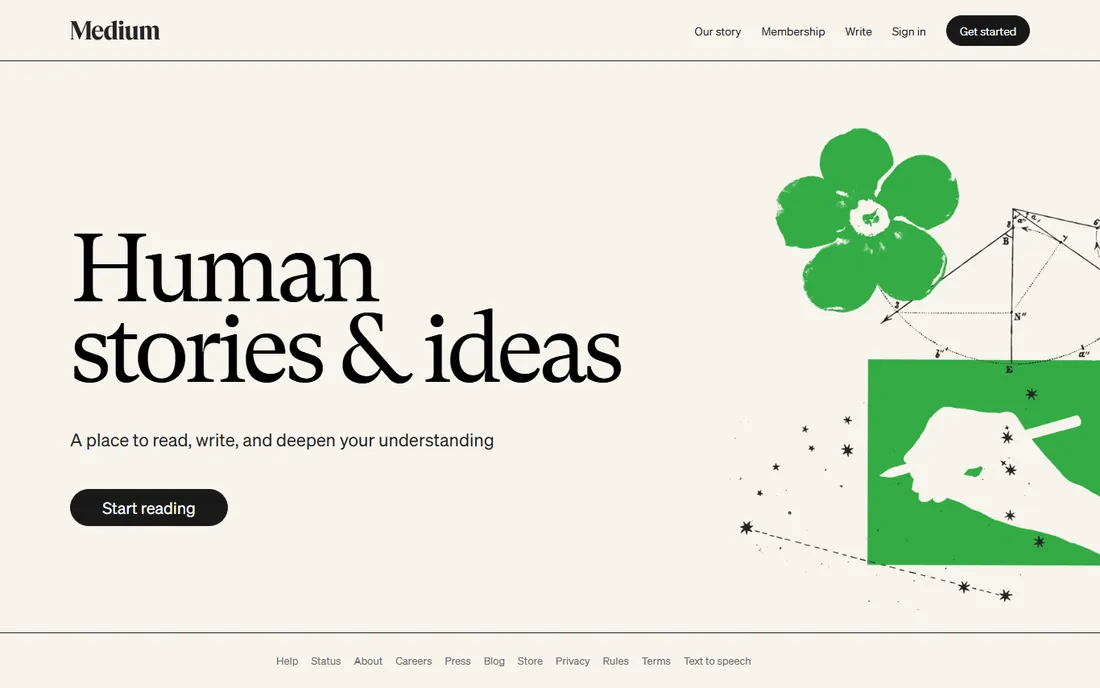
Medium is where you write when you want readers more than you want a website. Publish under medium.com/@yourname and your work can surface to millions of readers through recommendations, no SEO or social promotion required. The partner program pays writers based on member reading time.
You give up a lot of control: branding is minimal, your reach depends on Medium's distribution, and a custom domain requires a paid membership. Writers who treat it as a distribution channel alongside their own site tend to be happiest. As a zero-effort personal blog with real readers, it is unmatched.
What we like- Large built-in reader network
- Clean reading experience
- Partner program for earnings
Watch out for- Limited branding and customization
- Algorithm decides your reach
- Custom domain needs membership
Starting priceFree
Free planYes
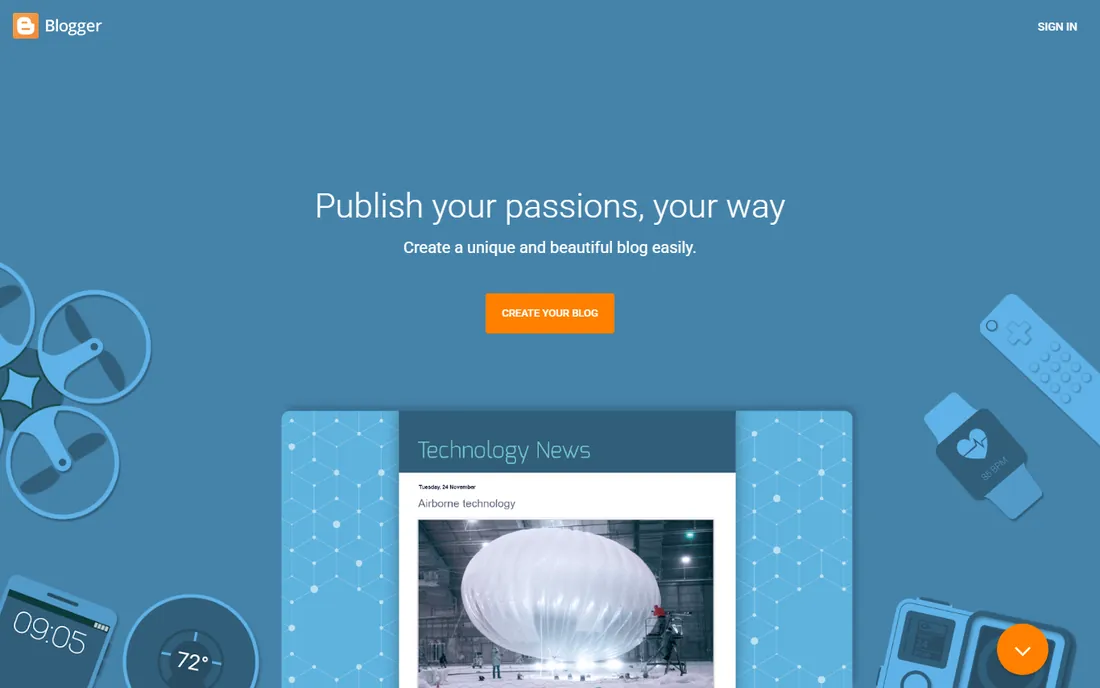
Blogger is Google's free blogging service and the quiet bargain of this list: free hosting, free yourname.blogspot.com address, no ads imposed on your visitors, and you can attach your own domain paying only the domain registration. For a personal or hobby blog with zero budget, the deal is unbeatable.
The honest caveats are age and momentum. Templates and the editor feel dated next to modern rivals, features evolve slowly, and Google's history of shutting down services makes some bloggers nervous about building on it. If you want free and simple and do not care about trends, Blogger still delivers.
What we like- Completely free
- Custom domain at just the domain's cost
- No platform ads
- Google account sign-in
Watch out for- Dated templates and editor
- Uncertain long-term future
- Limited features
Starting priceSee website
Free planYes
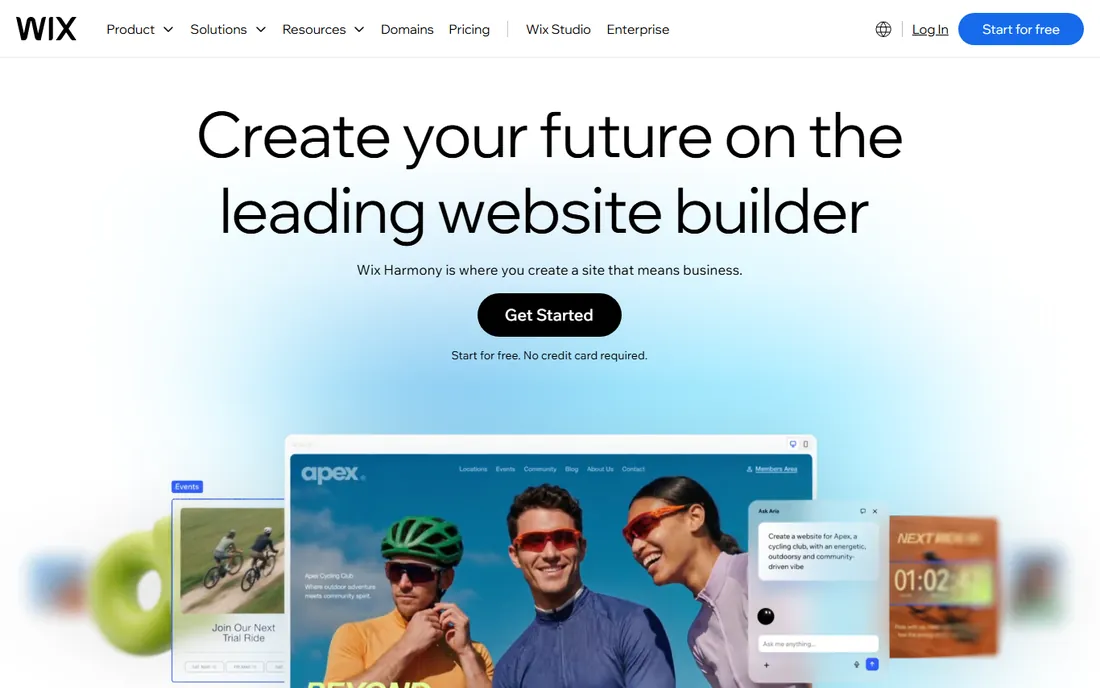
Wix is a website builder first and a blog platform second, which suits personal bloggers who want an about page, portfolio and contact form around their writing. The drag-and-drop editor and template library make attractive sites without code, and the free plan lets you publish at yourname.wixsite.com with Wix branding.
Writers should know the blog editor is not the star here; it is solid but not in Ghost or WordPress's league for publishing workflow. Premium plans remove branding and add a custom domain. Choose Wix when the site matters as much as the words.
What we like- Drag-and-drop design freedom
- Hundreds of templates
- Blog is one part of a full site
Watch out for- Free plan shows Wix branding
- Custom domain needs a Premium plan
- Less writing-focused
Starting priceSee website
Free planFree trial
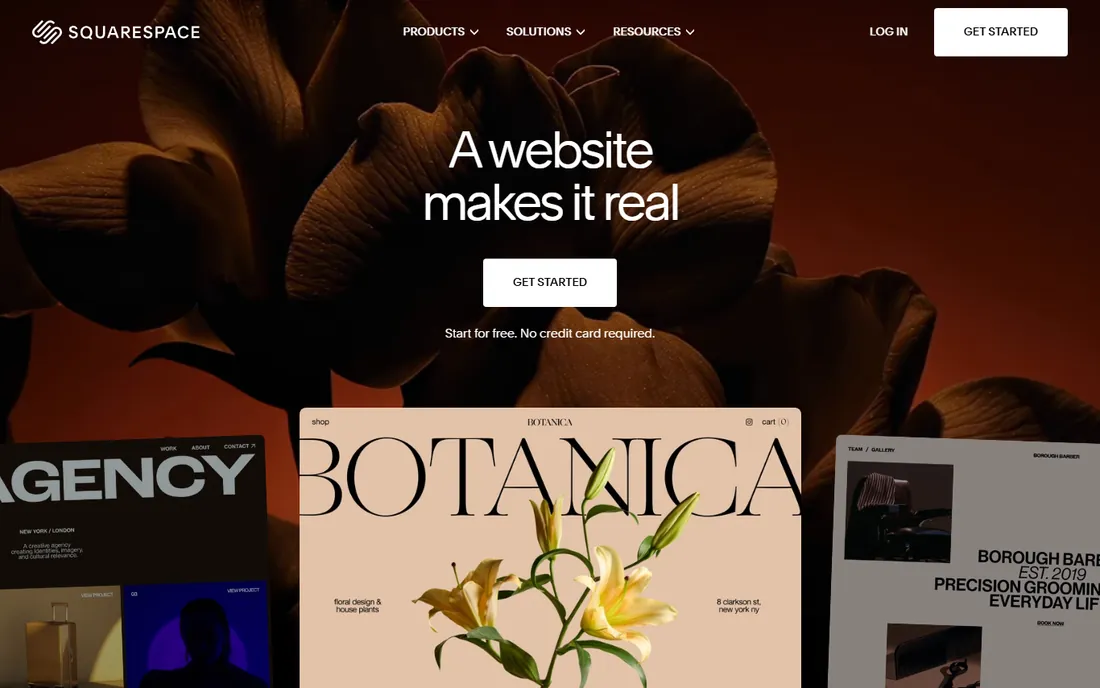
Squarespace blogs look expensive because the templates are genuinely the best in the business. Beyond the blog you get built-in email campaigns, membership areas and commerce, making it a complete personal brand platform. Everything is designed to work together without plugins.
There is no free plan, only a trial, and pricing sits above blogging-first options. For a personal blog where visual identity matters, photographers, designers, lifestyle writers, that premium buys a site that looks custom-built. For pure writing, cheaper tools do the job.
What we like- Best-looking templates in the category
- Built-in email campaigns and memberships
- All-in-one platform
Watch out for- No free plan
- Pricier than blogging-first rivals
#8
Write.as
Best for: minimal, distraction-free publishing
Visit write.as
Starting priceSee website
Free planYes
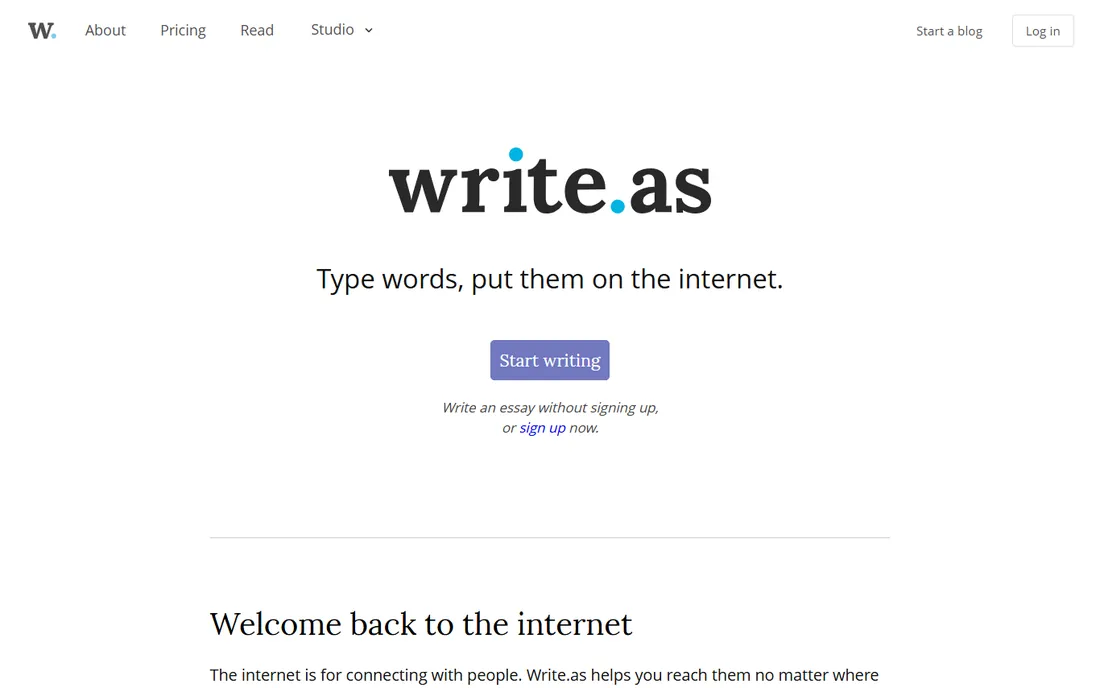
Write.as is blogging stripped to the essay: a clean editor, a clean page, nothing else competing for attention. The free tier publishes anonymously-friendly posts with minimal friction, and the paid Pro plan adds custom domains, newsletters and more blogs. Privacy is a genuine selling point rather than a checkbox.
Minimalism is a feature until you need something it deliberately lacks: comments, rich media layouts and discovery are thin by design. Writers who find other platforms noisy and distracting will love it. Everyone else should treat it as a focused writing space, not a growth platform.
What we like- Clean anonymous-friendly publishing
- Fast and private
- No clutter or tracking focus
Watch out for- Intentionally sparse features
- Smaller community
- Paid Pro for custom domains
Starting priceFree
Free planYes
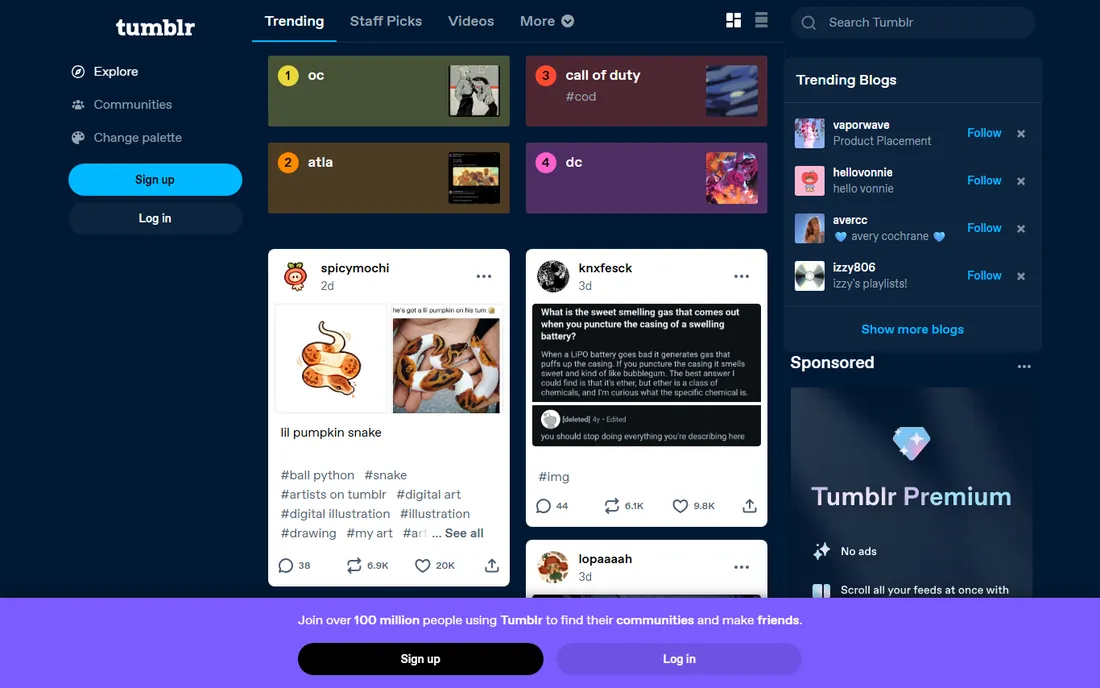
Tumblr occupies its own corner: part blog, part social network, thriving on short posts, images, GIFs and reblogs. It is free, the community is active in fandoms and creative niches, and starting takes minutes. For a personal stream-of-consciousness blog with multimedia, the format fits naturally.
It is a poor fit for long-form essays or professional portfolios, and monetization options are thin. But as a personal creative outlet with built-in social distribution, Tumblr remains unique. Many writers keep one alongside a "serious" blog for exactly that reason.
What we like- Free with a vibrant community
- Great for short posts, images and GIFs
- Easy reblogging
Watch out for- Not ideal for long-form writing
- Ad-supported
- Limited monetization
Choosing by what matters to you
Decide what you are optimizing for. Audience with zero effort points to Medium or Substack. Total control and growth potential point to WordPress.com, with Ghost as the premium writer-focused upgrade. Zero budget points to Blogger. A beautiful personal site points to Squarespace or Wix. Quiet minimal writing points to Write.as, and community plus multimedia points to Tumblr.
Think about the domain question early. A yourname.platform.com address is fine for a hobby, but if the blog might become professional, check what a custom domain costs on your shortlist before you invest months of writing: it ranges from the domain price alone on Blogger to a paid plan on WordPress.com, Wix and Medium.
The audience-versus-ownership trade
This is the fundamental choice in personal blogging. Platforms with built-in audiences (Medium, Substack, Tumblr) get you readers fast but own the relationship and the rules. Platforms you control (WordPress, Ghost, Squarespace) make you earn every reader but nobody can change the algorithm under you. Many successful bloggers eventually do both: own the site, syndicate to the networks. Whichever route you pick, export your content regularly; platforms change ownership and terms, and your archive is the one asset you should never leave solely in someone else's hands.
How we compared them
We evaluated platforms for personal (not business) blogging: ease of starting, free plan quality, writing experience, design options, audience features and pricing. We checked current 2026 pricing pages and recent guides, and noted where custom domains and monetization sit. We did not publish test blogs on each platform.
Frequently asked questions
What is the best free personal blog platform?
Blogger is the most fully free: no ads, custom domain at domain cost only. WordPress.com's free plan is more modern but shows ads and needs a paid plan for a custom domain.
Can I make money from a personal blog?
Yes. Substack and Ghost handle paid subscriptions natively, Medium pays through its partner program, and WordPress supports ads, affiliates and products. Free plans on most platforms limit monetization options.
Which is better for beginners, WordPress.com or Blogger?
WordPress.com for a modern editor and growth path; Blogger for absolute simplicity and zero cost. Both let you start in minutes.
Do I need a custom domain for a personal blog?
Not at first. A platform subdomain is fine for a hobby. If the blog becomes professional or you want it to look serious, a custom domain is worth the small cost.
What is the difference between WordPress.com and WordPress.org?
WordPress.com is hosted for you with free and paid plans. WordPress.org is free software you install on your own hosting, giving total control but requiring you to manage updates, backups and security.
Can I move my blog to another platform later?
Usually yes, with effort. WordPress and Ghost have mature import/export tools. Moving off Medium, Substack or Tumblr is possible but messier, another reason to weigh ownership early.
Sources we checked (10)
- https://wordpress.com/
- https://www.ghost.org/
- https://substack.com/
- https://medium.com/
- https://www.blogger.com/
- https://www.wix.com/
- https://www.squarespace.com/
- https://write.as/
- https://www.tumblr.com/
- https://www.outrank.so/blog/how-to-start-a-blog-for-free
Is your product missing or out of date?
We review this list regularly. Vendors can request a listing, send updated pricing or ask about featured placement.

Shihab Mia · Founder, Rankite
Shihab has spent more than a decade helping SaaS and e-commerce brands grow through search. He writes Rankite's software buying guides from pricing pages, documentation and public user reviews. More about Shihab.