How we make this list: we compare pricing pages, product documentation and public user reviews. Rankite is independent; if a vendor ever pays for a featured spot, that listing is clearly labeled Partner.
Key takeaways
- Enterprise payroll is almost never priced publicly. Workday, ADP, UKG, Dayforce, Oracle and SAP are all quote-based. Rippling ($8/employee/mo) is the exception.
- The best payroll software for large business is really an HCM decision. Payroll, time, benefits and compliance live in one system at this scale.
- Workday leads for global enterprises. UKG Pro dominates workforce management. Dayforce innovates on continuous payroll. ADP brings payroll heritage and compliance depth.
- Implementation is the real cost. Budget 6 to 18 months and a dedicated team; the software price is only part of the total.
Quick comparison
Is your product missing or out of date?
We review this list regularly. Vendors can request a listing, send updated pricing or ask about featured placement.
The best payroll software for large business
Starting priceSee website
Free planNo
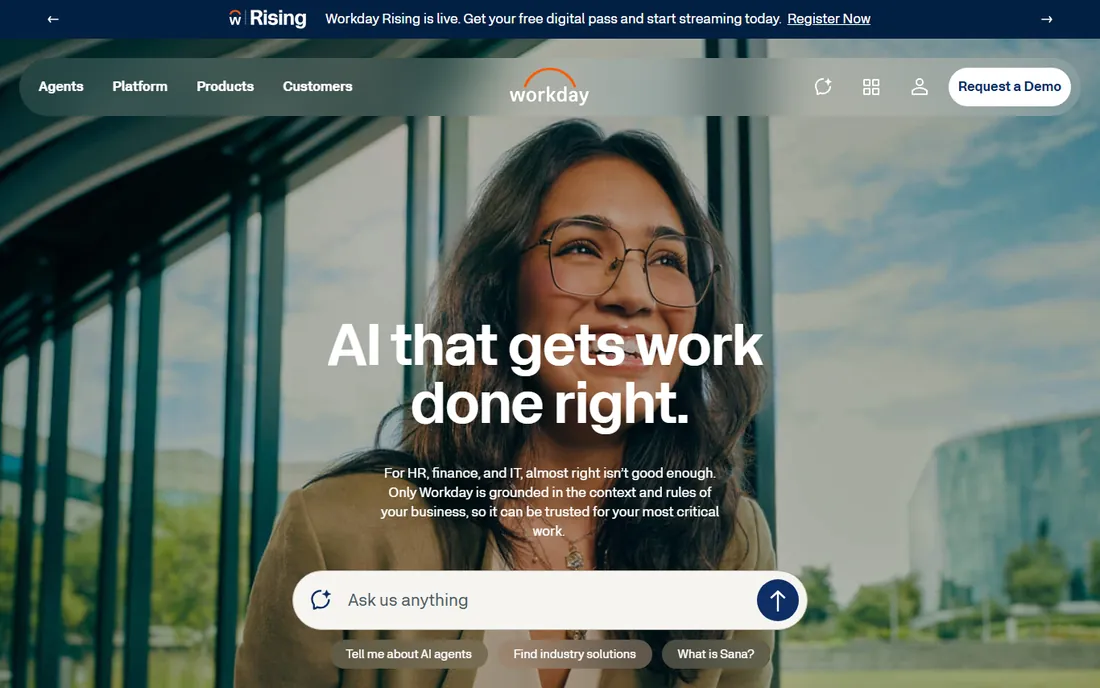
Workday is the enterprise HCM that large companies standardize on. Pricing is quote-based. The platform combines HR, payroll, financial management, planning and analytics in one cloud system, with in-house payroll in major countries and a partner network covering the rest.
The strength is the unified data model. Payroll, finance and workforce planning share one record, which gives CFOs and CHROs a single source of truth. The analytics and planning modules are best in class.
Implementations run 12 to 18 months and cost multiples of the license. For global enterprises that want one system for HR and finance, Workday is the default choice and the best payroll software for large business at true enterprise scale.
What we like- The enterprise standard
- Strong financials and planning alongside HCM
- Global payroll network
Watch out for- Pricing is quote-based and expensive
- Implementations are long and complex

#2
ADP Vantage HCM
Best for: payroll heritage and compliance
Visit adp.com
Starting priceSee website
Free planNo
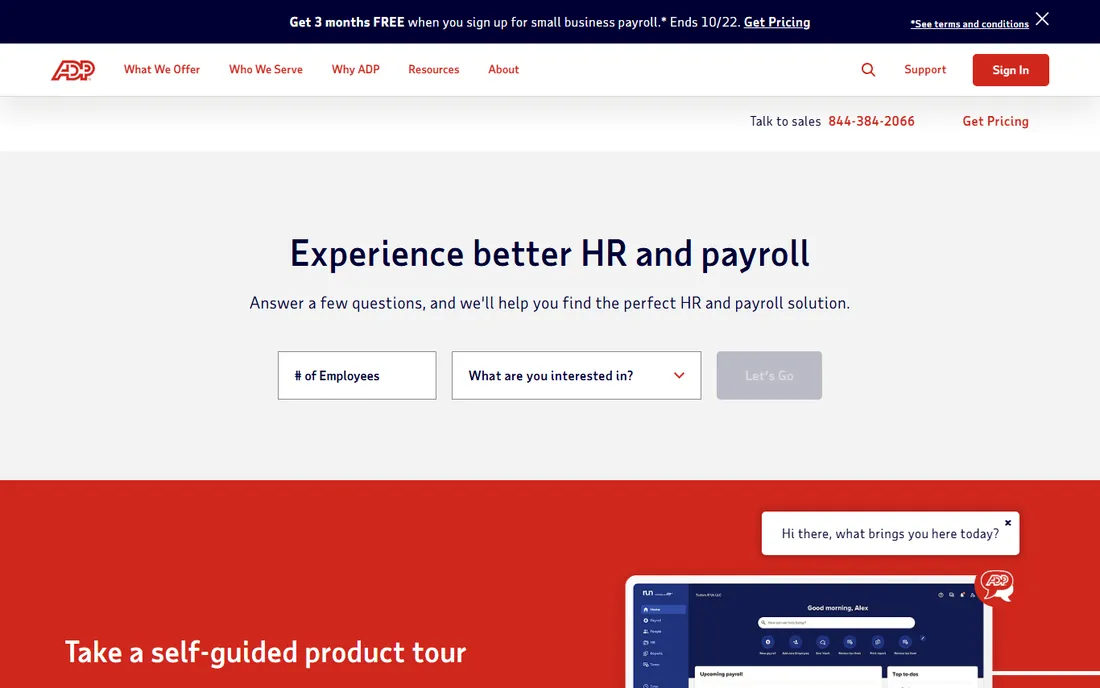
ADP is the payroll incumbent that enterprises have trusted for decades. Pricing is quote-based. ADP Vantage HCM serves large organizations with core HR, payroll, time, benefits and talent, backed by ADP's unmatched payroll processing and tax filing infrastructure.
The compliance depth is the differentiator. ADP files taxes in every US jurisdiction and operates in 140+ countries. For companies where payroll accuracy and tax compliance are non-negotiable, that heritage matters.
The product family spans RUN, Workforce Now and Vantage, which can confuse buyers. For enterprises that want payroll backed by the industry's deepest compliance bench, ADP is the safe pair of hands.
What we like- Decades of payroll and tax expertise
- Broad module coverage
- Strong compliance services
Watch out for- Pricing is quote-based
- Product family can feel fragmented
Starting priceSee website
Free planNo
UKG Pro is the workforce management powerhouse. Pricing is quote-based on a per-employee-per-month model. The platform covers core HR, payroll, time, scheduling, recruiting and analytics, with particular strength in shift-based and frontline workforces.
The scheduling tools stand out. SMS shift offers, self-scheduling and AI-assisted workforce planning serve hospitals, retailers and manufacturers with thousands of hourly workers. Global payroll and multi-currency support handle international operations.
Implementation is complex and reporting needs configuration. For large organizations where workforce management is the priority, UKG Pro is the strongest fit.
What we like- Best-in-class workforce management and scheduling
- Global payroll
- Strong integrations
Watch out for- Pricing is quote-based
- Complex implementation and reporting
Starting priceSee website
Free planNo
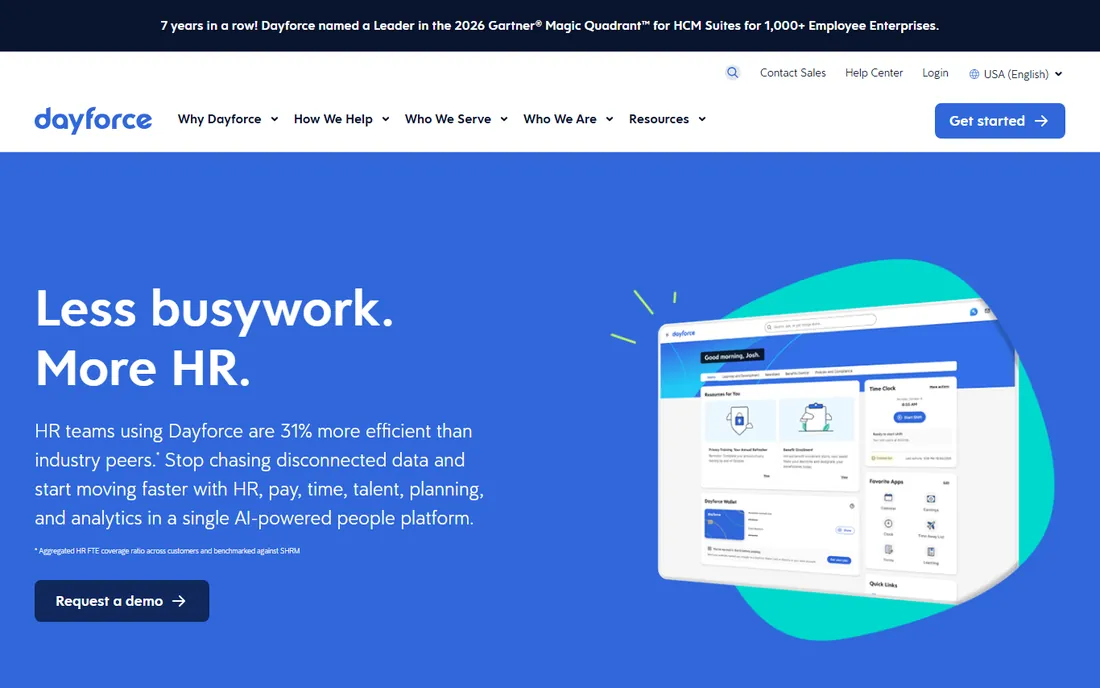
Dayforce is the continuous-payroll innovator. Pricing is quote-based. The platform's defining feature is always-on payroll calculation: every time, pay and HR change updates net pay in real time, eliminating the batch payroll cycle.
The model suits mid-to-large enterprises, especially in retail, hospitality and healthcare. Payroll, time, benefits, workforce management and talent share one database, with payroll processing across 200+ countries.
The architecture is powerful but the platform targets larger operations. For companies that want payroll without the pay-period scramble, Dayforce's continuous model is genuinely different.
What we like- Continuous payroll calculation
- Strong compliance
- Good for shift-based industries
Watch out for- Pricing is quote-based
- Complex for smaller teams
Starting priceSee website
Free planNo
Oracle Fusion Cloud HCM is the choice for Oracle shops. Pricing is quote-based. When the organization already runs Oracle ERP, adding Oracle HCM keeps HR, payroll, finance and supply chain in one cloud ecosystem with shared data and security.
The payroll is enterprise-grade with global coverage. Talent, compensation, recruiting and analytics round out a full HCM suite. The integration with Oracle's ERP and financials is the reason to choose it over best-of-breed alternatives.
Outside the Oracle ecosystem the case is weaker. For Oracle-standardized enterprises, Fusion Cloud HCM is the coherent choice.
What we like- Unified with Oracle ERP
- Strong global payroll
- Enterprise analytics
Watch out for- Pricing is quote-based
- Best value inside the Oracle ecosystem
Starting priceSee website
Free planNo
SAP SuccessFactors is the enterprise HR suite for SAP environments. Pricing is quote-based. For companies standardized on SAP S/4HANA, SuccessFactors extends the ERP into HR, payroll, talent and analytics with native integration.
The scale is proven. Some of the world's largest employers run SuccessFactors across hundreds of thousands of employees and dozens of countries. The compliance and localization depth matches that footprint.
Implementations are consultant-heavy and the user experience lags newer platforms. For SAP-centric multinationals, SuccessFactors is the path of least resistance and the best payroll software for large business in the SAP world.
What we like- Deep SAP integration
- Strong global compliance
- Proven at massive scale
Watch out for- Pricing is quote-based
- Complex and consultant-heavy
Starting price$8/employee/mo
Free planNo
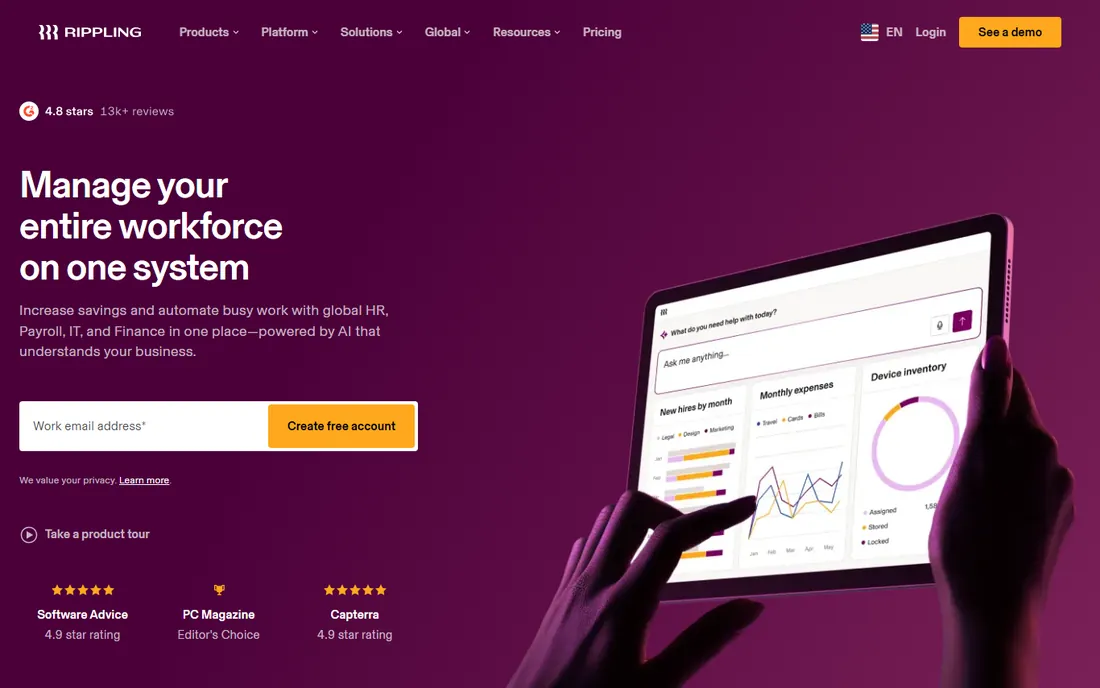
Rippling is the modern challenger that unifies HR, IT and Finance. Pricing is published: plans start at $8 per employee per month plus a monthly base fee, with modular products for payroll, benefits, devices and apps. Global payroll covers 185+ countries.
The unification is the pitch. One employee record drives HR, payroll, IT provisioning and spend management, with automation across all of them. Implementation is weeks, not months, and the interface is modern.
The base fee adds up, and Rippling is newer to 10,000+ employee deployments than Workday or SAP. For growing companies that want enterprise capability without enterprise implementation, Rippling is the best payroll software for large business on a modern stack.
What we like- Published pricing from $8/employee/mo
- Unifies HR, IT and finance
- Fast implementation
Watch out for- Monthly base fee on top
- Newer to true enterprise scale
Starting priceSee website
Free planNo
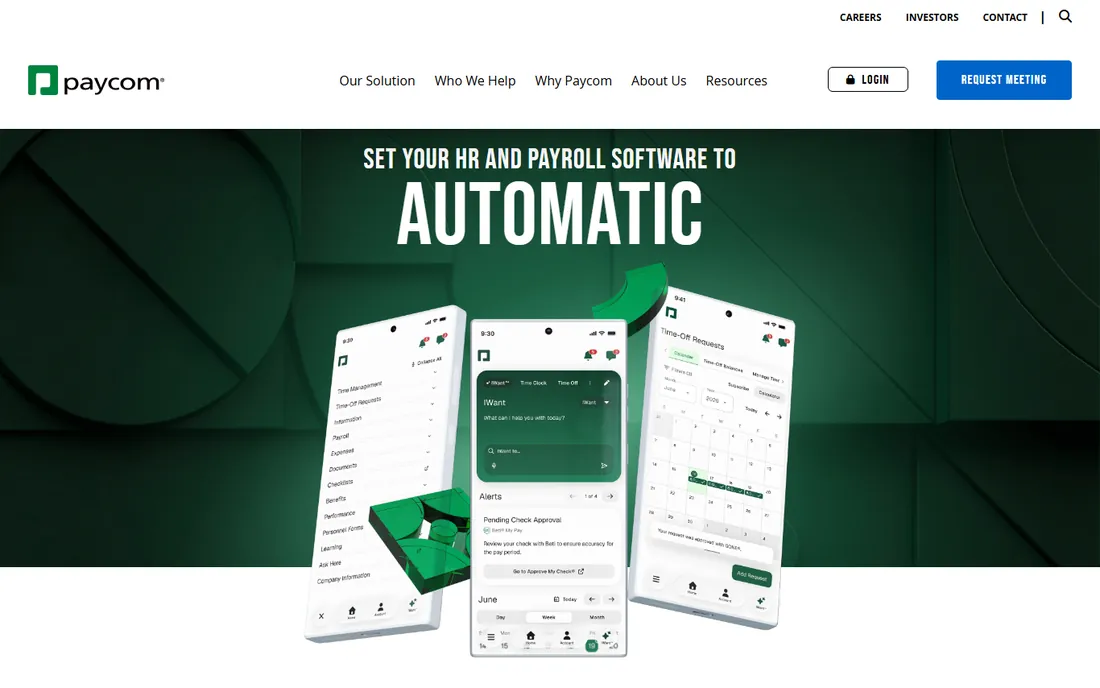
Paycom is the single-database HCM for mid-market and enterprise. Pricing is quote-based. Every module, from payroll and time to benefits and talent, reads and writes to one employee record, which the company argues eliminates the data integrity issues of interfaced systems.
The payroll accuracy story resonates. Beti, the employee-guided payroll experience, lets workers review their own paychecks before processing, catching errors upstream. The automation reduces HR administrative load.
The sales process draws criticism and pricing is opaque. For organizations that prioritize payroll accuracy and data integrity, Paycom's architecture is compelling.
What we like- True single-database architecture
- Strong payroll accuracy
- Employee self-service
Watch out for- Pricing is quote-based
- Sales process can be aggressive
Starting priceSee website
Free planNo
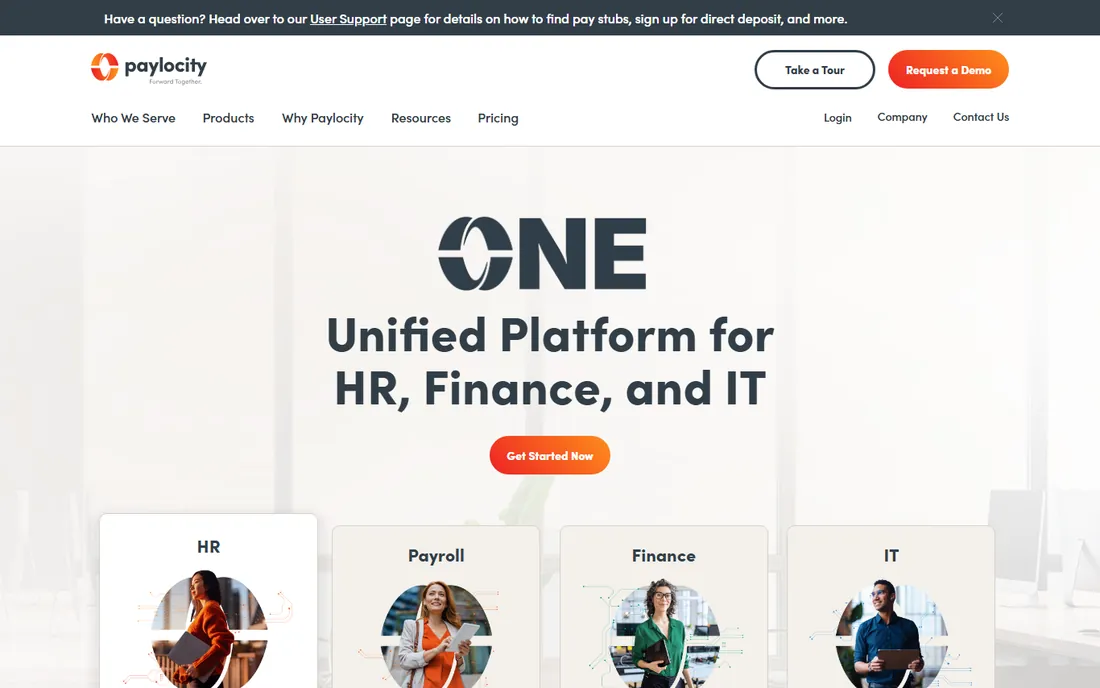
Paylocity is the modern HCM with strong employee experience. Pricing is quote-based. The platform combines payroll, HR, benefits and time with engagement tools like recognition, surveys and community features that larger enterprises often bolt on separately.
The interface is cleaner than legacy HCMs, which aids adoption across large workforces. Payroll, compliance and reporting are solid, and the platform scales well into the mid-market and lower enterprise.
At 20,000+ employees the track record is thinner than Workday or Oracle. For growing companies that want payroll plus a genuine employee experience, Paylocity is the modern choice.
What we like- Modern interface
- Strong engagement and culture tools
- Good for mid-market growth
Watch out for- Pricing is quote-based
- Less proven at very large scale
Starting priceSee website
Free planNo
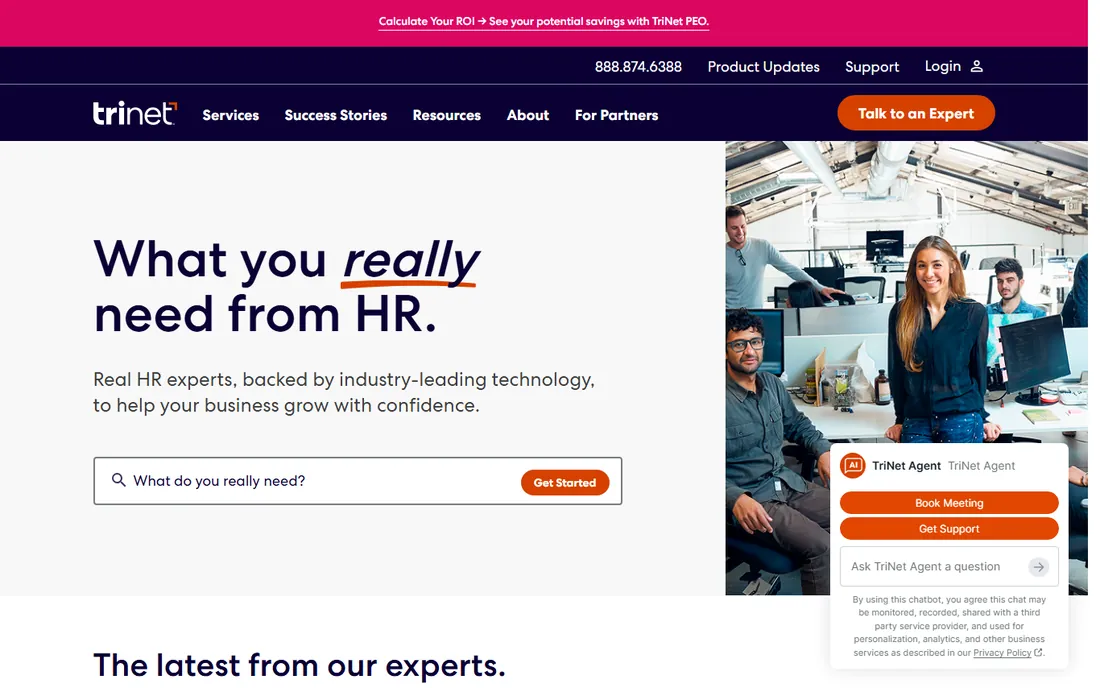
TriNet is the PEO option for companies that want HR outsourced. Pricing is quote-based. As a professional employer organization, TriNet becomes the employer of record for tax and benefits purposes, handling payroll, compliance, benefits and HR support.
The model suits fast-growing companies that need enterprise-grade HR without building the function. Benefits draw on TriNet's scale, and the compliance burden shifts to the PEO. HR Plus adds technology and services for larger clients.
Control is the tradeoff; the PEO owns the employment relationship mechanics. For large businesses that prefer to outsource HR operations rather than run them, TriNet is the established PEO choice.
What we like- PEO model outsources compliance and benefits
- Good for fast-growing companies
- HR expertise included
Watch out for- Pricing is quote-based
- Less control than in-house HR tech
Why enterprise payroll is (almost) never priced publicly
Nine of the ten tools here hide their pricing behind sales calls. The reasons are structural. Enterprise deals bundle modules, user counts, countries, implementation services and support tiers in combinations that defy a price grid. A 2,000-employee US-only deployment and a 15,000-employee 40-country rollout are different products with different prices.
The opacity serves the vendors. Without published prices, every deal is negotiated, and incumbents protect margins. It also reflects reality; the software license is often the smaller half of the first-year cost once implementation, data migration and change management are included.
Rippling's $8 per employee per month is the exception that proves the rule. Published pricing signals a product-led motion and simpler deployments. When evaluating, insist on total cost: license, implementation, integrations, training and three years of support. The quote is the beginning of the conversation, not the end.
Implementation: the real cost of enterprise payroll
The software decision is the easy part. Implementation is where enterprise payroll projects succeed or fail. Typical timelines run 6 months for mid-market platforms and 12 to 18 months for Workday, Oracle or SAP. Data migration, parallel payroll runs, integration with time and benefits systems, and change management across thousands of employees all take time.
The team matters more than the tool. Successful implementations have an executive sponsor, a dedicated internal project manager, and clean data going in. Dirty employee records, inconsistent pay codes and undocumented processes will surface during migration; budget time to fix them.
Plan for parallel runs. Running the old and new payroll side by side for at least two cycles catches calculation errors before they hit paychecks. Nothing destroys trust in a new system faster than a wrong paycheck. The vendors know this; insist on it in the statement of work.
Frequently asked questions
What is the best payroll software for large business?
For global enterprises, Workday leads. For workforce management, UKG Pro. For continuous payroll, Dayforce. For payroll heritage and compliance, ADP. For Oracle shops, Oracle HCM; for SAP shops, SuccessFactors. For a modern unified platform with published pricing, Rippling at $8 per employee per month. The best choice depends on your ERP, workforce type and global footprint.
How much does enterprise payroll software cost?
Almost all enterprise vendors are quote-based. Rippling publishes $8 per employee per month plus a base fee. Third-party sources report ADP Vantage from around $50 per user per month. Expect the total first-year cost, including implementation, to run 2 to 4 times the license fee. Always get total cost, not just the software quote.
Should large businesses use a PEO like TriNet?
A PEO suits fast-growing companies that want to outsource HR compliance, benefits and payroll administration. The tradeoff is control; the PEO becomes the employer of record. Companies with established HR teams usually prefer direct HCM software like Workday, UKG or ADP. Companies without HR infrastructure often benefit from the PEO model.
What is the difference between Workday and ADP?
Workday is a unified cloud HCM with financials and planning, best for global enterprises that want one system. ADP is the payroll specialist with the deepest tax and compliance infrastructure, offering a family of products by company size. Workday leads on analytics and unified data; ADP leads on payroll processing depth and compliance services.
How long does enterprise payroll implementation take?
Typically 6 months for mid-market platforms like Rippling, Paycom or Paylocity, and 12 to 18 months for Workday, Oracle or SAP. Data migration, integrations, parallel runs and change management drive the timeline. Budget a dedicated internal team and insist on parallel payroll runs before go-live.
Sources we checked (11)
- https://www.workday.com/
- https://www.adp.com/
- https://www.ukg.com/
- https://www.dayforce.com/
- https://www.oracle.com/
- https://www.sap.com/
- https://www.rippling.com/
- https://www.rippling.com/pricing
- https://www.paycom.com/
- https://www.paylocity.com/
- https://www.trinet.com/
Is your product missing or out of date?
We review this list regularly. Vendors can request a listing, send updated pricing or ask about featured placement.

Shihab Mia · Founder, Rankite
Shihab has spent more than a decade helping SaaS and e-commerce brands grow through search. He writes Rankite's software buying guides from pricing pages, documentation and public user reviews. More about Shihab.
 Workday HCM
 UKG Pro
 Dayforce
 Oracle Fusion Cloud HCM
 SAP SuccessFactors
 Rippling
 Paycom
 Paylocity
 TriNet HR Plus