How we make this list: we compare pricing pages, product documentation and public user reviews. Rankite is independent; if a vendor ever pays for a featured spot, that listing is clearly labeled Partner.
Key takeaways
- Extensiv and Cin7 are the heavyweights for distributors with real inventory complexity across warehouses and channels.
- Ordoro, inFlow Inventory, and Zoho Inventory serve smaller teams that need clean order entry without an enterprise implementation project.
- ShipStation and Veeqo are shipping-first tools: buy them for fulfillment speed and carrier rates, not for inventory depth.
- Linnworks and Finale Inventory fill specific gaps: multichannel automation rules and barcode-driven warehouse workflows.
Quick comparison
| Tool | Best for | Starting price | Free plan |
|---|
 Extensiv Extensiv | High-volume multichannel sellers | See website | See website |
 Cin7 Cin7 | Inventory-centric distributors and manufacturers | See website | See website |
 Ordoro Ordoro | Small merchants who ship a lot | See website | See website |
 ShipStation ShipStation | Shipping-heavy order fulfillment | See website | See website |
 Finale Inventory Finale Inventory | Barcode-driven warehouse operations | See website | See website |
 Linnworks Linnworks | Multichannel ecommerce automation | See website | See website |
 Zoho Inventory Zoho Inventory | Small businesses in the Zoho ecosystem | See website | See website |
 inFlow Inventory inFlow Inventory | Small distributors that want simplicity | See website | See website |
 Veeqo Veeqo | Amazon sellers managing multichannel orders | See website | See website |
Is your product missing or out of date?
We review this list regularly. Vendors can request a listing, send updated pricing or ask about featured placement.
The best order entry software
Starting priceSee website
Free planSee website
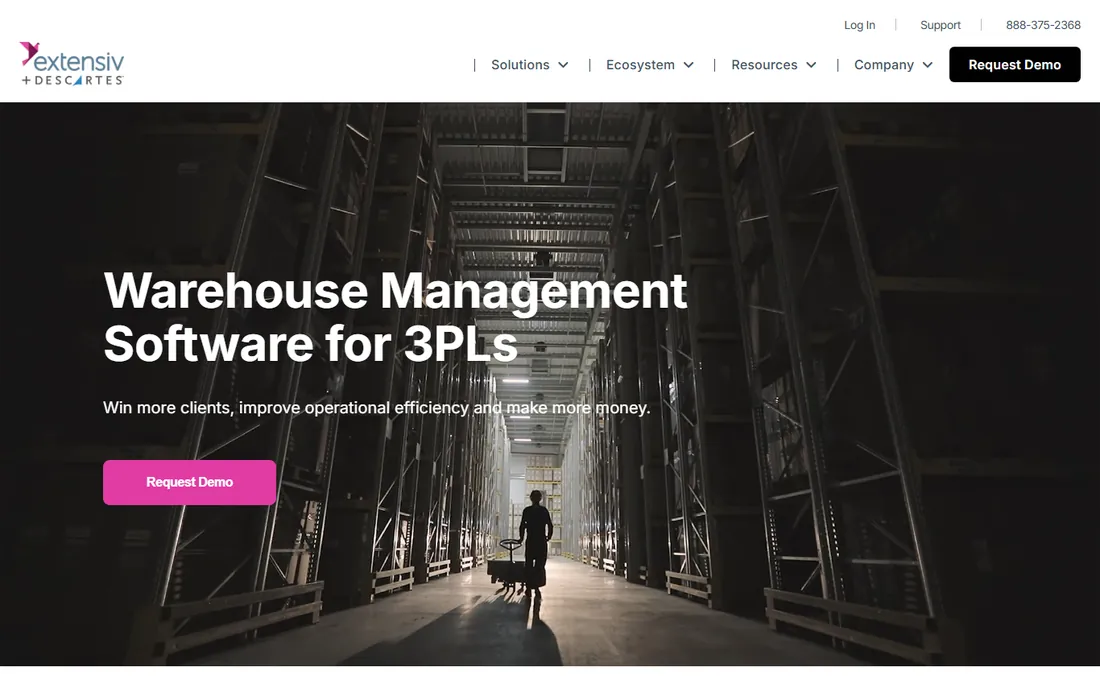
Extensiv, formerly Skubana, is the platform sellers graduate to when spreadsheets and basic tools stop keeping up. It pulls orders from every channel into one queue, routes them to the right warehouse or 3PL based on rules you define, and keeps inventory counts honest across all of it. The analytics go beyond "what sold" into which SKUs and channels actually make money after fees and shipping.
That power comes with enterprise weight. Pricing is quote-based and the sales process assumes you have real volume, which prices out small merchants. Implementation is a project, not a signup form: expect to map your warehouses, channels, and workflows with their team. For distributors and brands doing serious multichannel volume, that effort pays back. For a ten-SKU Shopify store, it is more tool than you need.
What we like- Unified order routing across sales channels and 3PLs
- Strong analytics on profitability by SKU and channel
- Built to handle enterprise order volumes
Watch out for- Quote-based pricing aimed at larger sellers
- Implementation takes real project management
#2
Cin7
Best for: Inventory-centric distributors and manufacturers
Visit cin7.com
Starting priceSee website
Free planSee website
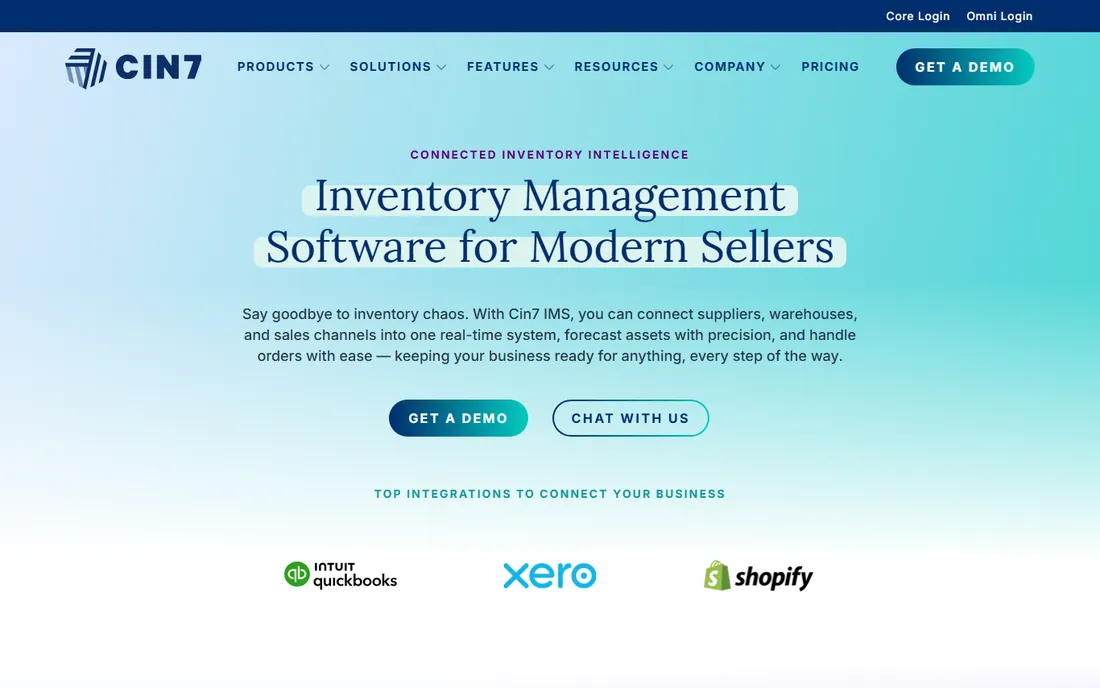
Cin7, which absorbed DEAR Systems (now Cin7 Core) and the former Orderhive, is the inventory-first option for distributors and light manufacturers. Where shipping-first tools treat inventory as an afterthought, Cin7 treats it as the core: bills of materials, assemblies, batch tracking, landed costs, and multi-warehouse transfers are all native rather than bolted on.
Order entry benefits from that foundation. When a rep enters an order, available-to-promise counts reflect what is actually buildable and shippable, not just what a channel feed claims. The channel integrations cover the usual marketplaces and carts, and the 3PL connections handle outsourced fulfillment.
The honest knocks are usability and onboarding. The interface shows its age next to newer competitors, and while the feature depth is real, getting it configured for a complex operation usually means paying for implementation help. Budget for that alongside the subscription.
What we like- Deep inventory, manufacturing, and assembly features
- Connects to major sales channels and 3PLs
- Handles multi-warehouse complexity well
Watch out for- Interface feels dated in places
- Onboarding can drag without paid implementation help
Starting priceSee website
Free planSee website
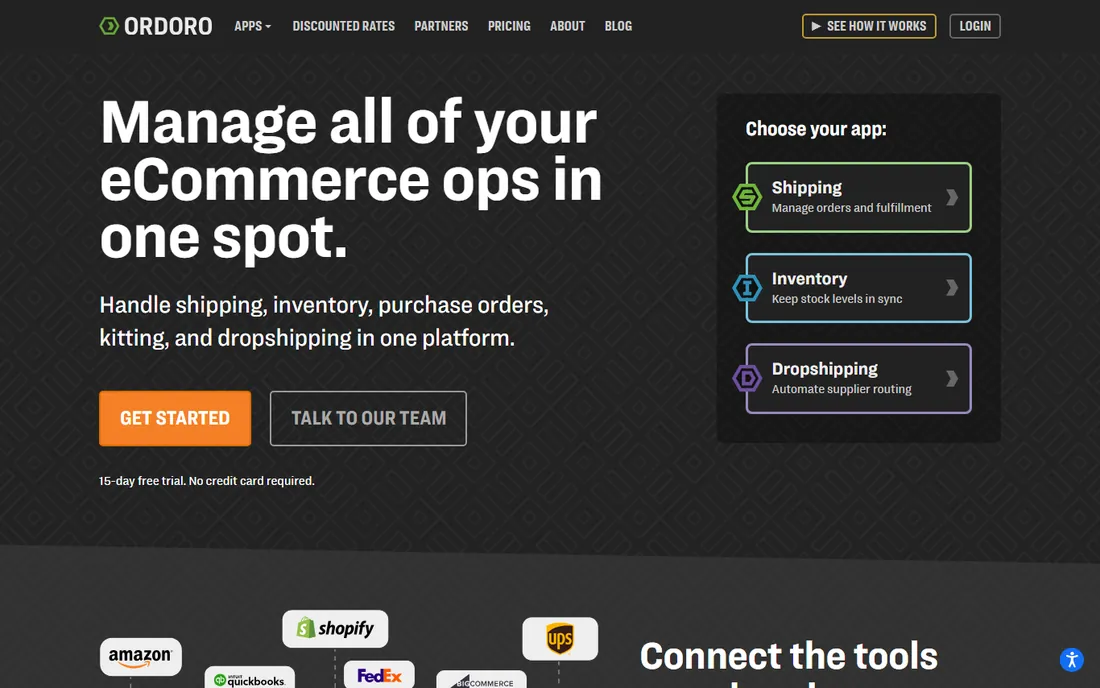
Ordoro is the pragmatic pick for small merchants whose biggest daily pain is getting boxes out the door. Order entry is straightforward: orders flow in from your channels, inventory decrements, and the shipping workflow takes over with rate shopping and batch label printing that just works.
Setup is measured in hours, not weeks, which is the point. A five-person operation can be running the same week they sign up, without a consultant. The pricing stays friendly for small teams, and the carrier integrations cover the options most US merchants actually use.
The ceiling arrives when inventory gets complicated. Kitting, manufacturing, and multi-warehouse logic are not Ordoro's strengths, and the reporting will frustrate anyone used to deeper analytics. If your operation is "buy, store, sell, ship," it fits. If you build or assemble products, look at Cin7 or Finale instead.
What we like- Fast setup with sensible shipping defaults
- Good rate shopping across USPS, UPS, and FedEx
- Affordable for small teams
Watch out for- Thinner on advanced inventory and manufacturing
- Reporting is basic next to larger platforms
Starting priceSee website
Free planSee website
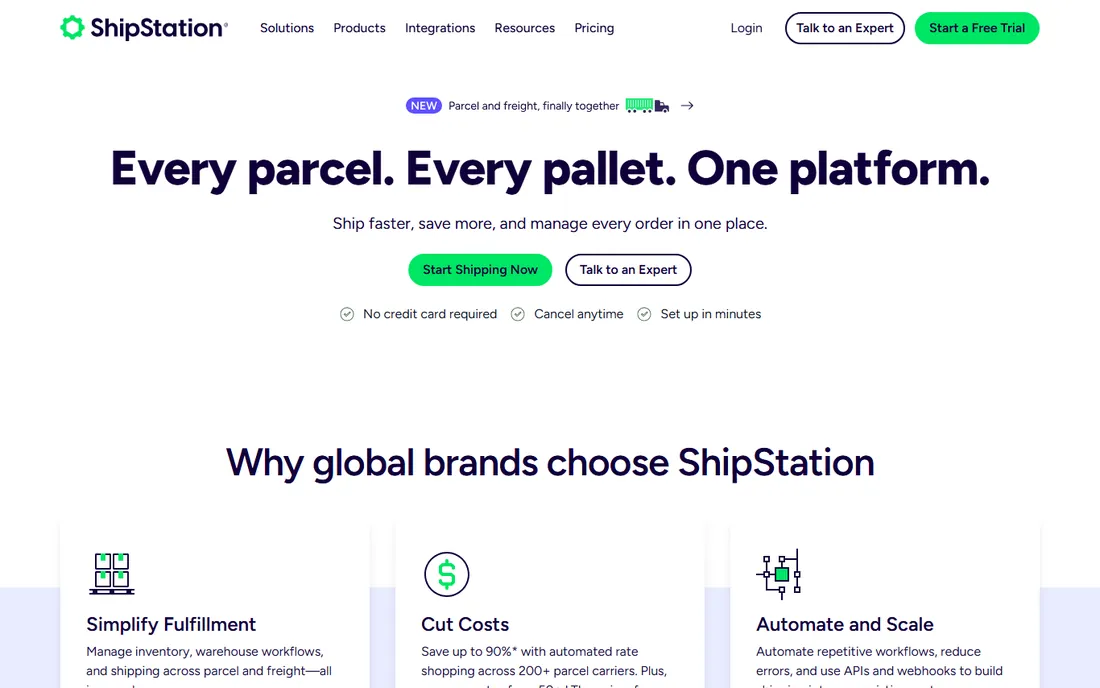
ShipStation, now part of the merged ShipStation Global group, is the label printer's best friend. Orders stream in from every channel, automation rules sort them by weight, destination, or product, and the batch printing workflow moves parcels at a pace manual processes cannot touch. The carrier discounts alone justify it for many merchants.
But be clear about what you are buying. ShipStation is fulfillment software with order entry attached, not the other way around. Inventory management is light, and if your complexity lives upstream (assemblies, landed costs, multi-warehouse allocation), you will need a real inventory platform in front of it.
Pricing scales with shipment volume, so high-volume shippers should model the monthly cost honestly. For merchants whose main problem is shipping speed and cost, it remains the default recommendation.
What we like- Deep carrier integrations and automation rules
- Fast batch label printing workflows
- Connects to nearly every sales channel
Watch out for- Order entry is secondary to the shipping workflow
- Costs scale with shipment volume
Starting priceSee website
Free planSee website
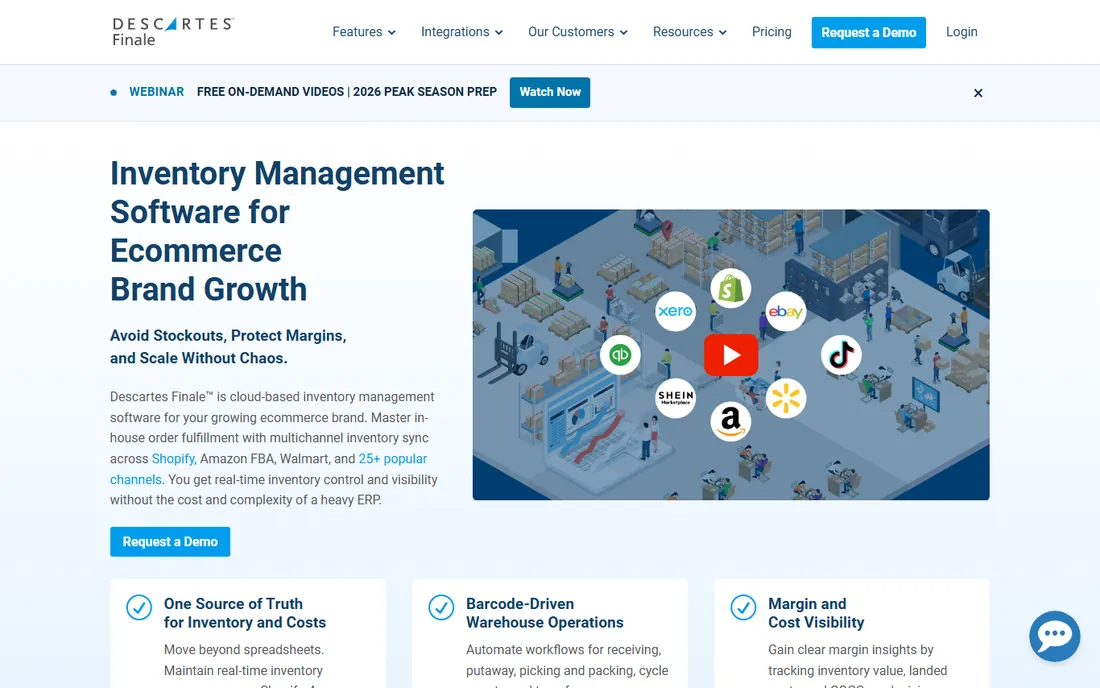
Finale Inventory is built for the warehouse floor. Barcode scanning drives receiving, picking, and cycle counts through mobile devices, and the system stays accurate at SKU counts where spreadsheets collapse. Kitting, assemblies, and serial or lot tracking are native, which matters for distributors with real product complexity.
Order entry plugs into that operational backbone. When a rep commits an order, the warehouse sees it in a pick queue designed for scanning, not for reading screens. That tight loop between the order and the shelf is the product's whole argument, and for barcode-driven operations it is a strong one.
The interface will not win design awards, and the integration list is shorter than Extensiv's or Cin7's. But if your pain is warehouse accuracy rather than channel sprawl, Finale's focus is exactly right.
What we like- Serious barcode and mobile warehouse workflows
- Handles high-SKU-count catalogs well
- Native kitting and assembly support
Watch out for- Utilitarian interface that prioritizes function over polish
- Smaller integration ecosystem than bigger rivals
Starting priceSee website
Free planSee website
Linnworks, which absorbed SkuVault's warehouse capabilities, is the automation workhorse for multichannel sellers. Orders from marketplaces, carts, and direct channels land in one system, and a rules engine handles the repetitive decisions: which warehouse fulfills, which shipping service applies, when to split or hold an order. Set the rules well and the daily grind mostly runs itself.
The channel coverage is genuinely broad, including the European marketplaces that US-centric tools neglect, which is why cross-border sellers cluster here. The warehouse management features, inherited from SkuVault, add barcode-driven accuracy for teams that outgrow pick-and-pack chaos.
Pricing is quote-based, which puts it out of casual reach, and the depth that makes it powerful can overwhelm a seller with one channel and simple needs. It fits established multichannel operations, not beginners.
What we like- Broad marketplace and channel integrations
- Flexible automation rules engine
- Proven with sellers across the US, UK, and EU
Watch out for- Quote-based pricing with no self-serve tier
- Can feel complex for very small sellers
#7
Zoho Inventory
Best for: Small businesses in the Zoho ecosystem
Visit zoho.com
Starting priceSee website
Free planSee website
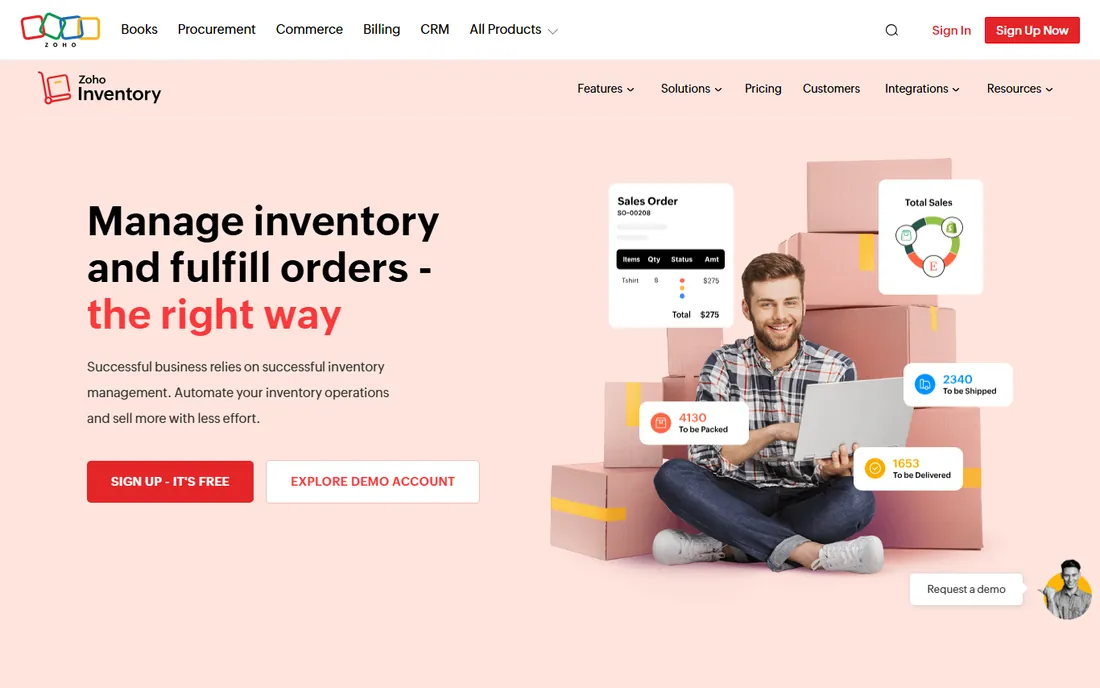
Zoho Inventory is the sensible default for small businesses already running on Zoho. Orders, inventory, and accounting connect natively to Zoho Books, and customer data flows to Zoho CRM without middleware or CSV gymnastics. For a small distributor or wholesaler, that integrated loop eliminates a whole category of reconciliation work.
The product itself is straightforward: create sales orders, track inventory across a few locations, generate invoices, and ship. The interface is clean enough that a non-technical office manager can run it, and the entry pricing keeps it accessible.
The limits are real but honest. Multi-warehouse complexity, advanced manufacturing, and high-volume 3PL orchestration belong to bigger platforms. If your operation fits in one or two locations and your accounting is already Zoho, this is the path of least resistance.
What we like- Clean interface small teams learn quickly
- Native integration with Zoho Books and Zoho CRM
- Low entry cost that suits tight budgets
Watch out for- Limited advanced warehouse and manufacturing features
- Weaker for high-volume 3PL workflows
Starting priceSee website
Free planSee website
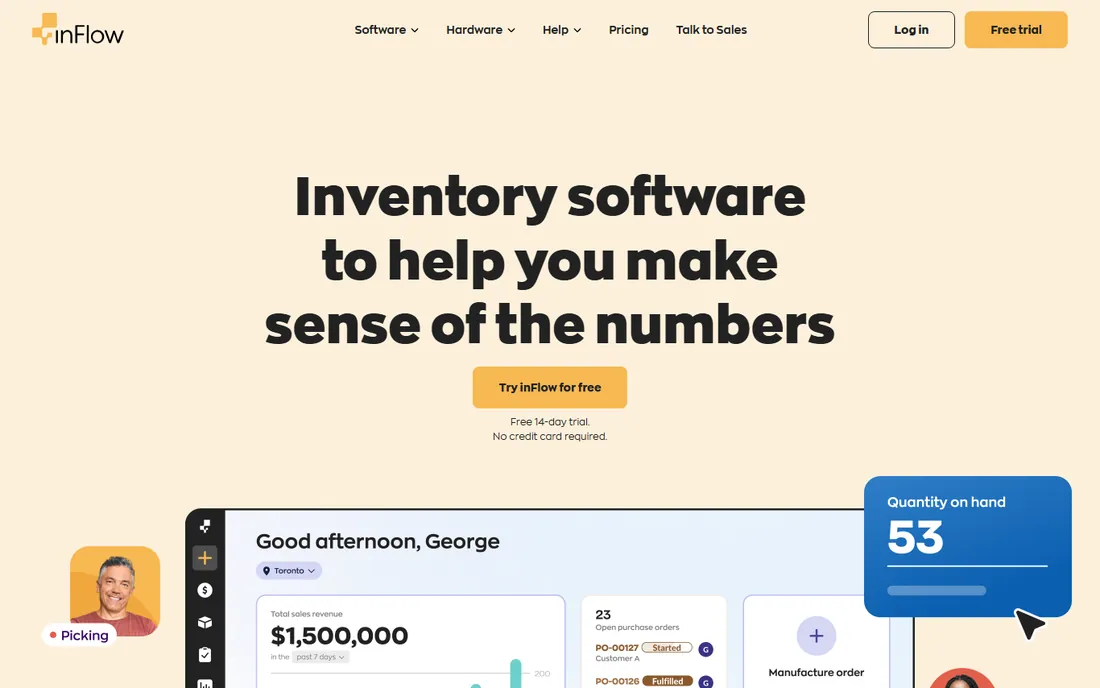
inFlow Inventory has been serving small distributors and wholesalers for years with a simple proposition: order entry and inventory tracking without the enterprise overhead. Sales orders, purchase orders, and stock levels live in one calm interface, and the workflow matches how small operations actually work.
The desktop application, which works offline, is a quiet differentiator for warehouses with unreliable connectivity or teams that distrust browser-only tools. Pricing stays within small-business reach, and the learning curve is mercifully short.
The trade-offs are scale and connectivity. Native integrations with sales channels are thinner than the multichannel specialists offer, and multi-warehouse operations will hit limits. For a single-location distributor that takes orders by phone, email, and a simple web store, inFlow is often all the system they need.
What we like- Straightforward order and inventory workflows
- Good value for small teams
- Desktop app that works offline
Watch out for- Fewer native sales-channel integrations
- Not built for complex multi-warehouse operations
#9
Veeqo
Best for: Amazon sellers managing multichannel orders
Visit veeqo.com
Starting priceSee website
Free planSee website
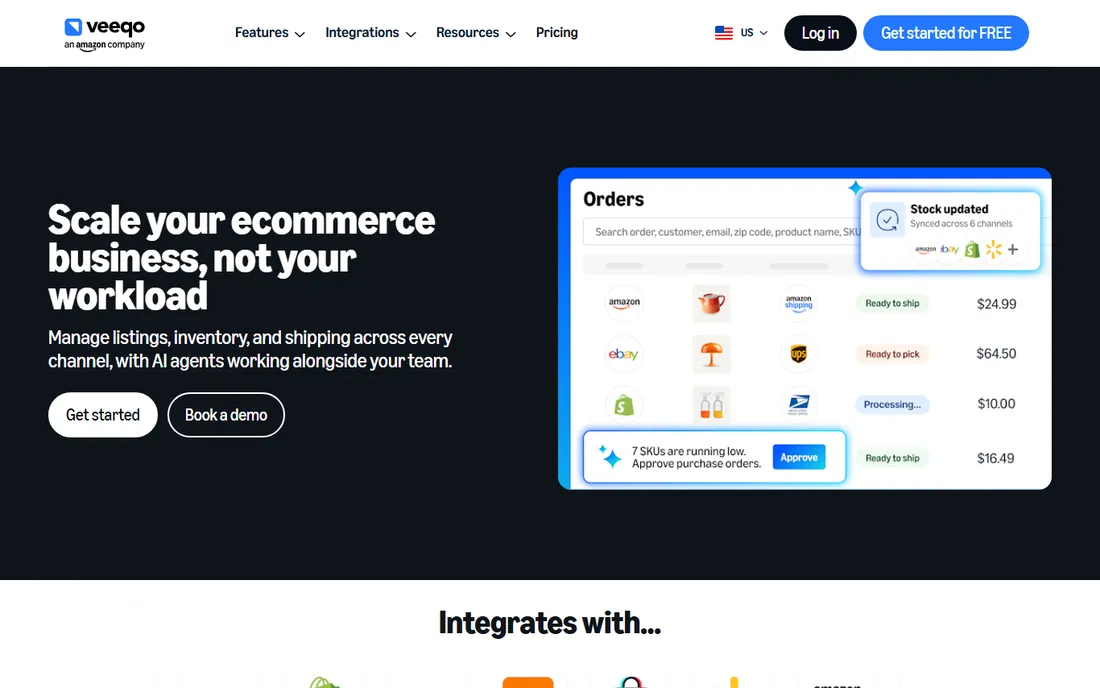
Veeqo is Amazon's free shipping and inventory software for sellers, and the price is the headline: if you sell on Amazon, the core platform costs nothing. Orders from Amazon, eBay, Shopify, and other channels consolidate in one dashboard, and the built-in shipping tools include discounted carrier rates that rival paid competitors.
For Amazon-centric sellers, the direct inventory sync removes the stock discrepancies that plague third-party connectors. It is a genuinely capable free option for the "sell everywhere, ship from here" model at small to medium scale.
The catch is the ownership. Amazon built Veeqo for Amazon sellers, and while other channels are supported, they will never be the priority. Advanced inventory features and reporting are thinner than dedicated platforms. If Amazon is your center of gravity, start here. If it is one channel among many, compare carefully with Linnworks or Ordoro.
What we like- Free for Amazon sellers
- Built-in shipping with discounted carrier rates
- Direct sync with Amazon inventory
Watch out for- Amazon ownership means other channels get less attention
- Limited advanced inventory and reporting features
How to pick order entry software that fits your operation
Map your order flow before you demo anything
Write down exactly how an order moves today: where it arrives, who touches it, where inventory is checked, and how the warehouse learns about it. The gaps in that flow are your requirements list. Vendors demo beautifully against vague needs; they struggle against a specific flowchart.
Inventory depth versus shipping speed
Decide which problem is bigger. If mispicks, stockouts, and assembly errors cost you money, prioritize inventory depth (Cin7, Finale, Extensiv). If the warehouse is accurate but slow, prioritize shipping throughput (ShipStation, Ordoro, Veeqo). Buying a shipping tool for an inventory problem, or the reverse, is the classic mismatch.
Channel integrations that actually matter
List every channel you sell through today plus the two you plan to add. Then verify each one is a real, maintained integration, not a Zapier workaround. Multichannel sellers should weight this heavily: Linnworks and Extensiv earn their keep here, while simpler tools may leave you maintaining spreadsheets between systems.
Count the total cost, not the subscription
Labels, carrier fees, implementation help, and per-user or per-order charges add up fast. A "cheap" platform with expensive implementation can cost more in year one than a pricier platform you can run yourself. Ask each vendor for the realistic first-year total for your order volume before you compare.
How we chose
We started from the tools distributors and wholesalers actually discuss: vendor documentation, current pricing pages, and integration directories, cross-checked against public reviews on G2, Capterra, and operations forums. We weighted real order-entry workflows (multi-channel capture, inventory accuracy, warehouse handoff) over marketing feature lists, and we favored tools with clear small-business fit alongside enterprise options.
We did not run hands-on tests or pilot implementations. Order entry platforms are evaluated through demos and trials in real warehouses, so our comparisons reflect published capabilities, integration evidence, and reviewer consensus. Where pricing was not published on the vendor's site, we marked it "See website" rather than repeating third-party figures.
When order entry software is not enough
Order entry software handles the commercial workflow: quote, order, pick, ship, invoice. It starts to strain when the business needs full financial consolidation across entities, advanced manufacturing resource planning, or deep HR and payroll in the same system. Those are ERP problems.
Warning signs include maintaining the same customer record in three systems, month-end closes that take weeks because inventory and accounting disagree, or needing lot traceability and quality workflows that your order tool handles with workarounds. At that point, the cost of disconnected systems usually exceeds the cost and pain of an ERP implementation.
The good news is that several tools here scale further than expected. Cin7 and Extensiv both push into ERP-adjacent territory, and Zoho Inventory connects to a broader Zoho suite that covers accounting and CRM. Before jumping to a full ERP, check whether your current category can stretch. Most distributors find the stretch covers them for years.
Frequently asked questions
What is order entry software?
Order entry software is the system where customer orders are captured, validated against inventory, and routed to fulfillment. For distributors and wholesalers, it sits between the sales channels (phone, email, ecommerce, EDI) and the warehouse, making sure what was promised is what ships.
How much does order entry software cost?
It ranges from free (Veeqo for Amazon sellers) to quote-based enterprise platforms. Small-business tools typically run on monthly subscriptions in the tens to low hundreds of dollars, while platforms like Extensiv, Cin7, and Linnworks price by volume and modules. Always model the first-year total including implementation.
Do I need order entry software if I already have QuickBooks?
QuickBooks handles accounting well but was not built for multichannel order capture, warehouse workflows, or complex inventory. Most distributors keep QuickBooks for the books and add a dedicated order and inventory platform in front of it. Several tools here integrate with QuickBooks directly.
What is the difference between order entry and order management?
Order entry is the capture step: getting the order into the system accurately. Order management is the full lifecycle: capture, allocation, fulfillment, shipping, returns, and invoicing. In practice, the tools in this guide do both, and vendors use the terms interchangeably.
Can order entry software handle EDI orders from big retailers?
Some can. Extensiv, Cin7, and SPS Commerce integrations handle EDI for retail compliance, while simpler tools may need a third-party EDI provider bolted on. If Walmart, Target, or Amazon Vendor Central orders are part of your business, confirm EDI support explicitly during evaluation.
Should I choose shipping software or inventory software?
Choose based on your biggest cost center. If shipping speed and carrier rates drive your margins, start with ShipStation, Ordoro, or Veeqo. If stockouts, mispicks, and assembly errors are the expensive problems, start with Cin7, Finale, or Extensiv. Many operations eventually run one of each.
Sources we checked (9)
- https://www.extensiv.com
- https://www.cin7.com
- https://www.ordoro.com
- https://www.shipstation.com
- https://www.finaleinventory.com
- https://www.linnworks.com
- https://www.zoho.com/inventory/
- https://www.inflowinventory.com/
- https://www.veeqo.com
Is your product missing or out of date?
We review this list regularly. Vendors can request a listing, send updated pricing or ask about featured placement.

Shihab Mia · Founder, Rankite
Shihab has spent more than a decade helping SaaS and e-commerce brands grow through search. He writes Rankite's software buying guides from pricing pages, documentation and public user reviews. More about Shihab.