How we make this list: we compare pricing pages, product documentation and public user reviews. Ratings come from G2, Capterra or Trustpilot, with the date we checked them.
Key takeaways
- Edmund Optics and Thorlabs suit engineers and labs best, with large catalogs, fast ordering and detailed specifications for components.
- ZEISS, Leica Microsystems and Nikon suit microscopy and imaging buyers, with complete systems for research, clinical and industrial work.
- Newport and Jenoptik suit laser, measurement and industrial optics programs, where custom systems and integration matter more than catalog parts.
- Olympus, now Evident for life science and industrial products, suits buyers who need proven microscope and inspection systems with service support.
- Catalog price is only part of the cost, since lead time, custom coatings, tolerances and service contracts decide the total for many projects.
Quick comparison
| Tool | Best for | Starting price | Free plan |
|---|
 Edmund Optics | Catalog optical components | See website | No |
 Thorlabs | Photonics lab components | See website | No |
 ZEISS | Microscopy and measurement | See website | No |
 Leica Microsystems | Clinical and research imaging | See website | No |
 Nikon | Imaging and microscope systems | See website | No |
 Olympus Evident | Life science microscopes | See website | No |
 Newport | Laser and precision optics | See website | No |
 Jenoptik | Industrial optical systems | See website | No |
Is your product missing or out of date?
We review this list regularly. Vendors can request a listing, send updated pricing or ask about featured placement.
The best optics companies
Starting priceSee website
Free planNo
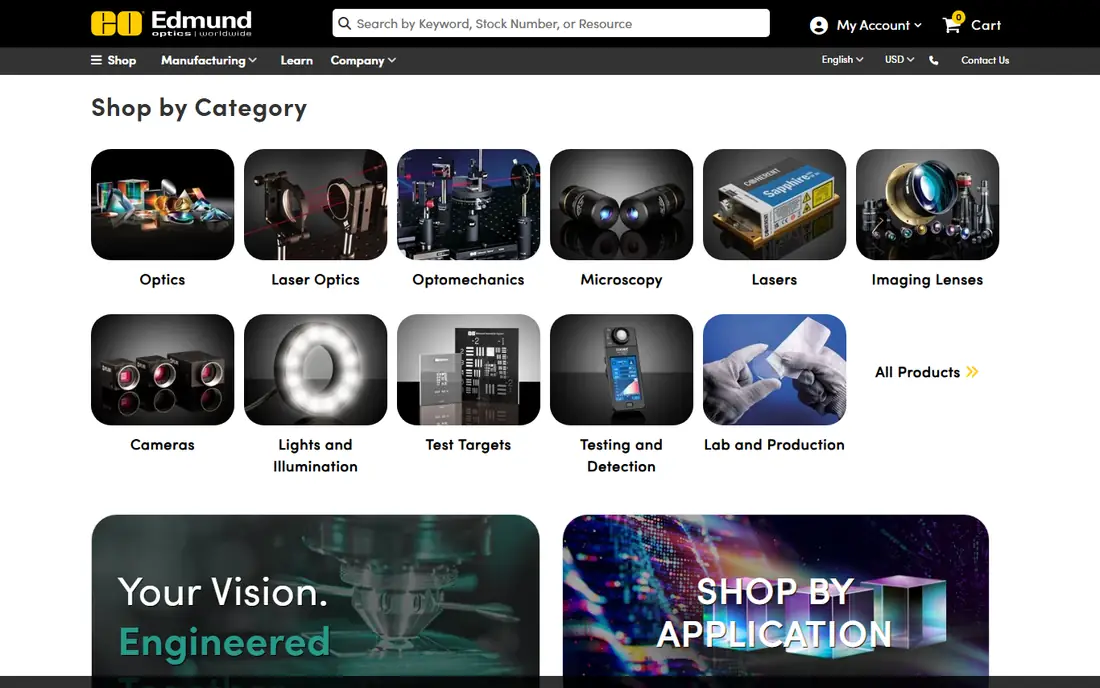
Edmund Optics, founded in 1942 and based in Barrington, New Jersey, is the first stop for many engineers who need a lens, filter, mirror or imaging lens with a clear specification sheet. Stock, tolerance, coating and pricing data are published for thousands of parts, so a design team can prototype without waiting for a quote on every component. That catalog depth saves weeks in early design, when a team needs to test several focal lengths, filters or beam splitters before committing to a custom part.
Custom manufacturing extends the catalog when a standard part does not meet a tolerance, coating or size requirement, though custom lead times and minimums apply. Some specialized parts carry premium pricing compared with smaller suppliers, and a buyer should compare total cost including coating and inspection. Edmund Optics fits a product team, lab or manufacturer that needs reliable catalog optics fast, and it fits less well for a buyer who only needs a finished microscope system rather than components.
What we like- Very large catalog of lenses, filters and mirrors
- Detailed specifications and stock data
- Custom manufacturing services
Watch out for- Custom work needs longer lead times
- Premium pricing on some specialized parts
Starting priceSee website
Free planNo
Thorlabs serves photonics labs with an unusually wide catalog, covering optomechanics, lenses, mirrors, fibers, detectors, lasers and motion control in one ordering system. A researcher building a custom optical setup can order mounts, posts, lenses and a detector from one supplier, with drawings, specifications and application notes for most parts. That single source approach reduces compatibility risk, since mounts, threads and optical axes are designed to work together.
Breadth is also a challenge for a new buyer, since similar mounts and optics appear in many variants and the right choice depends on wavelength, power and mechanical load. Thorlabs sells components and subsystems, not a turnkey microscope or inspection system, so integration, alignment and safety remain the buyer job. Thorlabs fits a lab, university or R and D team building custom photonics setups, and it fits less well for a buyer who wants a finished system with installation and training included.
What we like- Huge photonics catalog from optomechanics to lasers
- Strong documentation and tutorials
- Fast global shipping for stock parts
Watch out for- Catalog breadth can overwhelm new buyers
- System integration is left to the buyer
Starting priceSee website
Free planNo
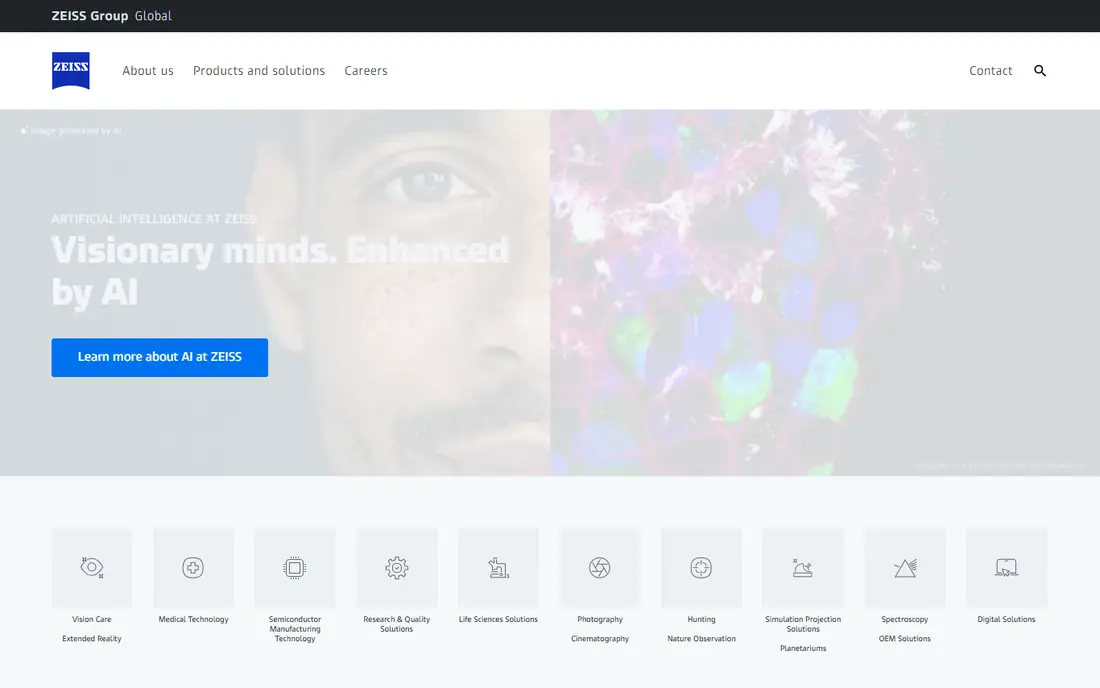
ZEISS covers microscopy, industrial measurement and semiconductor optics, with systems that range from stereo microscopes to advanced confocal and electron microscopy platforms. Research labs value the optical quality, software for image analysis and AI assisted workflows, while industrial buyers value measurement systems that link optical inspection to production data. A global service network helps a large lab or factory keep a system running across sites.
System pricing is premium, and a large configuration with cameras, stages, lasers and software can require a detailed quote and a longer sales cycle. Smaller labs may find a ZEISS system more than needed for routine imaging, and should compare a mid range system from Nikon or Leica before committing. ZEISS fits a research institute, hospital lab or manufacturer that needs high end imaging or measurement with long term service, and it fits less well for a buyer who only needs a basic teaching microscope.
What we like- Complete microscope and measurement systems
- Strong optics and software for research
- Global service network
Watch out for- Premium system pricing
- Configuration complexity for large systems
Starting priceSee website
Free planNo

Leica Microsystems, part of Danaher, focuses on microscopes and imaging for life science research, clinical diagnostics and surgical work. Systems for confocal imaging, digital pathology and surgical microscopy are built around workflow, so a pathologist or surgeon gets a system that fits daily case volume, not just optical performance on a spec sheet. Software for capture, analysis and reporting helps a lab standardize results across users and sites.
Pricing is premium and clinical configurations often need specialist installation, validation and training, which adds time and cost beyond the system price. A teaching lab or small research group may find a simpler Nikon or Olympus system sufficient for routine work. Leica Microsystems fits a clinical lab, hospital or research center that needs workflow driven imaging with service support, and it fits less well for a buyer who wants a low cost standalone microscope.
What we like- Strong surgical and clinical workflow systems
- Confocal and digital pathology options
- Clear software for image capture
Watch out for- Premium pricing
- Clinical configurations need specialist setup
Starting priceSee website
Free planNo
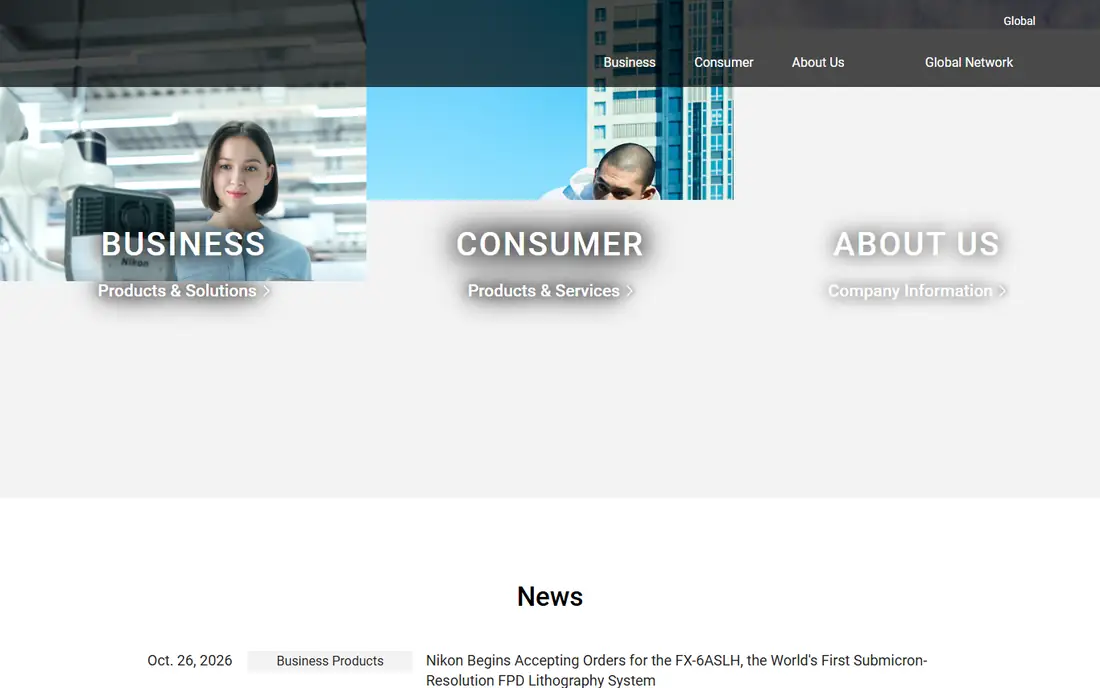
Nikon serves two optics worlds: cameras and imaging for consumers and professionals, and microscope systems for education, research and industry. In microscopy, Nikon offers teaching microscopes, routine lab systems and advanced research platforms, with digital cameras and software that many labs already know. That range lets a university buy teaching and research systems from one supplier, with consistent training and service.
The breadth can confuse a buyer, since Nikon industrial, semiconductor and consumer imaging divisions operate separately and a contact in one area may not cover another. Top research systems still cost as much as ZEISS or Leica rivals, so Nikon is not automatically the cheapest premium choice. Nikon fits a university, lab or manufacturer that needs a wide microscope range with strong imaging, and it fits less well for a buyer who needs a specialized laser or custom optical component rather than a system.
What we like- Wide microscope range from teaching to research
- Strong digital imaging and cameras
- Good value at mid range
Watch out for- Industrial and semiconductor focus is separate
- Top research systems still carry premium prices
Starting priceSee website
Free planNo

Olympus microscope and industrial products now sit under Evident, following a corporate split, while the Olympus name remains widely used in labs. Life science microscopes, from routine upright and inverted systems to advanced imaging platforms, have a long service history in universities and hospitals, and industrial microscopes support inspection, measurement and materials work. That installed base means parts, training and service are available in many regions.
The brand split can confuse a new buyer searching for Olympus versus Evident product pages, support contacts and warranties, so confirm the current product owner before ordering. Premium systems still need specialist installation and training, and a small lab may not need the top tier. Olympus Evident fits a lab or factory that wants a proven microscope system with service depth, and it fits less well for a buyer who needs catalog optical components rather than a finished system.
What we like- Proven life science and industrial microscopes
- Strong service history
- Industrial inspection systems
Watch out for- Brand split between Olympus and Evident can confuse buyers
- Premium systems need specialist support
Starting priceSee website
Free planNo
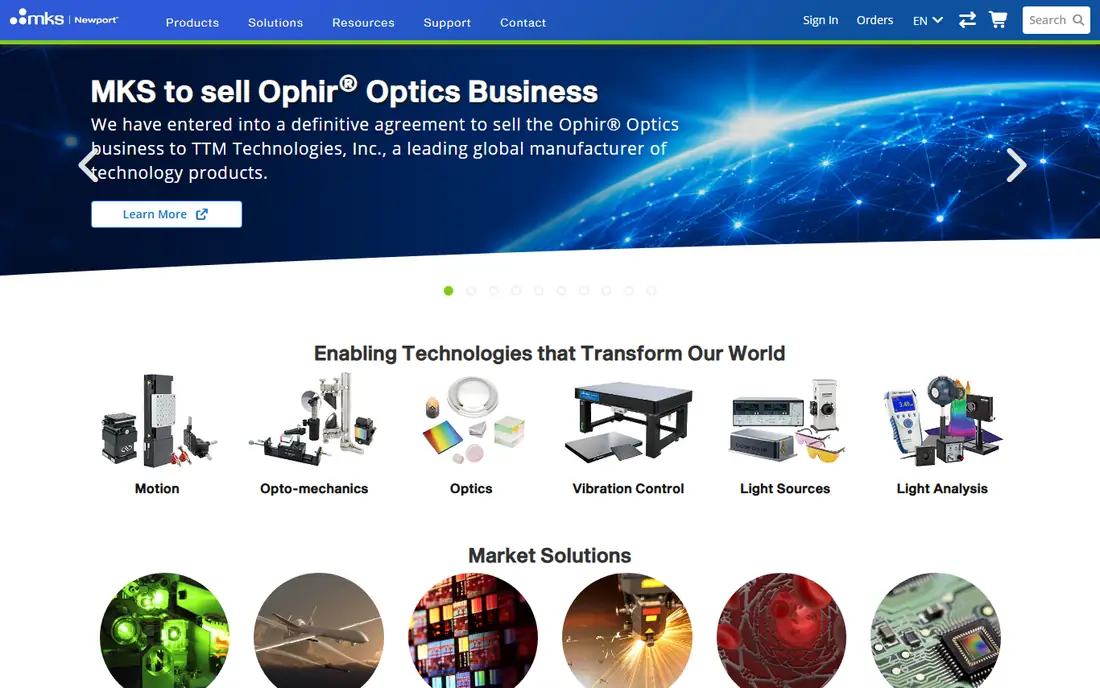
Newport, part of MKS Instruments, supplies laser optics, optomechanics, motion control and vibration isolation for research and industrial photonics. A laser lab can order mirrors, beam splitters, stages and tables designed for high power and precise alignment, with specifications for damage thresholds and stability that matter at laser wavelengths. Industrial buyers use Newport for laser processing, measurement and automation where precision and repeatability decide yield.
Many products sit between catalog parts and custom systems, so a buyer may need a quote for coatings, sizes or integrated assemblies, and lead times vary. Newport does not replace a turnkey microscope supplier for life science imaging, and it does not replace Thorlabs for every general photonics part. Newport fits a laser lab, photonics manufacturer or research team that needs precision laser optics and motion, and it fits less well for a buyer who only needs a standard microscope.
What we like- Laser optics, motion and vibration control
- Precision components for research and industry
- Part of MKS Instruments
Watch out for- Catalog and custom mix needs careful quoting
- System integration is buyer led for many products
Starting priceSee website
Free planNo
Jenoptik builds optical systems and components for industrial measurement, laser processing and traffic and safety related applications, with a strong focus on manufacturing customers. A factory that needs an optical measurement system integrated into a production line, or a laser system for processing and inspection, gets a supplier that designs for throughput, uptime and data integration, not just optical performance in a lab. Custom system work is the core strength, with engineering, integration and service as part of the project.
Project pricing, lead times and minimum scope mean Jenoptik is not a catalog order for a single lens or filter. Small labs and universities will usually find Edmund Optics or Thorlabs faster and cheaper for components. Jenoptik fits a manufacturer or large industrial buyer with a defined system project, and it fits less well for a buyer who needs a few stock parts or a standalone microscope.
What we like- Industrial measurement and laser systems
- Custom optical systems for manufacturing
- Strong in automotive and semiconductor related work
Watch out for- Project based pricing and lead times
- Less suited to small catalog orders
How we chose
We reviewed vendor catalogs, product documentation and public industry guides, and we compared catalog depth, system range, custom capability, service coverage and buyer type fit. We marked prices as See website because most optics systems and many components are priced by specification, coating, quantity and configuration, and a single price would mislead buyers. We favored companies that exist now, publish current products and specifications, and serve more than one customer type without overstating a niche.
Buying optics without costly rework
Start with wavelength, power, tolerance and environment, not with brand. A lens that works at visible wavelengths may fail in ultraviolet or infrared, and a coating that works at low power may damage at high laser power. Confirm damage thresholds, coating specifications, surface quality and mechanical mounts before ordering, and order one prototype part for testing when tolerance or coating is critical.
Catalog parts versus custom systems
Catalog parts suit prototypes, teaching labs and standard setups, with fast delivery and known prices. Custom parts and systems suit production, tight tolerances and integrated measurement, but they need drawings, lead time and acceptance testing. A buyer should get a written specification, inspection data and a service plan for any custom order, and should budget for alignment, calibration and spare parts in the first year.
Frequently asked questions
What is the best optics company for a university lab?
Edmund Optics and Thorlabs suit most university labs best, because catalog parts, documentation and fast ordering support teaching and custom research setups. Nikon, ZEISS and Leica suit labs that need a complete microscope system rather than components. Pick components for custom setups and systems for routine imaging, and avoid buying a system when a catalog part will do the job.
What is the difference between an optics supplier and a microscope company?
An optics supplier sells components such as lenses, filters and mirrors that a buyer integrates into a custom setup, while a microscope company sells a complete imaging system with optics, stages, cameras and software. Edmund Optics and Thorlabs are mainly suppliers, while ZEISS, Leica, Nikon and Evident are mainly system makers. Some companies do both, but their main strength usually sits in one area.
How much do optical components cost?
Catalog lenses and filters can cost from tens to hundreds of dollars, while precision, coated or custom parts can cost far more, and complete microscope systems can cost tens of thousands of dollars or more depending on configuration. Always quote by specification, coating, quantity and lead time, since those factors change price more than the catalog list price alone. Ask for inspection data on custom parts before accepting delivery.
Do I need custom optics or catalog optics?
Catalog optics suit most prototypes, teaching and standard research work, since they ship fast and cost less. Custom optics suit tight tolerances, unusual wavelengths, special coatings or production volumes where a catalog part fails a specification. Test a catalog part first when possible, and move to custom only when a measured specification, not a preference, requires it.
How do I choose a microscope supplier?
Match the supplier to the application, whether teaching, routine clinical work, confocal research or industrial inspection, and confirm camera, software, service and training in the quote. Ask for a demo with your own samples, since image quality on a supplier sample does not guarantee results on your material. Check service response time and parts availability in your region before signing.
What should I check before ordering laser optics?
Check wavelength, power density, damage threshold, coating type, surface quality and mount compatibility, and confirm laser safety requirements for your lab. A part rated for low power continuous use may fail under pulsed high peak power, even at the same average power. Ask the supplier for damage threshold data at your wavelength and pulse conditions, not just a generic rating.
Sources we checked (4)
- https://www.sourcifychina.com/optical-manufacturers/
- https://www.inven.ai/company-lists/top-24-optical-materials-companies
- https://www.sphericalinsights.com/blogs/top-25-companies-in-global-optical-microscopes-market-statistics-report-till-2035
- https://www.verifiedmarketresearch.com/blog/top-microscopy-companies/
Is your product missing or out of date?
We review this list regularly. Vendors can request a listing, send updated pricing or ask about featured placement.

Shihab Mia · Founder, Rankite
Shihab has 5+ years in B2B and SaaS SEO. He writes Rankite's software buying guides from pricing pages, documentation and public user reviews. More about Shihab.