How we make this list: we compare pricing pages, product documentation and public user reviews. Ratings come from G2, Capterra or Trustpilot, with the date we checked them.
Key takeaways
- MetricStream, Archer and Riskonnect are the enterprise heavyweights, with deep risk libraries and regulatory content built in.
- LogicGate and AuditBoard win on usability: no-code configuration and modern interfaces that risk teams adopt faster.
- Fusion Risk Management specializes in operational resilience and business continuity alongside classic risk registers.
- OneTrust and ServiceNow bring operational risk into broader trust-intelligence and workflow platforms respectively.
Quick comparison
Is your product missing or out of date?
We review this list regularly. Vendors can request a listing, send updated pricing or ask about featured placement.
The best operational risk management software
Operational risk management software tracks the risks of failed processes, people and systems: risk registers, assessments, controls, incidents and losses. The leaders are GRC platforms with dedicated operational risk modules. Eight options.
Starting priceSee website
Free planNo
MetricStream covers the operational risk lifecycle: risk identification and assessment, controls, loss event capture, key risk indicators and regulatory reporting, inside a broad GRC platform.
The platform rewards committed implementations. MetricStream fits large financial services and regulated enterprises with mature risk functions.
What we like- Deep integrated risk management heritage since 1999
- Operational risk, IT risk, audit and compliance in one
- Strong regulatory content
Watch out for- Enterprise implementation effort
- Interface modernization still in progress
- Pricing is quote-based
Starting priceSee website
Free planNo
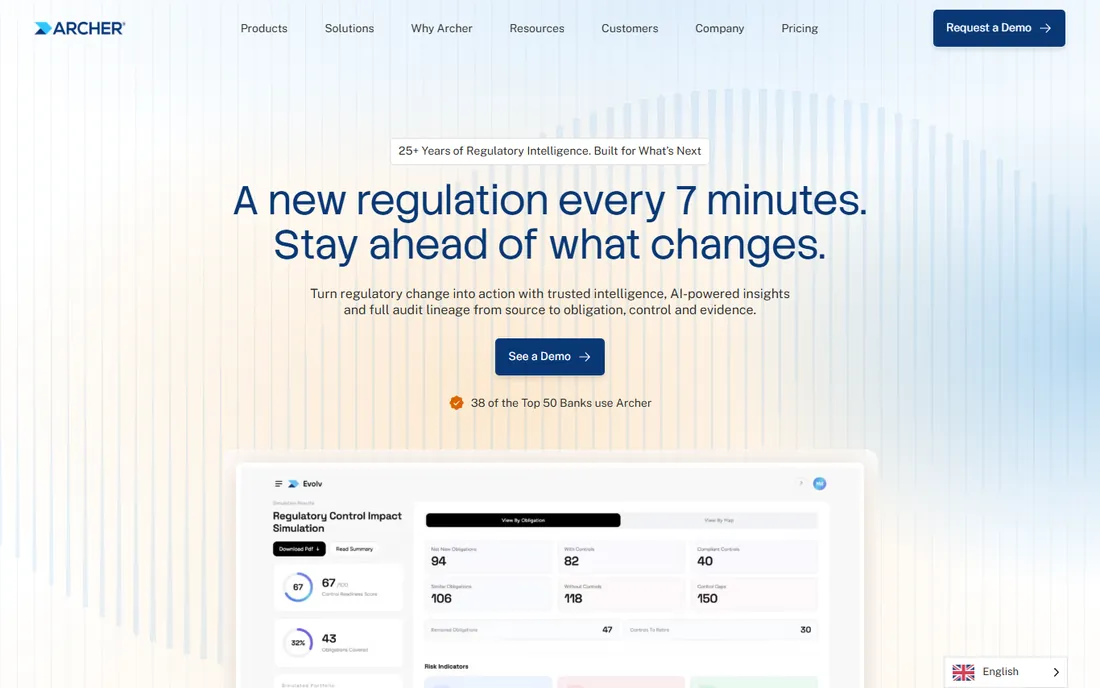
Archer (formerly RSA Archer) offers configurable risk applications: operational risk, IT risk, third-party risk and business continuity share data models and reporting.
Flexibility demands governance of the configuration itself. Archer fits enterprises wanting tailored risk programs on a proven platform.
What we like- Highly configurable use cases
- Strong operational risk and third-party risk content
- Long enterprise track record
Watch out for- Configuration complexity needs expertise
- Licensing can grow with use cases
Starting priceSee website
Free planNo
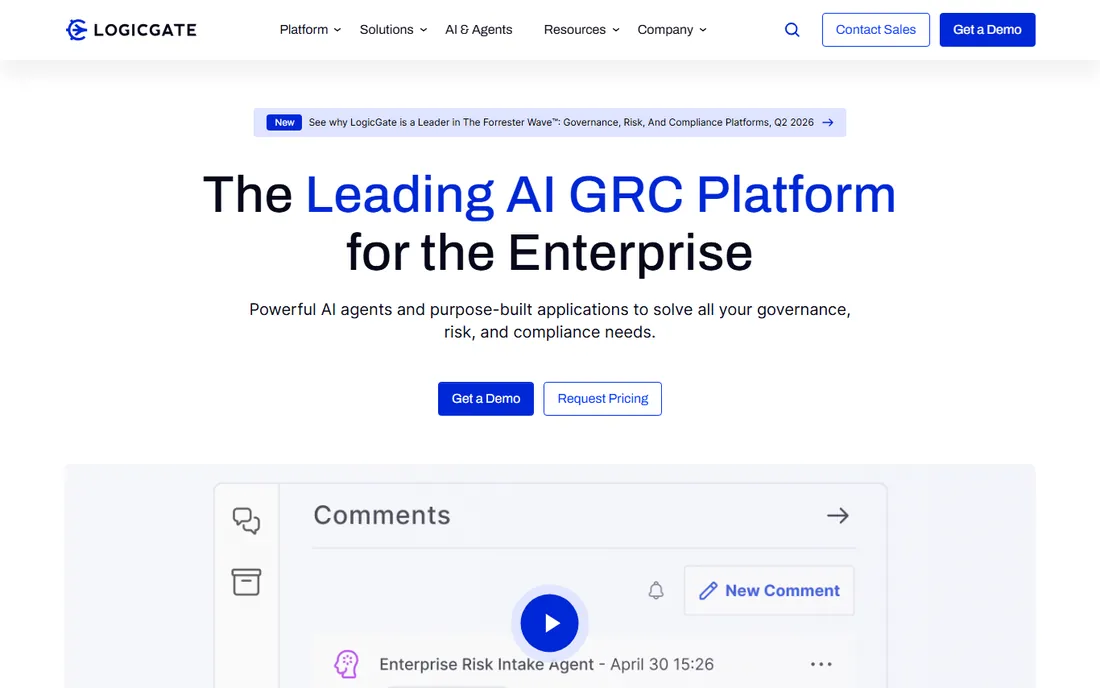
LogicGate's Risk Cloud lets risk teams build operational risk, control and compliance workflows without code or consultants, with prebuilt applications accelerating common programs. Forrester has recognized its fast-implementation approach.
Deepest regulatory libraries trail the incumbents. LogicGate fits mid-market and enterprise teams prioritizing speed and usability.
What we like- No-code drag-and-drop risk workflows
- Fast implementation
- Transparent simple pricing
- Forrester-recognized leader
Watch out for- Less depth than decades-old enterprise suites
- The AI pivot is still proving out
Starting priceSee website
Free planNo
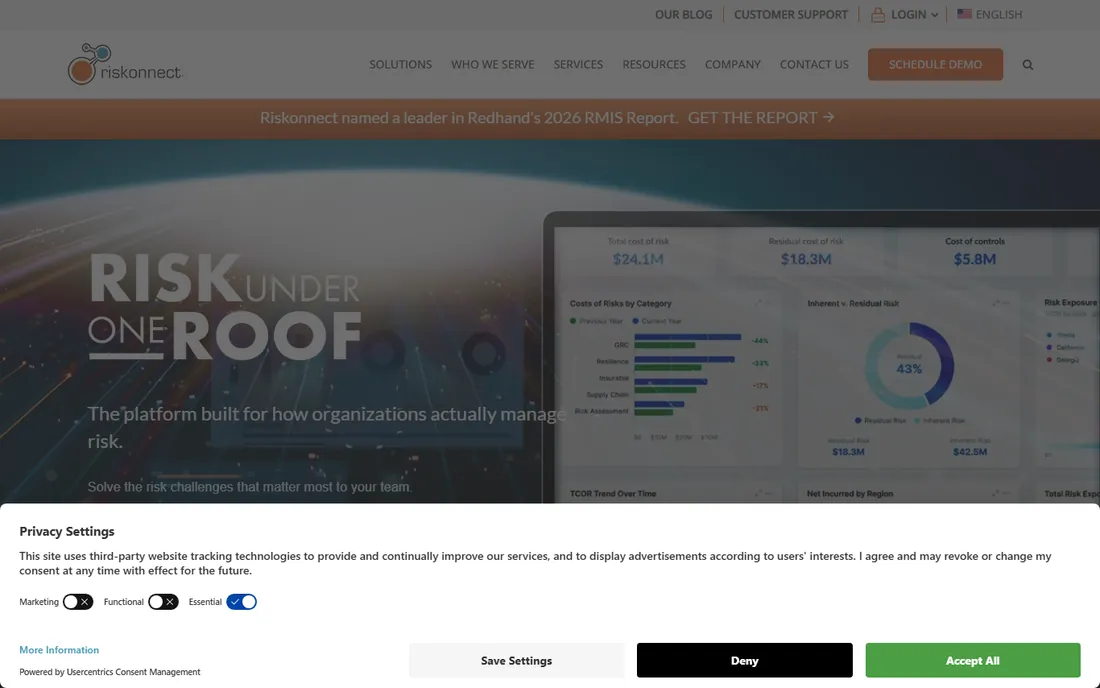
Riskonnect unifies operational risk with business continuity, third-party risk, project risk and ESG, serving thousands of customers across continents.
Focused buyers may find the suite heavy. Riskonnect fits organizations consolidating multiple risk disciplines onto one platform.
What we like- Broad integrated suite across risk, resilience and ESG
- Large customer base
- Strong project and third-party risk capabilities
Watch out for- Breadth can complicate focused operational risk deployments
- Enterprise pricing
Starting priceSee website
Free planNo
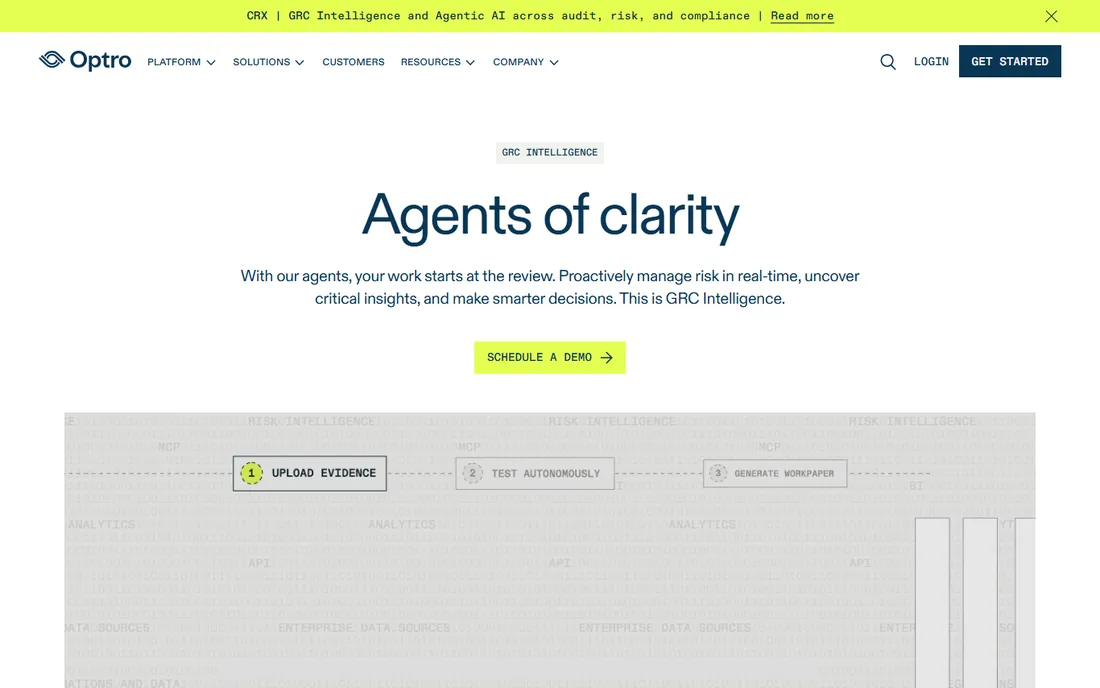
AuditBoard approaches operational risk from audit and controls: risk assessments, control testing and issue management connected to the audit workflow. Customer ratings on usability lead the category.
Pure risk functions may want deeper quantification. AuditBoard fits companies where audit, SOX and risk share one connected platform.
What we like- Modern interface risk and audit teams actually enjoy
- Strong SOX and controls heritage
- Used by over half the Fortune 500
Watch out for- Audit roots show in risk module depth
- Premium pricing
- Risk-first buyers may want more
Starting priceSee website
Free planNo
ServiceNow's GRC applications bring operational risk, policy and compliance into the workflow platform IT already uses, with automation routing risk tasks and evidence collection.
It is a platform play, not a best-of-breed risk specialist. ServiceNow fits enterprises already invested in the Now Platform extending into risk.
What we like- Risk management on the Now Platform with unmatched workflow automation
- Integrates with IT and security operations
- Huge ecosystem
Watch out for- GRC is one module among many
- Licensing across the platform adds up
Starting priceSee website
Free planNo
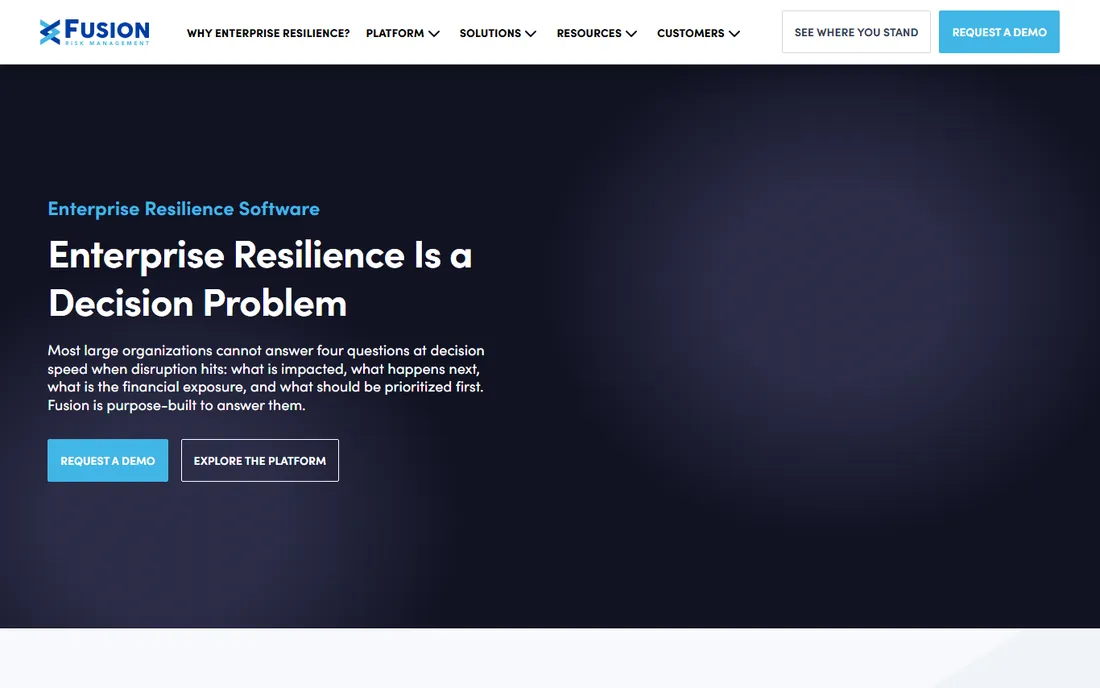
Fusion connects operational risk with resilience: business impact analysis, continuity planning, scenario testing and risk registers in one framework built for disruption readiness.
Broad GRC buyers need more. Fusion fits regulated firms where operational resilience is the primary mandate.
What we like- Purpose-built for resilience: business continuity, scenario testing and risk in one framework
- Strong in financial services
Watch out for- Resilience focus means narrower GRC breadth
- Smaller vendor than the suite players
Starting priceSee website
Free planNo
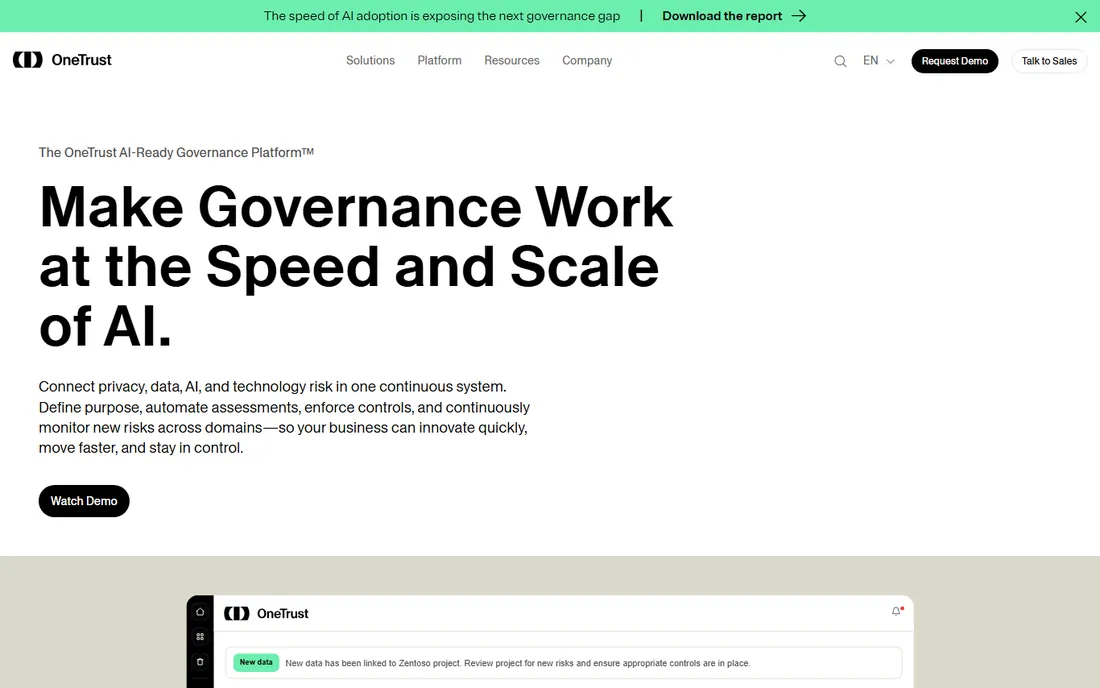
OneTrust extends from privacy leadership into risk: IT and operational risk management alongside ethics, ESG and data governance, unified as trust intelligence.
Risk specialists may prefer dedicated platforms. OneTrust fits enterprises consolidating privacy, risk and compliance under one trust program.
What we like- Broad trust platform spanning privacy, risk and ethics
- Strong regulatory intelligence
- Large enterprise customer base
Watch out for- Privacy roots mean operational risk is one module
- The suite is broad and pricing is custom
What to check before you buy
Define your risk taxonomy first. Operational risk programs fail on inconsistent risk language across business units; confirm the platform supports your framework (Basel, COSO, ISO 31000) natively.
Verify loss event capture and KRI monitoring, not just risk registers. Check control testing integration with audit teams. Confirm reporting serves both the board and regulators. Finally, assess implementation support: enterprise GRC succeeds or fails on configuration quality, and vendor services vary widely.
Building a risk register people actually maintain
Every operational risk program centers on the risk register, and most registers die within a year. They die because they are built for auditors, not for the people who must maintain them. A register that gets updated is designed differently.
Keep the fields minimal. Risk description, owner, likelihood, impact, controls and next review date. That is enough. Every additional field (risk category hierarchies, three kinds of scores, linkage matrices) is a tax on the person updating it. You can add sophistication later; you cannot recover from a register everyone hates.
Write risks as scenarios, not labels. "Cybersecurity" is not a risk; it is a topic. "Ransomware encrypts the order management system during peak season, halting fulfillment for five days" is a risk someone can assess and mitigate. Scenario-writing takes longer upfront and makes every downstream step (scoring, control design, testing) dramatically easier.
Assign owners who feel the pain. The owner should be the person whose budget or bonus suffers if the risk materializes, not a central risk function. Central teams can facilitate, chase and report, but ownership must sit with the business. A risk owned by "the risk department" is a risk nobody manages.
Review on a heartbeat, not on a panic. Quarterly reviews of the top risks, annual reviews of the full register, and ad-hoc updates when something changes. Tie the review to an existing meeting (the ops review, the quarterly business review) rather than creating a separate risk committee that gets cancelled.
Make the register visible. A risk register that lives in a spreadsheet on one person's laptop might as well not exist. The top risks, their owners and their trend should be visible to leadership every quarter. Visibility creates accountability; accountability creates updates.
Finally, celebrate the near miss. When a control catches something, say so publicly. Teams that see risk management preventing real losses keep participating; teams that only hear about risk at audit time treat it as theater.
How we chose
We selected risk management platforms with live products and real enterprise customers, spanning best-of-breed GRC suites and adjacent platforms, using vendor sites, analyst coverage and public reviews. Pricing is quote-based across the category, so all prices are See website. We did not run risk assessments.
Risk appetite: making it concrete
"Risk appetite" is the most abstract phrase in risk management, and the most useful once made concrete. A vague statement ("we have a low appetite for compliance risk") decides nothing. A concrete one guides daily decisions.
Translate appetite into thresholds. Instead of "low appetite for operational losses," say "no single operational event should cost more than $500,000, and aggregate operational losses stay under $2 million annually." Numbers turn philosophy into escalation criteria: everyone knows when to raise the flag.
Differentiate by risk type. Most organizations accept more risk in pursuit of growth (new products, new markets) than in compliance, safety or financial reporting. A one-page appetite statement with green, amber and red zones per risk category gives managers a quick reference for decisions.
Connect appetite to controls. If the appetite for data breach risk is near zero, the control set (encryption, access reviews, penetration testing, incident response drills) should reflect that. Mismatches between stated appetite and actual controls are what auditors and regulators pounce on.
Revisit after events. A near miss or an actual loss is the best time to ask whether the appetite statement still fits. Did the event fall within appetite but still hurt? The thresholds were wrong. Did it exceed appetite but nobody escalated? The communication was wrong.
Get the board to own it. Risk appetite set by the risk function and ignored by the board is decoration. An annual board discussion, minuted, with the statement signed off, makes it real. When a difficult decision arises (enter the risky market, accept the risky client), the appetite statement is the tiebreaker everyone agreed to in advance.
Frequently asked questions
What is operational risk management software?
Software that identifies, assesses, monitors and mitigates risks from failed internal processes, people, systems and external events, typically with risk registers, controls, loss events and KRIs.
What is the difference between MetricStream, Archer and LogicGate?
MetricStream and Archer are long-established enterprise suites with deep regulatory content; LogicGate is a newer no-code platform emphasizing fast implementation and usability.
How does operational risk differ from enterprise risk?
Operational risk focuses on process, people and system failures; enterprise risk (ERM) is the broader umbrella including strategic, financial and compliance risks. Most platforms cover both.
What are KRIs?
Key Risk Indicators: metrics that signal rising risk exposure, such as failed transaction rates or control breaches. Good platforms track KRIs with thresholds and alerts.
How long does GRC implementation take?
No-code platforms like LogicGate can go live in weeks; enterprise suites like MetricStream or Archer typically take months depending on use cases and data migration.
Do we need dedicated software or will spreadsheets work?
Spreadsheets fail at scale: no audit trail, version chaos and no aggregation. Once risk programs span business units or face regulatory scrutiny, dedicated software pays for itself.
How is operational risk different from enterprise risk?
Operational risk covers losses from failed processes, people, systems and external events; enterprise risk management is the broader umbrella that also includes strategic, financial and compliance risks. In practice, operational risk platforms focus on the day-to-day machinery (incidents, controls, audits) while ERM adds the board-level aggregation across all risk types. Many organizations run both with shared data.
What does a risk manager actually do day to day?
Facilitate more than analyze: chasing control owners for updates, reviewing incident reports for patterns, preparing committee materials, and advising business units on risk decisions. The best risk managers spend most of their time with the business, not with the software. The platform should reduce administrative drag so that ratio stays healthy.
Sources we checked (8)
- https://www.metricstream.com
- https://www.archerirm.com
- https://www.logicgate.com
- https://riskonnect.com
- https://www.auditboard.com
- https://www.servicenow.com
- https://www.fusionrm.com/
- https://www.onetrust.com
Is your product missing or out of date?
We review this list regularly. Vendors can request a listing, send updated pricing or ask about featured placement.

Shihab Mia · Founder, Rankite
Shihab has 5+ years in B2B and SaaS SEO. He writes Rankite's software buying guides from pricing pages, documentation and public user reviews. More about Shihab.
 MetricStream
 Archer
 LogicGate
 Riskonnect
 AuditBoard
 ServiceNow
 Fusion Risk Management
 OneTrust