How we make this list: we compare pricing pages, product documentation and public user reviews. Rankite is independent; if a vendor ever pays for a featured spot, that listing is clearly labeled Partner.
Key takeaways
- Most enterprise risk platforms are quote-only in 2026: LogicGate, Riskonnect, MetricStream, Archer, Optro, ServiceNow, Onspring, LogicManager, NAVEX and Drata publish no public prices, so expect a sales process and a demo before numbers appear.
- Drata is the compliance-automation pick for companies that need SOC 2, ISO 27001 or HIPAA evidence collection without building a full GRC program.
- Archer and MetricStream fit large, regulated organizations with complex control libraries, while LogicGate and Onspring suit mid-market teams that want to configure workflows themselves.
- None of the ten publish a free plan, so shortlist two or three, run the demos with your actual risk register in hand, and compare implementation timelines, not just feature lists.
Quick comparison
| Tool | Best for | Starting price | Free plan |
|---|
 LogicGate LogicGate | Mid-market companies that want to configure their own GRC workflows without code | See website (custom quote) | No (demo request available) |
 Riskonnect Riskonnect | Enterprises that want every risk discipline in one connected platform | See website (custom quote) | No (demo request available) |
 MetricStream MetricStream | Large, highly regulated organizations with complex compliance obligations | See website (custom quote) | No (demo request available) |
 Archer Archer | Organizations running complex, mature governance programs | See website (custom quote) | No (demo request available) |
 Optro Optro | Audit, risk and compliance teams that want a connected platform with a modern interface | See website (custom quote) | No (demo request available) |
 ServiceNow ServiceNow | Companies already running ServiceNow that want risk on the same platform | See website (custom quote) | No (demo request available) |
 Onspring Onspring | Mid-market teams that want flexible no-code GRC apps without enterprise overhead | See website (custom quote) | No (demo request available) |
 LogicManager LogicManager | Teams that want a guided, taxonomy-driven approach to GRC | See website (custom quote) | No (demo request available) |
 NAVEX NAVEX | Ethics and compliance program owners, including whistleblower and policy management | See website (custom quote) | No (demo request available) |
 Drata Drata | Companies that need SOC 2, ISO 27001 or HIPAA readiness fast | See website (custom quote) | No (demo request available) |
Is your product missing or out of date?
We review this list regularly. Vendors can request a listing, send updated pricing or ask about featured placement.
The best risk management software
A failed audit, a vendor breach and a compliance fine landing in the same quarter is the kind of year that ends careers. Risk management software exists to stop that from happening twice: one place to register risks, assign owners, track controls, manage vendors and produce the reports auditors ask for. The ten platforms below cover the real 2026 market, from no-code GRC builders to compliance automation, so you can match the tool to the size of your program.
#1
LogicGate
Best for: Mid-market companies that want to configure their own GRC workflows without code
Visit logicgate.ai
Starting priceSee website (custom quote)
Free planNo (demo request available)
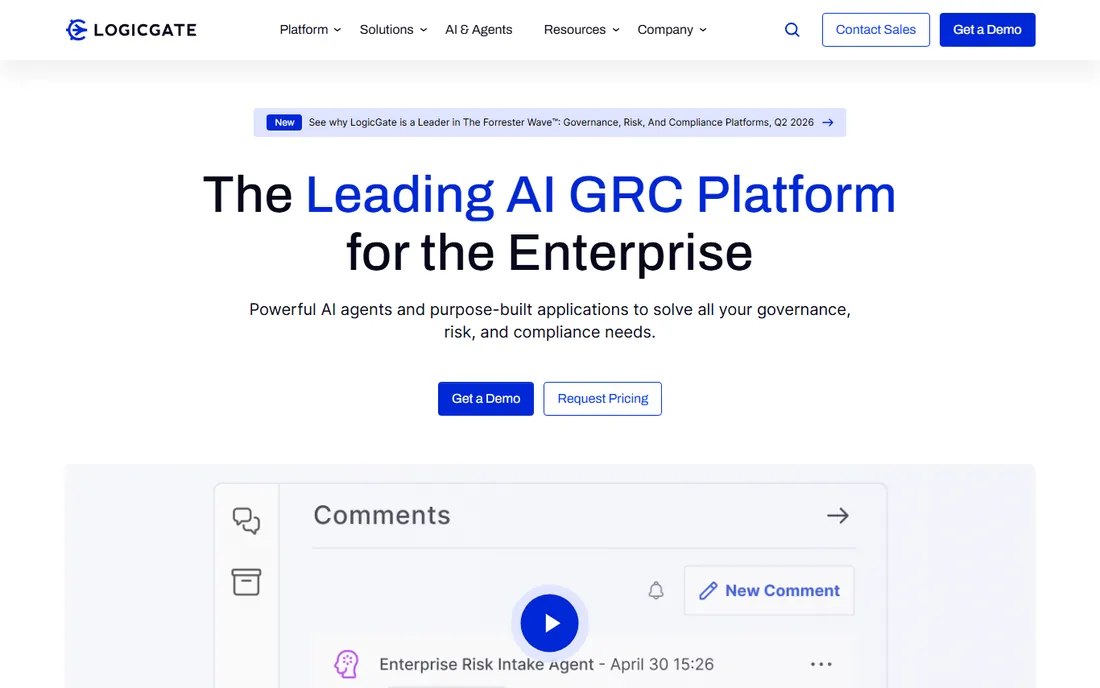
LogicGate, sold as Risk Cloud, is built for teams that would rather configure their own risk program than hire consultants for every change. The center of the product is a drag-and-drop workflow builder, so compliance and risk staff can build control libraries, run assessments and route remediation tasks without writing code. Pre-built applications cover the standard GRC areas, and the pitch is a platform you extend rather than a fixed tool you adapt to.
The tradeoff is depth in any single area. LogicGate is a GRC generalist, and companies with heavy audit or continuous control monitoring needs may pair it with a specialist tool. Pricing is custom and quote-based, with no published tiers, so budget buyers should expect a demo and a sales conversation before seeing numbers.
What we like- No-code workflow builder lets risk staff build controls, assessments and remediation flows
- Modular applications cover enterprise risk, IT risk, compliance, policy and third-party risk
- Integrations with common business systems
Watch out for- Quote-only pricing with no published tiers
- Implementation effort grows as you add custom workflows and modules
#2
Riskonnect
Best for: Enterprises that want every risk discipline in one connected platform
Visit riskonnect.com
Starting priceSee website (custom quote)
Free planNo (demo request available)
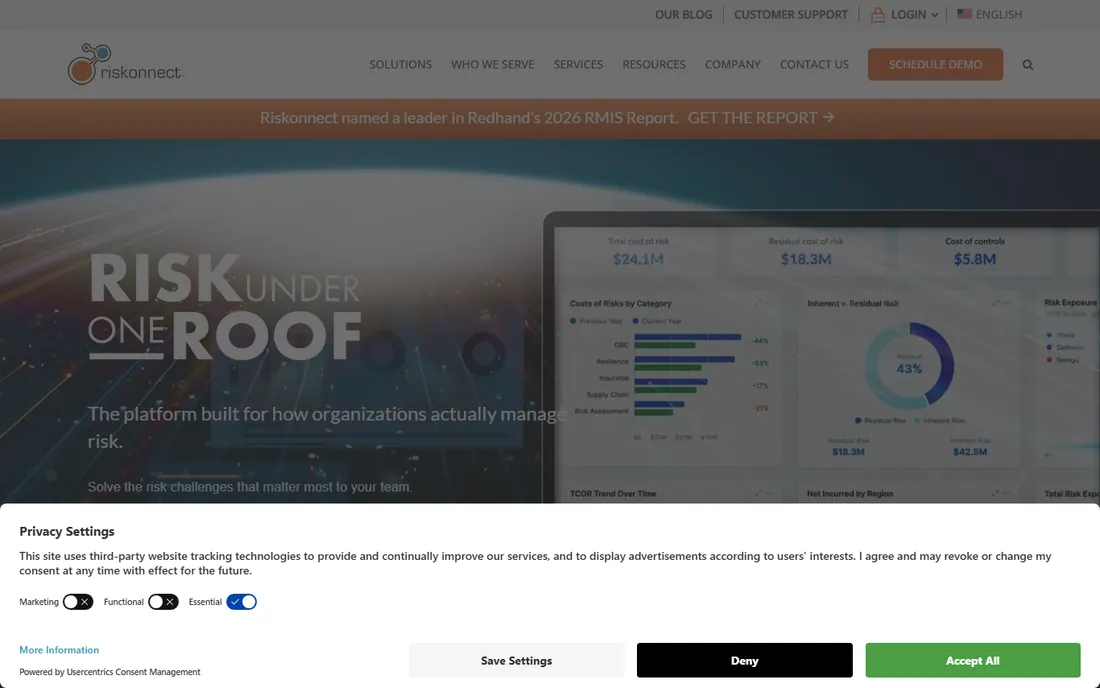
Riskonnect takes the integrated view of risk: instead of separate tools for ERM, business continuity, claims and vendor risk, it puts them on one platform with shared data. That matters for organizations where a single event creates work in three departments, like an insurer handling a loss event or a manufacturer facing a supply chain disruption. Claims administration is a genuine differentiator, since few GRC vendors cover it.
The cost of breadth is weight. Riskonnect implementations are enterprise projects with real timelines, and the pricing is custom with nothing published. It is a strong fit for large organizations consolidating point tools, and overkill for a small team running its first risk register.
What we like- Broad coverage across enterprise risk, operational risk, business continuity, claims and third-party risk
- Centralized data model connecting risk areas
- Strong fit for insurance and claims-heavy organizations
Watch out for- Enterprise scale means longer implementations
- Quote-only pricing with no public numbers
#3
MetricStream
Best for: Large, highly regulated organizations with complex compliance obligations
Visit metricstream.com
Starting priceSee website (custom quote)
Free planNo (demo request available)
MetricStream is one of the long-standing names in governance, risk and compliance, and it shows in the depth of the product. The platform covers risk management, compliance, audit, IT risk and third-party risk with content and control libraries built for banks, insurers and other heavily regulated industries. Regulatory change management and compliance mapping are particular strengths for organizations that answer to multiple regulators.
This is enterprise software in every sense, including the buying process. Expect a custom quote, a structured implementation and a program that rewards dedicated GRC staff. Mid-market buyers comparing MetricStream should check whether they have the internal team to run it, because the platform assumes you do.
What we like- Deep coverage of GRC domains with mature content libraries
- Designed for complex, multi-entity organizations
- Strong regulatory change and compliance mapping capabilities
Watch out for- Enterprise pricing and implementation timelines
- More platform than a mid-market team can usually absorb
#4
Archer
Best for: Organizations running complex, mature governance programs
Visit archerirm.com
Starting priceSee website (custom quote)
Free planNo (demo request available)
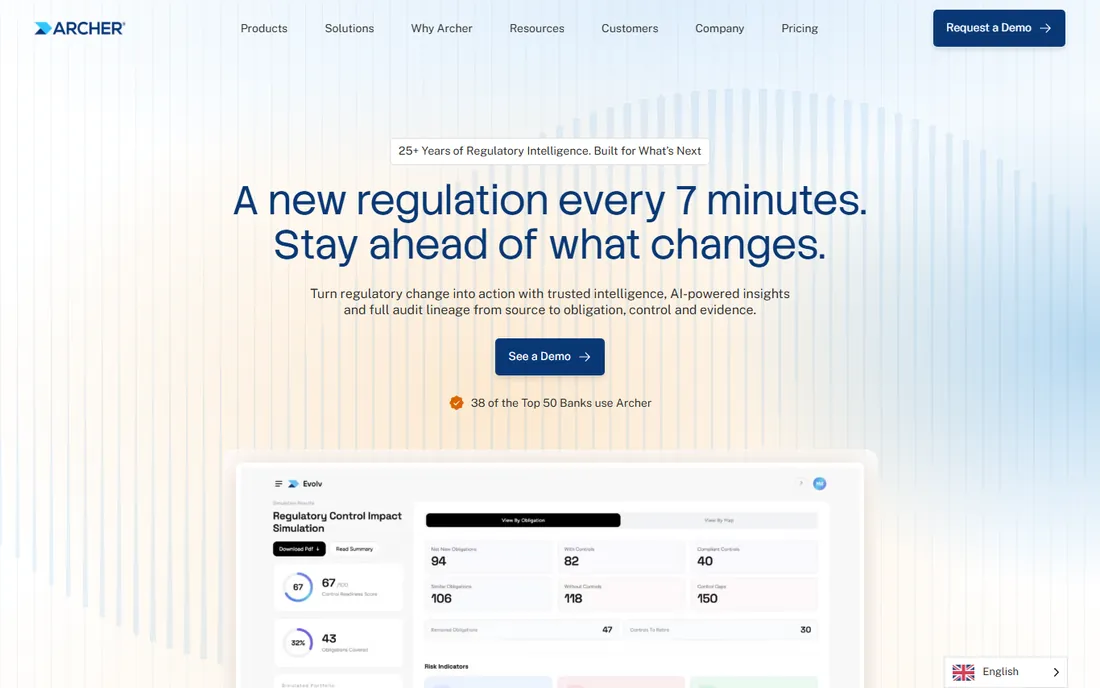
Archer, the RSA-originated GRC suite now operating as its own company, is the configurability pick for organizations with mature programs. It covers the full GRC map, from enterprise and operational risk to IT risk, third-party governance and business continuity, and its audit management and control testing capabilities are among the deepest in this set. Large enterprises with dedicated GRC teams use it to model exactly how their organization thinks about risk.
That flexibility comes with a learning curve and a services bill. Archer deployments are typically consultant-led, and the pricing is custom with nothing published. It suits organizations that already know what their risk program should look like and need a platform that can be shaped to it, not teams looking for an out-of-the-box starting point.
What we like- Highly configurable GRC suite with deep use-case coverage
- Strong audit and control testing capabilities
- Long track record in large enterprises
Watch out for- Configuration complexity is high
- Pricing is quote-only and implementations are typically consultant-led
#5
Optro
Best for: Audit, risk and compliance teams that want a connected platform with a modern interface
Visit optro.ai
Starting priceSee website (custom quote)
Free planNo (demo request available)
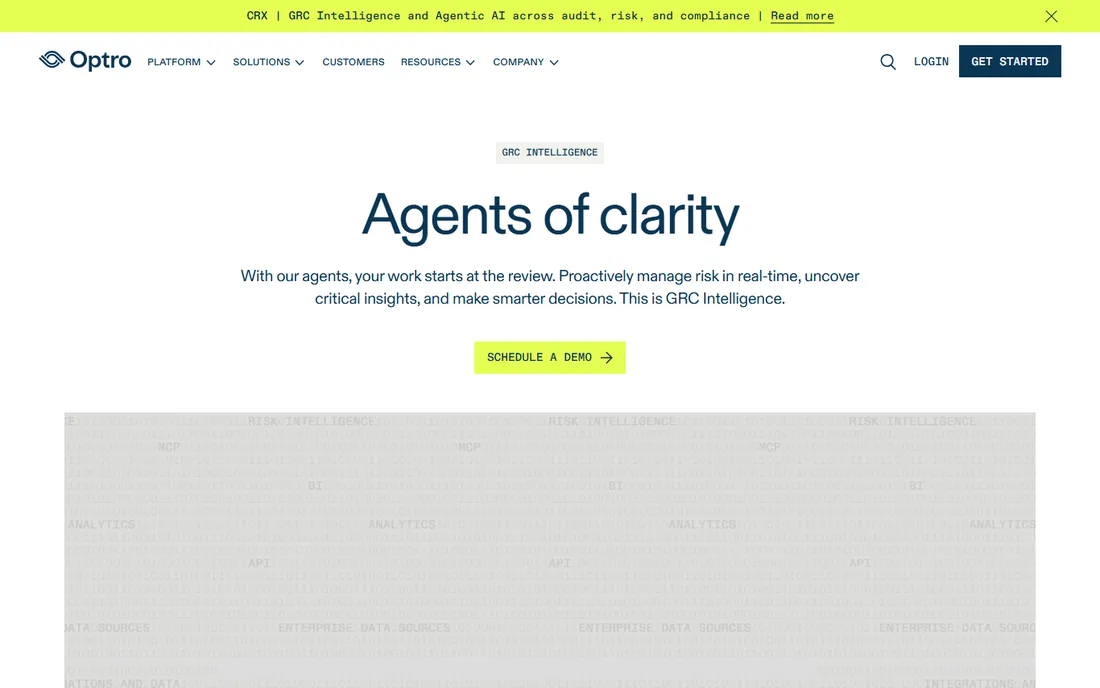
Optro is the current name of the platform long known as AuditBoard, and buyers should know both names when researching. The product connects audit management, SOXHUB-style controls testing, risk management and compliance in one platform, with evidence collected once and reused across frameworks. The interface is more approachable than most enterprise GRC tools, which helps with adoption across audit and business teams.
The company rebrand means some reviews and comparisons still live under the old name, so search both when doing diligence. Pricing is custom and quote-based. For audit-led organizations that want risk and compliance connected to the audit plan rather than siloed, Optro is one of the more natural fits on this list.
What we like- Connected audit, risk and compliance modules with shared evidence
- Modern, approachable interface for a GRC platform
- Strong fit for teams coordinating audit and risk work
Watch out for- Quote-only pricing with no published tiers
- Newer brand name may confuse buyers searching for the old name
#6
ServiceNow
Best for: Companies already running ServiceNow that want risk on the same platform
Visit servicenow.com
Starting priceSee website (custom quote)
Free planNo (demo request available)
ServiceNow's Integrated Risk Management offering is the obvious pick for organizations already invested in the Now Platform. Risk registers, control testing, policy exceptions and vendor risk assessments run on the same workflows, CMDB and automation engine as IT service management, which removes the integration work that plagues multi-vendor GRC stacks. For IT risk and operational resilience programs, the shared data model is a real advantage.
Outside a ServiceNow shop, the value proposition is thinner, since the platform advantage disappears and you are buying a large suite to get the risk module. Pricing is quote-based with module licensing. If your company already runs ServiceNow for IT, evaluating its risk modules before buying a separate GRC tool is the sensible first step.
What we like- Integrated Risk Management rides on the Now Platform with shared workflows, CMDB and automation
- Strong fit for IT-heavy risk programs
- Scales across the enterprise on one data model
Watch out for- Makes most sense inside an existing ServiceNow footprint
- Pricing is quote-based and module licensing adds up
#7
Onspring
Best for: Mid-market teams that want flexible no-code GRC apps without enterprise overhead
Visit onspring.com
Starting priceSee website (custom quote)
Free planNo (demo request available)
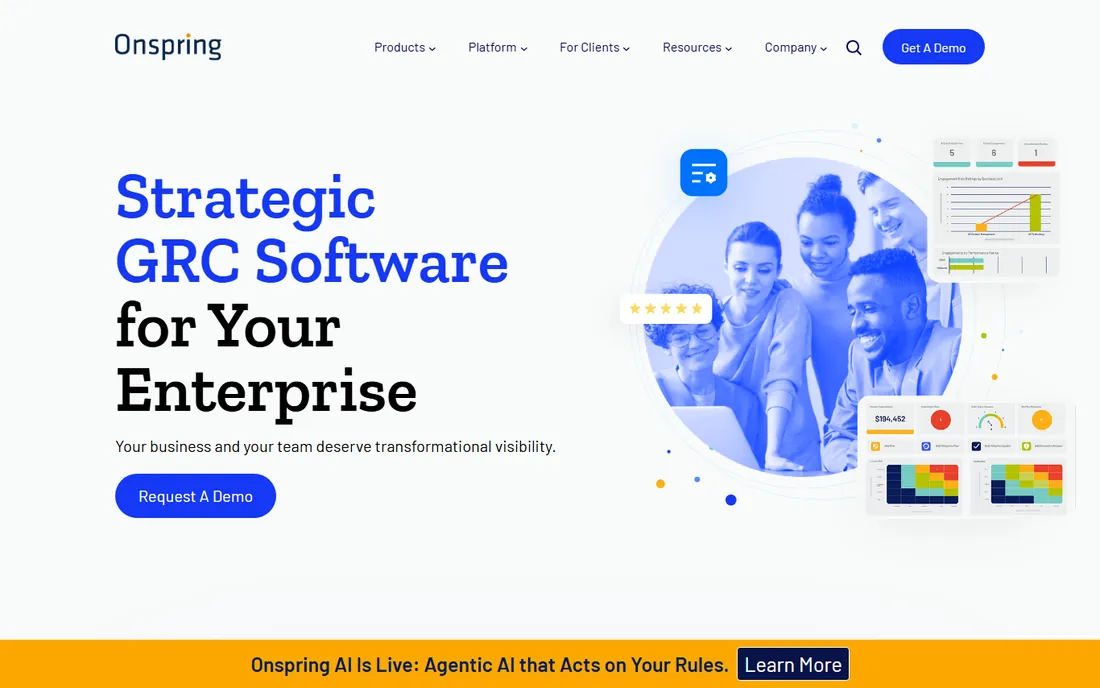
Onspring gives mid-market teams the no-code building blocks to design their own GRC applications: risk registers, assessments, issue tracking, vendor reviews and audit workpapers, assembled from configurable components. The appeal is speed and control. A team can stand up a working risk register in weeks rather than quarters, and reshape it as the program matures, without a consultant on retainer.
The flip side is that you build more of it yourself. Onspring ships less pre-built GRC content than MetricStream or Archer, so teams wanting a mature framework out of the box will do more configuration. Pricing is custom. For companies between spreadsheets and an enterprise suite, it is one of the most practical stepping stones on this list.
What we like- No-code app builder lets teams design their own risk, audit and compliance apps
- Faster to stand up than enterprise suites
- Responsive vendor with a mid-market focus
Watch out for- Less out-of-the-box content than the big GRC suites
- Quote-only pricing
Starting priceSee website (custom quote)
Free planNo (demo request available)
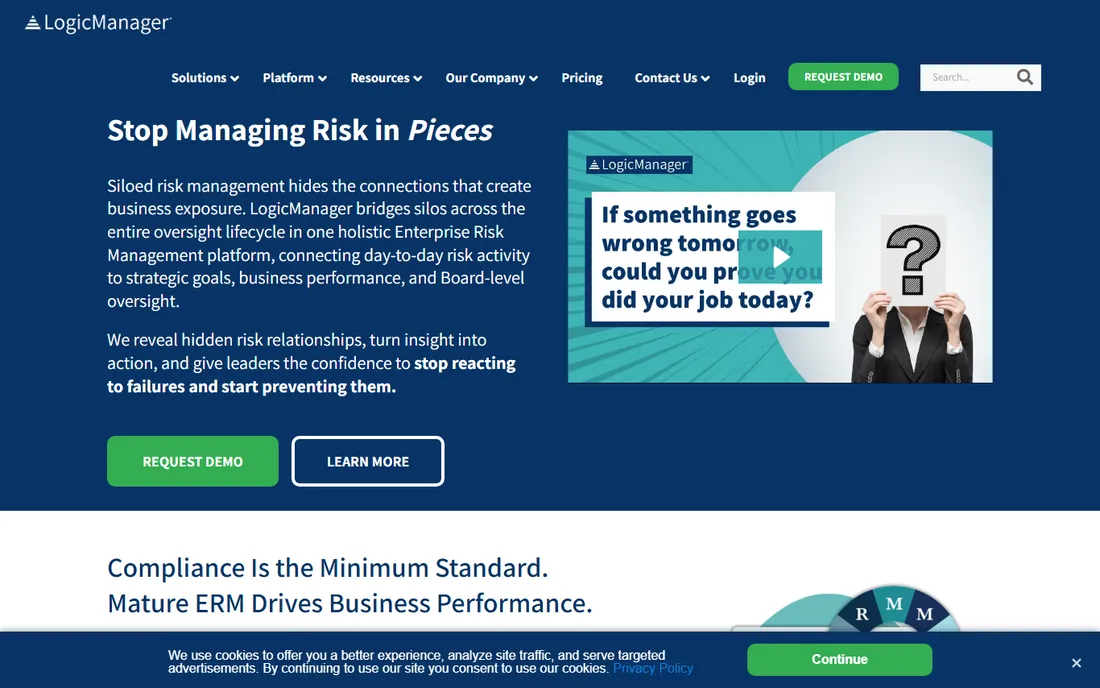
LogicManager differentiates on guidance, not just software. The platform ships with a structured risk taxonomy and advisory services that help teams build their program the way the vendor believes it should be built, covering enterprise risk, compliance, audit, incidents and business continuity. For organizations standing up their first formal GRC program, that scaffolding is the product as much as the software.
Teams with an established methodology may find the prescriptive approach constraining, and should confirm the platform bends to their framework during the demo. Pricing is quote-based. LogicManager suits buyers who want a partner in building the program, not just a tool to run one they already have.
What we like- Built-in risk taxonomy and advisory guidance structure the program
- Covers ERM, compliance, audit and incident management
- Hands-on support model with risk advisors
Watch out for- The guided approach can feel prescriptive for teams with established methods
- Quote-only pricing
#9
NAVEX
Best for: Ethics and compliance program owners, including whistleblower and policy management
Visit navex.com
Starting priceSee website (custom quote)
Free planNo (demo request available)
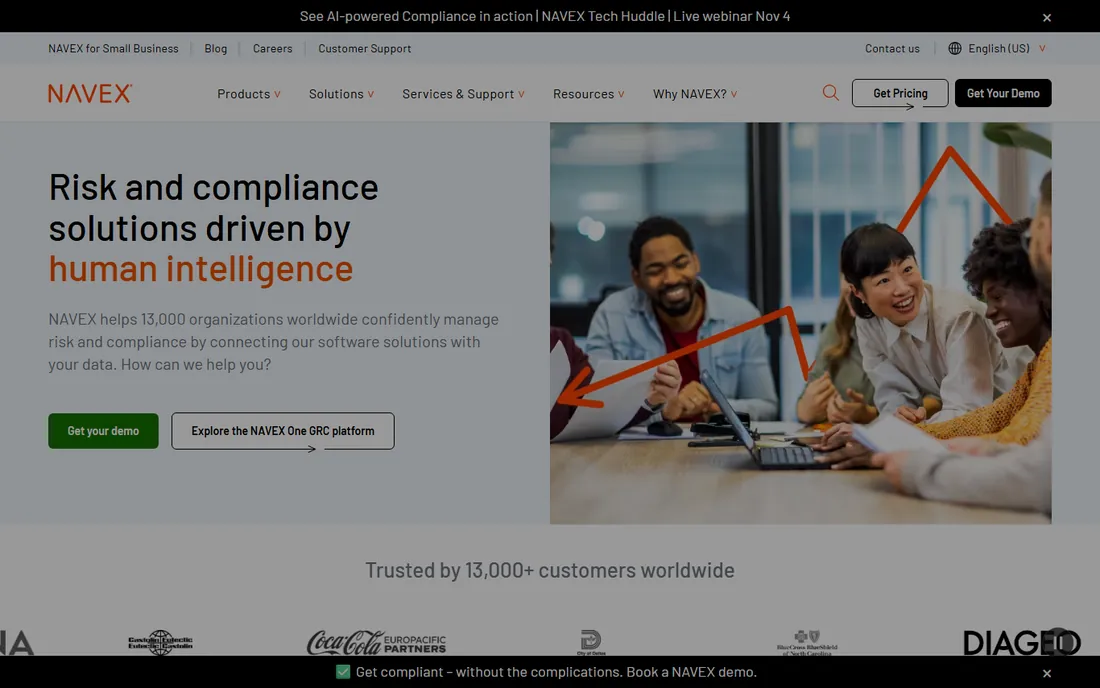
NAVEX is the ethics and compliance specialist on this list. Its roots are in whistleblower hotlines, incident case management, policy management and compliance training, and it remains the default choice for organizations building or formalizing an ethics program. The broader platform adds risk management and third-party risk modules, so compliance teams can run the whole program with one vendor.
Buyers whose primary need is risk analytics, control testing or IT risk will find the pure GRC suites deeper. NAVEX wins when the buying center is the ethics and compliance office rather than enterprise risk or IT. Pricing is custom and quote-based, with no published tiers.
What we like- Market-leading ethics and compliance coverage, including hotline, case management and policy tools
- Integrated GRC modules for risk and third-party management
- Strong training and awareness content
Watch out for- Ethics-first heritage means risk analytics are thinner than pure GRC suites
- Quote-only pricing
#10
Drata
Best for: Companies that need SOC 2, ISO 27001 or HIPAA readiness fast
Visit drata.com
Starting priceSee website (custom quote)
Free planNo (demo request available)
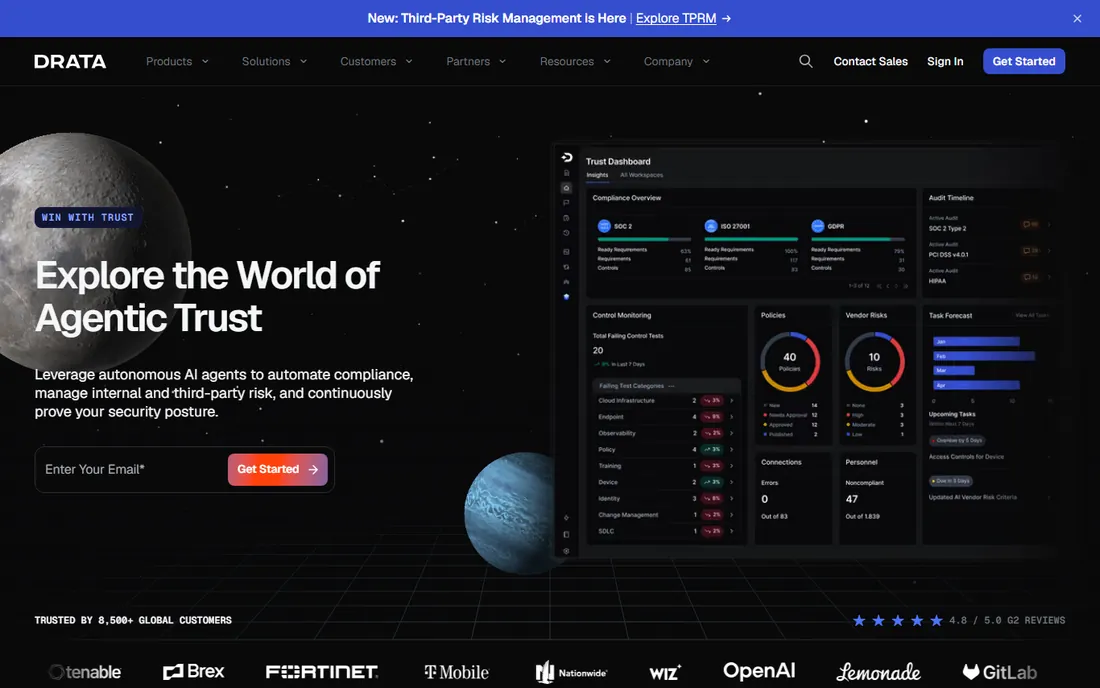
Drata is compliance automation, not traditional GRC. It connects to your cloud services, identity providers and HR systems, continuously collects evidence against frameworks like SOC 2, ISO 27001, HIPAA and GDPR, and flags control gaps before the auditor does. For startups and SMBs that need a certification to close enterprise deals, it compresses months of spreadsheet evidence gathering into an ongoing automated process.
It is not a general risk management platform: enterprise risk registers, operational risk and business continuity are outside its scope. Pricing is quote-based with nothing published. If the goal is audit readiness on a deadline, Drata is the fastest route on this list. If the goal is a company-wide risk program, pair it with one of the GRC platforms above.
What we like- Automated evidence collection from your cloud stack for common frameworks
- Continuous control monitoring with alerts
- Purpose-built for audit readiness rather than general GRC
Watch out for- Framework-focused, so it does not replace a full ERM program
- Pricing is quote-based
What risk management software actually covers
The category label hides several different products. Enterprise risk management (ERM) covers the risk register itself: identifying risks, scoring them, assigning owners and tracking mitigation. IT and cyber risk focuses on controls, vulnerabilities and framework mapping. Third-party risk management vets vendors and monitors them over time. Business continuity and operational resilience plan for disruptions. Compliance management tracks obligations and evidence. Audit management runs the internal audit plan.
Most platforms on this list cover several of these, but each has a center of gravity. NAVEX centers on ethics and compliance. Drata centers on framework evidence. Archer and MetricStream try to cover the whole map. Before shortlisting, write down which two or three disciplines you actually need this year, and judge each demo against those, not against the full feature grid.
How to choose risk management software for your company size
Small companies and first-time programs should favor speed over completeness. Onspring, LogicGate and Drata stand up quickly and do not assume a dedicated GRC team. Ask each vendor for a realistic go-live timeline with your headcount, and be wary of platforms that need consultants to configure the basics.
Mid-market companies with a compliance driver should look at Optro and LogicManager, which connect audit and risk work without enterprise-suite overhead. If you already run ServiceNow, evaluate its risk modules before buying a separate platform, since the integration is already done.
Large and regulated enterprises should shortlist Archer, MetricStream and Riskonnect, and run a structured proof of concept with your actual risk taxonomy. At this scale the deciding factors are content depth, multi-entity support and the vendor's professional services bench, not the demo interface. Get implementation timelines and reference customers in your industry in writing.
How we chose
We started with the categories buyers search: risk management software, GRC software, enterprise risk management software and compliance management software. For each candidate we checked that the vendor is actively selling the product under its current brand, noted where pricing is published versus quote-only, and compared scope across ERM, IT risk, third-party risk, audit and compliance. Where a price could not be verified on the vendor's own site we wrote "See website" rather than guessing.
Frequently asked questions
How much does risk management software cost?
Almost every enterprise GRC platform is quote-only: LogicGate, Riskonnect, MetricStream, Archer, Optro, ServiceNow, Onspring, LogicManager, NAVEX and Drata publish no public prices. Expect pricing to scale with modules, users and implementation scope. Get at least two written quotes and compare implementation timelines alongside license fees.
What is the difference between GRC software and risk management software?
GRC (governance, risk and compliance) is the broader category covering risk, compliance, audit and policy management. Risk management software is the narrower discipline of identifying, scoring and mitigating risks. Most tools on this list are GRC platforms that include risk management as a module.
Which risk management software is best for small businesses?
Drata fits small companies that need a compliance certification fast. Onspring and LogicGate suit small teams building their first risk program without consultants. The enterprise suites (Archer, MetricStream, Riskonnect) are usually more than a small team needs.
Do any of these tools offer a free plan?
No. None of the ten publish a free plan in 2026. All offer demos or sales-led trials, so plan to evaluate two or three through guided demos with your actual risk register and control list.
How long does implementation take?
It varies widely. No-code platforms like Onspring and LogicGate can stand up a basic risk register in weeks. Enterprise suites like Archer, MetricStream and Riskonnect typically run multi-month implementations with professional services. Ask for a written timeline with your scope before signing.
Can risk management software help with SOC 2 or ISO 27001?
Yes, and that is Drata's core use case: automated evidence collection and continuous control monitoring mapped to SOC 2, ISO 27001, HIPAA and GDPR. The broader GRC platforms (Optro, MetricStream, Archer) also support framework mapping, but with more manual evidence work.
Sources we checked (10)
- https://logicgate.ai
- https://riskonnect.com
- https://metricstream.com
- https://www.archerirm.com
- https://optro.ai
- https://www.servicenow.com
- https://www.navex.com
- https://onspring.com
- https://logicmanager.com
- https://drata.com
Is your product missing or out of date?
We review this list regularly. Vendors can request a listing, send updated pricing or ask about featured placement.

Shihab Mia · Founder, Rankite
Shihab has spent more than a decade helping SaaS and e-commerce brands grow through search. He writes Rankite's software buying guides from pricing pages, documentation and public user reviews. More about Shihab.