How we make this list: we compare pricing pages, product documentation and public user reviews. Rankite is independent; if a vendor ever pays for a featured spot, that listing is clearly labeled Partner.
Key takeaways
- ServiceNow GRC, Archer, and MetricStream are the enterprise IRM standards.
- LogicGate and AuditBoard offer more modern, approachable alternatives.
- OneTrust extends from privacy into broader risk management.
- Resolver and StandardFusion suit mid-market teams getting started.
- Expect demos and quotes; this category rarely publishes pricing.
Why integrated risk management exists
Risk used to live in spreadsheets scattered across departments: IT tracked cyber risks, finance tracked operational risks, compliance tracked regulatory risks, and nobody saw the whole picture. Integrated risk management software brings those views together so leadership can see, prioritize, and act on risk as one portfolio.
The platforms below cover the standard GRC cycle: identify risks, assess and score them, assign controls and owners, monitor continuously, and report to boards and regulators. The differences lie in depth, usability, and which risk domains each vendor emphasizes.
Pricing is annual, quote-based, and scaled on users, modules, or revenue. Demos are the standard evaluation path.
How we chose
We selected platforms with a real IRM or GRC product suite and enterprise customers managing risk on them. We looked for risk assessment workflows, control libraries mapped to common frameworks, and reporting suitable for boards and regulators.
We weighed the established enterprise suites against newer, more usable alternatives because buyer size varies widely. We checked for framework content, integration with IT and business systems, and credible security certifications. Vendor claims were checked against product documentation.
Starting priceSee website
Free planNo, demo available
ServiceNow's GRC modules run on the same platform as its IT service management, which is the main attraction: risks, incidents, changes, and controls share data and workflows automatically. A failed control can trigger an incident without anyone retyping anything.
Continuous monitoring features track control effectiveness in near real time rather than at audit time. The reporting serves both operational teams and board-level risk committees.
It makes most sense for organizations already invested in ServiceNow. As a standalone GRC purchase it is harder to justify, but inside the platform the integration value is substantial.
What we like- Deep integration with ServiceNow ITSM and workflows
- Strong continuous monitoring
- Good for large, complex orgs
- Powerful reporting
Watch out for- Enterprise pricing
- Best value requires ServiceNow commitment
- Implementation is significant
Starting priceSee website
Free planNo, demo available
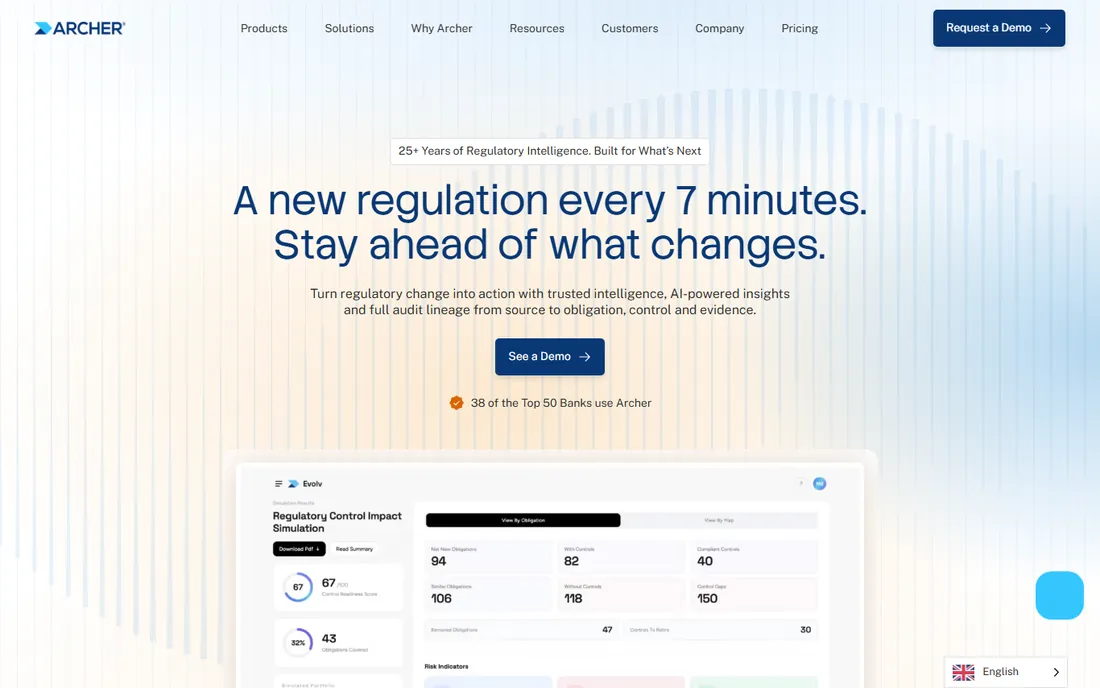
Archer, from RSA, is the traditional enterprise GRC suite, covering risk management, compliance, audit, business resiliency, and third-party risk in depth. Regulated industries with complex requirements have run on it for years.
Configurability is the hallmark: nearly every workflow, assessment, and report can be tailored. That power comes with cost, both in licensing and in the skilled administrators needed to run it.
Smaller or less mature programs will find it overwhelming. For large enterprises with dedicated GRC teams, Archer remains the depth leader.
What we like- Deepest GRC functionality
- Highly configurable
- Strong in highly regulated industries
- Long track record
Watch out for- Complex and expensive
- Needs dedicated administrators
- Implementations are long
Starting priceSee website
Free planNo, demo available
MetricStream covers the full GRC waterfront, from enterprise and operational risk to compliance, audit, and third-party risk. Recent versions add AI assistance for risk analysis and control testing, which helps large teams process more with the same headcount.
The platform suits organizations that want one vendor for the whole program rather than point solutions. Regulatory content libraries keep assessments current across common frameworks.
Like Archer, it is an enterprise commitment. Mid-market teams should look at LogicGate or AuditBoard first and graduate to this tier when complexity demands it.
What we like- Broad product coverage
- AI-assisted risk insights
- Strong in operational risk
- Good regulatory content
Watch out for- Enterprise pricing
- Suite breadth adds complexity
- Implementation needs planning
Starting priceSee website
Free planNo, demo available
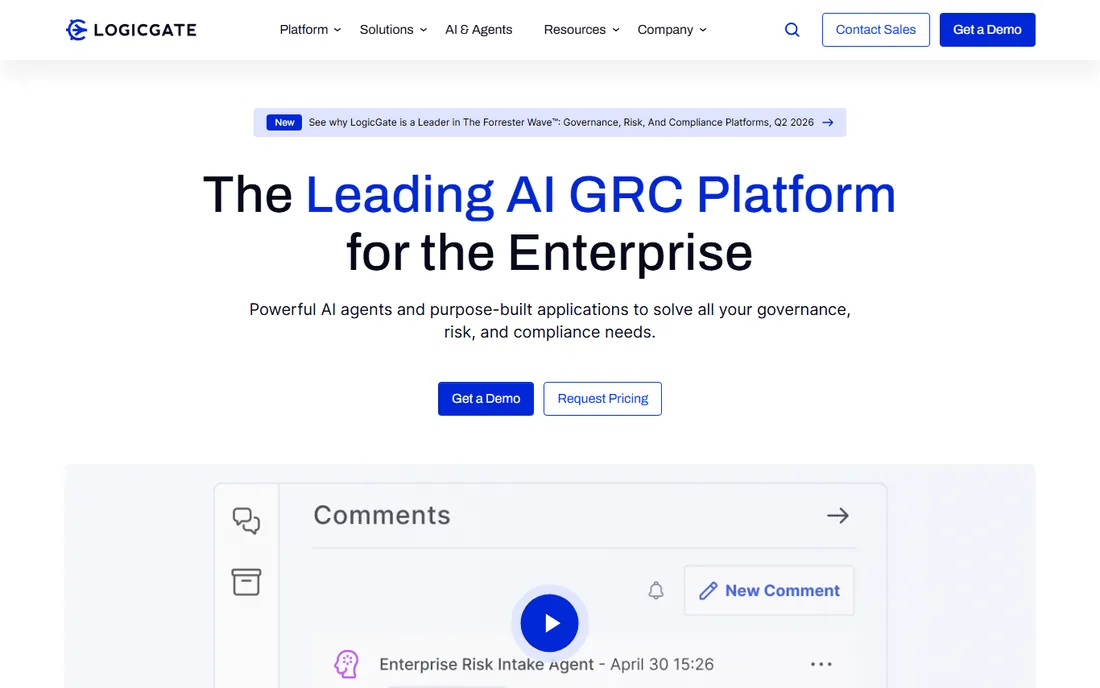
LogicGate's Risk Cloud uses a no-code builder that lets risk teams design their own assessment and control workflows without developers. That flexibility is the differentiator in a category known for rigid implementations.
The interface is modern and the time to first value is short compared to enterprise suites. Prebuilt process templates cover common use cases like vendor risk and control testing.
The deepest enterprise requirements may still need Archer or MetricStream. For teams that want GRC shaped to their actual processes, LogicGate is the most adaptable option.
What we like- No-code workflow builder
- Modern interface
- Fast to configure
- Good for growing programs
Watch out for- Less depth than Archer or MetricStream
- Enterprise features still maturing
- Pricing is quote-based

#5
AuditBoard
Best for: Audit-led risk and compliance teams
Visit optro.ai
Starting priceSee website
Free planNo, demo available
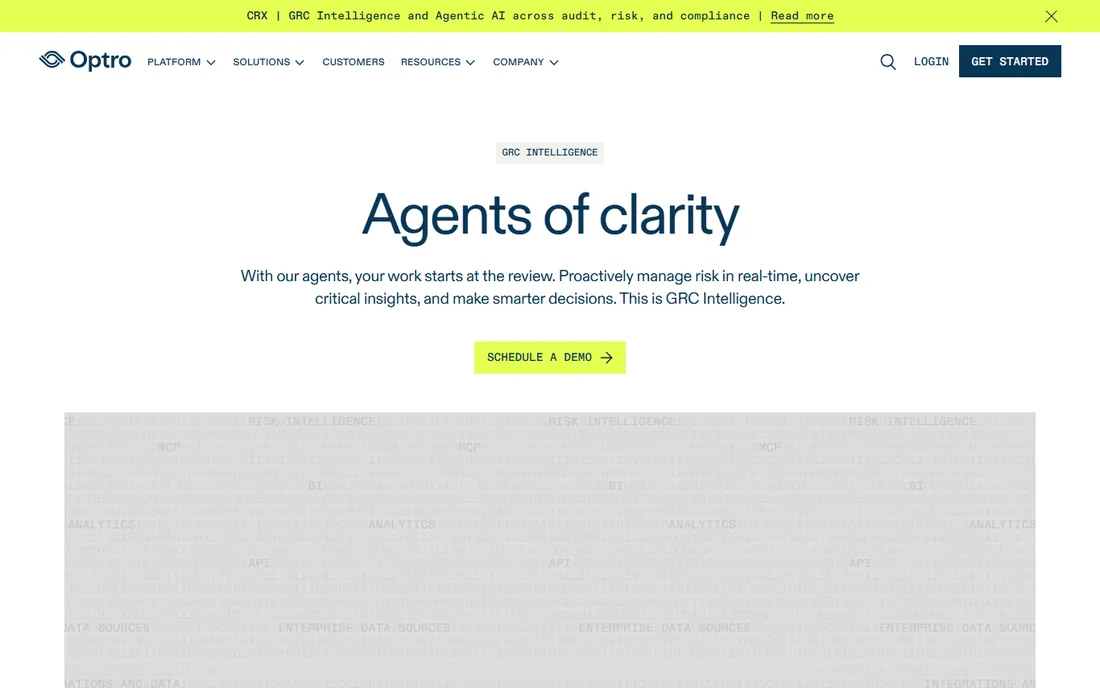
AuditBoard started in audit management and expanded into risk and compliance, which shows in the product's strengths: workpaper management, control testing, and issue tracking are excellent. Risk management connects naturally to the audit work teams already do.
Users consistently praise the interface and the customer community. For organizations where the audit function leads the GRC program, the fit is natural.
Pure risk teams may want deeper risk quantification than AuditBoard offers. But for connected audit, risk, and compliance, it is one of the best-liked platforms.
What we like- Excellent audit management heritage
- Connected risk and compliance
- Users rate usability highly
- Strong customer community
Watch out for- Risk depth less than pure-play IRM
- Pricing is quote-based
- Best for audit-centric programs
Starting priceSee website
Free planNo, demo available
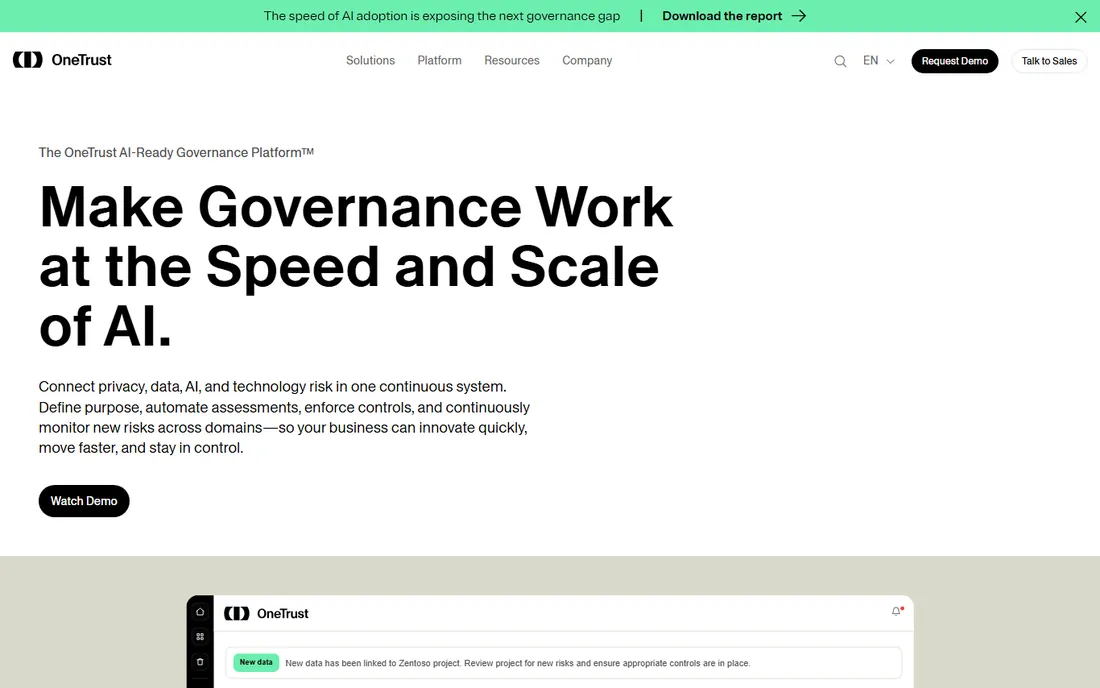
OneTrust dominates privacy management and has extended into third-party risk, ethics, and broader GRC. Organizations that started with OneTrust for GDPR often expand within the platform as their program matures.
Regulatory intelligence is a strength: the platform tracks changing requirements across jurisdictions, which matters for global companies. The third-party risk modules are well developed.
For core enterprise risk management depth, dedicated IRM suites still lead. OneTrust wins when privacy is the center of gravity and risk management grows around it.
What we like- Market leader in privacy management
- Expanding GRC modules
- Good regulatory intelligence
- Strong for global compliance
Watch out for- GRC depth trails dedicated suites
- Pricing is enterprise-grade
- Module sprawl can confuse buyers
Starting priceSee website
Free planNo, demo available
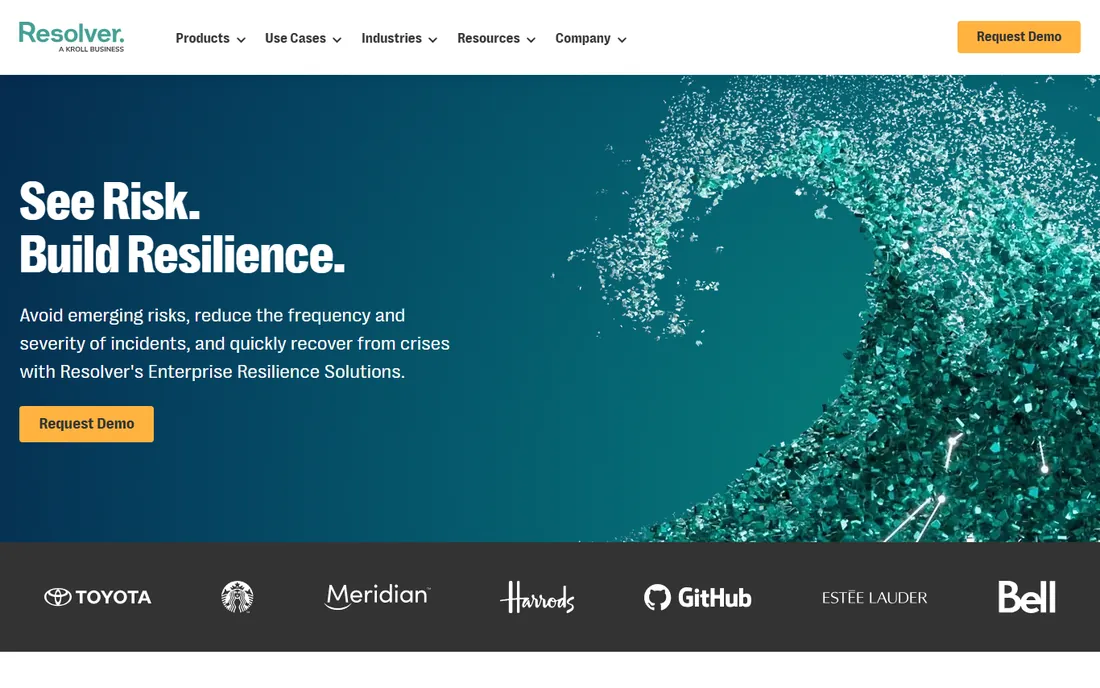
Resolver targets the mid-market with risk, incident, and compliance management that does not require an enterprise GRC team to operate. Implementation is measured in weeks, and the interface is straightforward.
The platform covers the fundamentals well: risk registers, assessments, control tracking, and incident management with sensible workflows connecting them. Support has a good reputation.
Large enterprises with complex needs will outgrow it. For companies formalizing risk management for the first time, Resolver is a sensible, right-sized choice.
What we like- Approachable for mid-market
- Good incident and risk workflows
- Reasonable implementation
- Solid support
Watch out for- Less depth than enterprise suites
- Smaller ecosystem
- Advanced analytics limited
Starting priceSee website
Free planNo, demo available
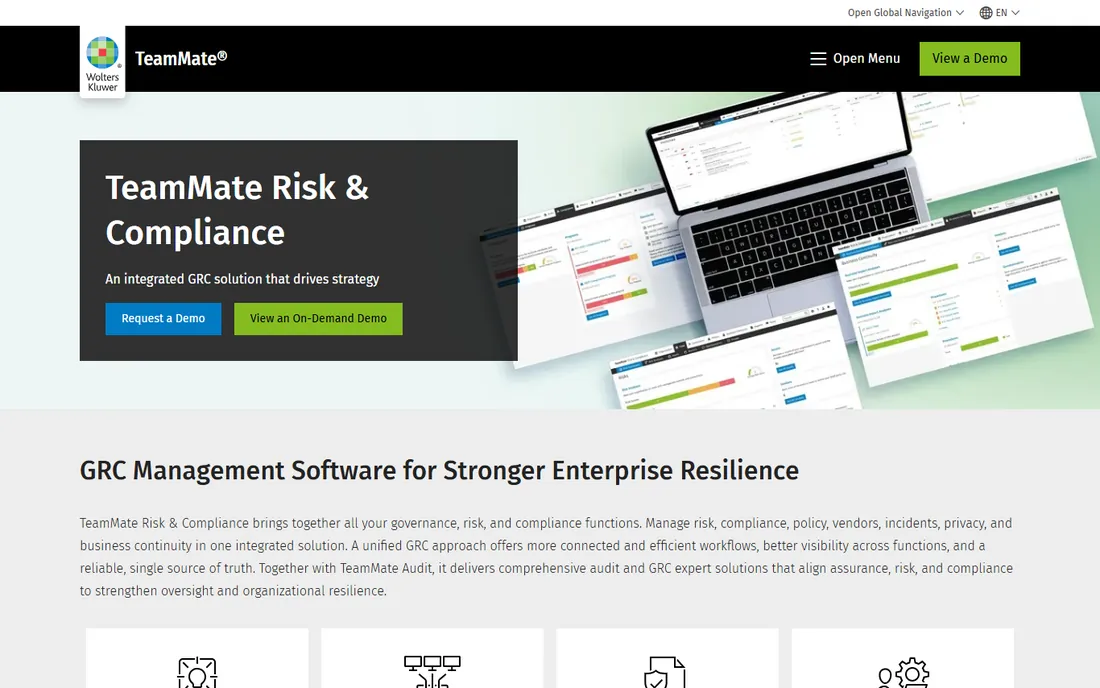
StandardFusion offers GRC basics at prices smaller companies can afford: risk registers, compliance tracking against common frameworks, vendor risk, and audit management in one platform.
Deployment is quick and the learning curve is gentle, which matters when the risk team is one person wearing five hats. Framework content covers the standards growing companies actually face.
It will not replace Archer for a global bank. But as a first real GRC platform, it delivers the essentials without the enterprise price tag.
What we like- Affordable pricing for the category
- Covers risk, compliance, and audit basics
- Quick to deploy
- Good for first GRC purchase
Watch out for- Limited advanced features
- Smaller vendor
- Integrations less extensive
Quick comparison
| Tool | Best for | Starting price | Free plan |
|---|
 ServiceNow GRC ServiceNow GRC | Enterprises already on the ServiceNow platform | See website | No, demo available |
 Archer Archer | Large enterprises with mature GRC programs | See website | No, demo available |
 MetricStream MetricStream | Enterprises wanting broad GRC coverage with AI assistance | See website | No, demo available |
 LogicGate LogicGate | Teams wanting flexible, modern GRC | See website | No, demo available |
| AuditBoard | Audit-led risk and compliance teams | See website | No, demo available |
 OneTrust OneTrust | Privacy-led organizations expanding into risk | See website | No, demo available |
 Resolver Resolver | Mid-market teams formalizing risk management | See website | No, demo available |
 StandardFusion StandardFusion | Affordable GRC for growing companies | See website | No, demo available |
Is your product missing or out of date?
We review this list regularly. Vendors can request a listing, send updated pricing or ask about featured placement.
Start with program maturity, not features. A team running its first risk assessments needs usability and quick wins, which favors LogicGate, AuditBoard, Resolver, or StandardFusion. A mature enterprise program needs depth and configurability, which favors Archer, MetricStream, or ServiceNow.
Map your must-have frameworks before demos, and ask each vendor to show those specific assessments running. Check who will administer the platform day to day, because the best GRC software fails when nobody owns it.
IRM implementation mistakes
The fatal mistake is buying software before defining the program. Teams purchase a GRC suite, then discover nobody agrees on what a risk is, who owns controls, or which frameworks apply. Define the risk taxonomy, ownership model, and priority frameworks first. Software organizes a program; it cannot invent one.
Second, boiling the ocean on day one. Rolling out every module to every department simultaneously guarantees a stalled implementation and exhausted stakeholders. Start with one risk domain and one business unit, prove value, then expand. Momentum beats comprehensiveness.
Third, letting perfect control design block progress. Risk teams spend months designing the ideal assessment while the business runs on spreadsheets. Launch with good-enough workflows and iterate. A living program that improves beats a perfect design that never ships.
Fourth, neglecting the first line of defense. If business owners see GRC as compliance paperwork imposed from above, data quality collapses. Design workflows that give them value, clear ownership, fewer surprises, and communicate in business language rather than framework jargon.
Finally, reporting activity instead of risk. Boards do not need control test counts; they need to know which risks threaten objectives and what is being done. Build reporting around decisions, not metrics. The platform that best answers the board's real questions wins the renewal.
Frequently asked questions
What does integrated risk management software do?
It centralizes how an organization identifies, assesses, monitors, and reports on risks across departments, connecting risk data to controls, owners, and remediation actions in one system.
How is IRM different from ERM?
Enterprise risk management is the discipline; integrated risk management is the technology-enabled approach to practicing it. In practice the terms overlap heavily, with IRM emphasizing connected data and processes.
How much does GRC software cost?
Mid-market platforms typically start in the tens of thousands per year. Enterprise suites run into six figures annually depending on modules and users. Always get a quote scoped to your actual needs.
Do we need GRC software or will spreadsheets work?
Spreadsheets work until the program grows: multiple risk owners, audit evidence requirements, and board reporting are where spreadsheets break down. Most companies adopt GRC software when audits get painful.
Which frameworks do these platforms support?
Common coverage includes ISO 27001, NIST, SOC 2, PCI DSS, HIPAA, and GDPR. Verify your specific frameworks with each vendor, since content depth varies.
How do we get business units to participate in risk assessments?
Make participation easy and visibly useful. Pre-fill assessments with known data so owners only confirm and adjust, keep questionnaires short and in business language, and show each unit what they get back: clearer ownership, fewer audit surprises, and faster decisions. Executive sponsorship matters enormously; when leadership treats risk input as important, participation follows. Start with the units most exposed to risk, deliver quick wins there, and let peer pressure do the rest. The programs that struggle are the ones that feel like compliance homework imposed from above.
Sources we checked (0)
Is your product missing or out of date?
We review this list regularly. Vendors can request a listing, send updated pricing or ask about featured placement.

Shihab Mia · Founder, Rankite
Shihab has spent more than a decade helping SaaS and e-commerce brands grow through search. He writes Rankite's software buying guides from pricing pages, documentation and public user reviews. More about Shihab.