How we make this list: we compare pricing pages, product documentation and public user reviews. Ratings come from G2, Capterra or Trustpilot, with the date we checked them.
Key takeaways
- ABCmouse is the best all-round learning app for ages 2 to 8, with a full curriculum across reading, math, and more.
- Khan Academy Kids is the best free option, with no ads and no subscriptions for early learners.
- PBS Kids is the best free video and game option, built around trusted children's shows.
- Prodigy makes math practice feel like a game, which helps reluctant learners stick with it.
- Epic is the best digital library, with more than 40,000 books and videos for kids 12 and under.
Quick comparison
| Tool | Best for | Starting price | Free plan |
|---|
 ABCmouse | A full early learning curriculum for ages 2 to 8 | See website | Free trial |
 Khan Academy Kids | Free, ad-free early learning for young children | Free | Yes |
 PBS Kids | Free educational videos and games featuring trusted characters | Free | Yes |
 Prodigy | Making math practice feel like an adventure game | Free | Yes |
 Reading Eggs | Teaching young children to read with phonics games | See website | 30-day free trial |
 SplashLearn | Math and English games for preschool through grade 5 | See website | Yes |
 Epic | A huge digital library of books and videos for kids 12 and under | See website | 7-day free trial |
 IXL | Skill-by-skill practice across subjects from PreK through grade 12 | See website | See website |
Is your product missing or out of date?
We review this list regularly. Vendors can request a listing, send updated pricing or ask about featured placement.
Starting priceSee website
Free planFree trial
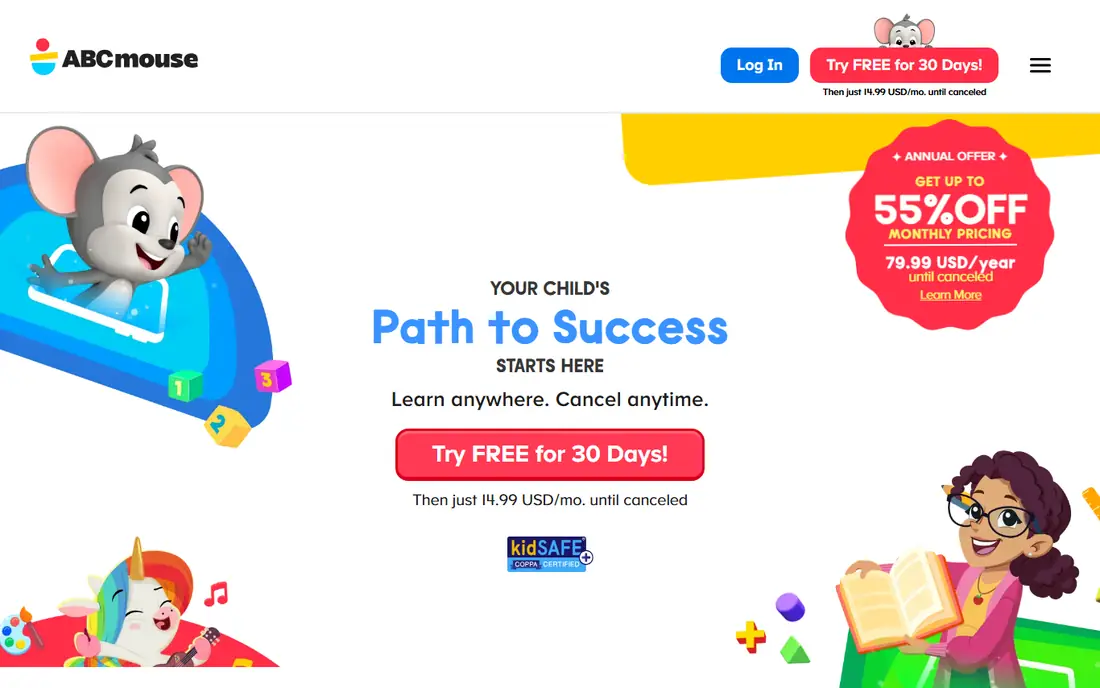
ABCmouse is the most complete early learning platform on this list, built for children ages 2 to 8. It covers reading, math, science, art, music, and more through thousands of interactive activities, games, books, and songs, all organized into a step-by-step learning path that adapts as your child progresses.
Parents get progress tracking that shows which skills their child has practiced and where they need more work, which helps you support learning without hovering over every session. The design is made for young children, with large buttons, friendly characters, and rewards that keep kids motivated without feeling like a test.
The trade-offs are age range and price transparency. ABCmouse is aimed at early learners, so older children will outgrow it, and subscription pricing is not published plainly on the homepage. For families with preschool and early elementary children who want one app that covers the whole curriculum, though, ABCmouse remains the strongest all-round choice.
What we like- Complete curriculum across subjects, thousands of activities, tracks progress, designed for young children
Watch out for- Subscription cost not shown plainly on the homepage, best for younger kids only, screen-time limits still apply
Starting priceFree
Free planYes
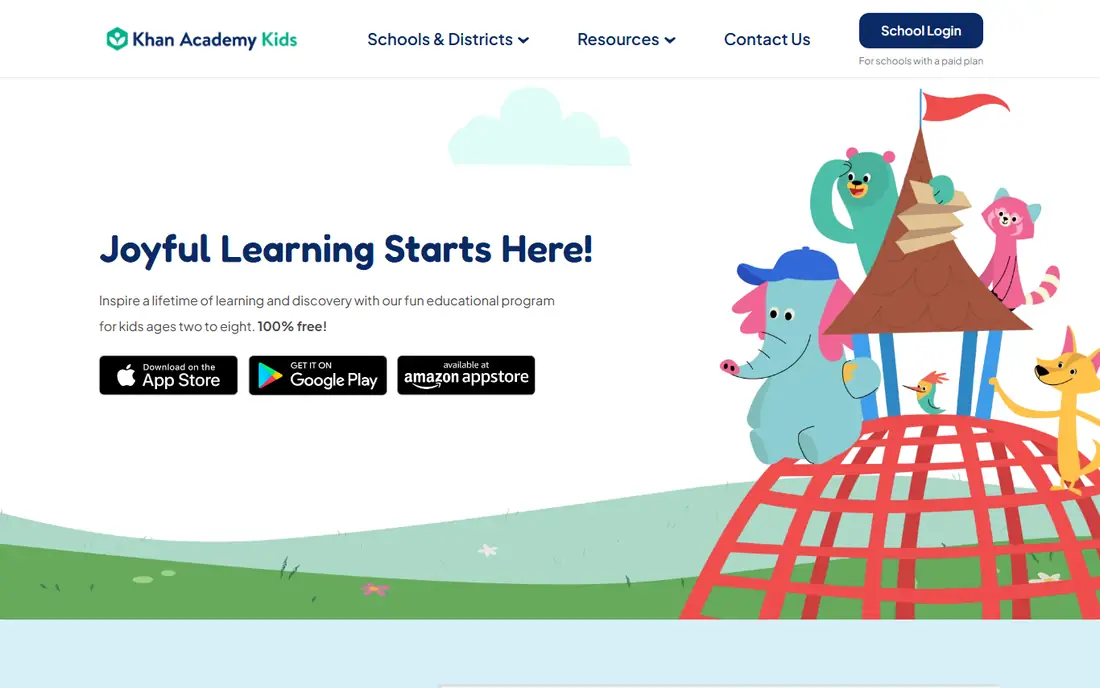
Khan Academy Kids is the free early learning app from Khan Academy, the nonprofit behind the well-known learning platform for older students. It covers early reading, language, math, and social-emotional skills for young children, with activities designed by early learning experts and no ads, no subscriptions, and no in-app purchases.
That free model matters. Many learning apps charge monthly fees or push extras, but Khan Academy Kids is funded as a nonprofit mission, so parents never face a paywall mid-lesson. The app includes books, videos, and interactive activities, plus tools for parents and teachers to follow progress.
The caveats are scope and verification. The age range is early childhood, so elementary children beyond the early grades will need a different platform. Our homepage check for this app returned a bot-check page rather than full content, so its listing rests on its well-established official address and its long public record rather than a fresh page read. For free, safe early learning, it is still the best option available.
What we like- Completely free with no ads, covers reading, math, and social-emotional learning, trusted nonprofit behind it, works offline in parts
Watch out for- Homepage check returned a bot-check page rather than full content, narrower age range, fewer games than paid rivals
#3
PBS Kids
Best for: Free educational videos and games featuring trusted characters
Visit pbskids.org
Starting priceFree
Free planYes
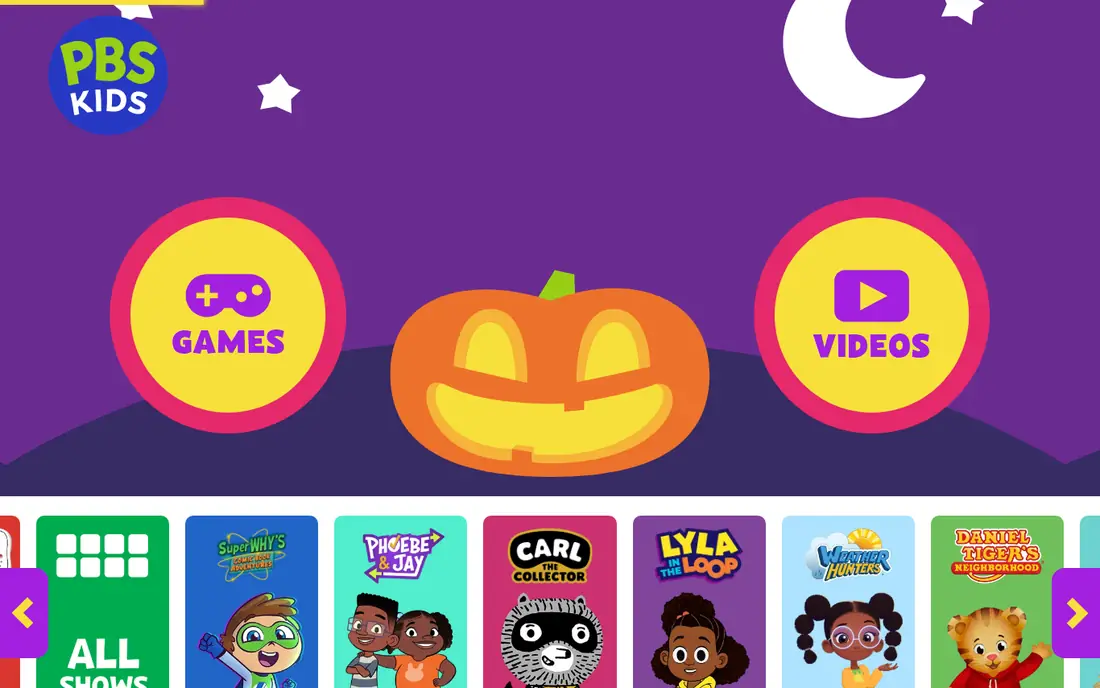
PBS Kids is the free children's platform from PBS, built around characters children already love from shows such as Daniel Tiger, Wild Kratts, and Sesame Street. It offers videos, games, and activities that teach reading, math, science, and social skills, all free and without a subscription.
The strength of PBS Kids is trust and familiarity. Parents know the shows, the content is age-appropriate, and the games reinforce what children see on screen. It works well as a first learning app for preschoolers and as a supplement for early elementary children who want to play while learning.
The limitation is structure. PBS Kids is more a collection of videos and games than a step-by-step curriculum, and progress tracking is thinner than ABCmouse or IXL. It will not replace a full learning program on its own. As a free, safe, and genuinely enjoyable supplement, though, it belongs on every family's list.
What we like- Completely free, beloved characters from PBS shows, games tied to curriculum, no subscription needed
Watch out for- More entertainment than structured curriculum, less progress tracking, best as a supplement
Starting priceFree
Free planYes
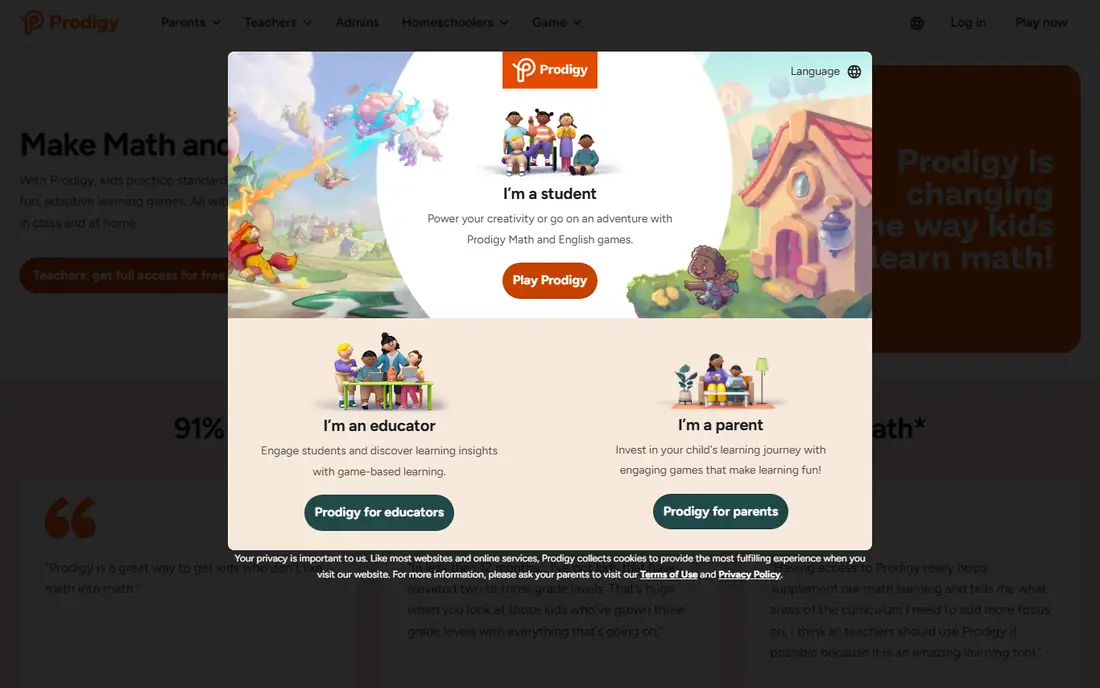
Prodigy turns math practice into a fantasy adventure game where children battle monsters by answering math questions matched to their skill level. For children who resist worksheets, that game layer is powerful: many parents report that their kids ask to play Prodigy, which is rare for a learning tool.
The game is free, with an optional paid membership that adds extras such as pets, outfits, and bonus areas. Teachers can use Prodigy to assign practice aligned to classroom topics, and parents can track progress through a dashboard. Questions adapt as children improve, so the game stays challenging without becoming frustrating.
The trade-offs are focus and upselling. Prodigy covers math, not reading or science, and the paid membership extras can tempt children to ask for upgrades. Used as a math supplement rather than a full curriculum, though, Prodigy is one of the most effective motivators on this list.
What we like- Free math game for grades 1 to 8, adaptive questions match skill level, teachers can assign practice, kids actually ask to play
Watch out for- Optional paid membership adds extras, game elements can distract some children, math focus only
Starting priceSee website
Free plan30-day free trial
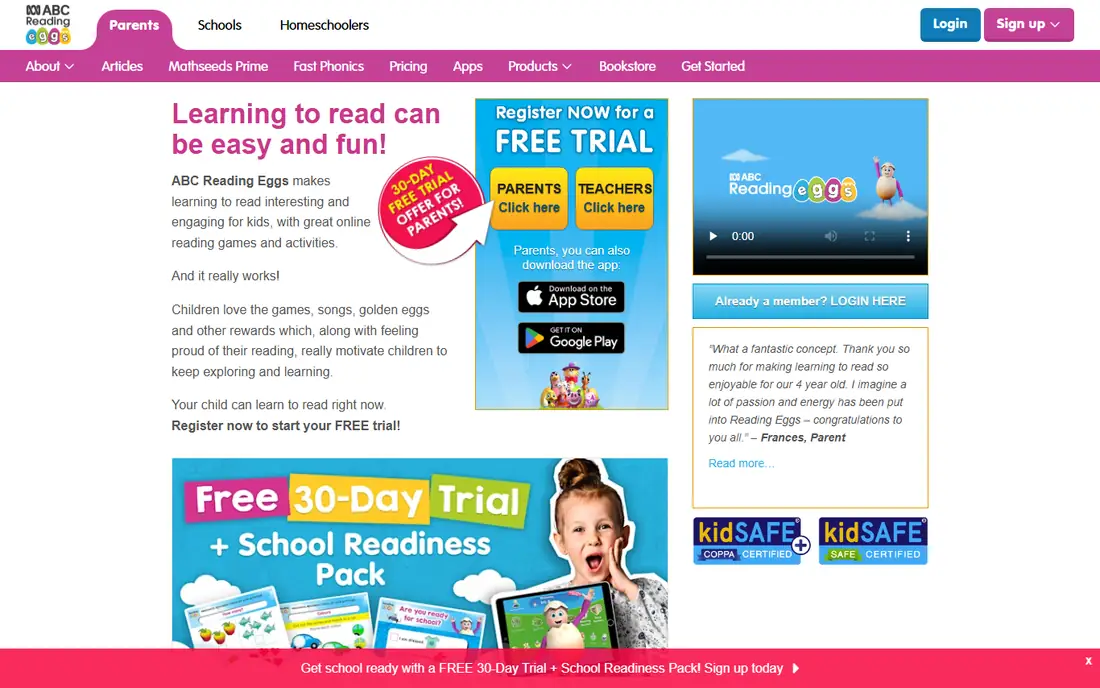
Reading Eggs is a phonics-based program that teaches children to read through games, songs, golden eggs, and rewards. Its homepage promises that learning to read can be easy and fun, and parent testimonials describe children reading within months of starting. The program is designed for ages 2 to 13, with levels that move from letter sounds to full reading comprehension.
The structure is a strength. Children follow a learning path with clear milestones, earn rewards for progress, and build confidence as they advance. A 30-day free trial lets families test the full program before paying, and free printable resources support offline practice and homeschooling.
The limitations are focus and pricing. Reading Eggs teaches reading, not math or science, so it works best alongside a broader platform. Subscription pricing is not shown plainly on the homepage. For families whose main goal is getting a young child reading, though, Reading Eggs is the most focused and proven tool here.
What we like- Phonics-based reading program, games, songs, and rewards motivate kids, 30-day free trial, resources for ages 2 to 13
Watch out for- Subscription price not shown on the homepage, reading focus only, some children outgrow it quickly
Starting priceSee website
Free planYes
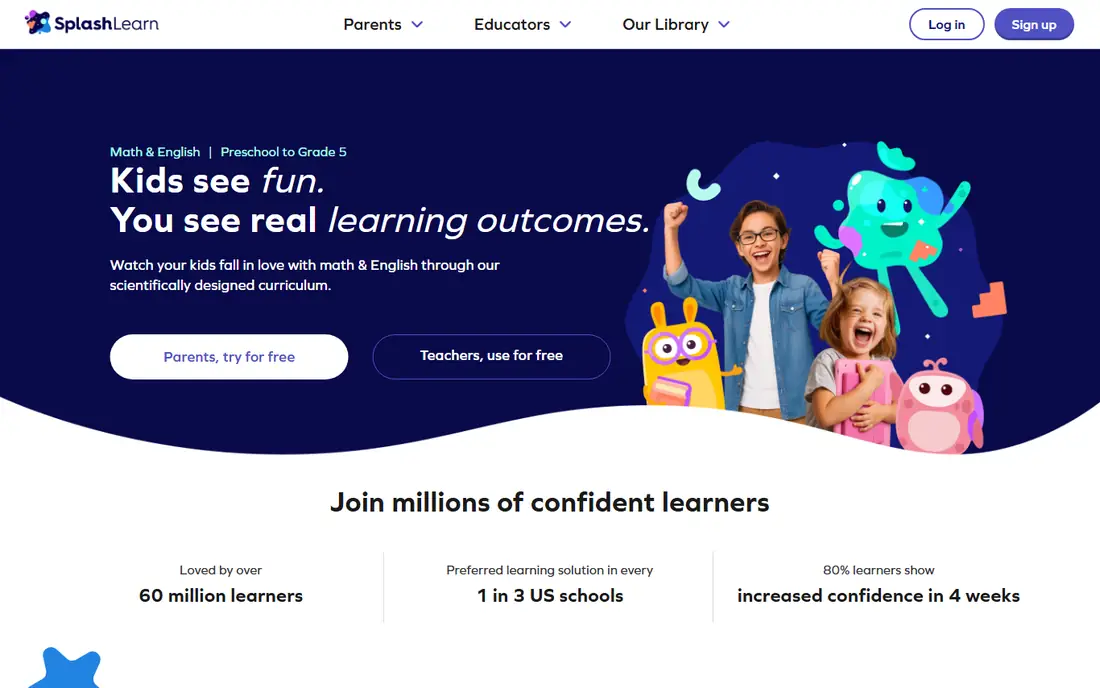
SplashLearn is a math and English program for preschool through grade 5, built around games, activities, worksheets, and lesson plans. Its library covers counting, addition, multiplication, phonics, sight words, and more, organized by grade and topic so parents and teachers can find the right practice quickly.
The platform is designed to feel like play: games teach concepts through interaction rather than drills, and worksheets and lesson plans support classroom and homeschool use. Teachers can access free lesson plans and classroom tools, and parents can follow their child's progress through the program.
The trade-offs are age range and pricing. SplashLearn is best for elementary children, and older students will need IXL or a similar platform. Full pricing is not published plainly on the homepage. For elementary math and English practice that children enjoy, SplashLearn is a strong, well-organized choice.
What we like- Games, worksheets, and lesson plans for PreK to grade 5, covers math and English, free content for teachers, tracks progress
Watch out for- Full pricing not shown plainly, best for elementary ages, some content behind paid plans
#7Epic
Best for: A huge digital library of books and videos for kids 12 and under4.2/5 on
G2 (940 reviews, checked Oct 2026)
Visit getepic.com
Starting priceSee website
Free plan7-day free trial
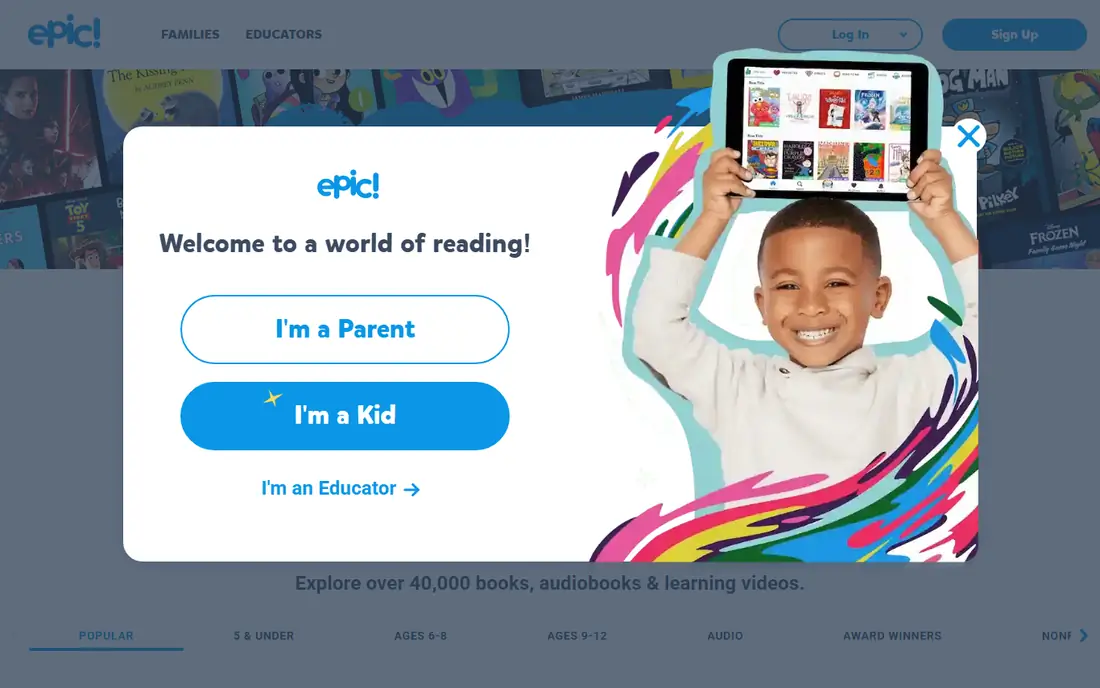
Epic is the world's leading digital library for kids, with more than 40,000 high-quality books, audiobooks, and learning videos for children 12 and under. Its goal is to inspire a lifetime of reading and discovery, and its scale shows: Epic reaches 75 million kids worldwide, with titles from top publishers across fiction, nonfiction, and educational topics.
The app is designed for safe, independent reading. Children can browse by age, interest, and reading level, and recommendations help them discover new books. Audiobooks and read-to-me options support younger readers and struggling readers, while videos add variety for children who learn by watching.
The limitations are focus and pricing. Epic is a library, not a curriculum, so it will not teach math or track academic skills the way IXL does. Subscription pricing is not shown plainly on the homepage, though a 7-day free trial is advertised. For families who want to build a reading habit, Epic's library is unmatched.
What we like- More than 40,000 books, audiobooks, and videos, reaches 75 million kids, safe reading app, personalized recommendations
Watch out for- Subscription price not shown plainly on the homepage, reading focus only, some books vary by region
#8
IXL
Best for: Skill-by-skill practice across subjects from PreK through grade 12
Visit ixl.com
Starting priceSee website
Free planSee website
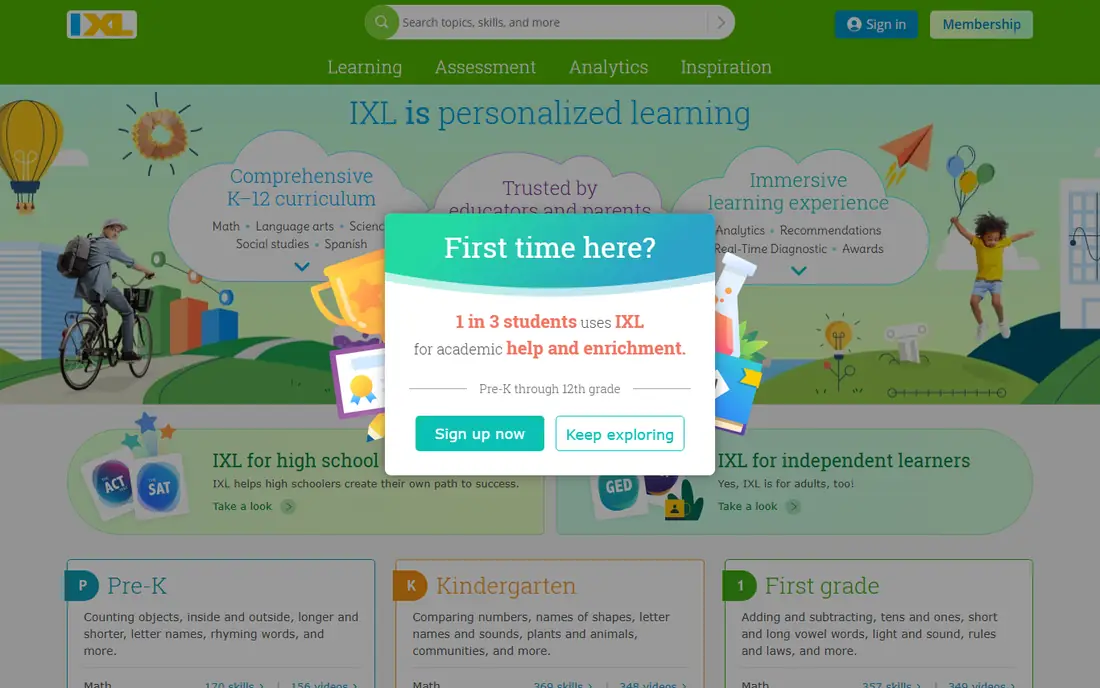
IXL is the broadest practice platform on this list, covering math, language arts, science, social studies, and Spanish from PreK through grade 12. Its skills are custom-built to match state standards, textbook chapters, and assessments such as the NWEA MAP, ACT, and SAT, which makes it useful for homework help, test prep, and classroom support alike.
The platform's strength is precision. Instead of a general game, IXL offers targeted practice on exact skills, from counting objects in PreK to quadratic equations in grade 9, with analytics that show where a child is strong and where they need work. Research cited by IXL links its use to improved results, and teachers nationwide use it in classrooms.
The trade-offs are style and price. IXL practice can feel like drills compared with the game worlds of Prodigy and SplashLearn, and pricing is not published plainly on the homepage. For families who want rigorous, standards-aligned practice across the widest age range, though, IXL is the most complete academic tool here.
What we like- Covers math, language arts, science, social studies, and Spanish, skills aligned to state standards and textbooks, detailed analytics, widest age range here
Watch out for- Pricing not shown plainly on the homepage, practice can feel like drills, less game-like than Prodigy or SplashLearn
How we chose
We compared learning platforms genuinely built for children, with age-appropriate content, real educational value, and a track record of classroom or home use. We checked each vendor homepage to confirm the platform exists and matches its description, and we used published prices where the vendor shows them. Where a vendor does not publish a price, we wrote "See website" rather than guessing. One homepage, Khan Academy Kids, returned a bot-check page during our check, so its listing rests on its established official address and public record rather than a fresh page read. Platforms were kept only if they are actively offered and usable by children with parent or teacher oversight, not just similar in name.
Pick by your child's age and goal
If your child is 2 to 8 and you want one full curriculum, start with ABCmouse, and add Khan Academy Kids and PBS Kids free alongside it. If reading is the goal, Reading Eggs and Epic are the strongest pair. If math practice is the struggle, Prodigy will motivate where worksheets fail, and SplashLearn covers elementary math and English with games. For older children or standards-aligned practice across subjects, IXL is the most complete choice. Try free tiers and trials first, watch how your child actually responds, and judge the platform on engagement and progress, not on promises.
Frequently asked questions
What is the best online learning platform for kids overall?
ABCmouse is the best all-round choice for ages 2 to 8, with a full curriculum and progress tracking. For free learning, Khan Academy Kids and PBS Kids are excellent, and for older children, IXL covers the widest range of subjects and grades.
Are there good free learning platforms for kids?
Yes. Khan Academy Kids and PBS Kids are completely free with no ads or subscriptions. Prodigy and SplashLearn also offer free tiers, and Reading Eggs and Epic offer free trials. Free options cover early learning well, though paid platforms add structure and tracking.
What age is ABCmouse best for?
ABCmouse is designed for children ages 2 to 8, covering preschool through early elementary. Older children will outgrow it and should move to platforms such as SplashLearn for elementary practice or IXL for broader academic coverage.
Which platform is best for teaching a child to read?
Reading Eggs is the most focused reading program here, with a phonics-based path and a 30-day free trial. Epic complements it with a huge library of books for practice, and Khan Academy Kids covers early reading skills free for younger children.
Can kids use these platforms without a parent?
Young children should use learning platforms with parent or teacher oversight, even on safe apps. Most platforms here include parent dashboards and progress reports, and parents should set time limits and review what children are doing, especially on apps with chat or social features.
Do these platforms replace school?
No. These platforms supplement school and homework; they do not replace teachers, classroom interaction, or a full curriculum. Use them for practice, reading, and enrichment, and talk to your child's teacher if you are concerned about progress in any subject.
Sources we checked (0)
Is your product missing or out of date?
We review this list regularly. Vendors can request a listing, send updated pricing or ask about featured placement.

Shihab Mia · Founder, Rankite
Shihab has 5+ years in B2B and SaaS SEO. He writes Rankite's software buying guides from pricing pages, documentation and public user reviews. More about Shihab.