How we make this list: we compare pricing pages, product documentation and public user reviews. Ratings come from G2, Capterra or Trustpilot, with the date we checked them.
Key takeaways
- Duolingo ABC and Khan Academy Kids are the strongest free starting points, with no ads and no subscription for core learning.
- Lingokids and ABCmouse suit families who want a structured path and are willing to pay after a free trial period.
- Speaking practice needs an app that listens, such as Buddy.ai or Studycat, because reading apps alone do not build spoken confidence.
- Age range matters more than feature count, since an app aimed at age eight will bore a four year old and overwhelm a younger child in reverse.
- Parents should check device controls and in-app purchases before handing a tablet to a child, even on apps described as kid friendly.
Quick comparison
| Tool | Best for | Starting price | Free plan |
|---|
 Duolingo ABC | Early reading and phonics | Free | Yes |
 Khan Academy Kids | Free all-round early learning | Free | Yes |
 Lingokids | Playful learning for ages 2 to 8 | $13.49 per month | Yes |
 ABCmouse | Structured Pre-K to grade 2 path | $14.99 per month | Free trial |
 Studycat | Speaking and everyday English | See website | Free trial |
 Buddy.ai | Voice based speaking practice | See website | Free trial |
 Monkey Junior | Structured listening and reading | See website | Yes |
 Reading Eggs | Phonics based reading for ages 2 to 13 | See website | Free trial |
Is your product missing or out of date?
We review this list regularly. Vendors can request a listing, send updated pricing or ask about featured placement.
The best apps for kids to learn english
Starting priceFree
Free planYes
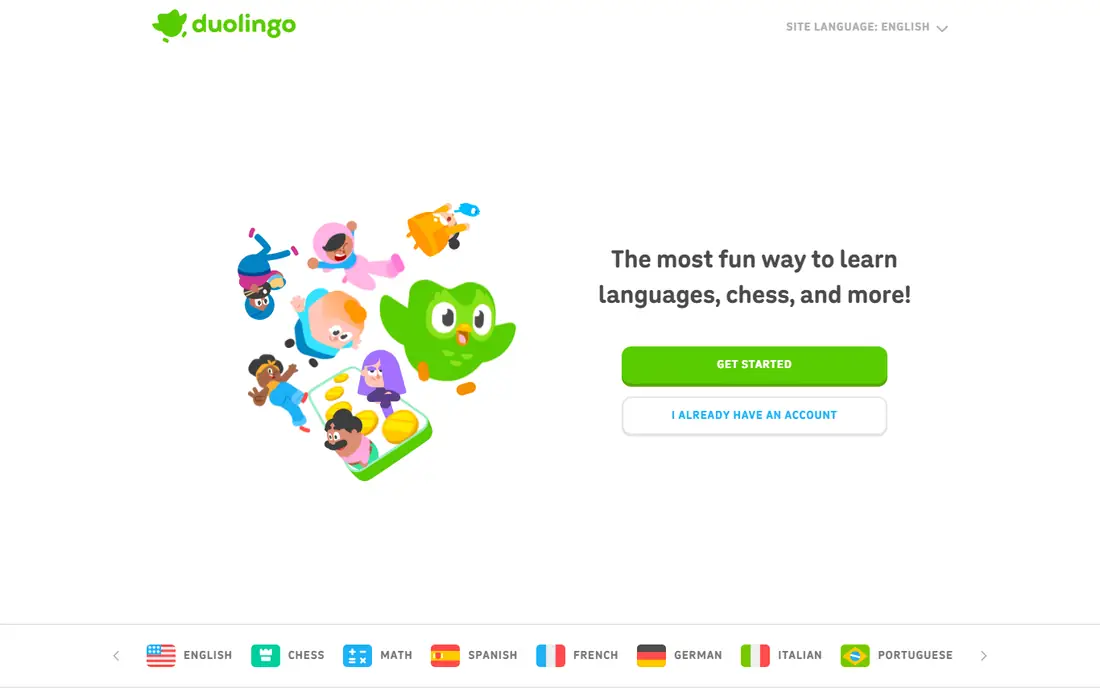
Duolingo ABC helps children aged three to seven learn to read through phonics, sight words and short stories. Lessons are bite sized, use the microphone for letter sounds, and follow a clear path so a child can work through them with little adult help. Because it is free with no ads or in-app purchases, parents do not need to manage payment settings for core use.
The limit is scope. Duolingo ABC teaches reading and early writing, but it does not provide a full English curriculum with speaking, grammar and vocabulary at older levels. Use it as a daily reading habit, and add a broader app or live practice when a child is ready for conversation.
What we like- Completely free with no ads
- Structured phonics path
- Short lessons suit young attention spans
Watch out for- Focuses on reading, not full English conversation
- Content ends for older children
Starting priceFree
Free planYes
Khan Academy Kids is the best free all-round app for ages two to eight, with books, language activities, phonics games and a personalised path. It is made by a nonprofit, carries no ads, and requires no subscription, which makes it easy to recommend without caveats about cost. Parents can follow progress through the adult section without paying for reports.
English learners benefit most when they use the reading and language sections daily, rather than drifting into maths or creative play alone. The app does not offer live speaking practice or voice feedback at the level of a specialist tutor app, so pair it with reading aloud at home or a speaking app for conversation skills.
What we like- Completely free with no ads
- Covers reading, language, maths and social skills
- Personalised learning path
Watch out for- English learning is part of a broader curriculum, not a specialist language course
- No live speaking tutor
Starting price$13.49 per month
Free planYes
Lingokids uses games, songs, videos and stories to teach English to young children, with characters and a playful style that keeps short sessions engaging. Content covers letters, vocabulary, maths, science and social skills in English, and parents can track progress and set up to four child profiles. The free version allows a limited number of activities per day, which is enough to test whether a child enjoys the style.
Full access requires a subscription, and prices differ between the website and app stores, with promotions changing over time. Lingokids is strongest for initiation and foundation levels. Children aged eight and above who need systematic grammar and reading at school level will need a more advanced programme.
What we like- Large library of games, songs and videos
- Progress reports for parents
- Ad-free environment
Watch out for- Paid subscription needed for full access
- Older children may outgrow the content
Starting price$14.99 per month
Free planFree trial
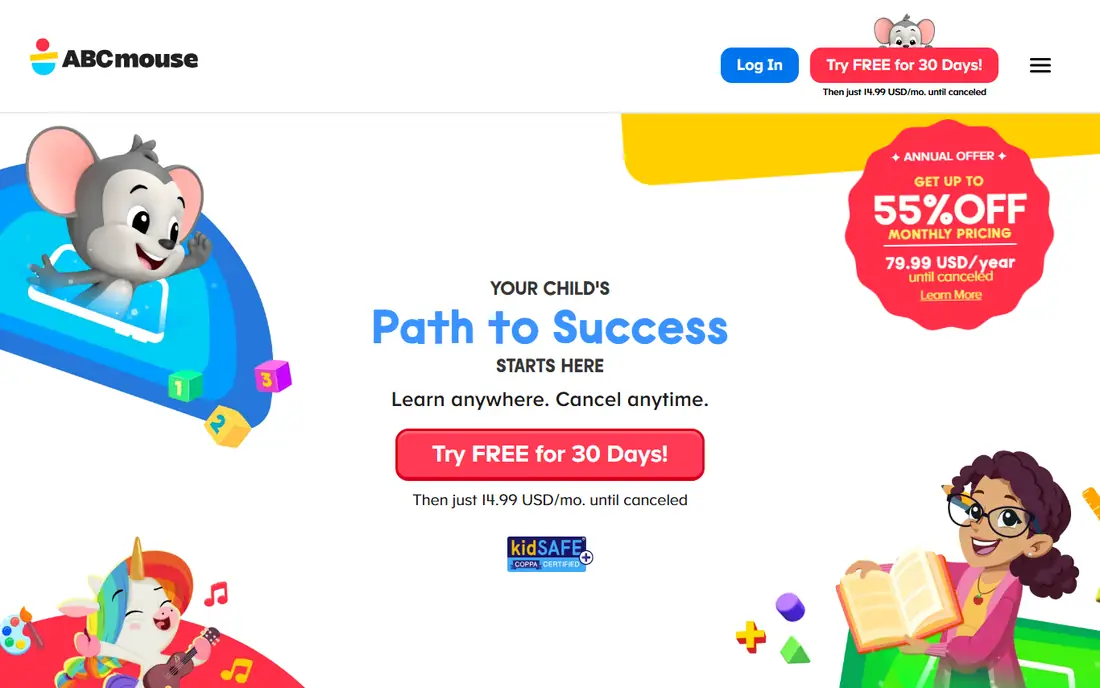
ABCmouse offers a structured learning path for ages two to eight, with lessons, books, songs, puzzles and games arranged by level. That structure appeals to parents who want a clear sequence rather than a collection of games, and the breadth covers early reading alongside maths, science and art. A single membership can cover up to three children, which helps families with siblings.
The risk is sustained use. Many families report strong early enthusiasm followed by a drop after a few months, so a monthly plan is safer than a long annual commitment until usage is proven. Check the current price on the official site or app store before subscribing, because introductory offers and renewal prices change.
What we like- Step by step curriculum with thousands of activities
- Covers reading, maths and science
- Up to three child profiles
Watch out for- Subscription cost
- Engagement can fade after the novelty period
- App store prices differ from website offers
Starting priceSee website
Free planFree trial
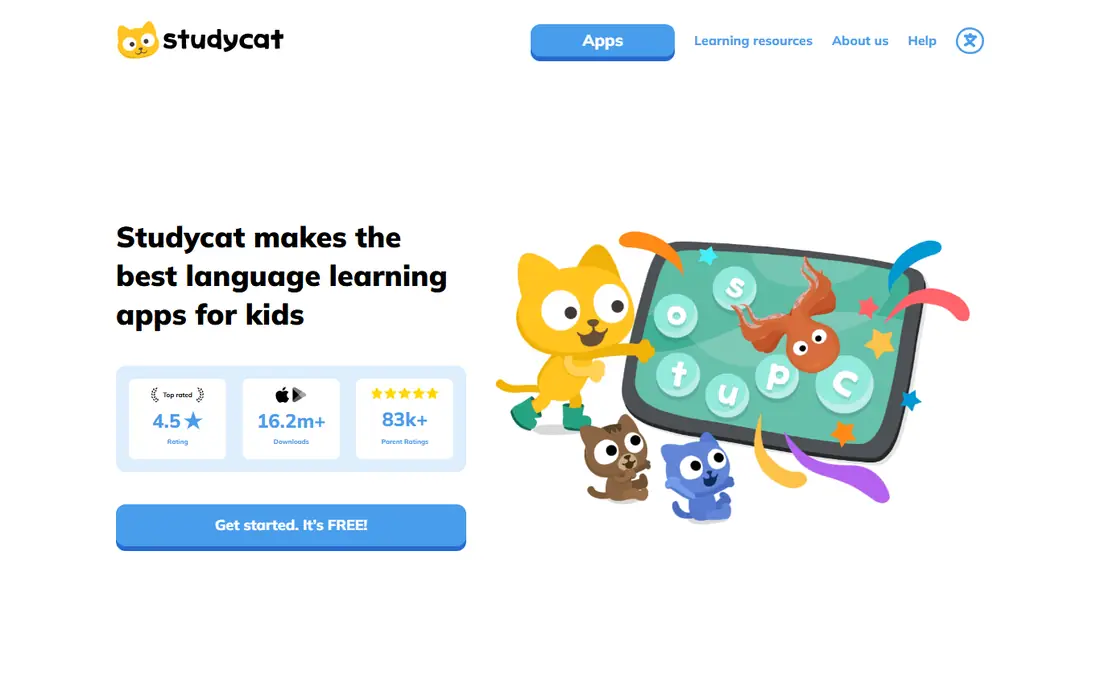
Studycat, also known as Learn English by Studycat, targets children aged three to eight with games, songs and speaking tasks built around everyday English. Voice recognition gives instant feedback on pronunciation, which is a real advantage over apps that only ask children to tap answers. Themes cover home, school, animals and daily routines, so new words connect to a child's real life.
The free version is limited, and full courses require a subscription with a trial period. Studycat is less suited as a sole reading programme, because its strength is spoken vocabulary and listening rather than extended reading. Pair it with Duolingo ABC or Khan Academy Kids for a fuller mix.
What we like- Voice recognition for pronunciation
- Ad-free games and songs
- Clear everyday vocabulary themes
Watch out for- Subscription needed for full courses
- Less depth for school age reading and grammar
Starting priceSee website
Free planFree trial
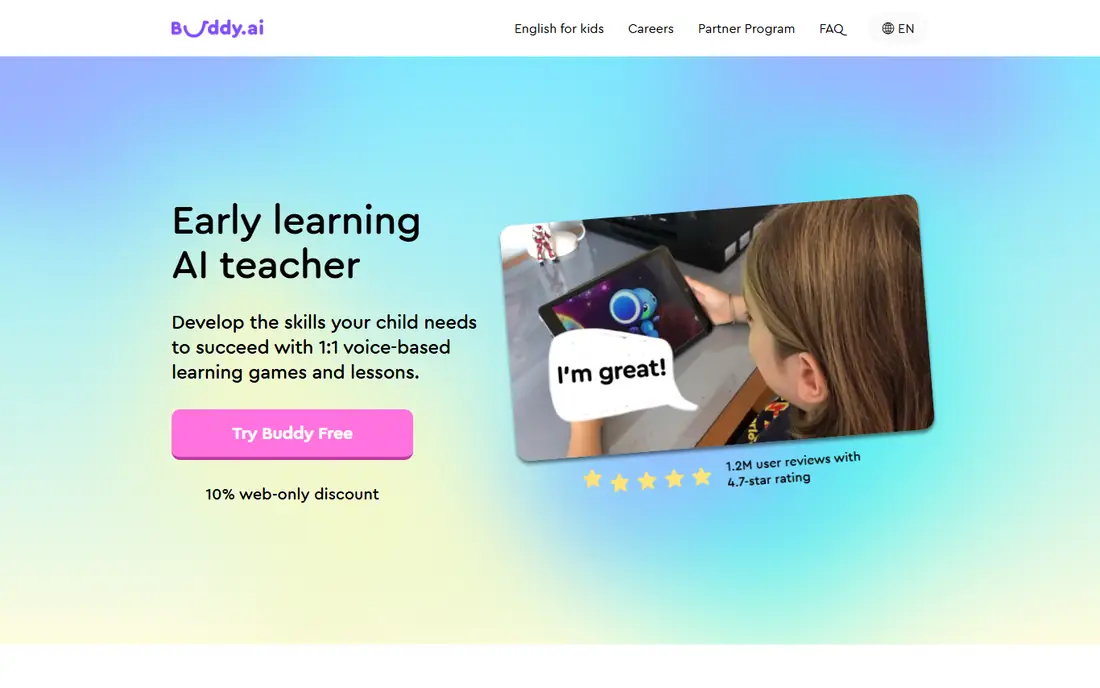
Buddy.ai gives children regular speaking practice with a voice based tutor that listens, responds and corrects pronunciation. That matters because many English apps test recognition but rarely ask a child to speak in sentences. Short, game-like lessons fit daily practice, and the tutor format can feel less intimidating than speaking in class.
Accuracy is the limit. Voice recognition for young children is harder than for adults, and background noise or shy speech can cause errors. Parents should try the free trial with their child present, check how the app handles mistakes, and review subscription terms before committing.
What we like- AI tutor that listens and responds
- Regular speaking practice without a live teacher
- Game-like lessons
Watch out for- Subscription needed after trial
- Speech recognition can struggle with very young voices
Starting priceSee website
Free planYes
Monkey Junior offers structured courses for young learners that cover listening, speaking, reading and writing, with phonics, vocabulary and stories arranged by level. That breadth makes it a useful step after a free reading app, especially for families who want one programme that touches all four skills. Offline access on some plans also helps for travel or limited internet.
The free download only covers part of the content, and full courses require in-app purchases or a subscription. Parents should check the total cost for the levels their child will actually use, rather than assuming the free version covers a full year of learning.
What we like- Structured courses across listening, speaking, reading and writing
- Large word and story library
- Offline options
Watch out for- In-app purchases for full access
- Interface can feel busy for very young children
Starting priceSee website
Free planFree trial
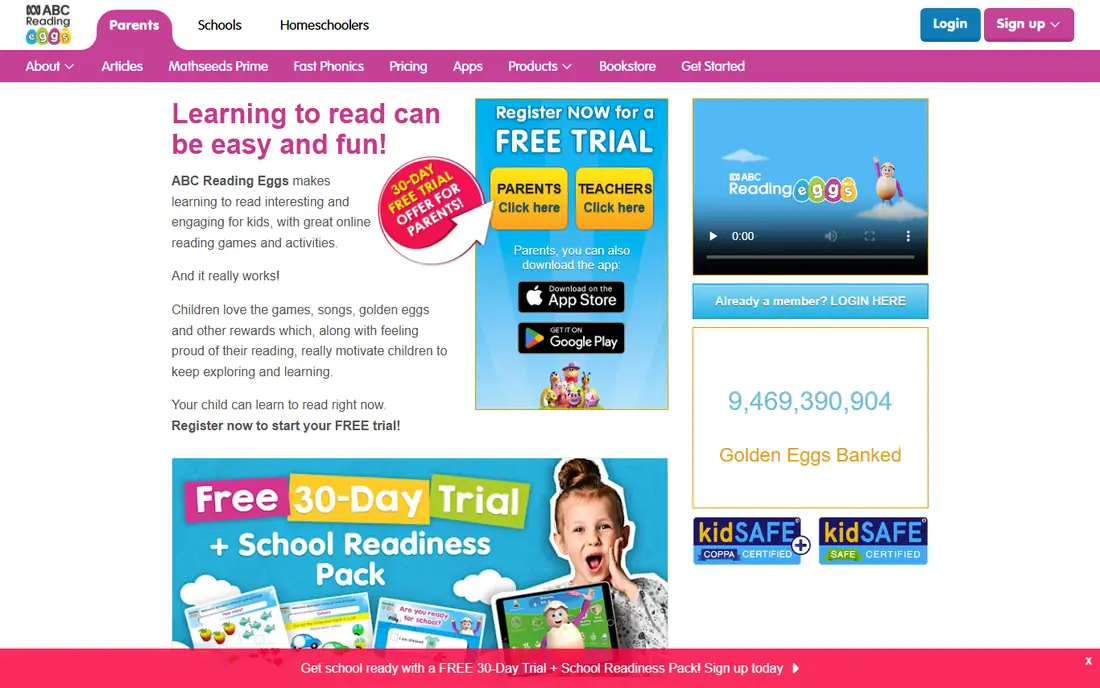
Reading Eggs teaches children to read through phonics, games, songs and rewards, with a step by step path that moves from letter sounds to full books. Children earn golden eggs as they complete activities, which keeps motivation high, and the programme covers ages two to thirteen with free home learning resources designed by educators. That combination of a clear sequence and playful rewards suits families who want reading progress they can see week by week.
The limit is scope. Reading Eggs builds reading skill, but it does not provide live speaking practice or a full spoken English curriculum, so pair it with conversation at home or a speaking app for oral confidence. Full access requires a subscription after the 30 day free trial, so use the trial to check that a child enjoys the games before paying.
What we like- Step by step phonics path with games and rewards
- 30 day free trial
- KidSAFE certified environment
Watch out for- Subscription needed for full access
- Focuses on reading, not live speaking practice
How we chose
We compared vendor pages, app store listings and public reviews, and kept only apps that are still available, are designed for children, and teach English directly rather than general screen time. Age range, free access, speaking practice, curriculum structure and parental controls were weighted above marketing claims. Prices were taken from vendor or app store listings where available, and marked as See website where pricing varies by store, region or promotion. Verification note: Todo English was replaced by Reading Eggs because todoenglish.com loads as an unrelated business English training service, not a kids app. Khan Academy loaded a bot check page and Monkey Junior returned a network error in this check, so both are kept on their established official URLs and were not retried.
How to choose for your child
Start with age and current level, not with the longest feature list. A child learning letters needs phonics and reading, while a child who can already read needs vocabulary, grammar and speaking practice. Try one free app for two weeks before paying, and watch whether the child returns without prompting. Sustained use matters more than a perfect curriculum that sits unused.
Set practical guardrails next. Check in-app purchases, turn on device purchase controls, and review what progress data the app collects. Keep sessions short and regular, ideally ten to twenty minutes for younger children, and pair app time with reading aloud, singing or simple conversation at home. If a child needs live interaction, consider a tutor service as a complement, rather than expecting an app alone to build fluent speech.
Frequently asked questions
What is the best free app for kids to learn English?
Khan Academy Kids is the best free all-round option, while Duolingo ABC is the best free option focused on reading and phonics. Both are free with no ads, so families can start without a subscription and add a paid app only if a gap remains.
At what age should a child start using an English app?
Most apps in this guide target ages two to eight, with reading apps starting around age three. Short, playful sessions suit younger children, while older children benefit from structured lessons and speaking practice. The right start age depends on the child, not on a fixed rule.
Do these apps replace English lessons at school?
No. Apps support practice and vocabulary, but they do not replace teacher feedback, classroom conversation or reading with an adult. Use them as daily practice between lessons, and talk to a teacher if a child is struggling with reading or speaking at school.
Is Lingokids or ABCmouse better?
Lingokids suits playful, game-led learning for younger children, while ABCmouse suits families who want a step by step curriculum with a clear path. Try the free version of each first, and choose the one your child returns to, because regular use matters more than small curriculum differences.
Can a child learn to speak English from an app alone?
An app can build vocabulary, pronunciation and listening, but fluent speaking needs real conversation. Apps with voice feedback, such as Buddy.ai and Studycat, help more than tap-only apps, yet talking with family, friends or a tutor remains the strongest way to build spoken confidence.
Sources we checked (8)
- https://www.duolingo.com
- https://www.khanacademy.org
- https://www.lingokids.com
- https://www.abcmouse.com
- https://www.studycat.com
- https://www.buddy.ai
- https://www.monkeyjunior.com
- https://readingeggs.com
Is your product missing or out of date?
We review this list regularly. Vendors can request a listing, send updated pricing or ask about featured placement.

Shihab Mia · Founder, Rankite
Shihab has 5+ years in B2B and SaaS SEO. He writes Rankite's software buying guides from pricing pages, documentation and public user reviews. More about Shihab.