How we make this list: we compare pricing pages, product documentation and public user reviews. Ratings come from G2, Capterra or Trustpilot, with the date we checked them.
Key takeaways
- Coursera leads for university-backed certificates and career credentials.
- Udemy suits single-skill learning with lifetime access per course.
- edX offers free audits of Harvard and MIT courses with paid certificates.
- Skillshare leads for creative, project-based classes.
- Khan Academy remains the best free option for academic foundations.
Quick comparison
| Tool | Best for | Starting price | Free plan |
|---|
 Coursera | University credentials | Free audit; Plus from $59 per month | Yes |
 Udemy | Single-skill courses | Per course, often $10 to $25 on sale | Yes |
 edX | Harvard and MIT courses | Free audit; certificates from $50 | Yes |
 Skillshare | Creative classes | From $14 per month | Free trial |
 MasterClass | Expert inspiration | From $10 per month | See website |
 LinkedIn Learning | Professional skills | From $20 per month | Free trial |
 Khan Academy | Free academic foundations | Free | Yes |
 Udacity | Tech Nanodegrees | From $249 per month | Yes |
Is your product missing or out of date?
We review this list regularly. Vendors can request a listing, send updated pricing or ask about featured placement.
#1Coursera
Best for: University credentials4.5/5 on
G2 (489 reviews, checked Oct 2026)
Visit coursera.org
Starting priceFree audit; Plus from $59 per month
Free planYes
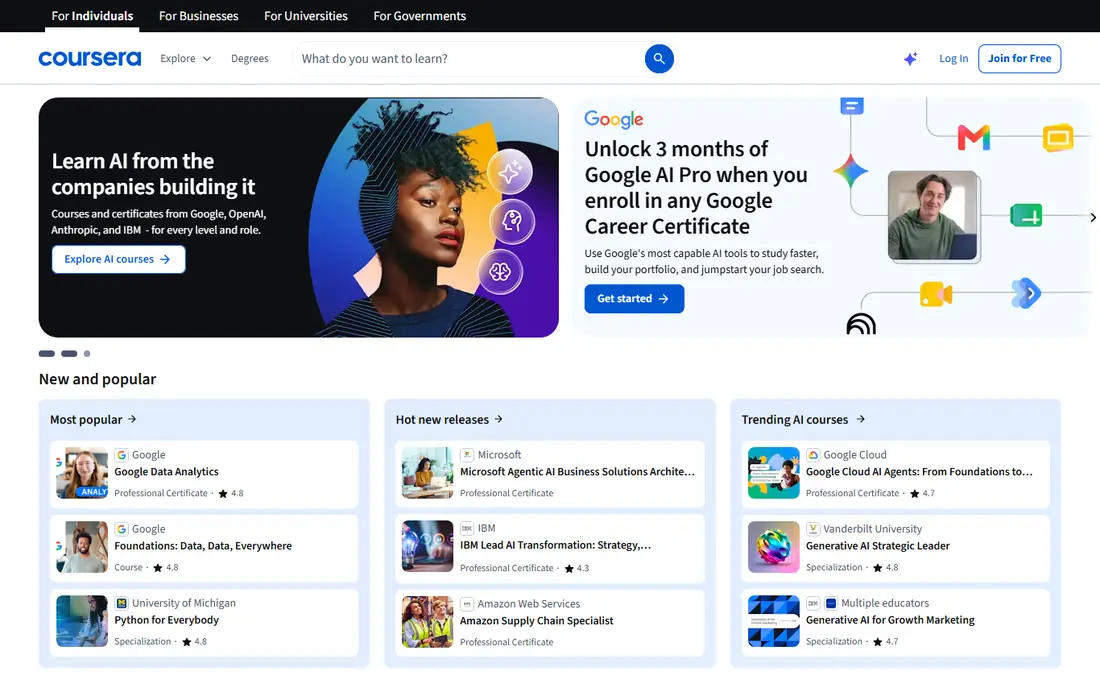
Coursera partners with over 350 universities and companies, including Stanford, Yale, Google, IBM, and Microsoft, and its catalog covers 7,000+ courses across business, tech, data science, health, and liberal arts. Most courses allow a free audit for lectures and reading, while graded assignments and certificates need payment. Coursera Plus at $59 a month or $399 a year covers most of the catalog except degree programs.
Google professional certificates in IT Support, Data Analytics, and UX Design have become hiring credentials at companies that no longer require four-year degrees. For a learner who wants a credential employers recognize, Coursera is the strongest platform.
What we like- 7,000+ courses from 350+ universities and companies
- University-backed certificates and degrees
- Google professional certificates
Watch out for- Plus at $59 a month or $399 a year
- Certificate costs add up without Plus
- Some courses feel dated
#2Udemy
Best for: Single-skill courses4.5/5 on
G2 (757 reviews, checked Oct 2026)
Visit udemy.com
Starting pricePer course, often $10 to $25 on sale
Free planYes
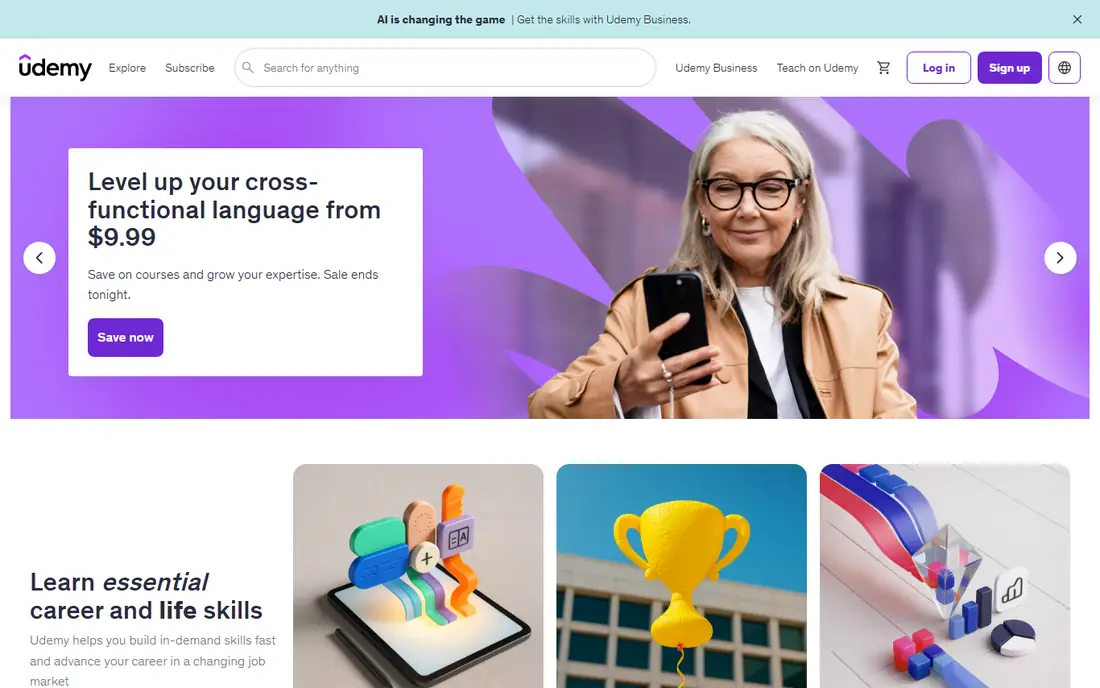
Udemy suits learners who want one specific skill without a subscription. With over 210,000 courses, almost any topic has a course, and sale prices often run $10 to $25 per course with lifetime access. A 30-day refund window on eligible courses reduces the risk of a bad pick.
Quality varies by instructor, since anyone can publish, and completion certificates carry less weight than university-backed credentials. For a learner who wants to buy one course and keep it forever, Udemy is the pick.
What we like- 210,000+ courses
- Lifetime access per course
- Frequent sales
- 30-day refund window on eligible courses
Watch out for- Quality varies by instructor
- No university accreditation
- Completion certificates carry less weight than Coursera
#3edX
Best for: Harvard and MIT courses4.5/5 on
G2 (121 reviews, checked Oct 2026)
Visit edx.org
Starting priceFree audit; certificates from $50
Free planYes
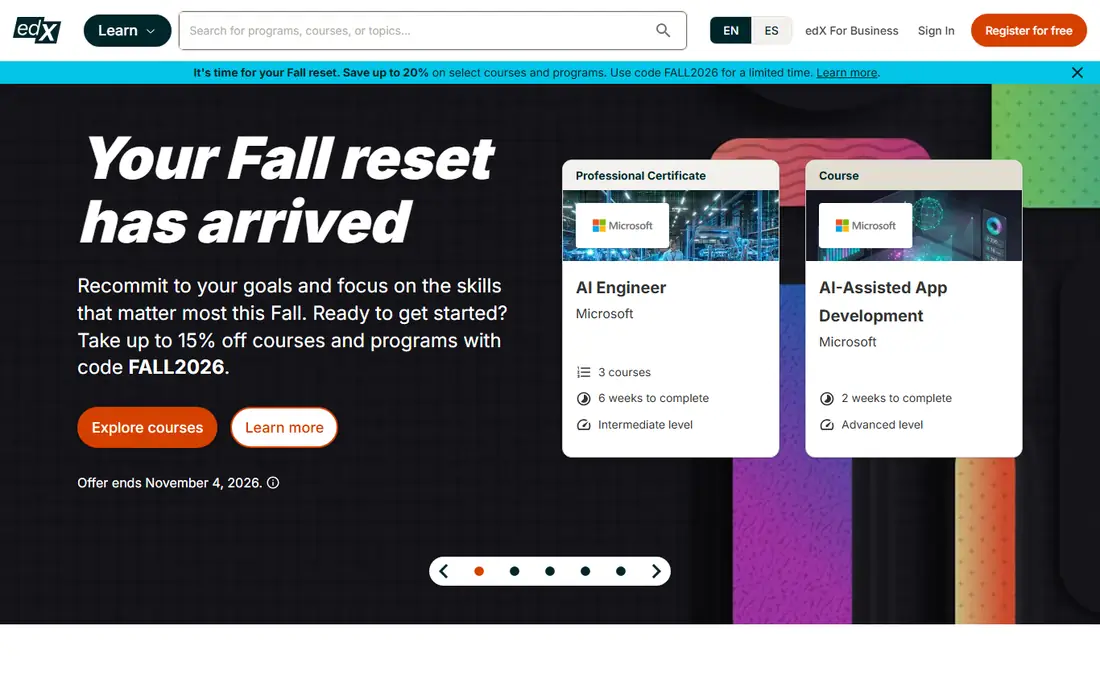
edX offers courses and certificates from Harvard, MIT, and other top universities, with free audits that cover lectures and reading without graded work or a certificate. Verified certificates run about $50 to $300 per course, and MicroMasters and professional certificate programs build toward degrees.
Programs can be demanding, since university courses expect real study time. For a learner who wants Ivy League content with a credible certificate, edX is the academic alternative to Coursera.
What we like- Courses from Harvard, MIT, and other top universities
- Free audit
- MicroMasters and professional certificates
- Degree pathways
Watch out for- Certificates cost $50 to $300 each
- Fewer creative courses than Skillshare
- Some programs are demanding
Starting priceFrom $14 per month
Free planFree trial
Skillshare leads for creative, project-based classes, with over 30,000 classes in design, illustration, photography, writing, and business creativity. Classes are short and project-based, so learners finish a real piece of work rather than just watching videos. Pricing runs about $14 a month billed annually, with a 7 to 30-day trial.
There is no formal certification, and academic depth trails Coursera and edX. For a creative learner who wants to make something, not just study it, Skillshare is the best platform.
What we like- 30,000+ creative classes
- Project-based learning
- Short classes that fit busy schedules
- Creative community
Watch out for- No formal certification
- About $14 a month billed annually
- Quality varies
- Less academic depth than Coursera
Starting priceFrom $10 per month
Free planSee website
MasterClass offers inspiration from world-class experts, with over 200 classes from famous writers, chefs, musicians, filmmakers, and athletes. Production quality is the highest of any platform here, and classes suit personal enrichment and creative growth.
Pricing starts around $10 a month billed annually, with no free trial, only a 30-day refund, and no formal certification. For a learner who wants to learn from the best in a field and feel inspired, MasterClass is unmatched, though hands-on practice trails Skillshare.
What we like- World-class experts teach their craft
- High production quality
- Inspiring for creative and personal growth
Watch out for- From $10 a month billed annually
- No formal certification
- No free trial, only a 30-day refund
- Less hands-on practice
#6LinkedIn Learning
Best for: Professional skills4.4/5 on
G2 (722 reviews, checked Oct 2026)
Visit linkedin.com
Starting priceFrom $20 per month
Free planFree trial
LinkedIn Learning covers professional skills with over 21,000 courses in business, technology, and creative fields. Certificates display directly on your LinkedIn profile, which helps recruiters see new skills, and a 30-day free trial lets learners test the catalog. Pricing runs $20 a month billed annually or $39.99 monthly.
Academic depth trails Coursera and edX, and some courses feel generic. For a professional who wants skills that show up where recruiters look, LinkedIn Learning is the most career-visible platform.
What we like- 21,000+ professional courses
- Certificates show on your LinkedIn profile
- 30-day free trial
- Business and tech focus
Watch out for- $20 a month billed annually, $39.99 monthly
- Less academic depth than Coursera
- Some courses feel generic
#7Khan Academy
Best for: Free academic foundations4.5/5 on
G2 (177 reviews, checked Oct 2026)
Visit khanacademy.org
Starting priceFree
Free planYes
Khan Academy is the best free option, since every core lesson costs nothing. Math, science, reading, and test preparation cover K-12 and early college foundations with mastery-based learning that adapts to each student. Schools worldwide trust it, and the nonprofit model keeps it free.
There is no formal certification, and career or creative content is thinner than paid platforms. For a student, parent, or adult rebuilding foundations, Khan Academy is the essential free platform.
What we like- Completely free
- Strong math, science, and test prep
- Mastery-based learning
- Trusted by schools worldwide
Watch out for- No formal certification
- Less career and creative content
- Interface is simpler than paid rivals
#8Udacity
Best for: Tech Nanodegrees4.5/5 on
G2 (758 reviews, checked Oct 2026)
Visit udacity.com
Starting priceFrom $249 per month
Free planYes
Udacity offers serious tech Nanodegrees with mentors, career services, and project-based learning in AI, data, programming, and cloud. Pricing runs $249 a month or about $999 per Nanodegree, with over 100 free courses for trying topics first. Nanodegree certificates carry weight with tech employers.
The time commitment is demanding, and the catalog is narrower than Coursera. For a career switcher who wants a structured tech credential with mentor support, Udacity is the most intensive platform here.
What we like- Serious tech Nanodegrees with mentors
- Career services
- Project-based learning
- 100+ free courses
Watch out for- $249 a month or $999 per Nanodegree
- Demanding time commitment
- Narrower catalog than Coursera
How we chose
We compared platforms on course quality, credentials, pricing, and completion support, using vendor pages and published comparisons from August 2026. We favored platforms US learners can use today with a distinct strength. We did not claim hands-on testing of every course, and prices change, so verify before subscribing. The most expensive course is the one you abandon, so test commitment with a free audit or trial before paying.
Start with the goal. Career credentials point to Coursera or edX, single skills point to Udemy, creative projects point to Skillshare, inspiration points to MasterClass, professional visibility points to LinkedIn Learning, foundations point to Khan Academy, and tech career change points to Udacity. A platform matched to the goal gets finished; a mismatched one gets abandoned in week three.
Then test before paying. Use free audits on Coursera and edX, trials on Skillshare and LinkedIn Learning, and free courses on Udemy and Udacity to check teaching style and time demands. Set a weekly study schedule before subscribing, since commitment and engagement decide whether learning pays off more than features do. Finally, check certificate value for your field: university-backed certificates matter in some industries, while portfolios matter more in creative fields, where Skillshare projects beat certificates.
Common mistakes waste learning budgets. Learners buy annual subscriptions they stop using, or pay for certificates they never complete. Start monthly where possible, finish one course before buying the next, and treat the first course as a test of the platform, not just the topic. Learning compounds when courses finish, so protect completion above catalog size.
Study groups improve completion more than any platform feature. Find a study partner or online cohort for your course, share weekly progress, and discuss assignments together, since accountability turns a solo video habit into a social commitment. Many platforms offer discussion forums, but a small group with a regular meeting time works better than a large forum nobody reads.
Note-taking method matters as much as platform choice. Summarize each lesson in your own words, do the practice exercises instead of just watching, and review notes weekly, since passive video watching fades fast. A course finished with notes and completed projects teaches more than three courses watched passively, so protect practice time inside your study schedule.
Employer tuition benefits can change the math completely. Many companies reimburse course fees or subscriptions for job-relevant learning, so check your benefits before paying out of pocket. A Coursera certificate or Udacity Nanodegree funded by an employer costs you nothing but study time, and some employers also grant study hours during work for approved courses.
Mobile learning fills gaps in a busy day, and most platforms here offer apps for offline viewing. Download lessons for commutes, review flashcards during waits, and save longer projects for desk time, since matching task type to available time keeps learning moving on days when a full study session is impossible.
A final habit closes the loop: after finishing a course, apply the skill within a week on a real project, since unused skills fade fast. Build a small portfolio piece, volunteer the skill, or teach it to someone else, and the course becomes capability rather than just a certificate on a profile.
Frequently asked questions
What is the best online course platform overall?
Coursera for career credentials, Udemy for single skills, and Khan Academy for free foundations. The best platform depends on your goal.
Are online course certificates worth it?
University-backed certificates from Coursera and edX carry weight in many industries, while creative fields value portfolios over certificates. Check what employers in your field actually recognize.
Can I take online courses for free?
Yes. Khan Academy is fully free, Coursera and edX offer free audits, and Udemy, Udacity, and Codecademy offer free courses or tiers without certificates.
Is Coursera or Udemy better?
They work differently. Coursera is a subscription for university courses and certificates, while Udemy sells single courses for a one-time price with lifetime access.
How much do online courses cost?
From free to $249 a month. MasterClass starts around $10 a month annually, Skillshare about $14, LinkedIn Learning $20, Coursera Plus $59, and Udacity $249.
How do I actually finish an online course?
Set a weekly schedule, start with a free audit or trial to test fit, and finish one course before buying another. Commitment matters more than platform features.
Sources we checked (8)
- https://www.coursera.org
- https://www.udemy.com
- https://www.edx.org
- https://www.skillshare.com
- https://www.masterclass.com
- https://www.linkedin.com/learning/
- https://www.khanacademy.org
- https://www.udacity.com
Is your product missing or out of date?
We review this list regularly. Vendors can request a listing, send updated pricing or ask about featured placement.

Shihab Mia · Founder, Rankite
Shihab has 5+ years in B2B and SaaS SEO. He writes Rankite's software buying guides from pricing pages, documentation and public user reviews. More about Shihab.