How we make this list: we compare pricing pages, product documentation and public user reviews. Rankite is independent; if a vendor ever pays for a featured spot, that listing is clearly labeled Partner.
Key takeaways
- ReciPal is the easiest entry point: make one label free, then pay $59/month with no contract. It cannot do Supplement Facts labels yet, so vitamin and protein powder brands should look elsewhere.
- MenuSano gives the most for the least at $29/month (CAD) with a genuinely free trial, but the Starter plan caps label downloads at five per month.
- Genesis R&D remains the industry reference for large manufacturers, now sold through Trustwell after the 2023 ESHA and FoodLogiQ merger.
- Food Label Maker is the pick for exporters: FDA, CFIA, EU, UK, Mexico, and Gulf label formats in one account, with a strict no-refunds policy.
- nutraCoster is one of the last tools that sells a one-time desktop license ($699), which appeals to buyers who dislike subscriptions.
Quick comparison
| Tool | Best for | Starting price | Free plan |
|---|
 ReciPal ReciPal | Startups and small CPG brands | $59 per user/month (billed monthly; $49 with annual billing) | Free trial (1 free label) |
 LabelCalc LabelCalc | Manufacturers wanting USDA-database accuracy | See website | No |
 Genesis R&D Genesis R&D | Food scientists and regulatory teams | See website | No |
 MenuSano MenuSano | Canadian brands and restaurants | $29 per user/month (CAD, billed monthly) | Free trial (no card needed) |
 nutraCoster nutraCoster | Buyers who want a one-time desktop license | $39 per user/month (cloud); $699 one-time (desktop) | No |
 Food Label Maker Food Label Maker | Brands exporting to multiple countries | $49 per user/month (billed monthly) | Free trial (demo) |
 Nutritionix Nutritionix | Restaurants facing menu labeling rules | See website | No |
 Trustwell Connect Trustwell Connect | Enterprises needing labeling plus traceability | See website | No |
Is your product missing or out of date?
We review this list regularly. Vendors can request a listing, send updated pricing or ask about featured placement.
The 8 best nutrition label software options
Starting price$59 per user/month (billed monthly; $49 with annual billing)
Free planFree trial (1 free label)
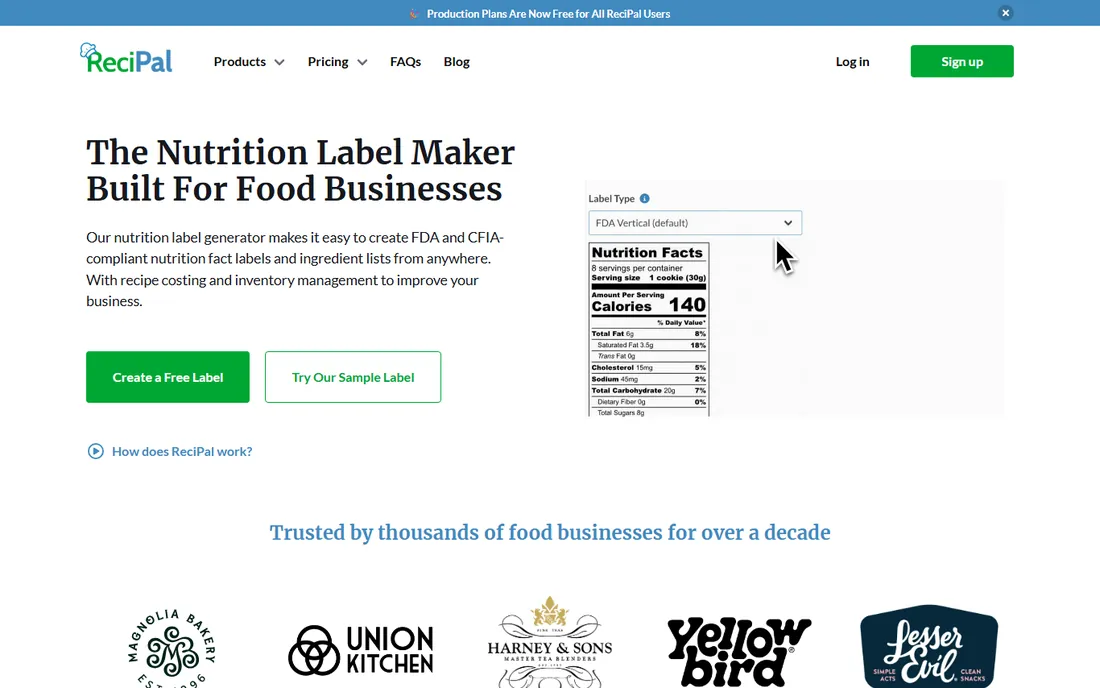
ReciPal is the friendliest way to get a compliant label out the door. Signing up with an email gives you full access to build one nutrition or supplement label, which is enough to test the whole workflow before paying. The interface is plain and modern, a relief if you have ever wrestled with a desktop tool that looks like it was designed in 2004.
The pricing is honest too. Single recipes cost $29 each, the Business plan is $59 per month for one user and 50 recipes, and Business Plus is $129 for five users with unlimited recipes. Everything is month-to-month. The catch is scope: as of this year, ReciPal does not generate Supplement Facts panels, so dietary supplement brands are out of luck. If you sell protein powder or vitamins, check MenuSano or Food Label Maker instead.
What we like- Create a full label free with just an email
- AI ingredient import speeds recipe entry
- Month-to-month billing with no contracts
Watch out for- No Supplement Facts label support
- Inventory add-on costs extra
- Business plan covers only one user
Starting priceSee website
Free planNo
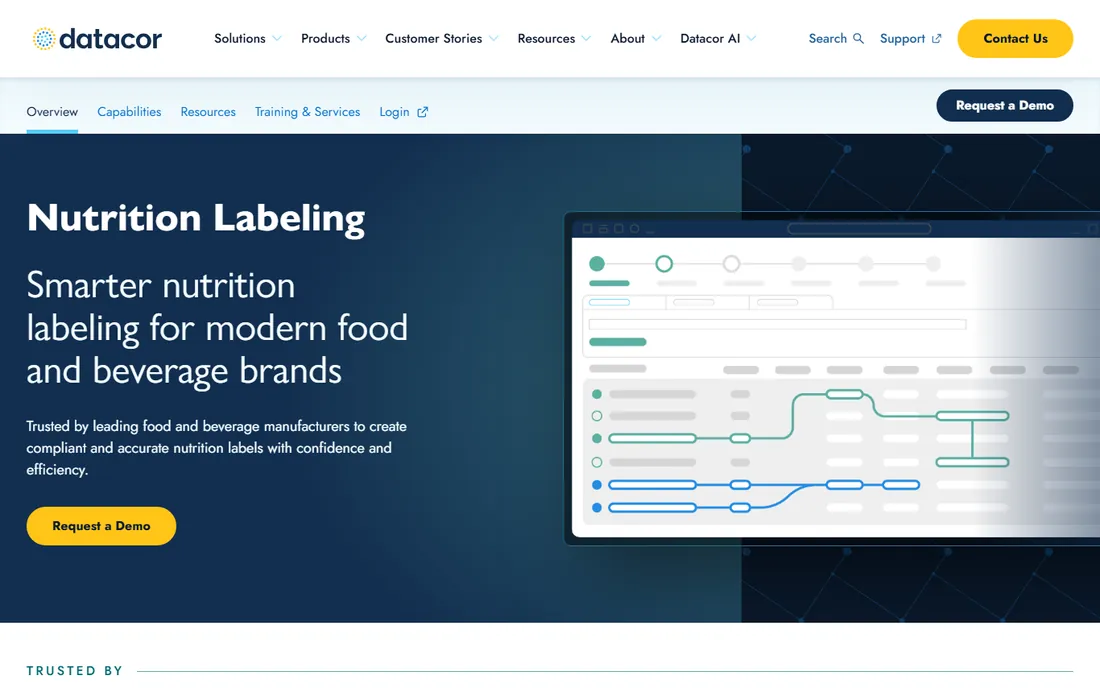
LabelCalc has been around since 2004 and built its reputation on accuracy, with its CEO on record claiming database analysis beats lab tests for consistency. In 2023 Datacor acquired the company, and the site now presents itself as "Nutrition Labeling and Analysis Software (formerly LabelCalc)," which tells you where the product is heading: toward mid-market food manufacturers rather than one-person startups.
The tool itself is solid for US-focused packaged goods. Recipes, USDA data, allergen flagging, and FDA-compliant panels are all handled in the browser. The honest catch is opacity. Pricing is not published, the international story is thinner than Food Label Maker's, and long-time users have watched the brand shift under new ownership. Ask for a quote, and ask what the Datacor roadmap means for the standalone product before committing.
What we like- Built on a USDA-compiled ingredient database
- Claims 30,000-plus labels generated over 15 years
- Cloud-based with team workspaces
Watch out for- Pricing is not published
- Datacor acquisition changed branding and direction
- Weaker on international label formats
Starting priceSee website
Free planNo
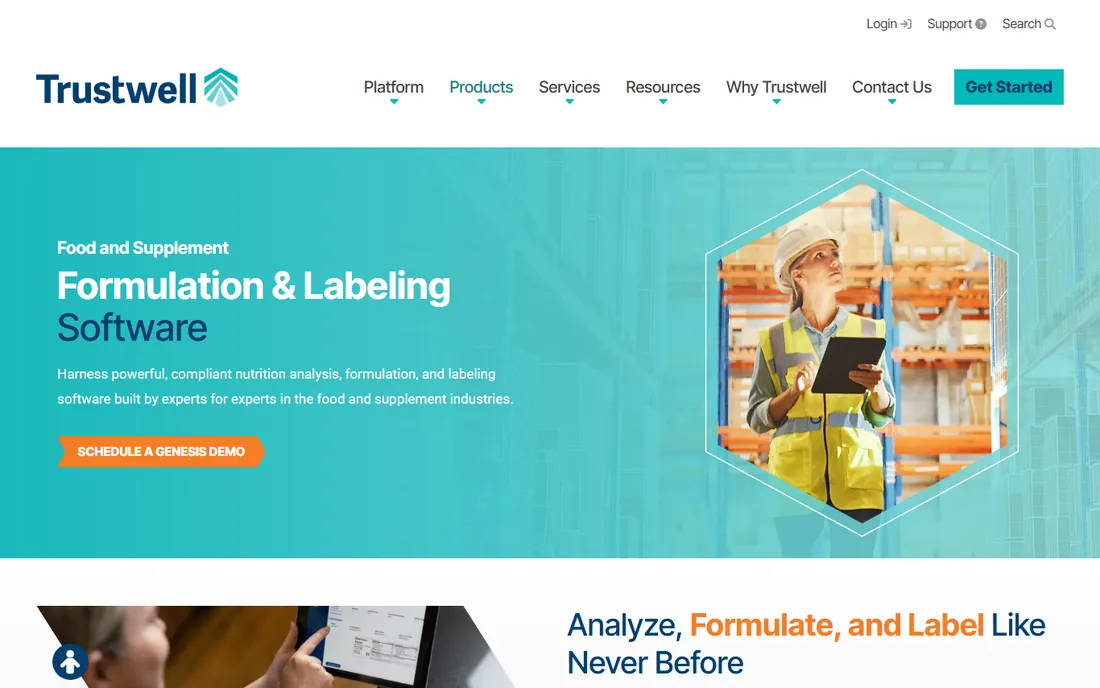
Genesis R&D is the name food scientists mention when accuracy is non-negotiable. It started at ESHA Research, which merged with FoodLogiQ in 2023 to form Trustwell, and the product now sits inside the Trustwell Connect platform. The database behind it is the reason large manufacturers trust its numbers for reformulation, nutrient claims, and regulatory submissions.
That pedigree comes with enterprise baggage. Pricing is quote-only, onboarding is a project rather than a signup, and for years the product was a Windows desktop install. Trustwell has been moving it toward the cloud, but if you are a startup making your first twelve labels, this is far more tool than you need. Where Genesis earns its keep is teams that reformulate constantly and need every version defensible.
What we like- The industry reference database for nutrition analysis
- Deep formulation and what-if modeling
- Now part of Trustwell with supply-chain tools alongside
Watch out for- Quote-only enterprise pricing
- Historically Windows-desktop based
- Overkill for a brand with five SKUs
Starting price$39 per user/month (cloud); $699 one-time (desktop)
Free planNo
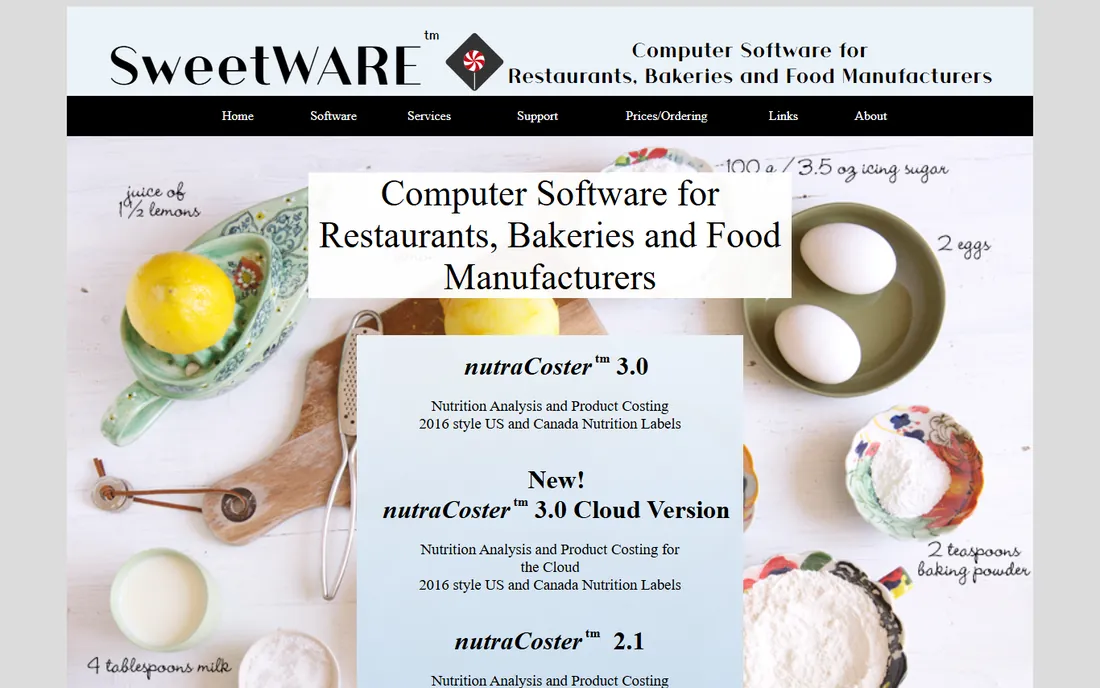
SweetWARE has sold nutraCoster since 1989, and it shows in the best way: this is a product with decades of bakery and foodservice users who never left. The unusual part is the pricing model. The Professional desktop version costs $699 once, with no annual fees, while the cloud version starts at $39 per month for a single user and additional users cost $9 per month.
That one-time license is the whole pitch. If you hate subscriptions and run Windows, few tools in 2026 will sell you nutrition software outright. The tradeoff is an interface that reviewers call dated, with a learning curve that the free phone support is meant to smooth over. It prints compliant labels for the US, Canada, and Mexico, and handles menu costing for foodservice, which is why schools and cafeterias keep it around.
What we like- Desktop version is pay-once with no recurring fees
- Cloud option from $39 a month
- Unlimited phone support included
Watch out for- The desktop interface looks dated
- Windows only for the desktop version
- No free trial advertised
Starting price$49 per user/month (billed monthly)
Free planFree trial (demo)
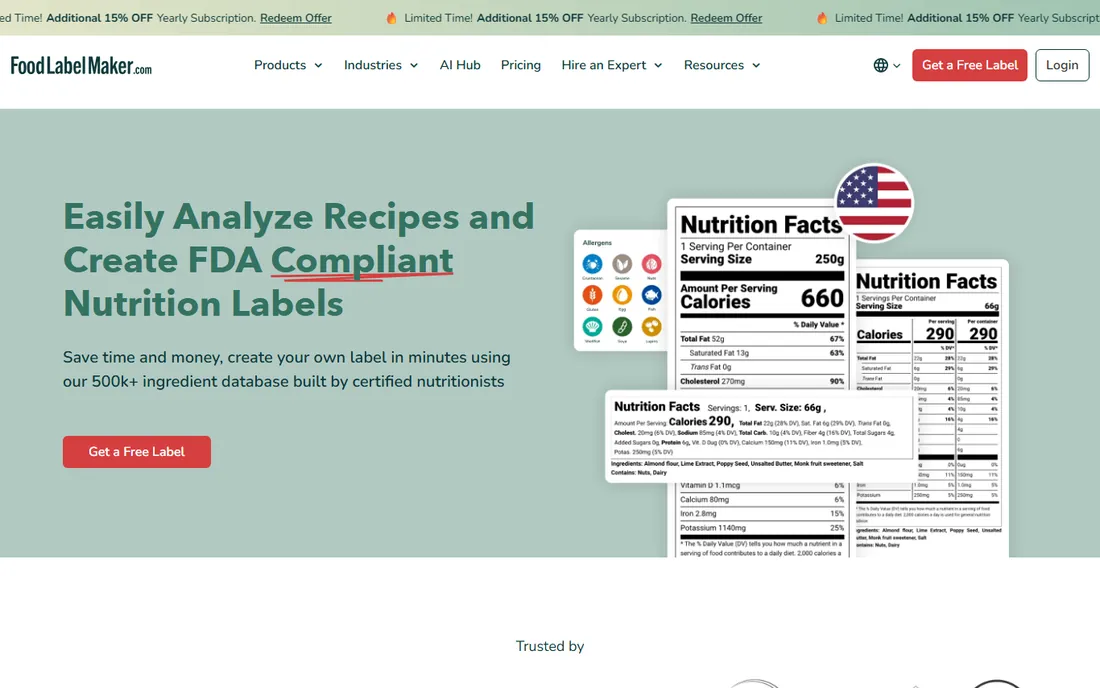
Food Label Maker is built for brands that sell across borders. Where most tools stop at US and Canadian formats, this one handles FDA, CFIA, EU, UK, Mexico NOM-051, Australia and New Zealand, and Gulf bilingual labels from a single recipe profile. The Pro plan adds AI parsing of supplier spec sheets and one-click translation into Spanish, French, or Arabic.
Pricing is straightforward: Essential at $49, Pro at $99, and Business at $199 per month, with annual billing available. You can generate a free label or try the demo before paying. The honest catch is in the terms: the company states plainly that it does not issue refunds, including for unused subscription time. That is not a dealbreaker, but it means you should use the free demo properly before subscribing, not after.
What we like- Label formats for FDA, CFIA, EU, UK, Mexico, and Gulf markets
- AI spec-sheet parsing on Pro
- Verified 500,000-ingredient database
Watch out for- No permanent free tier
- Refunds are not issued for any reason
- Higher tiers needed for export-ready downloads
Starting priceSee website
Free planNo
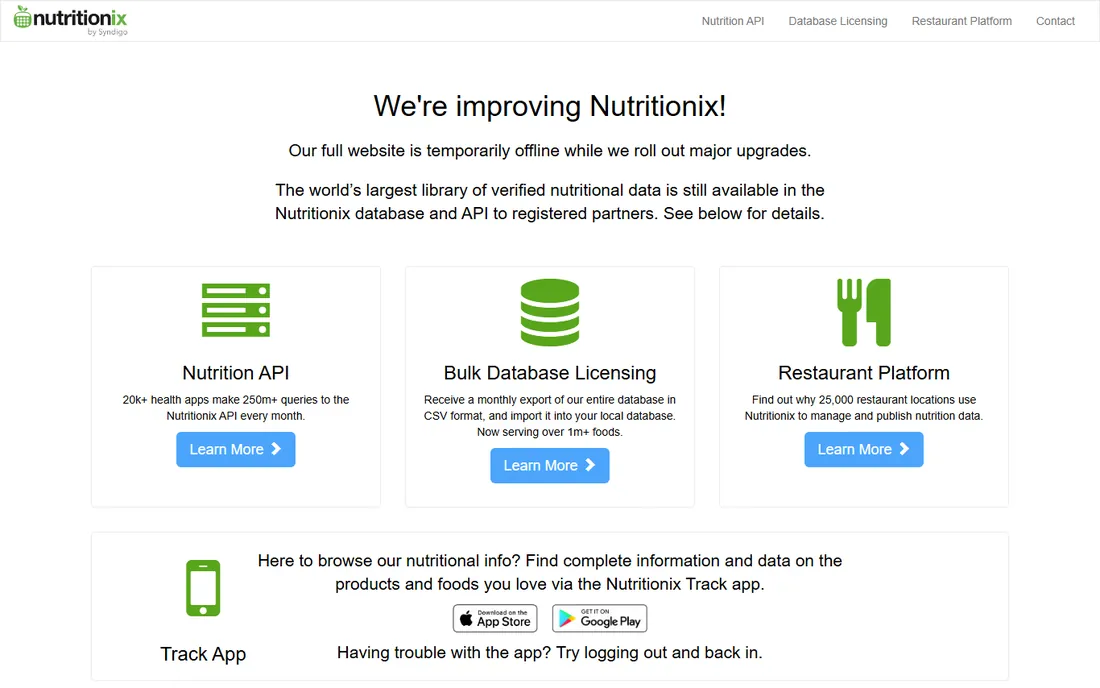
Nutritionix plays a different game from everything else on this list. It is a restaurant data platform that publishes nutrition information to online, mobile, and digital menu boards, aimed squarely at FDA menu labeling compliance for chains. If you run twenty locations and need every menu board accurate, that is the buyer this is built for.
The scale is real: the company reports coverage across more than 25,000 restaurant locations, with interactive menus, nutrition calculators, and allergen tools. But if you make packaged snacks, this is the wrong category of tool; there is no Nutrition Facts panel generator here. Pricing is quote-based, which makes sense for chains and is annoying for everyone else. Single-location restaurants should look at MenuSano first.
What we like- Used across more than 25,000 restaurant locations
- Interactive customer-facing menus
- Allergen tools and error-checking algorithms
Watch out for- Built for restaurants, not packaged goods
- Pricing is sales-led with nothing published
- Overkill for a single-location cafe
#8
Trustwell Connect
Best for: Enterprises needing labeling plus traceability
Visit trustwell.com
Starting priceSee website
Free planNo
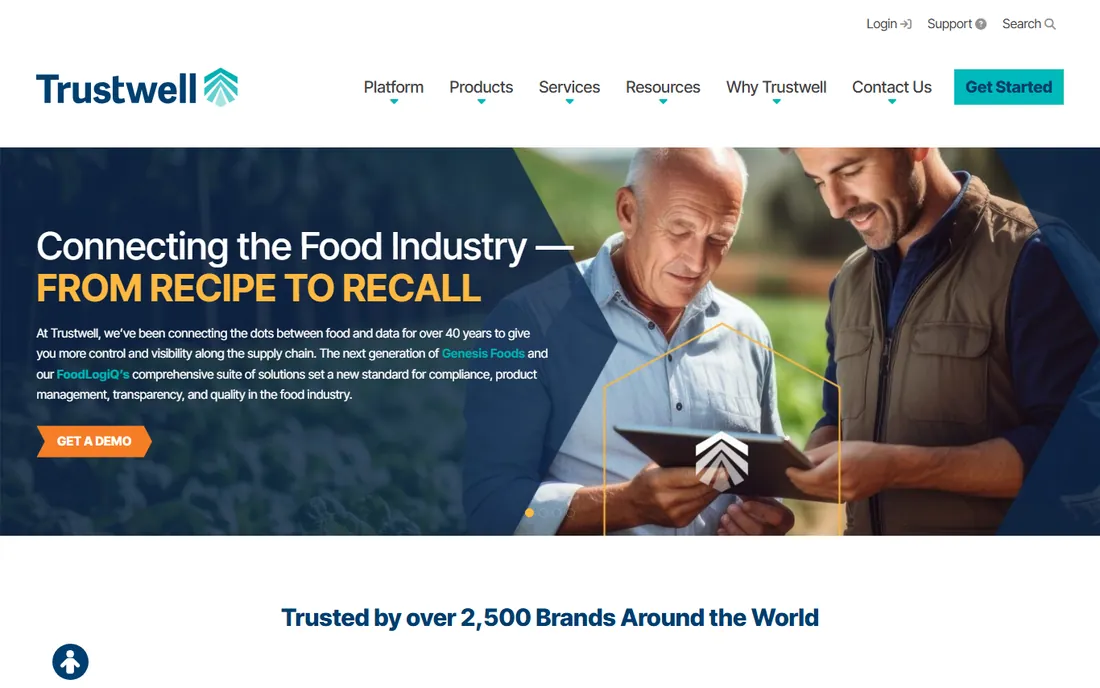
Trustwell is what ESHA and FoodLogiQ became after their 2023 merger: a single platform connecting product development, nutrition labeling, supplier compliance, traceability, and recall management. The company reports more than 2,500 food and supplement manufacturers, grocers, and restaurant chains on the platform, and TPG's Rise Fund invested in 2026, which says something about its enterprise traction.
For a large manufacturer, the logic is consolidation: one vendor for formulation, labels, supplier onboarding, and FSMA 204 traceability reporting instead of four. For everyone else, the logic does not apply. There is no public pricing, no self-serve trial, and the sales process will assume you have a compliance team. If that is not you, start with ReciPal or MenuSano and revisit Trustwell when your supplier list outgrows a spreadsheet.
What we like- Combines Genesis labeling with FoodLogiQ supply-chain tools
- FSMA 204 traceability support
- Used by 2,500-plus manufacturers and grocers
Watch out for- Enterprise pricing with no public tiers
- Implementation is a project
- Small brands will not get attention
How we chose
We started from vendor pricing pages, documentation, and product pages, then cross-checked against public reviews on G2, Capterra, and Reddit threads from food founders. Pricing and free-trial details above come from the vendors' own published pages, checked in October 2026. Where a vendor does not publish pricing, we say so instead of guessing. We weighted regulatory coverage (FDA, CFIA, EU, and beyond), database quality, fit for different company sizes, and honest pricing over feature-count marketing. We did not run hands-on tests; this is a research comparison, not a lab review.
How to pick the right label software for your food business
Match the tool to your SKU count and your markets. If you have fewer than ten products and sell only in the US, ReciPal or MenuSano will get compliant labels out this week for under $60 a month. The free label each offers is not a gimmick; use it to check whether the ingredient database has your actual ingredients before paying anything.
International sellers should weight label formats above all else. Food Label Maker covers the most jurisdictions in one account, while MenuSano handles bilingual Canadian requirements well. If you export to the EU, confirm the tool supports your target countries' formats before you buy, since rounding rules and mandatory nutrients differ by market.
Supplement brands need to check one specific feature: Supplement Facts panels. ReciPal does not offer them, which rules it out for vitamins, protein powders, and herbal products regardless of price. MenuSano and Food Label Maker both list supplement label support.
For enterprises, the question is not labels but workflow. Genesis R&D and Trustwell Connect sell into teams that reformulate, manage suppliers, and survive audits. The quote-only pricing is normal at that level, but insist on a scoped pilot with your own recipes rather than a scripted demo. And whatever you choose, remember that database analysis is FDA-accepted for nutrition labeling; lab testing is optional and mostly useful when your recipe has unusual processing steps.
The compliance basics buyers forget
Software generates the panel, but you own the inputs. Serving sizes must follow FDA RACC reference amounts, not whatever fits your marketing; several tools on this list flag RACC automatically, and you should let them. Allergen declarations follow the recipe, so keep ingredient data current when suppliers change formulations. Rounding rules are where most DIY labels fail, since each nutrient rounds differently at different thresholds, and this is exactly what label software handles better than a spreadsheet. Finally, keep records: if the FDA ever questions a label, being able to show the recipe, database version, and calculation behind it is what keeps a query from becoming a problem.
Frequently asked questions
Do I need lab testing if I use nutrition label software?
No. The FDA accepts database analysis as a valid method for generating Nutrition Facts panels, and many established brands use it as their primary method. Lab testing is optional and mostly worthwhile for products with unusual processing, fermentation, or highly variable natural ingredients where database values may not reflect the finished product.
Which tool is cheapest for a brand with three products?
MenuSano's Starter plan at $29 per month (CAD) or ReciPal's $29-per-recipe single servings are the cheapest honest options. Both let you create a label free first. Avoid annual plans until you have confirmed the ingredient database covers your recipes, since Food Label Maker does not issue refunds.
Can these tools make Supplement Facts labels for vitamins?
Some can, some cannot. MenuSano includes supplement labels on its plans and Food Label Maker supports them, but ReciPal explicitly does not offer Supplement Facts labeling as of 2026. If you sell dietary supplements, confirm this feature before signing up anywhere.
What is the difference between Genesis R&D and Trustwell Connect?
Genesis R&D is the nutrition analysis and labeling product, originally from ESHA Research. Trustwell Connect is the broader platform created when ESHA merged with FoodLogiQ in 2023, combining Genesis labeling with supplier compliance, traceability, and recall management. Small teams buy Genesis; enterprises with supply chains buy Trustwell Connect.
How accurate is database analysis compared to lab testing?
For standard recipes made from common ingredients, database analysis is generally as accurate as lab testing, and some vendors argue it is more consistent since lab results vary between samples. Accuracy depends on the database quality and on entering correct supplier data for proprietary ingredients, which is why custom ingredient entry matters.
Do I need different software if I sell in Canada or Europe?
You need software that supports those markets' formats and rounding rules. MenuSano handles Canadian bilingual labels natively, Food Label Maker covers the EU, UK, Mexico, and Gulf formats, and nutraCoster prints US, Canadian, and Mexican labels. A US-only tool will produce a panel that looks right but fails foreign requirements.
Sources we checked (7)
- http://www.recipal.com/pricing
- https://www.menusano.com/pricing/
- https://www.sweetware.com/nutracoster%20cloud%20product%20price%20and%20product%20ordering.htm
- https://foodlabelmaker.com/food-nutrition-labelling/
- https://nutritionix.com/restaurant
- https://www.trustwell.com/news-and-press/trustwell-launches-new-website/
- https://labelcalc.com
Is your product missing or out of date?
We review this list regularly. Vendors can request a listing, send updated pricing or ask about featured placement.

Shihab Mia · Founder, Rankite
Shihab has spent more than a decade helping SaaS and e-commerce brands grow through search. He writes Rankite's software buying guides from pricing pages, documentation and public user reviews. More about Shihab.