How we make this list: we compare pricing pages, product documentation and public user reviews. Rankite is independent; if a vendor ever pays for a featured spot, that listing is clearly labeled Partner.
Key takeaways
- Small nonprofits under 1,000 donors should start free: Givebutter and Zeffy cover fundraising and donor tracking with no monthly bill.
- Little Green Light at $45 per month is the cheapest credible donor database, ideal for organizations graduating from spreadsheets.
- Bloomerang at $125 per month is the retention-focused CRM pick once donor lapsing becomes a real problem.
- Aplos at $79 per month is the one to choose when the board starts asking for fund accounting instead of just donation totals.
- DonorPerfect and Neon CRM sit in the middle for nonprofits that want automation and membership features without enterprise pricing.
Quick comparison
| Tool | Best for | Starting price | Free plan |
|---|
 Bloomerang Bloomerang | Donor retention analytics | $125/month (billed annually, CRM only) | No |
 Little Green Light Little Green Light | Small orgs leaving spreadsheets | $45/month (up to 2,500 records) | Free trial |
 Givebutter Givebutter | Free all-in-one fundraising | $0 (donor tips; Plus from $29/month) | Yes |
 DonorPerfect DonorPerfect | Fundraising automation and reporting | See website | No |
 Neon CRM Neon CRM | Membership-based organizations | $99/month (Essentials) | Free trial |
 DonorSnap DonorSnap | Budget donor management | See website | Free trial |
 Aplos Aplos | Fund accounting for small nonprofits | $79/month (Lite) | Free trial |
 Zeffy Zeffy | Zero-fee fundraising at any size | $0 | Yes |
 Donorbox Donorbox | Recurring online giving | $0 + 1.75% platform fee | Yes |
 MonkeyPod MonkeyPod | CRM plus accounting in one system | $167/month (billed annually) | Free trial |
Is your product missing or out of date?
We review this list regularly. Vendors can request a listing, send updated pricing or ask about featured placement.
The best best nonprofit software for small business
How many donors does it take before a spreadsheet stops working? For most small nonprofits the answer is around a hundred. That is when thank-you letters get missed, recurring gifts slip through the cracks, and nobody can say which donors gave last year but not this year. That gap is what nonprofit software exists to close.
The next question is which kind of software you actually need. A donor CRM tracks who gave what and helps you keep them giving. A fundraising platform runs the donation pages, events, and peer-to-peer campaigns that bring money in. Accounting software proves to the board and the IRS where every dollar went. Many tools blur these lines, and the wrong choice leaves you paying for two products that do half the same job.
This list covers all three categories with current pricing, from genuinely free options to the mid-market CRMs that carry growing organizations for years. Every price comes from the vendor's own published pricing or is marked accordingly.
Starting price$125/month (billed annually, CRM only)
Free planNo
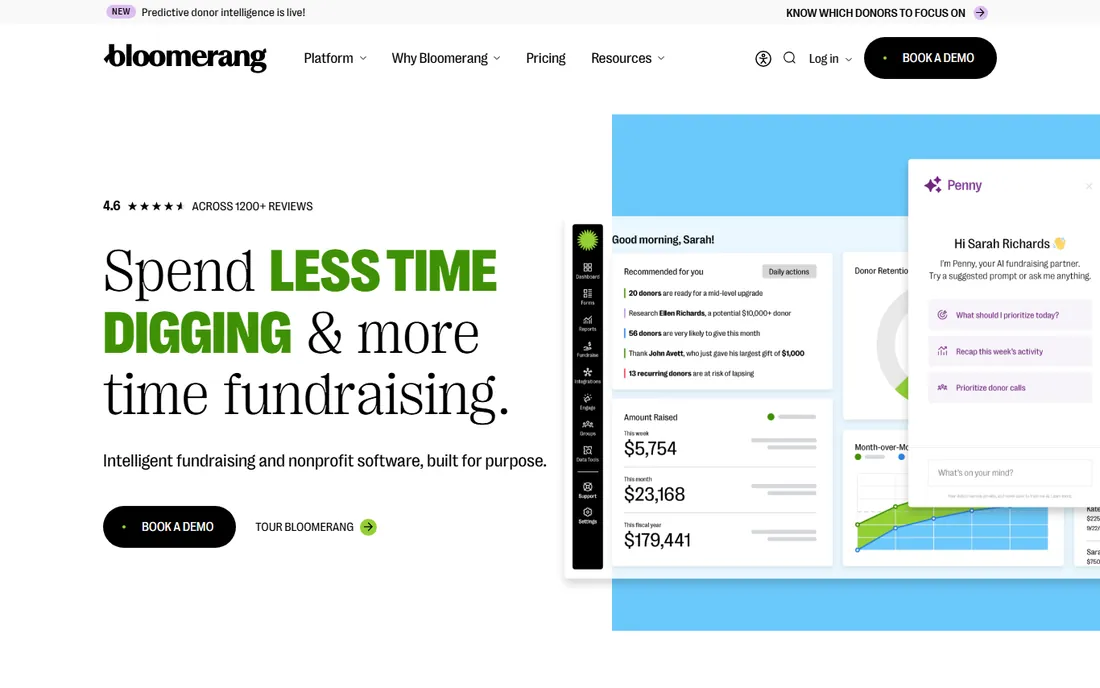
Bloomerang built its name on one metric: donor retention. The platform tracks engagement across giving, email opens, and event attendance, then scores each donor so you can see who is drifting before they lapse. For a small development team, that early warning is worth more than another reporting dashboard.
The CRM tier starts at $125 per month billed annually, which positions it above the budget databases but below enterprise systems. Fundraising tools start at $40 per month and volunteer management at $119, though both are sold bundled with the CRM, so the realistic entry point for the combined platform is $242 per month. Unlimited users are included, which helps when board members and volunteers all need access.
The honest catch is contact-based pricing. As your list grows past a few thousand records, the monthly cost climbs, and there is no free tier to fall back on, only a demo. If your organization is under 1,000 donors and cash is tight, a free platform will serve you longer than you think.
What we like- Engagement scoring shows which donors are slipping away
- Unlimited users on every plan
- Clean, modern interface
Watch out for- Costs rise with contact volume
- Fundraising and volunteer modules are separate add-ons
Starting price$45/month (up to 2,500 records)
Free planFree trial
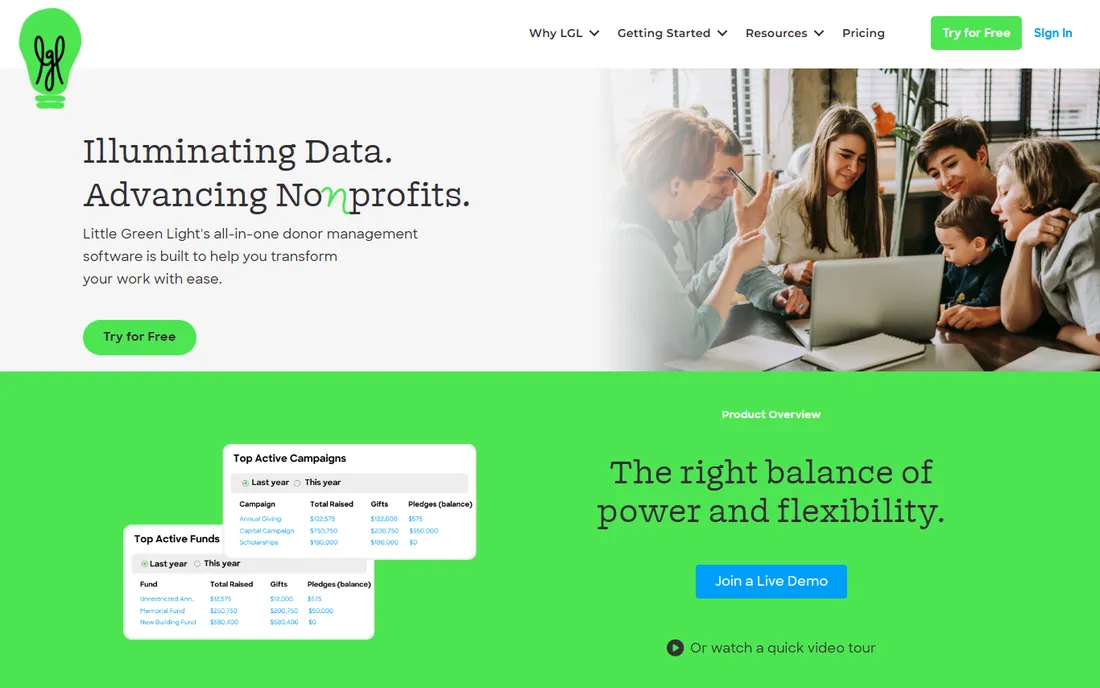
Little Green Light is the tool nonprofits recommend to each other in Facebook groups, and the reason is simple: it costs $45 a month for up to 2,500 constituent records and does the core job well. Gift tracking, pledge tracking, goal tracking, and customizable reports all come standard, with no feature gating between tiers.
The trade-offs are visible the moment you log in. The interface has not changed much in years, and while it is functional, new volunteers may need a walkthrough. Email capabilities are basic compared to Bloomerang or Neon, so most users pair it with Mailchimp through the available integration. There is also no accounting module, so donation data still needs to flow into QuickBooks or Aplos.
For the price, those are acceptable compromises. Support is frequently praised, with replies often arriving within the hour, which matters when your fundraiser is on Friday and the report will not run on Thursday. It is the right first database for organizations that have outgrown spreadsheets but are not ready for a $125 monthly commitment.
What we like- Lowest credible price in the category
- Customizable reports included at every tier
- Responsive support
Watch out for- Interface looks dated
- Email automation is limited
- No built-in accounting
Starting price$0 (donor tips; Plus from $29/month)
Free planYes
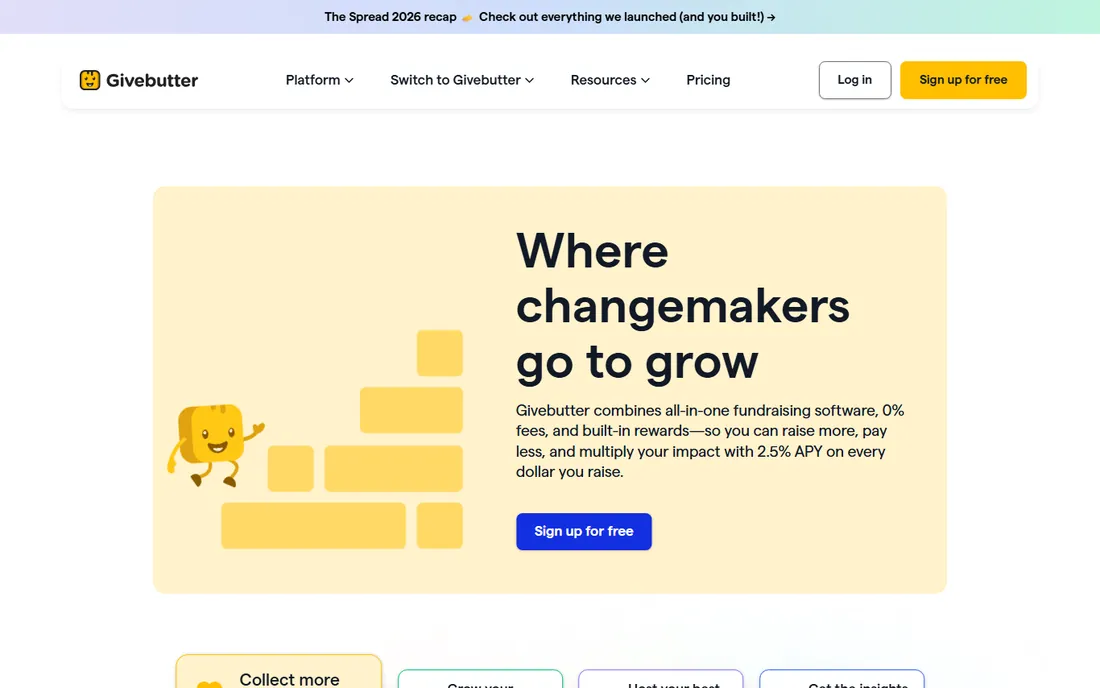
Givebutter's pitch is simple: the platform is free, funded by optional donor tips at checkout. In exchange you get donation pages, peer-to-peer campaigns, event ticketing, auctions, and a built-in CRM, a feature set that would cost hundreds a month elsewhere. For a small nonprofit running its first gala, that is hard to argue with.
The free tier is unlimited, not a trial, and the pages look current, which helps with younger donors. Payment options include the usual cards plus Venmo, Apple Pay, and Google Pay, reducing friction at the moment of giving. A Plus plan from $29 per month adds advanced features for organizations that want more customization and reporting.
The catch is the same as any tip-based model: standard card processing fees of 2.9% plus 30 cents per transaction still apply on every gift, and if donors decline the tip, Givebutter absorbs the platform cost rather than you. None of that is hidden, but do the math on a large campaign before assuming free means free. Support response times are the most common complaint.
What we like- Completely free core platform
- Donation pages, events and auctions included
- Modern donor experience
Watch out for- Standard processing fees still apply
- Plus plan costs add up for very small orgs
- Support can be slow
Starting priceSee website
Free planNo
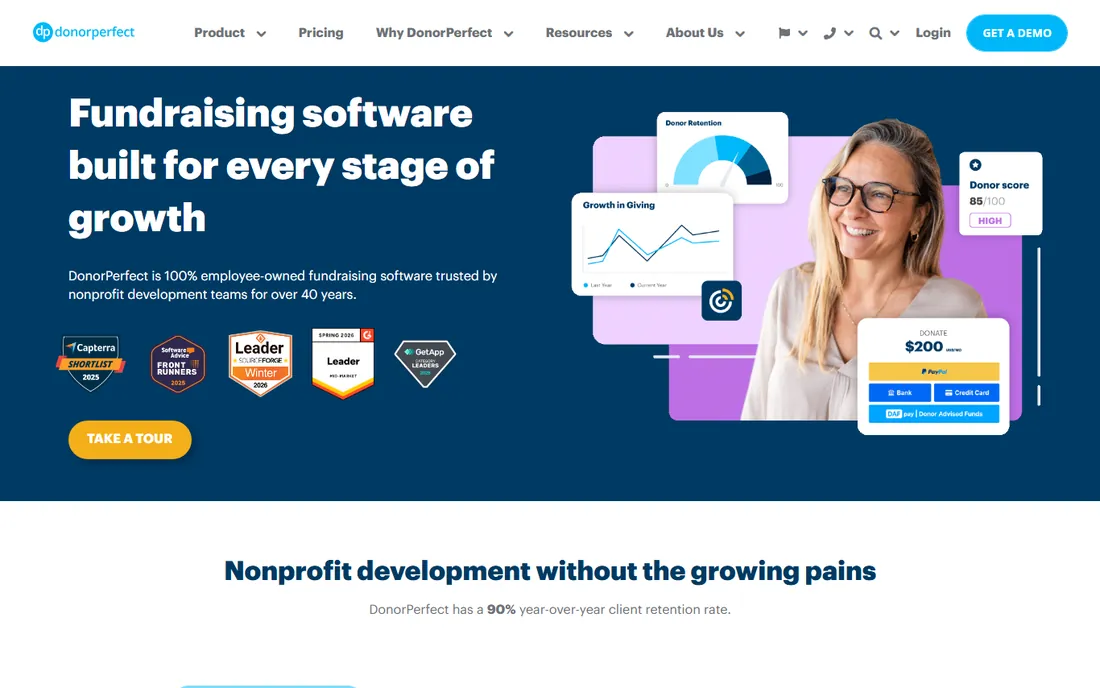
DonorPerfect has been in the nonprofit database business for decades, and it shows in the feature depth. The custom report builder can answer almost any question a board asks, and the automation workflows handle recurring gift follow-ups, pledge reminders, and donor journeys without manual intervention. Organizations that run on reports tend to stay for years.
Pricing is the friction point. DonorPerfect does not publish rates, so every quote is a sales conversation, and the total depends on record count, add-ons like online giving forms, and training. Independent estimates put entry pricing around $99 to $119 per month, but treat that as a starting guess, not a quote.
The honest weakness is the interface, which reviewers consistently call clunky compared to Bloomerang or Givebutter. If your staff is not technically confident, budget for training time. DonorPerfect rewards the effort once configured, but the first month requires patience.
What we like- Deep reporting and custom report builder
- Strong automation workflows
- Long track record with US nonprofits
Watch out for- Pricing gated behind sales conversations
- Interface feels dated in places
- Online giving is an add-on
Starting price$99/month (Essentials)
Free planFree trial
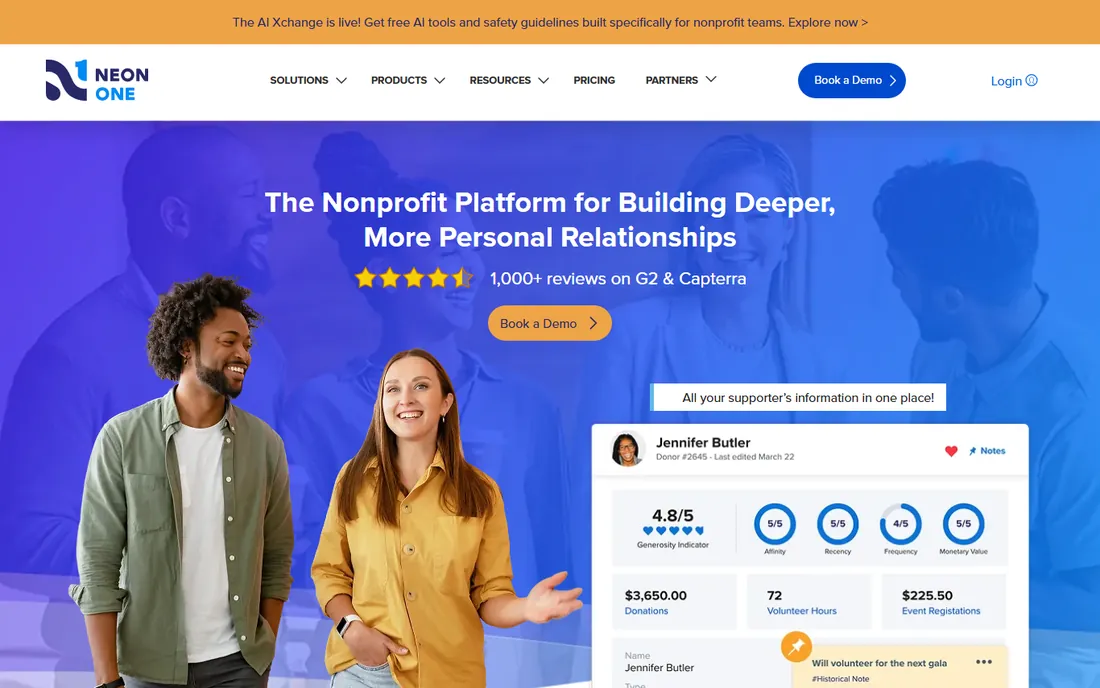
Neon CRM is built for nonprofits that do more than fundraise. Membership management, event registration, volunteer tracking, and donations all live in one system, which eliminates the spreadsheet that tracks members separately from the one that tracks donors. Arts organizations, associations, and community groups get the most from it.
The Essentials tier starts at $99 per month and includes the core CRM with a solid report library and automation workflows. Higher tiers add deeper customization, more integrations, and advanced email tools. The pricing model is based on annual revenue rather than contact count, which can be friendlier for organizations with big lists and small budgets.
The learning curve is real. Because the platform covers so much ground, new admins often need a few weeks to feel comfortable, and the most useful features tend to sit in the higher tiers. Plan the implementation around one use case at a time rather than turning everything on at once.
What we like- Membership, events and donations in one database
- 50+ built-in reports
- Workflow automation included
Watch out for- Learning curve on the full feature set
- Advanced features reserved for higher tiers
- Support speed varies
Starting priceSee website
Free planFree trial
DonorSnap has been independently owned and operated by the same team since 2007, which is unusual in a category full of acquisitions. That stability shows in the product philosophy: one straightforward donor database with online forms, event registration, email integration, and volunteer tracking included at every pricing level, with unlimited users throughout.
Pricing scales with contact count, starting in the tens of dollars per month for small databases and rising as the list grows. Third-party listings cite figures between $39 and $50 per month for the entry tier, but DonorSnap does not publish its own rates, so confirm the current price for your contact volume directly.
Support is the standout feature in user reviews, with responsive, personal help that small nonprofits value more than another automation. The honest trade-off is that advanced reporting and form customization take longer to learn than the core tracking features. If your team is small and your needs are straightforward, that is a trade worth making.
What we like- Independent company with personal support
- Unlimited users at every tier
- Online forms and event tools included
Watch out for- Pricing varies by contact tier and is not published
- Advanced reporting takes practice
Starting price$79/month (Lite)
Free planFree trial
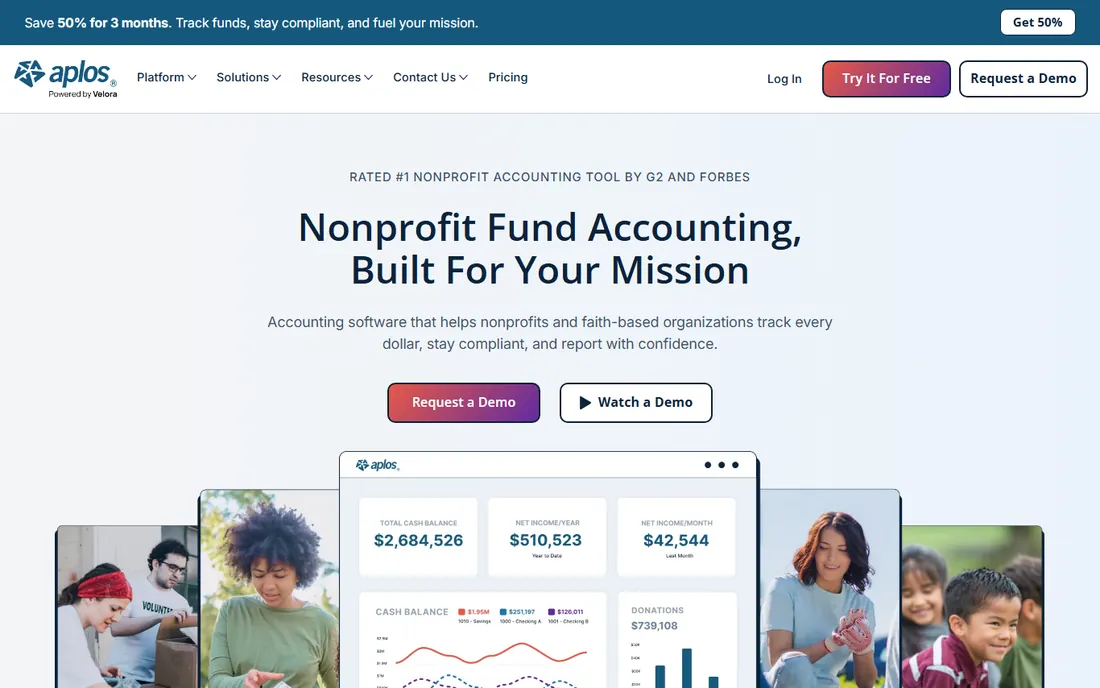
Aplos answers a different question than the donor CRMs on this list: where did the money go? Its Lite plan at $79 per month delivers balance sheets and income statements by fund, bank reconciliation, and 1099 management, with Core at $129 adding budgeting, payables, and receivables. Both include two users and unlimited support.
The distinction matters because general accounting tools like QuickBooks require workarounds to track restricted and unrestricted funds separately. Aplos was built for fund accounting from the start, so grant reporting and board financials come out clean. The interface is approachable enough that a treasurer without an accounting background can run it.
The limits are deliberate. Lite covers only basic accounting, and pushing into budgeting by grant or department means stepping up to Core or Advanced at $229. Donor management exists but is basic, so most organizations pair Aplos with a dedicated CRM. The 15-day free trial requires no credit card, but plan your evaluation carefully because two weeks passes fast.
What we like- True fund accounting built for nonprofits
- Board-ready financial reports
- Approachable for non-accountants
Watch out for- Lite tier is intentionally limited
- Donor tools are basic compared to real CRMs
- 15-day trial is short
Starting price$0
Free planYes
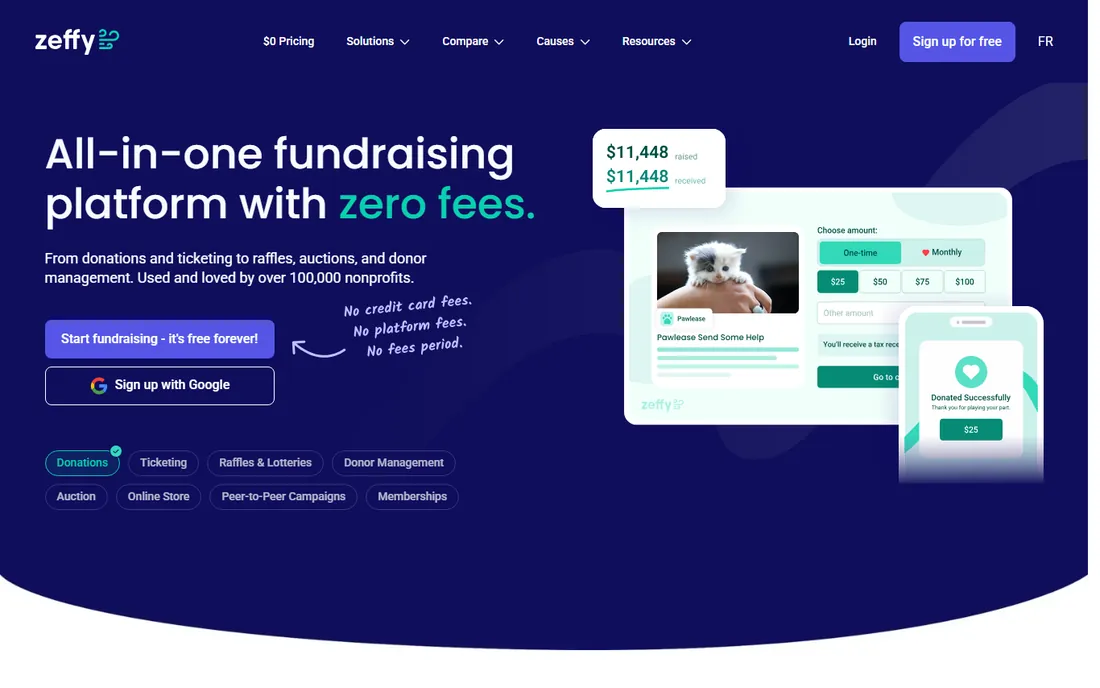
Zeffy takes the free model further than Givebutter by charging zero platform fees across the entire product, funded by optional donor contributions at checkout. Donation forms, event ticketing, memberships, and peer-to-peer campaigns are all included with no paid tier to upsell you into. For a nonprofit where every dollar of overhead gets questioned, the math is compelling.
The product covers the fundraising basics well, and because there is no pricing ladder, small organizations get the same features as large ones. That flatness is the appeal and the limitation. Mature donor CRMs offer deeper segmentation, wealth screening, and automation that Zeffy does not attempt.
Consider Zeffy the fundraising front end rather than the database of record. It works best paired with an affordable CRM like Little Green Light, where Zeffy collects the gifts and the CRM tracks the relationships. Watch the company's trajectory before building critical processes on it, since it is younger than most names on this list.
What we like- Entire product free with no platform fees
- Donation pages, events and membership included
- No tier gating
Watch out for- Newer and smaller company
- Feature depth lags mature CRMs
- Relies on optional donor contributions
Starting price$0 + 1.75% platform fee
Free planYes
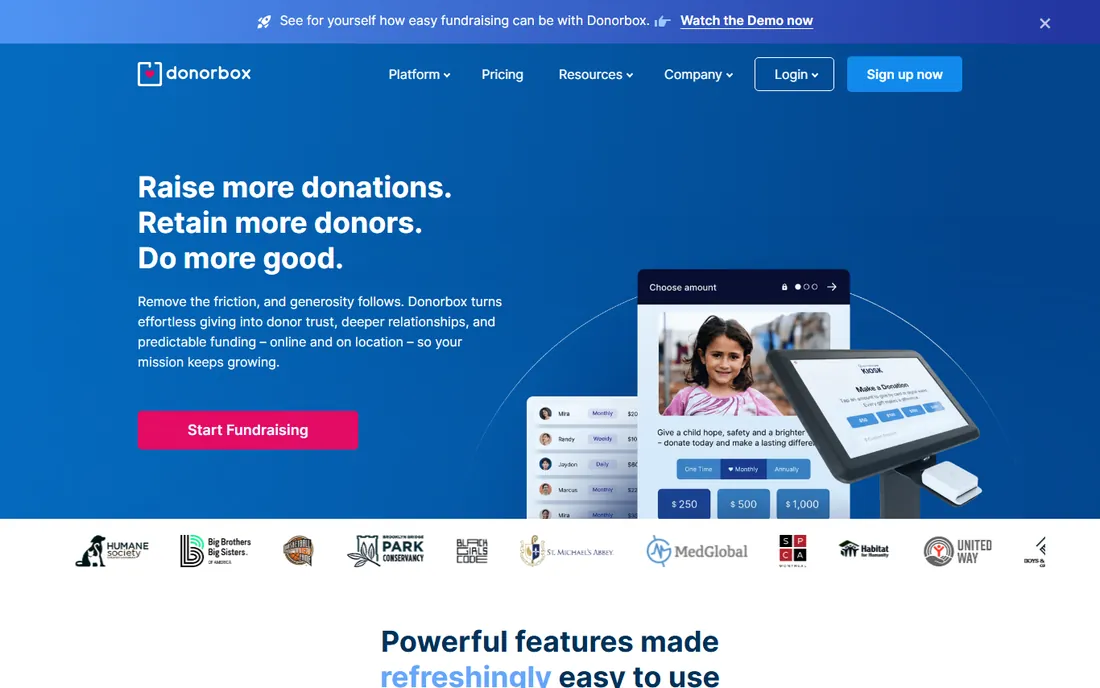
Donorbox specializes in the donation moment. Its forms embed on any website, support text-to-give and kiosk giving, and handle recurring gifts particularly well, with donor-managed subscription options that reduce the admin burden of monthly giving programs. Setup takes minutes, not weeks.
The pricing is pay-as-you-raise: no monthly fee, just a 1.75% platform fee on donations plus standard processing fees. That makes it nearly free to start and predictable to scale, which suits small nonprofits testing online fundraising for the first time. A Pro plan at a flat monthly rate exists for organizations that want to eliminate the platform fee at higher volumes.
The honest limitation is that Donorbox is a giving tool with basic donor management, not a full CRM. It tracks donors and gifts but lacks the retention analytics, moves management, and deep segmentation of Bloomerang or DonorPerfect. Most organizations outgrow it as a system of record within a couple of years, though many keep it as the donation form feeding a real CRM.
What we like- Excellent recurring donation tools
- Embeds anywhere including text and kiosk giving
- Quick setup
Watch out for- Basic donor management compared to full CRMs
- Platform fee applies to every gift
- Advanced reporting costs more
Starting price$167/month (billed annually)
Free planFree trial
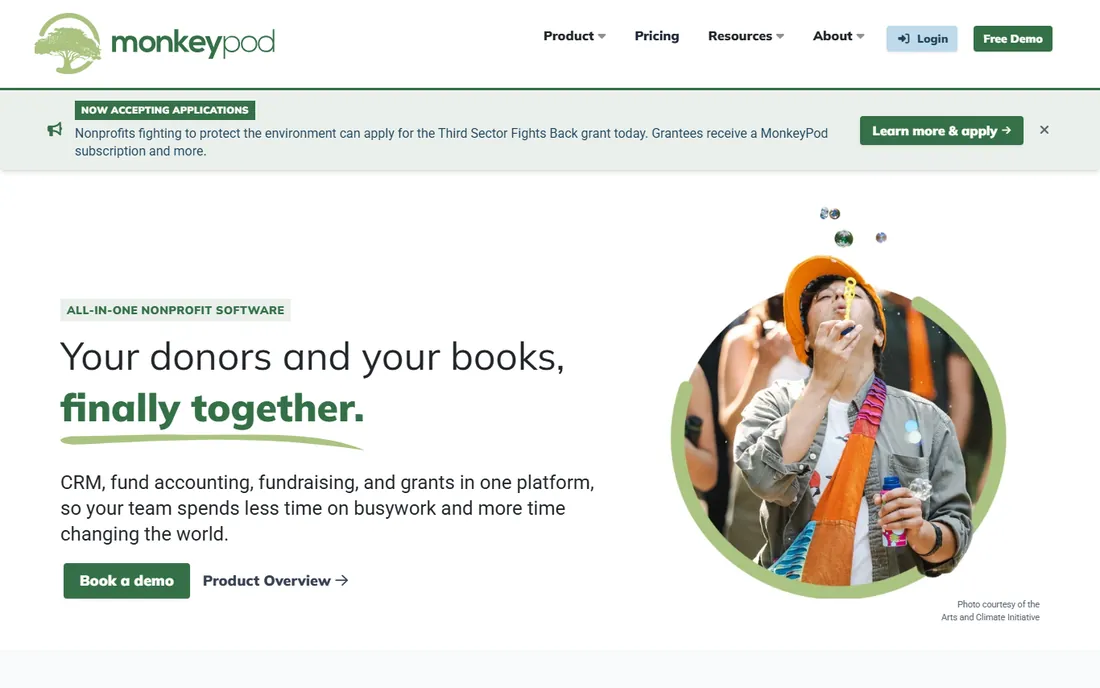
MonkeyPod is the only product on this list that genuinely combines a donor CRM with fund accounting. One system tracks donors, grants, donations, and the general ledger, with grant proposal and spend tracking that keeps restricted funds honest. For a nonprofit tired of reconciling a CRM against QuickBooks every month, that consolidation is the entire pitch.
The flat rate of $167 per month billed annually is the highest entry price here, but it replaces two subscriptions, and the price does not change as your contact list grows. Email marketing is included though basic, and the grant tracking goes deeper than any pure donor CRM on this list.
The trade-off is maturity and community. MonkeyPod is newer and smaller than Bloomerang or Blackbaud, so the integration ecosystem and third-party expertise are thinner. If your organization needs grant accounting more than it needs a marketing suite, that trade favors MonkeyPod. If you need advanced email automation, look elsewhere and keep the accounting separate.
What we like- Donor CRM and true fund accounting under one login
- Grant tracking built in
- Flat-rate pricing
Watch out for- Highest starting price on this list
- Email marketing is basic
- Smaller user community
Why free nonprofit software still costs you something
Free fundraising platforms are real, and Givebutter, Zeffy, and Donorbox prove the model works. But the platform fee is only one line in the total cost. Card processing fees of around 2.9% plus 30 cents apply to nearly every online gift, and they dwarf any platform fee once volume grows.
The bigger hidden cost is migration. Donor data, recurring gift schedules, and event history accumulate in your first system, and moving them later costs staff time and risks data loss. A free tool that fits for two years and then forces a painful migration can cost more than a $45 monthly database from the start.
That is not an argument against free tools. It is an argument for thinking two years ahead. If you expect to stay under 1,000 donors, free is rational. If you expect to grow past 5,000, starting on a platform with a clear upgrade path, even a cheap one like Little Green Light, usually beats starting over later.
How to match the software to your nonprofit's size
Under 250 donors, you need a way to accept gifts and say thank you, nothing more. A free fundraising platform covers it. Between 250 and 2,500 donors, you need a real database with reports, which is where Little Green Light and DonorSnap earn their price. Past 2,500 donors, retention analytics and automation start paying for themselves, and Bloomerang or Neon CRM make sense.
Accounting needs follow a separate track. Until the board asks for fund-level financials or a grant requires restricted-fund reporting, a simple bookkeeping tool is enough. When those questions arrive, Aplos or MonkeyPod replace workarounds with real fund accounting. Do not buy accounting software before you need it, and do not skip it once an auditor asks.
Membership organizations should weight Neon CRM or Givebutter higher, since dues, renewals, and member events dominate their operations. Pure fundraising shops should weight Bloomerang or DonorPerfect higher, since donor retention is the whole game. Match the tool to the work your team actually does, not the feature list that impressed the board.
How we picked these ten
We started with the products small nonprofits actually buy and discuss: the donor CRMs that dominate review categories, the free fundraising platforms that have grown fastest in recent years, and the fund accounting tools built specifically for nonprofits rather than adapted from small business software. We checked current pricing pages, product documentation, and public review summaries on G2, Capterra, and nonprofit technology publications.
Prices below come from the vendor's own published pricing wherever available. Vendors that gate pricing behind sales calls are marked as See website instead of estimated. We did not run hands-on trials; this guide reflects documentation, published pricing, and aggregated user feedback. Nonprofit pricing changes often, and some vendors offer nonprofit discounts on request, so confirm the current rate before committing.
Frequently asked questions
What is the cheapest good nonprofit software for a tiny organization?
Givebutter and Zeffy are free and cover online giving, events, and basic donor tracking. If you need a real donor database, Little Green Light at $45 per month is the cheapest credible option. Start free, and move to a paid database when you have more than a few hundred donors to track.
Should a small nonprofit use QuickBooks or nonprofit-specific accounting software?
QuickBooks works for basic bookkeeping, but it was built for businesses, so tracking restricted and unrestricted funds requires manual workarounds. Aplos was built for fund accounting from the start, which matters once you manage grants or report to a board. Many small nonprofits run QuickBooks for bookkeeping and a donor CRM for fundraising, then switch to Aplos when fund reporting becomes painful.
Do free fundraising platforms take a cut of donations?
Most free platforms earn money through optional donor tips or a small platform fee, while card processing fees of about 2.9% plus 30 cents apply on every platform. Zeffy charges no platform fee at all. Read the fee page before your first campaign so the net proceeds match your budget.
What is the difference between a donor CRM and a fundraising platform?
A donor CRM stores donor records, giving history, and communication, and helps you retain and upgrade donors over time. A fundraising platform runs the mechanics of raising money: donation pages, events, auctions, and peer-to-peer campaigns. Many products do both, but they usually excel at one. Small nonprofits often start with a fundraising platform and add a CRM as the donor list grows.
How hard is it to switch nonprofit software later?
The software switch is easy; the data migration is the work. Donor histories, recurring gift schedules, and custom fields rarely map cleanly between systems, so expect cleanup time. Export your data regularly from day one, keep a backup outside the platform, and choose tools with documented export options to keep future moves manageable.
Do nonprofits get discounts on software?
Many vendors offer nonprofit pricing on request even when it is not published, and some, like Salesforce with its Power of Us program, provide free licenses. Always ask before paying list price, and check TechSoup for donated and discounted software, which can cut costs dramatically on mainstream tools.
Sources we checked (12)
- https://www.bloomerang.com/pricing/
- https://www.littlegreenlight.com/pricing/
- https://givebutter.com/pricing/
- https://www.donorperfect.com/pricing/
- https://neoncrm.com/pricing/
- https://www.donorsnap.com/pricing/
- https://www.aplos.com/pricing/
- https://www.zeffy.com/pricing/
- https://donorbox.org/pricing
- https://monkeypod.com/pricing/
- https://nonprofitpoint.com/best-crm-for-nonprofits/
- https://monkeypod.com/best-nonprofit-crm-software
Is your product missing or out of date?
We review this list regularly. Vendors can request a listing, send updated pricing or ask about featured placement.

Shihab Mia · Founder, Rankite
Shihab has spent more than a decade helping SaaS and e-commerce brands grow through search. He writes Rankite's software buying guides from pricing pages, documentation and public user reviews. More about Shihab.