How we make this list: we compare pricing pages, product documentation and public user reviews. Ratings come from G2, Capterra or Trustpilot, with the date we checked them.
What is the best networking software for event management in 2026?
Brella is the best networking software for event management when structured 1:1 meetings are the goal, because its AI scheduling fills meeting diaries. Converve is the best choice for published per-event pricing, from 3,400 euros per event. Swapcard is the best value annual license from 610 dollars a year, and Grip is the best enterprise matchmaking engine for trade shows.
Key takeaways
- Brella leads for structured 1:1 meetings at conferences, though pricing is quote-based and custom per event.
- Converve is the only tool here with published per-event prices: Match from 3,400 euros, Match and Meet from 4,950 euros, and Match and Meet Pro from 7,900 euros per event for up to 100 attendees.
- Swapcard is the cheapest annual license, with its Engagement plan from 610 dollars a year, but it sells annual subscriptions only and does not offer per-event pricing.
- Whova is the best attendee app for academic and association conferences, with third-party reports putting it at 2,000 to 15,000 dollars per event.
- Bizzabo has the highest floor here at 17,999 dollars a year, with a three-user minimum, so it suits enterprise event programs.
How is networking software different from event management software?
Networking software has one job: getting the right attendees into the right conversations. It builds attendee profiles, recommends matches, schedules 1:1 meetings, runs hosted buyer programs, and measures the meetings that actually happened. Event management software has a wider job: registration, ticketing, agendas, venues, badges, and reporting, with networking as one module inside it. Rankite covers those wider suites in its guide to the best event management software. This guide ranks tools on the networking job itself, and it includes broader platforms such as Whova, Bizzabo, and vFairs only because their networking features are the main reason many organizers buy them.
The matchmaking method is the real difference between tools. Brella ranks matches by intent overlap between attendees. Grip and Jublia learn from behavior, such as bookmarks and meeting requests. Converve uses rules the organizer defines, so every match is explainable and auditable. Swapcard blends AI recommendations into the whole event journey. None of these methods works without adoption: industry guides put organizer adoption of matchmaking tools at roughly 45 percent across 2025 and 2026, so the tool that gets attendees to book meetings matters more than the tool with the cleverest algorithm.
How much does event networking software cost?
Take a 500-person B2B conference running one event a year. Converve Match and Meet for 251 to 500 attendees is 8,450 euros net per event in its published January 2026 guide, plus VAT. Whova is quoted per event, with third-party reports putting it at 2,000 to 15,000 dollars per event, plus ticket fees of about 3 percent plus 99 cents per paid ticket. Bizzabo costs from 17,999 dollars a year for three user seats, which buys unlimited events but is the floor for an annual license. Swapcard starts at 610 dollars a year, but that entry tier covers up to 200 attendees a year, so a 500-person event needs a quoted higher tier. Brella, Grip, Jublia, and vFairs are quote-only at this size.
The pricing model matters as much as the number. Per-event pricing suits a single annual conference: Converve publishes it, Whova quotes it, and Brella prices per event. Annual licenses suit teams running three or more events a year: Swapcard and Bizzabo sell annual subscriptions only, so a one-off event still pays for a year. Get the full quote in writing, including attendee packs, exhibitor packs, branded apps, onsite hardware, and support, because those extras are where the entry price usually doubles.
What should you check before you buy?
Check five things before you sign. First, pricing model: confirm whether you are buying per event or per year, and what happens to unused attendee credits. Second, matchmaking method: ask whether matches come from organizer rules, intent data, or behavioral learning, and whether you can cap meetings per group. Third, adoption: ask what the vendor does to get attendees booking meetings before the event, because an empty diary is the most common failure. Fourth, lead capture and CRM: confirm exhibitor lead tools sync to your CRM and whether that integration costs extra. Fifth, data and hosting: Converve hosts in the EU and is GDPR-compliant, so check where each vendor stores attendee data.
Comparison table
| Tool |
Best for |
Starting price |
Free plan |
| Brella |
Structured 1:1 meetings at conferences |
Quote |
No |
| Grip |
Enterprise AI matchmaking at trade shows |
Quote |
No |
| Swapcard |
Best value annual license with AI networking |
610 dollars per year |
No |
| Jublia |
Hosted buyer summits and structured B2B networking |
Quote |
No |
| Converve |
Published per-event pricing with explainable matching |
3,400 euros per event |
No |
| Whova |
Academic and association conferences |
Quote |
No |
| Bizzabo |
Enterprise event programs with onsite hardware |
17,999 dollars per year |
No |
| vFairs |
Virtual, hybrid, and onsite from one vendor |
Quote |
No |
Quick comparison
| Tool | Best for | Starting price | Free plan |
|---|
 Brella | Structured 1:1 meetings at conferences | quote | No |
 Grip | Enterprise AI matchmaking at trade shows | quote | No |
 Swapcard | Best value annual license with AI networking | 610 dollars per year | No |
 Jublia | Hosted buyer summits and structured B2B networking | quote | No |
 Converve | Published per-event pricing with explainable matching | 3,400 euros per event | No |
 Whova | Academic and association conferences | quote | No |
 Bizzabo | Enterprise event programs with onsite hardware | 17,999 dollars per year | No |
 vFairs | Virtual, hybrid, and onsite from one vendor | quote | No |
Is your product missing or out of date?
We review this list regularly. Vendors can request a listing, send updated pricing or ask about featured placement.
Starting pricequote
Free planNo
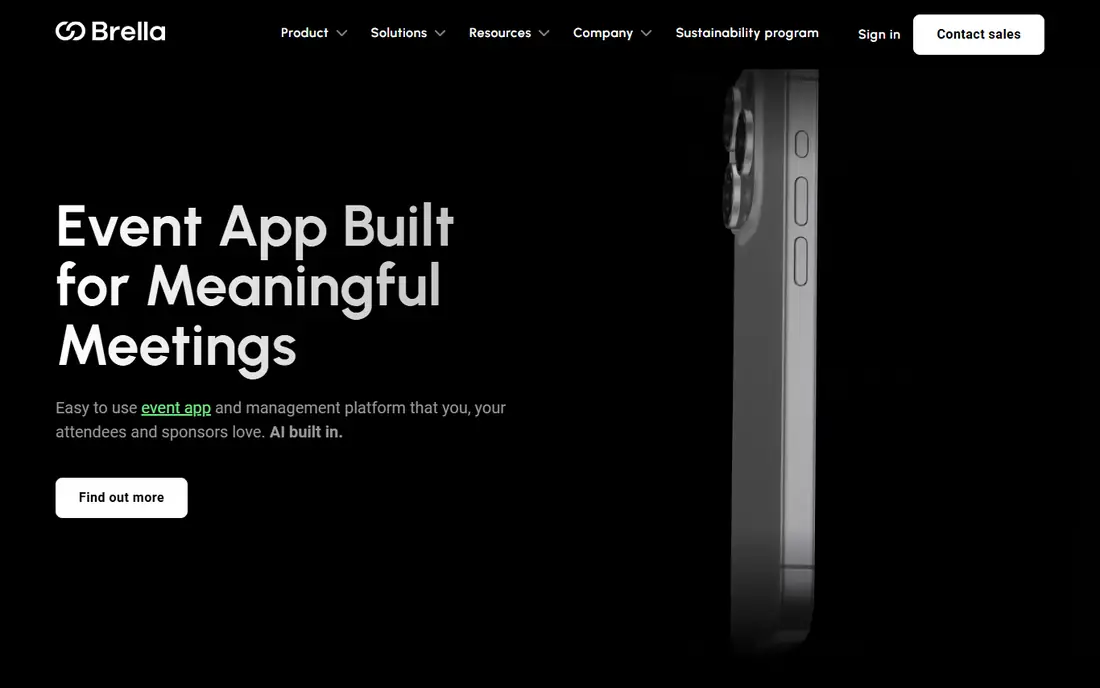
Brella is the best pick when the event succeeds or fails on scheduled 1:1 meetings. Its AI ranks attendees by intent overlap, then fills meeting diaries with confirmed slots, table assignments, and reminders, so a conference of 1,000 people produces hundreds of meetings rather than a pile of business cards. The platform covers networking, agendas, and exhibitor tools, but meetings are the core. Pricing is custom and quoted per event, with no published rates, and third-party comparisons place Brella contracts at the enterprise end of event technology budgets. That makes it a poor fit for small conferences, where the quote alone can exceed the whole event budget. Buy Brella when your attendees come to meet specific people and you can commit to driving adoption before the event opens.
What we like- Strongest structured 1:1 meeting scheduling
- Intent-based AI matchmaking
- Proven at large conferences
Watch out for- Quote-only pricing with no published rates
- Enterprise-shaped budgets
- Needs organizer effort to drive meeting adoption
Starting pricequote
Free planNo
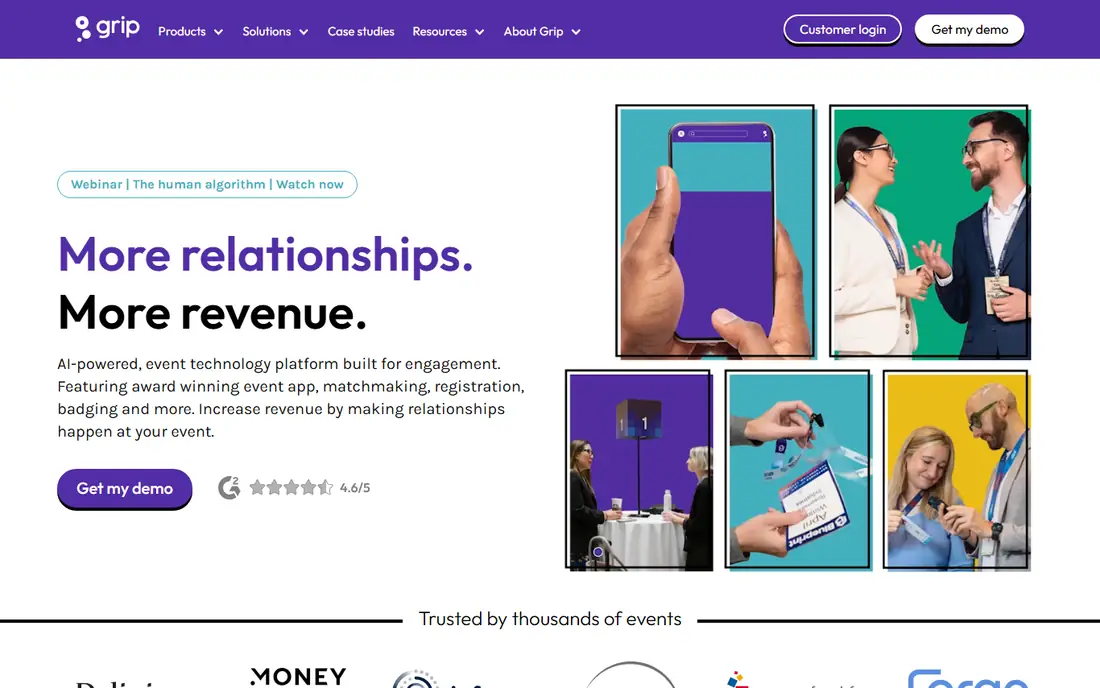
Grip is an event success platform built around AI-driven matchmaking, and it is the pick for large trade shows where exhibitors need measurable return. Its recommendations learn from attendee behavior, and its lead capture tools give exhibitors live dashboards on the meetings and leads their booths generate. Sponsored sessions, roundtables, and live streams sit alongside the matchmaking, so the platform covers the full exhibitor experience rather than just the meeting diary. Pricing is custom and enterprise-only, with no published rates, and third-party comparisons note that onboarding takes around four months with return on investment typically achieved in 17 months. That timeline rules Grip out for an event six weeks away. Buy Grip when you run a large recurring trade show and your exhibitors will pay for provable meetings, not when you need a quick tool for a single conference.
What we like- Strongest AI recommendations at scale
- Exhibitor lead capture and ROI dashboards
- Works across in-person and virtual formats
Watch out for- Enterprise pricing only
- Onboarding is resource-heavy and takes around four months
- Not accessible for smaller conferences
#3Swapcard
Best for: Best value annual license with AI networking4.6/5 on
G2 (228 reviews, checked Oct 2026)
Visit swapcard.com
Starting price610 dollars per year
Free planNo
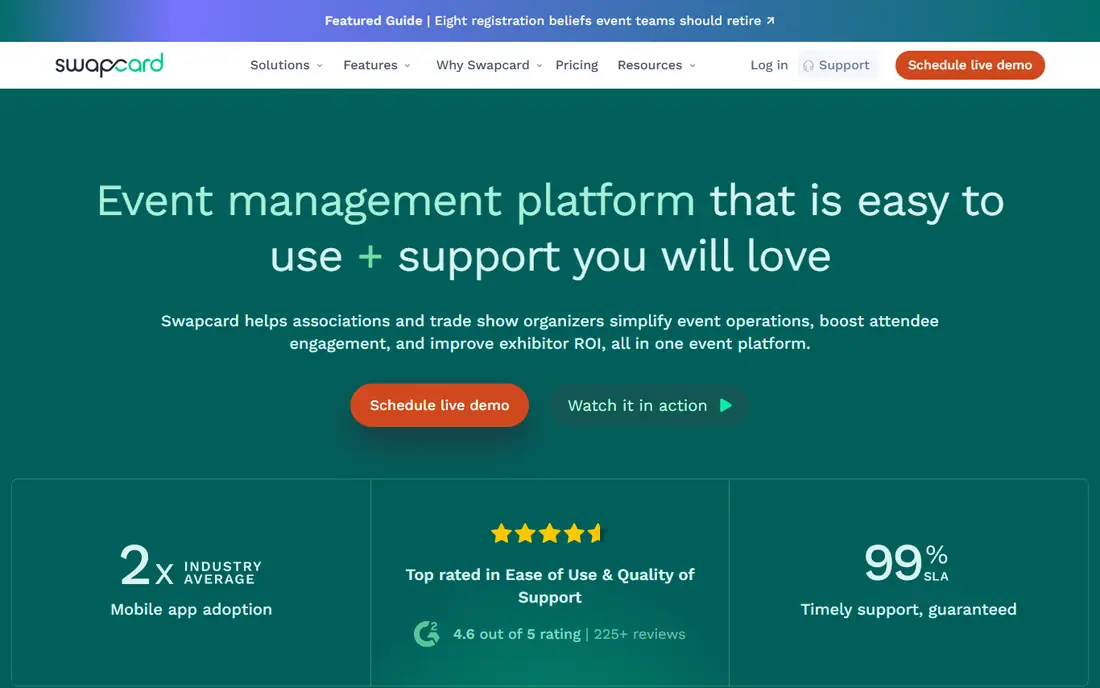
Swapcard is a full event platform whose main strength is AI networking, and its entry price is the lowest published figure in this guide. The Event Engagement Platform starts at 610 dollars a year and includes a mobile and web app, AI-powered networking, virtual events, hosted buyer tools, and exhibitor lead management. The catch is the model: Swapcard sells annual subscriptions only, with a license fee plus a price based on attendee and exhibitor volume. The entry tier covers up to 200 attendees a year, so a 500-person event needs a higher tier, and third-party comparisons put the enterprise tier at around 20,000 dollars a year. Extra attendee and exhibitor packs, branded apps, and onsite modules move the number further. Buy Swapcard when you run several events a year and want one annual license, and get the attendee volume priced for your largest event before you sign.
What we like- Lowest published entry price here
- AI matchmaking plus a full event platform
- Hosted buyer and exhibitor lead tools included
Watch out for- Annual subscriptions only, with no per-event pricing
- Per-attendee costs grow with event size
- Enterprise tier starts around 20,000 dollars
#4
Jublia
Best for: Hosted buyer summits and structured B2B networking
Visit jublia.com
Starting pricequote
Free planNo
Jublia is a smart event platform designed to make B2B networking structured, efficient, and measurable. Its 360-degree AI matchmaking recommends connections based on attendee profiles, stated objectives, and behavioral signals such as bookmarks, content interactions, and meeting requests, then lets attendees book relevant meetings and follow through after the event. It suits structured B2B networking events best, particularly expos, hosted buyer summits, and corporate conferences where the meeting diary is the product. Pricing is quote-based with no published rates, so budget planning starts with a sales conversation. Reviewers note a learning curve: first-time organizers need time to unlock the granular scheduling and analytics modules, so plan onboarding well before event day. Buy Jublia when your format is a hosted buyer summit or an expo with curated meetings, and when your team has time to learn the scheduling tools.
What we like- 360-degree AI matchmaking across profiles, objectives, and behavior
- Strong hosted buyer formats
- Measurable meeting ROI
Watch out for- Quote-only pricing with no published rates
- Learning curve for first-time organizers
- Granular scheduling modules take time to master
#5
Converve
Best for: Published per-event pricing with explainable matching
Visit converve.com
Starting price3,400 euros per event
Free planNo
Converve is a matchmaking-first platform built around the meeting matrix, and it is the most transparent tool here on price. Its January 2026 guide lists Match from 3,400 euros net per event, Match and Meet from 4,950 euros, and Match and Meet Pro from 7,900 euros for 1 to 100 attendees; Match and Meet for 251 to 500 attendees is 8,450 euros net per event. Organizers define participant categories, set who may meet whom, cap meetings per group, and let the platform build full pre-scheduled diaries with table and room assignments. Every placement is explainable, which suits investor meetings and hosted buyer programs. The platform is GDPR-compliant with hosting in the EU, and registration, payment, agenda, and a white-label event site are included. The guide prices are non-binding, VAT is additional, and optional modules are quoted on request. Buy Converve when you want a per-event price you can put in a budget today.
What we like- Only published per-event prices in this guide
- Rule-based matching is explainable and auditable
- GDPR-compliant with hosting in the EU
Watch out for- Prices are net plus VAT
- Final quote varies with scope and add-ons
- Registration and payment processing are quoted separately
#6Whova
Best for: Academic and association conferences4.8/5 on
G2 (1,925 reviews, checked Oct 2026)
Visit whova.com
Starting pricequote
Free planNo
Whova earns its reputation on the attendee-facing app: personalized agendas, in-app messaging, business-card and QR-code networking, live polls, session question and answer, and abstract and call-for-speakers management that academic programs depend on. Community boards let attendees post and connect before the event, which drives organic networking. Pricing is the weakest point: the pricing page is a quote request form asking for event type, duration, expected attendance, and how often you run events, with no tier names and no ranges. Third-party comparisons put Whova at 2,000 to 15,000 dollars per event, plus ticket fees of about 3 percent plus 99 cents per paid ticket. Reviewers also cite excessive notifications and navigation friction for newcomers. Buy Whova when your audience is an academic or association conference that lives in the app, and budget for the quote to vary by event size.
What we like- Best attendee app for academic and association events
- Community boards drive organic networking
- Registration and badges integrated
Watch out for- No published pricing at all
- Quoted per event, which means a sales conversation for every event
- Reviewers report notification overload
#7Bizzabo
Best for: Enterprise event programs with onsite hardware4.3/5 on
G2 (448 reviews, checked Oct 2026)
Visit bizzabo.com
Starting price17,999 dollars per year
Free planNo
Bizzabo is an event experience platform for B2B conferences and enterprise event portfolios, and it is the most expensive starting point in this guide. The core license costs 499 dollars per user per month billed annually, with a three-user minimum, which sets the floor at 17,999 dollars a year, and third-party comparisons put the average contract value at around 30,499 dollars a year. The core includes unlimited events and registrations, contact management, ticketing, email campaigns, a website builder, a mobile app, and reporting. The Klik SmartBadge wearables are the standout for onsite networking: badges track interactions and let attendees exchange details with a tap. Virtual events, networking modules, API access, and single sign-on are priced as add-ons, which pushes the total above the floor. Buy Bizzabo when events are a marketing channel with an annual program behind them, not when you need one conference covered.
What we like- Full event experience OS with registration, website builder, and mobile app
- Klik SmartBadge wearables
- Strong CRM and marketing integrations
Watch out for- 17,999 dollar yearly floor with a three-user minimum
- No single-event purchase
- Virtual, networking, API, and SSO are paid add-ons
#8vFairs
Best for: Virtual, hybrid, and onsite from one vendor4.7/5 on
G2 (1,786 reviews, checked Oct 2026)
Visit vfairs.com
Starting pricequote
Free planNo
vFairs is an all-in-one event management platform that covers virtual, hybrid, and in-person events from one vendor, and it earns its place here on the strength of its virtual networking. Teams build registration forms, personalized agendas, exhibitor booths, and branded mobile apps, with 3D exhibitor booths for virtual trade shows and expos where the booth is the meeting place. The platform suits organizers who run a virtual event first and add an onsite layer later. Pricing is the main drawback: vFairs publishes no tiers or ranges, and pricing is quote-only behind a demo, which third-party comparisons describe as the same quote-only wall buyers leave Whova over. That makes budgeting slow and comparison hard. Buy vFairs when your event is virtual or hybrid and the 3D booth experience matters, and request the quote early because the sales process takes time.
What we like- Broad virtual plus onsite coverage in one product
- 3D exhibitor booths
- One vendor for hybrid formats
Watch out for- Quote-only pricing behind a demo
- No published tiers or ranges
- Enterprise-shaped sales process
Frequently asked questions
What is the cheapest event networking software?
Swapcard is cheapest for an annual license, with its Engagement plan from 610 dollars a year, though that entry tier covers up to 200 attendees a year. For a single event, Converve is cheapest with a published price: Match from 3,400 euros per event for up to 100 attendees. Whova is quoted per event, with third-party reports at 2,000 to 15,000 dollars per event. Brella, Grip, Jublia, and vFairs are quote-only.
Should I buy per event or per year?
Buy per event when you run one conference a year: Converve publishes per-event prices, and Whova and Brella quote per event. Buy per year when you run three or more events a year, because Swapcard and Bizzabo sell annual subscriptions only and a one-off event still pays for a year. Bizzabo costs from 17,999 dollars a year, so it only makes sense as an annual program. Always ask what happens to unused attendee credits at the end of the term.
What is AI matchmaking at events?
AI matchmaking recommends which attendees should meet, using profiles, stated goals, and behavior. Brella ranks matches by intent overlap between attendees. Grip and Jublia learn from behavior such as bookmarks, content interactions, and meeting requests. Converve uses rules the organizer defines, so every match is explainable. Swapcard blends AI recommendations into the whole event journey. The method matters less than adoption: a tool only works when attendees actually book the meetings it suggests.
How do I get attendees to actually use the networking app?
Start before the event opens. Open meeting booking two to three weeks early, send attendees three to five recommended matches each, and run a hosted buyer program for your most valuable attendees. Keep the app to one job on day one: meetings, not every feature at once. Industry guides put organizer adoption of matchmaking tools at roughly 45 percent, so plan a reminder sequence and staff the help desk for the first morning.
Do I need a separate registration tool?
It depends on the tool. Whova, Bizzabo, Swapcard, and vFairs include registration, ticketing, and agendas. Brella, Grip, and Jublia focus on networking and meetings, so they usually sit alongside a registration platform. Converve includes registration, payment, agenda, and a white-label event site. Check the integration list before you buy, because a networking tool that cannot read your registration data cannot match your attendees.
Sources we checked (15)
- https://brella.io
- https://grip.events
- https://www.swapcard.com
- https://www.jublia.com
- https://www.converve.com
- https://whova.com
- https://www.bizzabo.com
- https://www.vfairs.com
- https://www.converve.com/pricing
- https://www.swapcard.com/pricing
- https://eventify.io/blog/event-management-software
- https://eventify.io/blog/whova-alternatives
- https://resources.rework.com/tools/events/best-whova-alternatives
- https://invitedesk.com/en-gb/blog/vfairs-alternatives/
- https://remo.co/blog/best-ai-tools-for-event-matchmaking
Is your product missing or out of date?
We review this list regularly. Vendors can request a listing, send updated pricing or ask about featured placement.

Shihab Mia · Founder, Rankite
Shihab has 5+ years in B2B and SaaS SEO. He writes Rankite's software buying guides from pricing pages, documentation and public user reviews. More about Shihab.