How we make this list: we compare pricing pages, product documentation and public user reviews. Rankite is independent; if a vendor ever pays for a featured spot, that listing is clearly labeled Partner.
Key takeaways
- Sellers on Amazon, eBay, Shopify and Walmart who oversell because stock counts drift between channels need one system of record: Linnworks, Cin7 and Descartes Sellercloud all sync inventory across 100+ channels in near real time.
- The budget entry is Zoho Inventory: free for 50 orders per month, then $29 per month for the Standard plan, with multichannel sync and shipping built in.
- High-volume marketplace sellers should look at Descartes Sellercloud ($1,349 per month to start, priced on order volume) and Cin7 ($349 per month), both built for serious order throughput rather than side businesses.
- Linnworks and ChannelEngine do not publish prices: both quote based on order volume, so bring your monthly order count to the first call.
Quick comparison
| Tool | Best for | Starting price | Free plan |
|---|
 Linnworks Linnworks | Small and mid-size sellers running 100+ sales channels | See website (priced on order volume, quote only) | No (none advertised) |
 Cin7 Cin7 | Growing brands that also manufacture or assemble products | $349/month | No (none advertised) |
 Descartes Sellercloud Descartes Sellercloud | High-volume marketplace sellers and 3PLs | $1,349/month (annual subscription, based on order volume) | No (none advertised) |
 ChannelEngine ChannelEngine | Brands expanding onto new marketplaces quickly | See website (no published pricing) | No (none advertised) |
 Sellbrite Sellbrite | Small retailers and brands starting multichannel selling | See website (pricing not published) | No (none advertised) |
 Zoho Inventory Zoho Inventory | Small sellers who want multichannel inventory at the lowest cost | $29/month (Standard plan, billed annually) | Yes (free plan: 50 orders/month, 1 user, 1 location) |
 Extensiv Order Manager Extensiv Order Manager | Multichannel sellers needing advanced order automation | See website (quote-based pricing) | No (none advertised) |
Is your product missing or out of date?
We review this list regularly. Vendors can request a listing, send updated pricing or ask about featured placement.
Sell on two channels and a spreadsheet can keep up. Sell on Amazon, eBay, your Shopify store and Walmart at the same time, and the same spreadsheet will happily sell the same last unit four times. Multi channel inventory management software exists for exactly that failure mode: one stock count, updated everywhere within minutes of every sale, with orders routed to the right warehouse or 3PL without anyone retyping them. The seven tools below do that job at very different scales and prices, from free to four figures a month.
#1
Linnworks
Best for: Small and mid-size sellers running 100+ sales channels
Visit linnworks.com
Starting priceSee website (priced on order volume, quote only)
Free planNo (none advertised)
Linnworks is the classic multichannel workhorse for growing e-commerce businesses. Every sale on Amazon, eBay, Shopify, Walmart, TikTok Shop or any of the other 100+ channels updates the central stock count automatically, which kills the oversell problem that defines this category. Orders route by rule to your own warehouse, a 3PL or a dropshipper, with carrier selection and label printing handled in the same flow. New channels configure in minutes because inventory rules and pricing logic carry over.
The commercial reality is quote-only pricing tied to order volume rather than seats or channels. That is fair for the value, but it means you cannot put a number on Linnworks without talking to sales. Setup takes a month or more for complex operations. If you sell on five or more channels and order volume is climbing, Linnworks is usually the first serious platform sellers graduate to.
What we like- Connects inventory, orders, warehouses, listings and shipping carriers across 100+ marketplaces with instant sync
- Rules-based automation handles carrier selection, label printing and order routing
- Pricing ignores channel count, so adding marketplaces does not raise the bill
Watch out for- No published pricing: every quote is based on your order volume and features, so comparison shopping requires a sales call
- Implementation typically runs 30 to 40 days, which is a project for a small team
#2
Cin7
Best for: Growing brands that also manufacture or assemble products
Visit cin7.com
Starting price$349/month
Free planNo (none advertised)
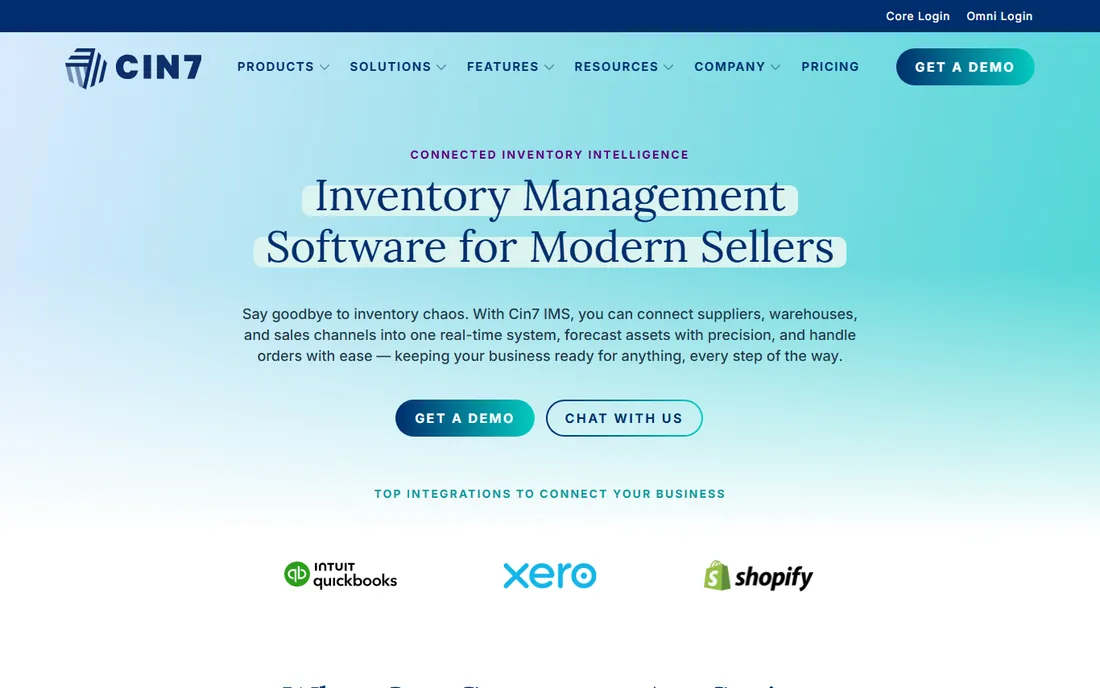
Cin7 sits one level up from pure marketplace sync tools: it is inventory management plus a small-business ERP. Real-time stock visibility runs across every product and component, e-commerce and retail orders flow through the same system, and manufacturers get material handling, assembly tracking and production costing that Linnworks and Sellbrite do not attempt. The vendor publishes its $349 per month starting price, which makes the first comparison easy.
The trade is breadth against price. A pure reseller with no warehouse complexity pays for manufacturing depth it will never open, and the integration allowance means a seller on ten channels buys add-ons. Cin7 fits brands that make things, hold stock in multiple locations and sell both direct and wholesale. If you only resell on marketplaces, the cheaper specialists below do the sync job for less.
What we like- Published starting price of $349 per month, rare transparency in this segment
- Combines multichannel inventory with manufacturing, BOM tracking and production planning
- Accounting sync with QuickBooks and Xero plus advanced inventory analytics
Watch out for- $349 per month is the floor, so small sellers pay enterprise-adjacent money before they need it
- Plans include up to 6 e-commerce and app integrations, with more available for purchase, which adds cost as channels grow
Starting price$1,349/month (annual subscription, based on order volume)
Free planNo (none advertised)
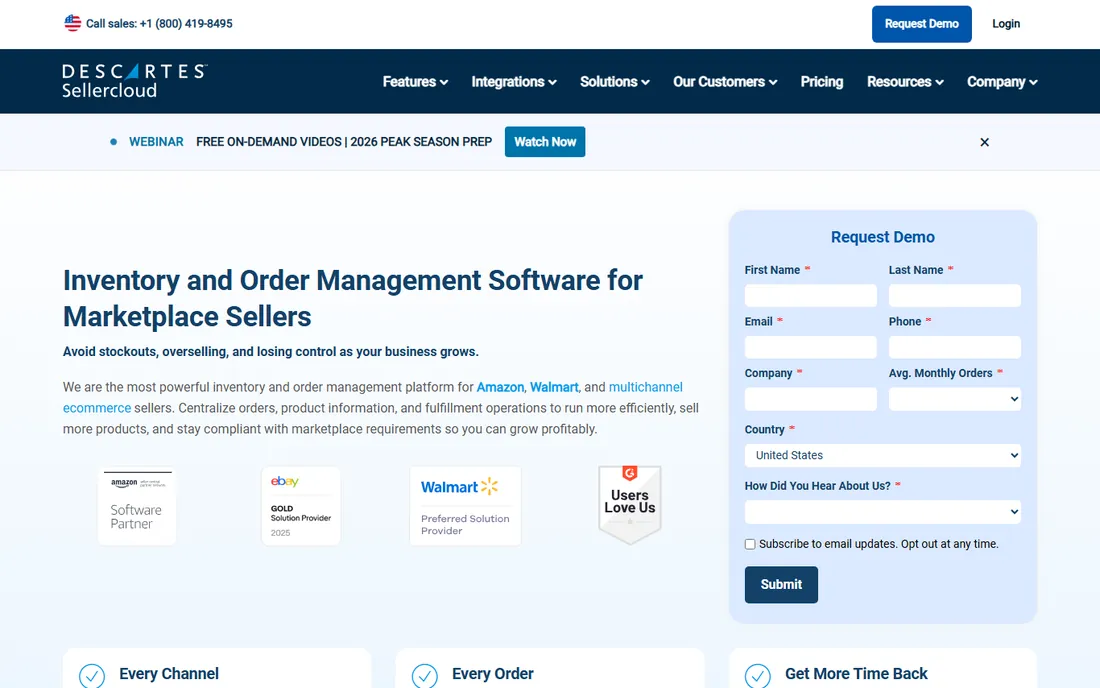
Sellercloud, now part of Descartes, is the heavy-duty option for sellers whose problem is scale rather than setup. Inventory accuracy runs to bin level inside the warehouse, orders centralize across Amazon, Walmart, eBay, Shopify and the rest, and the platform handles the marketplace compliance details, SLAs, listing accuracy, that get sellers suspended when sync slips. 3PLs run client warehouses on it too.
There is no pretending this is a small-business tool at $1,349 per month to start. Pricing is annual and scales with order volume, so a breakout year on Amazon raises your software bill alongside your revenue. Sellers doing seven figures across marketplaces get the depth they need. Everyone else should start further down this list and graduate here when volume demands it.
What we like- Built for serious marketplace throughput: 1,000+ sellers managing 150M+ orders per year per the vendor
- Combined OMS and WMS with bin-level warehouse tracking and marketplace compliance tooling
- 350+ integrations across marketplaces, carriers and accounting
Watch out for- $1,349 per month starting price puts it far beyond small sellers
- Annual subscription priced on order volume, so fast growth raises the bill automatically
Starting priceSee website (no published pricing)
Free planNo (none advertised)
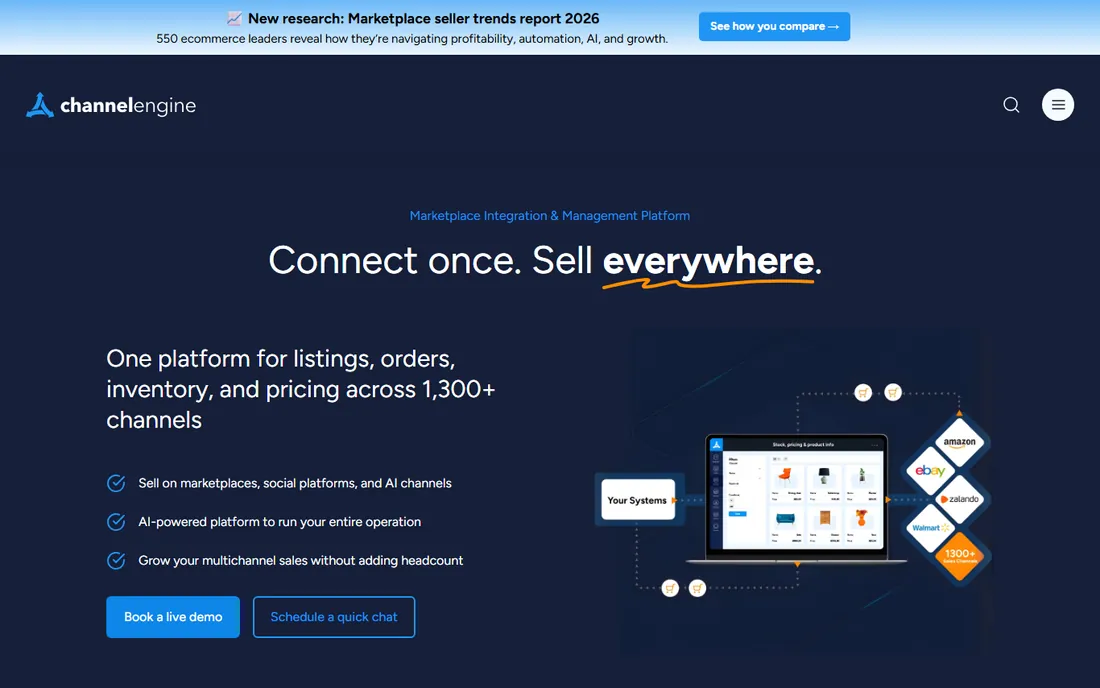
ChannelEngine approaches multichannel from the marketplace side rather than the warehouse side. The pitch is expansion: direct relationships with marketplaces speed up approvals, product data and pricing sync centrally, and dynamic pricing rules keep you competitive without sacrificing margin on any channel. For a brand that wants to be on every relevant marketplace in Europe and the US, the 1,300+ channel footprint is the point.
The honest limitation is depth below the listing layer. Warehouse management, bin tracking and 3PL workflows are not its game; sellers with complex fulfillment pair it with a WMS or run a platform like Sellercloud instead. Pricing is quote-only. Choose ChannelEngine when the goal is selling everywhere fast, and look elsewhere when the goal is running the warehouse.
What we like- Marketplace integration across 1,300+ marketplaces and sales channels with direct marketplace relationships
- Dynamic pricing automation with margin guardrails across channels
- Centralized product data, stock, pricing and orders in one platform
Watch out for- No published pricing, so budgeting requires a sales conversation
- The strength is marketplace expansion rather than warehouse depth, so complex fulfillment needs a separate WMS
#5
Sellbrite
Best for: Small retailers and brands starting multichannel selling
Visit sellbrite.com
Starting priceSee website (pricing not published)
Free planNo (none advertised)
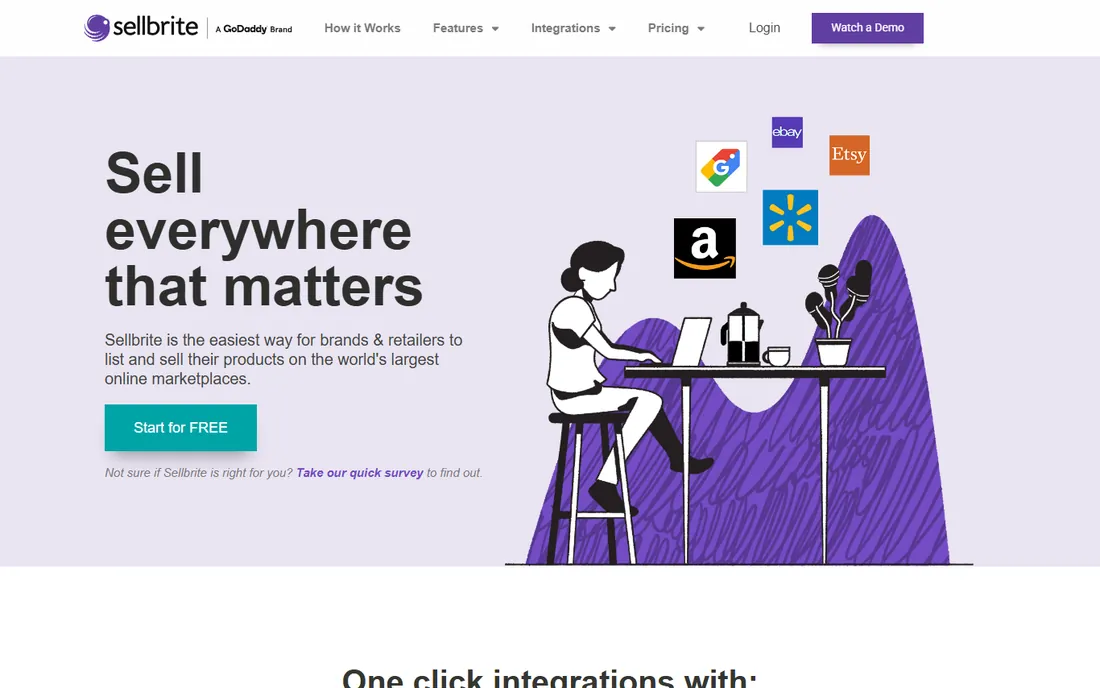
For small retailers just starting multichannel selling, Sellbrite is the on-ramp. Bulk listing templates push your catalog to Amazon, eBay, Walmart, Etsy, Google and your Shopify or BigCommerce store without retyping; inventory adjusts automatically when items sell so channels stay in sync; and shipping runs from the same interface with discounted labels or automatic routing to Fulfillment by Amazon. The whole product is designed so a small team can be live the same day.
The catch is the ceiling. Sellbrite is built for brands and retailers getting started, not for high-volume operations with warehouse complexity. Review ratings on the site run 4.4 to 4.8 across review platforms, which suggests the target audience is happy, but sellers with serious throughput graduate to Linnworks or Sellercloud. Pricing is not published, so get the quote early and compare it against Zoho Inventory's $29 plan before committing.
What we like- Purpose-built for listing and selling on major marketplaces with bulk listing templates
- Automatic inventory sync across channels to prevent overselling
- Discounted shipping labels and FBA order routing from one interface
Watch out for- No published pricing, which makes it hard to compare against Zoho Inventory or Linnworks without a call
- Aimed at smaller operations, so high-volume sellers outgrow it
#6
Zoho Inventory
Best for: Small sellers who want multichannel inventory at the lowest cost
Visit zoho.com
Starting price$29/month (Standard plan, billed annually)
Free planYes (free plan: 50 orders/month, 1 user, 1 location)
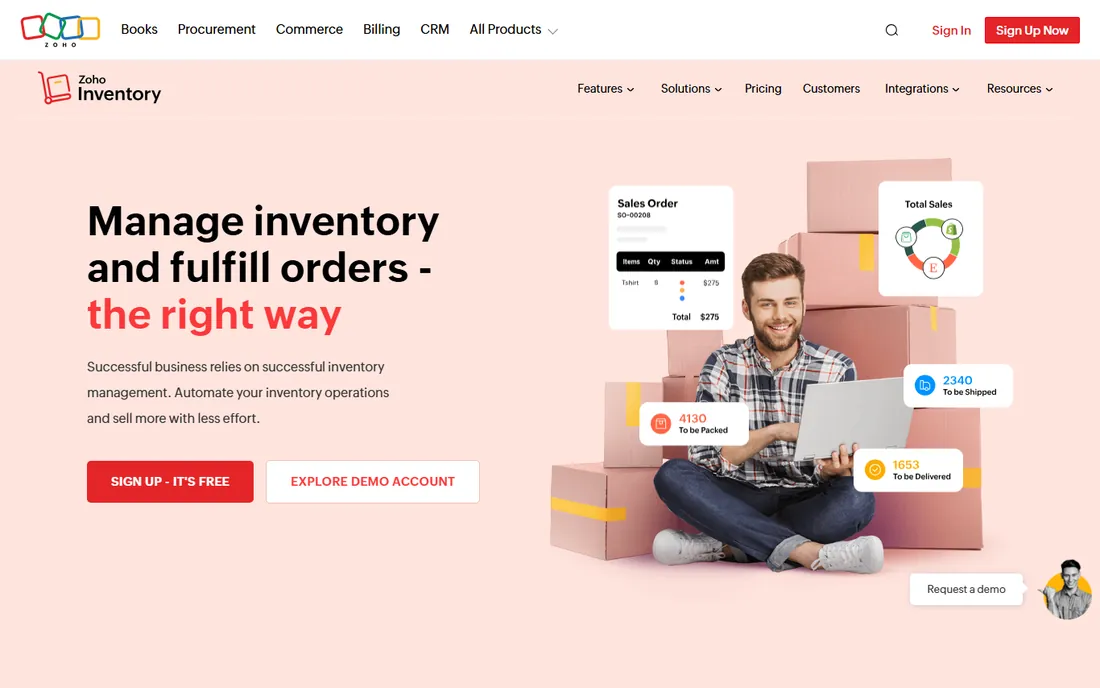
Zoho Inventory is the value play in this category and it is not close. The free plan covers 50 orders a month with a user and a location, which is a real business for a starting seller. Paid tiers scale by order volume: $29 per month for 500 orders, $79 for 3,000, $129 for 7,500. Multichannel selling, stock sync, dropshipping and backordering, multi-warehouse transfers, and shipping integrations with UPS, USPS, DHL, FedEx and others all come along.
The limitation is specialization. Zoho connects your sales channels and keeps stock synced, but it does not match the marketplace footprint or the automation depth of Linnworks, and it is not a warehouse system like Sellercloud. For small sellers the math is simple: start free, pay $29 when you outgrow it, and only look at the specialists when channels or volume exceed what Zoho handles cleanly.
What we like- A genuinely useful free plan at 50 orders per month, then paid plans from $29 per month
- Multichannel selling with stock sync across digital storefronts plus shipping carrier integrations
- Part of the Zoho ecosystem, so accounting, CRM and e-commerce apps connect natively
Watch out for- Order-based pricing tiers mean a busy month can push you into a higher plan
- Multichannel depth is thinner than the specialists: fewer marketplace integrations and less automation than Linnworks or Cin7
#7
Extensiv Order Manager
Best for: Multichannel sellers needing advanced order automation
Visit extensiv.com
Starting priceSee website (quote-based pricing)
Free planNo (none advertised)
Extensiv Order Manager descends from Skubana, one of the original multichannel order management products, and it keeps that product's strength: automation depth. Order routing, inventory allocation across warehouses, and fulfillment workflows run on rules rather than manual decisions, which is what sellers need when daily order counts climb into the hundreds across a dozen channels. Because it sits inside the Extensiv platform, sellers that later move to 3PL fulfillment stay in the same ecosystem.
The caveat is discoverability. Extensiv's marketing now centers on its 3PL warehouse software, so Order Manager buyers have to look past the homepage to evaluate the right product. Pricing is quote-based with no published tiers. It fits established multichannel sellers whose pain is order operations rather than listing expansion. If your problem is getting onto marketplaces, ChannelEngine or Sellbrite fit better.
What we like- Deep order management automation for multichannel sellers, from the platform formerly known as Skubana
- Strong rules engine for routing, allocation and fulfillment workflows
- Part of the broader Extensiv platform alongside 3PL warehouse tools for sellers that outgrow self-fulfillment
Watch out for- The Extensiv site now leads with 3PL warehouse messaging, so the Order Manager product takes digging to evaluate
- Quote-only pricing with no public plans, which slows down comparison shopping
Order volume decides your price more than features do
Multichannel pricing follows order volume, not users, and the tiers move fast. Zoho Inventory charges by monthly orders: 50 free, 500 at $29, 3,000 at $79, 7,500 at $129. Cin7 starts at $349 per month with a set integration allowance. Sellercloud starts at $1,349 per month on an annual plan priced by volume. Linnworks, ChannelEngine, Sellbrite and Extensiv all quote against your order count. Two sellers comparing the same tools can get very different numbers.
So bring your real numbers to every evaluation: monthly orders per channel, SKU count, warehouse locations, and whether you fulfill in-house, 3PL or dropship. A seller doing 400 orders a month across three channels lives in Zoho's $29 tier or Sellbrite territory; a seller doing 5,000 orders across ten marketplaces is choosing between Linnworks, Cin7 and Sellercloud. Price the tools against your actual throughput, then compare features. The feature comparison is meaningless until the price tiers line up.
What to check before you buy multichannel software
Start with the channel list, in writing. Every vendor claims broad marketplace coverage, but the integration you need might be native, partner-built or missing. Confirm each of your current channels plus the two you plan to add next year, and ask whether listing management, inventory sync and order import all work on each one or only some. A tool that syncs stock on Amazon but only imports orders from eBay is not really multichannel for your business.
Then test the sync speed and the oversell logic. Ask how quickly a sale on one channel updates stock everywhere else, and what happens when two channels sell the last unit within minutes of each other. The whole category exists to prevent that failure, so the answer should be specific: minutes-level sync, safety stock buffers per channel, and automatic listing pauses at zero. Vague answers here are a red flag.
On operations, map your fulfillment model. In-house warehouses need bin tracking and pick-pack workflows; 3PL users need the EDI and API connections their provider requires; dropshippers need supplier routing rules. Check the accounting integration too: QuickBooks and Xero sync is standard on Cin7 and Zoho, but confirm cost-of-goods and fee reconciliation work the way your bookkeeper expects. Finally, read the contract terms on the annual plans: Sellercloud's volume-based annual pricing and Linnworks' order-volume quotes both mean growth changes the bill, so know the formula before you sign.
How we chose
We started with the searches multichannel sellers run: multi channel inventory management software, multichannel inventory software, marketplace inventory management and e-commerce inventory management. For each candidate we opened the vendor's own homepage, copied the final address-bar URL after redirects, and took prices and plan details from the vendor's published pages only. We dropped several products during research: Veeqo and TradeGecko, both discontinued; Stitch Labs, shut down after its acquisition; and PatrolLIVE-style dead ends do not apply here, but the same rule did. Where a price could not be verified on the vendor's pages we wrote "See website" rather than guessing.
Frequently asked questions
What is multi channel inventory management software?
It keeps one accurate stock count across every place you sell: Amazon, eBay, Shopify, Walmart and others. When an item sells on one channel, the software updates inventory everywhere else within minutes, routes the order to the right warehouse, and prevents the same unit from selling twice.
How much does multichannel inventory software cost?
It ranges widely. Zoho Inventory starts free (50 orders per month) and $29 per month paid. Cin7 starts at $349 per month. Descartes Sellercloud starts at $1,349 per month. Linnworks, ChannelEngine, Sellbrite and Extensiv quote based on your order volume. Your monthly order count is the biggest price driver.
Do I need this if I only sell on Amazon and my own website?
Probably, once volume grows. Two channels can drift out of sync just as easily as ten, and overselling on Amazon hurts your seller metrics. Small two-channel sellers often start with Zoho Inventory's free or $29 plan and move to a specialist when channels or order counts grow.
What is the difference between multichannel software and a regular inventory tool?
Regular inventory software tracks stock in your warehouse. Multichannel software adds the channel layer: listing management across marketplaces, near-real-time stock sync per channel, order routing from every channel into one fulfillment flow, and marketplace compliance. Tools like Cin7 do both; pure warehouse tools do not.
Can this software handle my 3PL warehouse?
It depends on the tool. Descartes Sellercloud and Extensiv are built around 3PL and warehouse workflows with bin-level tracking. Linnworks routes orders to 3PLs by rule. Zoho Inventory and Sellbrite suit sellers who fulfill in-house or use FBA. Confirm your 3PL's required integrations before buying.
Sources we checked (7)
- https://linnworks.com
- https://cin7.com
- https://sellercloud.com/
- https://channelengine.com
- https://sellbrite.com/
- https://www.zoho.com/inventory/
- https://extensiv.com/
Is your product missing or out of date?
We review this list regularly. Vendors can request a listing, send updated pricing or ask about featured placement.

Shihab Mia · Founder, Rankite
Shihab has spent more than a decade helping SaaS and e-commerce brands grow through search. He writes Rankite's software buying guides from pricing pages, documentation and public user reviews. More about Shihab.