How we make this list: we compare pricing pages, product documentation and public user reviews. Rankite is independent; if a vendor ever pays for a featured spot, that listing is clearly labeled Partner.
Key takeaways
- Shopify at $39 per month is the default choice for small businesses planning to grow, thanks to its app ecosystem.
- Squarespace and Wix are the easiest ways to launch a beautiful small store, from $16 and $29 per month respectively.
- Square Online, Shift4Shop, Ecwid and Weebly all offer genuinely free plans for stores starting out.
- WooCommerce is free software but needs hosting and maintenance, so it suits WordPress users, not beginners.
Quick comparison
| Tool | Best for | Starting price | Free plan |
|---|
 Shopify Shopify | Growing stores of any kind | $39/month (Basic) | Free trial |
 Squarespace Squarespace | Design-led brands and creators | $16/month (Basic) | Free trial |
 Wix Wix | DIY small business websites with a store | $29/month (Core) | Free plan |
 BigCommerce BigCommerce | Scaling product catalogs | $39/month (Core) | Free trial |
 WooCommerce WooCommerce | WordPress site owners | $0 + hosting | Free plan |
 Square Online Square Online | Physical retailers going online | $0 | Free plan |
 Shift4Shop Shift4Shop | Budget US merchants | $0 | Free plan |
 Ecwid Ecwid | Adding a store to an existing site | $0 | Free plan |
 Weebly Weebly | Beginners on a budget | $0 | Free plan |
Is your product missing or out of date?
We review this list regularly. Vendors can request a listing, send updated pricing or ask about featured placement.
Starting price$39/month (Basic)
Free planFree trial

Shopify is the default recommendation for a reason. The Basic plan at $39 per month includes hosting, a solid theme, discount codes, abandoned cart recovery and a checkout that converts well on mobile. When the store grows, the app store adds subscriptions, wholesale, loyalty programs and just about anything else without replatforming.
The costs to watch are transaction fees and apps. Using a third-party gateway instead of Shopify Payments adds up to 2% per order on Basic, and a handful of paid apps can double the monthly bill. Still, for a small business with growth ambitions, starting on Shopify avoids a painful migration later. The free trial lets you build the store before paying.
What we like- Largest app and theme ecosystem
- Excellent checkout
- Scales from startup to enterprise
Watch out for- Transaction fees unless you use Shopify Payments
- Costs rise with apps
Starting price$16/month (Basic)
Free planFree trial

Squarespace is the choice when the store needs to look exceptional with minimal effort. Templates are genuinely beautiful, the editor is straightforward, and blogging is built in, which suits brands that sell through content. Plans start at $16 per month for Basic (with a 2% transaction fee) or $23 per month for Core with 0% fee.
Inventory management and advanced e-commerce features lag Shopify and BigCommerce. If you sell dozens of products and care about design more than complex operations, Squarespace is ideal. Creators, artists and boutique brands consistently pick it for exactly this reason.
What we like- Best-looking templates in the category
- Simple to manage
- Good blogging built in
Watch out for- 2% transaction fee on the Basic plan
- Weaker inventory tools than Shopify
#3
Wix
Best for: DIY small business websites with a store
Visit wix.com
Starting price$29/month (Core)
Free planFree plan

Wix is the easiest way for a non-technical owner to get a store online. The drag-and-drop editor lets you place anything anywhere, and the Core plan at $29 per month includes e-commerce with no added platform transaction fee. Service businesses like it because bookings, events and a store can live on one site.
The freedom has limits. Sites can get messy without design discipline, switching templates means rebuilding, and large catalogs strain the platform. For a small store under a few hundred products run by its owner, Wix is the fastest path from idea to sales.
What we like- Easiest drag-and-drop builder
- Store plus services in one site
- No platform transaction fee
Watch out for- Less scalable than Shopify
- Template switching requires rebuilding
Starting price$39/month (Core)
Free planFree trial

BigCommerce competes with Shopify for growing stores and wins on built-in value. The Core plan at $39 per month charges 0% platform transaction fees regardless of gateway, and features like multi-currency, customer groups and faceted search come standard rather than as paid apps. B2B tools are stronger than Shopify's at comparable prices.
The catch is revenue thresholds: as sales grow, the platform moves you to higher plans. The app ecosystem is smaller, though the essentials are covered. For a small business with a large catalog or wholesale ambitions, BigCommerce often costs less than Shopify at scale.
What we like- 0% platform transaction fees on every plan
- Strong built-in features
- Good B2B tools
Watch out for- Revenue-based plan upgrades
- Smaller app ecosystem than Shopify
Starting price$0 + hosting
Free planFree plan
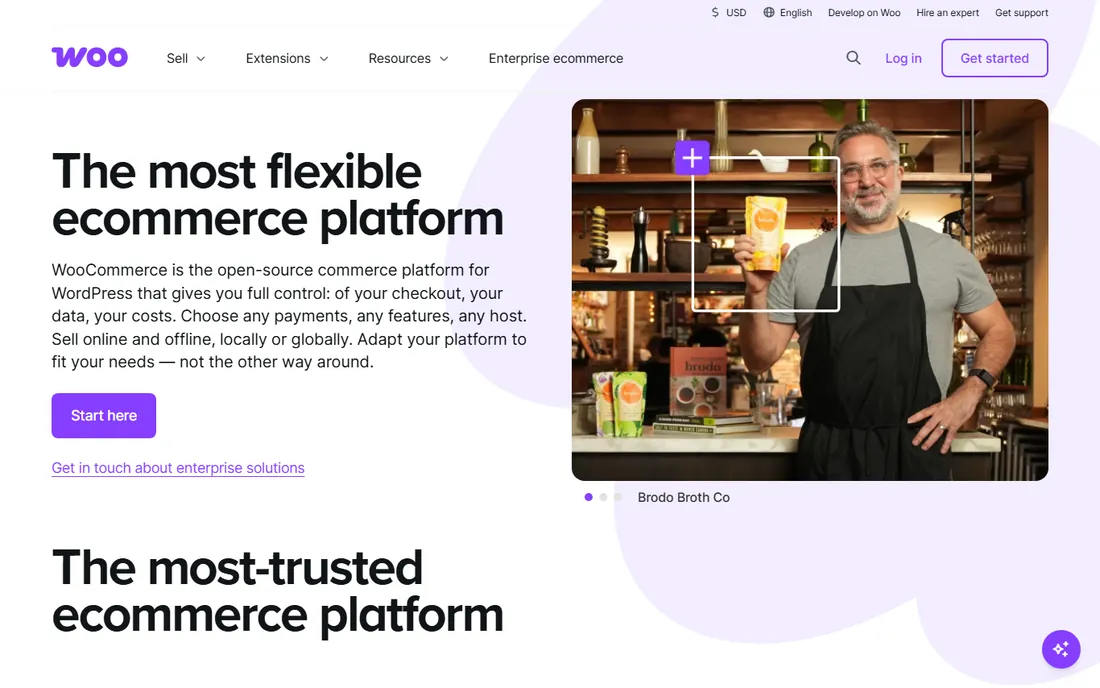
WooCommerce turns any WordPress site into a store for free. The software costs nothing and charges no platform transaction fees. Control is total: own your code, your data and your checkout. The extension marketplace covers subscriptions, bookings, memberships and nearly everything else.
"Free" needs context. Hosting runs $8 to $15 per month minimum, a good theme and essential paid extensions add cost, and you own security updates and maintenance. Realistic budgets land at $250 to $500 per year. WooCommerce suits WordPress users and anyone with developer help. Pure beginners should pick a hosted platform instead.
What we like- Free open-source software
- Total control
- Massive extension library
Watch out for- You handle hosting, security and updates
- Real costs add up
Starting price$0
Free planFree plan
Square Online is the natural extension for businesses already using Square in person. The free plan includes a real online store with hosting, and inventory syncs automatically between the physical shop and the website. Setup takes an afternoon, and paid plans from $29 per month add custom domains and lower processing rates.
The free plan's 3.3% plus $0.30 processing fee is higher than paid alternatives, and design flexibility is modest. For a cafe, boutique or salon adding online ordering to an existing Square setup, nothing else integrates as cleanly.
What we like- Free plan with real selling features
- Syncs with Square POS
- Easy setup
Watch out for- 3.3% + $0.30 processing on the free plan
- Less flexible design
Starting price$0
Free planFree plan

Shift4Shop (formerly 3dcart) offers its full enterprise plan free to US merchants who use Shift4 payments. That means advanced features, unlimited products and no platform transaction fees for $0 in subscription. Built-in tools cover SEO, promotions, CRM and email marketing without the app-store nickel-and-diming.
The free deal requires Shift4 payment processing and is US-only; international merchants pay standard rates. The admin interface shows its age. For a budget-conscious US merchant who wants maximum features for minimum subscription, Shift4Shop is the value play.
What we like- Free enterprise-level plan for US merchants
- No platform transaction fees
- Rich built-in features
Watch out for- US-only free plan
- Interface feels dated
Starting price$0
Free planFree plan
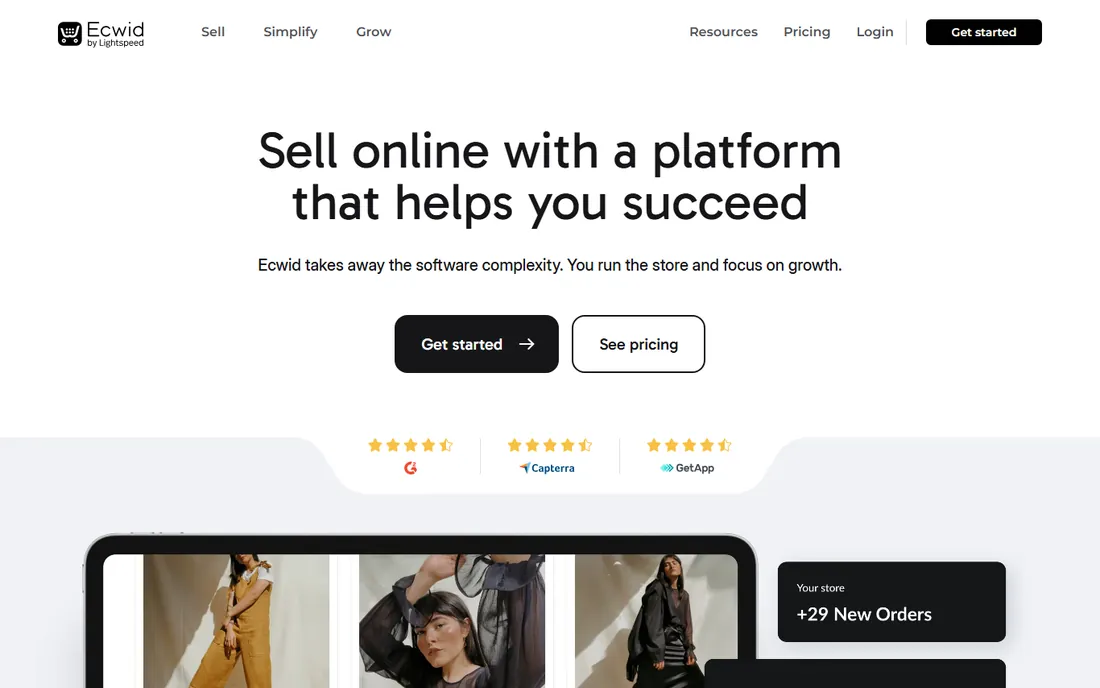
Ecwid solves a specific problem: you already have a website and just need to sell. A snippet of code adds a store to WordPress, Wix, Squarespace or a custom site, with products, cart and checkout handled by Ecwid. The free plan covers up to 10 products, and paid plans scale from there.
Design control is limited compared to full platforms, and growing stores eventually want their own storefront. For bloggers, small businesses and creators adding a few products to an existing site, Ecwid is the lowest-friction option.
What we like- Embeds into any existing website
- Free plan for up to 10 products
- Simple to run
Watch out for- Limited design control
- Advanced features need paid plans
Starting price$0
Free planFree plan
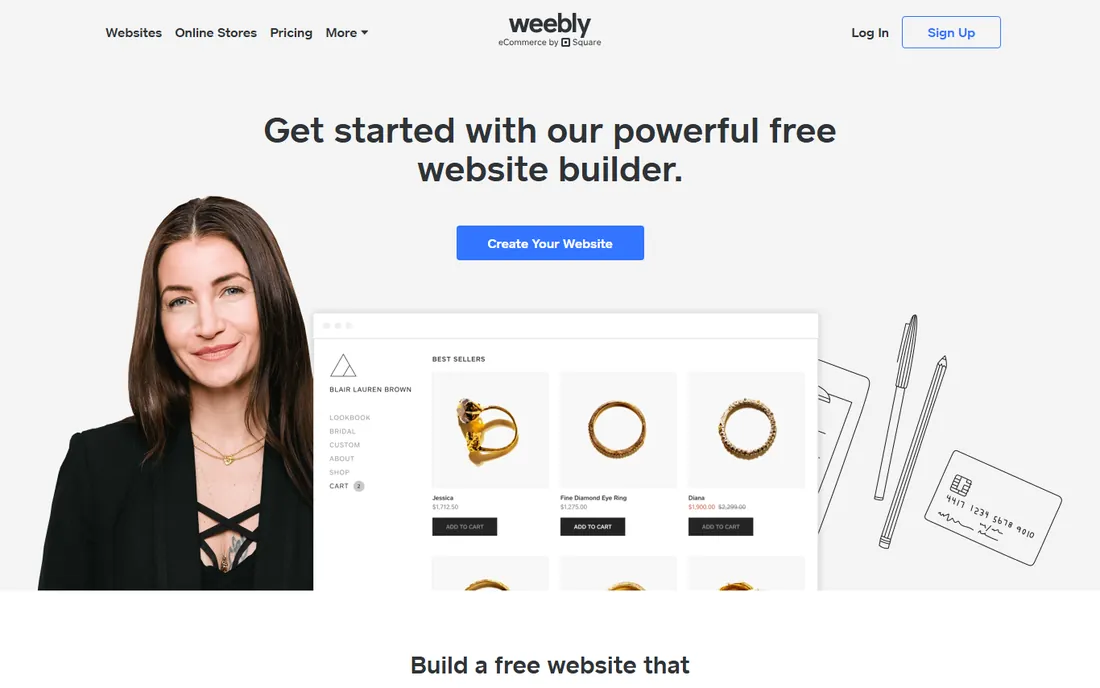
Weebly, now part of Square, remains one of the simplest ways to put a small store online. The drag-and-drop builder is genuinely beginner-friendly, and the free plan lets you start selling with minimal investment. Square's ownership means payment processing and POS integration are straightforward.
Advanced sellers will outgrow it: inventory tools, marketing features and customization are basic next to Shopify or BigCommerce. For a first store, a hobby business or a simple side project, Weebly's simplicity is exactly right.
What we like- Very easy to use
- Free plan available
- Backed by Square
Watch out for- Limited advanced e-commerce features
- Templates feel dated
How to choose: the five questions that matter
How many products will you sell? Under 50, any platform works. Over 500, shortlist Shopify, BigCommerce or WooCommerce.
Do you sell in person too? Square Online and Shopify POS both unify retail and online inventory. Do not run two disconnected systems.
What are the real fees? Add the subscription, the platform transaction fee and the payment processing fee. A "free" plan at 3.3% processing can cost more than a $39 plan at 2.9% once volume grows.
How much design control do you need? Squarespace and Wix win for visual brands. Shopify wins for functional growth. WooCommerce wins for total control.
Can you handle maintenance? Hosted platforms handle security, updates and uptime. WooCommerce gives you freedom in exchange for responsibility. Be honest about your technical capacity.
The true cost of "free"
Free plans are real, but processing fees are where the money goes. Square Online's free plan charges 3.3% plus $0.30 per transaction; at $10,000 monthly sales that is over $350 in fees. A $39 Shopify Basic plan with Shopify Payments at 2.9% plus $0.30 costs roughly $330 total. Run your own numbers at your expected volume before choosing on subscription price alone. Also budget for a custom domain (around $15 per year) and product photography, which every store needs regardless of platform.
Payments and checkout optimization
The platform decision gets the attention, but checkout optimization determines the revenue. The average cart abandonment rate hovers around 70 percent, which means most of your store's potential sales die in the final steps. The fixes are unglamorous and well-proven. Offer guest checkout; forcing account creation is the single biggest conversion killer for first-time buyers. Show all costs early; surprise shipping fees at the final step are the second. Keep the form short; every field you remove measurably lifts completion. These three changes alone typically recover more revenue than any marketing campaign, and every platform here supports them with varying ease.
Payment options have expanded beyond cards, and the right mix depends on your customers. Digital wallets (Apple Pay, Google Pay, Shop Pay) convert dramatically better on mobile because they eliminate typing card numbers on phones. Buy-now-pay-later options (Klarna, Afterpay, Affirm) lift average order value, especially for higher-priced goods, at the cost of a slightly higher transaction fee. PayPal remains essential for buyer trust in many demographics. The platforms differ in how easily these plug in: Shopify and BigCommerce have the broadest native support, while others need third-party integrations. Map your customers' preferred payment methods before choosing; a store selling to Gen Z without BNPL and wallets is leaving money behind.
Mobile checkout deserves separate attention because most small business traffic is now mobile. Test your checkout on a real phone, not just a responsive preview. Buttons must be thumb-sized, forms must use the right keyboards (numeric for card numbers), and the whole flow should complete in under two minutes. One-page checkouts generally outperform multi-step on mobile. Also verify that your payment options actually appear on mobile; some integrations hide wallets on certain devices. A checkout that converts at 3 percent on desktop but 0.8 percent on mobile has a mobile problem, and with mobile traffic shares above 60 percent for most small stores, that gap is the business.
Transaction fees are the quiet margin killer. Platform fees, payment processor fees, and app subscription costs stack: it is common to pay 3 to 5 percent of revenue before counting anything else. Model this honestly at your actual average order value. A 1 percent fee difference is trivial on a $200 order and painful on a $15 order. Higher platform tiers often reduce transaction fees enough to pay for themselves past a certain volume; do the math at your current sales, not your hoped-for sales. And watch for the fees nobody mentions: currency conversion, chargeback fees, payout delays that affect cash flow.
Finally, treat checkout as an ongoing experiment, not a one-time setup. Run A/B tests on the elements with the greatest impact: button text and color, trust badges placement, express checkout prominence, shipping threshold messaging. Change one thing at a time and measure for at least two weeks. Small stores often skip testing because traffic feels too low, but even directional data beats guessing. The platforms with built-in testing tools make this easier; with others, a simple before-and-after comparison still works. Checkout optimization never finishes, because customer expectations keep rising. The stores that treat it as a habit compound small wins into serious revenue.
Frequently asked questions
What is the cheapest way to start an online store?
Ecwid, Weebly, Square Online and Shift4Shop all offer free plans. WooCommerce software is free but needs paid hosting. For most beginners, Square Online or Weebly free plans are the simplest zero-cost start.
Is Shopify worth $39 per month for a small business?
If you plan to grow, yes. The app ecosystem, checkout quality and reliability justify the cost once you have steady sales. For a tiny hobby store, start free on Square Online or Weebly and move to Shopify when revenue supports it.
Can I sell on my existing website?
Yes. Ecwid embeds a store into any site. WooCommerce adds a store to WordPress. Squarespace and Wix let you add commerce to an existing site on their platforms.
Do I need a separate payment processor?
No. Every platform here includes or integrates payment processing. Shopify Payments, Square, Stripe and PayPal cover nearly all small business needs. You only pay the processor's per-transaction fee plus any platform fee.
Which platform is best for SEO?
WooCommerce on WordPress has the strongest SEO flexibility, followed by Shopify and BigCommerce with solid built-in tools. Squarespace and Wix are adequate for small catalogs. Content plus site speed matters more than platform choice.
Can I migrate platforms later?
Yes, but it is work. Products, customers and orders can be exported and imported; URL redirects need mapping to preserve SEO. Choosing a platform you can grow into, like Shopify or BigCommerce, avoids the migration entirely.
How we chose
We compared the platforms small businesses actually shortlist, using pricing checked against each vendor's own pricing page in late 2026. We weighted ease of setup for non-technical owners, total cost including transaction fees, free and low-cost entry points, and ability to grow without replatforming. No hands-on store builds were performed; assessments rest on documentation, pricing pages and public reviews.
Sources we checked (11)
- https://www.shopify.com/pricing
- https://www.squarespace.com/pricing
- https://www.wix.com/pricing
- https://www.bigcommerce.com/pricing
- https://woocommerce.com/
- https://squareup.com/us/en/online-store/pricing
- https://www.shift4shop.com/pricing.html
- https://www.ecwid.com/pricing
- https://www.weebly.com/pricing
- https://cartva.co/blog/6-shopify-alternatives-2026
- https://shopthemedetector.com/blog/shopify-competitors/
Is your product missing or out of date?
We review this list regularly. Vendors can request a listing, send updated pricing or ask about featured placement.

Shihab Mia · Founder, Rankite
Shihab has spent more than a decade helping SaaS and e-commerce brands grow through search. He writes Rankite's software buying guides from pricing pages, documentation and public user reviews. More about Shihab.